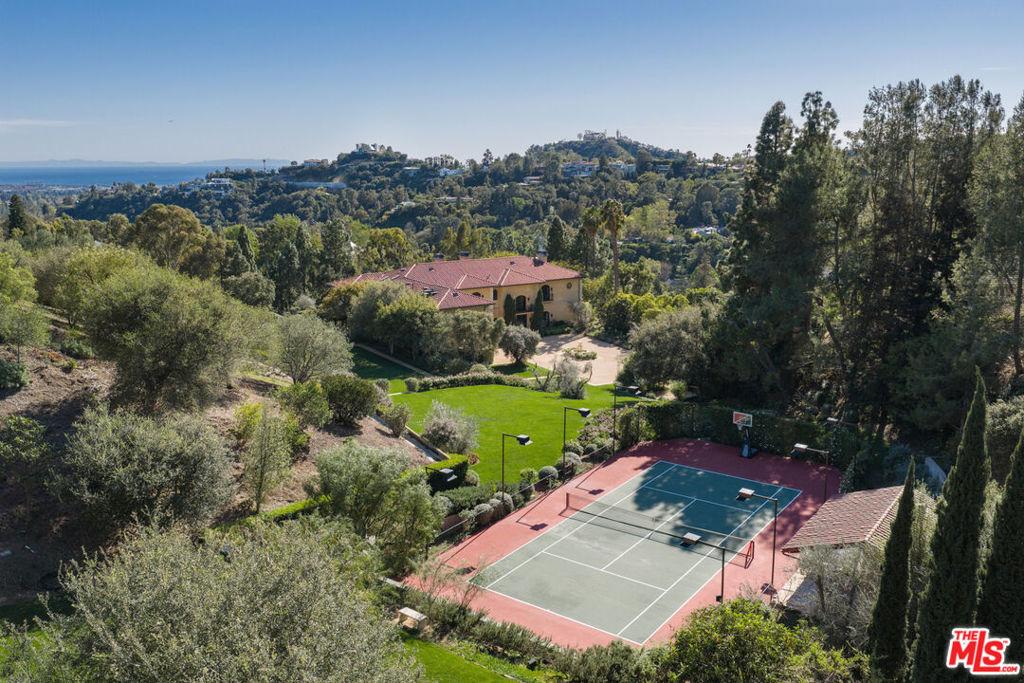
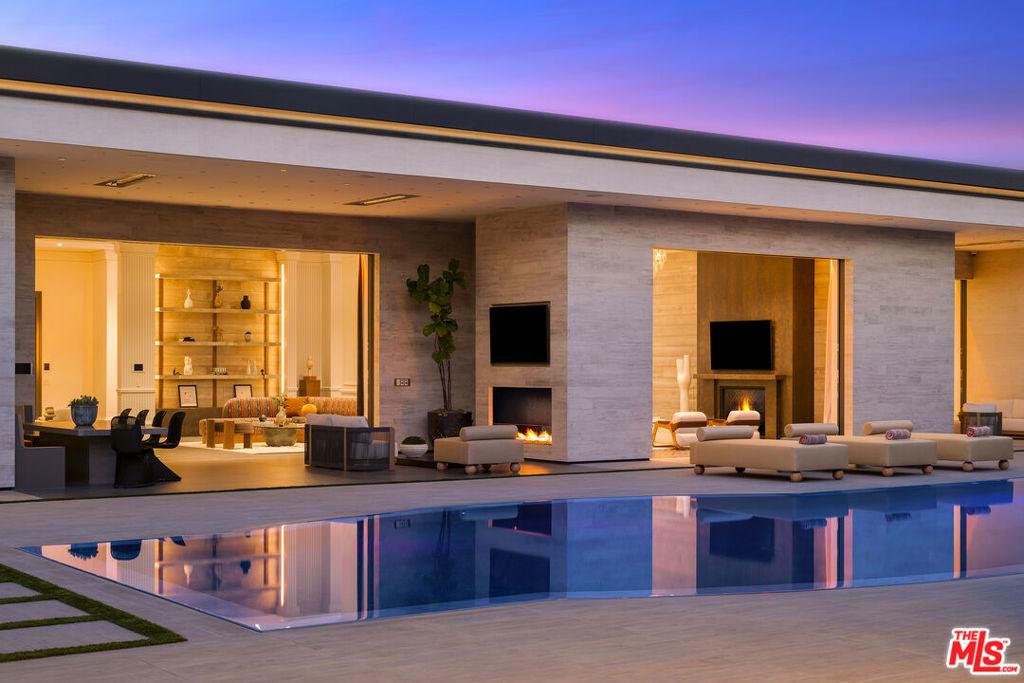
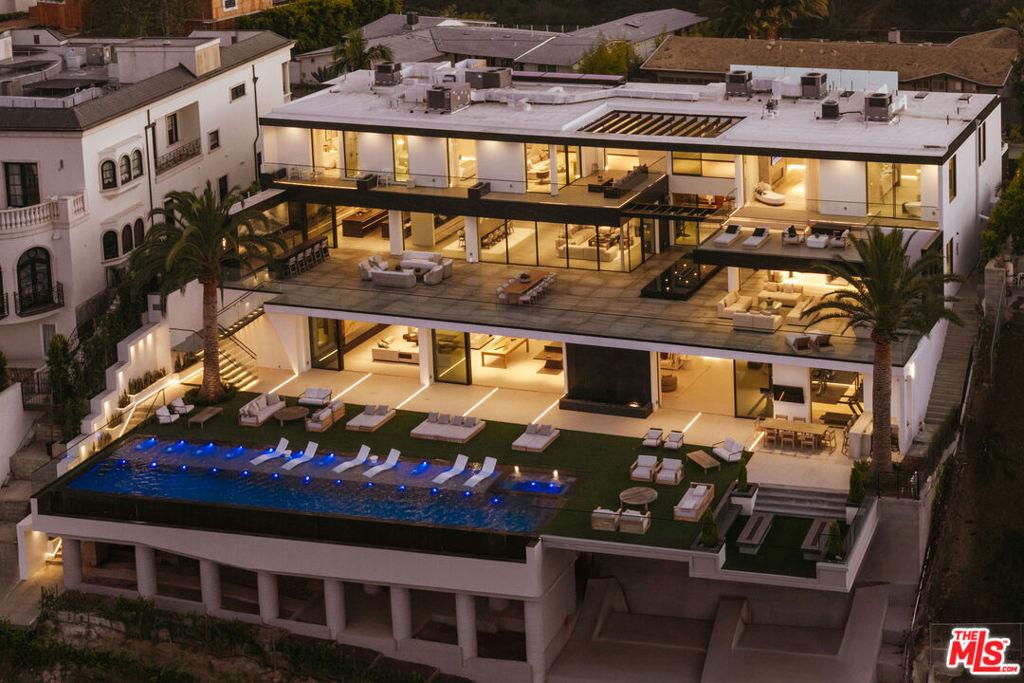
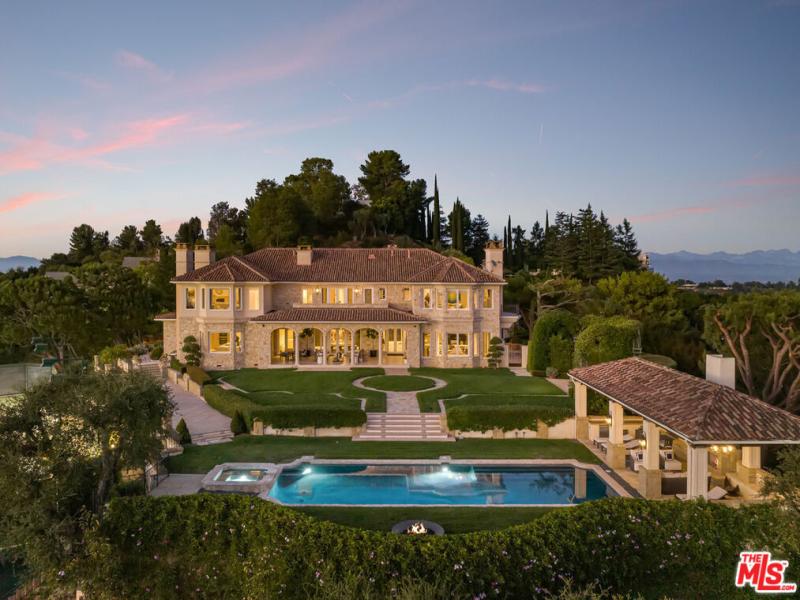
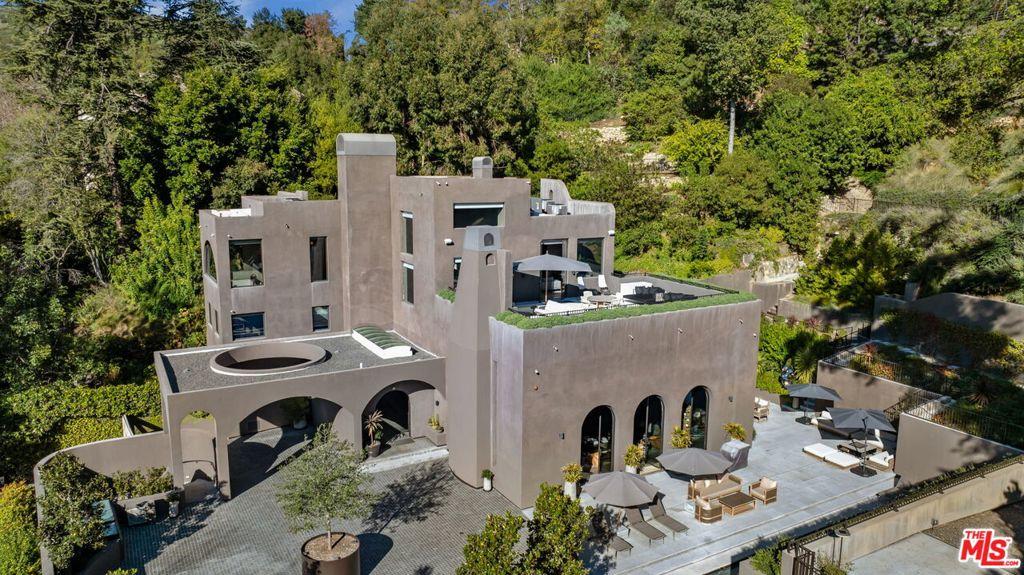
Tennis court homes for sale in Los Angeles sit in a small, permanently constrained category, because a regulation-size private court takes real land and real money — a new hardcourt installation runs $60,000–$150,000 depending on grading, drainage, fencing, and lighting. The buyer pool for these properties is dedicated and consistent, which is why values here hold up better than most in softer conditions. The Knight Group works with court buyers across the Westside, Bel Air, Beverly Hills, and beyond.
Most of the inventory sits on the largest parcels in Bel Air and the Beverly Hills estate section, much of it built in the 1960s and 1970s when courts were a standard feature. Pacific Palisades has flatter terrain and more multi-sport courts; Malibu’s are cut into hillsides; Hidden Hills and Calabasas pair them with equestrian facilities. Surfaces vary from low-maintenance hardcourt to red clay to rare grass.
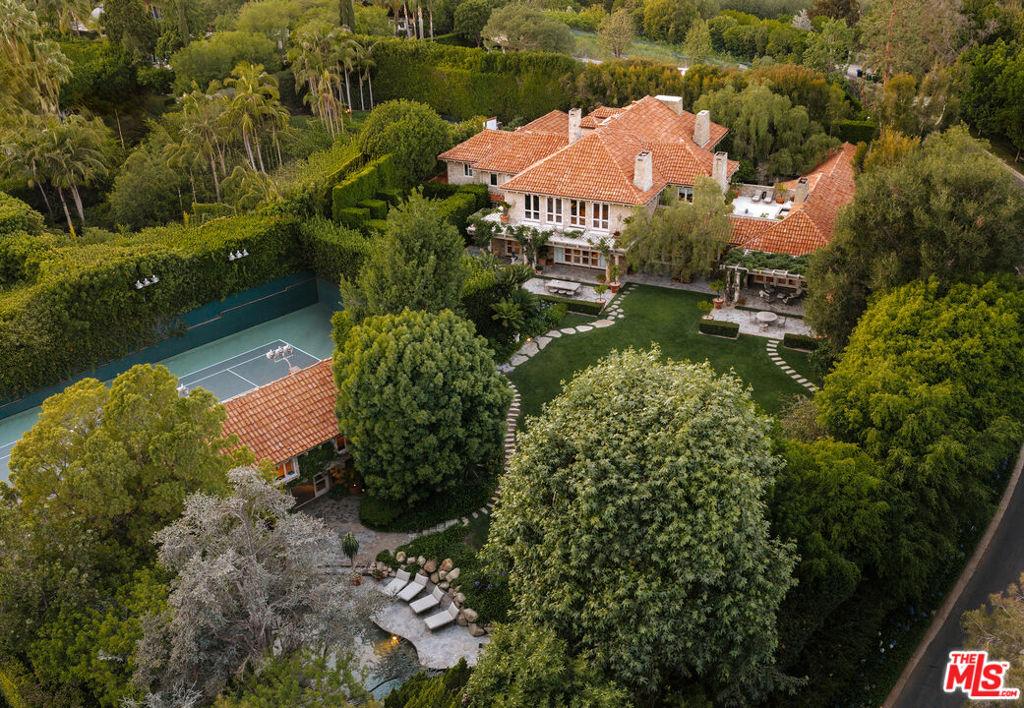
The largest parcels in the most premier neighborhoods naturally host the most private tennis courts. Many of LA’s most significant estates — particularly those built in the 1960s and 1970s when lots were developed at their maximum — included tennis courts as standard features. These courts range from well-maintained clay and hardcourt installations to full tennis pavilions with stadium seating, overnight lighting systems, and ball machine storage facilities. The celebrity tennis court has been a fixture in Bel Air since the era when the neighborhood’s residents included legends like Dinah Shore and Bob Hope.
The Palisades combines generous lot sizes, family-oriented demographics, and an active sports culture that makes tennis court ownership unusually common relative to other LA neighborhoods. Many Pacific Palisades estates feature half-court or full-court installations that double as multi-sport surfaces — basketball, pickleball, and futsal during the times the tennis nets come down. The neighborhood’s flat and gently rolling terrain makes court construction more straightforward than in the hillside enclaves.
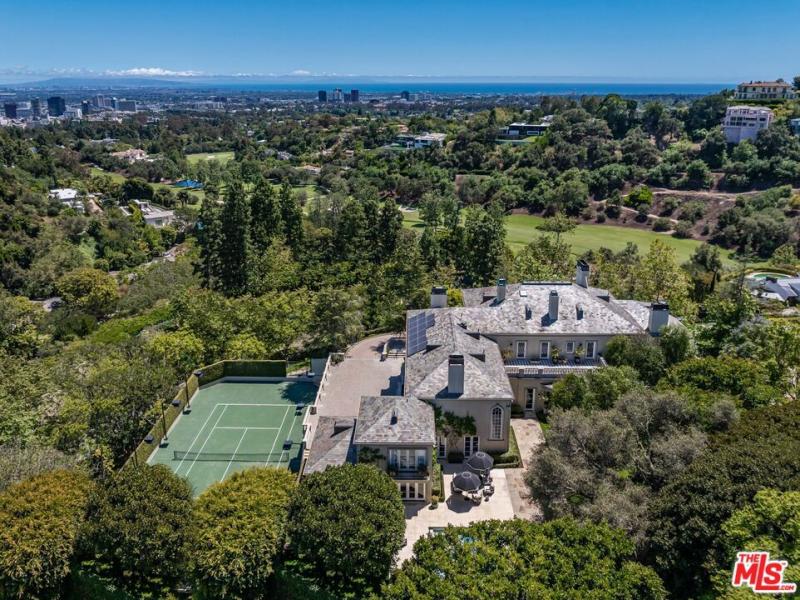
Malibu’s canyon and mountain estates often feature tennis courts integrated into dramatic natural settings — courts carved into hillsides with view-oriented orientations, courts surrounded by oak woodland, courts sharing a compound with horse facilities. The combination of natural beauty and athletic infrastructure is quintessentially Malibu.
The equestrian communities of Hidden Hills (a city with its own guard gate and horse trails) and Calabasas have long attracted athletes and entertainers who want space, community, and recreation facilities. Tennis courts are common here, sometimes paired with pickleball courts, sport courts, and equestrian facilities on the same large property.
The standard surface for most private installations in Southern California. Hardcourt surfaces are low maintenance, weather-resistant, and similar to what you’d play on at most public parks and clubs. Color customization (blue, green, red) is easy at initial installation. Courts need resurfacing every 5–8 years. Ball speed plays medium-fast on hard surfaces.
Red clay (har-tru / fast-dry) courts are the preferred surface for many recreational players because the slower ball speed extends rallies and is easier on knees and joints. Clay requires more active maintenance — regular rolling, watering, and line brushing — and is less suited to multi-sport use. But for dedicated tennis players, clay offers the closest thing to the European club experience at home. A handful of Bel Air and Beverly Hills estates maintain beautiful red clay courts that evoke the country club aesthetic perfectly.
Extremely rare in Los Angeles — the maintenance requirements are prohibitive in a dry climate without significant irrigation. A handful of trophy estates maintain grass courts as statements; they’re aesthetic masterpieces but require dedicated groundskeeping staff.
Pickleball’s explosive growth has driven significant interest in pickleball conversions on existing tennis courts. A standard tennis court fits four pickleball courts (or two, configured for more space). Many buyers purchasing tennis court homes are now requesting pickleball line additions at or before close, and a growing number of new installations are built as dedicated pickleball courts from the start.
A new hardcourt installation in Los Angeles typically runs $60,000–$150,000 depending on site preparation requirements, grading, drainage, fencing, and lighting. Clay court installations are similar in base cost but add ongoing maintenance. Repaving an existing court runs $15,000–$40,000. Full-size indoor tennis court structures are exceptionally rare in residential settings and represent investments of $500,000+.
From a resale perspective, tennis courts are a positive for buyers in this demographic but can narrow your buyer pool slightly for buyers who explicitly don’t want the maintenance commitment. In neighborhoods where courts are common (Bel Air, the Palisades), the presence of a court is value-neutral to mildly positive. In neighborhoods where courts are rare, a well-maintained court can be a genuine differentiator.
Before closing on a home with a tennis court, have the court professionally inspected. Check for: surface cracks and their extent (minor surfacing cracks vs. structural base movement), drainage adequacy (standing water after rain damages surfaces), lighting condition and compliance with county dark-sky ordinances if applicable, fencing height and condition, and net post integrity. Budget $5,000–$15,000 for a thorough refurbishment of a neglected court; full resurfacing and lighting replacement can reach $50,000+.
We maintain visibility into tennis court properties throughout the Westside, Beverly Hills, Bel Air, and beyond — including off-market listings that never appear on public portals. Call us at 503-200-4823 if a tennis court home is on your list. We’ll find it, evaluate it properly, and help you negotiate the best possible terms.
Tennis court maintenance in Southern California differs from wetter climates. The abundant sun and UV exposure fade surfaces faster and dry out clay courts more aggressively. Hardcourt surfaces should be professionally inspected annually and resurfaced every 5–8 years depending on use intensity and sun exposure. High-quality acrylic resurfacing with textured cushioning systems extends playing comfort and reduces joint stress — expect $15,000–$40,000 for a full resurfacing job on a standard court. Net systems, windscreens, and perimeter fencing require annual inspection for UV and weather deterioration.
Lighting systems merit particular attention in Los Angeles, where county dark-sky ordinances and HOA covenants may restrict night play. Full-court LED lighting for evening play is a significant amenity but needs to be compatible with neighbor relationships and local regulations. Motion-activated and timer-controlled systems help manage neighbor concerns while preserving nighttime use capability.
If you’re purchasing a property without a court with the intention of adding one, the feasibility study is your first investment. Los Angeles’s hillside topography often requires significant grading to create a level court pad — this can cost anywhere from $20,000 on a modestly sloped lot to $200,000+ on a steep site where significant cut and fill is required. Soils reports and geotechnical engineering are required for graded pads in hillside zones. Drainage infrastructure for the court surface must be engineered to prevent runoff impacts on neighboring properties and down-slope areas. HOA approval processes in communities like Bel Air, Mulholland Estates, and Beverly Park add 3–9 months to the timeline.
A court without amenities is a missed opportunity. The best private court environments include: a dedicated viewing area with comfortable seating and shade, a pro shop-style storage room for equipment and ball hoppers, a ball machine for solo practice, and either a poolside water service point or a dedicated hydration station adjacent to the court. The most sophisticated installations add a small locker area with a full bath — functional for players visiting your home who don’t want to track clay dust or sweat through your main house. These amenities add $25,000–$100,000 to the court project but dramatically increase daily use frequency and entertainment value.
Our knowledge of where the best courts are in Bel Air, Beverly Hills, Pacific Palisades, and Hidden Hills is current and specific. We know which properties have recently resurfaced, which have permit issues with their lighting systems, and which courts are in the kind of condition that serious players will love from day one. Call us at 503-200-4823 for a targeted search focused on court-equipped properties — we’ll save you time and find the right one faster than a general search ever would.
Tennis court maintenance in Southern California differs from wetter climates. The abundant sun and UV exposure fade surfaces faster and dry out clay courts more aggressively. Hardcourt surfaces should be professionally inspected annually and resurfaced every 5–8 years depending on use intensity and sun exposure. High-quality acrylic resurfacing with textured cushioning systems extends playing comfort and reduces joint stress — expect $15,000–$40,000 for a full resurfacing job on a standard court. Net systems, windscreens, and perimeter fencing require annual inspection for UV and weather deterioration.
Lighting systems merit particular attention in Los Angeles, where county dark-sky ordinances and HOA covenants may restrict night play. Full-court LED lighting for evening play is a significant amenity but needs to be compatible with neighbor relationships and local regulations. Motion-activated and timer-controlled systems help manage neighbor concerns while preserving nighttime use capability.
If you’re purchasing a property without a court with the intention of adding one, the feasibility study is your first investment. Los Angeles’s hillside topography often requires significant grading to create a level court pad — this can cost anywhere from $20,000 on a modestly sloped lot to $200,000+ on a steep site where significant cut and fill is required. Soils reports and geotechnical engineering are required for graded pads in hillside zones. Drainage infrastructure for the court surface must be engineered to prevent runoff impacts on neighboring properties and down-slope areas. HOA approval processes in communities like Bel Air, Mulholland Estates, and Beverly Park add 3–9 months to the timeline.
A court without amenities is a missed opportunity. The best private court environments include: a dedicated viewing area with comfortable seating and shade, a pro shop-style storage room for equipment and ball hoppers, a ball machine for solo practice, and either a poolside water service point or a dedicated hydration station adjacent to the court. The most sophisticated installations add a small locker area with a full bath — functional for players visiting your home who don’t want to track clay dust or sweat through your main house. These amenities add $25,000–$100,000 to the court project but dramatically increase daily use frequency and entertainment value.
Our knowledge of where the best courts are in Bel Air, Beverly Hills, Pacific Palisades, and Hidden Hills is current and specific. We know which properties have recently resurfaced, which have permit issues with their lighting systems, and which courts are in the kind of condition that serious players will love from day one. Call us at 503-200-4823 for a targeted search focused on court-equipped properties — we’ll save you time and find the right one faster than a general search ever would.
Buyers evaluating tennis court Los Angeles listings should start with terrain, because it shapes both what exists and what can be changed. Flatter ground in the Palisades supports full-size courts and easier reconfiguration; hillside sites in Malibu and parts of Bel Air lock a court into whatever pad was cut for it decades ago, so relocating or expanding is rarely practical. That distinction matters more than surface preference, since a hardcourt can be resurfaced or striped for pickleball, but a court sited badly for sun, wind, or drainage stays that way.
The second question is how you actually plan to use it. Clay rewards players who want longer rallies and softer footing but demands routine upkeep; hardcourt suits households that want one surface serving several sports. Because tennis court real estate draws a narrower, more committed buyer pool, a court in working condition supports resale — a neglected one becomes a repair estimate the next buyer prices in.

Browse all Los Angeles real estate — or explore the full Los Angeles luxury real estate market.
In the Los Angeles market, homes marketed with private tennis court represent properties where this feature is a meaningful, installed amenity — not simply a cosmetic aspiration. These include full-size hard courts (DecoTurf, Pro-Bounce), clay courts, grass courts, lighting for night play, court fencing and perimeter landscaping, viewing areas, and in some cases ball machines and instruction facilities.
The presence of a significant amenity like private tennis court typically signals a level of investment in the property that correlates with broader quality across the home. Buyers who search specifically for this feature tend to be informed, motivated, and clear on what they want — which means the transaction tends to move faster once the right property is identified.
The buyer pool for Los Angeles homes with private tennis court primarily consists of tennis players, sports-enthusiast buyers, families with competitive junior athletes, and buyers who view private athletic facilities as a permanent lifestyle upgrade over club memberships. Unlike the broader LA market where buyers are evaluating multiple competing properties, buyers searching for specific amenities often have a single defining requirement that narrows their search significantly — and makes them less price-sensitive once they find the right match.
Los Angeles is uniquely positioned as a market for rare amenity properties. The city’s entertainment industry has normalized extraordinary residential investments, its climate extends the usable year-round value of outdoor amenities, and its buyer pool includes both local high-net-worth individuals and international buyers who have self-selected for the city’s lifestyle proposition. Properties with distinctive amenities here attract broader interest than comparable properties in most US markets.
For buyers seeking homes with private tennis court in Los Angeles, the most compelling opportunities rarely appear on the open market. Properties with significant amenity installations are often sold through private networks — estate attorneys, trusted listing agents, and relationship-based introductions — long before they hit Zillow, Redfin, or even the MLS. This off-market dynamic is especially pronounced for amenity-rich properties where sellers value privacy and targeted buyer selection over maximum marketing exposure.
The Knight Group operates extensively in the off-market segment for luxury and specialty-amenity properties. Our team maintains direct relationships with sellers, estate representatives, and other agents who manage high-value listings discretely. Buyers who work exclusively through public listing platforms miss a meaningful portion of the available inventory for properties with private tennis court in the Los Angeles market.
Properties with significant amenities require a more detailed due diligence process than standard residential purchases. In addition to standard home inspection, buyers of Tennis Court homes should evaluate: the permit status and sign-off documentation for any installed amenity infrastructure, the ongoing maintenance requirements and associated annual costs, insurance implications specific to the amenity type, and HOA or CC&R restrictions (if applicable) that govern use or future expansion of the facility.
The Knight Group coordinates specialized due diligence for specialty amenity properties and can connect buyers with inspection professionals who have direct experience evaluating the specific amenity type. This coordination is part of our standard buyer representation service for properties in this category.
Properties featuring Tennis Court represent a specialized segment of the luxury market where buyer pools are smaller but motivation levels are significantly higher. Buyers who specifically search for Tennis Court have typically already gone through a broader home search and narrowed their criteria to properties that include this specific feature — which means they arrive at the table with sharper intent and fewer competing priorities pulling them in different directions.
For sellers, the presence of Tennis Court creates both an opportunity and a challenge. The opportunity is that the right buyer will pay a meaningful premium for a property that eliminates the need to retrofit or build out this feature post-purchase. The challenge is that overpricing on the basis of the feature — without accounting for the property’s overall condition, location, and comparables — can result in extended days on market that ultimately harm the final sale price.
The Knight Group takes a data-led approach to positioning Tennis Court properties. That means reviewing recent sales of comparable properties with and without the feature, quantifying the actual premium the market has demonstrated (as opposed to the premium a seller assumes), and crafting marketing that speaks to the specific buyer who considers Tennis Court a primary requirement rather than a nice-to-have.
If you’re looking to buy a property with Tennis Court or sell one that includes it, contact The Knight Group to discuss current market conditions, realistic pricing, and the off-market channels that often surface these properties before they reach public listings.
Properties with private tennis court are distributed across the Los Angeles market, but concentrate in neighborhoods where lot size, zoning, and buyer demographics align: Bel Air, the Hollywood Hills, Pacific Palisades, Malibu, Calabasas, Hidden Hills, and Agoura Hills. Each of these areas has specific zoning, HOA, and CC&R considerations that may affect how the amenity is used or expanded.
Significant amenity installations in Los Angeles require permits, and the permit history of an installed amenity is an important due diligence item. The Knight Group recommends verifying that all structures and installations have been properly permitted and signed off before committing to a purchase. Unpermitted work can affect financing, insurance, and future resale.
Properties in gated communities and planned developments may have HOA rules that govern the use or construction of certain amenity types. Before purchasing a property with private tennis court in a managed community, The Knight Group recommends a full review of HOA documents, CC&Rs, and any architectural restrictions that might affect the amenity’s current use or future expansion.
Specialized amenities come with specialized insurance and operating cost considerations. The Knight Group can connect buyers with insurance brokers and property managers experienced with these property types to establish realistic ongoing cost estimates before purchase.
While Tennis Court properties appear across Los Angeles County, they concentrate in specific geographic corridors where lot size, zoning, and buyer demographics align. Understanding which neighborhoods have the highest density of private tennis court properties helps buyers focus their search efficiently and gives sellers context for positioning their property competitively within its geographic subset.
The Knight Group maps the inventory of specialty amenity properties by neighborhood on an ongoing basis. If you have a specific geographic preference within the Los Angeles market alongside your requirement for private tennis court, we can provide a targeted inventory analysis and estimated time-to-find based on current market conditions.
The practical access requirements for properties with private tennis court vary significantly by property type and location. Lot access, utility availability, fire-zone considerations (particularly relevant for estate properties in the Santa Monica Mountains and Malibu areas), and driveway and motor court configuration all affect the long-term usability of specialty amenity properties. The Knight Group evaluates these infrastructure factors as part of the buyer advisory process for properties in this category.
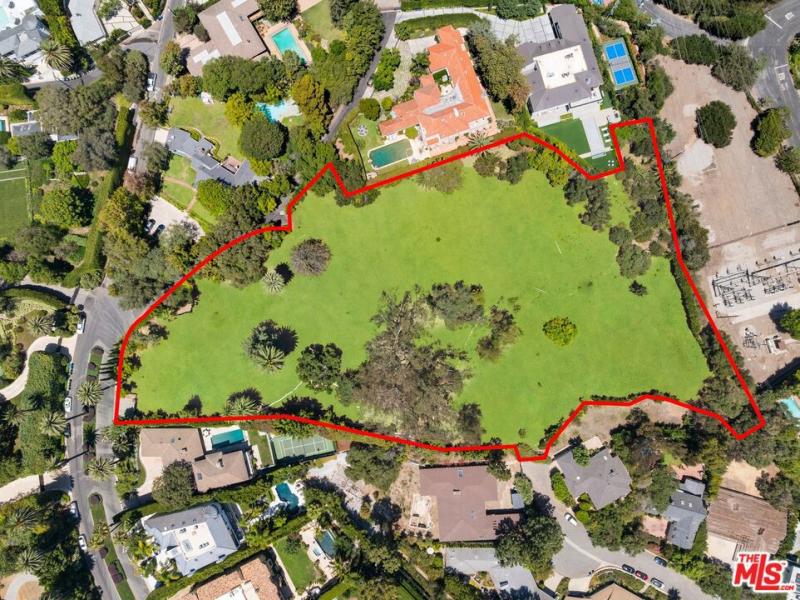
Private tennis courts require significant lot size — typically 0.75 acres or more for a full court with comfortable setbacks. This constraint limits supply naturally. The Knight Group tracks tennis court properties closely as demand from the racket sports community continues to grow. Understanding the supply dynamics for properties with this specific amenity is essential for buyers establishing price expectations and for sellers calibrating their pricing strategy.
Los Angeles homes with private tennis court typically trade in the range of $1.8M to $25M+ — private tennis court estates represent a significant land and amenity investment. Price is determined not only by the amenity itself but by the overall property context — lot size, neighborhood, total square footage, renovation quality, and view. The amenity alone does not determine value, but it does affect the depth and motivation of the buyer pool.
A significant portion of properties with rare luxury amenities in Los Angeles trade off-market. Sellers of these properties are often privacy-conscious, and buyers are often willing to move quickly when the right opportunity surfaces. The Knight Group maintains a network of relationships in this off-market segment and can provide access to properties that never appear on Zillow or Redfin.
Properties with distinctive, well-installed amenity packages have historically demonstrated resilience in the LA luxury market. The amenity serves as a differentiator that sustains buyer interest even in slower market periods. For investors, rental income potential is meaningful — furnished, amenity-rich properties in the LA market command premium short-term and executive rental rates.
The Knight Group has direct experience representing buyers and sellers of specialty amenity properties in Los Angeles. If you are searching for a property with private tennis court, contact us to begin a targeted search — including properties not publicly listed — or to discuss your selling strategy if you own a property with this amenity.
The market for specialty amenity properties in Los Angeles does not follow the same seasonality patterns as the broader residential market. While standard homes tend to see peak inventory in spring and early summer, properties with private tennis court often trade on individual owner timelines rather than seasonal patterns. This means buyers who are actively engaged with The Knight Group year-round — not just during peak season — have access to the broadest inventory over any given 12-month window.
From a seller’s perspective, the most motivated buyers for Tennis Court properties are typically not seasonal — they are buyers who have a specific, defined requirement that transcends market timing preferences. When the right buyer and the right property connect, transactions can move quickly regardless of season.
Many buyers of properties with private tennis court are evaluating whether to purchase an existing installation or buy a property with strong bones and add the amenity. Both strategies have merit depending on the specific amenity type, the buyer’s timeline, and the cost differential between a completed installation and the land/structure. The Knight Group has experience advising buyers on this build-versus-buy calculation for specialty amenity properties and can connect buyers with contractors and designers who specialize in the relevant amenity type.
Properties with well-documented, properly permitted, and professionally maintained specialty amenities have historically outperformed comparable non-amenity properties on both price appreciation and days-on-market in the Los Angeles luxury market. The amenity serves as a genuine differentiator in a market where buyers are increasingly sophisticated and are looking for properties that offer something that cannot easily be replicated elsewhere.
The Knight Group tracks the resale performance of specialty amenity properties over multiple market cycles. Contact us to discuss the specific appreciation profile for private tennis court properties in the neighborhoods most relevant to your search.
Inventory for private tennis court properties is constrained by definition — these are properties with a specific, significant installed amenity that limits the available pool. The Knight Group tracks both publicly listed and off-market opportunities for buyers with this requirement. Contact us to discuss current availability.
Pricing for properties with private tennis court typically ranges from $1.8M to $25M+ — private tennis court estates represent a significant land and amenity investment. The amenity itself affects price only in the context of the full property — location, condition, overall size, and the quality of the installation all contribute to value. The Knight Group can provide a current market analysis for the specific type of property you are considering.
Distinctive amenities can both accelerate and complicate resale. They accelerate it by attracting a specific, motivated buyer who has been actively searching. They can complicate it if the amenity is poorly maintained, unpermitted, or so specialized that the buyer pool becomes very narrow. Proper installation, permitting, and maintenance are the key variables that determine whether an amenity enhances or complicates resale.
Many of the best private tennis court properties in LA are not publicly listed. The Knight Group maintains relationships with owners, listing agents, and estate attorneys that provide access to unlisted properties. Contact us directly to discuss your search — we can often surface opportunities before they come to market.
The Knight Group recommends requesting a full permit history from the county or city building department for any significant amenity installation. Properly permitted work will have final sign-off documentation, and the permit record should be verifiable through public records. The Knight Group coordinates permit verification as part of the standard buyer due diligence process for specialty amenity properties. Unpermitted installations carry risk for financing, insurance, and resale — it is always worth verifying before committing to a purchase.
Yes — a significant portion of the most compelling Tennis Court properties in Los Angeles are sold before or without ever being publicly listed. The Knight Group maintains relationships in the off-market network for specialty amenity properties and can provide buyers with access to properties not available through standard listing platforms. This off-market access is one of the most meaningful advantages of working with a specialist agency rather than searching independently through public portals.
Selling a property with private tennis court requires a targeted marketing approach. The buyer pool is specific, and marketing through general-audience channels often misses the most motivated buyers. The Knight Group’s approach for specialty amenity sellers focuses on off-market introductions to qualified buyers, precision digital marketing to targeted buyer demographics, and discreet representation that protects seller privacy while maximizing exposure to the right audience. Contact us to discuss our marketing approach for your specific property.
Explore more Lavish Ammenities neighborhoods:
Lucky for you we’re looking out.
Subscribe to this Custom Search to be alerted when new properties hit the market in the area.
Choose the frequency that works for you.