Browse all San Diego County real estate.

Browse all San Diego County real estate.

Homes for Sale in Lake San Marcos currently number 17 active listings with a median asking price of $1,250,000 (CRMLS, September 2026).
Homes for sale in Lake San Marcos sit in an unincorporated pocket of San Diego County, wrapped by the City of San Marcos and about nine miles inland from the Pacific. The community was built in the 1960s and 1970s around a private 80-acre lake, with two golf courses, a resort and marina, tennis and pickleball, and pools packed into roughly 1.8 square miles. Population runs somewhere around 4,400 to 4,900 residents.
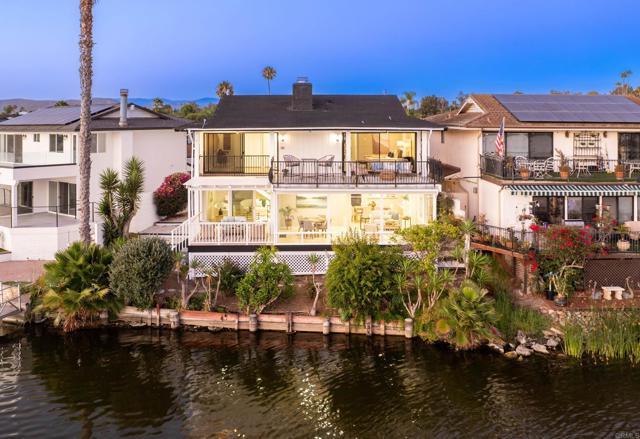
The housing mix covers detached single-family homes, patio homes, townhomes, and condominiums, from modest patio homes to waterfront properties well over a million dollars. Some have private docks, some sit along the golf courses, and most reach the lake through their HOA. What varies most is the association: more than twenty separate HOAs operate here, plus three 55+ neighborhoods — Hunter Valley, Sun Park, and Chateau Lake San Marcos. Two homes a block apart can carry very different dues and rules.
Browse the current Lake San Marcos listings below, or contact The Knight Group to talk through which enclave and HOA structure actually fits how you want to live on the water.
It is a planned, amenity-first community rather than a conventional subdivision. The homes were laid out deliberately around the lake and golf courses in the 1960s and 1970s, and that design still governs daily life. Most residents belong, through their HOA, to the shared recreational facilities that orbit the water.
Two things define the character. First, water is the organizing feature: the lake, the docks, the boat rentals, and the resort set the tone. Second, the community is a patchwork of associations rather than one master HOA. There are gated pockets, resident-owned senior enclaves, condo groups, and detached single-family neighborhoods, each with its own rules, dues, and personality. That patchwork is the single most important thing a buyer needs to understand before making an offer, because two homes a block apart can carry very different monthly costs and very different restrictions.
The population is small, on the order of 4,400 to 4,900 residents depending on the source and boundary used. That scale is part of the appeal for buyers who want a quiet, contained setting with recreation built in.
The community traces to 1962, when the Frazar brothers, Don, Bob, and Gordon, purchased 1,648 acres from the Clemson and Wells families. They reshaped the shoreline, drained the existing lake, and enlarged it to its current 80 acres. The initial map of homes was approved by the San Diego County Planning Commission in 1962, according to community history compiled by local sources.
The design earned recognition early. In 1966, the planning work by Campbell and Miller won a statewide competition honoring Lake San Marcos as the best planned community in California, and in 1967 the National Home Builders Association recognized it as the best planned lakeside community in the nation. Lake San Marcos was also the first development in San Diego County to place all utilities, including television lines, underground.
That heritage matters to a buyer for a practical reason. The bones of the community, its street layout, its lake orientation, its greenbelts, come from a deliberate mid-century plan. The trade-off is age: much of the original housing stock dates to the 1960s and 1970s, which shapes what you should expect on systems, roofs, and finishes.
The housing stock is genuinely diverse for a community this size. You will find detached single-family homes, detached patio homes, townhomes, and condominiums, many built during the original 1960s and 1970s development waves. Some are waterfront with private docks, some are golf-adjacent, and many sit in interior pockets with lake and club access through their HOA.
The community also splits between 55+ age-restricted neighborhoods and all-ages areas. That distinction is not cosmetic. If a neighborhood is deed-restricted to 55+, it limits who can live there full time and can affect resale pool and financing, so it needs to be confirmed in writing before you commit.
For buyers, the range means you can enter Lake San Marcos at very different price points and lifestyles: a compact two-bedroom patio home in a resident-owned senior enclave is a different purchase, and a different monthly obligation, than a waterfront single-family home with a boat slip. The lake ties them together, but the ownership math varies widely.
Lake San Marcos contains three age-restricted 55+ neighborhoods, each with a distinct structure. Understanding them is the fastest way to understand the community’s senior-living side.
Hunter Valley is a resident-owned retirement neighborhood of 81 detached homes, built around 1978 as a non-gated pocket inside the larger community. It is walkable and low-key, with the shared Lake San Marcos amenities reachable nearby. Because it is resident-owned, the ownership and fee structure differs from a standard condo or master-planned HOA, and that structure should be reviewed line by line.
Sun Park is another resident-owned 55+ enclave, made up of smaller detached single-family homes, typically two bedrooms with one or two baths and an attached one-car garage. It tends to be one of the more attainable entry points into the community for buyers who want a detached home rather than a condo.
Chateau Lake San Marcos is a resident-owned setup built around condominiums, with a monthly fee that can cover some meals and services. In practice it functions closer to independent senior living with support available, which makes it a different product from the other two and worth evaluating on its service package, not just its square footage.
Each of these neighborhoods carries its own dues, reserves, and rules. The Knight Group can pull the governing documents for any of them so you are comparing total cost of ownership, not just list price.
Pricing spans a wide band because the housing types do. At the entry end, compact patio and senior-enclave homes trade well below the waterfront tier. At the top end, lakefront property carries a clear premium. A 2026 Redfin snapshot of waterfront listings showed roughly five homes on the market at a median list price near $1.13 million, though a sample that small moves sharply from month to month and should be treated as directional, not fixed.
Aggregator data has put the broader community’s typical sold price modestly above the San Diego County median, but those figures carry no firm date and shift with each cycle, so treat any single number you see online as a starting point rather than a fact. The honest answer is that your budget maps to a neighborhood type: senior-enclave and interior homes at one level, golf-adjacent in the middle, and true waterfront with a dock at the top.
The more useful exercise than chasing an average is pricing a specific home against its HOA obligations and its condition, given the age of the stock. The Knight Group runs that comparison on the actual listings you are considering.
This is the part buyers underestimate. Lake San Marcos is not one HOA. It is more than twenty associations, and membership in the shared recreational facilities, the beach and tennis club and racquet club, is included in the HOA fees of most communities around the lake. That means your monthly dues are doing two jobs at once: running your own neighborhood and buying into the lake-wide amenities.
Dues vary by product type. One local brokerage analysis put condominium HOA fees in a range of roughly $250 to $700 per month, townhomes and small master associations around $200 to $600, and single-family homes in master plans anywhere from $300 to well over $1,000, with dock or slip charges sometimes billed separately from $50 to $300 or more. Treat those as ranges from a single source, not quotes: every enclave sets its own numbers, and the only reliable figures come from the specific association’s current budget.
Two risks deserve attention. First, special assessments: with housing and infrastructure dating to the 1960s and 1970s, reserve health matters, and a thin reserve can mean a future assessment ranging from a few hundred dollars to much more depending on the project. Second, what the dues actually cover, which can include water-quality monitoring, dock maintenance, and liability insurance for water activities in lake-adjacent associations. Before you write an offer, read the CC&Rs, the current budget, the reserve study, and the resale packet. The Knight Group orders and reviews those documents as a standard step, not an afterthought.
Recreation is the point of living here, and it is concentrated. The 80-acre lake supports boating and fishing, with a community park, boat landing, and resident fishing access. The community recreational complex, known as the Beach and Tennis Club, includes tennis courts, paddle tennis courts, swimming pools, and a lakefront area with boat docks and rentals.
Golf is the other anchor. The community has two courses. The St. Mark Golf Club is a semiprivate championship layout of roughly 6,400 yards, par 71, designed by Harry and David Rainville, and there is also a shorter par-58 executive course for a lighter round. Both sit within the community’s daily orbit.
The waterfront is anchored by the Lakehouse Hotel and Resort, which bills itself as San Diego’s only lakeside hotel. Its Sail Club manages boat rentals, fishing passes, and water equipment for guests and residents, and the property adds a marina, pools, and dining such as Brickman’s. For residents, that means resort-grade amenities are on the doorstep, which is unusual for a community this small. The trade-off is that some amenities are resort-operated, so access terms and any guest or usage rules are worth confirming for the specific home you buy.
Lake San Marcos is served by the San Marcos Unified School District, which runs about 19 schools and serves more than 19,000 students, making it the fifth largest district in San Diego County. The district covers San Marcos plus sections of Vista, Escondido, Carlsbad, and unincorporated county areas.
Because the community sits in an unincorporated pocket wrapped by the city, school assignment can depend on the exact address, and boundaries change over time. For families, the honest move is to confirm the assigned schools for a specific home directly with the district rather than assuming a whole community feeds one campus. The Knight Group can help you verify assignment before you fall for a house.
Location is a genuine strength if your life runs through North County. The community sits near State Route 78, the main east-west corridor across inland North County. A commute to Carlsbad, Vista, Oceanside, Escondido, or Rancho Bernardo generally runs about 15 to 25 minutes. The coast is roughly nine miles west.
Downtown San Diego is the weak point. That drive typically runs 40 to 75 minutes each way depending on traffic, with the standard path of the 78 to the 5 to the 163 getting heavy at rush hour. If your job anchors you downtown five days a week, weigh that honestly. If you work in North County or remotely, the location reads very differently.
Three trade-offs come up repeatedly, and naming them upfront saves money later.
Age of the housing stock. Much of the community dates to the 1960s and 1970s. That can mean original systems, older roofs, and deferred maintenance behind a clean cosmetic remodel. A thorough inspection and a realistic renovation budget matter more here than in newer inventory.
HOA structure and assessments. With more than twenty associations and aging shared infrastructure, reserve health and special-assessment risk vary enclave to enclave. A low list price paired with a thin reserve can cost you later. Read the reserve study, not just the dues figure.
Age restrictions and resale pool. The 55+ neighborhoods limit who can live there, which affects both your use and your future buyer pool. And as inland North County, wildfire preparedness and insurance availability are worth checking for any specific address, since insurers have tightened across California. These are not reasons to avoid Lake San Marcos. They are reasons to buy with your eyes open.
Because the community is a patchwork of associations rather than one governing body, shopping here is less about square footage and more about which enclave you are buying into. Start by narrowing what matters most: direct water access with a dock, a golf-course frontage, an age-restricted enclave, or an interior location where lake and club privileges arrive through the association. Each of those routes carries a different monthly obligation, and the difference is often larger than the difference in list price.
Once you have a short list, read the documents. Ask what the dues cover, whether lake and recreation access is included or billed separately, how reserves look given the age of the original construction, and what the rules say about rentals, pets, and boats. That review is where Lake San Marcos real estate decisions get made, and The Knight Group can request the governing documents for any association before you write an offer.
No. It is an unincorporated community within San Diego County, surrounded by the City of San Marcos. That affects some services and, in places, school assignment, so the exact address matters.
The lake and its core recreational facilities are tied to the community’s associations and resort, with access generally coming through HOA membership or the resort’s Sail Club rather than open public use. Confirm the access terms for the specific home you are considering.
No. Only three neighborhoods, Chateau Lake San Marcos, Hunter Valley, and Sun Park, are age-restricted 55+. The rest of the community is all-ages.
It depends on the association, but dues commonly cover common-area maintenance, master insurance for shared elements, and membership in the lake’s beach and tennis facilities, plus dock and water-quality items in lake-adjacent enclaves. Always verify against the current budget.
Boating is a central amenity, with docks, rentals, and slips available, though slip access and any separate dock fees vary by home and association. Waterfront homes with private docks are the premium tier.
A large share of the housing stock was built in the 1960s and 1970s during the original development. Expect to budget for updates and to inspect systems carefully.
The Pacific is about nine miles west. Downtown San Diego is a longer haul, generally 40 to 75 minutes by car depending on traffic. North County destinations are much closer, roughly 15 to 25 minutes.
San Marcos Unified School District serves the area. Because assignment can depend on the exact address in this unincorporated pocket, confirm the specific schools with the district before you buy.
The Knight Group treats Lake San Marcos as what it is: a set of distinct neighborhoods sharing one lake, not a single market. That means the work starts with matching you to the right enclave, all-ages or 55+, waterfront or interior, condo or detached, and then pricing the real cost of ownership, dues and reserves included, against the actual condition of a home built decades ago.
On any home you are serious about, we order and read the governing documents: CC&Rs, current budget, reserve study, and resale packet, so you understand assessment risk and amenity access before you are committed. We verify school assignment where it matters, flag insurance and inspection considerations honestly, and negotiate with the specific dynamics of each association in mind.
If you are weighing Lake San Marcos, browse the listings below and then reach out. The Knight Group will tell you which neighborhoods fit your budget and how you actually want to live on the water, and which ones to skip.
Lucky for you we’re looking out.
Subscribe to this Custom Search to be alerted when new properties hit the market in the area.
Choose the frequency that works for you.