Ramona San Diego County Homes for Sale
Ramona San Diego County Homes for Sale currently number 82 active listings with a median asking price of $792,000 (CRMLS, September 2026).
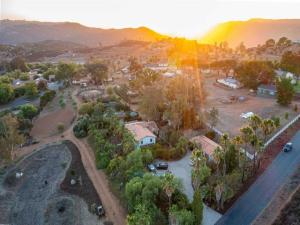
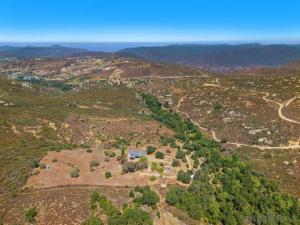
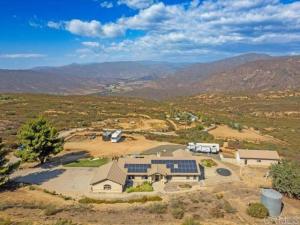
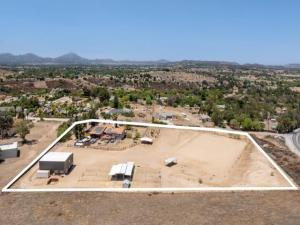
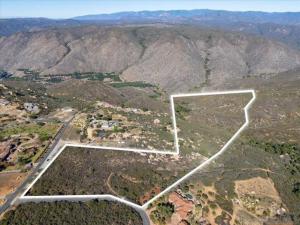
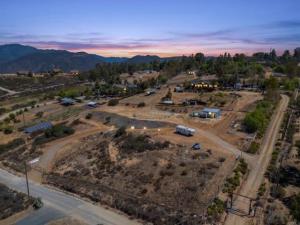
Most buyers looking at Ramona San Diego County homes for sale are really buying land. This unincorporated community sits in the Santa Maria Valley at about 1,430 feet, with roughly 21,468 residents across a 38.5-square-mile census area. Parcels are measured in acres, horse property is normal, and the Ramona Valley AVA covers about 89,000 acres of working wine country. The trade is access: SR 67 and SR 78 are the only two ways out, and both are two-lane for long stretches.
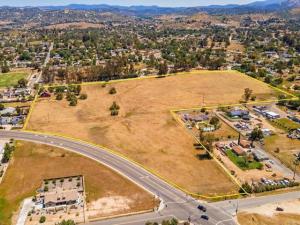
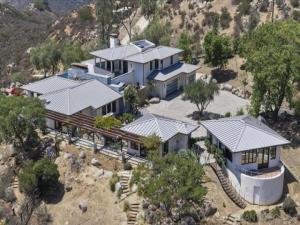
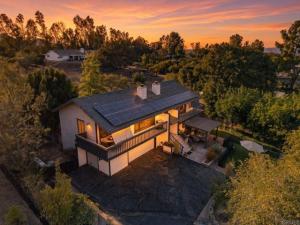
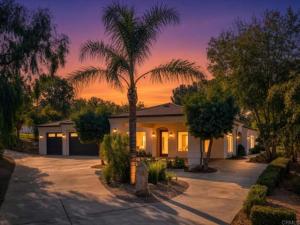
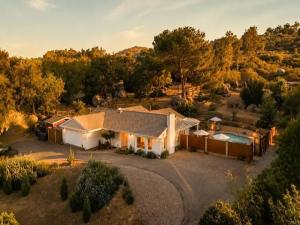
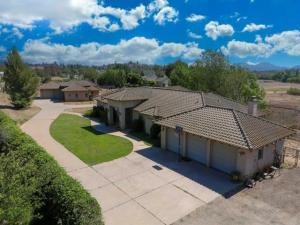
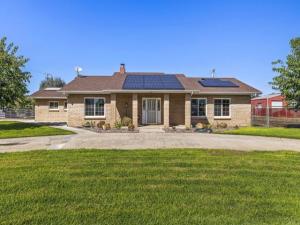
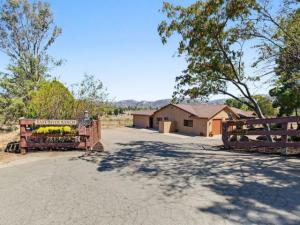
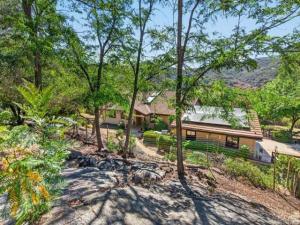
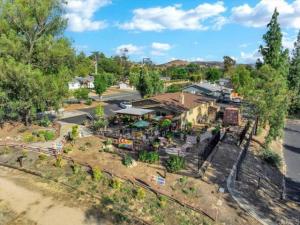
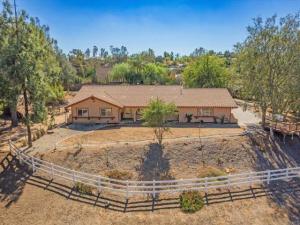
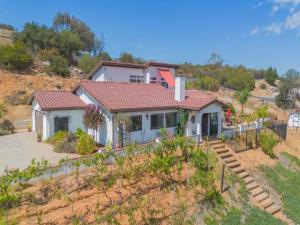
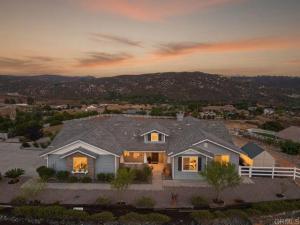
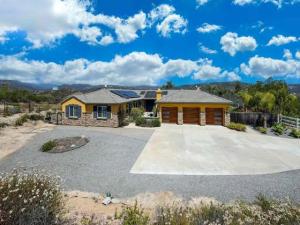
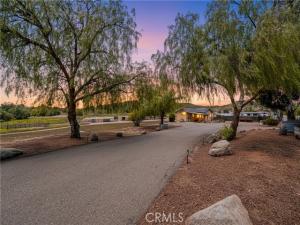
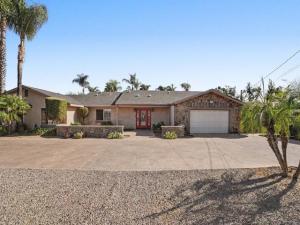
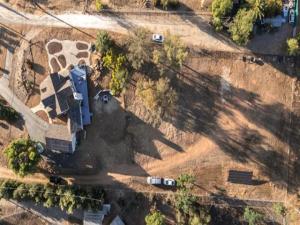
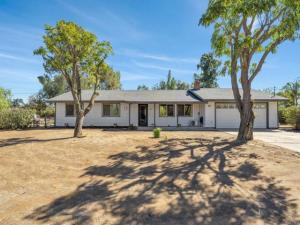
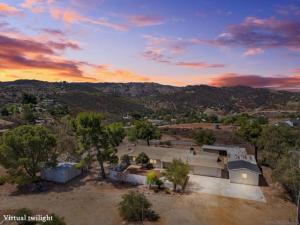
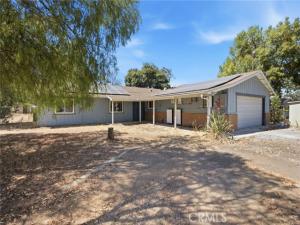
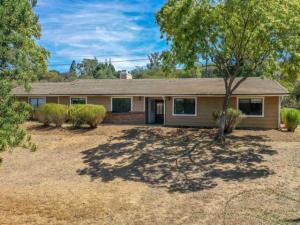
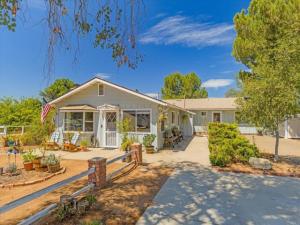
The stock is single-family homes on acreage, and the acreage often carries more value than the structure. You will see older ranch homes on valley floor parcels, custom hillside builds, planned-community homes in San Diego Country Estates, small-lot homes near Main Street, and working properties with barns or planted vines. Condition, permit history, and road access vary widely — verify all three before writing.
That trade should be made with open eyes. Ramona has burned twice within living memory, and insurance underwriting reflects it. Browse current listings across the Ramona area below. If you want the parcel-level read on a specific address, including fire zone, water service, and access, contact The Knight Group and we will pull it before you write an offer.
Where exactly is Ramona, and what is the commute like?
Ramona sits inland and uphill from the coastal metro. Two state highways define access. State Route 67 runs southwest toward Poway, Lakeside, and the Interstate 8 corridor. State Route 78 runs west toward Escondido and Interstate 15, and east toward Santa Ysabel and Julian. Nearly every trip out of Ramona uses one of those two roads, and both are two-lane for meaningful stretches.
Plan accordingly. There is no freeway inside the community and no rail. Peak-direction traffic on SR 67 toward Poway and SR 78 toward Escondido is the most common surprise for buyers relocating from the coast. If someone in the household commutes daily to downtown San Diego, Sorrento Valley, or Carlsbad, drive the actual route at the actual hour before committing. If the household works remotely, is retired, or works locally, the geography stops being a constraint and becomes the point.
Ramona Airport, owned by the County of San Diego, sits about two miles west of town at 1,395 feet with a single 5,001 by 150 foot asphalt runway. In 2020 it recorded 144,979 aircraft operations, all general aviation, with 135 based aircraft. For pilots, a county-run field inside the community is a differentiator coastal San Diego cannot match.
What kind of housing does Ramona actually have?
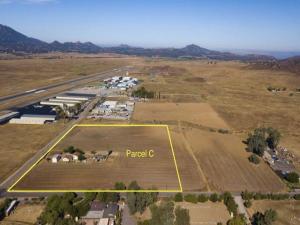
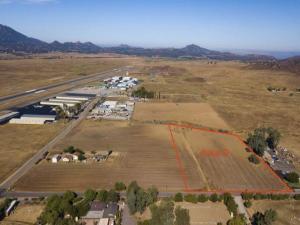
Ramona is a land market first and a house market second. The dominant product is a single-family home on acreage, and the acreage frequently drives more value than the structure does. The stock splits into recognizable groups: older ranch homes on flat valley parcels, custom builds on hillside lots with view corridors, planned-community homes inside San Diego Country Estates, small-lot homes near Main Street, and working properties with barns, arenas, groves, or planted vines.
Condition varies more than in a tract market. Because so much of the inventory was custom-built or owner-modified over decades, permit history matters. Ask whether the second unit, the barn conversion, or the detached shop was permitted through San Diego County. Unpermitted square footage is common here and it affects appraisal, lending, and resale.
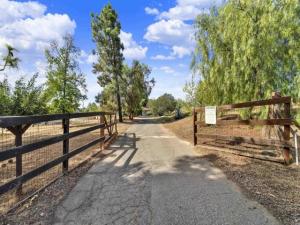
Also confirm access. Some Ramona properties are served by county-maintained public roads. Others sit on private roads with shared maintenance agreements, or on easements across a neighbor’s parcel. That distinction changes cost of ownership and, in some cases, lender appetite. It is a title and survey question, and it belongs in escrow rather than after.
Which communities make up the Ramona area?
Ramona is not one uniform neighborhood. It is a valley floor with a village core, surrounded by distinct pockets that each carry their own character, road network, and price behavior. Two areas are covered in depth on this site: the largest planned community in the area, and a canyon-oriented rural enclave outside the village.
San Diego Country Estates is the anchor. It is a separate census-designated place with 10,395 residents as of the 2020 census, occupying about 16.8 square miles in the San Vicente Valley at roughly 1,516 feet, functioning as a master-planned community with its own association-run amenities. Buyers who want acreage without giving up a golf course, a pool, a restaurant, and staffed equestrian facilities usually end up here first. You can review the housing stock, amenity structure, and what association membership means for ownership on the San Diego Country Estates real estate page.
Black Canyon Estates is the opposite profile. It sits off the Black Canyon Road corridor outside the village, in terrain that is genuinely canyon rather than valley floor. Topography, grade, drainage, and access become primary underwriting questions rather than footnotes, and the buyer pool skews toward people who want seclusion and land character over shared amenities. There is no golf course attached to this decision. There is privacy, terrain, and riding access. The detail on lot character, road access, and what to verify before writing an offer is on the Black Canyon Estates real estate page.
Between those two poles sits everything else: parcels along the SR 78 corridor, homes near Main Street with village walkability, and vineyard and grove properties across the valley. When two addresses look similar on paper, the difference usually comes down to which microzone each belongs to.
What does San Diego Country Estates ownership actually include?
Country Estates was developed after Raymond A. Watt purchased 3,250 acres in the San Vicente Valley in 1970 to build a new community. The result is unusual for the backcountry: rural parcels paired with a full association amenity program. The San Diego Country Estates Association, at 24157 San Vicente Road, operates the San Vicente Golf Course, the San Vicente Hotel, dining, two equestrian centers, pools and parks, event venues, RV storage, and a trail network for hiking, biking, and riding.
That amenity list is why the community holds a premium over comparable acreage elsewhere in Ramona, and why ownership carries an association assessment. Do not assume the assessment amount from a listing remark. Request the current assessment schedule, reserve study, governing documents, and any pending special assessment disclosure from the association during your contingency period. In a community carrying a golf course, a hotel, and equestrian infrastructure, the reserve position is a real financial variable.
How does the Ramona Valley wine region affect property here?
The Ramona Valley AVA was established on December 7, 2005 and covers approximately 89,000 acres in a rectangle roughly 14.5 by 9.5 miles, about 28 miles northeast of San Diego. Elevations run from around 650 feet at the southwest corner to over 3,000 feet in the eastern foothills. The appellation reports more than 80 commercial vineyards and roughly 36 bonded wineries, and it sits entirely within the larger South Coast AVA.
Growing conditions are the reason: a long season, limited coastal fog, and low annual rainfall. Plantings reflect that warm-climate profile, including Cabernet Sauvignon, Syrah, Petite Sirah, Grenache, Tempranillo, Sangiovese, Zinfandel, Viognier, Chardonnay, and Merlot.
For a buyer, this matters in three ways. Planted acreage is a real asset class here, and a property with established vines and a water plan prices differently from raw land. Tasting-room traffic gives the community a weekend economy it would not otherwise have. And agricultural use interacts with property tax treatment and county land use rules, including Williamson Act contracts on some parcels. If you are buying with any intent to farm, get the parcel’s zoning, agricultural preserve status, and water situation reviewed before you commit.
What should buyers know about wildfire risk in Ramona?
This is the most important section on the page. Ramona sits in a high fire environment and the record is specific, not theoretical.
The Cedar Fire ignited on October 25, 2003 in Cleveland National Forest near Ramona and burned 273,246 acres before containment, destroying 2,820 buildings including 2,232 homes and killing 15 people. It spread at rates reported up to 6,000 acres per hour under Santa Ana winds. Four years later, the Witch Fire started in Witch Creek Canyon near Santa Ysabel on October 21, 2007 after Santa Ana winds brought down a power line, burned 197,990 acres, destroyed 1,265 residences, and contributed to countywide evacuations affecting roughly 500,000 people. It reached Ramona early in its run before continuing west toward Rancho Bernardo, Poway, and Escondido.
Response infrastructure is also located here. CAL FIRE and the United States Forest Service jointly operate an air attack base at Ramona Airport, established in 1957 and CAL FIRE’s oldest, stationing air tankers including S-2 Trackers and a C-130H. That is useful context. It is not a substitute for parcel-level diligence.
Practical steps before you buy: check the CAL FIRE Fire Hazard Severity Zone designation for the specific parcel, not the general area. Get an insurance quote in writing before your contingency period expires, because availability and pricing vary by address and by carrier appetite. Ask whether the California FAIR Plan would be required and what a wraparound policy costs alongside it. Inspect defensible space, roof class, vent screening, and ember-resistant construction. Confirm road width and turnaround geometry for emergency apparatus, and whether there is a second way out. On a canyon parcel especially, egress is not a detail.
What about water, septic, and utilities?
Utility service in Ramona is not uniform, and the difference between two parcels can be significant. Some properties are on district water and sewer. Others rely on a private well or a shared well agreement, and on septic rather than sewer. Never assume from the listing. Ask for the specific service on the specific parcel, in writing.
On a well, get a yield test, a water quality test, and the well log, and ask whether the well is shared with neighboring parcels under a recorded agreement. If it is shared, read the agreement. On septic, request the inspection, pumping history, leach field location, and county records. Septic capacity also constrains what you can add later, so if your plan involves an accessory dwelling unit or added bedrooms, verify capacity before you budget the project.
Also ask about propane versus natural gas, internet service at the address, and public safety power shutoff history. Backcountry parcels in San Diego County have seen planned de-energization during extreme fire weather, and many owners treat a generator or battery backup as standard equipment.
What are the schools in Ramona?
Public education is provided by the Ramona Unified School District, which serves the town and surrounding areas including San Diego Country Estates. The district runs elementary, middle, and high school programming under a single unified structure, so families are within one district regardless of which pocket of Ramona they buy into.
Two things to verify rather than assume. Attendance boundaries are specific to an address, so confirm the assigned campus with the district directly for any property you are serious about. And school bus routing in a rural district covers real distance, with pickup times earlier than coastal families expect. Ask about the route that serves the parcel.
What is there to do around Ramona?
The lifestyle case here is outdoor and agricultural rather than urban. Riding is central: the trail network in and around San Diego Country Estates supports horses in a way almost no other part of San Diego County still does. Hiking is immediately accessible, with Woodson Mountain at 2,901 feet drawing steady traffic to the summit-area formation known as Potato Chip Rock, reachable by a steep 3.75-mile round trip from the SR 67 side or 6.6 miles round trip from Lake Poway. The Kumeyaay name for the mountain is Ewiiy Hellyaa.
Wine tasting is a weekend fixture given the density of bonded wineries in the appellation. Ramona Airport hosts the Classic Rotors rotorcraft museum and an annual Air Fair and Fly-In each October. Julian and the Cuyamaca and Laguna mountains are a drive east on SR 78 for apple country and elevation, with Anza-Borrego further along the same axis.
What Ramona does not offer is coastal-metro density of restaurants, retail, and nightlife. Main Street covers daily needs and local dining. Anything beyond that is a drive to Poway, Escondido, or the coast.
Who buys in Ramona, and what do they give up?
Four buyer profiles dominate: equestrian owners who need arena space and trail access, remote workers and retirees trading commute tolerance for land, agricultural buyers looking at vineyard or grove parcels, and extended-family buyers who need outbuildings or a shop a coastal lot cannot accommodate.
All four give up the same list. Commute time to coastal employment. Immediate access to major medical and retail infrastructure. Some liquidity, because the buyer pool is narrower. And a higher, more variable insurance cost driven by fire exposure. Those are the terms of the deal, and a buyer who prices them in makes a better decision than one who discovers them at renewal.
How do you value a Ramona property with acreage?
Comparable sales analysis works differently here. On a tract street, three recent sales settle the question. On acreage, the variables that move value are usable land versus slope, water service and well yield, permitted versus unpermitted structures, road access, view corridor, fire hazard designation and insurability, and irrigated agricultural improvement. Two five-acre parcels a mile apart can be far apart in value for reasons a square-footage comparison never shows.
Financing follows the same logic. Lenders treat large-acreage residential differently, outbuilding value often gets limited credit, and unpermitted square footage may be excluded from the appraised improvement entirely. If marketed square footage includes converted space, ask early whether the lender and appraiser will count it.
What to Weigh Before You Commit to Ramona
The decision here comes down to how much land you want versus how much friction you will accept getting to it. Buyers who move out from the coast tend to underestimate two things: the daily driving, and the cost of insuring a property in an area that has burned twice in recent memory. Get an insurance quote on the specific parcel early, not after inspections. Carriers price fire exposure address by address, and a quote that surprises you in week three of escrow can undo an otherwise sound purchase.
Beyond that, Ramona real estate rewards buyers who ask parcel-level questions instead of comparing square footage. Whether the road is county-maintained or private, whether the well or water service is documented, whether the shop and second unit were permitted through San Diego County — these determine what ownership actually costs. Two listings at the same size can carry very different risk. The Knight Group can pull those details on any address before you write.
Frequently Asked Questions About ramona Homes for Sale
Is Ramona part of the City of San Diego?
No. Ramona is unincorporated San Diego County. It has no city council, and land use, permitting, and code enforcement run through the County of San Diego rather than a municipal government. City-specific measures that apply inside the City of San Diego do not apply here, but county ordinances and community plan policies do.
How large is Ramona?
The census-designated place covers about 38.5 square miles and recorded 21,468 residents in the 2020 census, up from 20,292 in 2010. San Diego Country Estates is counted separately at 10,395 residents in 2020 across about 16.8 square miles.
Can I keep horses on a Ramona property?
In much of the area, yes, and equestrian use is a defining feature of the market. Animal keeping is governed by county zoning and any applicable association rules, and limits vary by parcel size and designation. Verify the zoning and any recorded restrictions before assuming a given number of animals or a commercial boarding use is permitted.
Does San Diego Country Estates have a homeowners association?
Yes. The San Diego Country Estates Association operates the community’s amenities, including the San Vicente Golf Course, the San Vicente Hotel, two equestrian centers, pools, parks, trails, event venues, and RV storage. Ownership carries an assessment. Request the current amount, governing documents, reserve study, and any special assessment disclosure from the association during escrow rather than relying on listing remarks.
How bad is the fire risk, honestly?
It is real and documented. The 2003 Cedar Fire burned 273,246 acres and destroyed 2,232 homes countywide, and the 2007 Witch Fire burned 197,990 acres and destroyed 1,265 residences after starting near Santa Ysabel and moving through the Ramona area. The correct response is diligence, not avoidance: check the parcel’s Fire Hazard Severity Zone, secure a written insurance quote before your contingency deadline, evaluate defensible space and construction hardening, and confirm road egress.
Is there wine country in Ramona?
Yes. The Ramona Valley AVA was established in December 2005, covers approximately 89,000 acres, and reports more than 80 commercial vineyards and roughly 36 bonded wineries. It sits within the larger South Coast AVA, and warm-climate varieties including Cabernet Sauvignon, Syrah, Grenache, Tempranillo, and Zinfandel are planted here.
What is the commute to downtown San Diego?
There is no freeway access from Ramona itself. Travel runs via State Route 67 toward Poway and Interstate 8, or State Route 78 toward Escondido and Interstate 15, both partly two-lane. Drive your actual route at your actual commute hour before you commit to an address.
Do Ramona properties sell quickly?
Acreage markets generally carry longer marketing times than coastal tract markets because the buyer pool is narrower and each property is more specific. That cuts both ways: sellers need pricing discipline, and buyers often get more negotiating room than they would on the coast.
How does The Knight Group work in the Ramona market?
We treat Ramona as a land market, because that is what it is. Before you write an offer, we pull the parcel-level facts that decide whether a property is a good buy: zoning and community plan designation, Fire Hazard Severity Zone, water and sewer service or well and septic status, road access and maintenance obligation, permit history on every structure, and any association assessment or recorded agreement attached to title. Then we price the property against comparable land, not a square-foot average that ignores the acreage.
On the sell side the work is the reverse. Acreage properties are routinely marketed as if they were suburban houses, which buries the value carried by the land, the improvements, the water, and the use rights. We position those explicitly and target the buyer profile that pays for them.
Browse the current Ramona listings below, or review the two areas in detail at San Diego Country Estates and Black Canyon Estates. When you have an address in mind, contact The Knight Group and we will run the diligence first.
What are Ramona San Diego County Homes actually like to buy?
- Ramona San Diego County Homes sit in an unincorporated community in the Santa Maria Valley, where buyers are really purchasing land rather than structure.
- Parcels here are measured in acres, horse property is normal, and the Ramona Valley AVA covers working wine country across the area.
- Single-family homes on acreage dominate the stock, and the acreage often carries more value than the structure it holds.
- Older ranch homes occupy valley floor parcels, while custom hillside builds take the view corridors above the valley.
- Planned-community homes inside San Diego Country Estates form one recognizable group within the broader Ramona inventory.
- Small-lot homes near Main Street offer a village-core alternative to the acreage properties spread across the valley.
- Working properties with barns, arenas, groves, or planted vines round out the recognizable groups of local inventory.
- Condition, permit history, and road access vary widely across Ramona San Diego County Homes, and all three deserve verification before writing an offer.
- Fire history is real, Ramona has burned twice within living memory, and insurance underwriting reflects that exposure directly.
- No freeway exists inside the community and no rail serves it, so nearly every trip uses one of two highways.
- Peak-direction traffic toward Poway and Escondido is the most common surprise for buyers relocating from the coast.
- Remote workers, retirees, and locally employed households find the geography stops being a constraint and becomes the point.
- Ramona Airport, owned by the County of San Diego, sits west of town and gives pilots a county-run field coastal San Diego cannot match.
What should buyers check before purchasing Ramona San Diego County Homes?
- Utility service across Ramona San Diego County Homes is not uniform, and the difference between two neighboring parcels can be significant.
- Some properties connect to district water and sewer, while others rely on a private well and septic system instead.
- Well diligence should include a yield test, a water quality test, and the well log for the specific parcel.
- Shared well agreements are recorded documents that deserve a careful reading rather than an assumption from listing remarks.
- Septic diligence covers the inspection, pumping history, leach field location, and county records tied to the parcel.
- Septic capacity constrains later additions, so accessory dwelling unit plans or added bedrooms require verified capacity before budgeting.
- Propane versus natural gas, internet service at the address, and power shutoff history all belong on the question list.
- Backcountry parcels have seen planned de-energization during extreme fire weather, and many owners treat generators or battery backup as standard.
- Ramona Unified School District serves the town and surrounding areas including San Diego Country Estates under a single unified structure.
- Attendance boundaries are address-specific, so the assigned campus deserves confirmation directly from the district for any serious property.
- School bus routing covers real distance in a rural district, with pickup times earlier than coastal families expect.
- Riding is central to the lifestyle, and the trail network around San Diego Country Estates supports horses like almost nowhere else in the county.
- Woodson Mountain draws steady hiking traffic to the summit-area formation known as Potato Chip Rock, called Ewiiy Hellyaa in Kumeyaay.
- Wine tasting is a weekend fixture given the density of bonded wineries in the appellation surrounding Ramona San Diego County Homes.
- Equestrian owners, remote workers, retirees, agricultural buyers, and extended-family buyers form the buyer profiles that dominate Ramona San Diego County Homes.
- Buyers trade commute time, immediate medical and retail access, some liquidity, and higher insurance cost for what the land delivers.
What questions do buyers ask about Ramona San Diego County Homes?
- Ramona is a census-designated place, and San Diego Country Estates is counted separately as its own community within the area.
- Horse keeping is permitted in much of the area, and equestrian use is a defining feature of Ramona San Diego County Homes.
- Animal keeping is governed by county zoning and any applicable association rules, with limits varying by parcel size and designation.
- Zoning and recorded restrictions deserve verification before assuming a given number of animals or a commercial boarding use is permitted.
- San Diego Country Estates Association operates community amenities including the San Vicente Golf Course and the San Vicente Hotel.
- Equestrian centers, pools, parks, trails, event venues, and RV storage fall under the association’s amenity umbrella.
- Association ownership carries an assessment, and the current amount belongs in escrow paperwork rather than in listing remarks.
- Governing documents, the reserve study, and any special assessment disclosure should come directly from the association during escrow.
- Fire risk is real and documented, with the Cedar Fire and the Witch Fire both burning through the region within living memory.
- Diligence rather than avoidance is the correct response, starting with the parcel’s Fire Hazard Severity Zone designation.
- Written insurance quotes should be secured before the contingency deadline on any of the Ramona San Diego County Homes under contract.
- Defensible space, construction hardening, and confirmed road egress round out the fire diligence checklist for any parcel.
- Ramona Valley AVA sits within the larger South Coast AVA and supports commercial vineyards and bonded wineries across the appellation.
- Warm-climate varieties planted here include Cabernet Sauvignon, Syrah, Grenache, Tempranillo, and Zinfandel.
- Acreage markets carry longer marketing times than coastal tract markets because the buyer pool is narrower and each property more specific.
- Sellers need pricing discipline while buyers often find more negotiating room among Ramona San Diego County Homes than on the coast.