Byron is one of the most rural communities in Contra Costa County, an unincorporated settlement in the eastern Delta foothills that retains an agricultural and small-town character largely unchanged from the mid-20th century. Home to the Byron Airport, large agricultural parcels, Delta access, and a small residential population, Byron attracts a specific type of buyer: one who prioritizes rural character, land, and outdoor lifestyle over suburban amenity, transit access, and school quality comparisons. For that buyer, Byron offers property types and acreage that are not available at any price point in the inner Bay Area. This guide covers Byron’s real estate market, community character, and what buyers need to understand before purchasing here.
Byron’s real estate market is small, slow-moving by Bay Area standards, and specialized in rural and agricultural property types. Inventory is limited at any given time, transaction volume is low, and price discovery is challenging because comparable sales are infrequent. Buyers who are accustomed to urban or suburban Bay Area markets will find Byron’s market dynamics fundamentally different, and should adjust their expectations for due diligence timelines, inspection resources, and comps availability accordingly.
Property values in Byron reflect the rural character and distance from employment centers rather than the proximity-to-amenity pricing that drives most Bay Area market segments. Prices for standard residential properties are among the most accessible in Contra Costa County on an absolute basis, while large agricultural parcels can reach substantial prices based on land area, water rights, agricultural improvements, and income potential rather than residential comparables.
Agricultural land in the Byron area is subject to Williamson Act contracts in some cases, which restrict non-agricultural development in exchange for reduced property tax assessments. Buyers considering agricultural parcels should verify Williamson Act status and understand the implications for any planned non-agricultural uses or development projects before committing.
Byron’s town center is minimal: a post office, a school, a few service businesses, and the legacy of an agricultural crossroads community. The Byron Airport is the community’s most distinctive institution, a general aviation airport that provides hangar facilities, flight training, skydiving operations, and aircraft services for the east Contra Costa aviation community. The airport is a significant draw for buyers who are private pilots or who work in aviation-related fields.
The Delta access from Byron is direct, with boat launches and Delta waterway connections accessible from the community’s eastern edge. Unlike Discovery Bay and Bethel Island, Byron’s waterfront character is less developed for residential use and more focused on agricultural and recreational access. Buyers who want Delta access in a more rural and less residential-amenity context may prefer Byron’s character to the more developed Delta communities.
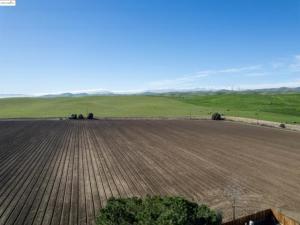
The surrounding landscape is primarily rolling agricultural land in transition between the Sacramento-San Joaquin Delta and the Diablo foothills. Vineyards, row crops, orchards, and cattle ranches characterize the agricultural character of the area. Buyers who want to participate in agricultural operations, whether hobby farming, equestrian use, or small-scale commercial agriculture, find that Byron’s zoning and land character supports these uses.
Byron Union School District is a small district serving the elementary grades with a single-school campus in the community. Secondary students attend schools in the Liberty Union High School District, typically Freedom High or Heritage High in Brentwood. The small size of the elementary district means an intimate school experience with high parent involvement and low administrative complexity. Families who value this type of small-school community often cite it as a positive aspect of Byron living.
Byron is among the most car-dependent communities in the Bay Area. There is no BART service, no regular transit, and highway access requires driving to Highway 4 via Brentwood or Byron Highway to Vasco Road toward Livermore and I-580. Bay Area employment center commute times from Byron average 60 to 90 minutes or more. This community is practical for buyers who work remotely, work locally in agriculture or aviation, or have a specific tolerance for long commutes in exchange for rural living and land ownership.
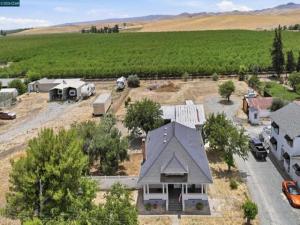
Byron’s property types span from modest single-family homes in the town area on standard residential lots to large agricultural parcels of 10 to 100-plus acres. Well and septic systems are standard; municipal water and sewer are not available at most rural addresses. Agricultural infrastructure including irrigation systems, storage facilities, barns, and equipment buildings is common on larger parcels. Due diligence for rural properties requires well log review, water quality testing, septic system inspection, easement analysis, agricultural zoning verification, and assessment of any Williamson Act or other land use restrictions.
The Knight Group serves Byron buyers with the rural property due diligence framework that transactions here require. Agricultural parcels, airfield-adjacent properties, and Delta-access rural land each have specific assessment factors beyond standard residential inspection. TKG coordinates the appropriate specialists and ensures clients have complete information before committing to a Byron property. Connect with TKG to discuss Byron real estate.
No properties found. |
Connect with TKG about Byron real estate.
Byron's investment landscape is dominated by agricultural land transactions, which follow different market dynamics than residential real estate. Agricultural land value in the Byron area is influenced by water rights, soil quality, crop history, equipment infrastructure, and agricultural income potential. These factors require specialized agricultural appraisal expertise that differs substantially from standard residential appraisal methodology. Buyers acquiring Byron agricultural land should engage an agricultural appraiser with Williamson Act and California agricultural law expertise rather than relying on residential comparable methodology.
The Byron Airport attracts a small but consistent demand segment from pilots and aviation enthusiasts who want to live within practical distance of their aircraft. Hangar homes and residential properties within the airport access corridor are a niche category that occasionally trades at premiums reflecting the aviation convenience value. This market is too small and infrequent for reliable statistical analysis but is a real demand segment that TKG has represented in prior transactions.
What is the Williamson Act and how does it affect Byron agricultural land?
The California Land Conservation Act of 1965 (commonly called the Williamson Act) allows landowners to voluntarily enter into enforceable contracts with counties restricting their land to agricultural and compatible open space uses for a minimum of 10 years in exchange for reduced property tax assessments based on agricultural use value rather than market value. Byron area agricultural properties in Williamson Act contracts have significantly lower property taxes but cannot be developed for non-agricultural uses during the contract term without a formal cancellation process. Buyers of Byron agricultural land should verify Williamson Act status and understand the contract expiration or cancellation requirements before committing to any development or subdivision plans.
Are there water supply issues in rural Byron?
Rural Byron properties typically rely on private wells for water supply. Well depth, water yield, and water quality vary significantly across the Byron area and should be specifically investigated for any rural property through a licensed well inspector and water quality testing as part of due diligence. The specific aquifer conditions in the area, combined with any neighboring agricultural water use that might affect private well performance, are relevant factors that TKG coordinates assessment for in Byron rural transactions.
What is Byron like as a full-time rural residence?
Byron offers a genuinely rural lifestyle that requires self-reliance and comfort with car dependence, the absence of walkable commercial services, and the extended emergency response times that come with any remote location. For buyers who have lived in rural areas and are seeking this character in a Bay Area-accessible location, Byron is a genuine option. For buyers who are romanticizing rural living without direct experience of its practical demands, TKG strongly encourages a test period of living or staying in a rural setting before committing to a Byron purchase.
The rise of remote and hybrid work has expanded Byron's appeal as a full-time residential option for Bay Area professionals who previously required proximity to a Bay Area office. For households where one or both earners work primarily from home, Byron's combination of agricultural character, space, privacy, and significantly lower housing costs relative to the inner Bay Area represents a genuinely compelling alternative that was not practical for most buyers before the remote work transition. The trade-off of rural service distance and car dependence becomes manageable when the daily commute to an office is replaced by a walk to a home office.
Buyers who are considering Byron specifically on the basis of remote work flexibility should have an honest conversation about the permanence of their remote work arrangement before making a purchase. Employment situations change, and a property in Byron that works when remote is not the right property if the commute to a Bay Area office becomes a regular requirement. TKG advises clients to plan for a range of employment scenarios rather than optimizing solely for current work arrangements when making a purchase this far from the Bay Area core.
Byron Airport (KBYS) is a general aviation reliever airport that serves the east Contra Costa County area. The airport has paved runways, a fixed-base operator providing fuel, maintenance, and hangar services, and is the home base for a local skydiving operation and flight training activity. Private pilots who are based at or frequently use the Byron airport represent a small but consistent demand segment for residential properties in Byron, and some properties within driving distance of the airport carry a modest aviation-access premium for this specific buyer demographic.
The Byron area is within the agricultural core of the Sacramento-San Joaquin Delta fringe, where row crops, hay production, and some specialty agriculture have operated continuously since the late 19th century. Contra Costa County's agricultural preservation policies, including the Williamson Act contracting program and the county's East County Area Plan agricultural designation framework, are designed to keep this land in productive agricultural use. Buyers of agricultural parcels in the Byron area are purchasing land within a policy environment that actively encourages agricultural use and creates hurdles for non-agricultural conversion. Understanding and accepting this policy framework is a prerequisite to responsible acquisition of Byron agricultural land.
Byron's small permanent population creates an intimate community social environment where a significant portion of residents know each other by name. Community events centered on the Byron Airport, the Byron Elementary School, and the small commercial area anchor the social calendar for permanent residents. The Byron Airport's open house events draw aviation enthusiasts from across the region and provide a specific community gathering that reflects the town's aviation identity. The annual skydiving events at the airport attract visitors from outside the area and create a brief period of commercial activity that is otherwise absent from the town's quiet year-round rhythm.
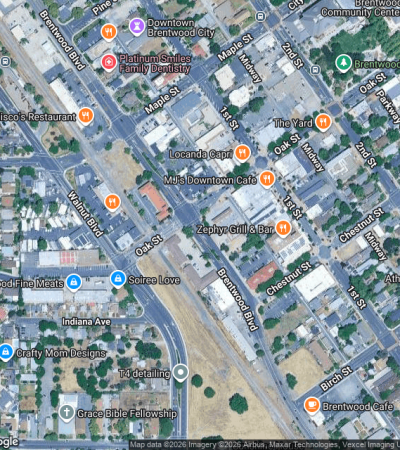
The Brentwood-based commercial and social infrastructure is the practical reference point for Byron residents who need services, dining, or social activities beyond what the village itself provides. The 10-to-15-minute drive to Brentwood accesses the u-pick farms, the downtown restaurant and retail scene, and the broader commercial amenity that Byron lacks. For permanent Byron residents, Brentwood functions as the nearby town center that provides services and social options on a regular basis, and the relationship between Byron's rural residential character and Brentwood's more complete community infrastructure is part of the dual-community lifestyle that eastern county rural living typically involves.
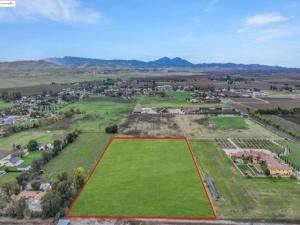
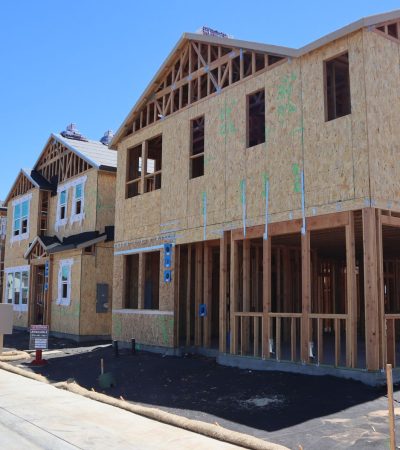
Properties in Byron span a wider range of types than most Bay Area communities at comparable price ranges. The available inventory includes standard residential lots in subdivisions platted during the eastern county growth period of the 2000s, agricultural parcels ranging from a few acres to working farms of 20 or more acres, and rural residential properties on parcels of one to five acres with older ranch-style construction. Each of these property types carries different ownership requirements, different financing considerations (agricultural land may require farm credit financing rather than conventional residential mortgages), and different maintenance obligations.
Buyers who are seeking rural residential in Byron should understand that the agricultural zoning that surrounds much of the residential development affects noise, odor, and activity patterns in ways that are normal in agricultural communities and that may be unfamiliar to buyers from urban or suburban backgrounds. Seasonal farming activity, including tractors, harvest equipment, and agricultural chemical application, is part of the rural environment and is not a nuisance to be avoided but rather a feature of the agricultural community that Byron is. For buyers who are intentionally seeking a rural lifestyle, these features are expected and welcome. For buyers who are seeking rural appearance with urban quiet, Byron may not deliver the experience they are imagining.
The Byron-Brentwood-Knightsen Union Elementary School District serves Byron students through 8th grade, and the small enrollment of the district produces a school environment with very small class sizes and a high degree of individual teacher-student relationship that is rare in larger districts. The intimacy of a small rural school is a positive feature for some families and a concern for others, and understanding what small-district schooling actually involves is important for school-motivated Byron buyers.
Byron occupies a specific and limited position in the eastern Contra Costa County real estate market: it serves buyers who specifically want either agricultural land, rural residential parcels, or airpark access, and it does not compete effectively with Brentwood, Oakley, or Discovery Bay for buyers whose primary motivation is maximizing residential amenity per dollar. The buyer who chooses Byron over Brentwood is making a deliberate choice to accept less community infrastructure and more rural character in exchange for agricultural land access, larger parcels, or a specific connection to the aviation community centered on the Byron Airport.
The long commute reality of Byron is a material factor in the community's residential demand. Buyers who accept Byron as a place to live are accepting commute times to Bay Area employment centers that range from 60 to 90 minutes or more in normal traffic conditions, with Interstate 580 congestion on the Altamont Pass segment adding unpredictability to drive times. This commute profile aligns Byron's buyer pool with households that have one non-commuting adult, retirees, remote workers who commute occasionally rather than daily, or buyers who work locally in the eastern county agricultural and industrial economy. For commuter households with daily Bay Area employment needs, Byron's commute reality is a deterrent that is not overcome by any combination of price and rural amenity that the community can offer.
The rural lifestyle that Byron provides is authentic in a way that planned rural-looking suburban communities are not. The presence of working farms, the agricultural neighbors, the open sky, and the connection to the natural cycles of the agricultural year create a community character that requires genuine rural land to produce and cannot be replicated in a community that merely has larger lots. For buyers who grew up in agricultural communities or who have a specific affinity for rural California life, Byron is the most accessible and affordable expression of that lifestyle available within a manageable distance of Bay Area services and infrastructure.
Browse all Contra Costa County real estate.
The Knight Group is here to help you with all your realty needs. To get started, fill out the form below and one of our experienced agents will contact you as quickly as possible.
Copyright © 2024 The Knight Group.
All rights reserved. License: 02133297
Lucky for you we’re looking out.
Subscribe to this Custom Search to be alerted when new properties hit the market in the area.
Choose the frequency that works for you.