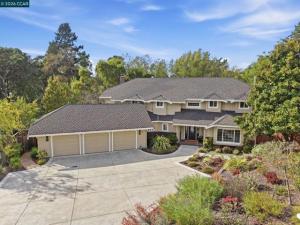
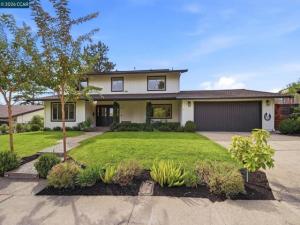
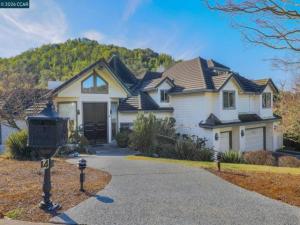
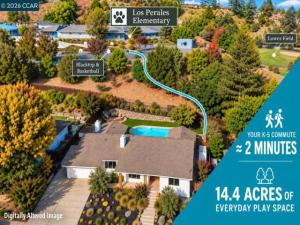
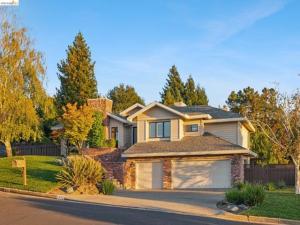
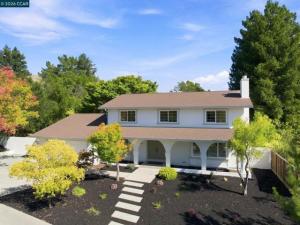
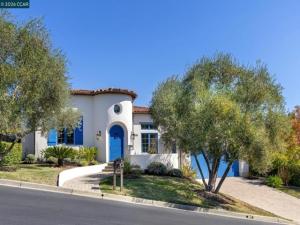
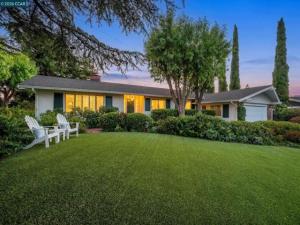
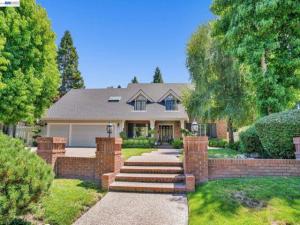
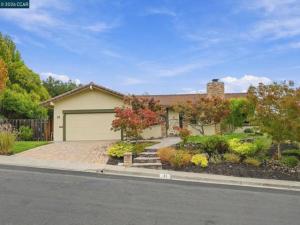
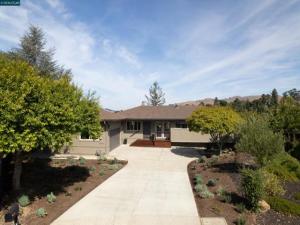
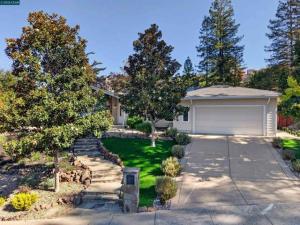
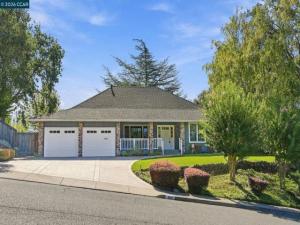
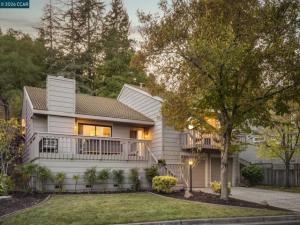
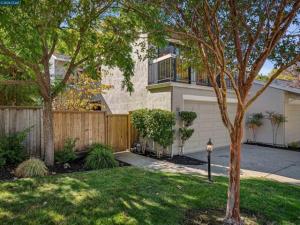
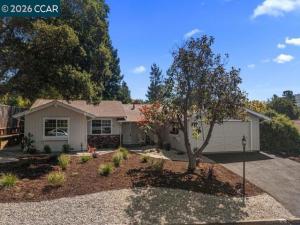
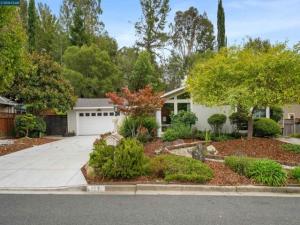
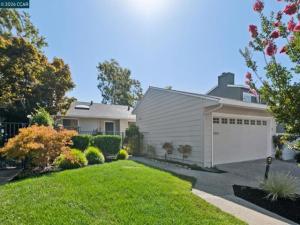
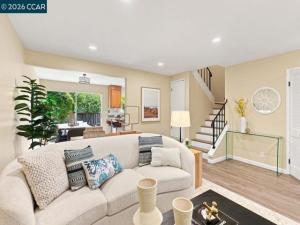
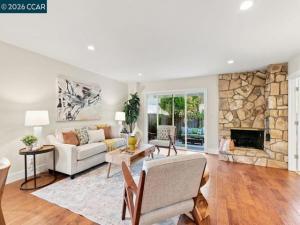
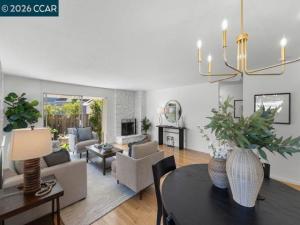
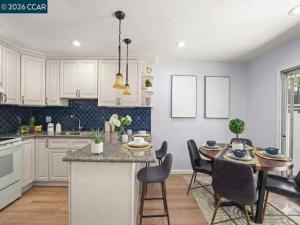
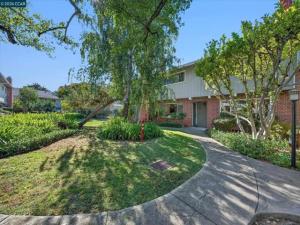
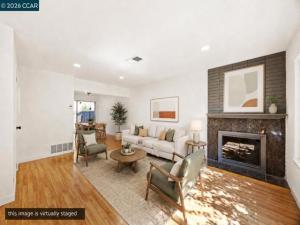
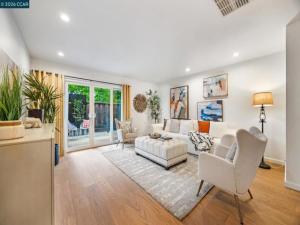
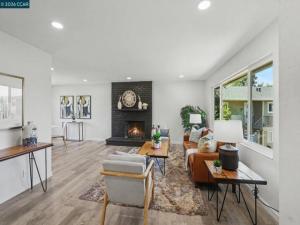
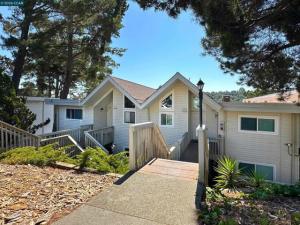
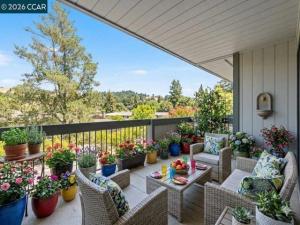
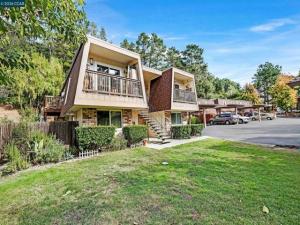
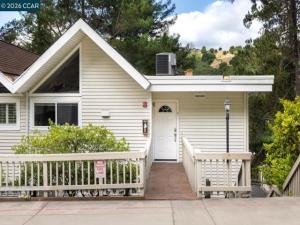
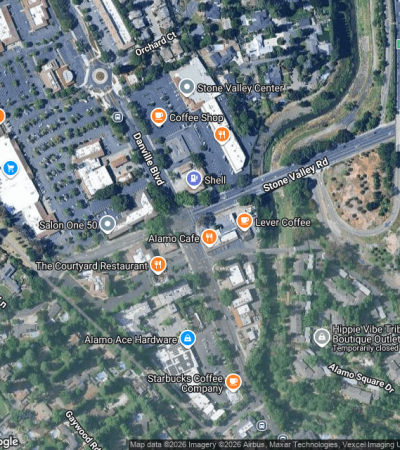
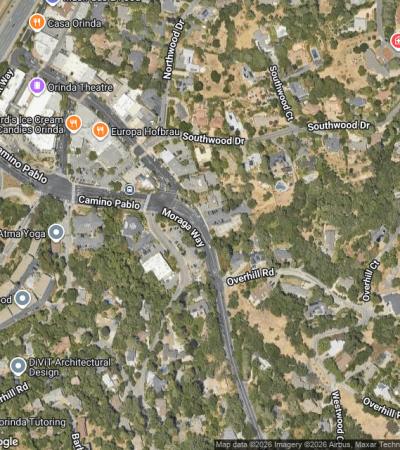
Homes for Sale in Moraga currently number 6 active listings with a median asking price of $2,498,000 (CRMLS, September 2026).
Buyers looking at homes for sale in Moraga are usually here for one reason: Campolindo High School. Moraga is the smallest and most residential of the three Lamorinda cities, about 17,000 residents in the hills east of Oakland and Berkeley, with no BART station and very little commercial development. The nearest BART is Orinda or Lafayette, roughly 10 to 15 minutes by car. What you get in exchange is quiet cul-de-sac streets, oak woodland, Saint Mary’s College of California, and the Lafayette-Moraga Regional Trail running 7.7 paved miles between the two towns.
The core family home market runs from about $1.4 million to $2.8 million, with lot size, privacy, and view position driving values inside that band. Condominiums and townhomes around Canyon Oaks and Rheem are the entry point; the hillside streets along Camino Pablo bring larger lots and valley views. Low-density zoning keeps inventory tight, so be ready to move when the right house comes up.
Moraga is the smallest and most residential of the three Lamorinda cities, a town of approximately 17,000 residents in the hills east of Oakland and Berkeley without BART service, without significant commercial development, and without the retail density of Lafayette or Orinda. What Moraga has is the Acalanes Union High School District‘s Campolindo High School, one of the most consistently high-performing public high schools in Northern California; Saint Mary’s College of California, which provides a cultural and institutional anchor unusual for a city of Moraga’s size; and a residential character defined by quiet cul-de-sac streets, oak woodland, and a community that has explicitly chosen to maintain low density and resist commercial growth. For the buyer who specifically wants the Lamorinda school quality in the most residential and lowest-density setting possible, Moraga is the answer. This guide covers Moraga’s real estate market, neighborhoods, schools, and what buyers need to know.
Moraga’s market is driven primarily by the Campolindo High School premium within the Acalanes Union High School District. While all three Lamorinda communities have access to AUHSD schools, Moraga specifically feeds Campolindo, which has built a strong reputation for academic depth and competitive athletics that sustains buyer demand from families who specifically target this campus. The school driver is intense enough that it raise Moraga prices relative to Orinda despite Orinda having BART access and Moraga having none.
Prices in Moraga span from modest condominiums and townhomes in the Canyon Oaks and Rheem area to large single-family homes on substantial lots in the upper hillside sections. The core family home market runs from approximately $1.4 million to $2.8 million, with lot size, privacy, and view position influencing values within that range.
Inventory in Moraga is tightly constrained by the town’s low-density zoning and a community ethos that limits new development. This means the market is resale-dependent, and quality properties attract serious interest from the buyer pool that has specifically targeted Moraga. The illiquidity and limited inventory mean buyers who identify Moraga as their target should be prepared to move quickly when appropriate properties come to market.
The Rheem area near the town center and the Rheem Valley Shopping Center is the most commercially accessible section of Moraga, with the town’s primary retail, restaurants, and services concentrated at this node. Properties in the surrounding residential streets are convenient to the commercial center and to the Lafayette-Moraga Regional Trail, making this the most practical section of town for residents who want walkable access to daily services and the regional trail.
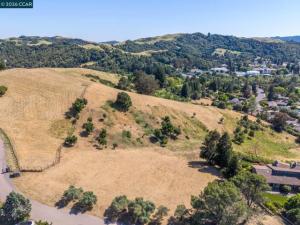
The upper residential neighborhoods along Camino Pablo and the hillside streets east of the town center provide more private settings, larger lots, and in some cases, valley views across the Moraga Valley. These areas attract buyers who want more space and more residential privacy within the Moraga market and are willing to trade some commercial convenience for lot character.
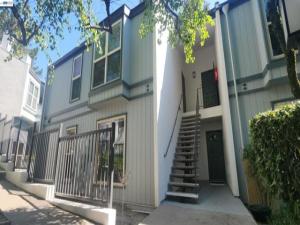
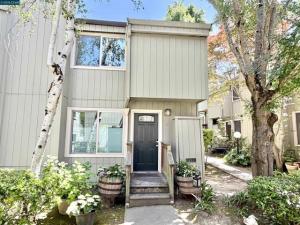
Canyon Oaks and the condominium and townhome communities in the northern portion of the town provide the most accessible price entry points in the Moraga market. These communities are HOA-governed and provide a lower-maintenance ownership option for buyers who want AUHSD access without the cost and maintenance of a detached single-family home.
Moraga School District operates Camino Pablo, Donald L. Rheem, and Los Perales Elementary schools, each with strong performance records and high parent involvement characteristic of the Lamorinda community’s investment in public education. Joaquin Moraga Intermediate serves middle school grades within the town.
Campolindo High School, in the Acalanes Union High School District, is the secondary campus serving Moraga students. The school has consistently ranked among the top public high schools in California for academic performance, with exceptional AP course depth, award-winning performing arts programs, and strong athletics. The school’s reputation draws buyers from across the Bay Area who specifically target a Moraga address to secure Campolindo attendance.
The Lafayette-Moraga Regional Trail is the primary linear recreation amenity connecting Moraga to Lafayette, a paved multi-use trail of approximately 7.7 miles that provides car-free connection between the two communities and is heavily used by cyclists, runners, and families with strollers. Access points from Moraga’s residential areas make the trail a practical daily exercise route for a large portion of the residential population.
Sibley Volcanic Regional Preserve and the connected East Bay hills trail network are accessible from the upper hillside areas of Moraga, providing hiking and cycling access to the broader EBRPD trail system and the Round Top area of the Oakland hills. The natural setting of the Moraga hills is one of the most consistent reasons residents cite for their commitment to living in Moraga despite the car-dependent commute profile.
Saint Mary’s College of California, founded in 1863 and located on the western edge of Moraga, contributes cultural programming, academic facilities, and a performing arts calendar to the town’s character that exceeds what a residential community of Moraga’s population would otherwise support. The Hearst Art Gallery on campus and the college athletic events are community assets that reflect the institutional anchor Saint Mary’s provides.
Moraga has no BART station. The nearest BART access is at the Orinda or Lafayette stations, each approximately 10 to 15 minutes by car. Bus service to BART is available via County Connection routes but requires transfer coordination. Total commute time from Moraga to San Francisco’s Embarcadero averages 50 to 70 minutes via drive-to-BART and transit. The absence of BART within the town is the primary trade-off buyers make in the Lafayette-Orinda-Moraga comparison, and it influences the relative positioning of Moraga prices despite its superior school metrics relative to the transit-connected alternatives.
Moraga’s residential inventory spans from 1960s ranch homes on modest lots to 1970s through 1990s single-family homes on larger hillside parcels, with some newer custom construction in the estate segment. Condominium and townhome communities provide mid-range entry points. Architectural styles are predominantly California ranch and contemporary, with the hillside properties occasionally featuring custom designs that take advantage of the terrain. Lot sizes in the flatlands neighborhoods average 7,000 to 12,000 square feet, with hillside properties regularly exceeding a quarter acre and estate-level lots approaching an acre or more.
The Knight Group serves Moraga buyers with the Lamorinda market knowledge that correctly positions Moraga’s school premium relative to the transit trade-off. For buyers who have identified Campolindo as their school target, TKG provides the neighborhood analysis and offer strategy that this constrained, competitive inventory environment requires. Connect with TKG to discuss the current Moraga market.
Connect with TKG about Moraga real estate.
Moraga's rental market is exclusively premium-tier and school-access-driven. Renters who specifically target Moraga want Campolindo High School access and are willing to pay the premium that the community's limited rental inventory and strong demand command. The rental market is self-selecting in the same way the ownership market is: the community attracts only renters who have specifically identified the school quality and lifestyle character as their priority, which creates a tenant profile that is highly stable and low-friction for landlords.
Investment acquisition in Moraga follows similar logic to Lafayette: current yield is compressed by the premium prices that the school demand sustains, and the appropriate investment thesis is appreciation and school-district demand stability over a multi-decade hold. Canyon Oaks condominiums provide the most accessible investment acquisition point in Moraga while maintaining the AUHSD-Campolindo school access that drives the market.
How does Moraga's small-town governance work?
Moraga is an incorporated town (not a city) with its own Town Council, public works department, and planning commission. The town has actively maintained its low-density residential character through zoning decisions, and the Town Council reflects the community's consistent preference for resisting major commercial development or residential density increases. The small governance scale means that community members have direct access to elected officials and planning decisions are made with more community visibility than in larger cities.
What Saint Mary's College amenities are available to Moraga residents?
Saint Mary's College provides a performing arts schedule, athletic events (the SMC Gaels compete in the West Coast Conference), library access for community card holders, and a campus setting of significant architectural character in the Moraga hills. The college's presence contributes cultural and educational programming that would otherwise be absent in a residential town of Moraga's size. Specific amenity access for community members (as opposed to college affiliates) varies by facility and program, and TKG can direct interested buyers to SMC's community access information.
What is the traffic situation at the Moraga-Lafayette junction?
Moraga Road and Canyon Road, the primary routes connecting Moraga to Lafayette and BART, experience meaningful peak-hour congestion at the Moraga-Lafayette junction, particularly during the school drop-off and pick-up windows when Campolindo, Miramonte, and the adjacent schools are generating traffic simultaneously. Buyers who will commute by car to Lafayette BART during peak hours should test the commute timing during a representative weekday before committing to a Moraga purchase, as the additional 10 to 20 minutes of peak-hour congestion relative to off-peak is a material commute planning factor.
Despite its car-dependent character for daily errands and BART connections, Moraga has more active transportation options than buyers from outside the community sometimes realize. The Lafayette-Moraga Regional Trail provides a paved, car-free route to Lafayette's commercial corridor and BART station that is practical for cycling commuters. The trail is 7.7 miles one-way, which is within the cycling range of reasonably fit commuters with e-bikes, and several Moraga residents make the BART connection by bike on the trail as a regular commute mode. The growing adoption of e-bikes in the Bay Area has made this trail commute option more accessible to a broader range of cyclists, and Moraga's proximity to Lafayette BART via the trail is more practical in e-bike context than the pure mileage might suggest to non-cyclists.
The Moraga market's most intense competition period aligns precisely with the Campolindo High School and Moraga School District enrollment calendar. Buyers who need their children enrolled in Moraga schools for the following September must close and establish Moraga residency before the district enrollment deadline, which typically falls in February or March. This creates a buyer pool that is specifically deadline-driven in the January through April window, producing a competitive dynamic that is more concentrated than a purely season-driven market. TKG advises buyers who have school enrollment as a time constraint to begin the search process no later than November or December to allow sufficient time for search, offer, due diligence, and closing before the enrollment deadline.
The Town of Moraga provides municipal services through a Town Manager form of government with a five-member Town Council. The town contracts for some services with Contra Costa County and with regional agencies, and provides direct services in areas including planning, engineering, and recreation. The small size of the town means that planning applications, permit requests, and neighborhood concerns receive relatively quick attention and a personal response from town staff. This governance responsiveness is a quality-of-life benefit that many Moraga residents cite as part of the community's appeal alongside the school quality and the natural setting.
Moraga residents access healthcare through the Lafayette and Walnut Creek medical infrastructure. John Muir Medical Center in Walnut Creek is the primary acute care facility, accessible via the Lafayette-Moraga Road to Highway 24 in approximately 20 to 25 minutes. The Kaiser Permanente Walnut Creek campus serves Kaiser plan holders. Saint Mary's College has its own health center for college-affiliated individuals, but this resource is not available to the general Moraga residential community. The drive to acute care from Moraga is somewhat longer than from Lafayette or Orinda due to the canyon road approach to the freeway, which is a factor emergency response time calculations should incorporate.
Moraga's small commercial area in the Rheem Valley center provides the primary local dining and shopping options: a handful of independently owned restaurants, a Safeway-anchored grocery shopping center, and professional services. For most retail and specialty dining needs beyond what the Rheem center offers, Moraga residents drive to Lafayette, which is approximately 10 to 15 minutes north. The Lafayette commercial corridor serves as Moraga's de facto secondary commercial center, and many Moraga residents develop a dual-community commercial habit that encompasses both the Rheem Valley center for daily convenience and Lafayette's Mount Diablo Boulevard for dining and specialty retail.
Moraga's position between Briones Regional Park to the north and Las Trampas Regional Wilderness to the south creates exceptional trail access from the residential areas at the edges of town. The Lafayette-Moraga Regional Trail runs through the center of the community along the former interurban rail corridor, connecting Moraga to Lafayette in one direction and to the Heather Farm Park area in Walnut Creek in the other direction on a flat paved trail that is widely used for walking, running, and cycling. The combination of the flat valley floor trail and the more challenging hillside trails in the adjacent regional parks gives Moraga residents a range of outdoor recreation options that span casual walking to serious hill climbing within a short distance of any Moraga address.
The Hacienda de Las Flores, a community center operated by the Moraga Parks and Recreation Department, provides the primary venue for community events, private rentals, and civic gatherings in Moraga. The facility's setting in a historic rancho property adds to Moraga's community identity as a place with a connection to the pre-suburban California ranching history that most East Bay communities have fully erased. Saint Mary's College's cultural programming, including the Hearst Art Gallery's exhibitions and the annual Kinesis Dance Theatre performances, extends Moraga's cultural options beyond what a small residential community typically supports through its own municipal resources.
The typical Moraga buyer is choosing the community for a specific combination of reasons that is slightly different from the Orinda or Lafayette buyer profile. The Saint Mary's College presence, the canyon road buffer from freeway noise, the La Moraga trail system, and the distinctly small-town scale of the Rheem Valley commercial center all appeal to a buyer who wants genuine separation from the suburban Bay Area character without living in a truly rural location. Moraga buyers frequently describe finding the community after considering Orinda and Lafayette and deciding that Moraga's slightly more removed character and the college's cultural presence were the deciding factors that made it the right fit over its Lamorinda siblings.
The Moraga buyer also tends to be less focused on walkable commercial access and more accepting of the car-dependent lifestyle that the canyon location requires. The Lafayette BART station is the nearest transit connection, accessible via car in approximately 10 minutes, and Moraga buyers who are transit-dependent commuters tend to structure their daily commute around driving to Lafayette BART rather than seeking a walk-to-transit arrangement. Buyers who need walkable daily commercial access to a coffeehouse or grocery within foot distance of their front door will consistently find Lafayette or downtown Walnut Creek more practical options. Buyers who do not need walkable commercial access and who value the canyon's quiet more than the convenience will consistently prefer Moraga's trade-off.
Browse all Contra Costa County real estate.
Homes For Sale In Moraga listings currently show 6 active listings priced from $1,050,000 to $5,500,000, with a median asking price of $2,498,000 (CRMLS, August 2026).