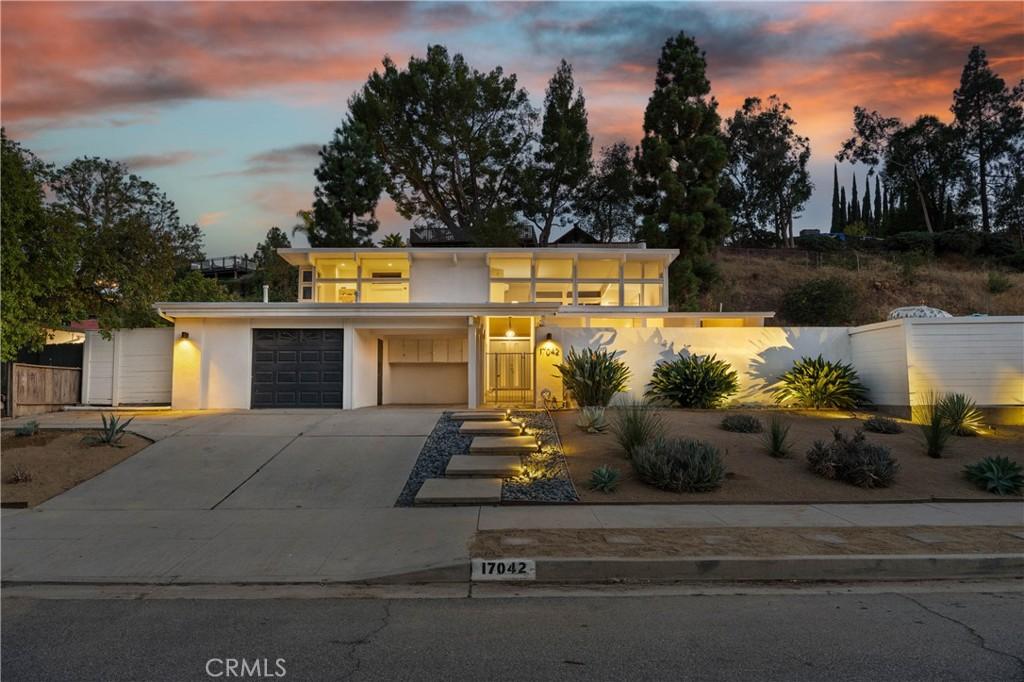
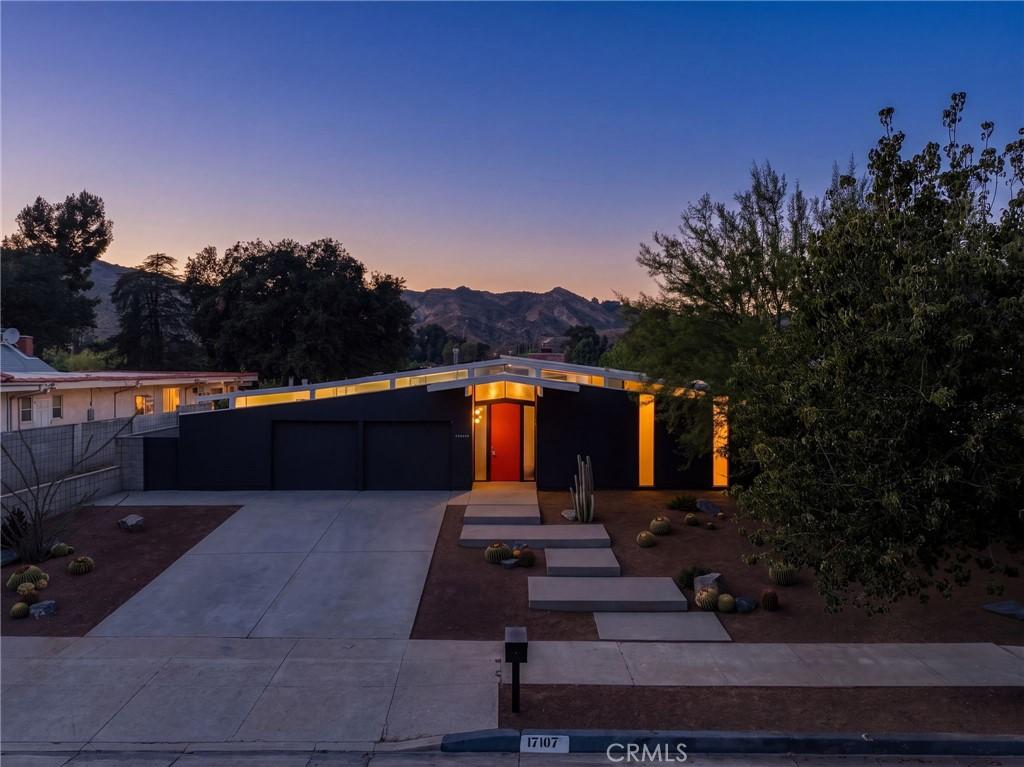
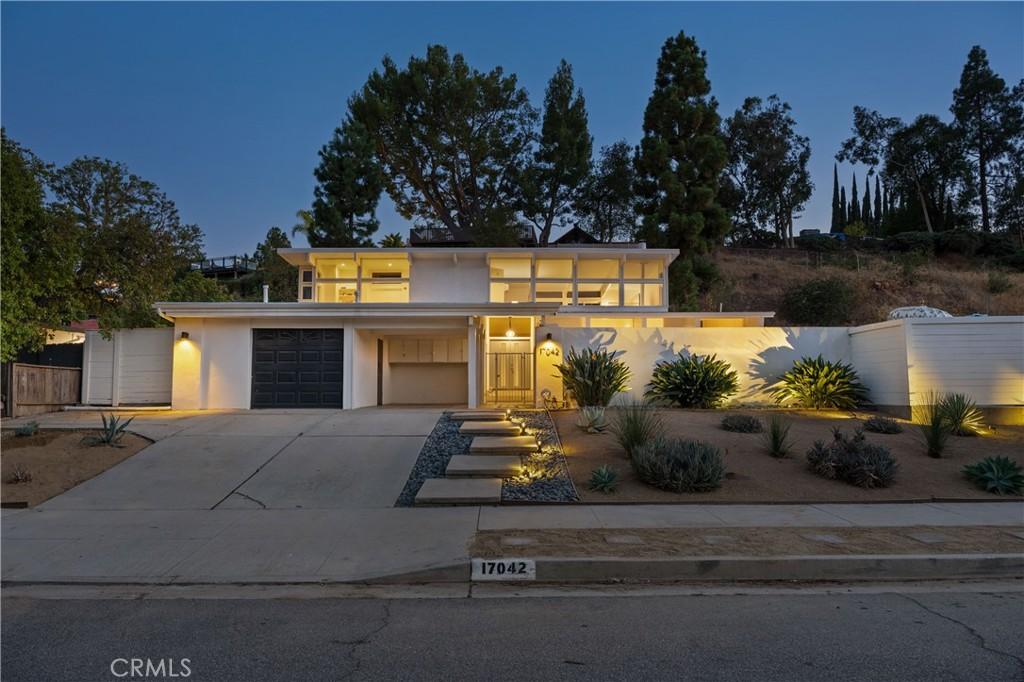
Balboa Highlands homes for sale come from the only Joseph Eichler tract in Los Angeles County, a 100-home pocket of Granada Hills built in 1962 and 1963. The City of Los Angeles designated the neighborhood a Historic Preservation Overlay Zone, so the mid-century character of the tract is protected rather than left to chance. Browse the current listings below, or call The Knight Group directly if you want access to on- and off-market options here. We cover the full market, including inventory that never reaches Zillow or Redfin.
With only 100 houses in the tract, turnover is limited and every sale matters. These are original Eichler-designed mid-century modern homes from the early 1960s, so what varies most is condition and how each owner has handled updates over six decades. The HPOZ designation also shapes what you can and cannot change to the exterior — worth understanding before you write an offer.
Balboa Highlands is the only Joseph Eichler tract in Los Angeles County, a 100-home collection of mid-century modern houses built in 1962 and 1963 that has been designated a Historic Preservation Overlay Zone by the City of Los Angeles.
Browse current listings below, or call The Knight Group directly to access on- and off-market options in this area. Our team covers the full market, including inventory that never reaches Zillow or Redfin.
Because every house here came out of the same early-1960s Eichler plans, the usual comparison points — square footage, layout, lot orientation — narrow considerably. What separates one property from the next is how six decades of ownership have been handled. Post-and-beam framing, flat or low-slope roofs, floor-to-ceiling glass, and radiant slab heating all age differently depending on maintenance. Ask what has been replaced and when, and read the difference between a home restored with period-correct materials and one modernized in ways that fight the original design.
The Historic Preservation Overlay Zone is the second thing to understand. It governs exterior changes, so plans for a new roofline, replacement windows, or added square footage need review rather than assumption. Buyers who want a mid-century house exactly as designed usually see the HPOZ as protection; buyers planning heavy remodels should scope it out early. If you are weighing Balboa Highlands in Granada Hills against other options, call The Knight Group and we will walk through the specifics of any home you are considering.
Browse all Los Angeles real estate — or explore the full Los Angeles luxury real estate market.
Balboa Highlands was developed by Joseph Eichler between 1962 and 1964, with architectural designs by Claude Oakland and the firm of A. Quincy Jones and Frederick Emmons — the same team responsible for Eichler’s most celebrated Northern California communities. The tract contains 100 homes (some sources cite 108) organized around four basic models with three roofline types: flat, A-frame, or slant. Each home features a simple front facade with unassuming clerestory windows opening to an internal atrium — the Eichler signature that floods interiors with natural light while maintaining street privacy (source: LA Conservancy, Eichler Network, balboahighlands.com, HPOZ designation records).
The City of Los Angeles designated Balboa Highlands a Historic Preservation Overlay Zone (HPOZ) in 2010, recognizing the tract’s architectural significance as the only Eichler neighborhood in LA County. The HPOZ requires that exterior modifications to homes be reviewed for compatibility with the mid-century modern character of the tract — a consideration buyers should understand before purchasing, as it limits some renovation approaches while also protecting the community’s defining aesthetic.
Balboa Highlands has become one of the San Fernando Valley’s most frequently filmed residential locations, appearing in TV shows, commercials, catalogues, and feature films that require a distinctly mid-century modern residential backdrop. That visibility has contributed to the tract’s reputation and resale values among buyers who specifically seek Eichler homes, a market that extends well beyond Granada Hills.
Homes in this area of Granada Hills offer a combination of architectural character, established landscaping, and strong community identity that attracts buyers looking for something beyond a generic suburban tract. While the broader Granada Hills market provides a range of options, this particular pocket has its own micro-market dynamics — often with faster absorption times and tighter inventory than comparable addresses across town.
most Granada Hills streets are non-HOA; equestrian zone properties carry CC&Rs governing animal keeping Buyers who prioritize privacy, outdoor space, and a neighbors-who-wave culture consistently point to neighborhoods like this one as undervalued relative to the broader San Fernando Valley market.
The homes in this area range from post-war single-family residences to updated modern builds, with many properties undergoing significant renovations over the past decade. Lot sizes are competitive for Los Angeles County standards. Most homes feature private outdoor space, attached garages, and mid-century design cues that have become increasingly sought-after in Southern California real estate.
Buyers with specific taste — whether for Spanish Colonial, Craftsman, or Contemporary — will find homes here that meet that brief. The range of price points within the community also means that entry-level buyers and move-up buyers often shop the same streets, which keeps demand diversified across market cycles.
This area of Granada Hills has tracked alongside or above the broader San Fernando Valley appreciation curve over the past several years. Rental demand is also strong — single-family homes in Granada Hills attract quality long-term tenants, making buy-and-hold strategies viable even with current interest rate environments. The Knight Group tracks off-market opportunities in this area specifically because they rarely generate open-offer situations and tend to close with less friction than listed properties.
Balboa Highlands is the Historic Preservation Overlay Zone (HPOZ) within Granada Hills that contains the SFV’s most significant concentration of authentic Joseph Eichler homes — the 100+ original mid-century modern residences that the Eichler development company built in Balboa Highlands in the early 1960s as the SFV extension of the California modernist residential movement. The Eichler homes’ design characteristics — the post-and-beam structural systems, the floor-to-ceiling glass that opens the living space to the interior atrium, the flat and low-pitched rooflines, and the radiant floor heating that the concrete slab foundations incorporate — create the modernist residential experience that the mid-century modern movement defined as the California alternative to the traditional residential forms that dominated the postwar national housing market. The HPOZ designation protects the Balboa Highlands Eichler district from the architectural alterations that would compromise the historic integrity of the development; restoration of original Eichler features (the original siding, the steel-frame glass systems, the atrium design) is both encouraged and governmentally supported through the HPOZ process that requires the City of LA’s Office of Historic Resources review for any exterior modifications. The Balboa Highlands community is active and organized: the homeowners association and the architecture enthusiast community that has formed around the Eichler legacy sustain the annual Eichler home tours, the architectural design events, and the community advocacy that preserves the district’s historic character as the SFV’s most architecturally significant residential neighborhood.
The Eichler buyer faces the specific challenge that all historic residential architecture presents: the balancing act between preserving the original design integrity that creates the home’s value and modernizing the systems and the performance that 60+ year old construction requires. Original Eichler electrical systems (often aluminum wiring and the original 100-amp service), the single-pane glass walls (significant heat gain and loss), and the flat roof systems (prone to leak without proper maintenance) require the targeted renovation investment that the sophisticated Eichler buyer budgets for alongside the acquisition price. The radiant floor heating, the original siding, and the distinctive glass wall systems can all be refreshed and upgraded within the HPOZ guidelines; the expertise of Eichler-experienced architects and contractors is essential for the renovation buyer who wants to maintain the HPOZ compliance and the historic character that sustains the Balboa Highlands premium.
Fire Risk: Balboa Highlands occupies a flat portion of Granada Hills.
Climate: Balboa Highlands’ mid-century atrium-design homes are known for passive ventilation through their central atriums, which provide natural cross-ventilation and moderate the North San Fernando Valley’s summer heat in a way that conventional tract homes do not.
Getting Around: Balboa Highlands is positioned near Balboa Boulevard in central Granada Hills, with the 118 freeway accessible to the north and the 405 to the south via Balboa Boulevard.
Schools:
Water: Water service is provided by the Los Angeles Department of Water and Power (LADWP).
Los Angeles Unified School District (LAUSD) serves this area. Within the neighborhood’s draw zone, families typically access O’Melveny Elementary, Patrick Henry Middle, and Granada Hills Charter High. LAUSD and private school options are also available for families pursuing specialized programs in math, arts, or bilingual education. The availability of strong public schools at multiple grade levels is a consistent driver of demand in this area.
Residents commute primarily via Balboa Blvd, the 118 Freeway, and Rinaldi St, with typical drive times of 30–50 minutes to Chatsworth, Northridge, and Warner Center. For buyers who prioritize non-freeway alternatives, local surface streets and rideshare coverage are solid. Remote work has reduced the commute calculus for many buyers in this market, but access to major employment corridors still factors into pricing at the neighborhood level.
Day-to-day conveniences are handled by Chatsworth Street and the Granada Hills commercial corridor. Grocery options, pharmacies, fitness studios, and coffee shops are accessible without significant driving. The mix of national brands and local independents gives the area a lived-in feel that distinguishes it from purely commercial suburban centers.
Outdoor recreation centers on the Santa Susana Mountains horse trails, Bull Canyon Park, and the equestrian zone. Year-round outdoor activity is the norm in Southern California, and this neighborhood’s access to trails, parks, and recreational facilities is a meaningful part of the value proposition for active buyers. Nearby options expand the range further for buyers who prioritize specific activities like cycling, hiking, or swimming.
Pricing Snapshot: Granada Hills area market data shows a median sale price around $970,000, down 2.4% year-over-year, $552 per square foot down 11.1% year-over-year, median list price $1,100,000 at $557 per square foot, 125 homes on market, 44 sold, 38 days on market, 100.1% sale-to-list ratio, 1 average offer, and 20.0% average down payment.
Recent Sales and Inventory: Balboa Highlands homes command premiums above the Granada Hills area median due to their architectural rarity — as the only Eichler tract in Los Angeles County and an HPOZ-designated community, demand comes from both local buyers and mid-century modern enthusiasts from across Southern California.
Price Trends: Well-preserved original Eichler homes, particularly those with updated systems but original architectural features intact, consistently generate buyer competition from the national Eichler collector market, pushing prices above what comparable square footage would command in surrounding Granada Hills neighborhoods.
Active listings in this area of Granada Hills have been trading in the $700K–$1.8M range for single-family homes, depending on square footage, lot size, and renovation quality. The market is sensitive to condition: fully updated homes transact at the top of the range, while fixer-upper and dated inventory sits longer and tends to attract investor offers below list. Understanding this bifurcation is essential for buyers calibrating their search budget.
The buyer profile here skews toward horse property buyers, families seeking non-HOA value, and first-time buyers in north SFV. Demand is rarely speculative — most buyers who commit to this neighborhood are making primary residence decisions tied to school zoning, commute routes, or lifestyle preferences that are not easily substituted elsewhere. This makes the market relatively resilient during broader downturns: demand does not evaporate, it waits.
Inventory has been tight relative to historical averages. Well-priced homes in move-in condition typically receive multiple offers within the first week. Overpriced or significantly deferred-maintenance properties sit considerably longer — sometimes through multiple price reductions — before finding a buyer. The Knight Group uses real-time MLS data to identify mispriced inventory and act before market corrections happen.
The price dynamics in this area are shaped by Granada Hills’ horse-zoned parcels and larger lot sizes attract equestrian buyers unavailable in southern SFV. Buyers who understand these local drivers are better positioned to make competitive offers and negotiate from strength. The Knight Group’s market intelligence extends beyond list prices and includes off-market sales, pending transactions, and expired listings that paint a more complete picture of true market value in this area.
Granada Hills occupies the northern SFV’s premium residential tier alongside Porter Ranch — the combination of Granada Hills Charter High School’s academic reputation, the large-lot hillside residential character, and the relative affordability compared to Porter Ranch’s gated estate tier creates a consistent demand from the family buyer who prioritizes school quality over the newer construction and the gate infrastructure that Porter Ranch commands at a 15-25% premium. Within Granada Hills, the north-of-Rinaldi hillside sections (Balboa Highlands, Bee Canyon, the Country Club Estates areas) trade $1.4M-$2.8M, while the flat south-of-Rinaldi residential grid runs $850K-$1.4M. The neighborhood’s historical character (the Balboa Highlands HPOZ with its original Joseph Eichler designs, the mid-century ranch stock of the flat grid) provides the architectural diversity that the flat-grid sections of comparable northern Valley communities lack. Granada Hills Charter High School’s consistent academic performance is the single most important price driver in the Granada Hills residential market — properties in the school’s primary attendance zone command a measurable premium over equivalent properties that fall outside the boundary.
What is Balboa Highlands in Granada Hills?
Balboa Highlands is the only Joseph Eichler residential tract in Los Angeles County — 100 mid-century modern homes built in 1962 and 1963, designed by architects Claude Oakland and A. Quincy Jones/Frederick Emmons, and designated an HPOZ by the City of Los Angeles in 2010.
What is an HPOZ and how does it affect Balboa Highlands homeowners?
A Historic Preservation Overlay Zone (HPOZ) requires that exterior modifications to homes be reviewed for compatibility with the community’s historic character. For Balboa Highlands, this means exterior renovations must be reviewed against mid-century modern design standards before permits are issued.
Why are Balboa Highlands homes often seen on TV and in films?
The tract’s consistent mid-century modern architecture makes it a popular location for TV shows, commercials, and feature films that need an authentic mid-century residential setting — a distinction the neighborhood has earned since the 1960s.
Competition varies significantly by price point and condition. Turnkey single-family homes in desirable pockets of Granada Hills often attract multiple offers — particularly when listed under $700K. Fixer-uppers and properties with deferred maintenance see much softer competition. Working with an agent who has real-time visibility into days-on-market and offer-history data is critical to calibrating your bid strategy correctly.
Granada Hills has demonstrated consistent appreciation over the past decade, supported by Granada Hills’ horse-zoned parcels and larger lot sizes attract equestrian buyers unavailable in southern SFV. While no market guarantees future returns, the fundamentals here — limited land supply, strong school performance, and proximity to employment — align with the characteristics that historically underpin sustained appreciation in Southern California. The Knight Group can provide a detailed appreciation analysis for specific streets or sub-neighborhoods on request.
A meaningful percentage of transactions in Granada Hills — particularly in the upper price tiers — never hit the MLS. Sellers who want privacy, convenience, or to avoid the preparation costs of a listed sale often prefer a direct buyer introduction. The Knight Group maintains an active off-market network in Granada Hills and can present qualified buyers to sellers before a property is listed. If your target property type is not available on-market, a conversation with our team about off-market options is worth having.
Granada Hills contains multiple distinct micro-neighborhoods, each with its own character, price range, and amenity profile. The differences between a north-of-Ventura address and a south-of-Ventura address in this area, for example, can be meaningful in terms of pricing, lot size, and school assignment. The Knight Group provides neighborhood-level guidance — not just city-level — to ensure buyers understand exactly what they are buying into before making an offer.
The Balboa Highlands HPOZ requires that exterior modifications to Eichler homes be reviewed and approved by the City of LA’s Office of Historic Resources to ensure compatibility with the district’s architectural character. Modifications that alter the original roofline, the glass wall systems, the post-and-beam structural expression, or the atrium design typically require the HPOZ Certificate of Appropriateness. Interior modifications generally do not require HPOZ review. Buyers planning renovation should consult with an architect familiar with HPOZ compliance before finalizing renovation plans.
Explore more Granada Hills neighborhoods:
Lucky for you we’re looking out.
Subscribe to this Custom Search to be alerted when new properties hit the market in the area.
Choose the frequency that works for you.