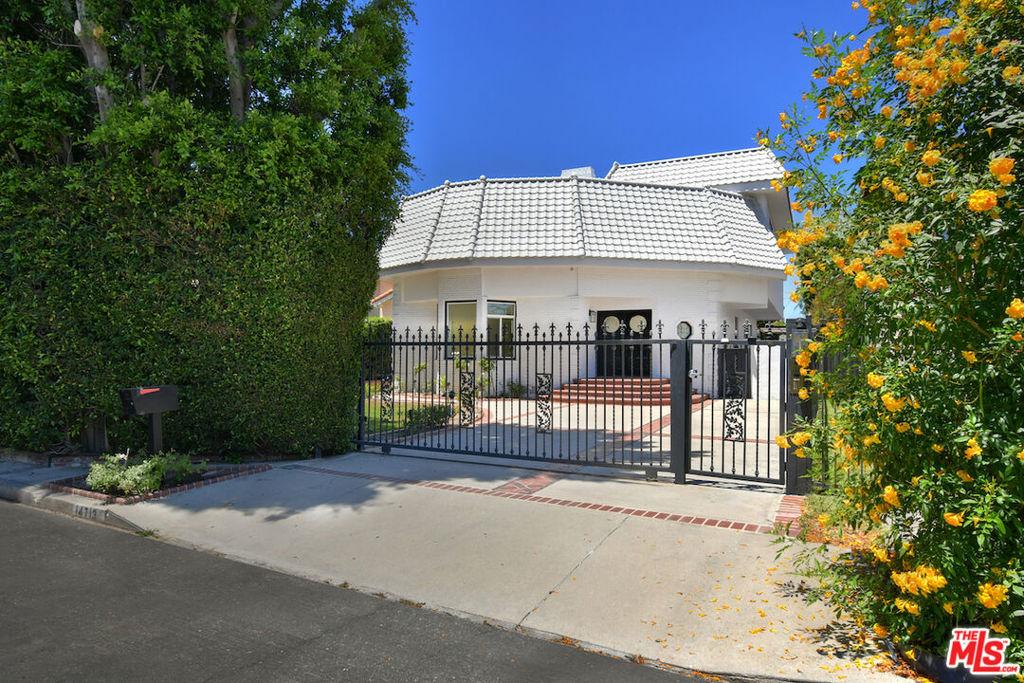
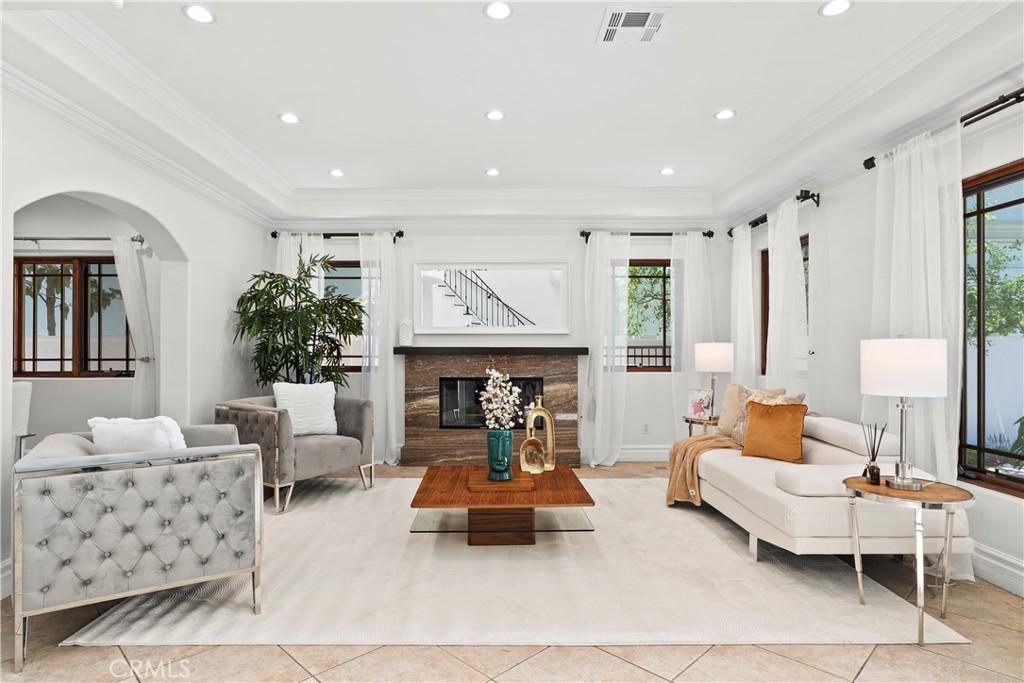
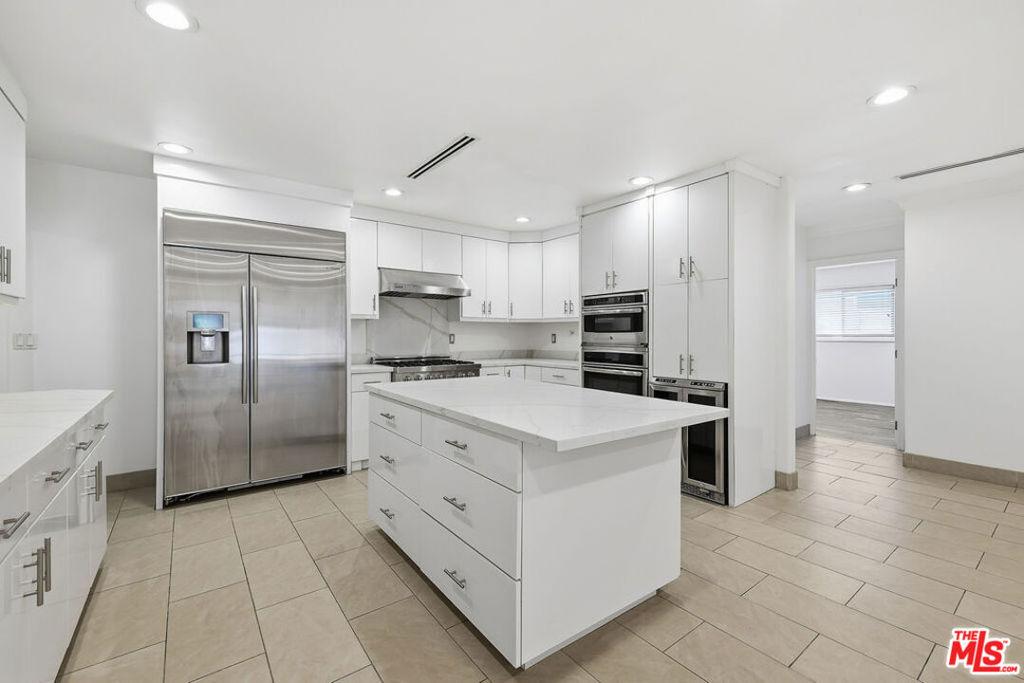
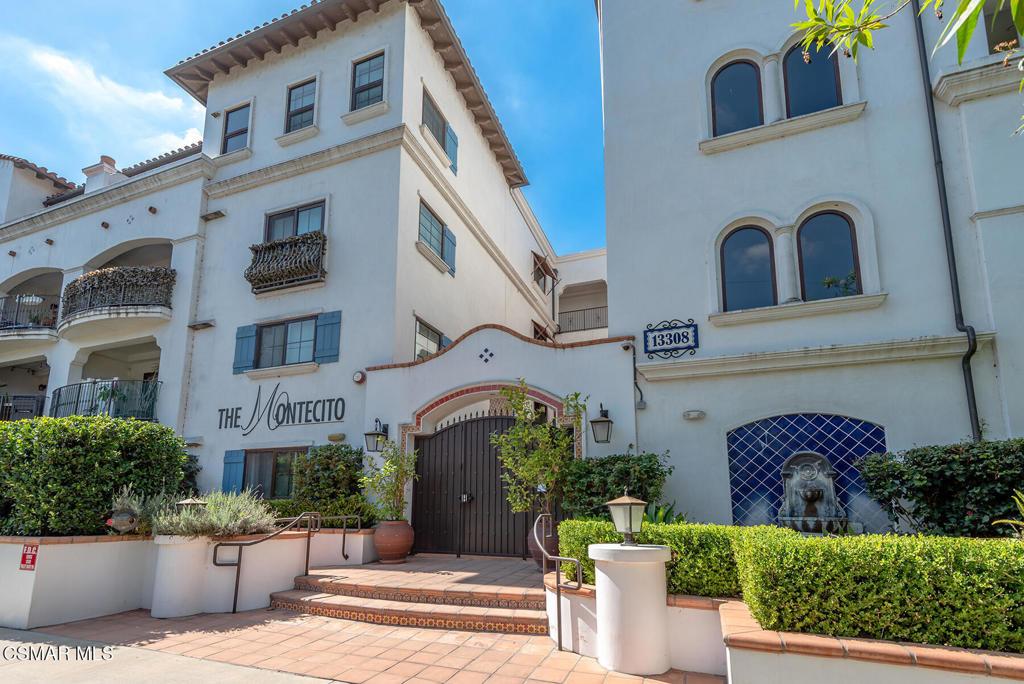
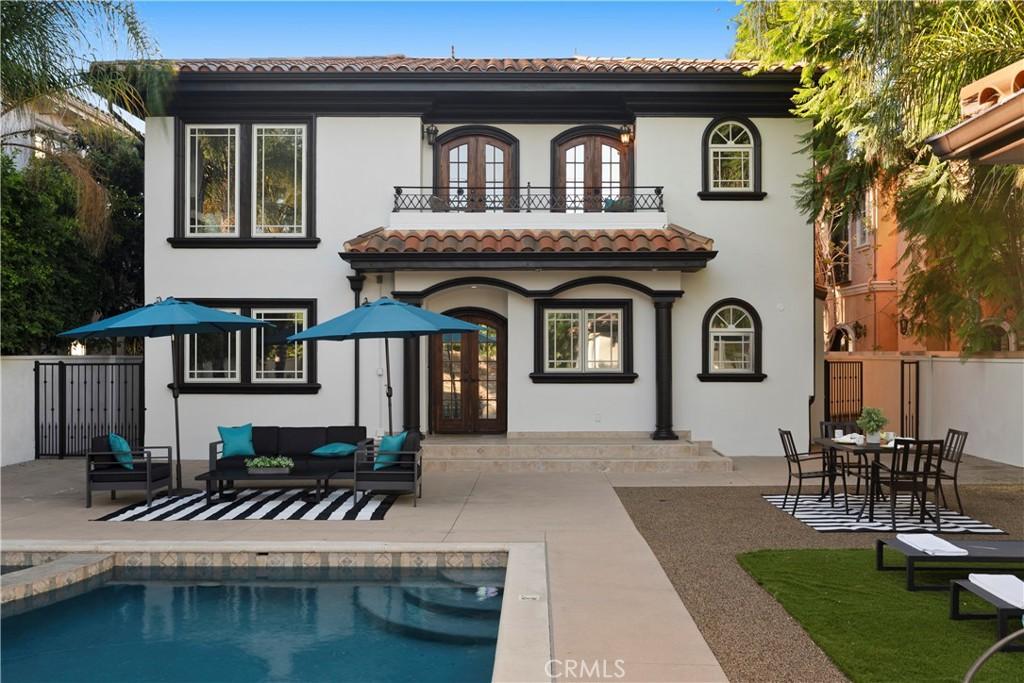
Ernie S Walk Sherman Oaks Homes for Sale currently number 7 active listings with a median asking price of $1,449,000 (CRMLS, September 2026).
Ernie’s Walk is a small linear park along the north bank of the Los Angeles River in Sherman Oaks, running roughly 0.3 miles between Kester Avenue and Cedros Avenue along Valleyheart Drive. While not a traditional residential subdivision, the park gives its name to the surrounding pocket of homes and apartments that back up to or sit near the river greenway, an amenity that is unusual for the San Fernando Valley.
Browse current listings below, or call The Knight Group directly to access on- and off-market options in this area. Our team covers the full market, including inventory that never reaches Zillow or Redfin.
Browse all Los Angeles real estate — or explore the full Los Angeles luxury real estate market.
The park is named after Ernie La Mere, a retired Sherman Oaks resident who began planting along this stretch of the riverbank in 1987. Los Angeles County later renovated the space and reopened it as a county park in 2004. Today it features river rock seating walls, a mix of native and non-native plantings, benches along the path, and a lighthearted touch known locally as “boot hill,” a mock pet graveyard, plus signage noting that deer occasionally cross through the area (source: Wikipedia, thelariver.com, Nextdoor).
According to U.S. Census data, the immediate area around Ernie’s Walk has a population of roughly 2,178 residents, reflecting the mix of apartment buildings and houses that line Valleyheart Drive and the surrounding streets near the riverbank.
Homes in this area of Sherman Oaks offer a combination of architectural character, established landscaping, and strong community identity that attracts buyers looking for something beyond a generic suburban tract. While the broader Sherman Oaks market provides a range of options, this particular pocket has its own micro-market dynamics — often with faster absorption times and tighter inventory than comparable addresses across town.
newer townhome communities and gated pocket developments carry monthly HOA dues; older single-family homes typically have none Buyers who prioritize privacy, outdoor space, and a neighbors-who-wave culture consistently point to neighborhoods like this one as undervalued relative to the broader San Fernando Valley market.
The homes in this area range from post-war single-family residences to updated modern builds, with many properties undergoing significant renovations over the past decade. Lot sizes are competitive for Los Angeles County standards. Most homes feature private outdoor space, attached garages, and mid-century design cues that have become increasingly sought-after in Southern California real estate.
Buyers with specific taste — whether for Spanish Colonial, Craftsman, or Contemporary — will find homes here that meet that brief. The range of price points within the community also means that entry-level buyers and move-up buyers often shop the same streets, which keeps demand diversified across market cycles.
This area of Sherman Oaks has tracked alongside or above the broader San Fernando Valley appreciation curve over the past several years. Rental demand is also strong — single-family homes in Sherman Oaks attract quality long-term tenants, making buy-and-hold strategies viable even with current interest rate environments. The Knight Group tracks off-market opportunities in this area specifically because they rarely generate open-offer situations and tend to close with less friction than listed properties.
Ernie’s Walk is the informal name for the pedestrian-friendly commercial and residential zone centered on the intersection of Moorpark Street and Hazeltine Avenue in Sherman Oaks — the walkable retail node that the adjacent residential community accesses on foot for the neighborhood-scale dining, coffee, and retail that distinguishes this Sherman Oaks sub-neighborhood from the purely residential streets around it. The node’s independent restaurants, the wine bar, and the boutique services create the walkable village commercial character that the Sherman Oaks buyer who prioritizes the walkable lifestyle specifically values and that the broader Sherman Oaks Ventura Boulevard corridor provides at the macro scale but that the neighborhood-scale Ernie’s Walk node creates within the residential fabric itself. The residential streets adjacent to the Ernie’s Walk node are primarily post-war single-family homes on standard Sherman Oaks R1 lots — the conventional SFV residential grid with the neighborhood commercial node embedded as the walkable daily-life destination that the otherwise car-dependent suburban residential experience rarely provides at this walking distance. The proximity to the Van Nuys-Sepulveda commercial corridor (one of the SFV’s primary commercial nodes) and the easy 101 Freeway access via the Sepulveda on-ramp create the transportation infrastructure that sustains the Sherman Oaks residential demand from both the transit-accessible buyer and the car-dependent commuter.
The Ernie’s Walk node’s independent restaurant and boutique commercial character reflects the broader Sherman Oaks village commercial evolution — the transition from the auto-oriented strip commercial toward the pedestrian-friendly, independently-owned commercial character that the walkable neighborhood commercial format cultivates. The Sherman Oaks BID’s investment in the boulevard’s streetscape improvements, the expanded outdoor dining infrastructure (parklets and sidewalk dining), and the community events that the BID calendar sustains create the activated commercial street environment that the Ernie’s Walk-adjacent residential community benefits from as the walkable daily-life infrastructure.
Fire Risk: As a riverside, flatland location, the Ernie’s Walk area carries lower wildfire exposure than the Sherman Oaks hillside neighborhoods to the south.
Climate: Proximity to the Los Angeles River channel and the tree plantings along Ernie’s Walk provide some cooling and shade relative to fully paved stretches of the valley floor, though the area still experiences typical valley summer heat.
Getting Around: Valleyheart Drive runs parallel to the 101 freeway and the river, giving residents quick access to Kester Avenue, Cedros Avenue, and onto Van Nuys Boulevard, with the 101 on-ramps close by for valley and Westside commutes.
Schools:
Water: Water service is provided by the Los Angeles Department of Water and Power (LADWP).
Los Angeles Unified School District (LAUSD) serves this area. Within the neighborhood’s draw zone, families typically access Kester Avenue Elementary, Van Nuys Middle, and Birmingham Charter. LAUSD and private school options are also available for families pursuing specialized programs in math, arts, or bilingual education. The availability of strong public schools at multiple grade levels is a consistent driver of demand in this area.
Residents commute primarily via Ventura Blvd, the 405 Freeway, and Sepulveda Blvd, with typical drive times of 20–40 minutes to Century City, Burbank, and Downtown LA. For buyers who prioritize non-freeway alternatives, local surface streets and rideshare coverage are solid. Remote work has reduced the commute calculus for many buyers in this market, but access to major employment corridors still factors into pricing at the neighborhood level.
Day-to-day conveniences are handled by Ventura Blvd’s restaurant row, Westfield Fashion Square, and the Galleria. Grocery options, pharmacies, fitness studios, and coffee shops are accessible without significant driving. The mix of national brands and local independents gives the area a lived-in feel that distinguishes it from purely commercial suburban centers.
Outdoor recreation centers on Balboa Park, the Van Nuys Sherman Oaks Recreation Area, and easy 405 access to the coast. Year-round outdoor activity is the norm in Southern California, and this neighborhood’s access to trails, parks, and recreational facilities is a meaningful part of the value proposition for active buyers. Nearby options expand the range further for buyers who prioritize specific activities like cycling, hiking, or swimming.
Pricing Snapshot: As of mid-June 2026, Sherman Oaks citywide has a median sale price around $1,680,000, up 36.2% year over year, or about $759 per square foot (up 5.3% year over year), with a median list price around $1,730,000, or about $767 per square foot. About 275 homes were on the market with 54 recently sold, homes typically going pending in around 62 days at about 99.4% of list price, buyers averaging roughly two offers per home, and a typical down payment around 40.0% (source: Redfin).
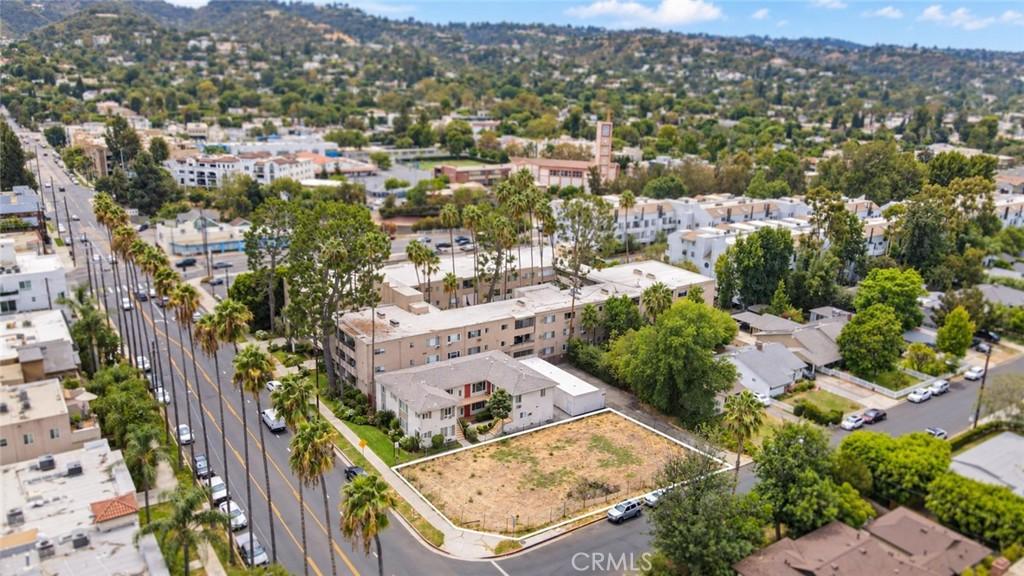
Recent Sales and Inventory: The housing stock immediately around Ernie’s Walk includes a mix of apartment and condo buildings along Valleyheart Drive and single-family homes on the surrounding residential streets, giving buyers a wider price range than many strictly single-family Sherman Oaks pockets.
Price Trends: Condo and apartment-conversion units near the river greenway tend to price below the Sherman Oaks single-family median, while detached homes on the surrounding blocks generally track closer to the citywide figures above.
Active listings in this area of Sherman Oaks have been trading in the $900K–$3.5M range for single-family homes, depending on square footage, lot size, and renovation quality. The market is sensitive to condition: fully updated homes transact at the top of the range, while fixer-upper and dated inventory sits longer and tends to attract investor offers below list. Understanding this bifurcation is essential for buyers calibrating their search budget.
The buyer profile here skews toward young professionals, families upgrading from condos, and Valley commuters wanting proximity to the Westside. Demand is rarely speculative — most buyers who commit to this neighborhood are making primary residence decisions tied to school zoning, commute routes, or lifestyle preferences that are not easily substituted elsewhere. This makes the market relatively resilient during broader downturns: demand does not evaporate, it waits.
Inventory has been tight relative to historical averages. Well-priced homes in move-in condition typically receive multiple offers within the first week. Overpriced or significantly deferred-maintenance properties sit considerably longer — sometimes through multiple price reductions — before finding a buyer. The Knight Group uses real-time MLS data to identify mispriced inventory and act before market corrections happen.
The price dynamics in this area are shaped by Sherman Oaks’ central location and strong rental market create consistent demand from both owner-occupants and investors. Buyers who understand these local drivers are better positioned to make competitive offers and negotiate from strength. The Knight Group’s market intelligence extends beyond list prices and includes off-market sales, pending transactions, and expired listings that paint a more complete picture of true market value in this area.
Sherman Oaks is the SFV’s most balanced market — the combination of walkable Ventura Boulevard commercial access, established school options, and the Westside-proximate location that the Sepulveda Pass provides creates demand from the broadest buyer profile in the Valley. Within Sherman Oaks, sub-neighborhood pricing stratifies by the north-of-Ventura vs. south-of-Ventura divide and by proximity to the shopping center nodes (the Sherman Oaks Galleria area, the Ventura-Woodman node). North-of-Ventura Sherman Oaks flat-grid properties typically trade $1.3M-$2.2M for single-family detached, while the south-of-Ventura grid runs $1.1M-$1.8M. The Sherman Oaks Galleria-adjacent condo and townhome market provides the entry tier at $600K-$950K. Days on market in well-priced Sherman Oaks inventory average 14-21 days — among the fastest in the SFV — reflecting the depth of buyer demand across the broad target demographic that Sherman Oaks attracts. For the investment buyer, Sherman Oaks multifamily properties along Ventura and Van Nuys corridors offer 4.0-4.8% gross yields with the Valley appreciation backstop that the Westside proximity and the LAUSD school quality sustain.
What is Ernie’s Walk?
It is a roughly 0.3-mile linear park along the north bank of the Los Angeles River between Kester Avenue and Cedros Avenue, planted by longtime resident Ernie La Mere starting in 1987 and reopened as a Los Angeles County park in 2004.
What can residents do at Ernie’s Walk?
The park offers a walking path along the river with river rock seating walls, native and non-native plantings, benches, and a small mock pet graveyard known as “boot hill,” and deer are occasionally seen crossing the area.
What kind of housing is near Ernie’s Walk?
The immediate area is a mix of apartment and condo buildings along Valleyheart Drive and single-family homes on the surrounding streets, with about 2,178 residents in the surrounding pocket according to Census data.
Competition varies significantly by price point and condition. Turnkey single-family homes in desirable pockets of Sherman Oaks often attract multiple offers — particularly when listed under $900K. Fixer-uppers and properties with deferred maintenance see much softer competition. Working with an agent who has real-time visibility into days-on-market and offer-history data is critical to calibrating your bid strategy correctly.
Sherman Oaks has demonstrated consistent appreciation over the past decade, supported by Sherman Oaks’ central location and strong rental market create consistent demand from both owner-occupants and investors. While no market guarantees future returns, the fundamentals here — limited land supply, strong school performance, and proximity to employment — align with the characteristics that historically underpin sustained appreciation in Southern California. The Knight Group can provide a detailed appreciation analysis for specific streets or sub-neighborhoods on request.
A meaningful percentage of transactions in Sherman Oaks — particularly in the upper price tiers — never hit the MLS. Sellers who want privacy, convenience, or to avoid the preparation costs of a listed sale often prefer a direct buyer introduction. The Knight Group maintains an active off-market network in Sherman Oaks and can present qualified buyers to sellers before a property is listed. If your target property type is not available on-market, a conversation with our team about off-market options is worth having.
Sherman Oaks contains multiple distinct micro-neighborhoods, each with its own character, price range, and amenity profile. The differences between a north-of-Ventura address and a south-of-Ventura address in this area, for example, can be meaningful in terms of pricing, lot size, and school assignment. The Knight Group provides neighborhood-level guidance — not just city-level — to ensure buyers understand exactly what they are buying into before making an offer.
Ernie’s Walk is an informal neighborhood name rather than an officially designated neighborhood boundary — it refers to the walkable commercial node around the Moorpark-Hazeltine intersection and the adjacent residential streets rather than a formal planning or HOA designation. Real estate listings in this area will typically identify the property as Sherman Oaks with a specific address; the Ernie’s Walk designation is used locally to describe the character of this particular sub-area within the broader Sherman Oaks geography.
Explore more Sherman Oaks neighborhoods:
Lucky for you we’re looking out.
Subscribe to this Custom Search to be alerted when new properties hit the market in the area.
Choose the frequency that works for you.