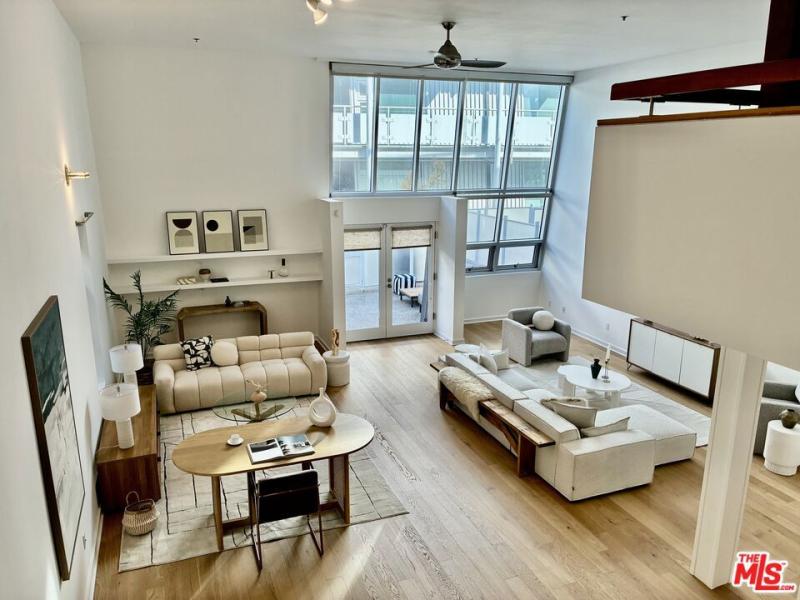
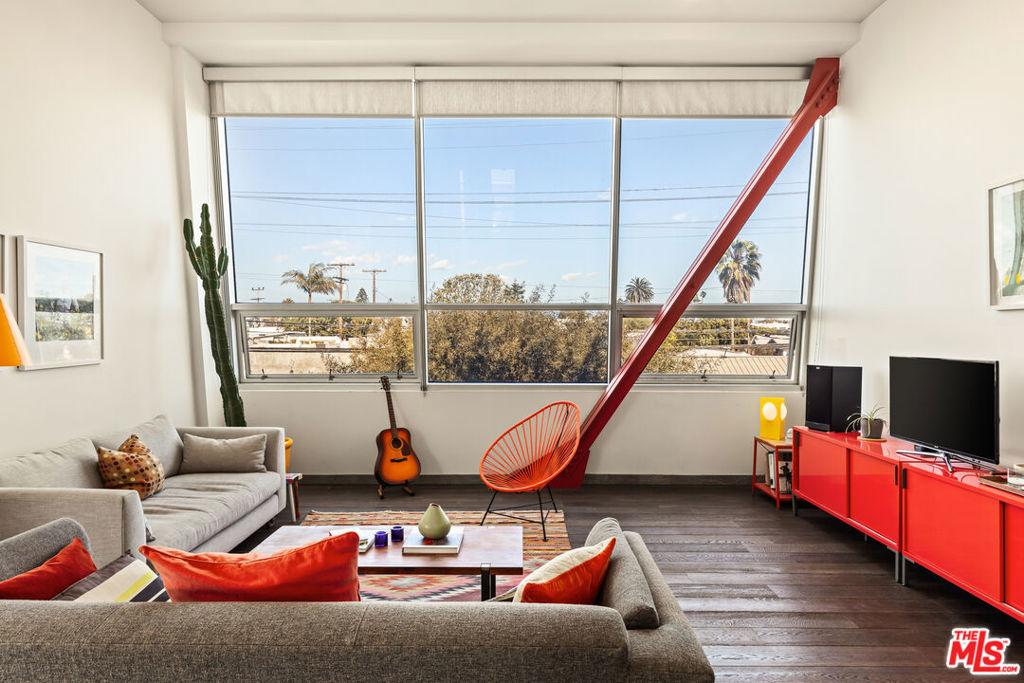
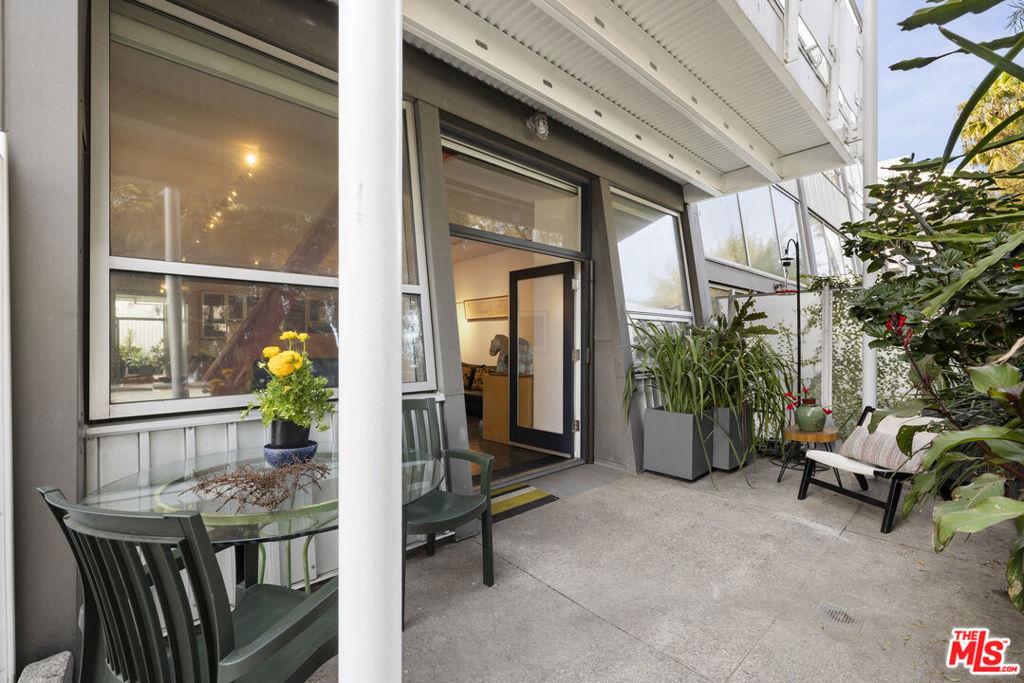
If you’re looking at Venice Art Lofts downtown Los Angeles condos for sale, you’re looking at a loft condo building in the Downtown Los Angeles neighborhood — open floor plans, high ceilings, and industrial-inspired finishes. Residents get Metro rail access, Arts District character, and the walkable urban core of DTLA. Browse the current listings below, or reach out to The Knight Group directly if you want to see what’s available off-market here as well.
The housing stock in this building is loft-style rather than traditional condo layouts, so expect open volume and hard finishes instead of compartmentalized rooms. What varies most is the individual unit: ceiling height, floor plan, and how each owner has handled the open space differ from listing to listing, and that shows up in price. Our team knows this specific pocket of Downtown LA and can tell you quickly which units are worth your time.
Venice Art Lofts is a loft condo building in the Downtown Los Angeles neighborhood, offering open floor plans, high ceilings, and industrial-inspired finishes within the Downtown LA condo market. The community provides residents with access to Metro rail access, Arts District character, and the walkable urban core of DTLA, making it a relevant option for buyers targeting this part of Los Angeles.
Browse current listings below, or contact The Knight Group directly for on- and off-market options in this community. Our team has direct knowledge of this specific area and can help you navigate the market efficiently.
Browse all Los Angeles real estate — or explore the full Los Angeles luxury real estate market.
Venice Art Lofts is positioned within the Downtown Los Angeles neighborhood of Los Angeles, a location that provides residents with access to Metro rail access, Arts District character, and the walkable urban core of DTLA. As a loft condo building, the community delivers open floor plans, high ceilings, and industrial-inspired finishes within a Downtown Los Angeles residential context.
The units at Venice Art Lofts are organized within a loft condo building structure, reflecting the building conventions of the Downtown Los Angeles submarket. Floor plans range from studio and one-bedroom configurations to larger multi-bedroom units, accommodating the diverse buyer profile that the Downtown LA area attracts.
HOA amenities and services at Venice Art Lofts typically include common area maintenance, landscaping, and building facilities appropriate to the community’s scale. Buyers should request the current HOA budget and CC&Rs to understand the full scope of services included in the monthly fee.
Downtown Los Angeles is known for Metro rail access, Arts District character, and the walkable urban core of DTLA. Living at Venice Art Lofts puts residents within the daily radius of these neighborhood features, which represents the primary value proposition of this location relative to alternatives in other parts of the Los Angeles market.
Buyers at Venice Art Lofts tend to be individuals and couples drawn to the Downtown Los Angeles neighborhood for its specific combination of Metro rail access, Arts District character, and the walkable urban core of DTLA. Both primary residence buyers and investors target the Downtown LA market for its consistent demand from employed professionals and renters across multiple market cycles.
This area of Los Angeles represents the kind of residential character that draws buyers away from more generic suburban options. The combination of established streetscapes, accessible local amenities, and strong community identity creates a living environment that sustains demand even during broader market slowdowns. Buyers who discover this specific pocket of Los Angeles frequently note that its character differs meaningfully from adjacent neighborhoods — in ways that matter to long-term ownership satisfaction.
The residential mix here includes a range of price points, architectural periods, and lifestyle configurations that serves buyers from different stages of life. This diversity of options means that buyers in multiple income brackets often compete for the same addresses — keeping days-on-market competitive and absorption rates steady. The Knight Group monitors both the listed and off-market inventory in this area to give our clients early access to opportunities before they become widely known.
Buyers targeting Los Angeles should approach the market with a clear sense of their priorities and a financing situation that allows them to move quickly when the right property appears. The inventory in this area tends to absorb well-priced properties faster than buyers expect — particularly when a home is updated, well-located within the area, and priced within the most active demand tier.
The most common mistake buyers make in Los Angeles is treating early viewings as low-stakes exploration. By the time a listing has been toured casually and a buyer decides they want it, a serious competing buyer has often already submitted an offer. Working with The Knight Group means you’re identifying opportunities earlier and positioned to act with confidence rather than urgency-driven concessions.
Pre-approval with a reputable local lender is a baseline expectation in this market. Sellers in Los Angeles routinely request proof of funds or pre-approval letters before accepting showing appointments on competitive listings. Having that documentation prepared signals that you’re a serious buyer and often earns better access to sellers who might otherwise prioritize buyers who have demonstrated financial readiness.
Sellers in Los Angeles benefit from positioning their home within the first two weeks of listing at the right price — not an aspirational price. The local buyer pool responds to new inventory quickly, and well-priced homes in strong condition often see their most competitive offers in the first seven to ten days. Overpricing at the outset frequently results in price reductions that train buyers to expect further reductions, ultimately yielding a lower sale price than a correctly priced launch would have achieved.
Pre-listing preparation matters more in Los Angeles than in markets where buyers routinely expect to do work. Buyers here are often purchasing at or near the top of their financial capacity, which makes deferred maintenance and cosmetic updates feel more consequential. Minor investments in paint, landscaping, and hardware updates consistently return multiples of their cost in buyer perception and final sale price.
The Knight Group’s approach to seller representation includes a detailed comparable market analysis specific to the immediate neighborhood, not just the broader city, along with photography and marketing positioning calibrated to the specific buyer demographic most likely to value your home’s distinguishing features.
Residential real estate in Los Angeles has demonstrated consistent long-term appreciation driven by a combination of supply constraints, strong employment access, and sustained buyer demand from multiple demographic groups. The Southern California market overall maintains one of the most reliable appreciation profiles in the country, and well-located properties within established neighborhoods like those in Los Angeles tend to outperform broader market averages.
Buyers who approach their purchase with a five-to-ten year horizon are typically well-served in this market. Short-term ownership in any market carries more risk, and Los Angeles is no exception — transaction costs make short holding periods less predictable. But buyers who commit to the area and allow appreciation to compound alongside principal paydown historically achieve meaningful equity positions.
Rental demand in Los Angeles also supports the investment thesis for buyers who may need flexibility. The rental pool is active and can absorb well-maintained single-family homes and condominiums at rates that, in many cases, offset carrying costs meaningfully. The Knight Group can provide current rental comparable data to help buyers model ownership scenarios accurately.
The Knight Group maintains an active presence in Los Angeles and the surrounding areas — not just as a transactional brokerage, but as a genuine local resource for buyers and sellers who want an informed, strategic partner throughout the process. Our familiarity with this specific market means we can identify when a listing is priced correctly versus aspirationally, when a neighborhood’s trajectory is improving, and when off-market opportunities are worth pursuing before they reach the MLS.
For buyers, that local knowledge translates into better targeting of time and energy — focusing on properties and pockets that genuinely fit your criteria rather than touring everything in a zip code. For sellers, it means pricing decisions grounded in what this specific street and neighborhood are actually clearing at, not what a broader market index suggests.
We work with a limited number of clients at any given time to ensure that every buyer and seller receives the level of attention and market intelligence that a significant financial transaction deserves. If you’re considering a purchase or sale in Los Angeles and want to understand what’s currently available — including off-market inventory we’re tracking — reach out to The Knight Group directly for a confidential initial conversation.
This community provides access to the greater Los Angeles area’s lifestyle, employment, and cultural amenities.
School assignment for Venice Art varies by specific location. Buyers should verify school assignments for specific addresses. Buyers should verify the specific school assignment for any unit through the district’s school finder tool, as assignment can vary by specific address.
Commute details depend on the specific location. The greater LA metro is served by the Metro rail system and multiple freeway corridors.
The Los Angeles metro has one of the most diverse dining scenes in the world.
Los Angeles Metro provides a range of outdoor and cultural recreation options for residents. Buyers should walk or drive the specific streets around Venice Art to evaluate walking distance to their priority amenities — park access, grocery options, transit stops, and restaurant concentrations vary by the specific building location within Los Angeles Metro.
Los Angeles Unified School District (LAUSD) serves this area. The combination of public school performance and proximity to private school alternatives makes Los Angeles a consistent choice for education-focused buyers. Strong school districts are one of the primary drivers of sustained home price appreciation over long investment horizons, and Los Angeles’s school profile supports that thesis.
Commuting residents use LA freeway network and Metro system for typical daily routes, with drive times of 15–45 minutes to major employment centers throughout Los Angeles. The increasing flexibility of remote and hybrid work arrangements has reduced the commute priority for many buyers, but freeway and transit access remain a meaningful factor in pricing at the sub-neighborhood level.
For daily life, local restaurant corridors and neighborhood dining provides dining and retail options without requiring significant driving. parks, trails, and coastal access throughout Southern California give residents access to outdoor recreation that Southern California buyers consistently prioritize. The year-round mild climate extends the effective use of outdoor amenities — a genuine quality-of-life advantage that is difficult to replicate in other US markets.
The Los Angeles metro condo market has shown consistent long-term appreciation driven by population growth, supply constraints, and consistent demand.
Units at Venice Art have historically traded in the varies by location range depending on floor plan size, floor level, view orientation, and renovation level. Properties with premium views or significant updates trade at the upper end of the community’s range; standard-condition units on lower floors or without premium views represent the entry point.
The buyer pool reflects the neighborhood’s specific demographics, employment proximity, and lifestyle access.
Los Angeles metro condos have shown consistent long-term appreciation across most neighborhoods. Within Venice Art, units on higher floors with view exposure typically achieve better rental rates and shorter vacancy periods. HOA fees should be evaluated as part of the total cost of ownership when comparing investment returns to alternatives. The Knight Group can provide a return analysis specific to Venice Art for clients evaluating the investment case.
A portion of condo transactions at buildings like Venice Art occur off-market, particularly when a resident wants to test buyer interest without the commitment of a public listing. The Knight Group’s access to Compass Private Exclusives and its direct relationships in the Los Angeles Metro condo market provide buyers with a window into Venice Art inventory that does not appear on Zillow or Redfin. Buyers specifically targeting Venice Art should register their interest with The Knight Group to be notified immediately when a unit becomes available, including off-market opportunities.
Active and recent transactions in this area of Los Angeles reflect the $500K–$2.5M range for comparable properties, with condition and specific location within the neighborhood driving positioning within that range. Fully updated, well-staged homes in prime pockets typically receive multiple offers within days. Deferred maintenance and dated layouts tend to sit considerably longer and attract lower offers.
The buyer pool here skews toward buyers seeking urban convenience and strong location fundamentals. This demand composition is important for sellers pricing their homes and for buyers calibrating offer strategy — understanding who else is bidding and why informs how aggressive to be on pricing, contingency waiver, and close timeline.
proximity to employment, lifestyle amenities, and transportation drives consistent demand. The Knight Group provides a detailed current market analysis for this specific area on request — including recent sales data, pending transactions, and off-market comparables that don’t appear in standard MLS searches.
HOA fees cover building maintenance and shared amenities — review reserve fund health before purchasing
Venice Art Lofts is located in the Downtown Los Angeles area of Los Angeles, which offers Metro rail access, Arts District character, and the walkable urban core of DTLA. The building falls within the Downtown LA condo market, which serves buyers who specifically want access to Downtown Los Angeles’s residential character and amenities.
Most condominiums in the Downtown Los Angeles area include at least one assigned or deeded parking space per unit. Some floor plans include tandem or additional spaces. Guest parking availability varies by building. Buyers should confirm the number and type of parking spaces included with any specific unit before purchasing.
Rental policies at Venice Art Lofts are governed by the community’s CC&Rs and may include restrictions on minimum lease terms, the proportion of units that can be rented, and short-term rental platforms like Airbnb. Buyers intending to use the property as an investment rental should review the governing documents carefully and confirm current rental policies with the HOA management company.
School assignments in Downtown Los Angeles depend on the specific address and grade level. Buyers with school-age children should verify attendance zones with the applicable Los Angeles Unified School District or charter school authority before finalizing a purchase. A local agent familiar with the Downtown Los Angeles market can help identify current school assignments for any specific address.
Explore more Downtown Los Angeles neighborhoods:
Signup for email alerts when properties match your interest!