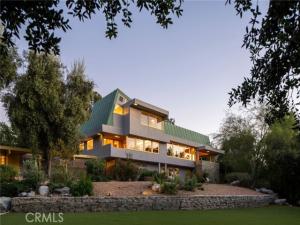
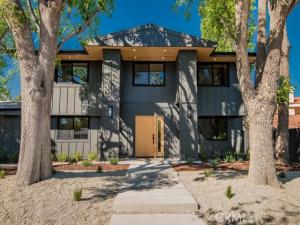
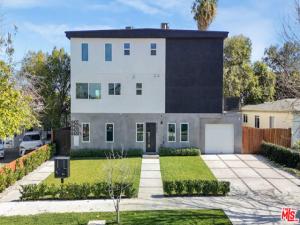
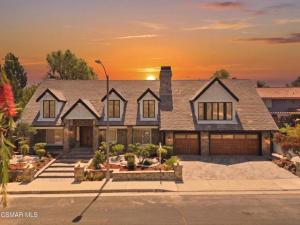
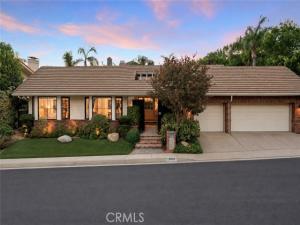
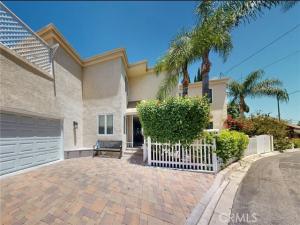
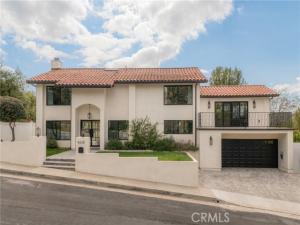
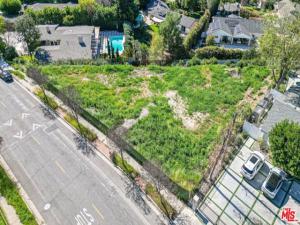
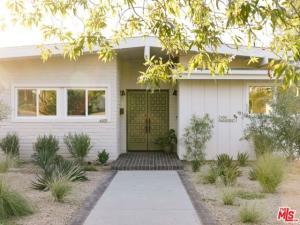
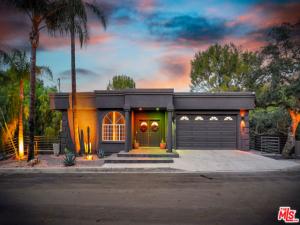
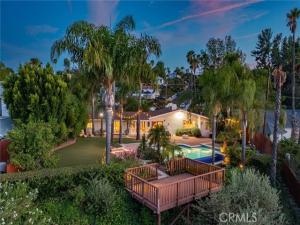
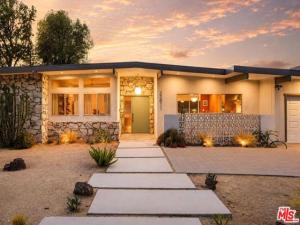
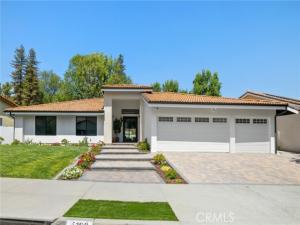
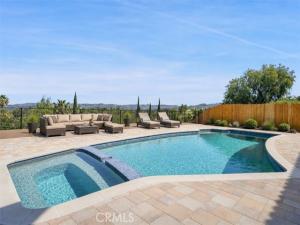
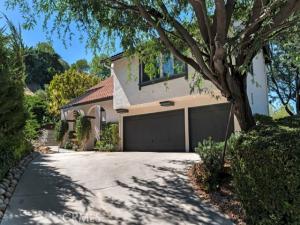
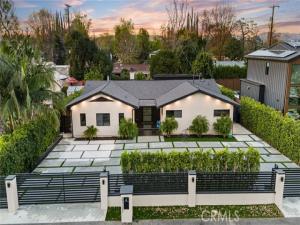
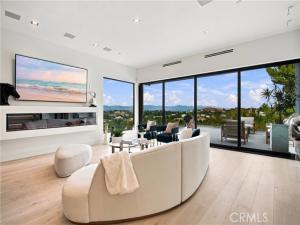
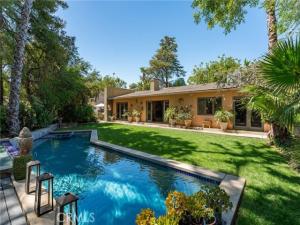
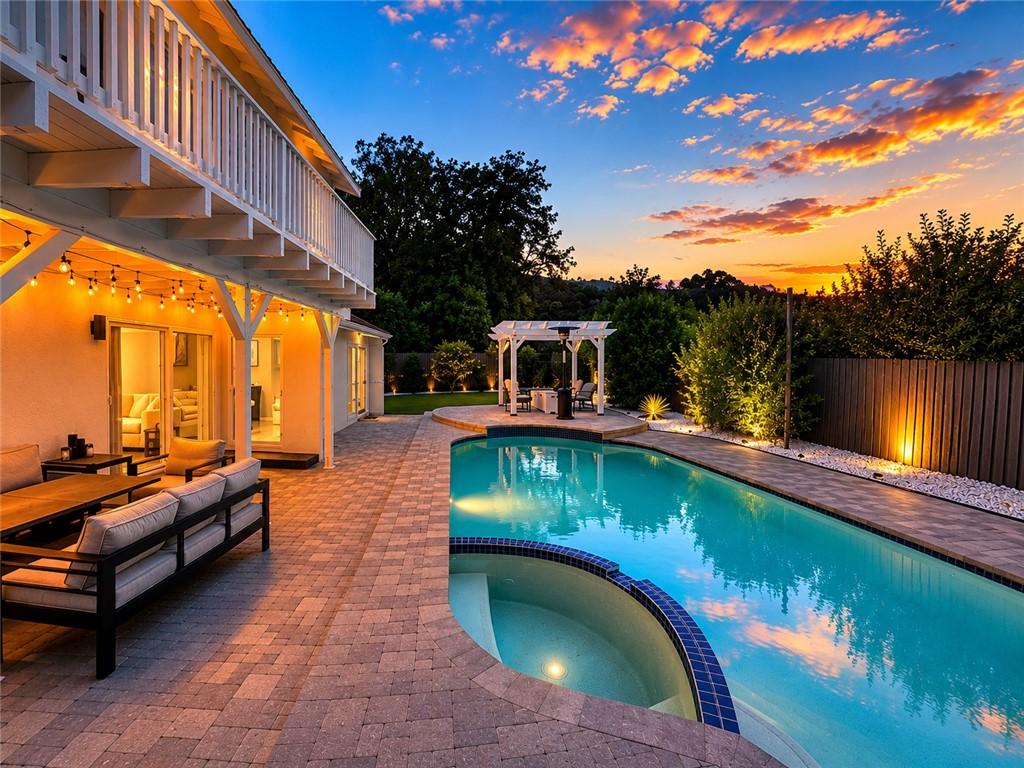
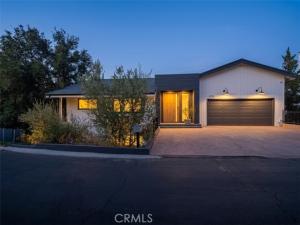
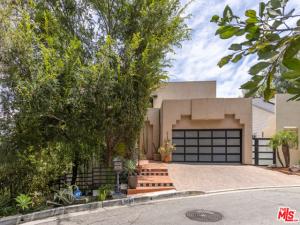
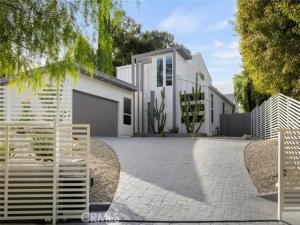
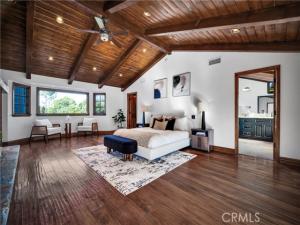
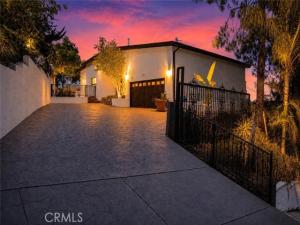
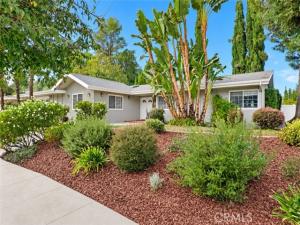
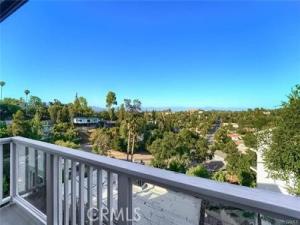
Fire Risk: Valley Circle sits near the western edge of Woodland Hills toward the foothills, and parts of the neighborhood closer to the hillside may fall within or near a Very High Fire Hazard Severity Zone under Cal Fire’s mapping.
Climate: The neighborhood experiences typical San Fernando Valley summer heat, with the western edge picking up slightly more breeze from the Calabasas and western valley direction than neighborhoods further east.
Getting Around: Valley Circle Boulevard runs north-south through the neighborhood, connecting to Mulholland Drive to the south and Vanowen Street and the Warner Center area to the north, with the 101 freeway accessible via Topanga Canyon Boulevard.
Schools:
Water: Water service is provided by the Los Angeles Department of Water and Power (LADWP).
What schools serve Valley Circle?
Los Angeles Unified School District (LAUSD) serves this area. Within the neighborhood’s draw zone, families typically access Haynes Charter, Robert Frost Middle, and El Camino Real Charter. LAUSD and private school options are also available for families pursuing specialized programs in math, arts, or bilingual education. The availability of strong public schools at multiple grade levels is a consistent driver of demand in this area.
What’s the commute like from Valley Circle?
Residents commute primarily via Ventura Blvd, the 101 Freeway, and De Soto Ave, with typical drive times of 25–50 minutes to Warner Center, Burbank, and Century City. For buyers who prioritize non-freeway alternatives, local surface streets and rideshare coverage are solid. Remote work has reduced the commute calculus for many buyers in this market, but access to major employment corridors still factors into pricing at the neighborhood level.
What dining and shopping is near Valley Circle?
Day-to-day conveniences are handled by The Village at Westfield Topanga, Ventura Blvd restaurant corridor, and Warner Center. Grocery options, pharmacies, fitness studios, and coffee shops are accessible without significant driving. The mix of national brands and local independents gives the area a lived-in feel that distinguishes it from purely commercial suburban centers.
What recreation and outdoor activities are in Valley Circle?
Outdoor recreation centers on Topanga State Park, the Nash Bridges filming locations, and Westfield Topanga. Year-round outdoor activity is the norm in Southern California, and this neighborhood’s access to trails, parks, and recreational facilities is a meaningful part of the value proposition for active buyers. Nearby options expand the range further for buyers who prioritize specific activities like cycling, hiking, or swimming.
What is it like to live in Valley Circle Woodland Hills Homes?
- Valley Circle Woodland Hills Homes sit near the western edge of Woodland Hills toward the foothills, with parts of the area closer to the hillside terrain.
- Parts of the neighborhood closer to the hillside may fall within or near a Very High Fire Hazard Severity Zone under Cal Fire’s mapping.
- Summer weather brings typical San Fernando Valley heat, with the western edge picking up slightly more breeze than neighborhoods further east.
- Breezes arrive from the Calabasas and western valley direction, giving the western edge a marginally cooler feel than the eastern side.
- Valley Circle Boulevard runs north-south through Valley Circle Woodland Hills Homes, connecting to Mulholland Drive to the south.
- Vanowen Street and the Warner Center area sit to the north along the same route, with freeway access reached via Topanga Canyon Boulevard.
- Water service throughout Valley Circle Woodland Hills Homes is provided by the Los Angeles Department of Water and Power.
- Los Angeles Unified School District serves the area, with families in the draw zone typically accessing Haynes Charter, Robert Frost Middle, and El Camino Real Charter.
- Private school options join LAUSD choices for families pursuing specialized programs in math, arts, or bilingual education.
- Strong public schools at multiple grade levels act as a consistent driver of housing demand across the area.
- Commuters rely primarily on Ventura Boulevard, the Ventura Freeway, and De Soto Avenue to reach Warner Center, Burbank, and Century City.
- Outdoor recreation centers on Topanga State Park, the Nash Bridges filming locations, and Westfield Topanga, with trails, parks, and recreational facilities close at hand.
MarketTrends
What is the Valley Circle market like right now?
Valley Circle is tracked as a distinct sub-market of Woodland Hills, and its figures diverge from the parent average. The measurements below come from CRMLS listing data as of September 2026.
- Median list price across 28 tracked Valley Circle properties: $1,319,750.
- Median lot size in Valley Circle: 8,541 sq ft.
- Median living area in Valley Circle: 2,111 sq ft.
- Median days on market in Valley Circle: 23.
- Housing stock in Valley Circle was built between 1959 and 2026, with a median year of 1961.
- Typical Valley Circle home height: 1 story.
How does Valley Circle compare with nearby Woodland Hills neighborhoods?
Median lot size separates Woodland Hills sub-markets more sharply than price does. Valley Circle ranks 6th of the 9 comparable sub-markets tracked here.
- Walnut Acres Estates: median lot 21,468 sq ft, median list price $2,899,500.
- College Acres: median lot 19,105 sq ft, median list price $2,149,999.
- Vista De Oro: median lot 17,776 sq ft, median list price $1,897,499.
- Woodland Hills: median lot 11,136 sq ft, median list price $1,600,000.
- Carlton Terrace: median lot 10,573 sq ft, median list price $1,309,950.
- Valley Circle: median lot 8,541 sq ft, median list price $1,319,750.
- Dumetz Hills: median lot 7,813 sq ft, median list price $1,249,000.
- Warner Center: median lot 7,681 sq ft, median list price $1,025,000.
How much do homes in Valley Circle actually sell for?
Valley Circle trades close to asking price. Across 12 recorded sales, homes traded at a median of 96.3% of their original asking price after a median 19 days on market (CRMLS, September 2026). Asking prices are what sellers hope for; these are the numbers they accepted.
- Homes in Valley Circle sold for a median of 96.3% of their original asking price across 12 recorded sales.
- Median time on market in Valley Circle: 19 days.
- 42% of Valley Circle sellers reduced their price before selling.
- 25% of sales in Valley Circle closed above the original asking price.
- Median recorded sale price in Valley Circle: $1,312,500.
- Median recorded price per square foot in Valley Circle: $642.
Where price resistance shows up in Woodland Hills
Negotiating room is not evenly distributed across price. Measured across recorded sales in this dataset, the gap between asking and accepted widens sharply at the top of the market.
- Under $1M: sold at a median 98.7% of original ask after 20 days, with 33% of sellers reducing (1316 sales).
- $1M-$2M: sold at a median 99.3% of original ask after 19 days, with 28% of sellers reducing (1571 sales).
- $2M-$5M: sold at a median 98.9% of original ask after 22 days, with 20% of sellers reducing (752 sales).
- $5M and above: sold at a median 91.3% of original ask after 54 days, with 24% of sellers reducing (174 sales).
What are current prices in Valley Circle?
Active listings in this area of Woodland Hills have been trading in the $900K–$3.5M range for single-family homes, depending on square footage, lot size, and renovation quality. The market is sensitive to condition: fully updated homes transact at the top of the range, while fixer-upper and dated inventory sits longer and tends to attract investor offers below list. Understanding this bifurcation is essential for buyers calibrating their search budget.
Who Is Buying in This Area
The buyer profile here skews toward families seeking larger lots, Warner Center professionals, and buyers priced out of Studio City and Encino. Demand is rarely speculative — most buyers who commit to this neighborhood are making primary residence decisions tied to school zoning, commute routes, or lifestyle preferences that are not easily substituted elsewhere. This makes the market relatively resilient during broader downturns: demand does not evaporate, it waits.
What’s Valley Circle’s inventory like?
Inventory has been tight relative to historical averages. Well-priced homes in move-in condition typically receive multiple offers within the first week. Overpriced or significantly deferred-maintenance properties sit considerably longer — sometimes through multiple price reductions — before finding a buyer. The Knight Group uses real-time MLS data to identify mispriced inventory and act before market corrections happen.
What Drives Woodland Hills Pricing
The price dynamics in this area are shaped by Woodland Hills offers more square footage per dollar than most Valley markets, attracting value-driven buyers. Buyers who understand these local drivers are better positioned to make competitive offers and negotiate from strength. The Knight Group’s market intelligence extends beyond list prices and includes off-market sales, pending transactions, and expired listings that paint a more complete picture of true market value in this area.
How does Valley Circle compare to other Woodland Hills areas?
Woodland Hills is the western SFV’s most diverse housing market by price tier: the Warner Center high-rise condo zone trades $450K-$850K; the south-of-Ventura flat residential grid trades $1.0M-$1.8M for single-family; and the north-of-Ventura hillside estates command $2.0M-$5.5M+ for the view properties above the boulevard. The Warner Center employment hub (home to major employers including Warner Bros. Games, Anthem Blue Cross, and the many commercial office tenants in the WB Building and adjacent towers) creates a walk-or-bike-to-work buyer profile from the adjacent residential neighborhoods that few SFV communities can match. The Ventura Boulevard commercial corridor provides the retail and dining infrastructure; the US-101 freeway access at multiple Woodland Hills interchanges connects the western SFV to Downtown (30-35 minutes), the Westside via the 405 interchange at Calabasas (20-25 minutes), and the Conejo Valley employment corridor to the west. Woodland Hills’ appreciation over the past decade has outpaced the broader SFV average due to the Warner Center employment growth and the continued investment in the western boulevard commercial corridor.
What is the market for Valley Circle Woodland Hills Homes like?
- Valley Circle Woodland Hills Homes cover a wider price spread than many single-tract Woodland Hills neighborhoods, from entry-level original houses to large expanded properties.
- Smaller, original-era houses tend to sell closer to or below the Woodland Hills citywide median for single-family homes.
- Expanded or rebuilt homes on the larger end of the size range have pushed well above the citywide median sale price.
- Condition drives outcomes sharply, with fully updated houses transacting at the top of the range across Valley Circle Woodland Hills Homes.
- Fixer-upper and dated inventory sits longer on the market and tends to attract investor offers below the asking price.
- Buyer profiles skew toward families seeking larger lots, Warner Center professionals, and buyers priced out of Studio City and Encino.
- Demand is rarely speculative, with most buyers making primary residence decisions tied to school zoning, commute routes, or lifestyle preferences.
- Inventory across Valley Circle Woodland Hills Homes has been tight relative to historical averages, keeping well-priced move-in-ready listings competitive.
- Overpriced or significantly deferred-maintenance properties sit considerably longer, sometimes moving through multiple price reductions before finding a buyer.
- Woodland Hills offers more square footage per dollar than most Valley markets, attracting value-driven buyers into the area.
- Woodland Hills ranks as the western San Fernando Valley’s most diverse housing market by price tier, spanning Warner Center condos to hillside estates.
- Warner Center employment, the Ventura Boulevard retail corridor, and freeway access at multiple interchanges shape pricing across the western San Fernando Valley.
What is Valley Circle known for?
It is a large, established neighborhood on the western edge of Woodland Hills along Valley Circle Boulevard, with about 1,031 residences and roughly 2,789 residents according to Census data.
How old are the homes in Valley Circle?
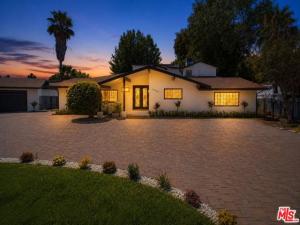
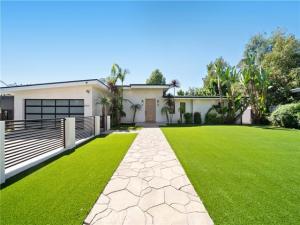
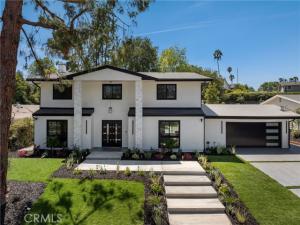
Construction began in 1959, and the neighborhood includes a mix of original homes, additions, and full rebuilds completed over the decades since.
What is the range of home sizes in Valley Circle?
Homes in the neighborhood range from about 1,150 to 4,129 square feet, one of the widest size ranges of any Woodland Hills neighborhood.
How competitive is the market for homes in Woodland Hills?
Competition varies significantly by price point and condition. Turnkey single-family homes in desirable pockets of Woodland Hills often attract multiple offers — particularly when listed under $900K. Fixer-uppers and properties with deferred maintenance see much softer competition. Working with an agent who has real-time visibility into days-on-market and offer-history data is critical to calibrating your bid strategy correctly.
Is Woodland Hills a good area for long-term appreciation?
Woodland Hills has demonstrated consistent appreciation over the past decade, supported by Woodland Hills offers more square footage per dollar than most Valley markets, attracting value-driven buyers. While no market guarantees future returns, the fundamentals here — limited land supply, strong school performance, and proximity to employment — align with the characteristics that historically underpin sustained appreciation in Southern California. The Knight Group can provide a detailed appreciation analysis for specific streets or sub-neighborhoods on request.
What should buyers know about off-market homes in Woodland Hills?
A meaningful percentage of transactions in Woodland Hills — particularly in the upper price tiers — never hit the MLS. Sellers who want privacy, convenience, or to avoid the preparation costs of a listed sale often prefer a direct buyer introduction. The Knight Group maintains an active off-market network in Woodland Hills and can present qualified buyers to sellers before a property is listed. If your target property type is not available on-market, a conversation with our team about off-market options is worth having.
How do I find the right neighborhood within Woodland Hills?
Woodland Hills contains multiple distinct micro-neighborhoods, each with its own character, price range, and amenity profile. The differences between a north-of-Ventura address and a south-of-Ventura address in this area, for example, can be meaningful in terms of pricing, lot size, and school assignment. The Knight Group provides neighborhood-level guidance — not just city-level — to ensure buyers understand exactly what they are buying into before making an offer.
Is Valley Circle Estates in Woodland Hills or West Hills?
Valley Circle Estates straddles the Woodland Hills-West Hills boundary, with some streets falling within the Woodland Hills community designation and others in West Hills. The distinction primarily matters for real estate listing designations and neighborhood identity, as both communities share the same ZIP codes and LAUSD school boundaries. Buyers should confirm which community designation applies to any specific address, as the Woodland Hills vs. West Hills designation can affect comparables and perceived neighborhood quality in the local market.