Browse all Monterey County real estate.

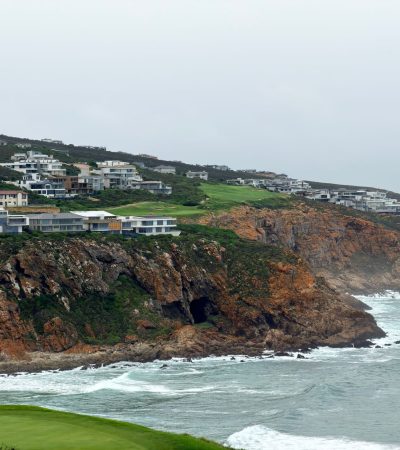
Big Sur CA homes for sale are among the scarcest in the state, spread thinly across roughly 90 miles of coast between Carmel and San Simeon. Land here is hemmed in by the Santa Lucia Mountains and the Pacific, and most of the surrounding acreage — Los Padres National Forest, state parks, conservation land — will never be built on. In June 2026 the median list price was $2.69M, or about $1,101 per square foot, per Movoto data. Active inventory typically runs in the single digits to low double digits, not hundreds.
There is no incorporated town and no subdivisions. Names like Pfeiffer Beach, Partington Ridge, Lucia, and Gorda are landmarks and service stops, not separate markets. Much of the private housing sits along Palo Colorado, Coast Ridge, and Nacimiento-Fergusson roads. Each parcel has to be judged on its own access, viewshed status, and utilities.
Browse the current listings below, or contact The Knight Group to talk through what owning on this coast actually involves before you tour.
Big Sur is not an incorporated town. It is a region, defined by the coastline it occupies rather than by city limits. The commonly cited boundaries run about 60 miles of Highway 1 from Hurricane Point in the north to the Monterey and San Luis Obispo county line in the south, with the broader cultural definition stretching the full 90 miles from Carmel down to San Simeon and Hearst Castle.
Within that span, the places people call by name are mostly landmarks, ranches, ridges, and small clusters of services rather than platted subdivisions. Pfeiffer Beach and Julia Pfeiffer Burns State Park anchor the central section near Big Sur Village. Partington Cove and Partington Ridge sit further south. Lucia and Gorda are small clusters of gas stations, restaurants, and lodging that appear on maps as towns but function as service stops. Several narrow roads climb east from Highway 1 into the mountains, principally Palo Colorado, Coast Ridge, and Nacimiento-Fergusson, and much of the region’s private housing sits along or above these.
Because this hub currently has no individual community sub-pages, treat these names as orientation points rather than distinct markets. The parcels that come up for sale are spread thinly across the whole coast, and each one has to be evaluated on its own access, its own viewshed status, and its own utility situation.
Scarcity, protected surroundings, and permanence of view. Big Sur is widely regarded as one of the most exclusive coastal markets in California precisely because so little of the land can ever be developed. The homes that exist are surrounded by public land and view-protected open space, so what a buyer acquires is not just a house but a fixed and defensible position on the coast.
The high end illustrates the range. A Mickey Muennig-designed home on five acres with ocean views was listed at $6.95M, and Big Sur’s most expensive listing in recent memory was a glass-walled home on 109 acres asking $35M. Buying in Big Sur runs about 6% above the national average per Movoto’s cost comparison, but the more useful point is the thinness of supply: at any given time the active inventory is measured in single digits to low double digits, not hundreds. When a genuinely good parcel lists, it is competing against years of pent-up demand.
They are among the most restrictive in California, and they will shape what you can and cannot do with a property. The governing document is the Big Sur Coast Land Use Plan, first approved by the Monterey County Board of Supervisors in 1981 and, after the California Coastal Commission rejected the first version, approved in amended form on April 10, 1986.
The central rule is the critical viewshed policy. The county’s stated policy is to prohibit all future public or private development that would be visible from Highway 1 and major public viewing areas, and to condition any new development in non-visible areas on specific siting and design criteria. In plain terms: if a site can be seen from the highway, from beaches, parks, campgrounds, or major trails, the county’s default position is no new visible structures, with narrow exceptions.
A Coastal Development Permit is required for a wide range of work, including development within the critical viewshed, development within 100 feet of environmentally sensitive habitat, development with positive archaeological reports, development on slopes of 30% or greater, and tree removal. Given the terrain, many Big Sur parcels trigger more than one of these. If your plan involves building new, expanding, or even significant tree work, assume permitting is a real project with its own timeline, and price that into any purchase. Monterey County has also had a Big Sur Coast Land Use Plan update in progress in recent years, so confirm the current standards with the county before you rely on any prior approval.
Access is the single most underestimated factor in this market. Highway 1 is the spine of the region, and it is vulnerable. The road was completed in 1937 after eighteen years of construction, and it has been repeatedly cut by landslides and storm damage since.
The record is specific. In 2017 the Mud Creek slide released about 6 million cubic yards of rock, destroyed a quarter mile of highway, and took more than a year and $54M to repair. In January 2021, debris from the Dolan Fire burn scar washed out roughly 150 feet of roadway at Rat Creek and forced a full closure. Detour routes are limited: Nacimiento-Fergusson Road, the main inland connection to communities like Gorda, has itself been closed to the general public after fire and rain.
For a buyer, the practical questions are: which direction do you reach this parcel from, what happens to that access when a slide closes the highway in one or both directions, and how do emergency services and deliveries reach you during a closure. Some homes sit on the mountain roads east of Highway 1, which carry their own maintenance and winter-access considerations. None of this is a reason to avoid the coast. It is a reason to underwrite access as carefully as you underwrite the structure.
Both risks are real and documented. The Dolan Fire burned nearly 130,000 acres of the Santa Lucia Range and took roughly four months to contain, and its burn scar was directly responsible for the debris flows that later took out sections of Highway 1. Big Sur sits in steep, fire-prone terrain where a fire season can be followed by a winter of slides across the same slopes.
The consequence for buyers is insurance. California’s high-hazard coastal and wildland markets have seen carriers pull back, and properties in this kind of terrain frequently end up relying on the FAIR Plan plus a wraparound policy rather than a standard homeowner’s policy. Before you remove contingencies, get an actual insurance quote in writing for the specific address. Do not assume the previous owner’s premium carries over, and do not assume coverage is available at all until a carrier confirms it. We treat the insurance quote as a gating item on any Big Sur transaction, not a formality.
Two districts split the coast. In the central and northern Big Sur area, Captain Cooper Elementary School serves grades K-5 and is part of the Carmel Unified School District, not a Big Sur district. It is a very small school; public data has reported an enrollment in the mid-40s.
The southern coast is served by the Big Sur Unified School District, which grew out of the Pacific Valley School founded in the 1920s and took its current name in 2012. Pacific Valley School sits on an open bench of land on the southern coast and serves grades K-12 across the small hamlets in that stretch. If school placement matters to you, confirm which district and school a specific parcel falls into, because the boundary between Carmel Unified and Big Sur Unified runs through the region and older parents often continue on to Carmel-area schools for higher grades.
Big Sur was home to the Esselen, Salinan, and Ohlone peoples long before the first permanent European-descended settlers arrived a little over a century ago. The region became one of cattle ranching and subsistence farming, and the names of those families still mark the land: Soberanes, Molera, Cooper, Pfeiffer, Castro, Burns, and Gamboa among them.
One thread runs directly into today’s landmarks. In the mid-1800s a young sailor named William Post arrived in Monterey, married Anselma Onesimo of the Rumsen people, and homesteaded at Soberanes Creek in 1858. The Post House still stands near the highway turnoff to Ventana, and Post Ranch Inn occupies the family’s historic land across Highway 1. For an owner, the history is not decoration. It is the reason the viewshed rules exist, the reason the archaeological-report permit trigger applies to so many parcels, and the reason a great deal of the surrounding land is held in conservation rather than available for development.
Big Sur is predominantly a second-home and legacy-property market rather than a commuter market. There is no employment base to speak of and no nearby job center within a normal daily drive, so most buyers are acquiring a retreat, a multigenerational family holding, or an architecturally significant house they intend to keep for a long time. The Muennig-designed homes and other custom architecture on this coast draw buyers specifically for the design and the setting.
That buyer profile shapes strategy. These are patient purchases. Owners here tend to hold, which is part of why so little comes to market, and the ones who sell often do so around estate and generational events rather than price cycles. If your interest is appreciation on a short horizon, this is the wrong market. If your interest is holding a permanent position on a protected coastline and using it for decades, it is close to unique.
Weigh the permitting reality first. Existing legal homes are valuable in part because they already exist under a permitting regime that makes new visible construction extremely difficult. A buildable, view-compliant vacant parcel is a different and harder proposition, because the critical viewshed policy, the slope and habitat permit triggers, and the Coastal Development Permit process can constrain or block what a buyer imagines building.
The honest trade-off: an existing home may cost more per square foot but comes with entitlements you could not easily recreate, while raw land may look cheaper on paper and then prove far more expensive and slower to realize once you account for permitting, access, utilities, fire hardening, and insurance. For most buyers, an existing, legally permitted home is the lower-risk path. We will tell you plainly which category a listing falls into and what it would take to build or expand.
Due diligence is heavier and access is the pivot. A standard Carmel or Monterey transaction does not usually turn on whether the road stays open or whether a carrier will write a policy. A Big Sur transaction can turn on both. Expect to spend real time on: the Coastal Development Permit history and any open code issues, the viewshed status of the parcel, the specific access route and its closure history, the water source (many parcels rely on wells or springs rather than municipal water), septic, and a written insurance quote for the actual address.
Because inventory is thin and each property is idiosyncratic, comparable sales are sparse and often stale. Pricing a Big Sur home is less about a per-square-foot grid and more about a case-by-case read of view, access, permitting posture, and structure quality. That is where local representation earns its keep.
Most buyers looking at Big Sur real estate end up choosing between two very different kinds of property. Parcels close to Highway 1 give you shorter drives to Carmel, easier delivery and service access, and direct proximity to the beaches and state parks — but they are also the ones most exposed to closures when a slide takes out a stretch of road, and the most likely to sit inside the critical viewshed, which limits what you can build or expand. Properties up Palo Colorado, Coast Ridge, or Nacimiento-Fergusson trade that convenience for more privacy and, in some cases, siting that falls outside the viewshed entirely.
The tradeoff is real on both sides. Ridge properties depend on private or shared roads that need maintenance and can wash out, and utilities are often self-supplied rather than connected. Ask early who maintains the access road, what the water source is, and whether the seller holds any current county approvals.
No. Big Sur is an unincorporated coastal region of Monterey County, not an incorporated city. The names people use, such as Big Sur Village, Lucia, and Gorda, refer to small service clusters and areas along Highway 1 rather than to municipal jurisdictions.
Per Movoto data, the median list price in June 2026 was about $2.69M, or roughly $1,101 per square foot, down about 9-10% year over year. The high end runs into the tens of millions: recent listings included a five-acre Muennig-designed home at $6.95M and a 109-acre property at $35M. Inventory is very thin, so a median figure is a rough guide, not a reliable predictor of any single sale.
Usually not if the site is visible from Highway 1 or major public viewing areas. The county’s critical viewshed policy is to prohibit new development visible from the highway, beaches, parks, campgrounds, and major trails, with narrow exceptions. A Coastal Development Permit is required for viewshed, steep-slope, habitat, archaeological, and tree-removal work. Confirm the current rules with Monterey County for any specific parcel.
Not always. Highway 1 has been repeatedly closed by landslides and storm damage, including the 2017 Mud Creek slide and the 2021 Rat Creek washout tied to the Dolan Fire burn scar. Closures can isolate a parcel or force long detours, and inland routes like Nacimiento-Fergusson Road have their own closures. Access history is a core due-diligence item.
It varies by property and is not guaranteed. Big Sur sits in high wildfire and landslide hazard terrain, and many properties rely on the California FAIR Plan plus supplemental coverage rather than a standard policy. Get a written quote for the specific address before removing contingencies.
Captain Cooper Elementary (grades K-5) serves the central and northern area and is part of Carmel Unified School District. The southern coast is served by Big Sur Unified School District, whose Pacific Valley School serves grades K-12. Confirm the district for any specific parcel, since the boundary runs through the region.
It is a scarcity and legacy play, not a quick-appreciation play. Supply is fixed by conservation and view protection, buyers tend to hold for decades, and turnover is low. If your horizon is long and your priority is a permanent position on a protected coast, it can make sense. If you need liquidity or short-term appreciation, look elsewhere.
Generally no. Many parcels rely on private wells or springs and on septic systems rather than municipal utilities. Water source and reliability, along with septic condition, should be verified in escrow.
We treat Big Sur as a due-diligence-first market, because that is what it is. Before you tour, we tell you which listings are legally permitted existing homes versus land with real build constraints, and we flag the access, viewshed, insurance, and utility questions specific to each parcel. We coordinate the permit-history and insurance checks early, so a deal does not collapse on a discovery that should have surfaced in week one.
Because inventory is thin and holds are long, we also watch for properties before they are widely marketed and help patient buyers position for the right parcel rather than the next available one. If you want to understand what owning on this coast actually requires, review the listings below and contact The Knight Group. We will give you a precise read on any specific property, including the trade-offs, before you commit.
Lucky for you we’re looking out.
Subscribe to this Custom Search to be alerted when new properties hit the market in the area.
Choose the frequency that works for you.