What is Trabuco Canyon?
Trabuco Canyon Orange County Homes for Sale currently number 31 active listings with a median asking price of $1,200,000 (CRMLS, September 2026).
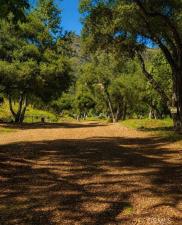
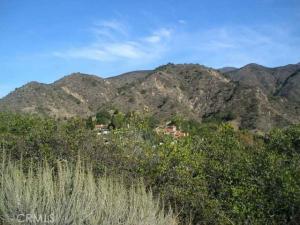
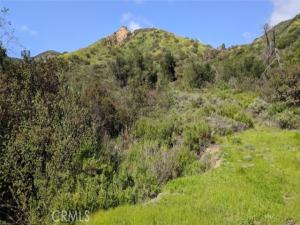
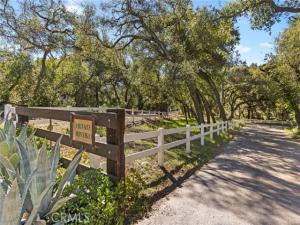
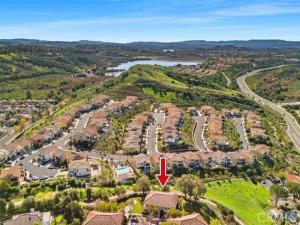
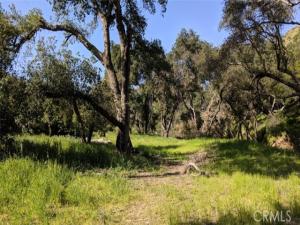
Trabuco Canyon is an unincorporated canyon community in eastern Orange County, tucked into the foothills of the Santa Ana Mountains below the Cleveland National Forest. It is rural in a way almost nothing else in Orange County still is. The 2020 U.S. Census counted 1,020 residents across 365 households in a census-designated place covering 7.283 square miles, and classified 99.9 percent of that population as rural.
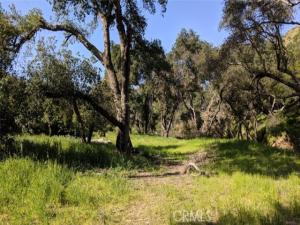
The value proposition is straightforward: land, privacy, oaks, creek frontage, and the ability to keep animals, all inside a county otherwise defined by master-planned density. You trade freeway proximity, sewer hookups, and easy insurance for acreage and quiet. That trade is the whole story of this market, and it is not the right trade for everyone.
Browse the current Trabuco Canyon listings below, or contact The Knight Group for a candid read on a specific parcel before you write an offer. Canyon property rewards diligence more than any other segment in Orange County.
Where exactly is Trabuco Canyon, and what does the name cover?
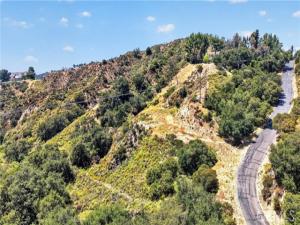
Trabuco Canyon sits north and east of Rancho Santa Margarita, reached via Plano Trabuco Road, Trabuco Canyon Road, and Live Oak Canyon Road. Elevation at the community center is 434 feet per U.S. Census geographic data, though the terrain climbs steeply behind it into the Santa Ana Mountains. The area lies partly within the Cleveland National Forest.
The name confuses buyers, and it is worth resolving early. “Trabuco Canyon” is used three ways in Orange County: the actual canyon and unincorporated census-designated place of roughly a thousand residents, the mailing address for ZIP codes 92678 and 92679, and a loose agent shorthand for the whole eastern foothill zone. That second usage is why homes legally inside the City of Rancho Santa Margarita still show a Trabuco Canyon address.
That distinction has consequences. A property in the true canyon is governed by Orange County, is likely on septic, sits in a high wildfire exposure area, and may have no HOA at all. A property with a Trabuco Canyon mailing address inside Rancho Santa Margarita city limits is a suburban home with city services, an HOA, and a very different cost profile. When a listing says Trabuco Canyon, ask which one.
What kinds of homes does Trabuco Canyon actually have?
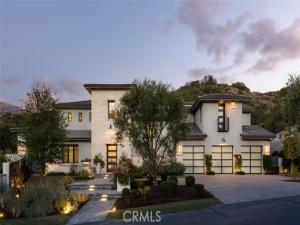
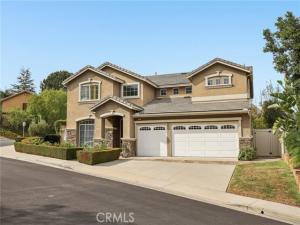
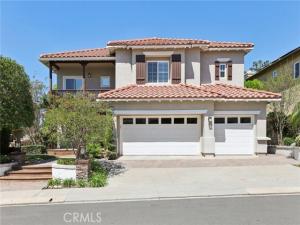
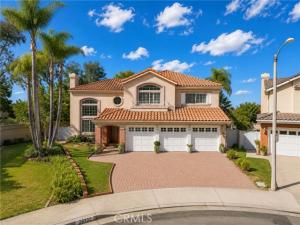
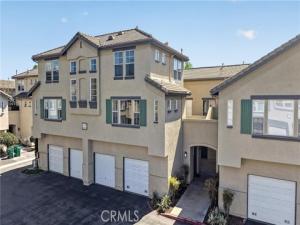
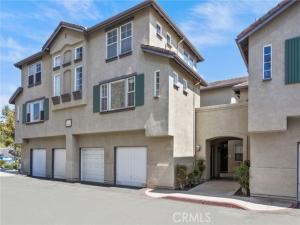
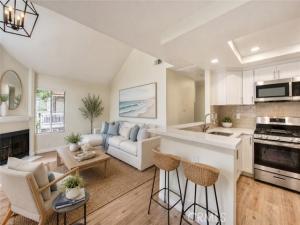
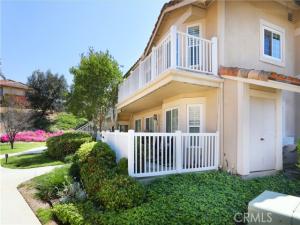
Housing stock in the true canyon is heterogeneous, which is unusual for Orange County. No single tract, no uniform build year, no dominant style. You will find older canyon cabins and small ranch houses on irregular lots, custom homes on multi-acre parcels, horse properties with barns and arenas, and the occasional heavily remodeled compound behind a gate.
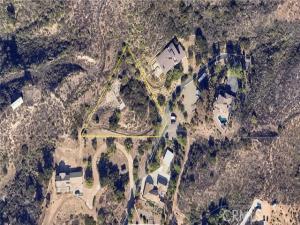
Lot geometry drives value here far more than square footage does. Two homes of identical size can be worth very different amounts depending on usable flat pad versus slope, whether the driveway is passable in wet weather, where the creek runs, and whether there is legal room for a second structure, an ADU, or animal facilities. Price-per-square-foot comparison is close to useless here. The land does the work.
Because the canyon developed incrementally over more than a century rather than as a single subdivision, permit history is uneven. Additions, decks, guest quarters, workshops, and barns are frequently unpermitted or partially permitted. That is not a reason to walk away. It is a reason to pull county records rather than trust a listing description.
Which neighborhoods and sub areas should you know?
This hub covers the canyon proper and the surrounding foothill areas sharing its address. The distinctions below matter when comparing listings.
Trabuco Oaks is the old canyon core, a cluster of homes under mature coast live oaks along Trabuco Canyon Road. It holds Trabuco Oaks Steakhouse, described by local histories as a favorite of former President Richard Nixon. This is the most rural-feeling pocket and the one most people picture when they hear the name.
Live Oak Canyon runs west toward Cook’s Corner and carries much of the through traffic to El Toro Road. Homes are scattered along the road and up side drives, with O’Neill Regional Park occupying the western half of the canyon.
Holy Jim Canyon is a side canyon inside the Cleveland National Forest, known for hiking access and its Forest Service cabin tract. Those are not conventional fee-simple homes and should not be evaluated as such. Get clear on the tenure structure before anything else.
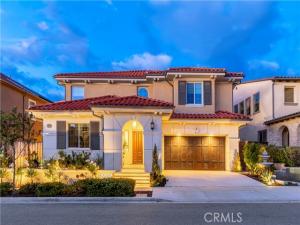
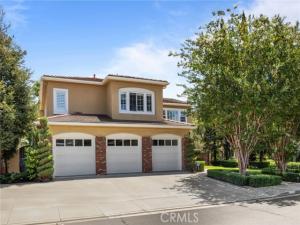
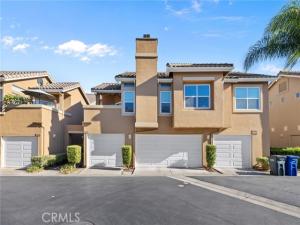
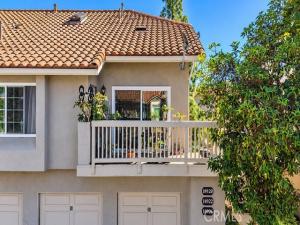
Robinson Ranch, Dove Canyon, and Rancho Cielo all carry ZIP code 92679 and Trabuco Canyon mailing addresses, but all three are within the City of Rancho Santa Margarita, which incorporated on January 1, 2000 and recorded 47,949 residents in the 2020 Census. These are master-planned neighborhoods with HOAs, city services, and suburban infrastructure. Buyers searching “Trabuco Canyon” will see them in results constantly. They are good neighborhoods. They are simply not canyon properties.
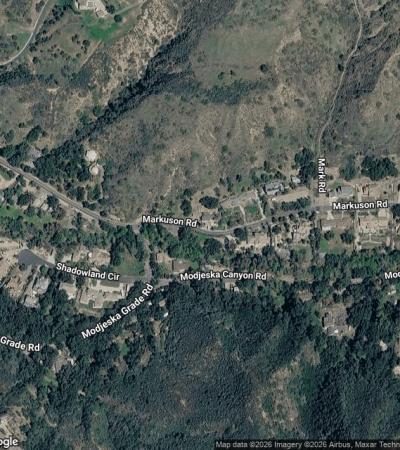
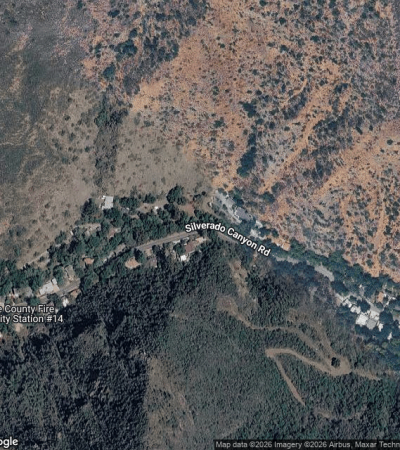
Modjeska Canyon and Silverado Canyon sit north across the ridge and share Trabuco’s rural character, access constraints, and fire history. Separate communities, same buyer pool. If you are unsure which category an address falls into, send it to The Knight Group and we will tell you before you spend a Saturday driving it.
What is the price tier, and how does it compare to the rest of Orange County?
Trabuco Canyon does not price like coastal Orange County, and it does not price like the tract markets. It prices like land. Values are set by parcel size, usable acreage, access quality, views, water and septic condition, and whether improvements are permitted. Two neighbors on the same road can be a seven-figure spread apart.
We are not going to publish a median price on this page. A median across a market of roughly a thousand residents with wildly heterogeneous parcels is a misleading number, and transaction volume in the true canyon is low enough that one unusual sale moves the average. Ask us for a parcel-level comparable set instead.
What holds up directionally is the scarcity. The Cleveland National Forest bounds the area, topography limits buildable pads, and the county is not entitling new canyon subdivisions. Supply is effectively fixed.
How serious is the wildfire risk?
Serious. Treat it as the first underwriting question, not a footnote. The canyon sits in the wildland-urban interface at the base of the Santa Ana Mountains, in the path of Santa Ana wind events, with limited road egress.
The record is documented. Residents were evacuated during the Santiago Fire in October 2007. The Holy Fire, which started August 6, 2018, burned roughly 23,000 acres and destroyed 24 structures in and around the canyon. Evacuations came again during the Airport Fire in September 2024. Three significant events in under two decades.
This does not make the canyon unbuyable. It makes it a market where defensible space, roof and vent assemblies, ember-resistant construction, and a realistic evacuation plan are part of the purchase decision rather than afterthoughts. Ask what the seller has done, when the brush was last cleared to standard, and where the second way out is if the primary road closes.
What should you expect on insurance?
Expect friction. Homeowners insurance in high wildfire exposure areas of California has tightened substantially, with carriers restricting new business and non-renewing policies in brush zones. Canyon buyers routinely find that admitted carriers will not quote, and end up in surplus lines or on the California FAIR Plan paired with a wrap policy for coverage the FAIR Plan does not provide.
The operational advice is simple: start insurance shopping the day you open escrow, not the week before closing, and get a written quote in hand before you release contingencies. Clean canyon deals get destabilized late when a buyer assumed insurance would be routine and the premium came back at a multiple of budget. Build the real number into your affordability math up front.
What are the schools?
The unincorporated communities of Trabuco Canyon and Modjeska are served by Saddleback Valley Unified School District, which also covers all of Laguna Hills and Lake Forest and parts of Mission Viejo and Rancho Santa Margarita. Schools associated with the area include Trabuco Elementary and Trabuco Mesa Elementary, Rancho Santa Margarita Intermediate, and Trabuco Hills High School. Silverado High School is also in the district.
Attendance boundaries in a district spanning both dense suburban tracts and remote canyon parcels are not intuitive, and they change. Verify the assigned schools for a specific address directly with the district rather than relying on a listing sheet or a third-party rating site.
Can you really keep horses here?
Yes, and it is one of the primary reasons buyers come here. Trabuco Canyon has a working equestrian culture rather than a decorative one, supported by direct trail access into public land. Whether a specific parcel can keep horses, and how many, depends on county zoning for that lot, parcel size, setbacks, and existing improvements. That is a parcel-level question, not a community-level one.
The trail access is what makes it worthwhile. O’Neill Regional Park covers approximately 4,500 acres and offers about 23 miles of trails used for hiking, mountain biking, and horseback riding. It spans roughly 7.5 miles of Trabuco Creek and includes the western half of Live Oak Canyon. Its Arroyo Campground, off Live Oak Canyon Road, includes 79 campsites, among them eight group sites and five horse camping sites. Beyond the park, the Trabuco Ranger District of the Cleveland National Forest opens onto the Santa Ana Mountains.
If keeping animals is the reason you are buying, say so first. It narrows the viable inventory sharply and changes which parcels are worth your time.
What is the commute like?
Realistic, but not short. There is no freeway in the canyon. Access is by two-lane roads: Trabuco Canyon Road, Live Oak Canyon Road, and Plano Trabuco Road, feeding out to El Toro Road and Santa Margarita Parkway. From there, State Route 241, the tolled Foothill Transportation Corridor, is the primary north-south connector for the eastern foothills.
Three things buyers underestimate. Toll cost is a recurring line item if SR-241 is part of your daily route, so price it into the monthly budget. Canyon roads are slow by design and slower in rain, and they occasionally close for fire, flood, or debris. Delivery, service, and contractor availability is thinner out here than five miles west, and trades often charge for the drive. None of this is disqualifying, but all of it is worth driving at your actual commute time, in both directions, before you commit.
What about water, septic, and utilities?
Infrastructure varies parcel by parcel, the single biggest departure from buying in a tract neighborhood. Water service in parts of the area is provided by the Trabuco Canyon Water District. Some properties are on district water, some rely on wells, and sewer service is not universal, so many canyon homes operate on septic.
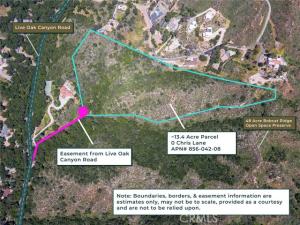
The diligence list on a canyon property should include, at minimum: the actual water source and its service history, a septic inspection with tank location and leach field condition documented, electrical service capacity, propane versus natural gas, internet and cell service tested on site rather than assumed from a coverage map, and confirmation of legal access if the driveway crosses another parcel. Easement questions matter enormously here and are frequently ambiguous in older canyon deeds.
Fire protection for unincorporated Orange County is provided by the Orange County Fire Authority. Response distance from the nearest station is a fair question to ask about any address, both for safety and for how it reads to an underwriter.
What is daily life in the canyon actually like?
Quiet, outdoor, and socially tight. The recreation is the amenity: O’Neill Regional Park, the Cleveland National Forest, and creek and ridge trails running directly off residential roads. A National Forest Adventure Pass is required for parking in designated forest areas. The forest was established on July 1, 1908 and covers roughly 460,000 acres across Orange, Riverside, and San Diego counties.
Cook’s Corner anchors the western entrance at the junction of El Toro Road, Santiago Canyon Road, and Live Oak Canyon Road. The building dates to 1884 and became a restaurant in 1926, and after motorcycle enthusiasts purchased it in 1975 it became one of Southern California’s better known riding destinations. Its annual Blessing of the Bikes each May draws an estimated 2,000 attendees. On August 23, 2023, a shooting there killed four people and wounded six. The venue reopened on September 1 of that year, and the community response illustrates how tightly connected the canyon is.
Other fixtures include Trabuco Oaks Steakhouse, Trabuco Canyon Community Church, and the Ramakrishna Monastery, a Vedanta Society property on 40 acres founded in 1942 by the writer Gerald Heard.
What is the history behind the name?
The name comes from the Spanish word trabuco, meaning blunderbuss. Accounts of the 1769 Gaspar de Portolá expedition hold that a friar traveling with the party lost the weapon in the upper canyon, and the name stuck. The Trabuco Adobe was built in 1810, and in 1846 John Forster received a Mexican land grant establishing Rancho Trabuco. Trabuco Canyon National Forest was established in 1907 and folded into the Cleveland National Forest when that forest was consolidated in 1908. A California grizzly was killed in the canyon in 1908, a useful marker for how recently this was genuine backcountry.
Much of the surrounding open space traces to ranch ownership. O’Neill Regional Park was established in 1948 when the owners of the O’Neill Ranch donated 278 acres for recreation, with acquisitions through 1982 bringing it to its present size.
Who is the wrong buyer for Trabuco Canyon?
Better to say this before you fall for a property than after. Trabuco Canyon is a poor fit if you need a short freeway commute, if your budget has no headroom for elevated insurance and maintenance, if you are uncomfortable treating wildfire exposure as a permanent condition, or if you want an HOA-managed neighborhood where infrastructure is somebody else’s problem.
It is a strong fit if you want acreage, privacy, animals, and trail access off the back gate, and you are willing to do the diligence canyon property demands. The 2020 Census put the median age here at 45.4 years, with 57.3 percent married-couple households and 30.7 percent of households including children under 18. It skews toward established buyers who chose this deliberately.
Frequently asked questions about Trabuco Canyon
Is Trabuco Canyon a city?
No. It is an unincorporated community and census-designated place governed by Orange County, not by a city council. That affects permitting, code enforcement, and which agencies you deal with. Neighboring Rancho Santa Margarita is an incorporated city and operates differently.
Why do homes in Rancho Santa Margarita have Trabuco Canyon addresses?
Because ZIP code 92679 carries a Trabuco Canyon mailing designation. Dove Canyon, Rancho Cielo, and Robinson Ranch use that ZIP while sitting inside Rancho Santa Margarita city limits. Mailing address and jurisdiction are different things, and here they diverge constantly.
Do Trabuco Canyon homes have HOAs?
Many true canyon properties have no HOA at all, which is part of the appeal. Properties in the master-planned neighborhoods that share the ZIP code generally do. Confirm on a per-property basis rather than assuming either way, and review the governing documents and reserves before removing contingencies on anything HOA-governed.
Are Trabuco Canyon homes on septic or sewer?
Both exist in the area. Many canyon properties operate on septic systems, and sewer service is not universal across the unincorporated area. Trabuco Canyon Water District provides water service to parts of the community. Verify the specific configuration for any address, and order a septic inspection where applicable.
How bad is the fire risk, honestly?
It is a real and recurring condition of owning here. The area was evacuated during the Santiago Fire in 2007 and the Airport Fire in 2024, and the 2018 Holy Fire burned roughly 23,000 acres and destroyed 24 structures. Plan for defensible space maintenance, hardened construction, and a difficult insurance market as ongoing costs.
Can I get insurance on a Trabuco Canyon home?
Usually, but often not from a standard admitted carrier and often at a premium well above suburban Orange County. Surplus lines coverage and California FAIR Plan policies paired with a wrap are common in brush-exposed canyon markets. Get a binding quote in writing early in escrow rather than at the end.
Which school district serves Trabuco Canyon?
Saddleback Valley Unified School District serves the unincorporated communities of Trabuco Canyon and Modjeska. Trabuco Elementary, Trabuco Mesa Elementary, Rancho Santa Margarita Intermediate, and Trabuco Hills High School are associated with the area. Confirm the assignment for a specific address with the district directly, since boundaries change.
Can I keep horses on a Trabuco Canyon property?
On many parcels, yes, and the area has established equestrian use with direct trail access including horse camping sites at O’Neill Regional Park’s Arroyo Campground. Whether a specific lot permits animals, and how many, depends on its county zoning, size, and setbacks. Confirm before you buy if this is the reason you are buying.
How does The Knight Group work this market?
Canyon property is a diligence business, not a volume business. We start with the parcel rather than the house: zoning and permitted use, usable versus slope acreage, recorded access and easements, water source, septic condition, permit history on every structure, brush clearance status, and what a carrier is actually going to say about it. Those findings usually determine both the price and whether the deal is worth doing.
For sellers, that same work protects your escrow. Canyon deals fall apart late, at the insurance quote or the septic report or an unpermitted addition surfacing in disclosures. Better to surface and price those items before the property goes live than to watch a buyer use them as leverage in week four.
Browse the Trabuco Canyon listings below. For a parcel-level assessment on a specific address, including comparable sales that are actually comparable, contact The Knight Group and we will put it together before you tour it.
What are Trabuco Canyon Orange County Homes actually like?
- Trabuco Canyon is an unincorporated canyon community in eastern Orange County, tucked into the foothills of the Santa Ana Mountains.
- Cleveland National Forest sits directly above the community, and the area lies partly within the forest boundary itself.
- Rural character defines Trabuco Canyon Orange County Homes in a way almost nothing else in Orange County still offers.
- Land, privacy, oaks, creek frontage, and the ability to keep animals form the core value proposition here.
- Buyers trade freeway proximity, sewer hookups, and easy insurance for acreage and quiet, a trade that suits some and not others.
- Access runs through Plano Trabuco Road, Trabuco Canyon Road, and Live Oak Canyon Road, north and east of Rancho Santa Margarita.
- Terrain climbs steeply behind the community center into the Santa Ana Mountains rather than flattening out.
- The name refers to three different things: the true canyon, a mailing address designation, and loose agent shorthand for the eastern foothill zone.
- Homes legally inside the City of Rancho Santa Margarita can still carry a Trabuco Canyon mailing address, which confuses buyers constantly.
- True canyon property is governed by Orange County, likely sits on septic, faces high wildfire exposure, and may have no HOA.
- Housing stock among Trabuco Canyon Orange County Homes is heterogeneous, with no single tract, no uniform build year, and no dominant style.
- Older canyon cabins, small ranch houses on irregular lots, custom homes on multi-acre parcels, and gated remodeled compounds all appear here.
- Lot geometry drives value far more than square footage, making price-per-square-foot comparison close to useless in this market.
- Usable flat pad versus slope, driveway passability in wet weather, and creek location can separate the value of identically sized houses.
- Permit history across Trabuco Canyon Orange County Homes is uneven, so additions, decks, workshops, and barns are frequently unpermitted or partially permitted.
What is it like to live in Trabuco Canyon Orange County Homes?
- Saddleback Valley Unified School District serves the unincorporated communities of Trabuco Canyon and Modjeska along with surrounding suburban areas.
- Trabuco Elementary, Trabuco Mesa Elementary, Rancho Santa Margarita Intermediate, and Trabuco Hills High School are associated with the area.
- Attendance boundaries change and are not intuitive, so verifying assigned schools directly with the district beats trusting a listing sheet.
- Equestrian culture here is working rather than decorative, supported by direct trail access into public land.
- Horse-keeping on any given parcel depends on county zoning, parcel size, setbacks, and existing improvements rather than community-wide rules.
- O’Neill Regional Park offers miles of trails used for hiking, mountain biking, and horseback riding, spanning much of Trabuco Creek.
- Arroyo Campground off Live Oak Canyon Road includes group sites and horse camping sites within the regional park.
- The Trabuco Ranger District of the Cleveland National Forest opens onto the Santa Ana Mountains beyond the regional park.
- Commuting from Trabuco Canyon Orange County Homes is realistic but not short, since no freeway runs through the canyon.
- Two-lane roads feed out to El Toro Road and Santa Margarita Parkway, connecting to the tolled Foothill Transportation Corridor.
- Toll cost becomes a recurring monthly line item for anyone whose daily route depends on the toll corridor.
- Canyon roads run slow by design, slower in rain, and occasionally close for fire, flood, or debris.
- Delivery, service, and contractor availability thins out here, and trades often charge extra for the drive.
- Infrastructure at Trabuco Canyon Orange County Homes varies parcel by parcel, the single biggest departure from buying in a tract neighborhood.
- Daily life around Trabuco Canyon Orange County Homes is quiet, outdoor, and socially tight, with recreation functioning as the amenity.
What should buyers know before buying Trabuco Canyon Orange County Homes?
- Trabuco Canyon is an unincorporated community and census-designated place governed by Orange County rather than by a city council.
- County governance affects permitting, code enforcement, and which agencies an owner deals with throughout the life of the property.
- Rancho Santa Margarita is an incorporated city next door and operates differently from the unincorporated canyon.
- Dove Canyon, Rancho Cielo, and Robinson Ranch carry a Trabuco Canyon mailing designation while sitting inside Rancho Santa Margarita city limits.
- Mailing address and jurisdiction are different things, and in this corner of the county they diverge constantly.
- Many true canyon properties have no HOA at all, which is part of the appeal for buyers seeking autonomy.
- Master-planned neighborhoods sharing the ZIP code generally do have HOAs, so confirmation belongs at the per-property level.
- Septic and sewer both exist among Trabuco Canyon Orange County Homes, and sewer service is not universal across the unincorporated area.
- Trabuco Canyon Water District provides water service to parts of the community, making the specific configuration worth verifying for any address.
- Fire risk is a real and recurring condition of ownership, with past fires prompting evacuations and destroying structures nearby.
- Defensible space maintenance, hardened construction, and a difficult insurance market belong in the ongoing cost budget.
- Insurance on Trabuco Canyon Orange County Homes is usually available but often from surplus lines or FAIR Plan policies paired with a wrap.
- Canyon property is a diligence business, so the work starts with the parcel rather than the house.
- Zoning, usable versus slope acreage, recorded access and easements, water source, septic condition, and permit history determine price and viability.
- Canyon deals fall apart late at the insurance quote, the septic report, or an unpermitted addition surfacing in disclosures.