Saratoga Homes for Sale: What Buyers Should Know
Saratoga Homes for Sale currently number 76 active listings with a median asking price of $2,884,487 (CRMLS, September 2026).
Most buyers looking at Saratoga homes for sale are weighing the same three things: schools, commute, and how much land they get. Saratoga sits at the southwest corner of Santa Clara County, where the valley floor meets the Santa Cruz Mountains, next to Los Gatos, Monte Sereno, Cupertino, and Campbell. State Route 9 runs through town as Big Basin Way, and SR-85 skirts the northeast side for a quick run toward Cupertino and I-280. The premium here is real, and it comes from scarcity, school access, and hillside living inside commuting distance of the largest tech employers in the country.
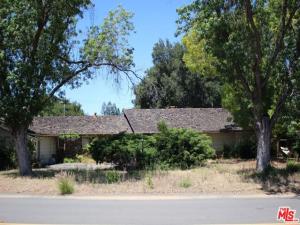
This is a single-family market. Expect mid-century ranch houses on the valley floor, custom contemporaries, and larger architect-designed homes in the hills, often on lots that are generous by Silicon Valley standards. Condos and townhomes exist but are a small share of what trades. What varies most is elevation: the flatter eastern side near SR-85 is conventional suburban, while parcels get bigger and streets wind as you move west. School boundaries are address-specific, so confirm assignment before you write an offer.
Browse the current Saratoga listings below, or contact The Knight Group to talk through where the value sits at your budget and which pockets of the city fit how you actually plan to live.
Where is Saratoga located within Silicon Valley?
Saratoga occupies the southwest corner of the Santa Clara Valley, where the flatland meets the Santa Cruz Mountains. State Route 9 runs through the heart of town as Big Basin Way and Saratoga-Los Gatos Road, connecting the village to Los Gatos in one direction and climbing toward Skyline and the coast in the other. State Route 85 skirts the city to the northeast, giving drivers a fast north-south connection toward Cupertino, Mountain View, and Interstate 280.
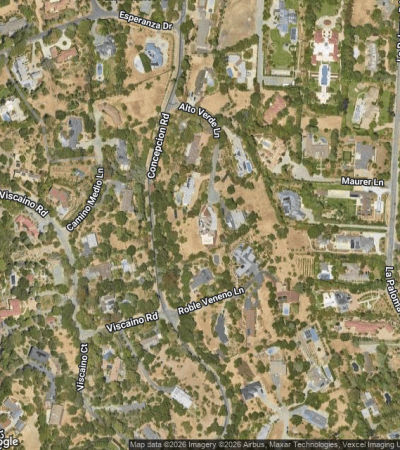
That location explains the character of the housing. Because much of Saratoga rises into the hills, lots tend to be larger and streets tend to wind rather than run straight. The eastern, flatter part of the city near the SR-85 corridor is more conventional suburban development. As you move west and south toward the mountains, parcels get bigger, grades get steeper, and homes become more secluded. Two addresses a few minutes apart can offer very different experiences of privacy, view, and access.
The trade-off is commute time versus seclusion. The hillside homes that buyers love for their quiet and their views also sit farther from freeway on-ramps and from the flat streets that make daily errands quick. It is a genuine choice, not a marketing distinction.
What kind of housing does Saratoga have?
Saratoga is overwhelmingly a market for single-family homes on generous lots. The housing stock ranges from mid-century ranch houses on the valley floor to large, architect-designed estates in the hills. You will find postwar homes that have been expanded or rebuilt, custom contemporary properties, and traditional two-story family houses, often on parcels that are large by Silicon Valley standards.
Condominiums and townhomes exist here but are a small share of the market compared with denser nearby cities. Buyers who want a lock-and-leave attached home have fewer options in Saratoga than in Campbell or San Jose, and that limited supply tends to keep attached-home prices firm when they do come up. Most people buying into Saratoga are buying land and a house, not a unit in a large complex.
Because so much of the inventory is older homes on desirable lots, a meaningful portion of transactions involve renovation, expansion, or teardown-and-rebuild. It is common to see a dated house sell for a high price because the buyer is paying for the location and the parcel, then investing further to modernize. If you are budgeting, plan for the possibility that the home you buy is the starting point, not the finished product.
Why is Saratoga so expensive?
Three forces stack on top of each other. First, schools: Saratoga’s public schools are among the most sought-after in the region, and school access alone drives a large share of demand. Second, employment: the city sits within a short drive of Apple in Cupertino and the broader concentration of technology and venture capital across Silicon Valley, so household incomes among buyers are high. Third, supply: Saratoga is built out, hillside terrain limits new construction, and the city has long favored low-density residential zoning. Strong demand meets a fixed, scarce supply.
The practical result is that Saratoga consistently ranks among the most expensive housing markets in the state. I am not going to quote a specific median here, because that number moves and I would rather you see current, verifiable figures than a stale one. Ask The Knight Group for the latest sold data, and we will pull the actual comparable sales for the streets and price band you are considering.
The risk buyers should name honestly: at this price tier, small differences in condition, lot, and location translate into large dollar amounts. Overpaying for the wrong parcel is expensive to unwind. This is a market where disciplined comparable analysis matters more, not less.
What are the schools like in Saratoga?
Strong public schools are the single most cited reason buyers target Saratoga. Elementary and middle school students in much of the city are served by the Saratoga Union School District, and many high school students attend Saratoga High School within the Los Gatos-Saratoga Union High School District. Parts of Saratoga fall into other districts depending on address, including areas served by Cupertino Union and Fremont Union high schools, so attendance boundaries are not uniform across the city.
The important point for buyers is that school assignment is address-specific. Two homes on the same side of town can feed different schools, and families frequently pay a premium to be inside a particular boundary. Never assume a school assignment from the city name alone. Before you write an offer with schools as a driver, confirm the current attendance area directly with the district, because boundaries and enrollment policies change.
West Valley College, a community college, is also located in Saratoga, which adds an education anchor and steady local activity near the campus.
How is the commute from Saratoga?
Saratoga is a driving city. Most residents commute by car, using State Route 85 for north-south trips toward Cupertino, Mountain View, and the Interstate 280 corridor, and using surface routes like Saratoga-Sunnyvale Road and State Route 9 to reach neighboring towns. For workers at the large tech campuses in Cupertino and Sunnyvale, the location is genuinely convenient in normal traffic.
Public transit is limited compared with cities closer to the bay. There is no light rail or Caltrain station in Saratoga itself, so transit-dependent commuters typically drive to connect with regional service in adjacent cities. If a car-free or transit-first lifestyle is a hard requirement for you, Saratoga is not the natural fit, and that is worth deciding early.
The hillside trade-off applies here too. Homes higher in the hills are more private and often have views, but they add minutes to every trip down to a freeway or a grocery store. If daily commute time is a priority, weigh the flatter eastern neighborhoods against the hillside pockets before you fall in love with a view.
What is there to do in Saratoga?
Downtown Saratoga, known as the Village, runs along Big Basin Way and holds the city’s concentration of restaurants, boutiques, and tasting rooms. It is a walkable stretch by local standards and functions as the social center of town. The scale is small and low-key rather than a large commercial district.
Saratoga also carries an outsized cultural footprint for its size. Hakone Estate and Gardens is one of the oldest Japanese-style gardens in the Western Hemisphere and sits in the hills above town. Montalvo Arts Center, based at the historic Villa Montalvo, offers performances, exhibitions, and grounds open to the public. The Mountain Winery, on the former Paul Masson estate, hosts a well-known outdoor summer concert series with the valley spread out below. These are not minor amenities; they are part of why residents value the setting.
For the outdoors, the surrounding foothills and nearby parks give quick access to hiking and trails, and the wooded terrain within the city keeps the tree canopy dense. The overall lifestyle skews quiet, residential, and nature-adjacent rather than nightlife-driven. Buyers who want a dense, urban scene will find it in San Jose or farther north, not here.
What should buyers know about wildfire risk and the hillsides?
Saratoga’s hillside setting carries wildfire exposure that flat valley cities do not. Because the western and southern edges of the city meet the wooded Santa Cruz Mountains, parts of Saratoga sit in or near the wildland-urban interface, and California maps portions of these foothill areas within Fire Hazard Severity Zones. I am not going to state the exact boundaries or the share of the city affected, because those maps are periodically updated and address-level detail matters more than a generalization.
What this means in practice is concrete. Insurance is a real underwriting question in the hills, and buyers should get an insurance quote during, not after, their contingency period, because availability and pricing vary sharply by parcel. Homes in higher-hazard areas may face defensible-space requirements and higher premiums. For any hillside property, also budget diligence for slope, drainage, access, and the age of key systems.
None of this should scare a buyer away from the hills. It should make you plan. The Knight Group will flag the fire-zone status, insurance picture, and hillside diligence items for any specific home you are serious about, so there are no surprises after you are in contract.
What is the history of Saratoga?
Saratoga grew up around a mountain toll road and the lumber and milling activity of the Santa Cruz Mountains in the nineteenth century. The settlement went through earlier names, including McCartysville and Toll Gate, before taking the name Saratoga after the mineral springs in the area drew comparison to Saratoga Springs, New York. The city incorporated in 1956, relatively late, which is part of why it retained low-density, residential character rather than industrializing.
That history still shows up in the built environment. The Village along Big Basin Way preserves the town’s original commercial spine, and estates like Villa Montalvo and the former Paul Masson winery survive as cultural landmarks. The result is a city that reads as established and settled, with mature landscaping and a strong sense of its own identity.
Who buys in Saratoga, and what are the trade-offs?
The typical Saratoga buyer is a family or a household with strong income prioritizing schools, space, and a quiet setting, often working in or around the technology sector. Move-up buyers trading larger cash positions into a long-term home are common, as are buyers who plan to renovate or rebuild on a well-located lot.
The honest trade-offs: you pay a significant premium, you commit to a car-oriented lifestyle, and if you buy in the hills you take on wildfire and slope considerations along with the view. In exchange you get school access that is difficult to replicate, larger lots than most of Silicon Valley offers, and a setting with genuine cultural and natural amenities. Whether that math works depends on how long you plan to stay and how much you value the specific things Saratoga is good at. A short-horizon buyer should think carefully; a long-horizon family often finds the premium justifies itself.
How to Compare Neighborhoods Before You Commit
The most useful thing a buyer can do early is stop shopping by price alone and start comparing parcels side by side. Two houses with similar asking prices can differ sharply in usable lot area, slope, driveway access, privacy, and which schools serve the address. Walk the flatter eastern streets near the SR-85 corridor on a weekday morning, then drive the winding roads toward the mountains at the same hour. The difference in noise, light, and travel time is easier to feel than to read in a listing.
Then sort the trade-offs you are actually willing to make: seclusion versus a short run to the freeway, a finished home versus an older one you plan to renovate or rebuild, and how much of the budget stays available after close. Saratoga real estate rewards buyers who define those priorities before touring, because the inventory is thin and decisions get made quickly. The Knight Group can pull recent comparable sales for the specific streets you are weighing.
Frequently Asked Questions About saratoga Homes for Sale
Is Saratoga a good place to buy a home?
It is well suited to buyers who prioritize schools, space, and a quiet hillside setting and who can afford one of the most expensive markets in California. It is a weaker fit for buyers who need transit access, want an urban scene, or plan a short holding period. The right answer depends on your budget and timeline, which is exactly what we work through with clients.
What types of homes are available in Saratoga?
Predominantly single-family homes, ranging from mid-century ranches on the valley floor to large custom estates in the hills, usually on generous lots. Condominiums and townhomes exist but are a small share of the market, so attached-home inventory is limited.
Which school districts serve Saratoga?
Coverage varies by address. Much of the city is served by the Saratoga Union School District at the elementary and middle level and by the Los Gatos-Saratoga Union High School District, with parts of the city in other districts. Always confirm the current attendance area for a specific home directly with the district before relying on it.
Why are Saratoga home prices so high?
Sought-after schools, proximity to major Silicon Valley employers, and a fixed, scarce supply of homes in a built-out, hillside-constrained city. Demand is strong and supply is limited, which keeps prices among the highest in the state.
Does Saratoga have wildfire risk?
Yes, in the foothill and hillside areas. Portions of the city near the Santa Cruz Mountains sit in or near mapped fire hazard zones. Buyers of hillside homes should get insurance quotes early and budget for defensible-space and hillside diligence. Risk is address-specific, so we evaluate it per property.
Is Saratoga a good commute for tech workers?
For workers at the Cupertino and Sunnyvale campuses and along the SR-85 and I-280 corridors, the drive is convenient in normal traffic. Transit is limited, so most residents commute by car. Hillside homes add time to every trip compared with the flatter eastern neighborhoods.
Should I expect to renovate a home I buy in Saratoga?
Often, yes. A large share of the stock is older homes on desirable lots, and many transactions involve renovation, expansion, or rebuilding. Budget for the possibility that the purchase price is the beginning of your investment, not the end of it.
Is now a good time to buy in Saratoga?
That depends on current inventory, rates, and your own timeline, none of which a static page should pretend to know. Contact The Knight Group for live sold comparables and an honest read on where the market sits for your target price band.
How does The Knight Group work in the Saratoga market?
The Knight Group represents buyers and sellers across Santa Clara County with a focus on the specifics that decide outcomes at this price tier: comparable-sales discipline, school-boundary verification, and hillside and insurance diligence before you are committed. In a market where a single parcel can swing by a large dollar amount on condition and location, we would rather slow down and get the analysis right than push a transaction.
For sellers, that means pricing to real comparables and preparing the home so its best features are legible to the buyers who pay Saratoga premiums. For buyers, it means naming the trade-offs of a given home out loud, so you buy with clear eyes rather than on momentum. Browse the current listings below, and when you are ready to go deeper on a specific property or neighborhood, contact The Knight Group and we will pull the live data and walk it with you.
Where are Saratoga Homes located and what kind of homes are they?
- Saratoga Homes sit at the southwest corner of Santa Clara County, where the valley floor meets the Santa Cruz Mountains.
- Neighboring cities include Los Gatos, Monte Sereno, Cupertino, and Campbell, placing Saratoga among established communities on the valley’s western edge.
- Buyers evaluating Saratoga Homes typically weigh the same three factors: school access, commute, and how much land comes with the property.
- Scarcity, school access, and hillside living within commuting distance of the largest tech employers explain the premium attached to this market.
- Single-family houses dominate the inventory, with condominiums and townhomes making up only a small share of what actually trades.
- Mid-century ranch houses occupy much of the valley floor, alongside custom contemporaries and larger architect-designed homes higher in the hills.
- Lot sizes across Saratoga Homes tend to be generous by Silicon Valley standards, particularly as parcels move west toward the mountains.
- Elevation is the variable that changes the most, shaping lot size, street layout, privacy, and view from one address to the next.
- Winding streets, steeper grades, and more secluded houses appear as buyers move west and south toward the Santa Cruz Mountains.
- Commute time versus seclusion is the genuine trade-off, since hillside houses sit farther from freeway on-ramps and flat errand streets.
- School boundaries are address-specific, so confirming assignment before writing an offer protects buyers from an expensive assumption.
What is it like to live in Saratoga Homes?
- Downtown Saratoga, known as the Village, runs along Big Basin Way and holds the city’s restaurants, boutiques, and tasting rooms.
- The Village functions as the social center of town, walkable by local standards and small in scale rather than a large commercial district.
- Hakone Estate and Gardens, one of the oldest Japanese-style gardens in the Western Hemisphere, sits in the hills above town.
- Montalvo Arts Center, based at the historic Villa Montalvo, offers performances, exhibitions, and grounds that are open to the public.
- The Mountain Winery, on the former Paul Masson estate, hosts a well-known outdoor summer concert series overlooking the valley below.
- Surrounding foothills and nearby parks give residents of Saratoga Homes quick access to hiking and trails from their front doors.
- Wooded terrain inside the city keeps the tree canopy dense, reinforcing a lifestyle that skews quiet, residential, and nature-adjacent.
- Buyers wanting a dense urban nightlife scene will find it in San Jose or farther north rather than in Saratoga.
- Wildfire exposure comes with the hillside setting, since western and southern edges of the city meet the wooded Santa Cruz Mountains.
- Insurance is a real underwriting question in the hills, so buyers should get quotes during their contingency period rather than after.
- Homes in higher-hazard areas may face defensible-space requirements and higher premiums, with availability and pricing varying sharply by parcel.
- Slope, drainage, access, and the age of key systems all deserve diligence budget on any hillside property.
- Saratoga grew up around a mountain toll road and the lumber and milling activity of the Santa Cruz Mountains.
- Families and high-income households working in or around technology form the typical buyer pool for Saratoga Homes, prioritizing schools, space, and quiet.
What should buyers know before purchasing Saratoga Homes?
- Saratoga Homes are predominantly single-family properties, ranging from mid-century ranches on the valley floor to large custom estates in the hills.
- Condominiums and townhomes exist in the city but represent a small share of the market, leaving attached-home inventory limited.
- School coverage varies by address, so district assignment cannot be assumed from a general description of the city.
- Saratoga Union School District serves much of the city at the elementary and middle level, with parts falling in other districts.
- Los Gatos-Saratoga Union High School District covers much of the city at the high school level, though coverage is not universal.
- Confirming the current attendance area for a specific home directly with the district is the only reliable verification method.
- Sought-after schools, proximity to major Silicon Valley employers, and a fixed, scarce supply keep prices among the highest in the state.
- Hillside constraints in a built-out city limit new supply, so strong demand meets inventory that cannot easily expand.
- Wildfire risk applies to foothill and hillside portions of the city that sit in or near mapped fire hazard zones.
- Insurance quotes early and budget for defensible-space and hillside diligence are standard advice for buyers of hillside properties.
- Transit options are limited, so most residents commute by car, and hillside addresses add time compared with flatter eastern neighborhoods.
- Renovation, expansion, or rebuilding features in many transactions, because a large share of the stock is older homes on desirable lots.
- The Knight Group brings comparable-sales discipline, school-boundary verification, and hillside and insurance diligence to buyers and sellers of Saratoga Homes.