Browse all Los Angeles real estate — or explore the full Los Angeles luxury real estate market.

Browse all Los Angeles real estate — or explore the full Los Angeles luxury real estate market.
Most buyers looking at Granada Hills CA homes for sale are really buying space. This is a roughly 15-square-mile district at the north edge of the San Fernando Valley, inside the City of Los Angeles, running from the flats along the 118 up into the Santa Susana foothills. Compared with the Westside or the south Valley, you get larger lots, wider streets, mature trees, and a lower cost per square foot. The trade-off is drive time to the Westside and Downtown, and foothill wildfire and seismic exposure on the north end.
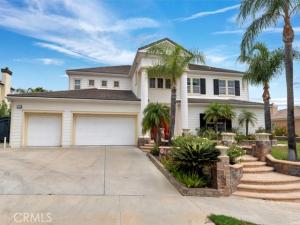
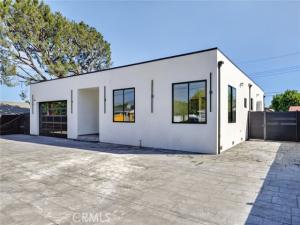
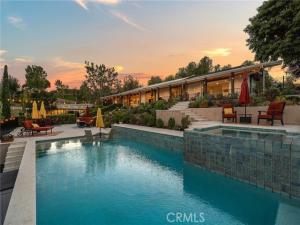
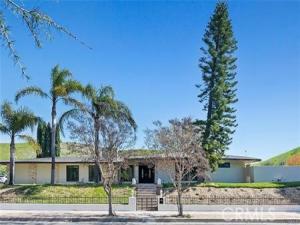
The housing stock is mostly detached single-family homes on generous lots from the postwar era — 1950s and 1960s ranch and traditional south and central, larger and newer construction in the hillside tracts, some gated. Balboa Highlands holds 109 Eichler homes; Knollwood Country Club Estates sits on the county golf course. Price follows the north-to-south gradient.
Browse the current Granada Hills listings below, or contact The Knight Group and we will tell you which of the sub-areas below actually matches what you are trying to buy.
Granada Hills sits at the north edge of the San Fernando Valley at an elevation of about 958 feet, higher than the Valley floor. It borders Porter Ranch on the west, North Hills and Northridge to the south, and Mission Hills and Sylmar to the east. North of the developed edge, the terrain climbs into the Santa Susana Mountains and stops being residential entirely.
Two features anchor the geography. California State Route 118, the Ronald Reagan Freeway, cuts east and west through the southern half of the district. The Los Angeles Aqueduct terminates here at the Van Norman complex on the eastern side, which is why a meaningful share of the district’s east edge is water infrastructure rather than housing.
That north-to-south gradient drives almost everything about price. Homes closer to the foothills run newer and larger. Homes south of the 118 run older, smaller, and more affordable. Neither end is the “real” Granada Hills. They are different products sharing a name.
The dominant product is the detached single-family home on a generous lot, built during the Valley’s postwar expansion. The area was established in 1926 as “Granada,” with “Hills” added about fifteen years later in 1941. Before that it was Sunshine Ranch, a dairy and orchard operation growing apricots, oranges, walnuts, and beans, and the San Fernando Valley’s first oil well was drilled in 1916 at the northern end of what is now Zelzah Avenue.
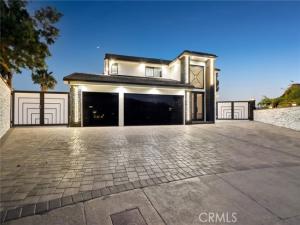
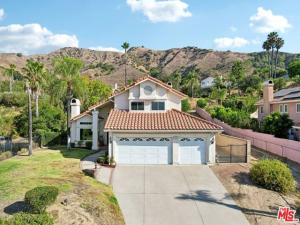
What that history means for a buyer today is a housing stock built in distinct waves. Ranch and traditional homes from the 1950s and 1960s fill the older southern and central tracts. Mid-century modern appears in one concentrated and architecturally significant pocket. Larger, newer homes appear in the hillside tracts built later, several of them behind gates.
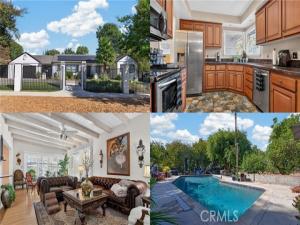
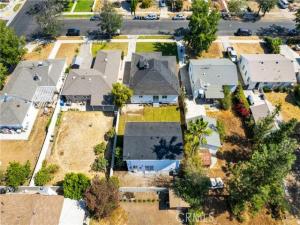
Condominiums and townhomes exist here but are not the story. If you want a house with real yard, room for a pool, and in some pockets room for horses, this is one of the better-supplied parts of Los Angeles for it.
Granada Hills breaks into sub-areas that behave like separate markets. Here is how we group them, with a dedicated page for each.
Old Granada Hills is the original core, the oldest platted section of the community and the part with the most established streetscape. Its defining feature is on White Oak Avenue: the stand of 101 Deodar cedar trees between San Fernando Mission Boulevard and San Jose Street, designated a Los Angeles Historic-Cultural Monument on August 3, 1966. Those trees served as the backdrop for the flying bicycle sequence in the 1982 film E.T. the Extra-Terrestrial. See current inventory at Old Granada Hills homes for sale.
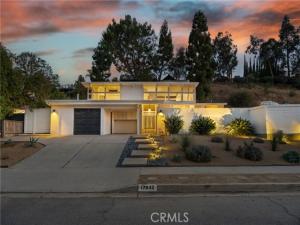
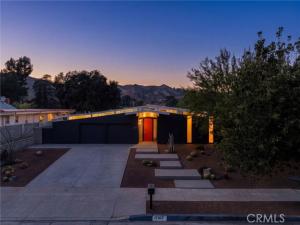
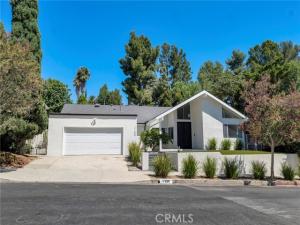
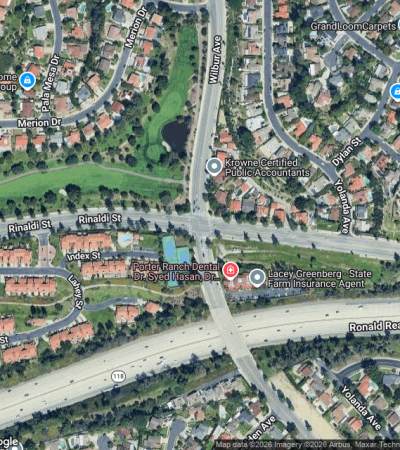
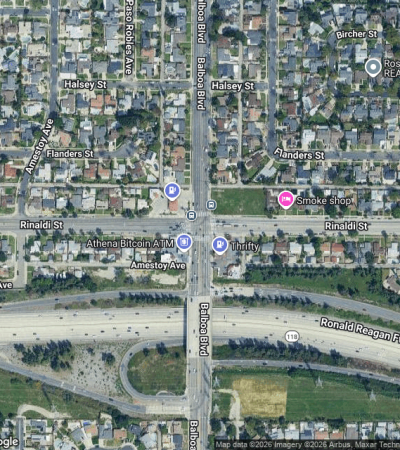
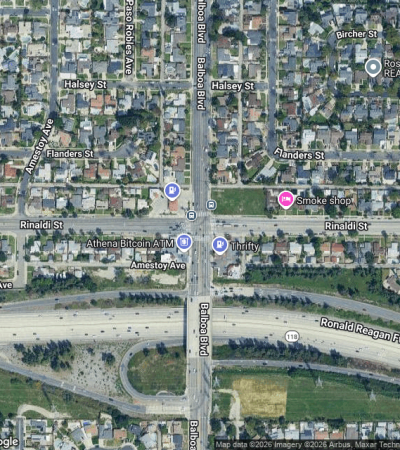
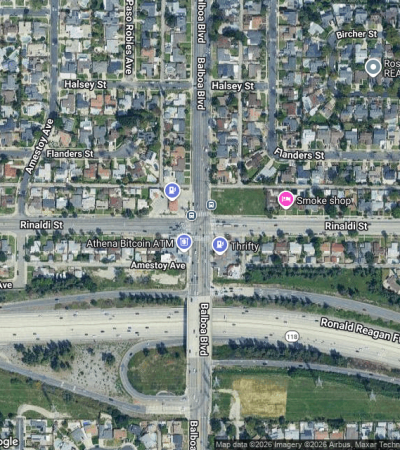
Balboa Highlands is the architectural outlier and, for a specific buyer, the reason to be in this ZIP code at all. It is a tract of 109 homes built by Joseph Eichler, located north of Rinaldi Street and west of Balboa Boulevard. Two of its houses, the Harris Residence and the Foster Residence, are designated Los Angeles Historic-Cultural Monuments. Inventory is tracked at Balboa Highlands homes for sale.
Knollwood Country Club Estates sits around Knollwood Golf Course, a Los Angeles County operated course playing to a par of 72 for men at 6,385 yards from the blue tees and 6,025 from the whites. Golf-adjacent lots in Los Angeles are scarce and this is one of the few places in the Valley where you can buy one without a private club membership attached. Start at Knollwood Country Club Estates homes for sale.
Knoll Hill is a smaller elevated pocket on the same side of the district. Turnover in compact hillside tracts like this one is low, which means the relevant question is rarely “what is on the market” and usually “what is likely to come available.” Track it at Knoll Hill homes for sale.
Greyhawk Ranch is a developer-named tract rather than a historic district, which is the usual signature of later hillside construction in this part of the Valley: newer systems, larger floor plans, and in most cases a homeowners association governing the common areas. Current listings are at Greyhawk Ranch homes for sale.
Bridlewood Estates carries a name that points back to the area’s equestrian past, when the north Valley was ranch land rather than subdivision. Whether a specific parcel still permits horse keeping is a zoning question we check per address, not per tract. Listings are at Bridlewood Estates homes for sale.
Bee Canyon Estates takes its name from Bee Canyon, the drainage that runs through O’Melveny Park at the north edge of the community. Proximity to open space is the draw. It is also the reason the wildfire and brush clearance conversation matters more here than it does south of the freeway. See Bee Canyon Estates homes for sale.
Granada Hills North and Granada Hills South mirror a real civic division. Two separate neighborhood councils, Granada Hills North and Granada Hills South, were both established in 2002, and the split roughly tracks the housing difference described earlier. North runs newer, larger, and closer to the foothills. South runs older, denser, and more affordable. Compare them directly at Granada Hills North homes for sale and Granada Hills South homes for sale.
If you would rather see everything in one place before narrowing, the full community roll-up is at homes for sale in Granada Hills.
Balboa Highlands is one of only a handful of Joseph Eichler developments in Southern California, and it is the reason architecture buyers who would otherwise never look at the north Valley end up here. Eichler’s company built more than 11,000 houses between 1949 and 1966 before filing for bankruptcy in 1967, and the overwhelming majority of them are in Northern California. The Los Angeles supply is a rounding error by comparison.
The construction signature is consistent: post-and-beam framing with the structure left exposed, open-air entry atriums, radiant heating cast into the concrete slab, and floor-to-ceiling glass. Those features are what buyers pay for. They are also what makes due diligence non-optional. Slab radiant heating systems are decades old and their condition varies enormously, glass walls have thermal performance consequences, and low-slope roofs carry different maintenance economics than the composition shingle two streets away.
The correct move in Balboa Highlands is to underwrite the specific house, not the tract reputation. A well-restored Eichler and a deferred-maintenance Eichler on the same block are not the same asset, and the spread between them is larger than most buyers expect.
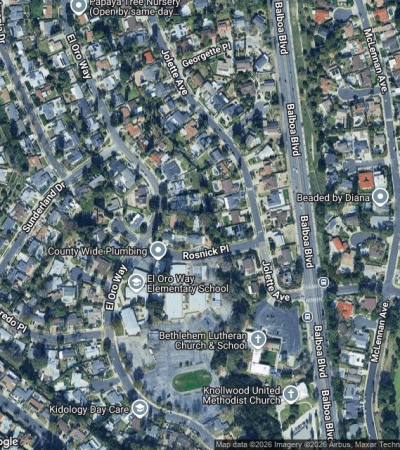
Granada Hills is served by the Los Angeles Unified School District and contains fourteen public schools and ten private schools. The public high schools are Granada Hills Charter High School and John F. Kennedy High School.
Granada Hills Charter is a genuine draw and one of the reasons families move into this specific part of the Valley. In 2003, the Los Angeles Board of Education voted to allow the school to convert to a charter, making it the largest school in the United States to do so at the time. It has since become one of the most decorated academic competition programs in the country, with a long run of national United States Academic Decathlon championships beginning in 2011. It became an International Baccalaureate World School in December 2011 and offers both Advanced Placement and IB coursework.
One caution. Charter school admission is not automatic by address the way traditional attendance boundaries are. Verify enrollment policy directly with the school for the year you intend to enroll rather than assuming a purchase guarantees a seat.
State Route 118, the Ronald Reagan Freeway, is the primary artery. It runs east and west through the southern portion of Granada Hills, connecting to Chatsworth and Porter Ranch to the west and terminating at an interchange with the Foothill Freeway, Interstate 210, near Lake View Terrace to the east. It was built between 1968 and 1979 and officially named for Ronald Reagan in December 1994.
From the 118 you reach the 405 south toward the Westside and LAX, and the 5 south toward Downtown and north toward Santa Clarita. That is the honest picture: Granada Hills has good freeway access and a long drive. A Westside or Downtown commute from here is a real commitment, particularly in the afternoon peak. Buyers who work in the Valley, in Santa Clarita, or remotely get the best of this location. Buyers commuting daily to Century City or Downtown should drive the route at their actual departure time before they write an offer.
Open space is one of the strongest arguments for Granada Hills. O’Melveny Park covers 672 acres in the Santa Susana Mountains and is the second largest public park in Los Angeles after Griffith Park. The land, then called C. J. Ranch, was purchased in 1941 by John O’Melveny, son of attorney Henry W. O’Melveny, and had been used for citrus growing and cattle grazing. In the early 1970s John and his wife Corinne arranged its transfer to the city, and Los Angeles received the deed in 1976. A grove of grapefruit trees still stands near the entrance, alongside grassy areas, picnic tables, and hiking and equestrian trails.
Mission Point, the high ground above the community, is a popular hiking and mountain biking destination with long views across the Valley and, in clear conditions, toward Downtown and the coast. The surrounding hills support deer, coyotes, bobcats, golden eagles, and mountain lions, which is a genuine amenity and a genuine consideration if you keep small pets. Closer in, the Granada Hills Recreation Center, also known as Petit Park, provides athletic fields, an auditorium, and arts programming, and Knollwood Golf Course adds county-run public golf inside the neighborhood boundary.
Three, and we would rather name them up front than have you find them during escrow.
Wildfire. The northern edge of Granada Hills meets undeveloped chaparral in the Santa Susana Mountains. The Sesnon Fire burned 14,703 acres from October 13 to 18, 2008 in the Porter Ranch area immediately west, destroying 15 residences and 63 outbuildings after a power line fell into dry brush. In January 2025, the Archer Fire burned about 19 acres near O’Melveny Park before being contained without structural damage. Pull the Natural Hazard Disclosure report on any specific address to see whether the parcel sits in a state-mapped fire hazard severity zone, and price insurance before you remove contingencies rather than after.
Seismic. Granada Hills recorded the most violent shaking of the January 17, 1994 Northridge earthquake, a magnitude 6.7 event that produced Modified Mercalli intensity IX here. Homes in this area were tested harder than almost anywhere in the region. That is a reason to read the seismic retrofit history carefully, particularly on raised-foundation homes and on anything with a soft-story garage or a hillside caisson foundation.
Infrastructure adjacency. The Van Norman complex and the terminus of the Los Angeles Aqueduct occupy a substantial footprint on the east side. The Aliso Canyon storage facility, site of the gas leak that ran from its discovery on October 23, 2015 until it was permanently plugged on February 18, 2016, sits above neighboring Porter Ranch. Neither is a reason to avoid Granada Hills. Both are reasons to know exactly where a given house sits relative to them.
Granada Hills is inside the City of Los Angeles, so Measure ULA applies. The measure took effect on April 1, 2023 and imposes an additional transfer tax on property sales within city limits: 4% on sales above the first threshold and 5.5% on sales at or above the second. The thresholds adjust annually for inflation, and as of July 1, 2025 they stood at $5.3 million and $10.6 million. This sits on top of the existing combined city and county documentary transfer taxes.
Practically, most Granada Hills transactions fall well under the first threshold and are unaffected. The sellers who need to model it are those with large hillside estates or income property, since the measure applies to commercial as well as residential transfers. The tax is levied on the entire sale price, not just the amount above the line, which makes pricing decisions near that number consequential. Confirm the current-year threshold with the City of Los Angeles Office of Finance before you set a list price.
Buyers who want square footage and land inside city limits and are willing to trade commute minutes for it. Families targeting the Granada Hills Charter attendance area. Architecture buyers hunting one of the scarce Southern California Eichler tracts. Move-up buyers priced out of Porter Ranch who want similar foothill positioning at a lower entry point. Equestrian and outdoor buyers who want O’Melveny Park and the Santa Susana trail network at the end of the street.
It is a weaker fit for buyers who need a walkable urban core, buyers with a daily Westside commute and no flexibility on hours, and buyers who want turnkey new construction at scale. The newest inventory here is limited, and much of what looks new is renovated rather than rebuilt. The 2008 estimated population was 53,998 across 15.11 square miles, a density of about 3,574 people per square mile, which tells you the texture: suburban, spread out, and quiet by Los Angeles standards.
The practical way to shop Granada Hills real estate is to pick your position on the slope first, then look at houses. North of the developed flats, you are buying newer construction, bigger floor plans, and in several tracts an HOA and a gate — along with brush clearance obligations and the fire and seismic exposure that come with foothill terrain. South of the 118, you are buying an older, smaller postwar house on a lot that is still generous by Los Angeles standards, at a lower entry point, with a shorter drive to the rest of the Valley.
Two things are worth checking per address rather than per neighborhood. Horse keeping depends on the zoning attached to a specific parcel, not on a tract name. And architectural significance is concentrated, not general — the Eichler tract and the designated monuments are specific properties, and a home nearby does not inherit that status or the pricing that follows it. Tell us which trade-off you would rather make and we will point you at the right sub-area.
Yes. It is a neighborhood of Los Angeles, not a separate city, which means city taxes, city permitting, LAFD and LAPD service, and Measure ULA all apply. It falls in Los Angeles City Council District 12.
The names come from two neighborhood councils, both established in 2002. The practical difference for a buyer is housing stock and elevation. The north side runs toward newer, larger homes closer to the Santa Susana foothills. The south side runs toward older, more modest postwar homes and a lower entry price.
Yes, primarily in the hillside tracts on the north side. Gated developments typically carry a homeowners association with monthly dues and recorded governing documents. Review the CC&Rs, the reserve study, and the current dues schedule for the specific association during your contingency period. We do not quote HOA figures from memory because they change and they vary by association.
In some places. The area has an equestrian history and O’Melveny Park maintains horse trails, but horse keeping in Los Angeles depends on the specific zoning overlay attached to the parcel, not on the neighborhood name. Do not assume a tract name that references horses confers the right. We verify zoning per address before you write an offer.
It is a 109-home tract built by Joseph Eichler, located north of Rinaldi and west of Balboa. The homes are mid-century modern with post-and-beam structure, atriums, and radiant slab heat, which is a completely different product from the ranch houses that dominate the rest of the community. Two of its residences are designated Los Angeles Historic-Cultural Monuments.
You should price it early. Homes on the northern foothill edge face different underwriting than homes south of the 118. Get an insurance quote on the specific address during your inspection contingency, not after. If a carrier declines, that is information you need while you can still act on it.
It is one of the better candidates in the city for that strategy, because lot sizes are generous and much of the stock is original. The constraints are Los Angeles permitting timelines, hillside grading rules on the north side, and seismic upgrade requirements on older foundations. Model the permit calendar before you model the budget.
We treat Granada Hills as a set of distinct markets, not one. Before we show anything, we establish which sub-area actually fits your criteria, because a buyer who wants an Eichler and a buyer who wants a gated hillside build with a three-car garage are not shopping the same neighborhood even though they share a ZIP code.
For buyers, that means address-level diligence: zoning and horse-keeping verification, Natural Hazard Disclosure review, insurance quotes pulled during contingency rather than after, and a hard read of the seismic and systems history on any home built before the Northridge earthquake. For sellers, it means pricing against the correct comparable set. A Balboa Highlands Eichler does not comp to a Granada Hills South ranch house, and running the two together produces a number that misprices your home in one direction or the other.
Browse the listings below to see what is currently available across the community. When you want to narrow it, contact The Knight Group and we will tell you honestly which of these sub-markets is worth your weekend and which is not.
Lucky for you we’re looking out.
Subscribe to this Custom Search to be alerted when new properties hit the market in the area.
Choose the frequency that works for you.