RIOSListings

RIOS, Los Angeles

RIOS. The Knight Group sources properties designed by this architect across Los Angeles, including off-market options not listed on the public portals.

Architectural School Highlights In the most prestigious neighborhoods, every home is a masterpiece. It s like the elite version of Mowgli s jungle school, where instead of learning to swing from vines, kids are learning to code and speak Mandarin. Fast forward to Disney s 1967 animated classic, and Kaa transforms into a bumbling villain with hypnotic powers, voiced by the legendary Sterling Holloway.

Buyers in Rios should move on well-priced properties quickly — competition is consistent. The Knight Group tracks off-market inventory here and can provide early access.

RIOS in Famous Architects

Community

What’s the luxury market like?

But how did we get here? How did a character from a children’s story become the unofficial mascot for high-end property trends? It’s a tale as winding as Kaa’s own body, full of unexpected turns and hypnotic revelations.

How has RIOS appeared in pop culture?

Let’s rewind for a moment. Kaa first appeared in Rudyard Kipling’s The Jungle Book as a wise, if somewhat intimidating, rock python. Fast forward to Disney’s 1967 animated classic, and Kaa transforms into a bumbling villain with hypnotic powers, voiced by the legendary Sterling Holloway. This shift from mentor to antagonist wasn’t just a storytelling choice – it was a harbinger of the character’s future versatility.

You’ve seen it happen in real estate too, haven’t you? That craftsman bungalow reimagined as a ultra-modern smart home. The abandoned warehouse turned into luxury lofts. Like Kaa, these properties shed their old skins, emerging as something new and captivating.

This evolution mirrors the luxury real estate market’s own transformations. According to a report by Knight Frank, the global prime property market saw a 5.2% average price growth in 2022. Despite economic challenges. This resilience and ability to adapt is reminiscent of Kaa’s own process through various adaptations.

Take the case of the iconic Chateau Marmont in Los Angeles. Once a 1920s apartment complex, it metamorphosed into a luxury hotel, becoming a sanctuary for Hollywood’s elite. This transformation echoes Kaa’s process from wise mentor to cinematic icon, each iteration adding new layers of allure and mystique.

As you navigate the luxury real estate market, remember Kaa’s adaptability. The most successful properties, like the most enduring characters, know how to change with the times while maintaining their core appeal. This is especially true for homes designed by famous architects, whose timeless designs continue to captivate and inspire.

What’s the community like?

Now, let’s slither into the heart of what makes a luxury property truly shine – the community. Because even the most mansion loses its luster if it’s surrounded by mediocrity.

Who lives in RIOS?

You’re not just buying a home; you’re buying into a lifestyle. In the most coveted neighborhoods, you’ll find a mix of old money and new tech moguls, Hollywood royalty rubbing elbows with finance titans. It’s a delicate ecosystem, much like the jungle Kaa calls home.

Take Bel Air, for instance. You might spot a Tesla pulling up next to a vintage Rolls-Royce at the local farmer’s market. The air is thick with the scent of success and imported truffles. Community events here aren’t just social gatherings; they’re networking opportunities that could make or break careers.

According to Zillow, the median home value in Bel Air is a staggering $3.5 million. But it’s not just about the price tag. The average household income in this area exceeds $200,000, creating a community of high achievers and influencers.

A study by the American Enterprise Institute found that the top 1% of income earners tend to cluster in specific neighborhoods, creating pockets of extreme wealth. These areas often boast top-tier schools, low crime rates, and exclusive amenities that cater to their affluent residents.

You feel it when you walk the streets of these neighborhoods. There’s a palpable sense of ambition and success in the air. It’s as if Kaa’s hypnotic gaze has entranced an entire community, drawing in the brightest and most successful individuals from all walks of life.

What local rules should I know?

But with great luxury comes great responsibility – and a whole lot of rules. HOAs in these areas are as strict as Kaa’s coils. One resident (let’s call him Mowgli) told me about the time he tried to paint his front door a daring shade of red. The neighborhood association shut that down faster than you can say Trust in me.

These ordinances aren’t just about maintaining property values; they’re about preserving a certain je ne sais quoi. It’s the difference between living in a house and inhabiting a lifestyle.

Take the case of Hidden Hills, California, a gated community that’s home to numerous celebrities. The city has strict ordinances about everything from architecture to landscaping. One resident shared their experience of trying to install solar panels. Despite California’s push for renewable energy. They had to jump through numerous hoops to ensure the panels didn’t disrupt the community’s aesthetic.

Another example comes from Palm Beach, Florida, where local ordinances dictate everything from the color of your house to the height of your hedges. A real estate agent recounted a story of a client who wanted to build a modern masterpiece in this traditional enclave. The process took years of negotiations and design revisions to create something that satisfied both the owner’s vision and the community’s standards.

These experiences highlight the delicate balance between individual expression and community harmony in luxury neighborhoods. Like Kaa’s careful navigation through the jungle, residents must learn to maneuver within the constraints of their gilded cages.

Who Lives in Rios

Rios draws buyers who have made deliberate trade-off decisions. It s the difference between living in a house and inhabiting a lifestyle. The buyer profile here tends toward established professionals and families — people who have evaluated comparable options and chosen this pocket for specific reasons: lot size, privacy, school access, commute profile, or community character.

Properties ranging from $3.5M to $238.0M+ range from [entry-level in the pocket] to larger estate-scale homes depending on the specific street. Knowing the sub-block matters when pricing or making an offer here.

How can The Knight Group help?

The Knight Group maintains active relationships in Rios, including off-market sellers who haven’t listed publicly. For buyers, this means access to inventory before it reaches the portals. For sellers, it means qualified buyers who are already researching this specific area.

In a market like Rios, where well-priced properties move quickly, having a relationship with an agent who knows the off-market layer changes what’s available to you. The Knight Group can typically show more options than what’s publicly listed at any given time.

Who Buys in Rios

The buyers coming to Rios are a recognizable mix: move-up buyers from nearby starter neighborhoods, Los Angeles metro workers seeking proximity to specific employment corridors, and second-home buyers from outside the area targeting the California lifestyle access. All three groups are active in most parts of the Los Angeles market, but the specific mix in Rios shapes how inventory is priced and how competitive each transaction is.

Move-up buyers tend to have strong down payments and clear financing in place — they’ve been to closing before. Corporate relocation buyers move on employer timelines and often need to close in 30 days. Second-home buyers often move slower and are more selective. Knowing which profile dominates the current Rios buyer pool is one of the inputs The Knight Group uses to advise sellers on pricing strategy and buyers on offer positioning.

How Rios Compares to Nearby Areas

Buyers evaluating Rios often consider it alongside one or two adjacent areas. The comparison that matters most isn’t amenities or aesthetics — it’s value per dollar and lifestyle trade-offs. Rios occupies a specific position in the Los Angeles market that becomes clear once you’ve seen the comparable inventory. The Knight Group can walk you through that comparison directly, based on current active and recently closed inventory, before you invest more time in your search.

Area Details

What’s the RIOS area like?

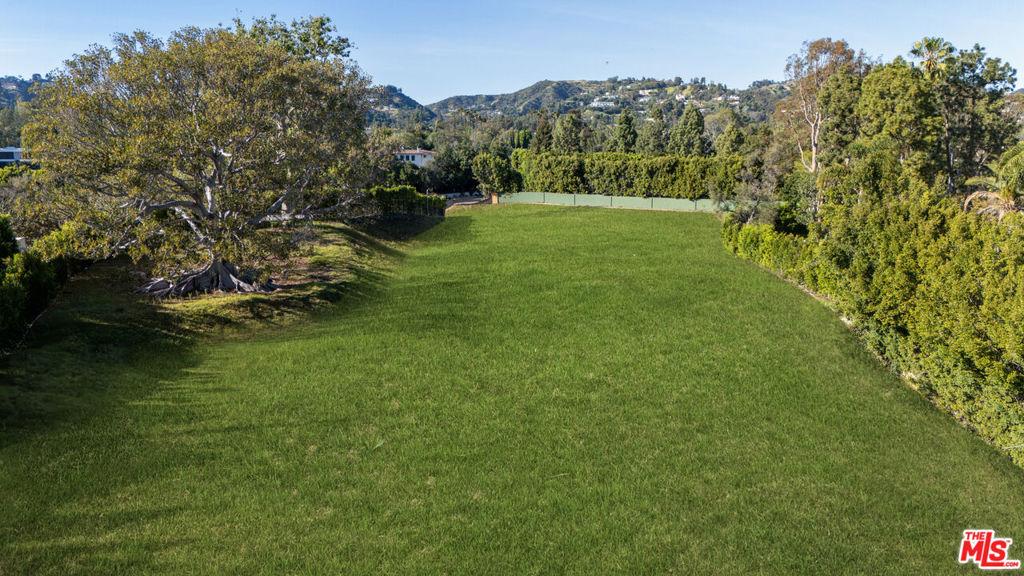
Now, let’s zoom out and take in the bigger picture. The area surrounding your luxury abode is just as crucial as the property itself. After all. What good is a multi-million dollar view if there’s nothing worth seeing?

Architectural & School Highlights

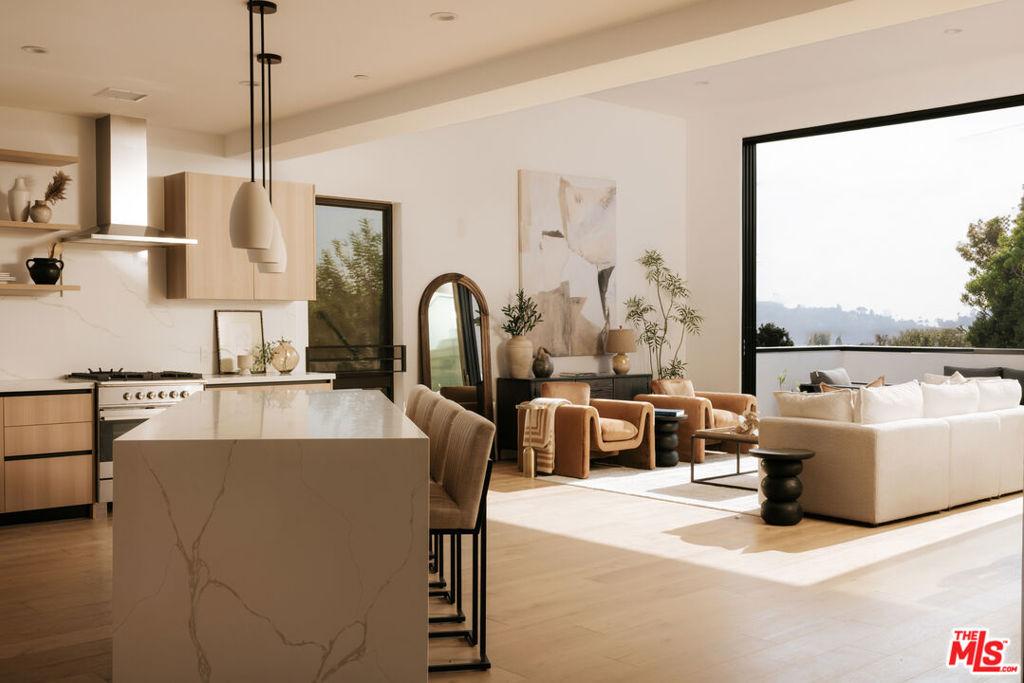
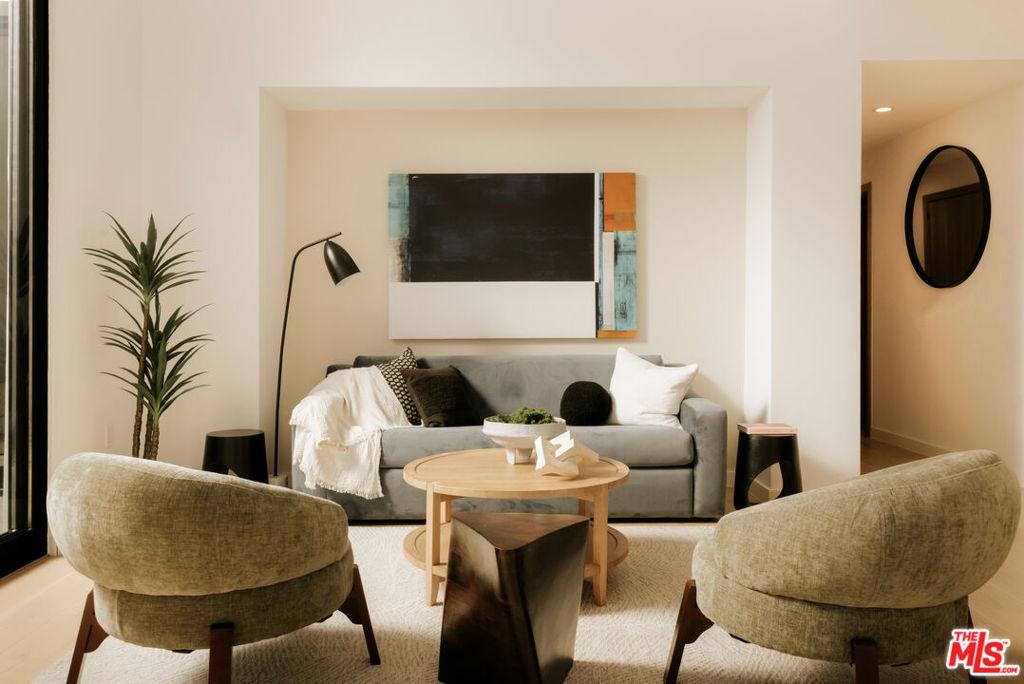
In the most prestigious neighborhoods, every home is a masterpiece. You’ll find modernist marvels perched on hillsides, their glass walls reflecting the sunset like giant diamonds. Historic estates stand proudly, their manicured lawns a testament to old-world charm.

Take Beverly Hills, for instance. Here, you’ll find architectural gems like the Spadena House, affectionately known as the Witch’s House. This storybook-style home, with its intentionally dilapidated appearance, stands in stark contrast to the sleek modernist homes that surround it. It’s a perfect example of how these neighborhoods embrace diversity in design while maintaining an overall sense of luxury.

For those seeking contemporary elegance, Griffin Enright homes offer a blend of form and function. Their innovative designs often feature expansive glass walls and smooth indoor-outdoor living spaces, perfect for soaking in those California views.

But it’s not all about aesthetics. The schools in these areas are top-tier, producing the next generation of movers and shakers. It’s like the elite version of Mowgli’s jungle school, where instead of learning to swing from vines, kids are learning to code and speak Mandarin.

Harvard-Westlake School in Los Angeles, for example, has an impressive list of alumni including actors, politicians, and business leaders. With a student-teacher ratio of 8:1 and over 40 AP courses offered. It’s no wonder that 100% of its graduates go on to attend four-year colleges.

Similarly, Phillips Academy Andover in Massachusetts, one of the oldest boarding schools in America, has educated future presidents, business tycoons, and cultural icons. Its rigorous curriculum and extensive extracurricular offerings prepare students for leadership roles in various fields.

These educational institutions are more than just schools; they’re gateways to networks and opportunities that can shape entire careers. Like Kaa’s wisdom in the original Jungle Book, the knowledge imparted in these hallowed halls can be a powerful tool for those who seek it.

Attractions & Outdoor Activities

Living in luxury means having the best at your fingertips. Michelin-starred restaurants where the chef knows your name (and your allergies). Boutiques that close their doors for private shopping experiences. Hiking trails that offer both a grueling workout and views of the city below.

One resident described it as having the jungle and the concrete jungle in perfect harmony. You can go from a sunrise yoga session in your private garden to a power lunch downtown in less time than it takes Kaa to shed his skin.

In Aspen, Colorado, for instance, you can hit the slopes at world-class ski resorts in the morning and attend a performance at the Aspen Music Festival and School in the evening. The town’s Food & Wine Classic attracts culinary enthusiasts from around the globe, offering a taste of luxury that rivals any urban center.

Meanwhile, in the Hamptons, you might start your day with a private tennis lesson from a former pro, followed by a tour of the Parrish Art Museum. End your evening with a beachfront dinner at a restaurant like Tutto il Giorno, where celebrities and Wall Street titans dine side by side.

These experiences aren’t just about indulgence; they’re about access. Like Kaa’s ability to navigate every corner of the jungle, residents of these luxury areas have unparalleled access to the best that life has to offer.

What’s the history of RIOS?

Los Angeles neighborhoods have distinct development histories that shape the current housing stock and the buyer experience. Rios reflects a specific era of residential development — the predominant architectural styles, lot sizes, and street grid reflect the period when the area grew most rapidly. This context matters because it explains why certain home sizes and configurations are common here, why certain infrastructure issues arise repeatedly, and what the renovation potential looks like relative to other parts of the city.

For buyers coming from other markets, Los Angeles residential construction quality and neighborhood development patterns can be unfamiliar. The Knight Group brings this local context to every buyer engagement — not just neighborhood statistics, but the underlying dynamics that drive the buyer experience in Rios specifically.

What services are available?

Utility infrastructure, street quality, and public services in Los Angeles vary more by neighborhood than residents from other cities expect. Water rates, power reliability, trash collection schedules, and street maintenance quality differ across LA neighborhoods — and they affect quality of daily life in ways that don’t show up in listing data. The Knight Group can answer specific infrastructure questions about Rios as part of standard buyer preparation.

Market Trends

How is the RIOS real estate market trending?

Now, let’s talk numbers – because in the world of luxury real estate, the figures can be as hypnotic as Kaa’s famous gaze.

Investment Insights & Home Prices

The luxury market is as unpredictable as Kaa’s loyalties. One minute. It’s all about sprawling estates; the next. It’s compact penthouses with killer views. But one thing remains constant: the upward trajectory of prices.

According to the Luxury Market Report by the Institute for Luxury Home Marketing, we saw a significant increase in ultra-luxury property values in key markets in 2023. It’s enough to make your head spin – or your wallet open wide. But remember, in this game, patience is key. Like Kaa waiting for the perfect moment to strike, savvy investors know when to make their move.

Take the case of 220 Central Park South in New York City. In 2019, a penthouse in this building sold for a record-breaking $238 million, making it the most expensive home ever sold in the U.S. at the time. This sale wasn’t just a fluke; it was a harbinger of the luxury market’s resilience and potential for astronomical returns.

But it’s not all about record-breaking sales. The luxury market has shown remarkable adaptability. During the COVID-19 pandemic, for instance, there was a surge in demand for luxury properties in suburban and rural areas. According to a report by Redfin, luxury home sales increased by 41.6% year-over-year in the third quarter of 2020, as wealthy buyers sought more space and privacy.

This shift mirrors Kaa’s own adaptability. Just as the serpent can navigate both treetops and forest floor, luxury real estate has found ways to thrive in both urban centers and pastoral retreats. For instance, Richard Meier homes are equally sought after in bustling cities and serene coastal locations, their timeless designs adapting to diverse environments.

Comparison with Pop Culture Trends

Just as Kaa’s character has evolved over the years, so too have luxury real estate trends. The 1967 Kaa, with his comical antics, mirrors the over-the-top opulence of 80s and 90s mansions. Think gold-plated everything and rooms you never use.

Fast forward to Scarlett Johansson’s sultry, dangerous Kaa in the 2016 remake. She represents the sleek, tech-integrated homes of today. These are properties that whisper luxury rather than shouting it – but make no mistake, they’re just as captivating.

This evolution is evident in the changing preferences of luxury homebuyers. According to a survey by Luxury Portfolio International, today’s affluent buyers are more interested in homes with wellness features, sustainable design, and smart home technology than in sheer size or opulence.

For example, The Residences at the West Hollywood EDITION offer homes with circadian rhythm lighting systems, purified air and water, and sound insulation that would make even Kaa’s whisper inaudible. These features represent a shift towards what we might call intelligent luxury – opulence that enhances quality of life rather than merely showcasing wealth.

Similarly, the rise of branded residences – luxury homes associated with high-end hotel brands or designer labels – mirrors the way Kaa’s character has been reimagined by different storytellers. A report by Savills found that the branded residences sector has grown by 230% in the last decade, with brands like Four Seasons, Ritz-Carlton, and even Porsche lending their names (and prestige) to luxury developments.

This trend speaks to a desire for homes that offer not just luxury, but an entire luxury lifestyle – much like how modern interpretations of Kaa offer not just a character, but an entire mood or aesthetic. In this vein, Patrick Tighe homes exemplify the fusion of art and architecture, creating living spaces that are as much about experience as they are about shelter.

Verify current figures per MLS before making pricing decisions.

How does RIOS compare to LA?

The broader Los Angeles residential market provides important context for buyers in Rios. Los Angeles has one of the most persistently supply-constrained housing markets in the country — new residential construction has consistently underdelivered against population and household formation growth for decades. This structural imbalance supports long-term home values even through cyclical corrections, which is why well-located Los Angeles properties have historically recovered from downturns faster than most other markets.

Rios sits within this broader context. The specific dynamics within the neighborhood — school district quality, walk and transit scores, employment proximity, lot and square footage relative to asking price — determine how Rios performs relative to the LA baseline. The Knight Group tracks these neighborhood-level factors alongside market-wide trends to give buyers a complete picture.

When’s the best time to buy?

Attempting to time the market in Los Angeles has historically underperformed simply entering the market when you’re personally and financially ready. The buyers who regret timing decisions in Los Angeles are almost always those who waited for a correction that either didn’t come or was smaller than expected. The buyers who consistently do well are those who bought for the right reasons — lifestyle fit, financial readiness, and long-term intent — and held through cycles. The Knight Group’s advisory approach is built around this perspective.

FAQs

FAQs

Overview of Kaa and its Meaning

You’re probably wondering, What does ‘kaa’ actually mean? Well, in The Jungle Book context. It’s simply the name of our serpentine friend. But dig a little deeper, and you’ll find it’s a word with multiple meanings across cultures. In some African languages, it can mean to tie or to build – fitting for a character who binds storylines together and for a real estate market that’s all about construction and connection.

Interestingly, the name Kaa has no direct translation in Hindi or Bengali, the languages of the Indian subcontinent where The Jungle Book is set. However. It’s worth noting that in Sanskrit, the root ka can denote who or what, perhaps alluding to the mysterious nature of the character.

In the context of luxury real estate, Kaa has come to symbolize adaptability, wisdom, and a certain hypnotic allure. Much like how 92% of homebuyers use the internet in their home search according to the National Association of Realtors, Kaa’s gaze in the modern interpretations represents the captivating power of a well-presented luxury property.

Gender Portrayals and Market Metaphors

But wait, you say, wasn’t Kaa a ‘he’ in the original? You’re not wrong. The 2016 film’s decision to cast Scarlett Johansson as a female Kaa wasn’t just about star power. It reflected a broader trend in both storytelling and the luxury market – a move towards diversity and breaking traditional molds.

In real estate, we’re seeing a similar shift. The old boys’ club of property tycoons is giving way to a more diverse group of investors and developers. It’s a change as dramatic as Kaa’s gender swap, and just as impactful.

For instance, a study by Real Capital Analytics found that women-led real estate investment firms consistently outperformed their male counterparts over a 10-year period. This shift is reshaping the luxury real estate landscape, much like how Johansson’s portrayal added new dimensions to Kaa’s character.

Moreover, the luxury market is seeing a rise in female buyers. A report by Luxury Portfolio International found that women are becoming increasingly influential in high-end real estate purchases, often prioritizing different features than their male counterparts. This changing demographic is forcing developers and agents to rethink their approach, much like how filmmakers reimagined Kaa for a new generation.

Good or Bad? – A Market Perspective

Is Kaa good or bad? Well, that depends on who you ask – and when. In Kipling’s original stories, Kaa was a wise mentor. In Disney’s adaptations, he’s more of an antagonist (albeit a one).

This duality perfectly captures the nature of the luxury real estate market. It can be your best friend, offering unparalleled returns and lifestyle perks. Or it can be a fierce opponent, with its volatile prices and cutthroat competition. Like Kaa. The market is neither inherently good nor bad – it’s all about how you approach it.

Consider the case of The World, a luxury residential cruise ship where apartments cost between $2 million and $15 million. For some, it represents the ultimate in luxury living – a constantly changing view and a built-in community of like-minded individuals. For others. It’s an example of excess and environmental concerns.

Similarly, the rise of ultra-luxury bunkers – high-end survival shelters for the super-rich – can be seen as either a prudent investment in an uncertain world or a symbol of inequality. Like Kaa’s hypnotic gaze, these properties can be alluring or unsettling, depending on your perspective.

Explore More

Explore more Famous Architects neighborhoods:

Hey, You ALMOST MISSED IT!

Lucky for you we’re looking out.

Subscribe to this Custom Search to be alerted when new properties hit the market in the area.

Choose the frequency that works for you.

get alerts

[showcaseidx_contact]