Condos for Sale in Santa Monica: What You’re Actually Buying
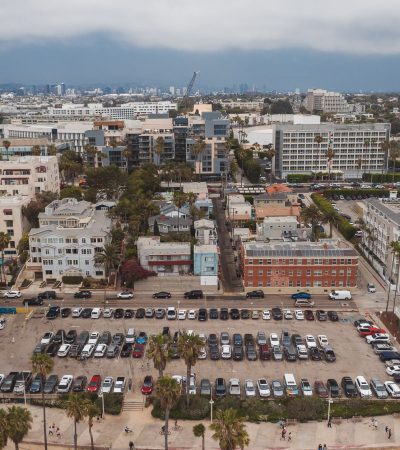
Most buyers looking at condos for sale in Santa Monica are paying for location, not square footage. At $1,100 to $1,400 per square foot for mid-tier product near the ocean, $1.2 million buys roughly 850 square feet — one bedroom and a den, a kitchen refreshed since the original 1980s build. What it also buys is a 12-minute walk to the Third Street Promenade, an 8-minute walk to the Pier, and the beach without your car. Spend the same money 6 miles inland and you get twice the space. Whether that trade makes sense is the whole decision.
Inventory splits into two tiers. The ocean-adjacent buildings on and near Ocean Avenue — Ocean Towers, 101 Ocean, 757 Ocean, 833 Ocean, Sea Colony I, II, and III — are mostly 1960s and 1970s construction, trading at $1,200 to $1,600+ per square foot for irreplaceable positions with real maintenance histories. Inland buildings like Santa Monica Lofts, Pacific Regency, and Santa Monica Bay Towers run $700 to $1,100 per square foot, selling on Promenade walkability and Expo Line access instead of views. The full market runs about $700,000 to $3 million-plus.
Who is buying condos in Santa Monica?
Santa Monica’s condo buyers break into two clear profiles.
The first is the lifestyle buyer: single, early career or established professional, often in tech or the creative industries, working in the Santa Monica tech corridor or commuting by the Expo Line to Culver City or Mid-Wilshire. They’ve done the math on renting versus buying and concluded that locking in a mortgage on a Santa Monica condo positions them better than staying in a rental while prices escalate. They are buying an urban LA lifestyle, not a house.
The second is the downsizing buyer or second-home buyer: someone who has already owned a larger property (often in the Westside or LA generally) and is specifically targeting Santa Monica for the ocean proximity. This buyer often has more flexibility on purchase price and is more focused on building quality and ocean orientation than on square footage maximization. They’re frequently the buyers for the ocean-adjacent buildings at the upper end of the Santa Monica condo market.
Both buyer types are making a deliberate trade against the single-family market. The Santa Monica public school question is real and worth naming: SMMUSD has a mixed performance record that leads many family buyers to calculate the private school cost as part of the housing equation, which sometimes makes the already-expensive Santa Monica math unsustainable for families. The buyers who make peace with Santa Monica condos are usually not organizing their housing decision around the public schools.
What kinds of condo buildings are in Santa Monica?
Santa Monica’s condo inventory is structured around two distinct tiers: the ocean-adjacent buildings on and near Ocean Avenue, and the inland buildings that trade on neighborhood access rather than ocean orientation.
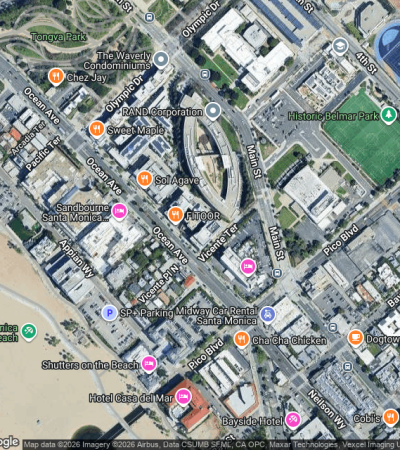
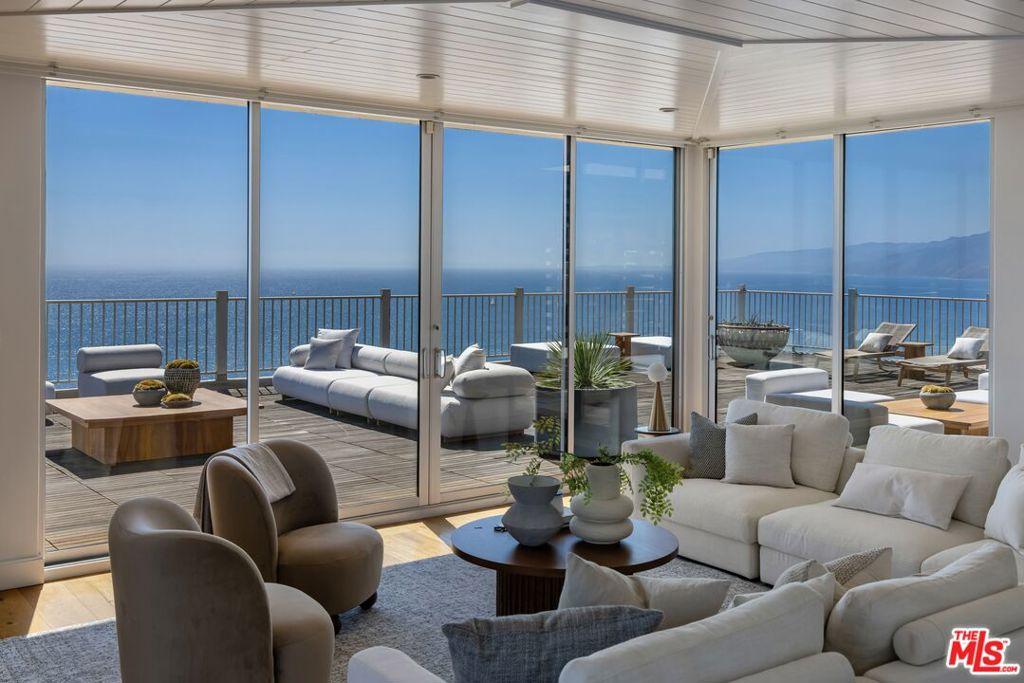
The ocean-adjacent tier is what most buyers imagine when they search santa monica condos for sale. These are the buildings along and near Ocean Avenue and the streets immediately behind the Palisades Park bluff. buildings where a unit on a high floor has Pacific Ocean views and where the walk to the beach is measured in steps rather than blocks. The buildings in this category are almost universally older construction. 1960s and 1970s built. which creates a specific due diligence picture. The physical positions are irreplaceable. The buildings themselves have age and maintenance histories that need examination.
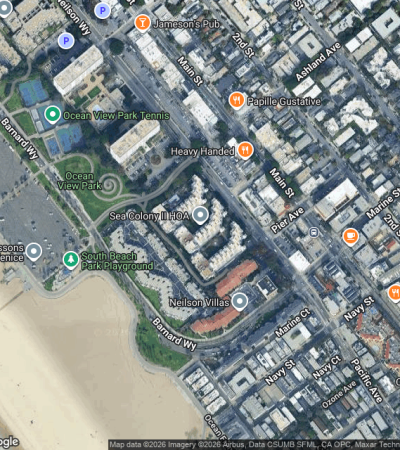
The most significant cluster is the oceanfront buildings on Ocean Avenue: Ocean Towers Condos, one of Santa Monica’s most recognizable oceanfront addresses on Ocean Avenue with a cooperative ownership structure that distinguishes it from standard condo ownership; 101 Ocean Condos, 270 Palisades Beach Condos, 757 Ocean, 833 Ocean, 951 Ocean. the numbered-address buildings that run along the Palisades bluff from Santa Monica to the northern edge of the beach access. Sea Colony I, II, and III are the gated beachfront complex south of the pier, one of the only direct-beach-access residential communities in Santa Monica with a gated community character and active HOA governance.
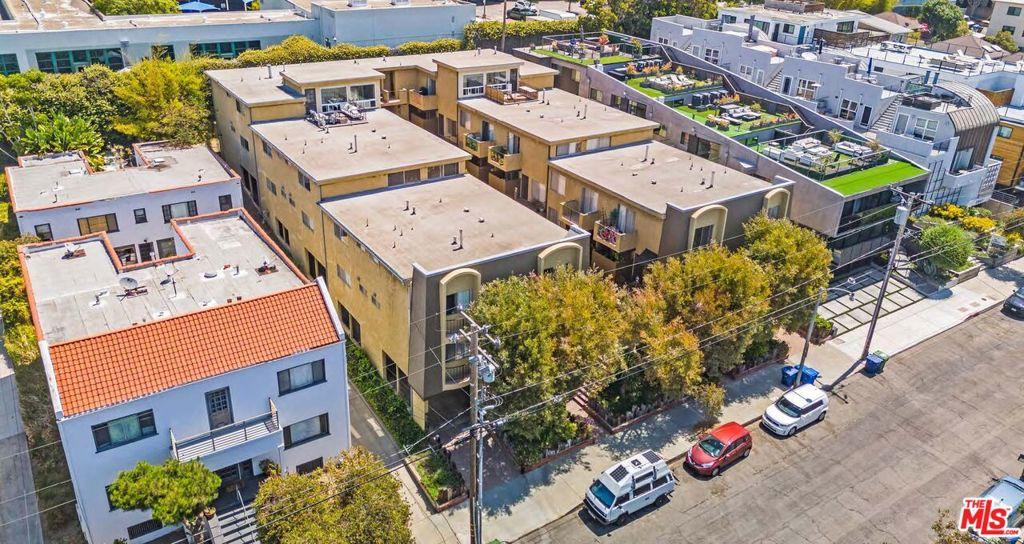
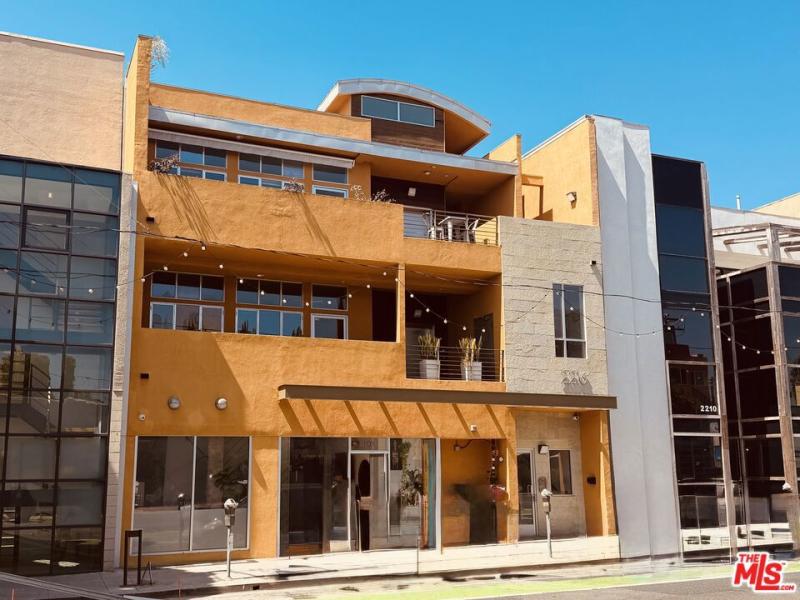
The inland tier includes Santa Monica Lofts, The Broadway Lofts, and Sailhouse Lofts in the mixed-use urban core blocks east of the Promenade, as well as Santa Monica Bay Towers on Wilshire, Pacific Bay Towers, Pacific Regency, and the Park Plaza Condos. buildings that trade on walkability to the commercial district and Expo Line access rather than ocean views. The Seychelle, The Pacifican, and The Oceanaire represent the mid-tier to upper-tier product that has ocean views from upper floors without the full oceanfront adjacency premium of the Avenue buildings.
What does a condo cost in Santa Monica?
The Santa Monica condo market ranges from approximately $700,000 for a smaller unit in an older inland building to $3 million-plus for a larger oceanfront unit with significant renovation or premium position.
The price-per-square-foot reality: ocean-adjacent and ocean-view units in the 1960s-1980s buildings on and near Ocean Avenue trade at $1,200-$1,600+ per square foot. These are buildings where the primary value is the address, and the building quality is what you’re accepting in exchange for it. Inland units in newer or better-maintained buildings trade at $700-$1,100 per square foot. a significant discount for giving up direct ocean orientation.
The practical consequence: a 1,000 square foot oceanfront unit in a 1970s building with deferred maintenance can be priced at or above a newer 1,100 square foot unit in a well-maintained inland building that’s 4 blocks from the beach. The buyer who pays the oceanfront premium for the address should go in understanding the building’s condition is part of what they’re accepting.
Current market condition (2026): inventory has increased from 2021-2022 lows and days on market have extended, particularly for the older oceanfront buildings where buyers are factoring in renovation costs and HOA assessment risk. This creates a more negotiable environment than Santa Monica condo buyers have seen in years.
What does condo ownership involve in Santa Monica?
The HOA is the first conversation in any Santa Monica condo purchase. The oceanfront and Ocean Avenue buildings are 40-60 years old, and many of them have deferred capital expenditures that the current HOA reserve levels don’t fully cover. Before making an offer on any of these buildings, the reserve study. a professional assessment of what the building should have saved versus what it has saved for future repairs. is essential reading.
The Coastal Zone designation creates a specific ownership constraint that buyers in Santa Monica’s oceanfront buildings frequently find after purchase. The California Coastal Commission has jurisdiction over modifications and additions to properties within the Coastal Zone, which includes most of Santa Monica’s oceanfront and near-oceanfront building stock. Remodels that change building footprint, addition of decks or exterior structures, and certain window replacements in Coastal Zone properties require permits that go beyond standard city approval. Buyers who plan significant interior renovations should verify what they’re actually allowed to do before assuming a renovation project is feasible.
Parking in Santa Monica condo buildings is a documented daily life issue. Most oceanfront and Ocean Avenue buildings have one assigned space per unit. Street parking in Santa Monica is among the most restricted in LA. permit zones, two-hour limits, beach parking lots that cost to use. which means a household with two cars in a one-space building is going to spend time finding the second space every day. The buildings near the Promenade and Expo Line have somewhat better transit alternatives, which helps, but the parking constraint is real in any building.
How does the Expo Line affect Santa Monica condos?
The Expo Line’s Santa Monica terminus. at 4th Street and Colorado, three blocks from the beach. makes Santa Monica one of the few LA neighborhoods where transit-dependent living is genuinely feasible for buyers who work in Mid-Wilshire, Culver City, or the University of Southern California corridor. The Blue Line connections at 7th Street/Metro Center extend this range to downtown. For a buyer whose office is at 3 stops east of Santa Monica on the Expo Line, the Santa Monica condo purchase is a different calculation than it was before the line opened.
The transit access matters for condo buyers specifically because it changes the parking calculus. A buyer who commutes by Expo Line rather than by car can function in a one-space building with less friction than a buyer who drives. The Santa Monica beachfront lifestyle. which is substantially pedestrian and bike-accessible within the city. further reduces the daily car usage for residents who are organized around that lifestyle. This doesn’t eliminate the car in Santa Monica, but it modifies the all-car dependency that makes parking constraints painful in most LA neighborhoods.
The Expo Line also affects resale. Santa Monica condos with walkable access to the Expo terminus have a measurable premium over comparable buildings that require a drive or significant walk to the station. For buyers thinking about resale positioning, proximity to the 4th and Colorado station is an asset that’s worth factoring into the building selection.
What are the trade-offs of a Santa Monica condo?
The building age and assessment risk is the central issue. Santa Monica’s most desirable condo addresses. the oceanfront buildings on and near Ocean Avenue. are almost universally 1960s-1980s construction. These buildings need ongoing capital expenditure that the monthly HOA fees in many cases do not adequately fund. The HOA reserve study and financials should be reviewed by a buyer’s agent and ideally by a CPA or real estate attorney who understands condo HOA financial analysis. A special assessment on a 60-unit building for a new roof, an elevator replacement, or seismic retrofitting can run $15,000 to $50,000 per unit. The risk is priced into some buildings and not into others. knowing which is which requires the reserve study.
The Coastal Zone affects more than you think. The restriction is not just on additions. It affects window replacements, exterior modifications, and deck construction in ways that buyers who plan to renovate don’t anticipate. If your purchase plan involves significant modifications to an oceanfront unit, get Coastal Zone clearance research done before you’re in contract.
The school question shapes the buyer pool. Santa Monica-Malibu Unified has underperformed its reputation for some elementary schools, and private school costs in Santa Monica run $25,000-$40,000 per child per year. Buyers with children who are factoring school costs into their housing equation often find the Santa Monica condo math tight. This affects the buyer pool and, by extension, the resale liquidity. you’re largely selling to buyers without school-age children or buyers for whom private school is already the assumption.
Parking is not a preference, it’s a constraint. A one-car building in Santa Monica is a real constraint for a two-car household. Test this before you buy: how does the parking situation at the specific building work for your daily life?
Where can I see condos for sale in Santa Monica?
TKG’s Santa Monica condo inventory includes 20 specific buildings across the oceanfront and inland market.
Ocean Towers Condos. The most recognizable oceanfront cooperative on Ocean Avenue. Pacific Ocean views, cooperative ownership structure.
Sea Colony I Condos. Gated beachfront community south of the pier. Direct beach access and gated community character.
Sea Colony II Condos. Second phase of the Sea Colony beachfront community.
Sea Colony III Condos. Third phase. The Sea Colony complex is Santa Monica’s only direct-beach-access gated residential community.
The Seychelle Condos. Mid-tier to upper-tier product with ocean views from upper floors. Interior Santa Monica location with Promenade walkability.
Santa Monica Lofts. Loft-style product in the urban core east of the Third Street Promenade.
Pacific Bay Towers Condos. Mid-rise product with ocean orientation and Wilshire corridor access.
There are 20 Santa Monica condo buildings in TKG’s inventory. Contact us to find buildings not listed here.
The Knight Group serves buyers and sellers in the Santa Monica condo market. Call us at 503-200-4823 or use the contact form below to connect with an agent who knows this coast specifically.
What Are You Actually Buying With Condos For Sale In Santa Monica?
- Buyers looking at condos for sale in Santa Monica are paying primarily for location rather than for square footage.
- Mid-tier product near the ocean buys a one bedroom and a den with a kitchen refreshed since the original build.
- Location value shows up as a short walk to the Third Street Promenade, a shorter walk to the Pier, and the beach without a car.
- Spending the same money inland delivers twice the space, and whether that trade makes sense is the whole decision.
- Inventory splits into two tiers, ocean-adjacent buildings near Ocean Avenue and inland buildings that sell on walkability instead.
- Ocean Towers, Ocean, Sea Colony I, II, and III are older construction trading for irreplaceable positions with real maintenance histories.
- Santa Monica Lofts, Pacific Regency, and Santa Monica Bay Towers sell on Promenade walkability and Expo Line access instead of views.
- Condo buyers here break into two clear profiles, the lifestyle buyer and the downsizing or second-home buyer.
- Lifestyle buyers are single, early career or established professionals, often in tech or creative industries working the Santa Monica tech corridor.
- Expo Line commuters heading to Culver City or Mid-Wilshire have concluded a mortgage positions them better than staying in a rental.
- Downsizing buyers who already owned a larger Westside property target condos for sale in Santa Monica specifically for ocean proximity.
- SMMUSD has a mixed performance record, so buyers who make peace with condos for sale in Santa Monica rarely organize around public schools.
What Kinds Of Buildings Are Included In Condos For Sale In Santa Monica?
- Condo inventory is structured around two distinct tiers, the ocean-adjacent buildings on Ocean Avenue and the inland buildings behind them.
- The ocean-adjacent tier is what most buyers imagine when they search condos for sale in Santa Monica.
- Buildings along the streets behind the Palisades Park bluff put high-floor Pacific Ocean views and a walk to the beach measured in steps.
- Older construction defines the oceanfront tier, creating a specific due diligence picture where physical positions are irreplaceable but maintenance histories need examination.
- Ocean Towers Condos is one of the most recognizable oceanfront addresses on Ocean Avenue, with a cooperative ownership structure distinguishing it from standard condo ownership.
- Sea Colony I, II, and III form the gated beachfront complex south of the pier with active HOA governance.
- Santa Monica Lofts, The Broadway Lofts, and Sailhouse Lofts sit in the mixed-use urban core blocks east of the Promenade.
- Santa Monica Bay Towers on Wilshire, Pacific Bay Towers, Pacific Regency, and Park Plaza Condos trade on commercial district walkability and Expo Line access.
- The Seychelle, The Pacifican, and The Oceanaire offer ocean views from upper floors without the full oceanfront adjacency premium.
- Market conditions have loosened as inventory increased and days on market extended, creating a more negotiable environment for condos for sale in Santa Monica.
- The HOA reserve study, a professional assessment of what a building has saved for future repairs, is essential reading before any offer.
What Are The Trade-Offs Of Condos For Sale In Santa Monica?
- The Expo Line terminus at Fourth Street and Colorado sits blocks from the beach, making transit-dependent living genuinely feasible here.
- Blue Line connections at Seventh Street Metro Center extend commuting range to downtown for buyers working Mid-Wilshire, Culver City, or the university corridor.
- Transit access changes the parking calculus, since an Expo Line commuter can function in a one-space building with less friction than a driver.
- The Santa Monica beachfront lifestyle is substantially pedestrian and bike-accessible, further reducing daily car usage for residents organized around it.
- Walkable access to the Expo terminus carries a measurable resale premium over comparable buildings requiring a drive or long walk to the station.
- Building age and assessment risk is the central trade-off in condos for sale in Santa Monica, since the most desirable addresses are older construction.
- Monthly HOA fees in many oceanfront buildings do not adequately fund the ongoing capital expenditure those buildings require.
- A buyer’s agent, and ideally a CPA or real estate attorney who understands condo HOA financial analysis, should review the reserve study and financials.
- Special assessments for a new roof, elevator replacement, or seismic retrofitting are priced into some buildings and not into others.
- Coastal Zone restrictions affect window replacements, exterior modifications, and deck construction in ways that buyers planning renovations do not anticipate.
- Private school costs and Santa Monica-Malibu Unified performance shape the buyer pool and, by extension, the resale liquidity of condos for sale in Santa Monica.
- Parking is a constraint rather than a preference, so a two-car household should test a one-car building against daily life before buying.