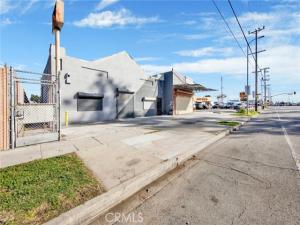
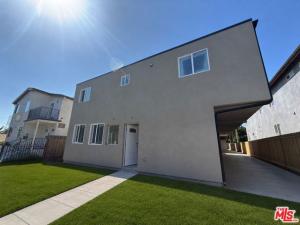
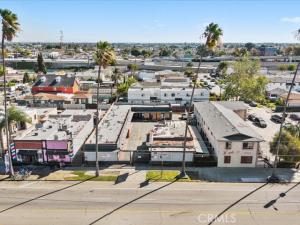
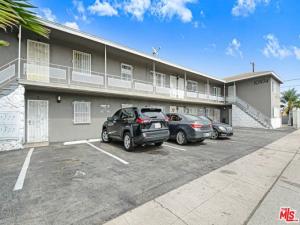
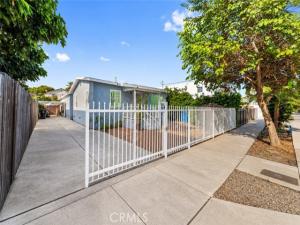
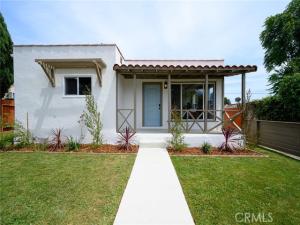
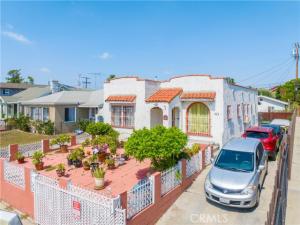
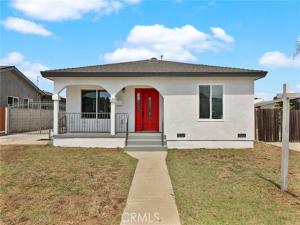
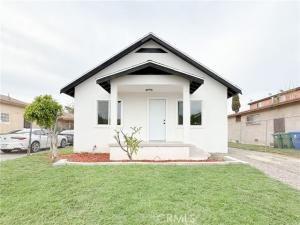
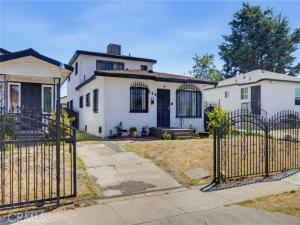
South Los Angeles Homes for Sale
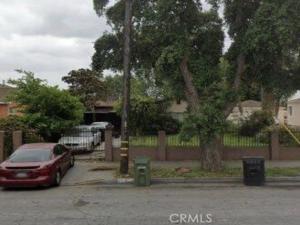
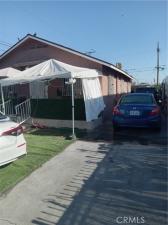
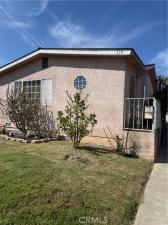
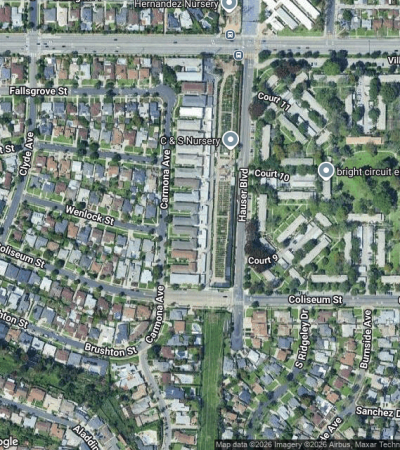
South Los Angeles Homes for Sale currently number 63 active listings with a median asking price of $700,000 (CRMLS, September 2026).
Most buyers looking at south los angeles homes for sale are here for one reason: this is where you still find detached houses on real lots inside city limits, at prices the Westside passed years ago. The spread is wide. Homes.com put the West Adams median at $1,097,000 as of March 2026 and Hyde Park at $802,500, while Zillow put the average Watts home value at $592,750 as of April 30, 2026. That is roughly two to one across one region, which tells you how much the block matters.
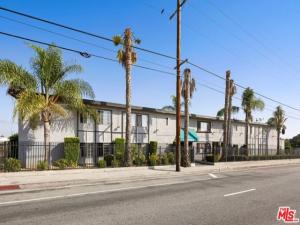
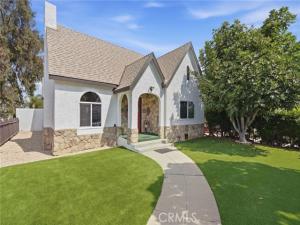
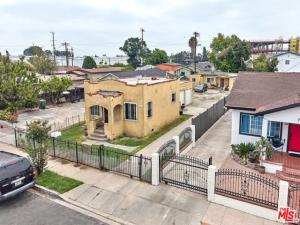
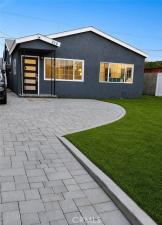
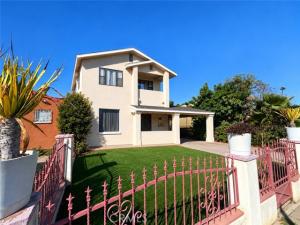
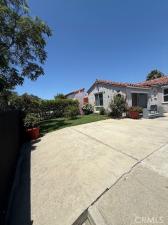
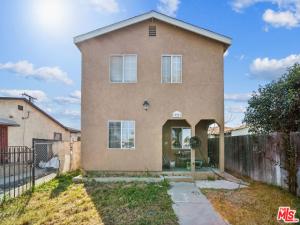
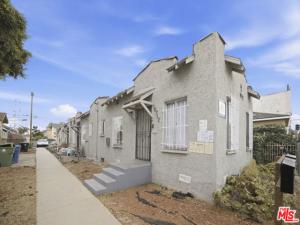
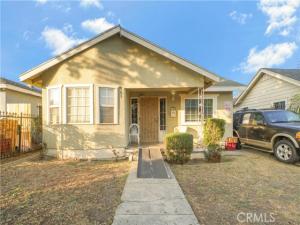
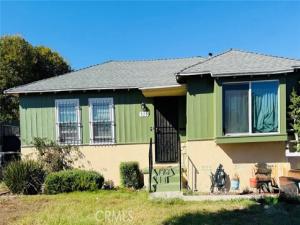
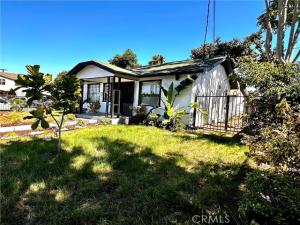
The stock is mostly older detached single-family, plus a lot of duplexes, triplexes, and houses with a converted rear unit. Near USC and West Adams you get Victorians, Craftsman, and period revival built between the 1880s and 1920s; the middle filled in with bungalow courts and Spanish Colonial Revival cottages; the southern edge and hillside pockets run traditional, ranch, and mid-century. What varies is jurisdiction. Some communities, like View Park-Windsor Hills and Westmont, are unincorporated county, which changes rent control, transfer tax, and your ADU path.
Browse the listings below, or contact The Knight Group and we will build a shortlist by block, by school boundary, and by jurisdiction rather than by ZIP code.
Where does South Los Angeles begin and end?
There is no single legal boundary, and that matters more than it sounds. South Los Angeles is a regional label covering both City of Los Angeles neighborhoods and unincorporated Los Angeles County communities that sit directly against them, with no visible seam. You can cross from the City into the County mid-block.
Broadly, it runs from the Santa Monica Freeway (Interstate 10) on the north to roughly the Century Freeway (Interstate 105) on the south, and from the Baldwin Hills on the west to the Alameda Street freight corridor on the east. The Harbor Freeway splits it down the middle.
Treat the boundaries as underwriting inputs. Jurisdiction determines transfer tax exposure, rent control rules, permitting authority, and often the entitlement path for an ADU. Two houses three hundred feet apart can face different answers on all four.
What kind of homes are you actually buying in South Los Angeles?
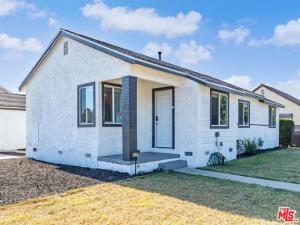
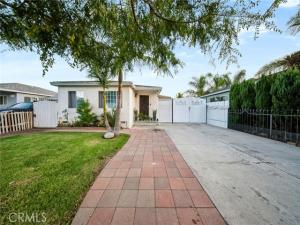
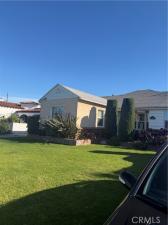
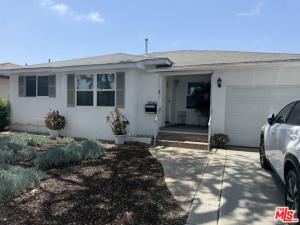
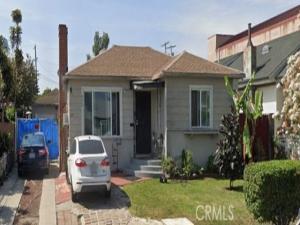
Mostly older detached single-family homes, plus a meaningful stock of small multifamily. The northern neighborhoods near USC and West Adams were built out between the 1880s and the 1920s and carry the heaviest concentration of Victorians, Craftsman, and period revival architecture. The middle of the region filled in from the 1910s to the 1930s with bungalow courts, stucco cottages, and modest Spanish Colonial Revival houses. The southern edge filled in through the 1940s and 1950s with traditional and ranch homes, and the hillside pockets carry mid-century designs on larger, view-oriented lots.
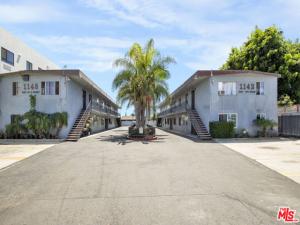
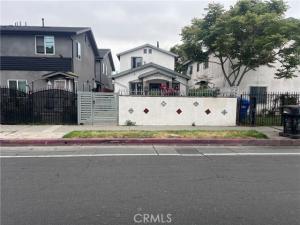
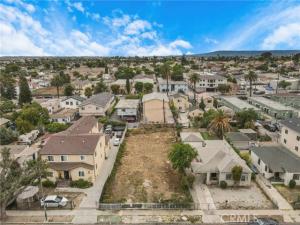
Three consequences. Deferred maintenance is the default assumption: knob-and-tube wiring, galvanized supply lines, unreinforced chimneys, and unpermitted rear additions are all common. Lot sizes are generally usable, which is why this is one of the more active ADU markets in the city. And a large share of properties are duplexes, triplexes, or houses with a converted rear unit, which brings rent regulation into the analysis whether or not you plan to be a landlord.
Order a full inspection, a sewer scope, and a permit history pull on every property. Unpermitted square footage is common enough here that it should be priced, not discovered at appraisal.
Which South Los Angeles neighborhoods should you be looking at?
Start with the historic northern tier, closest to Downtown and USC. West Adams is the region’s flagship for period architecture and has seen the sharpest price movement, with restaurants and retail along Adams and Jefferson boulevards. Jefferson Park sits just south with early twentieth century bungalows and Spanish Revival houses at a lower entry point. University Park wraps the USC campus and contains two National Register historic districts, North University Park and Menlo Avenue-West Twenty-ninth Street, with Victorian houses dating to the 1880s. Exposition Park is the institutional heart of the region: the Los Angeles Memorial Coliseum, the California Science Center, the Natural History Museum, and the California African American Museum. Vermont Square anchors the northern Vermont Avenue corridor and holds the 1913 Vermont Square Branch Library, the oldest branch library building in the Los Angeles Public Library system.
Move west and the price tier steps up. Baldwin Hills occupies elevated terrain with view lots and postwar architecture. View Park-Windsor Hills is unincorporated county territory and one of the most architecturally intact districts in the region: the View Park Historic District was listed on the National Register on July 12, 2016, covers nearly 1,800 properties, and is the largest historic district in the United States designated for its association with African American history. Leimert Park was master planned in 1928 by Walter H. Leimert with the Olmsted Brothers firm on roughly 230 acres east of Baldwin Hills, with buried utilities and street trees in place before most houses went up. Crenshaw runs along the boulevard of the same name and is the focus of the Destination Crenshaw cultural corridor. Hyde Park sits at the southern end of that corridor with bungalows and Spanish-style houses, and Homes.com listed its median home price at $802,500. Chesterfield Square and Harvard Park fill the grid between the Crenshaw and Vermont corridors with 1920s to 1940s stock at lower entry pricing.
The Vermont Avenue corridor forms the region’s spine. Vermont Knolls, Vermont-Slauson, and Vermont Vista run north to south along it, each built around a commercial spine with residential grids behind it. Manchester Square sits at the southwestern edge near the airport approach and the Century Freeway. West Athens and Westmont are unincorporated county communities covered by the Connect Southwest LA transit-oriented specific plan in Chapter 22.416 of the Los Angeles County Code.
East of the Harbor Freeway, the character shifts toward the freight geography that built it. Central-Alameda sits against the Alameda Corridor, the 20-mile freight rail expressway that opened on April 15, 2002 and carries port traffic in a trench roughly 33 feet deep. Florence and the adjacent unincorporated community of Florence-Graham share a name and a street grid but not a jurisdiction, the clearest example of why you verify the governing agency before writing an offer. Green Meadows and Broadway-Manchester sit south of them with primarily small postwar houses. Watts anchors the southeastern corner and holds the Watts Towers, built single-handedly by Simon Rodia between 1921 and 1954 from found material, with the tallest tower reaching nearly 99.5 feet, designated a National Historic Landmark in 1990.
What does Measure ULA mean if you are selling here?
If your property is inside the City of Los Angeles, Measure ULA applies to your sale, adding a transfer tax on top of the base documentary transfer tax at high sale prices. Per the Los Angeles Office of Finance and industry reporting, the thresholds effective July 1, 2025 were $5.3 million and $10.6 million, and for transactions closing after June 30, 2026 they move to $5,400,000 and $10,900,000. Sales above the lower threshold are assessed at 4 percent and sales at or above the upper threshold at 5.5 percent, adjusted upward annually by a Bureau of Labor Statistics chained CPI measure.
For most single-family sales here, ULA is not in play. It matters on multifamily and mixed-use dispositions, assemblages, and portfolio sales, all common here. The tax is assessed on the entire consideration rather than the amount above the threshold, so a sale that crosses the line by a small margin carries a disproportionate cost. Solve that before the property goes to market.
Unincorporated communities including View Park-Windsor Hills, Westmont, West Athens, and Florence-Graham sit outside the City and therefore outside Measure ULA.
Why does City versus unincorporated County matter so much here?
Because the two jurisdictions run different rent control regimes, permitting departments, and transfer tax rules over neighborhoods that look identical from the street.
In the City of Los Angeles, the Rent Stabilization Ordinance applies to rental units in buildings first built on or before October 1, 1978, and the Los Angeles Housing Department reports it covers roughly 624,000 units citywide. Given how much of South Los Angeles predates 1978, most small multifamily buildings in the City portion are covered: capped increases, just cause eviction requirements, and registration obligations.
In unincorporated county areas, the Los Angeles County Rent Stabilization Ordinance took effect on April 1, 2020 and was permanently extended in 2023. It applies to rental units built before February 1, 1995, caps annual increases at 4 percent, and requires just cause for most evictions after twelve months, with single-family homes and condominiums generally exempt.
Confirm the jurisdiction and the certificate of occupancy date before you underwrite a rent roll on anything with more than one unit. Assumed market-rate upside that turns out to be regulated is the most common modeling error we see here.
How is the K Line changing the Crenshaw corridor?
Metro’s K Line opened on October 7, 2022, running 11 miles with 13 stations. It put rail into neighborhoods that had none, including an underground station at Leimert Park, an at-grade station at Hyde Park, a Martin Luther King Jr. station serving Baldwin Hills, and a northern terminus at Expo/Crenshaw that transfers to the E Line. In June 2025 the LAX/Metro Transit Center opened, creating continuous service from Expo/Crenshaw to the airport and the South Bay.
Alongside the rail, Destination Crenshaw is building a 1.3-mile cultural corridor along Crenshaw Boulevard designed by Perkins&Will, budgeted at roughly $100 million, with about four acres of open space, ten pocket parks, and work commissioned from more than 100 Los Angeles artists. Its centerpiece, Sankofa Park, has been delayed repeatedly; reporting from April 2026 indicated it could open in the fall after a new funding commitment.
Redevelopment is following the rail. Harridge Development Group purchased the former Baldwin Hills Crenshaw Plaza for approximately $111 million in 2021, and phased redevelopment has begun with 90 townhomes underway. In Watts, the Jordan Downs redevelopment led by the Housing Authority of the City of Los Angeles with BRIDGE Housing is a roughly $1 billion effort to deliver 1,500 units of mixed-income housing, a 115,000-square-foot retail center, and nine acres of open space. Cypress View, with 119 apartments, opened there in January 2026.
The honest read: transit and cultural investment have supported demand without making this a uniform market. Station proximity is an asset for some buyers and a noise consideration for others. Price the block, not the press release.
What is happening in Exposition Park and what does 2028 mean?
Two dated events are worth planning around. The Lucas Museum of Narrative Art, founded by George Lucas and Mellody Hobson and designed by Ma Yansong of MAD Architects, is scheduled to open to the public on September 22, 2026. It is a roughly 300,000-square-foot building with 35 galleries on an 11-acre former parking site.
Then the Games. LA28 has confirmed that the 2028 Olympic Opening Ceremony on July 14, 2028 will be shared between the Los Angeles Memorial Coliseum in Exposition Park and the stadium in Inglewood, and that the Closing Ceremony on July 30, 2028 will be at the Coliseum, which becomes the first venue to host events for three Olympic Games.
What that means for real estate is more measured than the headlines suggest. Event traffic and institutional investment lift short-term rental interest and street-level retail nearby, but they do not reliably lift residential values block by block, and they bring congestion and parking pressure during construction and event windows. Underwrite the access reality, not a speculative Olympic premium.
What should you know about historic districts before you renovate?
Large parts of the northern and western tier are subject to preservation review. The City of Los Angeles uses Historic Preservation Overlay Zones, which require that exterior alterations and new construction be consistent with the district’s historic character and reviewed against an adopted preservation plan. The West Adams Terrace HPOZ, designated in 2003, covers Craftsman and Colonial Revival houses from an 1887 to 1951 period of significance.
National Register listing works differently. It is largely honorific for private owners spending private money and does not by itself restrict what you do to your own house, though it can open the door to preservation incentives. The View Park listing in 2016 came out of a resident-funded nomination effort that raised more than $100,000.
Either way, pull the property’s zoning and overlay status before you budget a renovation. Windows, roof material, front-facing additions, and driveway changes are the items most likely to trigger review, and a design that ignores the preservation plan adds months to a permit timeline.
What risks should a buyer underwrite in South Los Angeles?
Four are specific enough to name. First, geology. The Baldwin Hills sit on deformation associated with the Newport-Inglewood Fault Zone, and parts of the region fall within state-designated seismic hazard areas. Order the natural hazard disclosure early and read the liquefaction and fault-zone findings.
Second, the Inglewood Oil Field, which covers roughly 1,000 acres near the Baldwin Hills with more than 400 active wells as of 2022, operated by Sentinel Peak Resources under the Baldwin Hills Community Standards District established in 2008. The County Board of Supervisors voted in September 2021 to phase out drilling countywide, but litigation has delayed implementation here.
Third, infrastructure. The Alameda Corridor shapes the eastern neighborhoods and the southwestern edge sits near the airport approach. Both are permanent conditions, already priced in. Visit at different hours before you commit.
Fourth, condition. Older stock plus owner-performed work produces a high rate of unpermitted additions and dated systems. Budget a rehabilitation reserve and get contractor bids during your inspection period.
How do commutes and access work from here?
This is one of the better-connected parts of the county by car. The Santa Monica Freeway runs along the northern edge, the Harbor Freeway north to south through the middle, and the Century Freeway along the southern edge to LAX. Crenshaw, Western, Vermont, and Central handle north-south surface traffic.
By transit, the K Line serves the western corridor and connects to LAX and the South Bay, the E Line runs along the northern boundary between Downtown and Santa Monica, the A Line runs through the eastern portion toward Downtown and Long Beach, and the J Line bus rapid transit runs in the Harbor Freeway median. New supply arrives mostly as infill near these corridors, so check what is entitled nearby before you pay a premium for a view or an open lot next door.
How to Compare Two Blocks That Look the Same on Paper
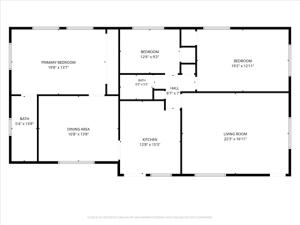
Because the region spans city and county jurisdiction, two listings with similar square footage, vintage, and lot size can carry different carrying costs and different renovation timelines. Before you fall for a floor plan, pull three things: the jurisdiction, the permit history, and the unit count on record. A single-family listing with a rear conversion may be a duplex in the eyes of the assessor, which changes your financing, your insurance, and whether tenant protections apply. In South Los Angeles real estate, the paperwork gap between what a house is marketed as and what it is legally recorded as is the single most expensive thing buyers miss.
Then decide what you are optimizing for. Period architecture and walkable commercial corridors concentrate in the northern and western tiers and price accordingly. Larger, more usable lots and lower entry points sit further south and east, where the ADU path often carries the real upside. Both are defensible strategies. Pick one before you tour, or you will end up comparing houses that were never competing for the same buyer.
Frequently Asked Questions About south los angeles Homes for Sale
Is South Los Angeles a good value compared to the rest of the city?
For detached housing inside city limits, yes, with a wide range. Homes.com reported a West Adams median home price of $1,097,000 as of March 2026 and a trailing twelve-month median of $991,309, down 10 percent year over year, while Zillow put the average Watts home value at $592,750 as of April 30, 2026.
Which neighborhoods carry the highest prices?
The western hillside and historic districts. View Park-Windsor Hills, Baldwin Hills, and Leimert Park price above the regional midpoint, and West Adams has moved furthest among the northern neighborhoods. Movoto listed a Leimert Park median home price of $1,150,000 as of June 2026, with a median sale price down about 3 percent year over year and a median 32 days on market.
Do I pay Measure ULA on a typical house sale here?
Almost certainly not. The lower threshold moves to $5,400,000 for transactions closing after June 30, 2026, far above the typical single-family price here. It becomes relevant on multifamily, mixed-use, and assemblage sales, and does not apply in the unincorporated communities.
Can I build an ADU on a South Los Angeles lot?
Frequently, and lot sizes here support it. Check overlay status, since HPOZ review affects anything visible from the street, and jurisdiction, since City and County permitting differ. Confirm both before you commission plans.
Are these neighborhoods in the Los Angeles Unified School District?
The City of Los Angeles neighborhoods here are served by LAUSD, and the area has a heavy charter and magnet presence. Assignment is boundary-specific and changes, so verify the current attendance area for the exact address.
What does the K Line do for resale value?
It adds an access amenity along a defined corridor. The line opened October 7, 2022 and reached LAX in June 2025, which improved connectivity for the western neighborhoods. Treat station proximity as one factor among several, weighed against street noise on the specific block.
Should I worry about the Inglewood Oil Field if I buy near Baldwin Hills?
It is a legitimate diligence item, not an automatic disqualifier. The field remains in operation with more than 400 active wells as of 2022, and while the County voted in September 2021 to phase out drilling countywide, litigation has delayed that outcome here. Distance and the specific parcel matter. Review the disclosures and decide with the facts in front of you.
How does The Knight Group work in South Los Angeles?
We work this region address by address. Before you see a property, we pull the permit history, the zoning and overlay status, the jurisdiction, and the certificate of occupancy date, because those four items drive more of the outcome here than the listing photos do. For anything with more than one unit, we verify rent regulation status before modeling a return.
For sellers, we price against the comparable set your block actually supports, and we address condition and permit issues before the property goes live rather than negotiating them in escrow. On multifamily and mixed-use dispositions inside city limits, we model Measure ULA exposure at the pricing stage so the threshold does not eat the difference at closing.
Browse the listings below. When you are ready to narrow it down, contact The Knight Group and we will build a shortlist with the trade-offs written out: what you gain on each block, what you give up, and what it costs to fix.
What are South Los Angeles Homes like to buy?
- South Los Angeles Homes draw buyers who want detached houses on real lots inside city limits at prices the Westside passed years ago.
- Housing stock across the region is mostly older detached single-family, joined by duplexes, triplexes, and houses carrying a converted rear unit.
- Neighborhoods near USC and West Adams carry Victorians, Craftsman houses, and period revival architecture from the region’s earliest build-out.
- Bungalow courts, stucco cottages, and modest Spanish Colonial Revival houses filled in the middle of the region.
- Traditional and ranch homes define the southern edge, while hillside pockets carry mid-century designs on larger, view-oriented lots.
- Jurisdiction varies across South Los Angeles Homes, with communities like View Park-Windsor Hills and Westmont sitting in unincorporated county territory.
- Rent control, transfer tax, and the ADU path all change depending on whether a property sits in the City or the County.
- South Los Angeles is a regional label covering City of Los Angeles neighborhoods and unincorporated county communities that sit against them with no visible seam.
- Boundaries run from the Santa Monica Freeway on the north to roughly the Century Freeway on the south.
- Western edge sits at the Baldwin Hills and the eastern edge at the Alameda Street freight corridor, with the Harbor Freeway splitting the middle.
- Deferred maintenance is the default assumption, including knob-and-tube wiring, galvanized supply lines, unreinforced chimneys, and unpermitted rear additions.
- Lot sizes are generally usable, which makes South Los Angeles Homes one of the more active ADU markets in the city.
- Full inspections, sewer scopes, and permit history pulls belong on every property, since unpermitted square footage should be priced rather than discovered at appraisal.
- West Adams stands as the region’s flagship for period architecture, with restaurants and retail along Adams and Jefferson boulevards.
- Jefferson Park sits just south of West Adams with early twentieth century bungalows and Spanish Revival houses at a lower entry point.
- University Park wraps the USC campus and contains two National Register historic districts, North University Park and Menlo Avenue-West Twenty-ninth Street.
What is changing around South Los Angeles Homes right now?
- Metro’s K Line put rail into Crenshaw corridor neighborhoods that previously had none, changing access for buyers weighing South Los Angeles Homes.
- Leimert Park received an underground station on the K Line, while Hyde Park received an at-grade station.
- Martin Luther King Jr. station serves Baldwin Hills, and the northern terminus at Expo/Crenshaw transfers riders to the E Line.
- LAX/Metro Transit Center created continuous service from Expo/Crenshaw to the airport and the South Bay.
- Destination Crenshaw is building a cultural corridor along Crenshaw Boulevard designed by Perkins&Will, with open space, pocket parks, and commissioned artwork.
- Sankofa Park, the centerpiece of Destination Crenshaw, has been delayed repeatedly, with reporting indicating it could open after a new funding commitment.
- Harridge Development Group purchased the former Baldwin Hills Crenshaw Plaza, and phased redevelopment has begun with townhomes underway.
- Jordan Downs redevelopment in Watts is led by the Housing Authority of the City of Los Angeles with BRIDGE Housing.
- Jordan Downs is delivering mixed-income housing, a retail center, and open space, with the Cypress View apartments already opened there.
- Station proximity reads as an asset for some buyers of South Los Angeles Homes and as a noise consideration for others.
- Lucas Museum of Narrative Art, founded by George Lucas and Mellody Hobson and designed by Ma Yansong of MAD Architects, is scheduled to open in Exposition Park.
- Los Angeles Memorial Coliseum hosts the Closing Ceremony and becomes the first venue to host events for three Olympic Games.
- Event traffic and institutional investment lift short-term rental interest and street-level retail without reliably lifting residential values block by block.
- Historic Preservation Overlay Zones require that exterior alterations and new construction stay consistent with a district’s historic character under an adopted preservation plan.
- Windows, roof material, front-facing additions, and driveway changes are the items most likely to trigger preservation review on South Los Angeles Homes.
Are South Los Angeles Homes a good value?
- South Los Angeles Homes offer real value for detached housing inside city limits, though the range across the region is wide.
- Western hillside and historic districts carry the highest prices, with View Park-Windsor Hills, Baldwin Hills, and Leimert Park pricing above the regional midpoint.
- West Adams has moved furthest on price among the northern neighborhoods of the region.
- Measure ULA almost never applies to a typical single-family sale here, since the threshold sits far above the usual house price.
- Measure ULA becomes relevant on multifamily, mixed-use, and assemblage sales, and does not apply at all in the unincorporated communities.
- ADU construction is frequently possible on South Los Angeles Homes because lot sizes in the region support it.
- Overlay status matters before commissioning ADU plans, since HPOZ review affects anything visible from the street.
- City and County permitting differ, so jurisdiction should be confirmed alongside overlay status before any design work begins.
- City of Los Angeles neighborhoods here are served by the Los Angeles Unified School District, with a heavy charter and magnet presence.
- School assignment is boundary-specific and subject to change, so the current attendance area should be verified for the exact address.
- K Line adds an access amenity along a defined corridor and improved connectivity for the western neighborhoods once it reached LAX.
- Station proximity works as one factor among several, weighed against street noise on the specific block.
- Inglewood Oil Field remains a legitimate diligence item near Baldwin Hills rather than an automatic disqualifier, with distance and the specific parcel mattering.
- County voted to phase out drilling countywide, though litigation has delayed that outcome at the Inglewood Oil Field.
- Permit history, zoning and overlay status, jurisdiction, and certificate of occupancy date drive more of the outcome than listing photos do.
- Sellers of South Los Angeles Homes benefit from addressing condition and permit issues before listing rather than negotiating them in escrow.