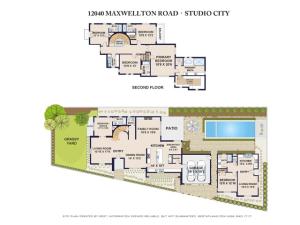
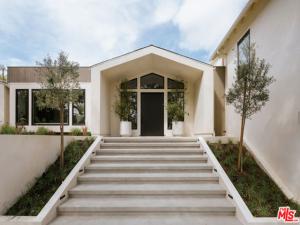
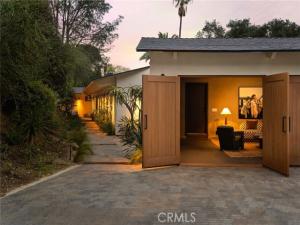
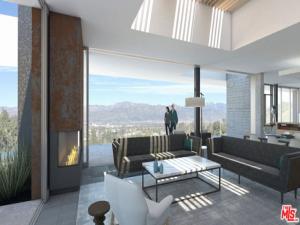
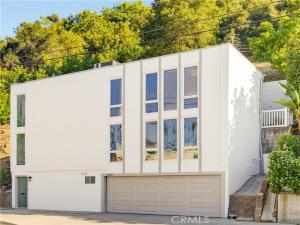
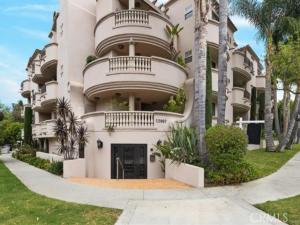
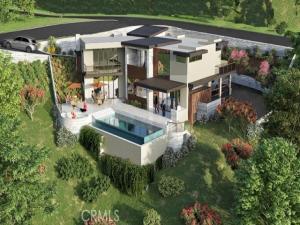
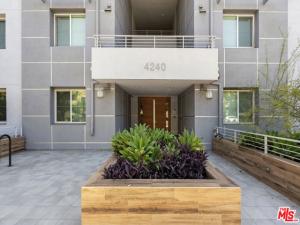
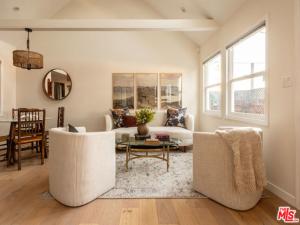
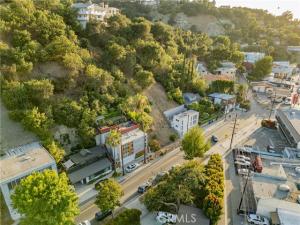
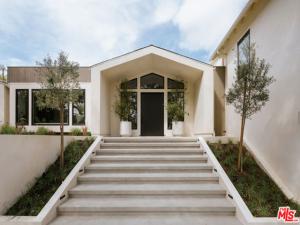
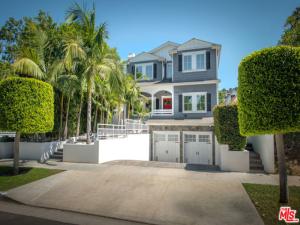
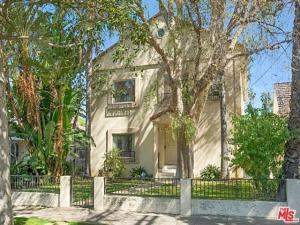
Silver Triangle Studio City Homes for Sale currently number 11 active listings with a median asking price of $977,000 (CRMLS, September 2026). Lots are the most compact of the 10 Studio City sub-markets tracked, a median of 6,004 sq ft against 18,368 sq ft in Wrightwood Estates. Listings move faster than the surrounding cohort, a median of 49 days on market against 55 across Studio City.
Browse all Los Angeles real estate — or explore the full Los Angeles luxury real estate market.
Silver Triangle’s single-family homes are a mix of original mid-century construction and newer rebuilds, with a typical home offering three bedrooms and three bathrooms around 2,000 square feet (source: Redfin). The average recorded sale price has been around $1,395,444 (source: Redfin). Residents are within walking distance of a Trader Joe’s and a Vons at the intersection of Laurel Canyon Boulevard and Ventura Boulevard, making it one of the more grocery-accessible flatland neighborhoods in Studio City (source: neighborhood market reporting).
As of mid-June 2026, Studio City citywide has a median sale price around $1,790,000, up 25.6% year over year, or about $843 per square foot (up 0.4% year over year), with a median list price around $2,100,000, or about $818 per square foot. About 168 homes were on the market with 28 recently sold, homes typically going pending in around 59 days at about 97.7% of list price, buyers averaging roughly two offers per home, and a typical down payment around 63.5% (source: Redfin). Silver Triangle’s average sale price of roughly $1.4 million sits slightly below the citywide median, reflecting its smaller, original-construction homes alongside newer rebuilds. CRMLS listing data shows active listings in Silver Triangle running from $225,000 to $5,990,000, with a median list price of $1,013,500 (12 active listings as of August 29, 2026).
Homes in this area of Studio City offer a combination of architectural character, established landscaping, and strong community identity that attracts buyers looking for something beyond a generic suburban tract. While the broader Studio City market provides a range of options, this particular pocket has its own micro-market dynamics — often with faster absorption times and tighter inventory than comparable addresses across town.
hillside homes and newer townhome communities carry HOA dues; flat-land single-family homes typically do not Buyers who prioritize privacy, outdoor space, and a neighbors-who-wave culture consistently point to neighborhoods like this one as undervalued relative to the broader San Fernando Valley market.
The homes in this area range from post-war single-family residences to updated modern builds, with many properties undergoing significant renovations over the past decade. Lot sizes are competitive for Los Angeles County standards. Most homes feature private outdoor space, attached garages, and mid-century design cues that have become increasingly sought-after in Southern California real estate.
Buyers with specific taste — whether for Spanish Colonial, Craftsman, or Contemporary — will find homes here that meet that brief. The range of price points within the community also means that entry-level buyers and move-up buyers often shop the same streets, which keeps demand diversified across market cycles.
This area of Studio City has tracked alongside or above the broader San Fernando Valley appreciation curve over the past several years. Rental demand is also strong — single-family homes in Studio City attract quality long-term tenants, making buy-and-hold strategies viable even with current interest rate environments. The Knight Group tracks off-market opportunities in this area specifically because they rarely generate open-offer situations and tend to close with less friction than listed properties.
The Silver Triangle occupies the eastern Studio City zone between Moorpark Street and Ventura Boulevard, bounded by Tujunga Avenue and the NBC/Universal Studios adjacent area to the east — a geography that has developed the urban-village commercial character that distinguishes the Silver Triangle from the more purely residential Studio City neighborhoods to the west. The Tujunga Village commercial node (centered on Tujunga Avenue between Moorpark and Ventura) provides the Silver Triangle with its primary neighborhood commercial identity: the independent bookshops (Iliad Books), the boutique restaurants and coffee shops, the artisan retail, and the community gathering spaces that the walkable village commercial format creates. This walkable village character makes the Silver Triangle the most pedestrian-oriented Studio City sub-neighborhood — the ability to walk to the Tujunga Village commercial district for daily needs and dining creates the urban-village residential experience that the flat Studio City buyer who prioritizes walkability over hillside views specifically values. The NBC Universal employment complex and the NBC Studios production facilities at the eastern Silver Triangle border create an employment anchor that sustains the professional residential demand from the media industry workforce that walks or bikes to the studio campus from the adjacent Silver Triangle residential streets.
The Silver Triangle commands a modest premium over the equivalent flat Studio City address in the Colfax Meadows or Beeman Park zones due to the Tujunga Village walkability and the creative-professional community character that the neighborhood has sustained. The architectural variety in the Silver Triangle is greater than in the more uniform mid-century ranch neighborhoods to the west — the neighborhood includes Spanish colonials, craftsmen, and newer infill construction alongside the ranch stock, creating the eclectic streetscape that the creative professional residential community tends to prefer over the more homogeneous suburban fabric.
As a flatland neighborhood at the base of the Studio City Hills, Silver Triangle generally carries lower wildfire exposure than the hillside neighborhoods immediately to its south (source: Cal Fire hazard severity zone maps).
Like the rest of the San Fernando Valley flatlands, Silver Triangle sees hot, dry summers and milder, occasionally rainy winters, with less moderation from hillside elevation than neighborhoods closer to the Santa Monica Mountains (source: regional climate data).
Silver Triangle is walkable to Ventura Boulevard’s restaurants and shops, including a Trader Joe’s and Vons at Laurel Canyon Boulevard and Ventura Boulevard, with the US-101 a short drive away (source: neighborhood market reporting).
Silver Triangle falls within the Carpenter Community Charter School boundaries (source: neighborhood market reporting), part of the Los Angeles Unified School District.
Studio City is part of the City of Los Angeles and is served by the Los Angeles Department of Water and Power (LADWP).
Los Angeles Unified School District (LAUSD) serves this area. Within the neighborhood’s draw zone, families typically access Carpenter Community Charter, Walter Reed Middle, and North Hollywood High. LAUSD and private school options are also available for families pursuing specialized programs in math, arts, or bilingual education. The availability of strong public schools at multiple grade levels is a consistent driver of demand in this area.
Residents commute primarily via Ventura Blvd, Coldwater Canyon, and the 101 Freeway, with typical drive times of 15–35 minutes to Hollywood, Burbank, and Century City. For buyers who prioritize non-freeway alternatives, local surface streets and rideshare coverage are solid. Remote work has reduced the commute calculus for many buyers in this market, but access to major employment corridors still factors into pricing at the neighborhood level.
Day-to-day conveniences are handled by Tujunga Village and Ventura Blvd’s Studio City corridor. Grocery options, pharmacies, fitness studios, and coffee shops are accessible without significant driving. The mix of national brands and local independents gives the area a lived-in feel that distinguishes it from purely commercial suburban centers.
Outdoor recreation centers on Fryman Canyon, Wilacre Park, and Runyon Canyon (15 min). Year-round outdoor activity is the norm in Southern California, and this neighborhood’s access to trails, parks, and recreational facilities is a meaningful part of the value proposition for active buyers. Nearby options expand the range further for buyers who prioritize specific activities like cycling, hiking, or swimming.
Silver Triangle is tracked as a distinct sub-market of Studio City, and its figures diverge from the parent average. The measurements below come from CRMLS listing data as of September 2026.
Median lot size separates Studio City sub-markets more sharply than price does. Silver Triangle ranks 10th of the 10 comparable sub-markets tracked here.
Silver Triangle is bounded by Ventura Boulevard to the north, Laurel Canyon Boulevard to the west, Whitsett Avenue to the east, and Laurel Terrace to the south, at the base of the Studio City Hills (source: neighborhood market reporting).
The average recorded sale price has been around $1,395,444 for a typical 3-bedroom, 3-bathroom home of about 2,000 square feet (source: Redfin).
Yes. Residents can walk to a Trader Joe’s and a Vons at the intersection of Laurel Canyon Boulevard and Ventura Boulevard (source: neighborhood market reporting).
Silver Triangle falls within the Carpenter Community Charter School boundaries (source: neighborhood market reporting).
Competition varies significantly by price point and condition. Turnkey single-family homes in desirable pockets of Studio City often attract multiple offers — particularly when listed under $1.3M. Fixer-uppers and properties with deferred maintenance see much softer competition. Working with an agent who has real-time visibility into days-on-market and offer-history data is critical to calibrating your bid strategy correctly.
Studio City has demonstrated consistent appreciation over the past decade, supported by Studio City consistently outperforms surrounding Valley neighborhoods due to proximity to studios and a strong walkable village feel. While no market guarantees future returns, the fundamentals here — limited land supply, strong school performance, and proximity to employment — align with the characteristics that historically underpin sustained appreciation in Southern California. The Knight Group can provide a detailed appreciation analysis for specific streets or sub-neighborhoods on request.
A meaningful percentage of transactions in Studio City — particularly in the upper price tiers — never hit the MLS. Sellers who want privacy, convenience, or to avoid the preparation costs of a listed sale often prefer a direct buyer introduction. The Knight Group maintains an active off-market network in Studio City and can present qualified buyers to sellers before a property is listed. If your target property type is not available on-market, a conversation with our team about off-market options is worth having.
Studio City contains multiple distinct micro-neighborhoods, each with its own character, price range, and amenity profile. The differences between a north-of-Ventura address and a south-of-Ventura address in this area, for example, can be meaningful in terms of pricing, lot size, and school assignment. The Knight Group provides neighborhood-level guidance — not just city-level — to ensure buyers understand exactly what they are buying into before making an offer.
The Silver Triangle’s primary distinction is the walkable Tujunga Village commercial corridor — the bohemian, independently-owned shopping and dining district that gives the neighborhood its urban-village character. Most Studio City flat neighborhoods require driving to Ventura Boulevard for commercial access; the Silver Triangle’s Tujunga Avenue walkability creates the pedestrian-first neighborhood experience that’s rare in the SFV. The proximity to NBC Universal studios also creates a media-industry employment anchor that influences the neighborhood’s professional tenant and buyer mix.
Explore more Studio City neighborhoods:
Signup for email alerts when properties match your interest!
Lucky for you we’re looking out.
Subscribe to this Custom Search to be alerted when new properties hit the market in the area.
Choose the frequency that works for you.