Browse all Los Angeles real estate — or explore the full Los Angeles luxury real estate market.
Studio City is a neighborhood in the southeast San Fernando Valley, inside the City of Los Angeles, covering roughly 6.31 square miles between Ventura Boulevard and the ridgeline of the Santa Monica Mountains. It sits just west of the Cahuenga Pass, which is the reason it functions as the Valley’s shortest hop to Hollywood and the Westside studios. The Los Angeles River and the Tujunga Wash both run through it, meeting near the studio lot that gave the neighborhood its name.
The value proposition is specific. Studio City buys you Valley lot sizes and Valley square footage while keeping you on the industry side of the hill, with a walkable commercial spine along Ventura Boulevard, sought-after school assignments, and direct canyon access to the Westside. The trade-off is that you pay for it: entry pricing runs well above the Valley median, and hillside inventory carries a different risk and insurance profile than the flats.
Browse the active Studio City listings below, or contact The Knight Group directly if you want a read on a specific pocket, street, or building before you start touring.
Studio City is bounded by the crest of the Santa Monica Mountains to the south and by Valley communities on its other three sides: Van Nuys, Valley Village, North Hollywood, and Sherman Oaks. Over the ridge to the south lie Beverly Hills, Bel Air, and the Hollywood Hills.
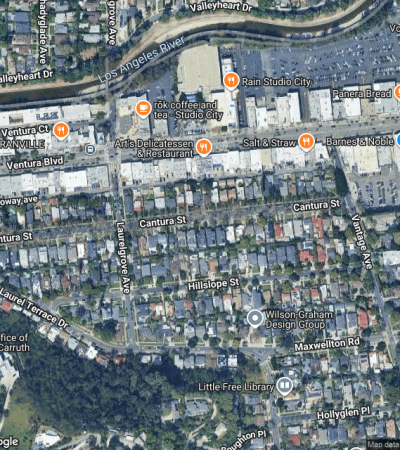
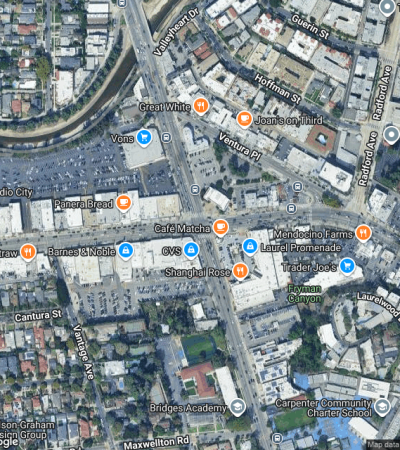
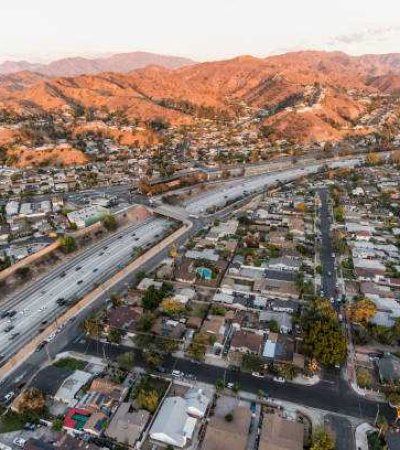
The neighborhood divides into two halves, and that division is the single most useful thing a buyer can learn here. North of Ventura Boulevard you get the flats: gridded streets, flat lots, ranch and traditional housing stock, mature street trees, and easy access to the 101. South of Ventura the land rises immediately into the canyons and hillside tracts, where the housing gets more architecturally varied, the views open up, the lots get steeper, and the price per square foot climbs.
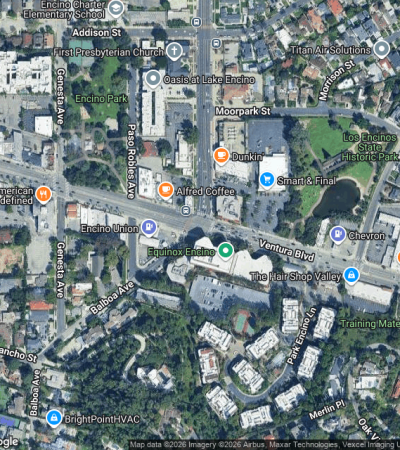
The major arterials are Ventura Boulevard running east to west, and Laurel Canyon Boulevard, Coldwater Canyon Avenue, and Lankershim Boulevard running north to south. Laurel Canyon and Coldwater Canyon are both direct routes over the hill to the Westside. Ventura Boulevard runs about 16.5 miles from Woodland Hills through Tarzana, Encino, and Sherman Oaks before reaching Studio City and becoming Cahuenga Boulevard toward Hollywood. It follows an old Tataviam and Tongva trading route later designated part of El Camino Real, which is why mission bell markers still appear along it.
The name is literal. The area was originally called Laurelwood and opened to development after the Los Angeles Aqueduct reached the Valley in 1913. In May 1928, silent film producer Mack Sennett established a studio on about 20 acres at what is now Ventura Boulevard and Radford Avenue. Sennett had already made his name at his Echo Park facility, which produced films starring Charlie Chaplin and Buster Keaton. The neighborhood took its identity from the new lot.
The lot outlasted Sennett. After his 1933 bankruptcy, Mascot Pictures took the property, and through mergers with Monogram Pictures and Consolidated Film Corporation it became Republic Pictures, known for B-movies and Westerns featuring Roy Rogers, Gene Autry, and John Wayne. CBS became the primary lessee in 1963 and bought the 70-acre property outright in February 1967 for $9.5 million, renaming it CBS Studio Center. Gunsmoke, Gilligan’s Island, The Mary Tyler Moore Show, Seinfeld, and Parks and Recreation were all produced there.
Ownership has moved recently. ViacomCBS sold the lot in November 2021 to Hackman Capital Partners and Square Mile Capital Management as part of a $1.85 billion transaction, and it now operates as Radford Studio Center. As of June 2026, Netflix is under contract to purchase the property. The relevance for buyers is straightforward: a working production campus of that size anchors housing demand within a short drive, and has done so for close to a century.
Housing stock spans a wide range, and the split follows the terrain. In the flats north of Ventura, the dominant product is the postwar single-family home on a flat lot, much of it built between the 1940s and 1960s, with a large share now remodeled or torn down and rebuilt. Modern farmhouse and transitional new builds have replaced a meaningful portion of the original ranch inventory over the past fifteen years, so two houses on the same street can be separated by a wide gap in finish level and price.
South of Ventura and into the canyons, the stock gets older and more idiosyncratic: mid-century post-and-beam, Spanish, contemporary hillside construction on caissons, and a scattering of architecturally significant homes. Lots are irregular. Some are down-slope, some up-slope, and the buildable envelope is often much smaller than the lot size suggests. Views vary block to block, and the view premium here is real and quantifiable.
There is also a substantial condominium and townhome segment, concentrated near Ventura Boulevard and along the north-south arterials. That inventory is where most first-time buyers and downsizers enter Studio City. Condos here come with the usual governing-document questions: reserves, special assessments, rental caps, and pending litigation. Answer them during the HOA document review period, before contingency removal rather than after.
Studio City is not one market. It is a set of named pockets, and pricing, lot character, and buyer competition differ meaningfully between them. Most of these names come from original subdivision tract maps, street names, or homeowner association boundaries rather than from official City of Los Angeles designations, which is why you will see them used by agents and residents but not on city maps. Each has its own page with current listings.
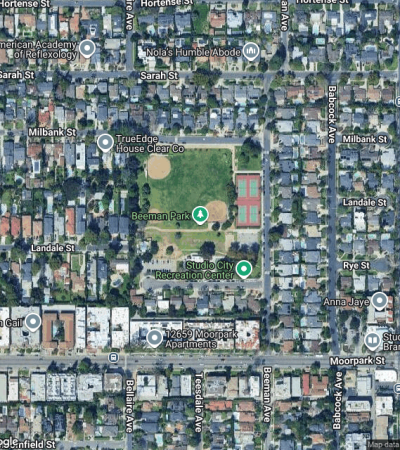
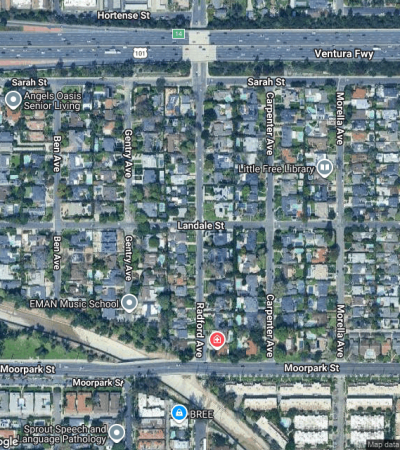
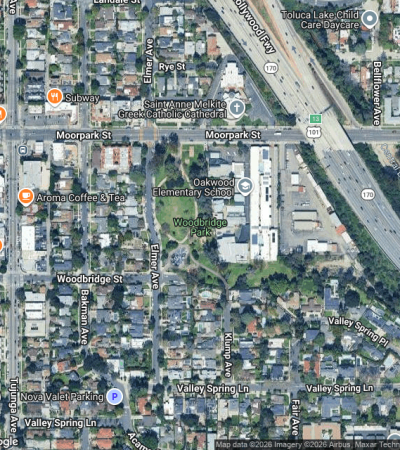
In the flats and near-flat areas, the pockets buyers search most often include Colfax Meadows, Silver Triangle, Beeman Park, Landale Square, Footbridge Square, and Woodbridge Park. Beeman Park takes its name from the neighborhood park at its center, which hosts the second-largest youth baseball program in the Los Angeles public parks system. That is a useful signal about who buys in that immediate area.
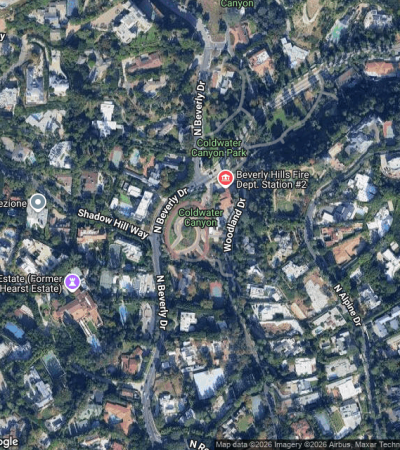
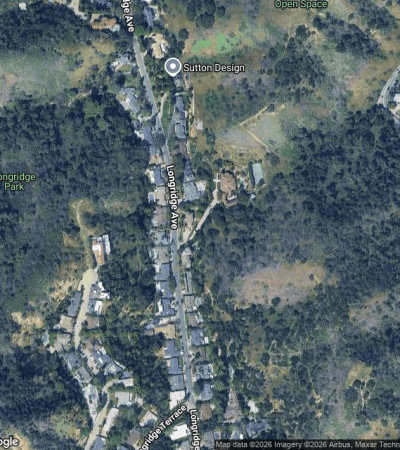
Moving south and up into the hills, the canyon and hillside pockets include Fryman Canyon, Coldwater Canyon, Wrightwood Estates, Longridge Estates, Sunshine Hill, Sunswept Hill, and Briarcliff Manor. Fryman Canyon shares its name with the 122-acre park on the south side of the neighborhood, and Coldwater Canyon Avenue is one of the two main routes over the ridge toward Beverly Hills. Hillside pockets carry different due diligence than the flats, covered further down this page.
Smaller named enclaves and condominium or townhome communities include The Grove, The Donas, Studio Village, Studio City Villas, Lumiere, and Acama Villas. If you are shopping the attached-housing segment, these are the names to know, and the differences between them come down to HOA governance, reserve health, parking, and unit layout more than to location.
If you would rather see everything in one place before narrowing, start with the full Studio City homes for sale inventory and filter from there.
School assignment is one of the strongest price drivers here, and buyers should treat it as a search filter rather than a nice-to-have. On the public side, Studio City is served by Carpenter Community Charter, a K-5 school, and Walter Reed Middle School for grades 6 through 8. Both are well known across the Valley, and demand inside the relevant attendance boundaries is persistent enough that the boundary line creates a visible price difference between otherwise comparable streets.
The private options are unusually concentrated here. Harvard-Westlake School operates its Upper School campus for grades 10 through 12 at 3700 Coldwater Canyon Avenue on a 22-acre site. It traces back to Harvard School for Boys, founded 1900, and Westlake School for Girls, founded 1904, which merged in 1989 and opened as one school in fall 1991. Campbell Hall School, a K-12 independent school, is also in the area, as is Bridges Academy, serving grades 4 through 12.
One caution. Attendance boundaries change, and charter enrollment rules are not the same as traditional neighborhood-school rules. Verify current boundaries and enrollment policy with the district or school directly before writing an offer that depends on a specific assignment. Do not rely on a listing remark or a third-party rating site.
Access is the neighborhood’s structural advantage. US Route 101, the Ventura Freeway, runs along the northern edge of Studio City, and State Route 134 connects east toward Glendale, Burbank, and Pasadena. For anyone working at the Burbank or Universal lots, the drive is short enough that Studio City competes directly with the Hollywood Hills for the same buyer.
Canyon routes handle the Westside. Laurel Canyon Boulevard and Coldwater Canyon Avenue both cross the Santa Monica Mountains and drop into West Hollywood and Beverly Hills respectively. These are two-lane canyon roads, so travel times swing widely with time of day, and they close entirely during storm-related slides or brush fires. Test the route at your actual commute hour before committing, not on a Sunday.
Transit is a genuine option, which is unusual for the Valley. The Metro B Line, a fully underground 14.7-mile rapid transit line from North Hollywood to Union Station, has a station at Universal City/Studio City. That is a direct rail connection to Hollywood, the Vermont Avenue corridor, the 7th Street/Metro Center transfer point, and downtown without touching the 101. Metro Local bus lines 150 and 240 also run Ventura Boulevard.
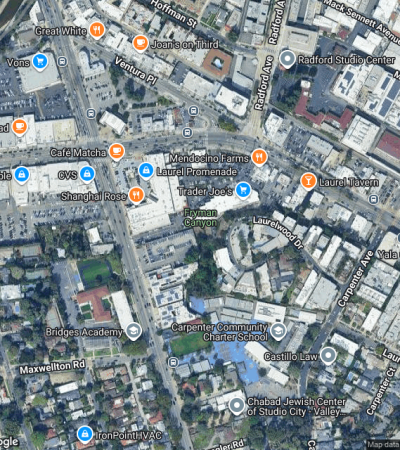
Ventura Boulevard is the commercial and social center. The Studio City stretch carries a dense concentration of independent restaurants, coffee shops, fitness studios, and small retail, and it is one of the few genuinely walkable commercial corridors in the San Fernando Valley. Residential streets immediately north and south of the boulevard sit within a short walk of it, which is part of why those blocks trade at a premium.
Open space is the other draw. Wilacre Park covers 128 acres and Fryman Canyon Park covers 122 acres, both on the Santa Monica Mountains side of the neighborhood, and together they form one of the most used trail systems on the Valley slope of the range. Mulholland Drive runs along the ridgeline above, following the crest of the eastern Santa Monica Mountains and Hollywood Hills for about 21 miles with views over both the Valley and the Los Angeles Basin. Beeman Park serves the flats with fields and a heavily subscribed youth baseball program. The Los Angeles River corridor also runs through the neighborhood, passing near Radford Studio Center, and has been the subject of ongoing regional revitalization planning. Treat river-adjacent parcels as a separate diligence item rather than assuming a park amenity is coming.
Hillside property is a different asset than flatland property and should be underwritten differently. Start with geology. Homes built into the slope may sit on caissons, piles, or retaining systems that require a soils or structural engineer, not just a general home inspector. Ask for original permits and any subsequent geology reports. Unpermitted hillside additions are common enough here that you should assume them until the permit history says otherwise.
Then look at fire. The hillside portions of Studio City sit within the Santa Monica Mountains, in the wildland-urban interface. Cal Fire and the City of Los Angeles maintain Fire Hazard Severity Zone maps that have been revised in recent years, and a parcel’s zone designation affects defensible-space obligations, building material requirements on remodels, and, most practically, insurance availability and cost. Check the specific parcel against the current state and city maps, and get an actual insurance quote in writing during your contingency period rather than assuming a rate.
Access and parking matter more than buyers expect. Narrow canyon streets, shared driveways, and limited guest parking are normal here and affect resale. So do slide and drainage histories. Ask about prior slope failures on the street, not just the subject property.
Studio City is inside the City of Los Angeles, so Measure ULA applies. That transfer tax took effect April 1, 2023 and is paid by the seller on the full sale price, not on the amount above the threshold. The rate is 4% on transactions above the lower threshold and 5.5% at or above the higher one. Thresholds adjust for inflation: as of July 1, 2025 they stood at $5.3 million and $10.6 million, up from the original $5 million and $10 million set by the November 2022 measure. It applies to residential and commercial property alike, and it sits on top of the existing combined city and county documentary transfer taxes.
The practical effect here is concentrated in the hillside and high-end new-construction segment, where sale prices cross the threshold regularly. Sellers in that range should model the ULA liability into net proceeds before setting a list price, because the tax is a cliff rather than a slope. A property that closes just above the threshold nets materially less than one that closes just below it, and that shapes pricing behavior around those numbers.
Two other items to verify parcel by parcel. The City of Los Angeles rent stabilization ordinance covers certain older multifamily buildings, so anyone buying a duplex, triplex, or small apartment building must confirm the property’s status and tenant protections before underwriting rents. And hillside parcels may fall under Mulholland Scenic Parkway or city hillside restrictions limiting grading, height, and buildable area. Confirm both with the city, not with a listing description.
Yes. Studio City is a neighborhood of Los Angeles in the southeast San Fernando Valley, not a separate incorporated city. That means Los Angeles city ordinances apply, including Measure ULA on qualifying transfers and city permitting for remodels and additions.
South of Ventura the land rises into the Santa Monica Mountains, and the inventory is hillside: view lots, older and more varied architecture, steeper parcels, and higher price per square foot. North of Ventura is flat, gridded, and dominated by single-family homes on regular lots, with newer construction increasingly common. The two areas have different inspection requirements and different buyer pools.
Yes. Attached housing is concentrated near Ventura Boulevard and along the north-south arterials, and it includes both older townhome communities and newer condominium buildings. This is where most entry-level buyers get into the neighborhood. Review the HOA budget, reserve study, minutes, and any pending litigation before removing contingencies.
Public schools include Carpenter Community Charter for grades K-5 and Walter Reed Middle School for grades 6-8. Private options in the area include the Harvard-Westlake Upper School at 3700 Coldwater Canyon Avenue, Campbell Hall School, and Bridges Academy. Verify current attendance boundaries and enrollment policy directly with the school or district before relying on them.
Laurel Canyon Boulevard and Coldwater Canyon Avenue are the two main crossings, and both are two-lane canyon roads whose travel times vary substantially by hour and by weather. Test your specific route at your actual commute time. Canyon roads can close during storms and brush fires, and the detour is significant when they do.
Yes. The Metro B Line has a station at Universal City/Studio City. The line runs fully underground for 14.7 miles between North Hollywood and Union Station in downtown Los Angeles, with stops in Hollywood, along Vermont Avenue, and at the 7th Street/Metro Center transfer hub.
It is the working production lot that gave the neighborhood its name, founded by Mack Sennett in May 1928 at Ventura Boulevard and Radford Avenue. It later became Republic Pictures, then CBS Studio Center. As of June 2026, Netflix is under contract to buy it.
Only above the thresholds. As of July 1, 2025 those were $5.3 million and $10.6 million, adjusted annually for inflation. Most flatland single-family sales fall below the lower threshold. A meaningful share of hillside and new-construction sales do not. Confirm the current threshold at the time of your transaction, because it moves.
We work Studio City pocket by pocket rather than as one market, because the pricing logic in Colfax Meadows is not the pricing logic in Fryman Canyon or in a Ventura Boulevard condominium. Before you tour, we give you a written read on the pockets that match your criteria: what has actually closed, what is sitting and why, where school boundary lines fall relative to the streets you are considering, and where the view or lot premium is real versus asking-price optimism.
On the buy side, that means we front-load the diligence that costs money later. Permit history and geology on hillside parcels. HOA documents, reserves, and assessment history on attached housing. Insurance quotes in writing during the contingency period on anything in or near the wildland-urban interface. We would rather tell you a property is a problem in week one than have you find out in week four.
On the sell side, we model net proceeds against the Measure ULA thresholds before setting a price, market to the buyer profile the specific pocket actually attracts, and price to the comparable set that matters rather than a neighborhood average that includes product nothing like yours. If you want a current valuation on a Studio City property, or a candid opinion on whether now is the right time to move on it, contact The Knight Group and we will put it in writing.
The Knight Group is here to help you with all your realty needs. To get started, fill out the form below and one of our experienced agents will contact you as quickly as possible.
Copyright © 2024 The Knight Group.
All rights reserved. License: 02133297
Lucky for you we’re looking out.
Subscribe to this Custom Search to be alerted when new properties hit the market in the area.
Choose the frequency that works for you.