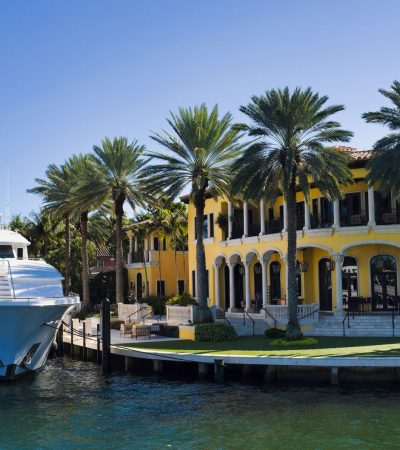
Browse all Orange County real estate.

Browse all Orange County real estate.
Homes for sale in south orange county span the southern half of the county, from the Newport Beach coastline down to the San Diego County line and inland to the Santa Ana Mountains. Roughly a third of Orange County’s 34 incorporated cities sit here, along with large unincorporated communities like Coto de Caza, Ladera Ranch, and Rancho Mission Viejo that are governed by the county rather than a city council.
Most of what you’ll see is master-planned: Irvine’s village plan, Mission Viejo’s hillside layout, Laguna Niguel’s trail network, and the newest construction at Rancho Mission Viejo. The coast is different — Laguna Beach has 706 structures classified as historically significant, and San Clemente enforces architectural review on red tile roofs and white exteriors. What changes city to city is price, whether you’re paying Mello-Roos and higher HOA dues, and whether your commute runs on a toll road or Interstate 5.
Browse the active listings below, or contact The Knight Group for the version that accounts for your budget, your commute, and your tolerance for special assessments.
Start at the coast. Newport Beach incorporated in 1906 and recorded 85,239 residents in 2020. Its harbor holds roughly 9,000 boats, among the largest on the West Coast. Southeast of it, Newport Coast is a 7.2-square-mile Irvine Company master plan in the San Joaquin Hills above Crystal Cove State Park, annexed into Newport Beach in the early 2000s. It holds the guard-gated Crystal Cove neighborhoods and the five Pelican Hill enclaves, and it is served by Newport-Mesa Unified.
Laguna Beach incorporated in 1927 and had 23,032 residents in 2020. It packs 27 beaches and coves into a seven-mile coastline, and 706 of its structures are classified as historically significant, which matters if you remodel. Dana Point incorporated in 1989 and had 33,107 residents. Its harbor was dedicated on July 31, 1971. The Lantern District is the historic core, its streets named for the colored lanterns ships once used in the natural harbor.
San Clemente was laid out in 1925 by Ole Hanson, a former Seattle mayor, as a 2,000-acre Spanish Colonial Revival community with architectural review over red tile roofs and white exteriors. It incorporated in 1928 and had 64,293 residents. San Juan Capistrano is the oldest settlement in the group: the mission was founded in 1776 by Junípero Serra as the seventh in California, and the Los Rios Historic District is on the National Register. The city incorporated April 19, 1961 and had 35,196 residents.
Inland, Irvine is the employment center. It incorporated in 1971, recorded 307,670 residents in 2020, and was built to architect William Pereira’s village plan. UC Irvine opened in 1959 on Irvine Company land and employs 18,373 people, and the Great Park occupies the former MCAS El Toro. Mission Viejo grew from a master plan Donald Bren drafted in the early 1960s that put roads in the valleys and houses on the hills. It incorporated March 31, 1988, had 93,653 residents, and hosted the 1984 Olympic road cycling events on what is now Olympiad Road.
Lake Forest incorporated December 20, 1991, was called El Toro before that, and had 85,858 residents in 2020. Its eucalyptus groves were planted for a lumber operation in the early 1900s, and Foothill Ranch and Portola Hills were annexed after a 2000 vote. Laguna Hills incorporated the same day, had 31,374 residents, and carries five Interstate 5 interchanges. Laguna Niguel traces to a 1959 master plan by architect Victor Gruen and had 64,355 residents. More than a third of it is public open space with roughly 80 miles of trails.
Aliso Viejo is the county’s newest city, incorporated July 1, 2001 and the only one added since 2000. The Mission Viejo Company bought 6,600 acres there in 1976 and planned 20,000 homes. Laguna Woods is a different proposition: incorporated in 1999, 17,644 residents, and roughly 90 percent of it is Laguna Woods Village, the age-restricted community Ross Cortese began building in 1963. Median age in the city was 74.5 as of 2021. Rancho Santa Margarita sits at the other end of that curve: incorporated in 2000, 47,949 residents, at 925 feet of elevation around Lago Santa Margarita.
Several large communities are unincorporated, governed by the county rather than a city council. Coto de Caza is a 5,000-acre dual guard-gated community in the Saddleback foothills whose name translates roughly to preserve of the hunt. Lot sales started in 1971. Per the Orange County Business Journal it holds roughly 4,000 residences, two Robert Trent Jones Jr. golf courses, and an equestrian center. Ladera Ranch broke ground in 1999 on former ranch land and had 26,170 residents across nine villages, including the gated Covenant Hills. Las Flores is smaller and older, at 5,995 residents, and shares a ZIP code with Rancho Santa Margarita.
Rancho Mission Viejo is the newest construction in the region and the last large one. The O’Neill family acquired the ranch in the early 1900s, and the 2004 Ranch Plan set aside a habitat reserve of nearly 17,000 acres out of 23,000 total. Sendero opened in 2013, Esencia in fall 2015, and Reata Glen, a 55-plus community, in May 2019. It is still a working ranch.
Finally, the canyons. Trabuco Canyon takes its name from the Spanish word for blunderbuss, reportedly after a firearm lost on the 1769 Portolá Expedition. It had 1,020 residents in 2020, roughly 99.9 percent of them in areas classified as rural. Silverado Canyon was founded in 1878 during a silver mining boom and had 932 residents. It still has a general store, café, library, church, and post office. Modjeska Canyon had 632 residents and is named for Helena Modjeska, the Polish actress whose home Arden is now a National Historic Landmark. Williams Canyon branches off Silverado and is the smallest and most rural of the four.
Countywide numbers set the floor. The California Association of Realtors put the median for existing single-family homes in Orange County at $1,490,000 in June 2026, up from $1,470,000 in June 2025. Redfin reported a county median sale price of $1.3 million over the three months ending June 2026, up 4.7 percent year over year. Both blend north and south county, so treat them as a baseline, not a forecast for a street.
Within the region the spread is wide, driven mostly by distance to the water and by lot size. Guard-gated ocean-view product in Newport Coast, Laguna Beach, and the Monarch Beach area of Dana Point sits at the top. Detached homes in the inland Saddleback Valley cities sit well below it. Attached product, older condominiums, and the age-restricted inventory in Laguna Woods Village sit lower still. Any median quoted for the region is useful only once you know which tier it describes.
Two things move faster than price: days on market, and the gap between list and close. Market commentary in mid-2026 put Orange County active inventory near 4,800 to 5,200 homes, with a median around 40 days on market for correctly priced listings and considerably longer for the rest. That gap is where negotiation happens.
District boundaries do not follow city lines here. Capistrano Unified, founded in 1965, spans 200 square miles across seven cities plus unincorporated territory, operates 64 campuses, served approximately 40,836 students in 2023-2024, and is the largest employer in South Orange County. Its own boundary description lists San Clemente, Dana Point, San Juan Capistrano, Laguna Niguel, Aliso Viejo, Mission Viejo, and Rancho Santa Margarita, plus Las Flores, Coto de Caza, Dove Canyon, Ladera Ranch, Sendero and Rancho Mission Viejo, and Wagon Wheel.
Saddleback Valley Unified, headquartered in Mission Viejo, operates 33 schools serving roughly 24,954 students across Lake Forest, Laguna Hills, and parts of Mission Viejo. Irvine Unified serves Irvine, and Newport-Mesa Unified serves Newport Beach and Newport Coast. At the college level, the South Orange County Community College District runs Saddleback College, Irvine Valley College, and the Advanced Technology and Education Park in Tustin.
The practical point: Mission Viejo is split between two unified districts, and Newport Coast is in a different district than most of Newport Beach. Verify the assigned school for the specific address before you write an offer.
Interstate 5 is the spine and the bottleneck. The alternative is the toll network, the largest in California: State Routes 73, 133, 241, and 261 together record more than 330,000 daily transactions. The 73 runs from I-405 in Costa Mesa to I-5 at the Laguna Niguel and Mission Viejo border, the fast way between the coastal cities and the John Wayne Airport employment core. The 241 runs from SR-91 down to Oso Parkway in Rancho Santa Margarita, which is what makes the eastern master plans commutable. Tolls are electronic via FasTrak and peak rates change periodically, so build a real monthly number into your budget.
Rail is genuinely useful here, which is unusual for suburban Southern California. Metrolink‘s Orange County Line and Inland Empire-Orange County Line plus Amtrak’s Pacific Surfliner serve two stations in San Clemente plus San Juan Capistrano and Laguna Niguel/Mission Viejo. If you commute to Los Angeles or San Diego a few days a week, walking distance to a platform is worth paying for.
The coastal cities were built before the master-plan era and show it. Laguna Beach, San Clemente, Dana Point, and San Juan Capistrano have irregular street grids, mixed architectural eras, hillside and bluff lots, and older infrastructure. You get character and walkability, plus smaller lots, tighter parking, more deferred maintenance, and slower permitting.
The inland master plans behave accordingly. Irvine, Mission Viejo, Aliso Viejo, Laguna Niguel, Rancho Santa Margarita, Ladera Ranch, and Rancho Mission Viejo have consistent street layouts, dedicated open space, and predictable construction quality within each phase. You get newer systems and fewer maintenance surprises. You also get HOA governance over exterior changes, and in the newer communities, Mello-Roos.
Both deliver open space, the region’s most underrated feature. Aliso Viejo dedicated roughly 2,600 acres to the Aliso and Wood Canyons Wilderness Park. Laguna Beach’s greenbelt connects to Crystal Cove State Park and Laguna Coast Wilderness Park, part of a contiguous wildland system reported at more than 20,000 acres. Irvine reports more than 16,000 acres of parks and open space, and San Clemente’s beach trail runs 2.6 miles between North Beach and Calafia State Beach.
Mello-Roos is a special tax authorized by the Community Facilities District Act of 1982. It funds roads, schools, and parks in developing areas and is repaid by the homes that benefit. Rancho Mission Viejo formed community facilities districts as it developed Rancho Santa Margarita, Las Flores, and Ladera Ranch, and uses them again in the current villages. Most Orange County CFDs run roughly 25–40 years from bond issuance.
Amounts vary substantially by district and by home. Third-party brokerage summaries published in 2025 and 2026 place annual Mello-Roos in Rancho Mission Viejo and Ladera Ranch broadly in the low thousands, and a widely reported figure for Sendero put the range at $1,313 to $5,135 per year. Do not budget off those numbers. Pull the county tax bill for the parcel, read the special assessments line, then add HOA dues and any sub-association dues, which the newer master plans frequently layer on top.
The older Saddleback Valley neighborhoods in Lake Forest, Laguna Hills, and much of Mission Viejo generally do not carry Mello-Roos, because their infrastructure was financed decades ago and differently. That is a real monthly difference, and it partly explains why an older inland home can pencil better than a newer one at the same price.
Serious enough to drive your insurance conversation before your offer. CAL FIRE and the Orange County Fire Authority publish Fire Hazard Severity Zone maps, and large portions of eastern Orange County, including Trabuco, Silverado, and Modjeska canyons, fall into the highest hazard classifications, with many homes bordering undeveloped wildland.
The history is documented and recent. The 2007 Santiago Fire destroyed roughly 14 Modjeska Canyon homes. The Bond Fire in December 2020 put Silverado, Williams, and Modjeska canyons under mandatory evacuation. The Holy Fire in 2018 and the Airport Fire in 2024 both affected the Trabuco Canyon area, and post-fire mudslide risk has triggered separate evacuation orders.
None of that is a reason to avoid the canyons. People live there for the acreage, the privacy, and the price per square foot, and those advantages are real. It is a reason to get an insurance quote in writing during your contingency period rather than assume coverage at a normal rate. The same applies to hillside lots in Laguna Beach, where slope stability is a separate question: a landslide on January 31, 2025 temporarily closed Thousand Steps Beach.
Mostly in one place. Rancho Mission Viejo is the last large-scale ground-up development in the region, and because the 2004 Ranch Plan permanently reserved nearly 17,000 of its 23,000 acres as habitat, the buildable footprint is finite and known. Villages come online in sequence, including age-qualified Gavilan neighborhoods.
Everywhere else, new supply arrives as infill and redevelopment. Laguna Hills is redeveloping the former mall site as Five Lagunas after it closed in 2018, and Dana Point Harbor has been in revitalization since 2014. If you want current building code and a warranty, your realistic options are Rancho Mission Viejo, resale in the newer Ladera Ranch and Esencia neighborhoods, or a substantial remodel.
It works for buyers who want a large, consistent public school system, real open space, and a commute solvable with money on the toll roads or with time on Metrolink. It suits people comfortable with HOA governance over what their house looks like from the street.
It works less well for buyers who want an urban walkable core, who need transit beyond the rail corridor, who object on principle to HOA dues and special taxes, or who need maximum square footage per dollar. On that last point the same budget goes further inland in Riverside or San Bernardino counties. Worth naming before you spend six months looking.
No. It is a region of multiple incorporated cities plus large unincorporated communities such as Coto de Caza, Ladera Ranch, Las Flores, Rancho Mission Viejo, and the canyons. Unincorporated areas are governed by the county Board of Supervisors and policed by the Sheriff’s Department, not a city force.
School quality varies by campus, not by city, and the two largest districts cross city lines. Mission Viejo is split between Capistrano Unified and Saddleback Valley Unified. Check the assigned school for the address, not the city’s reputation.
No, but many residents choose to. Interstate 5 and arterials like El Toro Road and Alicia Parkway connect the region without tolls. The 73 and 241 exist because those free routes congest at peak. Estimate your monthly toll spend before committing to a location that depends on them.
It depends on the parcel, the community facilities district, and the year. Published third-party figures run into the low thousands annually, and a commonly cited range for Sendero was $1,313 to $5,135 per year. The only reliable number is on the tax bill for the address itself, which we will pull before you write an offer.
Often yes, but not always at a standard rate, and availability changes. Trabuco, Silverado, and Modjeska canyons sit in high fire hazard severity zones with a documented fire history: Santiago in 2007, Holy in 2018, Bond in 2020, Airport in 2024. Get a written quote during your inspection contingency, not after.
Four separate cities. Laguna Beach is the coastal art colony city incorporated in 1927. Laguna Hills and Laguna Niguel are inland master-planned cities incorporated in 1991 and 1989. Laguna Woods incorporated in 1999 and is roughly 90 percent age-restricted community.
Yes. Newport Coast was a separate census-designated place until it was annexed into Newport Beach in the early 2000s. It remains a distinct submarket with its own guard-gated communities.
That depends on your holding period and financing, not the calendar. County medians were flat to modestly up year over year through mid-2026, and inventory improved from prior lows. A flat market with more listings favors buyers who can identify overpriced inventory and negotiate. It does not favor buyers who need to sell inside three years.
We work from the parcel up. Before you tour, we pull the tax bill, the special assessment lines, the HOA and sub-association dues, the assigned schools, and the fire hazard zone designation for the specific address. Those items account for most of the surprises that derail South Orange County escrows, and all are knowable in advance.
On the sell side, we price against the correct comparable set: guard-gated separated from non-gated, Mello-Roos from non-Mello-Roos, ocean-view from ocean-adjacent. Blending those into one average is how listings sit past the 40-day median.
Browse the current South Orange County listings below. If you want a written read on a specific city, community, or address, including the carrying costs most listings do not disclose, contact The Knight Group.
The Knight Group is here to help you with all your realty needs. To get started, fill out the form below and one of our experienced agents will contact you as quickly as possible.
Copyright © 2024 The Knight Group.
All rights reserved. License: 02133297