Browse all San Francisco real estate.

Browse all San Francisco real estate.
San Francisco CA homes for sale sit in a 47-square-mile city that prices like forty separate markets rather than one. Per a Q2 2026 report compiled from Compass data, the median single-family sale price was $2,150,000, up 22.2 percent year over year, while condos, TICs, and co-ops came in at $1,300,000, up 6.9 percent. Houses moved in a median of 12 days with 84.8 percent selling above list, against 15 days and 57.8 percent for the condo group. House inventory closed the quarter at 115 listings, down 49.3 percent.
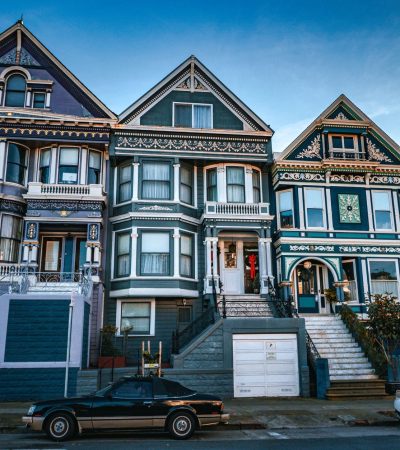
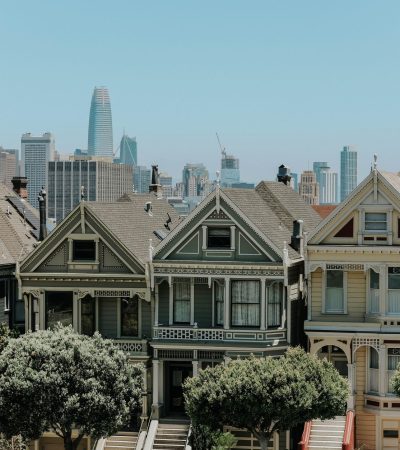
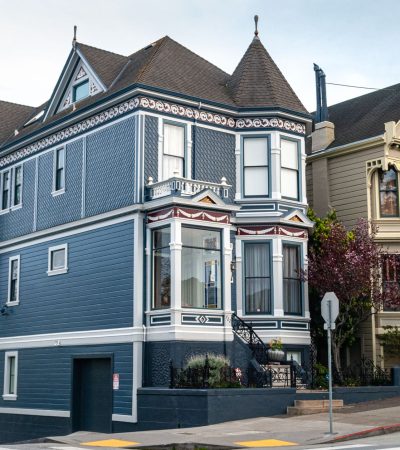
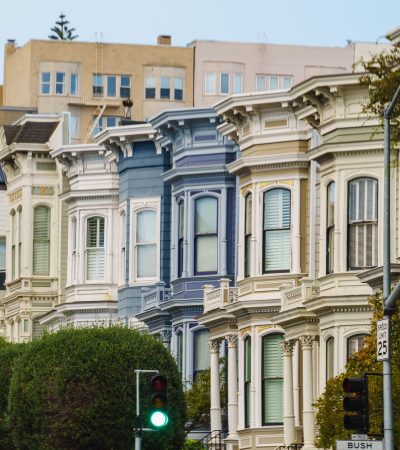
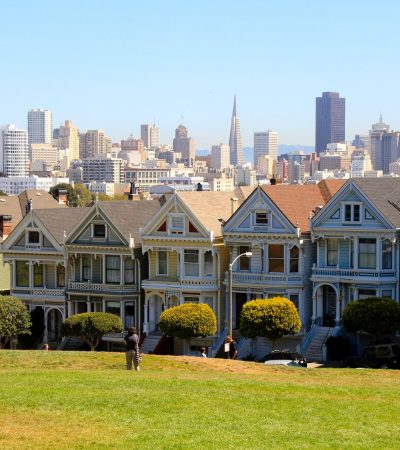
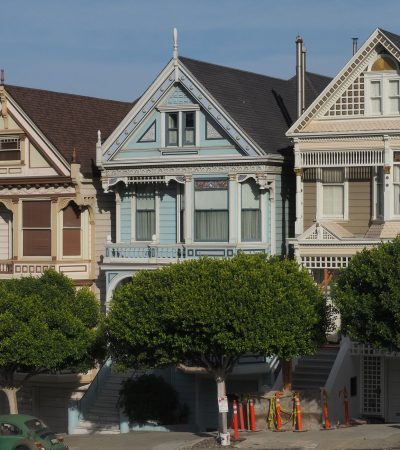
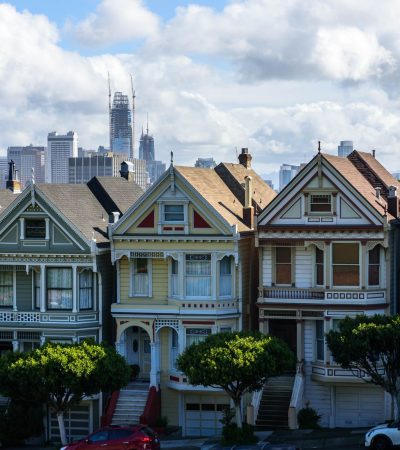
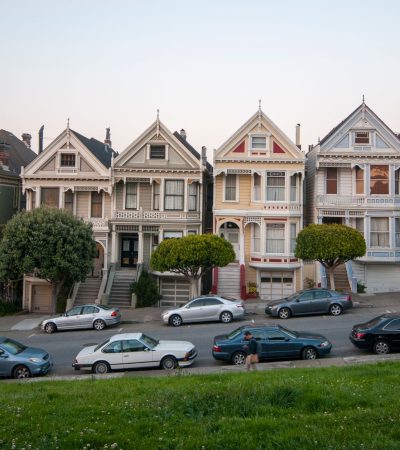
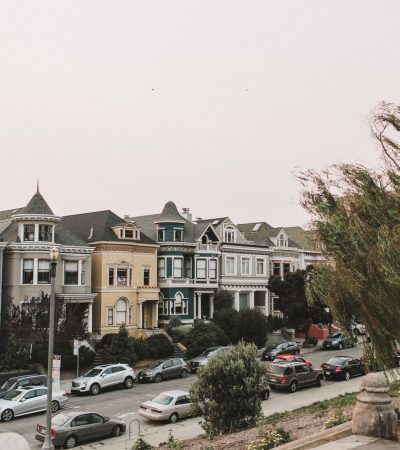
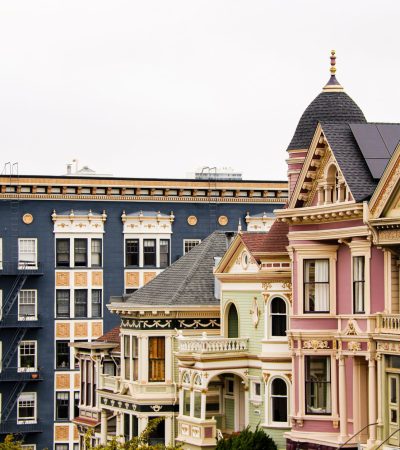
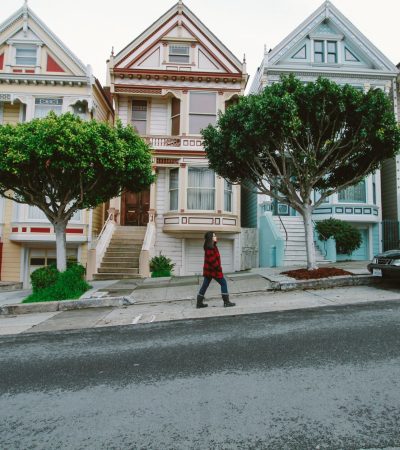
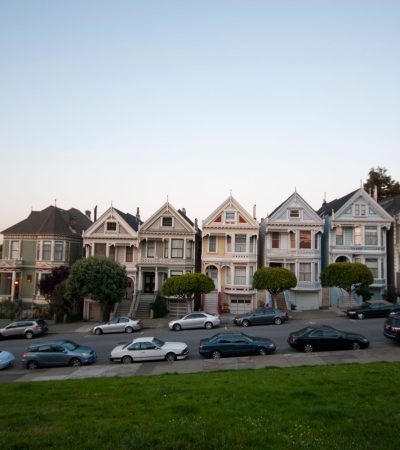
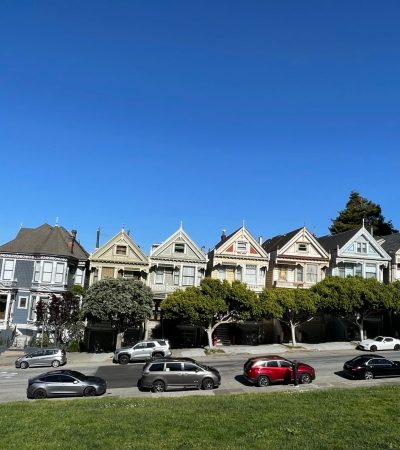
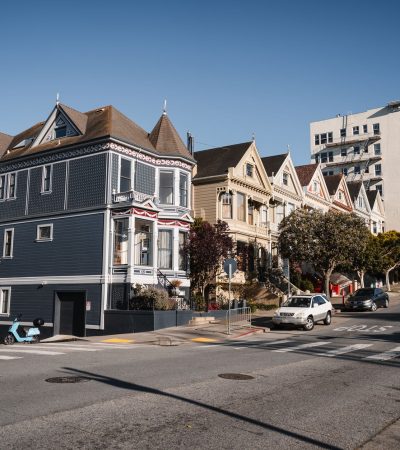
The stock splits cleanly. Pacific Heights, Presidio Heights, Sea Cliff, Russian Hill, and Telegraph Hill hold pre-1920s Victorian and Edwardian houses and pre-war flats. Rincon Hill, South Beach, Mission Bay, and The East Cut are almost entirely post-1990 condominiums with HOA dues and reserve questions. What varies block to block: bedrock versus bay fill, rent-ordinance exposure, and soft-story retrofit status.
Browse the current San Francisco listings below, or contact The Knight Group for the neighborhood-level read before you tour anything.
Two numbers matter. Per a Q2 2026 San Francisco market report compiled from Compass data, the median single-family sale price was $2,150,000, up 22.2 percent year over year, while the median for condominiums, tenancies in common, and co-ops was $1,300,000, up 6.9 percent. Houses are the tighter side of the market by a wide margin.
Speed and inventory tell the same story. That report put median days on market at 12 for houses and 15 for the condo group, with 84.8 percent of houses selling above list against 57.8 percent of condo-class units. Quarter-end house inventory was 115 listings, down 49.3 percent year over year. Condo inventory was 388, down 40.7 percent.
Treat those medians as descriptive, not predictive. The report notes that a quarterly median is highly sensitive to the location, size, and quality of whatever happened to close, and that the seasonally adjusted Case-Shiller index for the San Francisco metro area declined roughly 0.6 percent between January and April 2026. A rising median and a flat index coexist when the mix of what sells shifts upmarket. The honest read: supply is thin, well-prepared houses clear fast, and condos negotiate.
The city’s highest sustained pricing runs along the northern ridge and out to the coastal edge. Per that same Q2 2026 report, the Pacific Heights and Presidio Heights submarket posted a $7,917,500 single-family median and Russian Hill posted $9,001,000. These are small quarterly sample sets, so read them as tier indicators rather than appraisals.
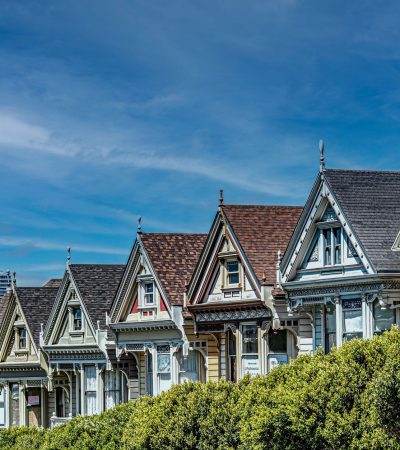
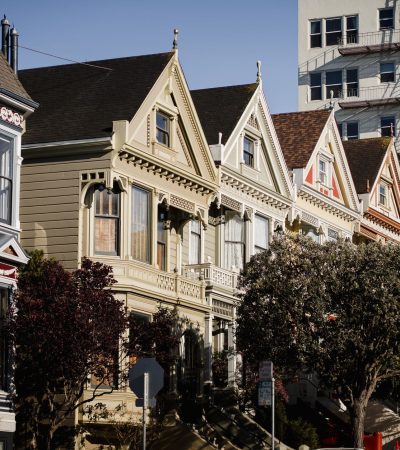
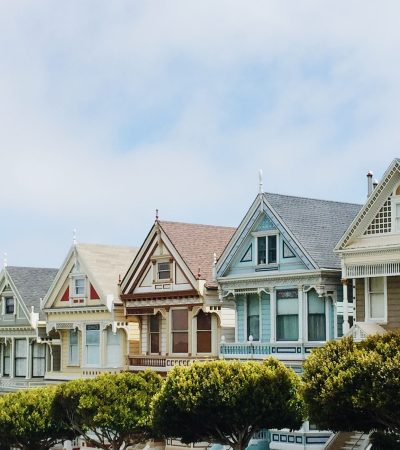
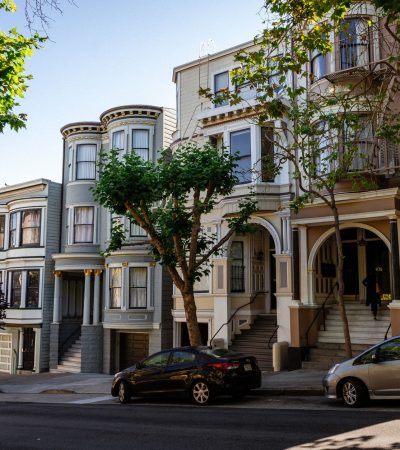
Start with Pacific Heights, which holds the densest concentration of pre-1920s Victorian, Edwardian, Queen Anne, and Chateauesque mansions in the city, and its quieter neighbor Presidio Heights. Inside that district sits Presidio Terrace, a gated private-street enclave that trades rarely. On the northwest coastal edge, Sea Cliff is a small master-planned residence park of large detached homes with ocean views and no commercial strip inside its boundaries.
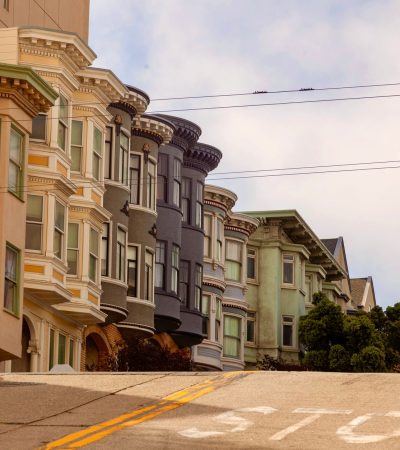
East of there, Russian Hill and Telegraph Hill are steep, view-driven, and heavy on pre-war flats and small co-op buildings. The retail spines serving this corridor run through Union Street and Polk Gulch, with Van Ness forming the eastern edge. The Western Addition mixes Victorian flats with mid-century apartment stock, and the Tenderloin remains the densest and lowest-priced central district, dominated by rental and single-room-occupancy buildings rather than resale housing.
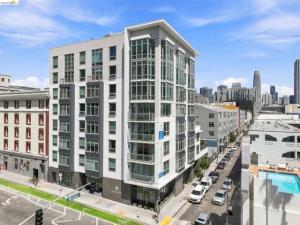
This is the city’s condominium belt and the part of the market with the most negotiating room. Nearly all of it is attached housing built after 1990, which means HOA governance under the Davis-Stirling Act, monthly dues, and lender scrutiny of reserves and owner-occupancy. Ask for the budget, reserve study, and litigation disclosure early.
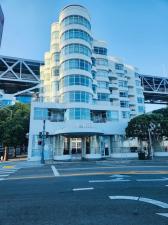
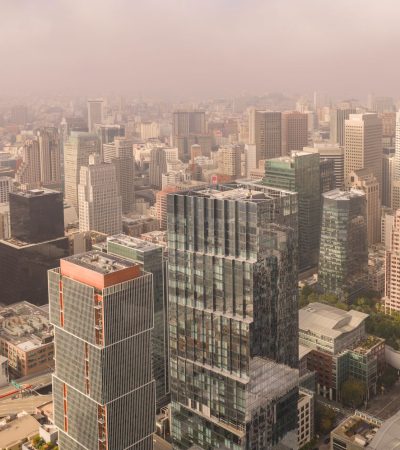
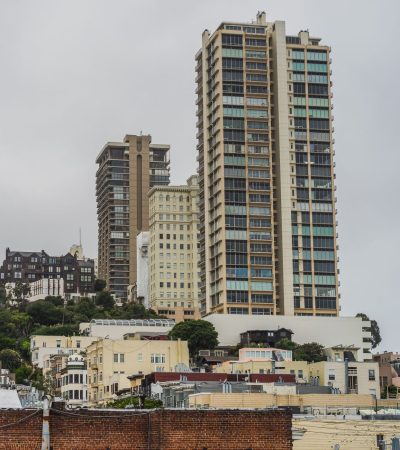
The high-rise core runs through Rincon Hill, The East Cut, South Beach, and Yerba Buena, with lower-scale loft and mixed-use stock in South of Market, Western South of Market, South Park, and Mint Hill. Mission Bay was built from the 1990s onward on former industrial land with modern seismic design applied from the start, and anchors the UCSF research campus and Chase Center. West of it, Showplace Square is the design-district conversion zone and Potrero Hill offers detached and small-multi housing with south-facing sun.
The newest inventory in the city sits in the bay. The Treasure Island and Yerba Buena Island redevelopment is programmed for roughly 8,000 to 10,000 units at full build-out, 27 percent below market rate, alongside about 290 acres of parks per the city’s project documentation. San Francisco YIMBY reported in July 2026 that phase one closed out with 490 Avenue of the Palms, a six-story building adding 148 homes, joining the 22-story Isle House and the adjacent Hawkins. The trade-off: new construction and bay views against ferry and bus dependence and active construction around you.
This band is the city’s most walkable mid-to-high tier and turns over faster than the far west side. The Castro and Upper Market combine Victorian and Edwardian houses with newer condominium projects along Market Street. Mission Dolores sits between that and the flats of the Mission District, the rental-heavy district where the Rent Ordinance matters most to anyone buying a two-to-four unit building.
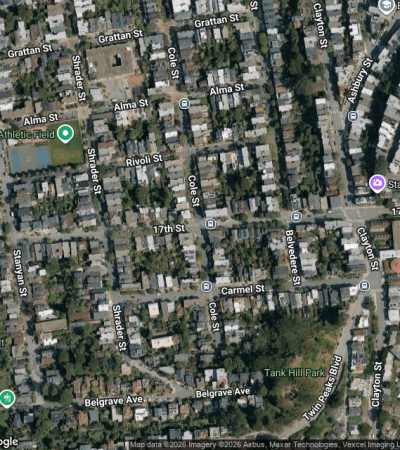
Above the Castro, Twin Peaks delivers the widest views in the city along with wind, fog, and steep grades that affect parking and resale. To the north, Ashbury Heights, Parnassus Heights, and the Panhandle sit within walking distance of Golden Gate Park and the UCSF Parnassus campus, which supports steady physician and academic demand. The Q2 2026 report put the combined Cole Valley and Haight single-family median at $4,900,000. Further south, Mission Terrace and St. Mary’s Park are quieter detached-house pockets priced better per foot than anything north of Market.
They are the closest thing San Francisco has to a suburb inside the city limits, and they are the answer for buyers who want a detached house with a garage and a yard. Per the Western Neighborhoods Project, the group includes Balboa Terrace, Forest Hill, Forest Knolls, Midtown Terrace, Mount Davidson Manor, Sherwood Forest, St. Francis Wood, West Portal, Westwood Highlands, and Westwood Park. The area became developable when the Twin Peaks Tunnel opened on February 3, 1918, and it was laid out as planned residence parks with curving streets, landscaped medians, and ornamental stairways maintained by neighborhood associations.
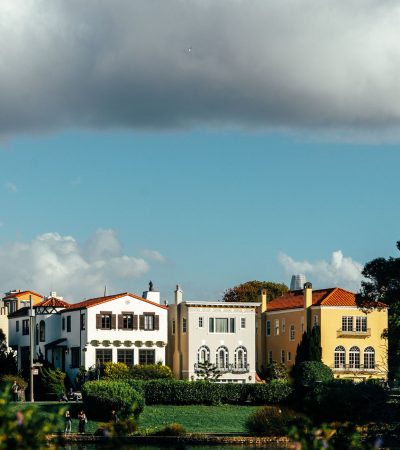
The district overview page is West of Twin Peaks. Within it, St. Francis Wood is the flagship, with Mediterranean, Tudor, and Spanish Revival houses on large landscaped lots. Sherwood Forest and Mount Davidson Manor sit on the slopes of the city’s highest point. Westwood Park and Westwood Highlands are more modest in scale and typically the entry point into the district. West Portal supplies the commercial main street and the Muni Metro portal itself, and Sunnyside sits on the eastern flank at a lower price point.
Check the recorded covenants and any association or street-maintenance assessment before writing an offer here. Several tracts carry architectural review requirements and private infrastructure obligations that do not exist elsewhere in the city.
Usually yes, and the Q2 2026 report put the Sunset single-family median at $2,003,888 against a citywide house median of $2,150,000. The trade is fog, longer commutes east, and stock that skews toward similar 1930s and 1940s rowhouses.
The Sunset District is the largest of these, running west to the ocean through Parkside, Outer Parkside, and the Outer Sunset. One live variable: voters passed Proposition K in November 2024 with 55 percent support, the Upper Great Highway closed permanently to private vehicles in March 2025, and Sunset Dunes park opened that April. About 64 percent of Sunset residents voted against it, a judge upheld the measure in January 2026, and repeal efforts continue. Buying within a few blocks of the ocean means the traffic pattern on your street is still contested.
South of there, Pine Lake Park backs onto Stern Grove, while Stonestown and Parkmerced sit beside San Francisco State University under long-horizon redevelopment plans worth reading before you buy nearby. North of Golden Gate Park, the Richmond District and Outer Richmond follow the same value logic with better restaurant density along Clement and Geary, and Sutro Heights occupies the bluff above Ocean Beach.
This is where San Francisco is still under seven figures in places. The Q2 2026 report put the Bayview and Hunters Point single-family median at $981,500, the lowest among the neighborhoods it tracked. Stock is mostly detached and small-multi housing on flatter, wider streets.
Portola and University Mound sit at the top of this group, with Silver Terrace, Bret Harte, and Peralta Heights covering the hillside pockets between them. At the county’s southern edge, Visitacion Valley and Sunnydale anchor the southern terminus of the Muni T Third line. The risks, plainly: appraisal support runs thinner, some parcels carry environmental history from prior industrial use, and resale takes longer than on the north side.
One page indexed under this hub covers Woodside in Rocklin, which sits in Placer County near Sacramento rather than in San Francisco: Woodside, Rocklin homes for sale. Useful if you are weighing a Bay Area purchase against a lower-cost inland alternative.
Buying a house does not buy you a school here, and that surprises people relocating from other metros. San Francisco Unified assigns elementary students through a citywide choice lottery rather than by attendance boundary. For the 2026 to 2027 school year the district confirmed it would keep the existing citywide choice policy, with elementary applicants receiving a tiebreaker to their attendance-area school rather than a guaranteed seat.
The district applies tiebreakers in sequence: siblings of enrolled students first, then students in Census Tract Integration Preference areas, then families in the school’s attendance area. A planned move to zone-based assignment has been delayed with no announced timeline. For buyers that means not paying a boundary premium the way you would in a suburban district, and budgeting for private options if a specific school is non-negotiable.
Transit access shows up in price, particularly for condominium buyers going car-light. BART and Muni Metro share the Market Street subway, Caltrain terminates at Fourth and King, and the Twin Peaks Tunnel connects the west side to downtown.
The most recent structural change was the Central Subway, which opened for revenue service on January 7, 2023 and extended the Muni T Third line 1.7 miles north from Fourth and King to Chinatown with three new underground stations, at a reported budget of $1.578 billion. The line now runs from Sunnydale through the Bayview and SoMa to Chinatown, with a BART transfer underground from Union Square and Market Street station to Powell. That project changed the commute math for the southeast and the eastern waterfront.
Four items come up repeatedly here, and none are optional reading.
Liquefaction and fill. The USGS maps the highest liquefaction hazard in areas of artificial fill placed over former bay margins, and notes that over half of documented historical liquefaction occurrences in the Bay Area happened in that kind of fill. In San Francisco that footprint covers much of South of Market, South Beach, Mission Bay, and the Marina. State seismic hazard zone maps and the DataSF liquefaction layer are public. Read the natural hazard disclosure, do not skim it.
Soft-story retrofit. The city created the Mandatory Soft Story Retrofit Program in 2013. It applies to wood-frame buildings with five or more residential units and two or more stories over a soft or weak story, permitted before January 1, 1978. The tiered deadlines have passed, so a covered building that has not been retrofitted is in violation, which can mean fines and a posted earthquake warning placard. Confirm compliance status in writing.
Rent control. San Francisco’s Residential Rent Stabilization and Arbitration Ordinance, adopted in 1979, covers most multi-unit buildings that received a first certificate of occupancy on or before June 13, 1979. The state Costa-Hawkins Rental Housing Act, effective in 1996, generally exempts separately alienable units such as single-family homes and condominiums from local price control, though just-cause eviction protections can still apply. If your purchase depends on raising rents or delivering a unit vacant, get a written opinion from a landlord-tenant attorney before removing contingencies.
Transfer tax. San Francisco’s transfer tax is tiered and steep at the top. Per SF.gov, the rate is $3.75 per $500 of value from $1,000,000 to $4,999,999, $11.25 per $500 from $5,000,000 to $9,999,999, $27.50 per $500 from $10,000,000 to $24,999,999, and $30.00 per $500 at $25,000,000 and above. On residential sales the seller customarily pays, and the rate applies to the full price rather than only the amount above each threshold. That creates cliffs just under $5,000,000 and $10,000,000 that should shape pricing strategy.
San Francisco has all three, and they finance differently. A condominium is separately deeded and qualifies for standard conforming and jumbo financing. A tenancy in common gives you a fractional interest in the whole building plus a written agreement assigning exclusive use of a unit, and it typically requires fractional TIC financing at a rate premium. A co-op conveys corporate shares plus a proprietary lease, and lender options are narrower.
TIC units usually list below comparable condominiums for that reason. Do not assume the discount closes through conversion. The city suspended its long-running condominium conversion lottery in 2013 in favor of a time-limited expedited program, then further restricted applications involving tenant-occupied buildings in 2017. Verify current eligibility before you underwrite a conversion into your return.
Possibly. The Board of Supervisors adopted the Family Zoning Plan in December 2025 to satisfy a state rezoning deadline of January 31, 2026. Reporting on the plan describes zoning changes across roughly 96,000 parcels, height increases of two to four stories near transit and commercial corridors on the west and north sides, and allowances for buildings between 12 and 65 stories on select thoroughfares including Van Ness Avenue, Market Street, and Geary Boulevard.
It cuts both ways. If you own a parcel that gained height, your land may be worth more to a developer than the house on it is worth to a buyer. If you are buying a view property near an upzoned corridor, that view is less protected than it was. Pull current zoning for the specific parcel rather than relying on a neighborhood summary.
It splits by property type. The Q2 2026 report showed houses selling in a median of 12 days with 84.8 percent closing above list, which is a seller’s market. The condominium, TIC, and co-op group sold in a median of 15 days with 57.8 percent above list, leaving room to negotiate price, credits, and timeline.
Supply and buyer preference. Nearly all new housing built in the last three decades has been attached, so condominium inventory replenishes while detached-house inventory does not. Per the Q2 2026 report, quarter-end house inventory was 115 listings against 388 condo-class listings. HOA dues also reduce the price a given payment supports.
Earthquake coverage is not required by lenders and is bought separately from a standard homeowners policy, usually through the California Earthquake Authority or a surplus-lines carrier. Whether it pencils depends on the deductible, construction type, and soil. Get a quote before you close, particularly on unretrofitted pre-1978 wood-frame buildings and parcels in mapped liquefaction zones.
Mello-Roos community facilities districts are far more common in newer suburban California subdivisions than in San Francisco, though some large redevelopment projects do carry special assessments. Rather than assuming either way, read the preliminary title report and the property tax bill line items for the specific parcel.
Most conventional resale purchases close in 21 to 30 days once the contract is signed, and all-cash can close faster. Condominium purchases take longer if the lender reviews HOA documents or the association has litigation or a low owner-occupancy ratio. TIC purchases run longest, because fractional lenders are a smaller field.
Historically the supply-constrained detached-house districts hold up better than the high-rise condominium belt, because you cannot build more St. Francis Wood or Sea Cliff and you can build more towers. That is a structural argument, not a guarantee. Any single property’s outcome depends on condition, floor plan, light, and parking more than on the label.
We work from parcel-level facts, not citywide averages. Before you tour, we pull zoning, hazard maps, permit history, and the relevant HOA or association documents for the specific addresses on your list, and we tell you which ones have a problem worth walking away from. For sellers, we price against the correct comparable set for your block and property type, then model the transfer tax cliff into the list price.
In this market the difference between a good outcome and a bad one is usually diligence, not enthusiasm. Browse the listings below, then reach out to The Knight Group for a straight read on a specific property or street.
The Knight Group also covers these San Francisco communities: Monterey Heights Real Estate San Francisco Ca · North Beach Real Estate San Francisco Ca · Noe Valley Real Estate San Francisco Ca · Nob Hill Real Estate San Francisco Ca · Ocean Beach Real Estate San Francisco Ca · North Waterfront Real Estate San Francisco Ca · North Panhandle Real Estate San Francisco Ca · Outer Mission Real Estate San Francisco Ca · Oceanview Real Estate San Francisco Ca · Lakeside Real Estate San Francisco Ca · Little Hollywood Real Estate San Francisco Ca · Laurel Heights Real Estate San Francisco Ca · Lower Nob Hill Real Estate San Francisco Ca · Lower Haight Real Estate San Francisco Ca · Little Saigon Real Estate San Francisco Ca · Merced Heights Real Estate San Francisco Ca · Marina District Real Estate San Francisco Ca · Lower Pacific Heights Real Estate San Francisco Ca · Lone Mountain Real Estate San Francisco Ca · Midtown Terrace Real Estate San Francisco Ca · Mid Market Real Estate San Francisco Ca · Mclaren Park Real Estate San Francisco Ca · Miraloma Park Real Estate San Francisco Ca · Merced Manor Real Estate San Francisco Ca · Holly Park Real Estate San Francisco Ca · India Basin Real Estate San Francisco Ca · Hunters Point Real Estate San Francisco Ca · Ingleside Real Estate San Francisco Ca · Inner Mission Real Estate San Francisco Ca · Ingleside Heights Real Estate San Francisco Ca · Inner Sunset Real Estate San Francisco Ca · Inner Richmond Real Estate San Francisco Ca · Inner Parkside Real Estate San Francisco Ca · Japantown Real Estate San Francisco Ca · Ingleside Terrace Real Estate San Francisco Ca · Laguna Honda Real Estate San Francisco Ca · Lakeshore Real Estate San Francisco Ca · Lake Street Real Estate San Francisco Ca · Jordan Park Real Estate San Francisco Ca · Hayes Valley Real Estate San Francisco Ca · Haight Ashbury Real Estate San Francisco Ca · Golden Gate Heights Real Estate San Francisco Ca · Glen Park Real Estate San Francisco Ca · Forest Knolls Real Estate San Francisco Ca · Forest Hill Extension Real Estate San Francisco Ca · Forest Hill Real Estate San Francisco Ca · Fairmount Real Estate San Francisco Ca · Excelsior Real Estate San Francisco Ca · Duboce Triangle Real Estate San Francisco Ca · Financial District Real Estate San Francisco Ca · Eureka Valley Real Estate San Francisco Ca · Downtown San Francisco Real Estate San Francisco Ca · Dolores Heights Real Estate San Francisco Ca · Dogpatch Real Estate San Francisco Ca · Candlestick Point Real Estate San Francisco Ca · Buena Vista Real Estate San Francisco Ca · Cayuga Terrace Real Estate San Francisco Ca · Cathedral Hill Real Estate San Francisco Ca · Central Richmond Real Estate San Francisco Ca · Central Waterfront Real Estate San Francisco Ca · Central Sunset Real Estate San Francisco Ca · Civic Center Real Estate San Francisco Ca · Corona Heights Real Estate San Francisco Ca · Clarendon Heights Real Estate San Francisco Ca · Chinatown Real Estate San Francisco Ca · Diamond Heights Real Estate San Francisco Ca · Crocker Amazon Real Estate San Francisco Ca · Cow Hollow Real Estate San Francisco Ca · Cole Valley Real Estate San Francisco Ca · Balboa Terrace Real Estate San Francisco Ca · Anza Vista Real Estate San Francisco Ca · Alamo Square Real Estate San Francisco Ca · Bayview Heights Real Estate San Francisco Ca · Bayview Real Estate San Francisco Ca · Aquatic Park Real Estate San Francisco Ca · Bernal Heights Real Estate San Francisco Ca.
More San Francisco neighborhoods to explore:
Lucky for you we’re looking out.
Subscribe to this Custom Search to be alerted when new properties hit the market in the area.
Choose the frequency that works for you.