Homes for Sale in San Carlos currently number 48 active listings with a median asking price of $1,918,500 (CRMLS, September 2026).
Homes for sale in San Carlos come from a 5.41-square-mile city on the mid-Peninsula in San Mateo County, sitting between Belmont and Redwood City with Highway 101 and Interstate 280 both in reach. The 2020 Census counted 30,722 residents at roughly 5,578 people per square mile, which means a built-out, low-rise city with very little raw land left. Buyers come here for Peninsula school access, a Caltrain station downtown, and the walkable retail spine on Laurel Street without the price ceiling of Palo Alto or Menlo Park. The trade-off is inventory: a city this small produces a thin listing count most months, and good properties are contested.
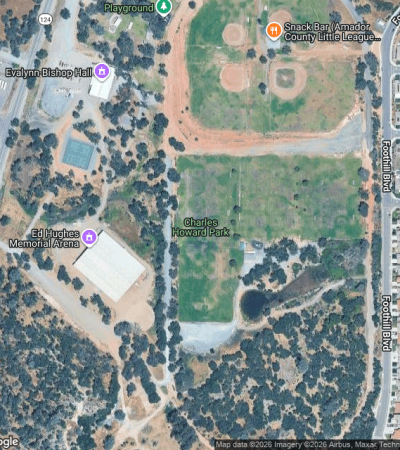
The stock is predominantly single-family and predominantly mid-century, much of it built out in the postwar decades as two- and three-bedroom ranch homes, then expanded, second-storied, or rebuilt. Two houses on the same block can be a generation apart in system age and finish. Behind that sit townhomes and condominiums near downtown and the transit corridor, and a small number of larger parcels in the western hills. The city’s west-to-east grade drives most of the rest — flat lots near Howard Park and White Oaks, elevation and views in Brittan Heights and Sunset Highlands.
Browse the current San Carlos listings below, or contact The Knight Group directly if you want the off-market and coming-soon picture rather than just what is publicly posted.
San Carlos occupies the mid-Peninsula, roughly equidistant from San Francisco and San Jose. Its official elevation is 33 feet, but that number describes the flatlands near the bay side only. The city climbs west from El Camino Real into hills that eventually meet the Pulgas Ridge Open Space Preserve, and Cordilleras Creek runs through the area. That west-to-east grade is the single most important geographic fact for a buyer, because it drives view premiums, lot shape, driveway steepness, and the difference between a flat backyard and a terraced one.
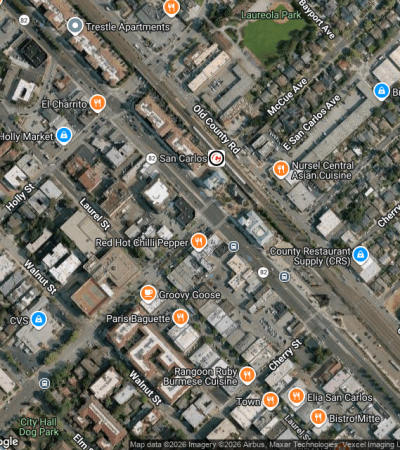
The city is organized in bands. El Camino Real is the commercial corridor. Laurel Street, just west of it, is the pedestrian downtown. East of El Camino you get the Caltrain corridor, then the light-commercial flats running out toward Highway 101 and the airport. West of downtown the streets start rising, and the neighborhood names change character with the topography. Climate is standard Mediterranean Peninsula: mild, with average annual precipitation around 20.46 inches concentrated in winter.
Predominantly single-family, predominantly mid-century, predominantly modest in original footprint. San Carlos built out heavily in the postwar decades, so a large share of the stock started life as two- and three-bedroom ranch and traditional homes on standard lots. Much of it has since been expanded, second-storied, or scraped and rebuilt. The consequence for a buyer: two houses on the same block can be twenty years apart in system age and a full generation apart in finish level, and the list prices will not always make that obvious.
The secondary stock is attached housing, meaning townhomes and condominiums, concentrated in the flatter areas near downtown and along the transit corridor. These are governed as common interest developments under California’s Davis-Stirling Act, which means an HOA, a governing document set, and a resale disclosure package you are entitled to review. We do not publish dues figures or reserve balances for any specific association here, because those change and stale numbers cost buyers money. Ask us for the current package on the building you are considering.
Third, there is a small stock of larger estate-scale properties in the western hills on bigger, often irregular parcels. Those are a different transaction: geotechnical reports matter more, and comparable sales are sparse enough that appraisal risk becomes a live negotiating issue.
San Carlos neighborhood names do real work, and reading them correctly saves time. As a rule of thumb, names carrying Heights, Highlands, or a view reference tend to sit up the western slope, trading flat yards and easy parking for elevation and quiet. Names built around Park or Manor tend to sit lower and flatter, closer to schools, downtown, and the Caltrain platform. That is a heuristic, not a boundary map, so confirm the specifics per address before you write an offer.
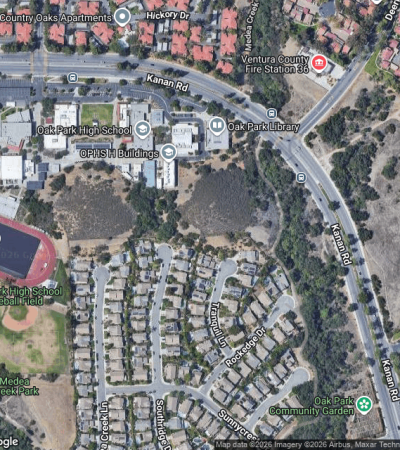
On the flatter, more central side of the city, the pockets we track most often are White Oaks, one of the more recognized San Carlos neighborhood names among local buyers, along with Howard Park, Clearfield Park, Oak Park, and Alder Manor. Buyers who prioritize walking to Laurel Street or reaching the train without driving generally start in this band. The offsetting factors are through-traffic on some streets and, closer to the corridor, train noise that varies materially block by block.
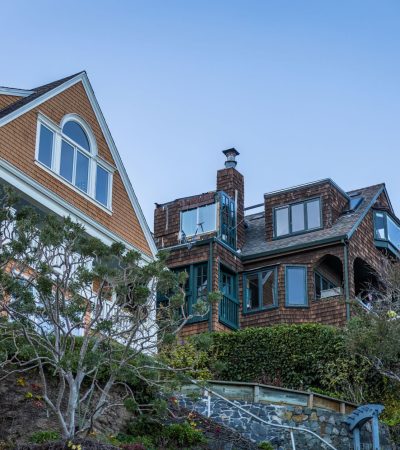
Moving west and up, the hillside pockets include Brittan Heights, Heather Highlands, Sunset Highlands, and Highland View. Elevation buys quiet and, on the right parcels, long views east across the bay. It also introduces variables flat-lot buyers never consider: retaining walls, drainage paths, downhill lot geometry that puts most of the usable yard below the house, and driveways that are genuinely difficult in a two-car household. Inspect for those specifically.
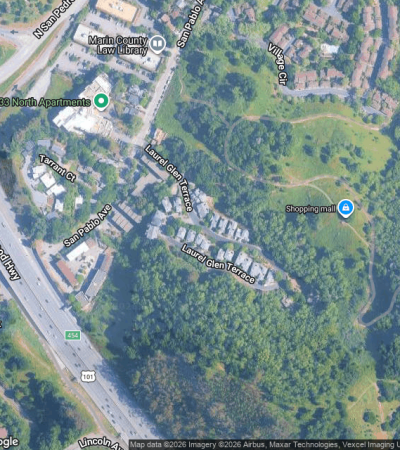
Beverly Terrace and Laurel Terrace read as stepped hillside streets. San Carlos Estates is the name attached to the larger-parcel end of the city, and properties carried under it deserve a different checklist than a standard subdivision purchase: parcel access, utility connections, and geotechnical history above all.
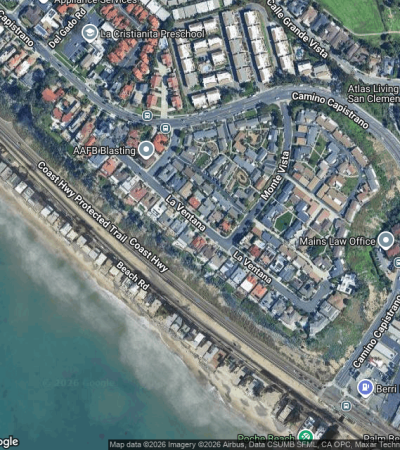
Rounding out the named submarkets are Devonshire, Cordes, El Sereno, and La Ventana. Each has its own turnover rhythm and buyer pool, which is why we keep them separated rather than quoting one citywide average at you. In a city producing few sales in a slow quarter, a “San Carlos median” can move for reasons that have nothing to do with the block you are buying on.
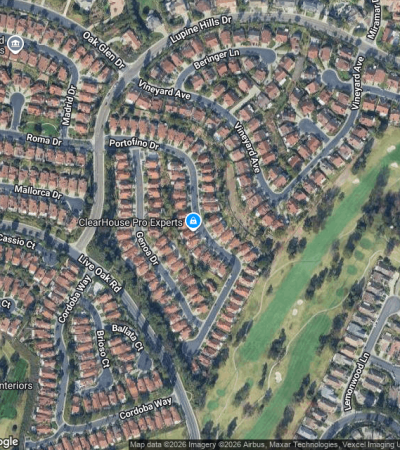
Four of the pages under this hub are named for specific developments rather than for spreads of streets: 1001 Laurel, 1501 Cherry, Vista Portofino, and The Residences at Wheeler Plaza. Buildings behave differently from neighborhoods. Pricing inside a single association is driven by floor, exposure, parking assignment, and the association’s own financial condition, not by what the house two blocks away sold for.
The diligence sequence for any of them is the same, and it is not optional. Read the CC&Rs and rules. Read the last two years of board minutes, where deferred maintenance and pending litigation surface before they reach a formal disclosure. Read the reserve study against remaining useful life on roof, decks, and elevators. Confirm whether any special assessment is levied, noticed, or under discussion, confirm the rental cap if you intend to lease, and confirm the association’s insurance status, now a real underwriting issue for California associations. We read that package before the offer goes in, not after.
Better than most of the Peninsula, with one caveat. San Carlos has its own Caltrain station downtown, opened in 1888 as a Southern Pacific stop. The original Almaden sandstone depot, built in the Richardsonian Romanesque style, was listed on the National Register of Historic Places on September 20, 1984 and served as the town’s first community church, library, and post office before being retired from railroad use in 1967. The working station today is an elevated two-platform structure rebuilt in 1997.
The caveat: San Carlos is served by Local and Weekend Local trains, and Express and Limited service does not stop here. If your commute assumes a peak express, verify the current timetable against your work address before assuming train access solves your travel time. Caltrain reported a weekday average of 644 boardings at San Carlos in fiscal year 2025, up about 37 percent year over year.
SamTrans serves the station on routes ECR, KX, 260, 261, 295, and 397, and is itself headquartered in downtown San Carlos. By car, Highway 101 handles the bay-side runs and Interstate 280 the western route. The difference between a house four minutes from a 101 on-ramp and one twelve minutes from it is worth measuring during a real commute hour, not on a Sunday showing.
For general aviation, San Carlos Airport (SQL/KSQL) sits about two miles northeast of downtown, off Highway 101. San Mateo County owns it. It covers roughly 110 acres and operates a single 2,621-by-75-foot asphalt runway, 12/30, with aircraft over 12,500 pounds prohibited, which caps the noise profile. More than 30 aviation businesses operate on the field. Homes on the flats east of El Camino sit closer to the traffic pattern than hillside homes, so if aircraft noise matters to you, visit at different times of day.
San Carlos splits its schooling between two districts, and buyers regularly get this wrong. Elementary through middle school is handled by the San Carlos School District, which runs elementary, upper elementary, and middle school campuses within the city. High school is handled by the Sequoia Union High School District, which serves Atherton, Belmont, East Palo Alto, Ladera, San Carlos, Menlo Park, Portola Valley, Redwood City, and Woodside.
San Carlos High School closed in 1982 on low enrollment, and its former playing fields became Highlands Park. Since then San Carlos students attend either Carlmont High School in Belmont, founded 1952, or Sequoia High School in Redwood City, founded 1895. Which one applies to a given address is an assignment question, not a citywide answer, and boundaries can be adjusted. If school assignment is driving your purchase, verify the current attendance area for the specific parcel with both districts before you remove contingencies. We will not quote you a rating or an assignment from memory, and neither should anyone else.
Downtown Laurel Street is the center of gravity: a low-rise retail and restaurant strip that runs a farmers market on summer mornings and holds the Frank D. Harrington park with its “Balancing Act” sculpture. The city programs a Music in the Park concert series and runs a Civics Academy for residents.
Burton Park is the largest park and the site of Hometown Days, the annual carnival held each May. Highlands Park sits on the former high school fields. Additional neighborhood parks are spread through the city, and the western edge connects to the Pulgas Ridge Open Space Preserve for trail access.
The Hiller Aviation Museum, next to San Carlos Airport, holds more than 40 aircraft with particular depth in helicopter history, and is a regional draw rather than a local curiosity. The San Carlos History Museum keeps limited weekend hours.
San Carlos sits in Silicon Valley’s Peninsula tier with an employment base no single firm dominates. As of the city’s 2022 employer reporting, the largest employers included the genetic testing company Natera with 934 employees, Pacific Gas and Electric with 323, The Home Depot with 291, and Check Point Software with 225. Life sciences and technology tenancy sits mainly on the east side.
The history runs deeper than the current tenant list. The land was part of Rancho de las Pulgas, the Spanish grant held by the Argüello family, whose residence stood near Magnolia and Cedar streets. Timothy Guy Phelps attempted an early development here under the name “The Town of Phelps.” In 1932 Charles Litton Sr. founded Litton Engineering Laboratories in San Carlos and changed how vacuum tubes were manufactured.
Start with the Natural Hazard Disclosure statement. Every California residential seller must deliver one, and it identifies whether the property falls within mapped flood, seismic, and fire hazard areas. San Carlos runs from bay-side flats to hillside parcels adjoining open space, so exposure is address-specific. Do not assume a citywide answer in either direction. Read the report for the actual parcel, and if the property sits near the western open space, check the current state Fire Hazard Severity Zone mapping and get an insurance quote before your contingency period runs out. Insurance availability, not price, derails an increasing share of California hillside transactions.
Second, hillside geotechnical condition. Sloped parcels carry drainage, retaining wall, and soil movement history. Ask for prior geotechnical reports, permits, and engineered repair records. A structural pest report is not a substitute for a soils engineer on a downhill lot.
Third, permit history. Given how much of the San Carlos stock has been expanded or rebuilt, unpermitted additions and converted garages appear regularly. Pull the permit file with the city and reconcile it against what you see on site. Square footage that never got a permit is square footage an appraiser may decline to credit. Fourth, if you are buying attached housing, the association documents described above are the transaction. Davis-Stirling gives you the right to that package. Use it.
Two things that do not apply here, since Los Angeles clients ask: San Carlos is not in the City of Los Angeles, so the Measure ULA transfer tax has no bearing on a San Carlos transaction, and the Los Angeles rent stabilization ordinance does not reach here either. California’s statewide rent cap and just-cause framework can apply to some tenant-occupied properties depending on type, age, and notice history. If you are buying tenant-occupied, get that analyzed rather than assumed.
Preparation, then speed. A city of roughly 30,000 residents with almost no developable land produces limited turnover, and the properties combining a flat lot, a renovated interior, and a quiet street are the ones every qualified buyer in the radius sees at once. We do not publish a current median price here, because a figure accurate in one month is misleading in the next, and the citywide number obscures the hillside-versus-flatland split that determines what you actually pay. Ask us for an address-specific comparable set instead.
What consistently works: full underwriting before you tour, not a pre-qualification letter. A decided position on which contingencies you hold and which you shorten, settled in advance rather than at 9pm on offer night. Disclosure packages read before the offer date. And a realistic second and third target neighborhood, because in a market this thin, insisting on one street can cost you a year.
Sellers face the inverse, which is the better problem. Limited comparable supply gives a well-prepared San Carlos listing leverage, and preparation is what creates it: pre-listing inspections so buyers are not pricing in unknown risk, targeted improvements where the return is documented, and a disclosure package assembled before launch rather than during escrow.
Because the city produces few listings in a given month, most buyers end up comparing across categories rather than within them: a flat-lot ranch that needs updating, a rebuilt house at a higher entry point, a townhome near the corridor, or a hillside parcel with a longer inspection list. Those are not interchangeable, and deciding which two you would actually accept before the season starts is what keeps you from writing a rushed offer on the only thing available. Set your non-negotiables around what cannot be changed later — grade, lot shape, proximity to the tracks — and treat finish level as the flexible part.
The other practical step is timing your diligence in advance. San Carlos real estate moves on contested properties, so reports, disclosure packages, and HOA documents are things you want to be reading early rather than requesting late. Ask us what is coming before it posts.
Yes, in the Peninsula portion of it. San Carlos is in San Mateo County, roughly mid-Peninsula between San Francisco and San Jose.
Small. The 2020 Census recorded 30,722 residents in 5.41 square miles, about 5,578 people per square mile. That footprint has been essentially built out for decades, which is the structural reason inventory stays tight.
Not since 1982, when San Carlos High School closed on low enrollment. Students now attend Carlmont High School in Belmont or Sequoia High School in Redwood City, both in the Sequoia Union High School District. Verify the assignment for a specific address with the district before buying on that basis.
Yes, from the downtown Caltrain station, but check the schedule against your workday. San Carlos is a Local and Weekend Local stop, and Express and Limited trains pass through without stopping. Caltrain recorded a weekday average of 644 boardings here in fiscal year 2025.
Both, with single-family dominant. Attached housing includes named developments such as 1001 Laurel, 1501 Cherry, Vista Portofino, and The Residences at Wheeler Plaza. All of it is governed as a common interest development under the Davis-Stirling Act, meaning HOA dues, governing documents, and a resale disclosure package you should read in full.
San Carlos Airport (SQL) sits about two miles northeast of downtown and is owned by San Mateo County. Its single runway is 2,621 by 75 feet and aircraft over 12,500 pounds are prohibited, which limits the noise profile relative to a commercial field. Exposure still varies by location. Visit at several times of day before deciding.
No. Measure ULA is a City of Los Angeles transfer tax with no application in San Mateo County. San Mateo County and the city apply their own documentary transfer taxes, which we will calculate for your transaction.
Soils and drainage first: retaining wall condition, prior geotechnical reports, engineered repairs, and where water goes in a heavy winter. Then access and parking, since steep driveways affect daily usability and resale. Then the Natural Hazard Disclosure and current fire hazard mapping, plus an insurance quote obtained inside your contingency period.
We work this market submarket by submarket, which is why every San Carlos neighborhood above has its own page instead of being folded into a citywide average. In a city with limited annual turnover, the difference between an informed offer and a guess is usually ten or fifteen comparable sales read properly, not general market commentary.
For buyers that means a current comparable set for the address, the disclosure and association package read before the offer date, a written position on contingencies, and a candid read on which properties are priced to attract competition versus priced to sit. We will tell you when we think a property is a stretch.
For sellers it means pricing built from the submarket rather than the citywide number, with a documented rationale for each preparation dollar. If you own in one of the neighborhoods linked above, contact The Knight Group and we will put the current data in front of you.
Lucky for you we’re looking out.
Subscribe to this Custom Search to be alerted when new properties hit the market in the area.
Choose the frequency that works for you.