Browse all Santa Barbara County real estate.

Browse all Santa Barbara County real estate.
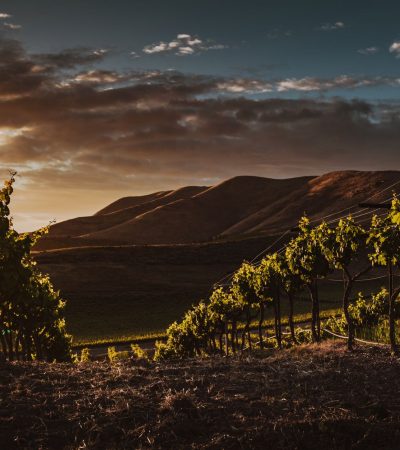
Homes for sale in Los Olivos come up rarely, and that is the first thing to understand about this market. The town is an unincorporated community of about 1,202 residents in the Santa Ynez Valley, roughly 30 miles inland from the coast and covering only about 2.6 square miles. It sits at the center of the Los Olivos District AVA, surrounded by vineyards, horse ranches, and oak country, with Santa Ynez, Ballard, Solvang, Buellton, and Los Alamos nearby.
Property here splits into two groups: homes on smaller lots inside the walkable village, and acreage on the edges — vineyard estates, horse ranches, and rural parcels. Ownership runs high, with 422 occupied households and a 72.7 percent owner-occupancy rate at the 2020 Census. What varies most is acreage, water and septic, and existing vineyard or equestrian improvements, so price ranges widely from a village bungalow to a multi-hundred-acre ranch.
Browse the current Los Olivos listings below, or contact The Knight Group to talk through what is realistically available in this market and what it takes to buy here.
Los Olivos anchors the northern-central Santa Ynez Valley. Its ZIP code is 93441 and it uses the 805 area code. The town is unincorporated, which means it is governed directly by Santa Barbara County rather than by a city government of its own. That distinction matters for buyers because land-use, permitting, and zoning questions run through the county, and rural parcels outside the village core often depend on private wells and septic systems rather than municipal utilities. Verify water, septic, and zoning on any specific parcel before you commit.
The town is ringed by the other Santa Ynez Valley communities. Santa Ynez and Ballard sit to the south and southeast, Solvang and Buellton lie to the southwest along the valley floor, and Los Alamos is to the northwest. State Route 154, the San Marcos Pass road, connects the valley over the mountains to the city of Santa Barbara and its coast. U.S. 101 runs through the valley’s western side by way of Buellton and Los Alamos, which is the practical route toward Santa Maria to the north and Santa Barbara to the south.
That geography is the core trade-off of living here. You get open land, dark skies, and vineyard views. You also accept a drive to reach a full-service city, a hospital, or an airport, and a mountain pass that carries most of the coastal traffic.
Los Olivos is the hub of the Los Olivos District AVA, an American Viticultural Area designated on January 21, 2016 as the 232nd appellation in the United States. The district spans 22,820 acres and, at the time of its establishment, held roughly 1,121 planted vineyard acres across 47 commercial vineyards, with 48 bonded wineries. Federal documentation described it as the largest concentration of the valley’s heritage vineyards.
The Los Olivos District is one of four sub-appellations inside the larger Santa Ynez Valley AVA, which was established May 15, 1983 and covers 182,400 acres with about 105 wineries. The other three sub-AVAs are Sta. Rita Hills to the west, Ballard Canyon in the center, and Happy Canyon of Santa Barbara on the eastern edge. Firestone Vineyard petitioned for the original Santa Ynez Valley designation in 1981.
Growing conditions in the Los Olivos District favor a broad range of grapes. Primary varieties include Sauvignon Blanc, Cabernet Franc, Cabernet Sauvignon, and Rhône varietals, alongside Spanish and Italian grapes. The area lies about 30 miles inland, where moderate marine fog cools the days and warms the nights. The growing season runs roughly 194 days with about 1,563 growing degree days, in USDA hardiness zones 9a to 10a. More than 95 percent of the soils come from the Positas-Ballard-Santa Ynez association, gravelly and clay loams with low to moderate fertility that drain well. Vineyard elevations in and around town generally sit between 650 and 900 feet.
The town traces to around 1880, when Alden March Boyd bought 157 acres and planted about five thousand olive trees, naming the property Rancho De Los Olivos. The name, Spanish for “the olive trees,” carried over to the community. The Pacific Coast Railway extension reached the site on November 16, 1887, and the narrow-gauge line operated until 1934. Mattei’s Tavern, built to serve rail and stagecoach travelers, was the railway’s southern terminus and remains a landmark in town.
That railroad-and-stagecoach origin explains the town’s shape. Los Olivos grew as a crossroads waypoint rather than a planned suburb, which is why the walkable village core is compact and the surrounding land stayed agricultural. The flagpole at the town’s central intersection is a recognizable local marker.
Los Olivos property splits into two broad categories. The first is homes in and immediately around the village, on smaller lots within walking distance of the tasting rooms and restaurants. The second, and the one the area is best known for, is acreage: vineyard estates, horse ranches, and rural residential parcels on the town’s edges and in the surrounding hills.
Housing here skews toward ownership. The 2020 Census counted 422 occupied households with a 72.7 percent owner-occupancy rate, and a median age of 49.4 years. Those figures describe a settled, owner-heavy community rather than a rental or transient market. Combined with the town’s small footprint, that means listings are limited and the character of what comes up for sale varies widely from a village bungalow to a multi-hundred-acre ranch.
Because the range is so wide, there is no single representative price for Los Olivos, and published median figures for a town this small can swing hard on a handful of sales. The honest answer is that pricing depends heavily on acreage, water rights, existing vineyard or equestrian improvements, and proximity to the village. The Knight Group can pull current comparable sales for the specific type of property you are targeting rather than relying on a townwide average that may not describe anything you would actually buy.
The lifestyle is rural wine country with a walkable center. Grand Avenue and the surrounding blocks hold tasting rooms, restaurants, galleries, and shops, and the town draws visitors for that concentration. The Foxen Canyon Wine Trail runs north from town, and large thoroughbred horse ranches operate throughout the region, so equestrian and vineyard land is a normal part of the setting rather than a novelty.
The climate supports the outdoor, agricultural pace. The mean annual temperature is about 61.6 degrees, summer highs average around 92 degrees, and winter lows average near 39.5 degrees. Summers are dry with little to no rain from June through September, while winters are mild and wet, with nearly 80 percent of the yearly precipitation falling between December and March.
The trade-off of that setting is service distance. Los Olivos is not a place with big-box retail, extensive nightlife, or a nearby hospital. Residents plan trips to Santa Barbara, Santa Maria, or the valley’s larger towns for those needs. Buyers who want that quiet and space tend to value it highly. Buyers who want urban convenience should weigh the driving honestly before committing.
Los Olivos is served by the Los Olivos School District, which operates Los Olivos Elementary School. Beyond the public elementary, the town is notable for two private college-preparatory schools. Dunn School is a boarding and day school located on State Route 154. Midland School is a boarding-only school on Figueroa Mountain Road. Both are established institutions that draw students from beyond the valley.
For older students and for public secondary education, families in the Santa Ynez Valley generally look to schools in the neighboring communities. If a specific school assignment matters to your purchase, confirm current attendance boundaries and enrollment directly with the districts, because assignments can change and rural boundaries are not always intuitive.
Los Olivos is a driving community. State Route 154 over San Marcos Pass is the direct route to the city of Santa Barbara and the South Coast. U.S. 101, reached through Buellton and Los Alamos on the valley’s western side, is the main corridor for longer trips north toward Santa Maria and south toward Santa Barbara and beyond.
There is no rail service today; the narrow-gauge line that founded the town stopped running in 1934. Everyday errands, commuting, and airport trips all assume a car and a tolerance for two-lane roads and a mountain pass. That is part of the rural bargain here. Factor commute time into any purchase decision, especially if someone in the household works on the South Coast and would cross San Marcos Pass daily.
Three categories deserve real attention here, and none should be taken on assumption.
First, wildfire. The Santa Ynez Valley backcountry sits in a fire-prone part of California. Check the Cal Fire fire hazard severity zone maps for any specific parcel, confirm what defensible-space and building requirements apply, and verify that homeowners insurance is available and affordable for that location before you are deep into a deal. Insurance availability in high-hazard California zones has become a live issue, and it can affect both financing and long-term cost of ownership.
Second, rural infrastructure. Many parcels outside the village core rely on private wells and septic systems rather than municipal water and sewer. Water supply, water rights, well condition, and septic capacity are material to value and to what you can build. Confirm all of it during due diligence rather than assuming a rural property has city-style utilities.
Third, county land use. Because Los Olivos is unincorporated, zoning, agricultural designations, and permitting run through Santa Barbara County. Agricultural preserve status, vineyard and equestrian use rules, and building limits can all shape what a parcel is worth and what you are allowed to do with it. Verify the zoning and any land-use restrictions before you rely on a plan for the property.
Los Olivos has a long screen and cultural presence. It stood in as the fictional Mayberry for the May 1986 television movie Return to Mayberry, and it featured prominently in the 2004 film Sideways, which brought national attention to Santa Barbara County wine country. The Fess Parker Wine Country Inn, originally the Los Olivos Grand Hotel and built in 1985, is a well-known property in town.
The wider area carries its own notable history. Ronald Reagan’s Rancho del Cielo sat roughly nine miles south, and Michael Jackson’s Neverland Ranch was located about five miles north of town. These references are part of why Los Olivos is recognizable, though the town itself remains small and residential in character.
The decision most buyers face here is village versus acreage, and it changes almost everything about the purchase. A lot inside the walkable core puts you steps from tasting rooms and restaurants, on a smaller parcel with fewer unknowns. A parcel on the edges brings vineyard or equestrian potential, but also private well and septic questions, county permitting through Santa Barbara County rather than a city, and maintenance that a village lot never asks of you. Neither is better; they are different commitments.
Because inventory is thin and every parcel differs, Los Olivos real estate rewards patience and specific due diligence over comparison shopping. Confirm water, septic, and zoning on the exact parcel, and understand which vineyard or ranch improvements are already in place versus what you would be building. It is also worth being honest about the drive — to a hospital, an airport, or a full-service city — before you commit to living inland.
No. Los Olivos is an unincorporated community and census-designated place in Santa Barbara County. It does not have its own city government; it is governed by the county, which handles zoning, permitting, and land use.
It is small. The 2020 Census recorded 1,202 residents across about 2.6 square miles, with 422 occupied households. That small footprint is a major reason resale inventory is limited.
Los Olivos is the center of the Los Olivos District AVA, designated in 2016 and covering 22,820 acres. That district is one of four sub-appellations within the larger Santa Ynez Valley AVA, which was established in 1983.
Primary varieties in the Los Olivos District include Sauvignon Blanc, Cabernet Franc, and Cabernet Sauvignon, along with Rhône, Spanish, and Italian varietals. The inland climate and well-draining loam soils support a wide range of grapes.
The mean annual temperature is about 61.6 degrees. Summers are dry and warm, with highs averaging near 92 degrees and almost no rain from June through September. Winters are mild and wet, with nearly 80 percent of yearly precipitation falling December through March.
Los Olivos is reached from the city of Santa Barbara by way of State Route 154 over San Marcos Pass. It is a mountain-pass drive rather than a short hop, so commute time is a real consideration for anyone working on the South Coast.
Yes. Dunn School is a boarding and day college-preparatory school on State Route 154, and Midland School is a boarding-only college-preparatory school on Figueroa Mountain Road. The public Los Olivos School District operates Los Olivos Elementary School.
Yes. Beyond village homes, the area is known for vineyard estates and thoroughbred horse ranches on larger acreage. Water rights, existing improvements, zoning, and fire-hazard designation all drive value on these parcels, so due diligence matters more than a townwide average price.
The Knight Group works this market by reading it property by property rather than by headline average. In a town this small, with a range that runs from a village bungalow to a several-hundred-acre ranch, a townwide median tells you little about what a specific purchase should cost. We pull the comparable sales that actually match the type, acreage, and improvements you are targeting.
We also treat the rural due-diligence items as first-order, not afterthoughts: water supply and rights, well and septic condition, Cal Fire hazard zone status and insurability, and Santa Barbara County zoning and agricultural land-use rules. Those factors decide whether a Los Olivos property is worth what it lists for and whether you can use it the way you intend.
If you are considering Los Olivos as a primary home, a wine-country second home, or a vineyard or equestrian investment, start with the listings below, then contact The Knight Group to build a realistic plan around what is available and what it will take to close.
The Knight Group is here to help you with all your realty needs. To get started, fill out the form below and one of our experienced agents will contact you as quickly as possible.
Copyright © 2024 The Knight Group.
All rights reserved. License: 02133297