Browse all Santa Barbara County real estate.

Browse all Santa Barbara County real estate.
Summerland homes for sale sit on coastal bluffs directly between Montecito and Carpinteria, in a community of roughly 1.4 square miles with a population of 1,222 at the 2020 Census. U.S. Route 101 runs straight through it, splitting the community into a coastal side to the south and a ranch-oriented foothill side to the north. The ZIP code is 93067.
That split defines the housing stock. The historic core, platted in 1883 on lots as small as 25 by 60 feet, holds some of the tightest parcels on the South Coast, along with bluff and ocean-view positions closer to the beach. North of the freeway, Ortega Ranch and Montecito Ranch Estates trade direct ocean access for land and privacy. Inventory is thin, so pricing leans on view, land, and position rather than a dense set of recent sales.
Browse the current Summerland listings below, or contact The Knight Group to talk through which side of the community fits what you are trying to buy.
Summerland sits on the South Coast of Santa Barbara County, immediately east of Montecito and west-northwest of Carpinteria. The community is built on and above coastal bluffs, with U.S. Route 101 running straight through it and the Pacific on the ocean side. Ortega Ridge Road forms part of the western boundary with Montecito.
The location is the whole argument for Summerland. You are minutes from Montecito’s Coast Village Road and Upper Village, a short drive from downtown Santa Barbara, and close to Carpinteria’s beaches. The ZIP code is 93067, and the community carries the 805 area code. For buyers who want a Santa Barbara County South Coast base that is smaller and less trafficked than its neighbors, the geography does most of the selling.
Summerland has an unusual origin. In 1883, spiritualist and real estate speculator H.L. Williams founded the town and marketed small lots, many as compact as 25 by 60 feet, to fellow Spiritualists. That founding left a lasting fingerprint on the layout: the older core of Summerland still carries some of the tightest residential lots on the South Coast, which is one reason the estate-scale parcels in the foothills read as so distinct.
The town also has a place in energy history. The Summerland Oil Field produced what is generally cited as the world’s first offshore oil well, drilled from piers here in the 1890s. The nearby 1969 Santa Barbara oil spill, centered on the Dos Cuadras field offshore, is part of the same coastal story. None of that industrial past is visible in the residential market today, but it explains why the bluffs and beaches carry the history they do.
Summerland is a low-volume, high-value market. Because the community is physically small and tightly held, inventory is thin, and a given month may show only a handful of active listings across both sides of the freeway. That scarcity is the defining feature: buyers here are usually waiting for the right property rather than choosing among many.
The demographic profile reflects the price tier. The median household income was $133,083 per the 2023 American Community Survey estimate, and the median age was 52.9 at the 2020 Census, both consistent with an established, equity-heavy South Coast community rather than a first-time-buyer market. Pricing spans a wide band depending on whether you are buying a compact coastal lot, an ocean-view bluff property, or a foothill estate parcel, and the two named communities north of the freeway sit at different points on that band.
Because listings are so scarce, off-market activity carries more weight in Summerland than in larger markets. The Knight Group works both the published inventory and private opportunities, which is often where the better foothill and view properties trade.
The wide spread in pricing is worth understanding before you shop. A compact lot in the historic coastal core, an ocean-view bluff property, and a multi-acre foothill estate are three very different purchases that all carry a Summerland address, and they do not move in lockstep. Comparable sales are also thin because volume is low, so pricing any single property leans more on judgment about view, land, and position than on a dense set of recent trades. That is exactly the kind of read where local, transaction-level experience earns its keep, and it is worth getting a grounded valuation before you anchor to a list price.
Summerland’s residential map is easiest to read as coastal side versus foothill side, and two named communities anchor the foothill side north of Highway 101.
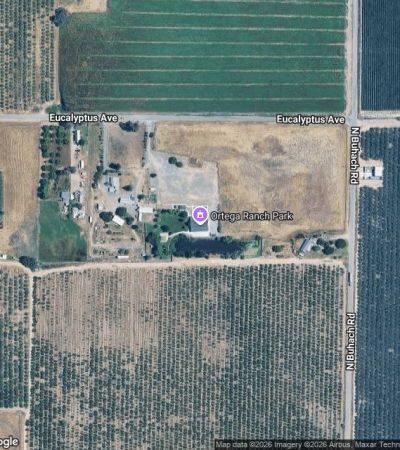
The first is Ortega Ranch, the residential community on the north side of the 101 in Summerland, with ranch-style properties and mountain-adjacent character. It sits above the coastal strip and trades land and privacy for reduced direct ocean access, which is the central trade-off for buyers weighing it against a bluff-top position. You can review the current inventory and neighborhood detail on the Ortega Ranch real estate page.
The second is Montecito Ranch Estates, a residential development on the eastern edge of Summerland with estate-sized properties that blend a Summerland address with ranch-scale acreage. It sits at the boundary between the Summerland and Montecito markets, and the parcels there run substantially larger than the compact lots in Summerland’s historic core. See what is available and how the community is positioned on the Montecito Ranch Estates real estate page.
Below those two, the coastal side of Summerland holds the older, smaller-lot fabric that traces back to the 1883 founding, including bluff and ocean-view positions closer to the beach. Which of these fits depends entirely on your priorities around land, view, and privacy.
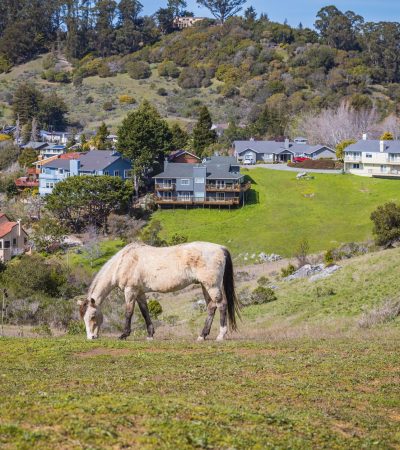
Ortega Ranch is the foothill option. Positioned on the north side of Highway 101, it puts residents in the hills rather than on the bluffs, which means more land and privacy and a more rural, property-focused character. The trade-off is direct ocean access: you are mountain-adjacent here, not oceanfront, and a coastal view is a function of elevation and lot rather than a given.
For buyers, the choice usually comes down to what you want the property to be. If the priority is acreage, quiet, and a ranch setting within a South Coast ZIP code, Ortega Ranch answers that. If the priority is walking to the beach or a bluff-top ocean view, the coastal side of Summerland is the stronger fit. The Ortega Ranch listings show how the current supply is shaped, and The Knight Group can flag whether a given foothill parcel actually delivers the view its elevation suggests.
Montecito Ranch Estates suits a buyer who wants estate-scale land and is comfortable at the top of the Summerland price band. The development sits on the eastern edge of Summerland, at the seam between the Summerland and Montecito markets, and the parcels are sized for privacy and horse-property or ranch use rather than compact residential living.
This is the community where the numbers run highest. The properties shown on the Montecito Ranch Estates page have included parcels well into the tens of millions of dollars on acreage measured in double digits, which places this squarely in the trophy-property tier for the South Coast. If you are cross-shopping Montecito estates and want a Summerland address with real acreage, this is the pocket to watch. The Knight Group can walk through how these parcels compare on a price-per-acre and view basis against neighboring Montecito inventory.
Summerland and Montecito are neighbors with different personalities. Montecito is larger, more established as a luxury brand, and priced accordingly across most of its inventory. Summerland is smaller, quieter, and less commercialized, with a village core that stays low-key. For buyers, the practical read is that a Summerland address can put you minutes from Montecito’s amenities while keeping you out of its most trafficked and most expensive core.
The eastern edge of Summerland blurs the line further. Communities like Montecito Ranch Estates sit at the boundary between the two markets, which is why their pricing tracks closer to Montecito estate values than to Summerland’s coastal-lot pricing. If you are already looking at Montecito, it is worth having The Knight Group show you where the Summerland side of that boundary offers a different value equation.
Access is straightforward because U.S. Route 101 runs directly through Summerland. That gives residents a fast connection north toward Montecito, downtown Santa Barbara, and Goleta, and south toward Carpinteria and, eventually, Ventura and the Los Angeles basin. For a community this small, having the main South Coast highway run through it is a real convenience.
The trade-off is the same one that comes with any 101-adjacent property: proximity to the freeway means road noise and traffic exposure vary sharply by parcel. Properties closer to the corridor and lower on the slope feel the highway more than foothill or bluff positions set back from it. This is worth checking property by property, and it is one of the first things The Knight Group evaluates on a Summerland showing.
Summerland has a local school within the community, and families here also draw on the broader South Coast education options across Montecito, Santa Barbara, and Carpinteria, which include well-regarded public and private choices. Because school assignments and district boundaries can shift and are not uniform across the South Coast, buyers with school-age children should confirm the current assignment for any specific parcel directly rather than assume it from the Summerland address.
The community’s demographic profile skews established rather than young, with a median age of 52.9 at the 2020 Census. That shapes the feel of the market: much of the demand comes from move-up, second-home, and equity buyers rather than families chasing a school catchment. For families who do want to be here, the foothill communities north of the freeway tend to offer the land and quiet that suit longer-term ownership, while proximity to Montecito and Santa Barbara keeps a full range of amenities within a short drive.
Summerland’s lifestyle is deliberately low-key. The community has a compact village core with a handful of shops and eateries, a local school, and a Presbyterian church, set against coastal bluffs and beach access on the ocean side. The scale is the appeal: this is a place people choose for quiet and proximity rather than nightlife or a dense commercial district.
For anything larger, the surrounding South Coast does the work. Montecito’s Coast Village Road and Upper Village, downtown Santa Barbara’s dining and cultural venues, and Carpinteria’s beaches are all a short drive away. The climate is warm-summer Mediterranean, which supports the outdoor, coastal orientation that defines living here. Buyers who want a walkable big-town center will lean on the neighbors; buyers who want calm with everything nearby tend to find Summerland fits.
Several factors deserve real diligence here. First, coastal position: much of Summerland sits on or above bluffs, and bluff-top and beach-adjacent properties carry coastal-hazard and California Coastal Commission considerations that inland parcels do not. Any development, remodel, or shoreline work on the coastal side can involve additional permitting, and buyers should confirm what a specific property allows before assuming a renovation plan.
Second, the South Coast wildfire context. This part of Santa Barbara County has real fire exposure in the foothills, which affects insurance availability and cost. Buyers considering Ortega Ranch or other foothill parcels should price insurance early and verify current fire-hazard designations rather than assume coverage will be simple.
Third, the legacy of the Summerland Oil Field. The community’s industrial history means some parcels may have historical land-use considerations, and standard environmental diligence is worth doing. None of these factors is a reason to avoid Summerland, but each is a reason to buy with clear eyes. The Knight Group flags these items up front rather than at the closing table. Buyers should verify current school assignments, insurance terms, coastal permitting, and any HOA arrangements directly, because these change and vary by parcel.
The first decision is which side of the 101 you want, because it sets everything that follows. South of the freeway, you are buying proximity — walkable distance to the beach, bluff and ocean-view positions, and the compact parcels that came out of the original 1883 town plat. North of the freeway, in Ortega Ranch and Montecito Ranch Estates, you are buying acreage, setback from traffic, and privacy, with ocean access becoming a drive rather than a walk. Neither is better; they answer different questions.
The second is patience. Summerland real estate turns over slowly, and the property that fits your criteria may not be listed the month you start looking. Buyers who do well here define their must-haves early — lot size, view, freeway distance — and stay ready to move when something surfaces. Talk to The Knight Group about what is active now and what may come available quietly.
No. Summerland is its own unincorporated community in Santa Barbara County, directly east of Montecito. The two share a boundary near Ortega Ridge Road, and the eastern edge of Summerland sits close to the Montecito market, but they are distinct communities with different pricing and character.
Summerland uses ZIP code 93067 and the 805 area code.
Summerland covers roughly 1.4 square miles and had a population of 1,222 at the 2020 Census, down from 1,448 in 2010. It is one of the smaller residential communities on the South Coast.
The coastal side, south of Highway 101, holds the older, smaller-lot fabric and the bluff and ocean-view positions closer to the beach. The foothill side, north of the freeway, holds ranch-oriented communities like Ortega Ranch, where the trade is more land and privacy for reduced direct ocean access.
Summerland is physically small and tightly held, so active listings tend to be scarce. That makes off-market and pre-market opportunities more important here than in larger markets, which is one reason working with a team that tracks private activity matters.
Montecito Ranch Estates, on the eastern edge of Summerland, is built on estate-scale acreage that runs well beyond the compact lots in Summerland’s historic core. It sits at the top of the local price band.
Yes, to different degrees by parcel. Foothill properties carry South Coast wildfire exposure that affects insurance, and bluff and beach-adjacent properties involve coastal-hazard and California Coastal Commission considerations. Both are worth verifying before you commit.
Yes. Given how thin the published inventory runs, The Knight Group works both listed and private opportunities in Summerland. Contact the team to be matched to what is actually available, including properties not yet on the open market.
The Knight Group approaches Summerland as a scarcity market, which changes the playbook. Rather than sorting through a long list of active homes, the work is about tracking a small, tightly held inventory, surfacing off-market and pre-market opportunities, and being ready to move when the right coastal or foothill property appears. That is a relationship-driven process, not a portal-driven one.
On any specific property, the team evaluates the things that actually move value here: freeway noise and setback, true view versus assumed view, coastal permitting exposure, wildfire and insurance cost, and how a Summerland address compares against neighboring Montecito inventory on a price-per-acre basis. The goal is a clear-eyed decision, with the trade-offs named before you write an offer. To start, browse the Summerland listings below, or reach out to The Knight Group to talk through which side of this small community fits what you want to own.
The Knight Group is here to help you with all your realty needs. To get started, fill out the form below and one of our experienced agents will contact you as quickly as possible.
Copyright © 2024 The Knight Group.
All rights reserved. License: 02133297