Homes for Sale in Sunnyvale, California
Homes for Sale in Sunnyvale currently number 316 active listings with a median asking price of $1,488,400 (CRMLS, September 2026).
Homes for sale in Sunnyvale sit at the center of Silicon Valley, in Santa Clara County between Mountain View to the northwest and Santa Clara to the southeast. This is a working technology hub with a large residential base, not a bedroom suburb. LinkedIn is headquartered here, Amazon’s Lab126 division is based in the city, and Juniper Networks, Fortinet, NetApp, and Trimble are all headquartered locally. That job concentration is why Sunnyvale is among the most expensive housing markets in the country.
The housing stock spans several eras. Mid-century ranch and single-story homes still define neighborhoods like Birdland, Cherry Chase, Ortega Park, and Ponderosa, while townhomes and condominiums cluster near downtown, along El Camino Real, and on the north side toward Moffett Park. West-side homes in the Cupertino and Fremont Union attendance zones draw the strongest premiums.
Browse the current Sunnyvale listings below, or contact The Knight Group to talk through where a specific budget and commute actually land you in this market.
What kind of housing does Sunnyvale have?
Sunnyvale’s housing stock spans several eras. Large tracts of ranch and single-story homes went up during the mid-century Silicon Valley expansion, and those neighborhoods still define much of the city’s residential character. Alongside them are newer townhomes, condominiums, and higher-density apartments concentrated near downtown, along El Camino Real, and in the redeveloped districts on the north side.
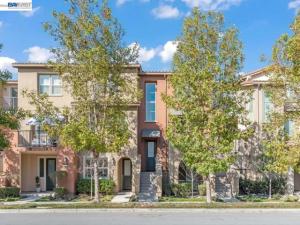
Practically, a buyer in Sunnyvale is usually choosing between three formats. A detached single-family home on its own lot is the most expensive and the most competitive. A townhome offers more space than a condo and often a small yard or attached garage, frequently inside a homeowners association. A condominium is the most accessible entry point into the city and the format most common near downtown and the transit corridors.
Each format carries different ownership terms. Townhomes and condos typically sit inside HOAs governed by California’s Davis-Stirling Act, which means monthly dues, reserve studies, and rules you should read before writing an offer. Detached homes give you more control but shift maintenance and long-term capital costs entirely onto you. Neither is better in the abstract. The right one depends on how long you plan to hold and how much upkeep you want to own.
What are the neighborhoods in Sunnyvale?
Sunnyvale is a collection of distinct neighborhoods rather than a single uniform grid. On the west side, areas served by the Cupertino and Fremont Union school attendance zones tend to draw the strongest premiums, because families weigh school assignment heavily and that demand is priced in.
Birdland, named for its streets that reference birds, is one of the better-known single-family pockets and is popular with buyers who want a settled residential feel close to the west-side job centers. Cherry Chase is another established single-family area frequently sought for its school associations. Ortega Park and Ponderosa are recognized residential neighborhoods with their own parks and a mix of original and updated homes. The Heritage District near downtown holds some of the city’s older housing and a more historic street pattern.
Closer to downtown and along the north side toward Moffett Park, the housing shifts toward townhomes, condominiums, and newer mixed-use development. These areas trade yard space for walkability and proximity to transit and offices. If you are comparing a west-side single-family home against a downtown condominium, you are really comparing two different lifestyles at two different price points, and it is worth being honest with yourself about which one you will actually use day to day.
Why do buyers pay a premium to live in Sunnyvale?
The short answer is jobs. Sunnyvale is a genuine employment center, not just a place workers commute out of. LinkedIn is headquartered in Sunnyvale. Amazon’s Lab126 hardware division, the group behind the Kindle and Echo, is based in the city. Juniper Networks, Fortinet, NetApp, and Trimble are among the technology companies headquartered there, and Apple and Google both lease significant space in Sunnyvale in addition to their neighboring campuses.
That concentration matters for housing because it compresses commutes. A buyer working at one of these employers can often reach the office in minutes rather than fighting a full Bay Area freeway crossing. Proximity to work is one of the most durable drivers of home value in this region, and Sunnyvale sits at the middle of it.
The trade-off is straightforward. That same demand keeps prices high and inventory tight. You are paying for location and access, and in a downturn the technology labor market is what moves this housing market up or down. A buyer should understand that they are buying into an economy tied closely to the tech sector’s health.
How is the commute and transit access in Sunnyvale?
Sunnyvale is well positioned for a car commute and unusually well positioned for rail. Caltrain runs through the city with stops at the Sunnyvale and Lawrence stations, giving residents a rail option north toward San Francisco and south toward San Jose without depending entirely on the freeway.
By road, US-101 runs along the northern edge of the city, State Route 237 connects the north side toward the East Bay approaches, and Interstate 280 is a short drive to the south. Local expressways including Lawrence Expressway and Central Expressway carry a lot of the internal traffic and are often faster than the freeways for cross-town trips.
The honest caveat is that Silicon Valley traffic is heavy at peak hours regardless of where you live. Sunnyvale’s advantage is not that it escapes congestion but that it puts you close enough to the major job centers that your daily distance is short. For a transit-oriented buyer, a home within walking distance of a Caltrain station is worth prioritizing, because that access holds its value.
What schools serve Sunnyvale?
School assignment in Sunnyvale is more complicated than in many cities because the city is split across several districts rather than served by one. Elementary and middle school students may fall under the Sunnyvale School District, the Cupertino Union School District, or the Santa Clara Unified School District depending on the specific address. At the high school level, the Fremont Union High School District serves much of the west side, while Santa Clara Unified serves other portions of the city.
Because the boundaries do not follow neighborhood names cleanly, the single most important thing a buyer with school-age children can do is verify the exact assigned schools for a specific address before falling in love with a house. Two homes on the same street can occasionally sit in different attendance zones. Do not assume, and do not rely on a listing’s summary. Confirm it.
School demand is one of the strongest forces in Sunnyvale pricing. Homes tied to sought-after attendance areas carry a premium that is real and persistent, which is worth knowing whether you are buying into that premium or deliberately buying outside it to save money.
What is daily life and amenities like in Sunnyvale?
Downtown Sunnyvale has been substantially rebuilt over the last two decades. Historic Murphy Avenue anchors the older, pedestrian core with restaurants and a regular farmers market, while newer mixed-use development around it, including the CityLine project, has added housing, retail, and public space. The result is a downtown that functions as an actual gathering place rather than a pass-through.
The city is also well supplied with parks and recreation. Baylands Park sits on the north side near the bay, and neighborhood parks including Las Palmas, Washington, Ortega, and Ponderosa give residents green space close to home. The Sunnyvale Community Center anchors civic and cultural programming.
One distinctive feature worth knowing is that Sunnyvale runs a consolidated Department of Public Safety, where officers are cross-trained to serve as police, firefighters, and emergency medical responders rather than operating as separate departments. It is an unusual municipal model and a point of local pride. For a buyer, the practical takeaway is a city that invests in its own services and manages them directly.
What should buyers know about property taxes, insurance, and risk in Sunnyvale?
Property taxes in Sunnyvale operate under California’s Proposition 13, which sets your base assessed value at your purchase price and caps annual increases on that base. This means your tax bill is tied to what you pay, not to a countywide reassessment, and two neighbors in similar homes can owe very different amounts depending on when each bought. Budget your taxes from your own purchase price, not from the prior owner’s bill.
Some newer developments may carry additional assessments or special taxes layered on top of the base rate. Whether any given property does is address-specific, so confirm the full tax picture on the actual home before you commit. Do not assume the headline rate is the whole bill.
On risk, Sunnyvale sits on the valley floor and is not a wildland fire community in the way that hillside and canyon areas of California are. The more relevant physical risks are seismic and, for the northern bay-adjacent parts of the city, flood exposure. The Bay Area is earthquake country, so any buyer should factor seismic considerations into insurance and, for older homes, ask about foundation and retrofit condition. For properties toward the northern baylands, check the FEMA flood-zone determination for the specific parcel, because that designation drives whether flood insurance is required and what it costs.
One point of clarity for buyers moving up from Los Angeles: the Measure ULA transfer tax on high-value property sales applies only inside the City of Los Angeles. It does not apply in Sunnyvale. Standard California and county transfer taxes still apply, but the ULA surcharge is not part of a Sunnyvale transaction.
Who is Sunnyvale the right fit for?
Sunnyvale fits buyers who want to be inside Silicon Valley rather than commuting into it. If your work or your household’s work is anchored to the technology corridor, the time you save and the access you gain justify a great deal of the price. It also fits families who value the school assignments on the west side and are prepared to pay for them.
It fits less well for buyers whose budget is stretched to the breaking point by a detached home here. In that situation, a townhome or condominium in Sunnyvale, or a detached home in a more affordable nearby city, can be the more durable financial decision. Buying the least expensive detached house in an expensive market often means inheriting the most deferred maintenance, and that cost is real.
The clarifying question is simple. Are you buying Sunnyvale for its location and access, or are you buying it as a status address? The first reason holds up over time. The second one is expensive. The Knight Group would rather help you answer that honestly than sell you the wrong format at the top of your budget.
How competitive is the Sunnyvale market for buyers and sellers?
Sunnyvale is a demand-heavy market. Inventory is limited by how built-out the city already is, and demand is refreshed continually by the local job base. In practice that means well-priced, move-in-ready homes in strong locations can draw multiple offers, while overpriced or dated properties still sit until they are corrected.
For a buyer, the implication is preparation. Financing should be fully underwritten before you shop, your must-haves and your walk-away conditions should be defined in advance, and your agent should be able to move on a property quickly without cutting the diligence that protects you. Speed without diligence is how buyers overpay or inherit problems.
For a seller, the market rewards presentation and pricing discipline. Homes that are prepared, staged where appropriate, and priced to the actual comparable sales tend to perform. Homes priced to the seller’s hope rather than the market’s evidence tend to linger and then sell for less. The Knight Group’s role on either side is to keep the strategy anchored to the numbers rather than to the emotion.
How to Approach an Offer in a Tight, Fast Market
Inventory here is limited and demand is steady, so most buyers should sort out their financing and their non-negotiables before they start touring. Decide early which format you are actually shopping for, because the preparation differs. On a detached house, your due diligence centers on the condition of the structure and the long-term capital items you will be paying for yourself. On a townhome or condominium, a large share of the risk sits in the association documents, and reading the dues history and reserve study is not optional.
It also helps to separate what you value from what the market is pricing. West-side school attendance zones and short commutes to the local employers carry a premium that shows up in every comparable, so if neither one drives your daily life, you may find better value elsewhere in the city. The Knight Group works Sunnyvale real estate every week and can tell you which trade-offs are worth making and which ones buyers tend to regret.
Frequently Asked Questions About sunnyvale Homes for Sale
Is Sunnyvale a good place to buy a home?
It is a strong long-term market for buyers tied to the Silicon Valley economy, because of the job concentration, the transit access, and the school options. It is an expensive market, so the value depends on matching the right housing format to your budget and your time horizon rather than overextending on a detached home.
What types of homes can I buy in Sunnyvale?
Mainly detached single-family homes, townhomes, and condominiums. Detached homes command the highest prices and the most competition. Townhomes and condos, usually within HOAs, are the more accessible entry points and are concentrated near downtown and the transit corridors.
Which school district serves Sunnyvale?
More than one. Depending on the address, elementary and middle schools fall under the Sunnyvale, Cupertino Union, or Santa Clara Unified districts, and high schools fall under the Fremont Union or Santa Clara Unified districts. Always verify the assigned schools for the specific property before you rely on them.
Can I commute to the rest of Silicon Valley from Sunnyvale?
Yes. Sunnyvale has two Caltrain stations plus direct access to US-101, State Route 237, and nearby Interstate 280, along with the local expressway network. Its central position keeps commutes to the major job centers short by regional standards, though peak-hour traffic is still heavy.
Does Sunnyvale have a walkable downtown?
Yes. Historic Murphy Avenue and the surrounding redeveloped districts, including the CityLine project, give Sunnyvale a functioning downtown with restaurants, retail, a farmers market, and public space, which is not something every Silicon Valley city can claim.
How do property taxes work when I buy in Sunnyvale?
Under Proposition 13, your base assessed value is set by your purchase price, and annual increases on that base are capped. Budget from your own purchase price, and confirm whether any specific property carries additional special assessments on top of the base rate.
Is Sunnyvale at risk from wildfire or flooding?
Sunnyvale sits on the flat valley floor and is not a wildland fire community the way hillside areas of California are. The more relevant risks are seismic, which applies across the Bay Area, and flood exposure in the northern bay-adjacent parts of the city, where you should check the FEMA flood-zone determination for the exact parcel.
Should I buy a detached home or a condo in Sunnyvale?
It depends on your budget and how long you plan to stay. A detached home gives you land and control but costs the most and competes the hardest. A townhome or condo lowers the entry price and shifts some maintenance to an HOA. Match the format to your time horizon rather than defaulting to the most expensive option you can qualify for.
How does The Knight Group work in the Sunnyvale market?
The Knight Group represents buyers and sellers across Santa Clara County, including Sunnyvale. Our approach is to anchor decisions to the evidence: comparable sales, the actual tax and HOA picture on a specific property, the verified school assignment, and the physical condition of the home, rather than to the pressure of a fast market.
For buyers, that means getting your financing fully prepared, defining your criteria and your limits before you shop, and moving decisively on the right property without skipping the diligence that protects you. For sellers, it means pricing to the market’s evidence, preparing the home to perform, and running a process that gets you the strongest result rather than the fastest sign in the yard.
Browse the Sunnyvale listings below, or contact The Knight Group to map a specific budget, commute, and school priority onto the neighborhoods and home types that actually fit. We would rather give you a precise answer than an optimistic one.
What are homes for sale in Sunnyvale like?
- Homes for sale in Sunnyvale sit at the center of Silicon Valley, in Santa Clara County between Mountain View and Santa Clara.
- Sunnyvale functions as a working technology hub with a large residential base rather than a bedroom suburb feeding another city.
- Juniper Networks, Fortinet, NetApp, and Trimble are all headquartered locally, concentrating technology employment inside the city limits.
- Job concentration explains why homes for sale in Sunnyvale rank among the most expensive housing markets in the country.
- Mid-century ranch and single-story homes still define neighborhoods including Birdland, Cherry Chase, Ortega Park, and Ponderosa.
- Townhomes and condominiums cluster near downtown, along El Camino Real, and on the north side toward Moffett Park.
- West-side properties inside the Cupertino and Fremont Union attendance zones draw the strongest premiums in the city.
- Buyers considering homes for sale in Sunnyvale generally choose among three formats: detached single-family houses, townhomes, and condominiums.
- Detached single-family homes on their own lots are the most expensive and the most competitive format in the city.
- Townhomes offer more space than condominiums and often include a small yard or attached garage, frequently inside a homeowners association.
- Condominiums are the most accessible entry point and the format most common near downtown and the transit corridors.
- Townhomes and condos typically sit inside HOAs governed by California’s Davis-Stirling Act, meaning monthly dues, reserve studies, and rules.
- Detached houses give owners more control but shift maintenance and long-term capital costs entirely onto the buyer.
- The Heritage District near downtown holds some of the city’s older housing and a more historic street pattern.
What is it like to live in homes for sale in Sunnyvale?
- Downtown Sunnyvale has been substantially rebuilt over the last two decades into a genuine gathering place rather than a pass-through.
- Historic Murphy Avenue anchors the older pedestrian core with restaurants and a regular farmers market.
- Newer mixed-use development around Murphy Avenue, including the CityLine project, has added housing, retail, and public space.
- Baylands Park sits on the north side near the bay, giving residents substantial open space within the city.
- Neighborhood parks including Las Palmas, Washington, Ortega, and Ponderosa put green space close to home.
- The Sunnyvale Community Center anchors civic and cultural programming for residents across the city.
- Sunnyvale runs a consolidated Department of Public Safety where officers are cross-trained as police, firefighters, and emergency medical responders.
- Neighbors in similar homes can owe very different tax amounts depending on when each of them bought.
- Some newer developments may carry additional assessments or special taxes layered on top of the base rate.
- Sunnyvale sits on the valley floor and is not a wildland fire community the way hillside and canyon areas are.
- Seismic risk and, for northern bay-adjacent parts of the city, flood exposure are the more relevant physical concerns.
- The Measure ULA transfer tax applies only inside the City of Los Angeles and is not part of a Sunnyvale transaction.
- Homes for sale in Sunnyvale fit buyers who want to be inside Silicon Valley rather than commuting into it.
- Homes for sale in Sunnyvale suit families who value west-side school assignments and are prepared to pay for them.
What should buyers know before shopping homes for sale in Sunnyvale?
- Homes for sale in Sunnyvale are mainly detached single-family houses, townhomes, and condominiums.
- Detached houses command the highest prices and the most competition among Sunnyvale property types.
- Townhomes and condos, usually within HOAs, are the more accessible entry points near downtown and the transit corridors.
- More than one school district serves the city, so assignments depend entirely on the specific address.
- Elementary and middle schools fall under the Sunnyvale, Cupertino Union, or Santa Clara Unified districts depending on location.
- High schools fall under either the Fremont Union or Santa Clara Unified districts, so verify assignments before relying on them.
- The local expressway network and the city’s central position keep commutes to major job centers short by regional standards.
- Peak-hour traffic remains heavy despite the short distances to surrounding Silicon Valley employment centers.
- Historic Murphy Avenue and the redeveloped districts, including CityLine, give the city a functioning walkable downtown.
- Flood exposure applies in the northern bay-adjacent parts of the city, where FEMA flood-zone determination matters for the exact parcel.
- Choosing between formats depends on budget and time horizon rather than defaulting to the most expensive qualifying option.
- The Knight Group represents buyers and sellers across Santa Clara County, anchoring decisions to comparable sales and verified evidence.
- Buyers of homes for sale in Sunnyvale benefit from prepared financing, defined limits, and diligence that protects them in a fast market.