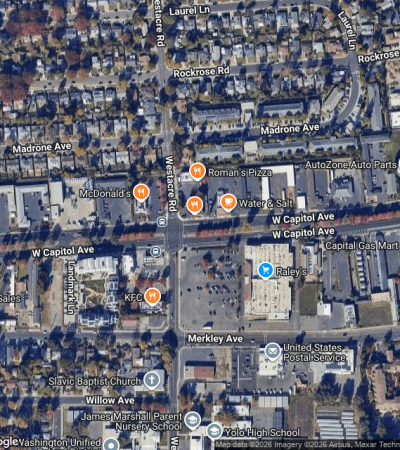
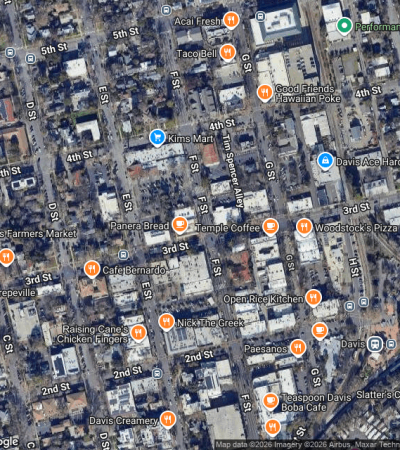
Woodland is the Yolo County seat and the county’s most established city, situated in the center of the Yolo County agricultural plain approximately 15 miles northwest of Sacramento and 10 miles north of Davis. The city has a genuine historic downtown with Victorian commercial architecture, a well-established residential neighborhood framework, and a community identity grounded in the Sacramento Valley agricultural economy that made Woodland one of the dominant commercial centers of the northern Sacramento Valley in the late 19th and early 20th centuries. The city’s combination of historic downtown character, affordable housing relative to Davis and Sacramento, and Interstate 5 and I-505 freeway access has made it one of the Sacramento region’s more actively developing residential markets as younger families and first-time buyers seek affordable alternatives to the more expensive Sacramento metropolitan communities.
Woodland’s population has grown significantly over the past two decades as residential development on the city’s southern and eastern margins has added new suburban housing inventory that attracts Sacramento-area commuters who cannot afford the increasingly expensive Sacramento midtown and suburban markets. This growth has expanded the city’s commercial and service infrastructure while also creating a dual character between the historic older neighborhoods near the downtown and the newer master-planned residential areas that share more in common with the broader Sacramento suburban landscape than with Woodland’s agricultural heritage.
How is the Woodland real estate market?
Woodland’s housing market is the most liquid and most conventionally suburban in Yolo County, with regular transaction activity across multiple price ranges and property types. The housing stock ranges from historic Craftsman and Victorian homes in the Downtown and Gibson Road neighborhoods to mid-century ranch homes in the established residential areas to new construction single-family homes in the master-planned developments on the city’s southern and western margins. Prices are consistently more affordable than comparable Davis inventory, reflecting the school district differential and Davis’s university-driven premium.
The comparison most buyers make in Woodland is between Woodland and Davis for the Yolo County residential purchase, and the trade-off is clear: Davis offers UC Davis proximity, superior school district performance, and the university’s cultural and community infrastructure at prices that are materially higher than comparable Woodland inventory. Woodland offers more house for the money, a more established suburban community character, Interstate 5 and 505 freeway access that in some cases provides better commute positioning than Davis, and a genuine historic downtown that Davis lacks. For buyers who do not need UC Davis proximity and who are not making a school-motivated purchase centered on the Davis Joint Unified District, Woodland’s value proposition relative to Davis is often compelling.
The new residential developments in the Spring Lake and other master-planned areas provide the most consistent new construction inventory in Yolo County, with single-family homes in multiple plan sizes and price ranges that compete directly with Elk Grove, Natomas, and other Sacramento suburban markets. These developments attract Sacramento commuters, first-time buyers, and move-up buyers from older Sacramento neighborhoods who are drawn to the combination of new construction quality, Woodland pricing, and the freeway access that places the Sacramento employment center within a 20-to-30-minute drive.
What are the schools like in Woodland?
Woodland Joint Unified School District serves Woodland students from kindergarten through 12th grade. The district has undergone significant investment in its facilities and programs over the past decade, and Woodland High School and Pioneer High School both offer comprehensive secondary programs with a range of AP courses, athletics, performing arts, and career technical education options. The district’s overall academic performance metrics are in the mid-range for the Sacramento region, which is lower than the Davis Joint Unified District but comparable to many Sacramento suburban districts. For buyers who are comparing Woodland to Davis specifically on school quality grounds, the DJUSD versus WJUSD comparison is real and measurable, and buyers who are prioritizing school academic performance should factor this differential into their community choice.
What is downtown Woodland like?
The Woodland Opera House, a fully restored 19th century performing arts venue, is one of the most significant historic buildings in the Sacramento Valley and anchors the downtown’s heritage identity. The Yolo County Historical Museum and the Court Street commercial district provide a walkable historic downtown environment that is rare in the Sacramento Valley’s predominantly suburban landscape. The downtown has experienced a gradual improvement in its restaurant and retail tenant mix as Woodland’s growing residential population has supported new commercial investment, and the combination of the Opera House’s programming calendar and the improving restaurant scene has made downtown Woodland a genuine destination for Yolo County residents and Sacramento area visitors.
Getting Around from Woodland
Woodland’s transportation connectivity is among the strongest in Yolo County outside of West Sacramento. Interstate 5 provides direct north-south freeway access with Sacramento approximately 20 minutes south. Interstate 505 provides the connection south to Davis and Interstate 80 toward the Bay Area. Yolobus provides regional transit service connecting Woodland to Davis, Sacramento, and other county communities. The Woodland Amtrak platform on the Capitol Corridor line provides passenger rail access for long-distance travel and for commuters who prefer rail to driving for the Sacramento leg of their commute. The combination of freeway access, regional transit, and Amtrak service gives Woodland a transit and highway connectivity profile that is genuinely complete for a Sacramento Valley city of its size.
Is Woodland a good real estate investment?
Woodland’s investment case rests on its position as Yolo County’s most conventionally suburban and most affordable significant residential market. The combination of Yolo County’s excellent school district alternatives, Sacramento commute positioning, and historic downtown character provides a value case that has attracted sustained buyer demand. The ongoing residential development on the city’s margins continues to add supply, which has moderated appreciation relative to more supply-constrained markets like Davis, but the absorption of new inventory by the Sacramento region’s growing commuter base has maintained reasonable market vitality. For first-time buyers, Sacramento commuters, and buyers who are comparing Woodland to comparable Sacramento suburban markets, the Woodland value proposition is compelling and well-supported by the market fundamentals of Yolo County’s most established residential community.

This site was last updated Oct 25 2026 9:49:03 pm.
What is downtown Woodland like?
The Woodland Opera House, built in 1896 and meticulously restored to its Victorian-era specifications, is the anchor of Woodland's historic downtown and one of the most significant cultural venues in the Sacramento Valley. The building's ornate interior, with its original horseshoe balcony, decorated plaster ceiling, and period-appropriate lighting and seating, provides a performance environment that has hosted professional touring productions, community theater, and educational programs for more than a century of Yolo County cultural life. The Opera House's programming calendar includes professional touring productions, local performing arts companies, and community events that draw audiences from across the Sacramento region and provide a cultural anchor for Woodland's downtown identity that comparable-size California cities rarely possess.
The Downtown Woodland shopping district along Main Street and Court Street has benefited from the city's investment in historic facade improvements, street lighting, and public gathering spaces that have made the downtown walking environment more attractive for both retail tenants and weekend visitors. The Yolo County Historical Museum in the former Carnegie Library building provides the historical interpretation of Woodland's agricultural heritage and the county's settlement history. The Woodland Farmers Market, held on Tuesday evenings during the summer months in the downtown, provides a community gathering event that supplements the Opera House's performance calendar as a regular downtown activation.
Is Woodland growing?
The Spring Lake master-planned community in south Woodland has added significant new construction residential inventory to the Yolo County housing market, providing single-family homes in multiple plan sizes that compete directly with comparable Sacramento suburban developments in Elk Grove, Natomas, and West Sacramento. The Spring Lake development's investment in neighborhood parks, trails, and the planned commercial infrastructure of the Spring Lake Town Center reflects the developer's commitment to creating a complete community environment rather than a conventional residential subdivision without civic amenity. For buyers who want new construction quality in a Yolo County location, Spring Lake represents the most complete new-construction option in the county, with the additional advantages of Woodland's historic downtown access and its Interstate 5 and 505 commute positioning.
The Sutter County Line Road corridor in southwest Woodland and the Beamer Park area have attracted additional new residential development that has expanded the city's housing inventory in the price ranges most accessible to first-time buyers and Sacramento-area commuters. The combination of new construction availability, competitive Yolo County pricing, and the freeway access that places Sacramento's employment center within a 20-minute drive has made this area of Woodland one of the more actively transacting residential markets in the county.
What is the job market like in Woodland?
Beyond its role as the Yolo County governmental and service center, Woodland has developed a diverse economic base that includes agricultural services and processing, light manufacturing, healthcare services through Dignity Health's Woodland Memorial Hospital, and the retail and professional services that serve the county's residential and agricultural population. The Woodland Research and Technology Park provides commercial space for agricultural technology, food science, and related businesses that benefit from proximity to UC Davis's research programs. The Cache Creek Casino Resort employment commute corridor to the west provides additional employment connectivity for Woodland residents. The city's economic development investments in the Highway 113 commercial corridor have attracted distribution and logistics operations that provide employment for the Woodland workforce outside the traditional agricultural service sector.
How do you commute from Woodland?
Woodland's value as a Sacramento commuter base is one of the primary reasons that first-time buyers and young families from Sacramento choose Woodland as their initial homeownership market. The Interstate 5 corridor from Woodland to Sacramento flows reliably outside of the peak-hour congestion periods, and the 20-to-25-minute drive to Sacramento's employment centers compares favorably to the commute times from many Sacramento suburban neighborhoods that are nominally within the city limits but located far from the downtown employment core. For households whose Sacramento employment is in the north Sacramento, Natomas, or Cal Expo corridor, the Woodland commute via I-5 is particularly practical and direct.
The Woodland-Davis Yolobus route provides a transit alternative for commuters who prefer not to drive, connecting Woodland to the Davis Amtrak station and providing access to the Capitol Corridor rail service for commuters to the Bay Area or to Sacramento. The total transit commute time from Woodland to Sacramento via bus-to-Amtrak is longer than the drive but eliminates the parking cost and the driving stress for commuters who are comfortable with the transit schedule constraints. The option of using the Davis BART connection (via bus or carpool from Davis to the Richmond or El Cerrito del Norte station) extends the transit geography for Woodland-based Bay Area commuters who are willing to accept a longer but transit-based commute.
Woodland FAQ
How does Woodland compare to Davis for families? The honest comparison is that Davis provides superior school quality through the Davis Joint Unified District, more walkable and cycling-friendly residential character, and the cultural and commercial richness of a university town, all at prices that are materially higher than comparable Woodland inventory. Woodland provides more house per dollar, the historic downtown character that Davis lacks, and Interstate 5 commute access that in some cases is more convenient than Davis's I-80 positioning. For families who are specifically school-motivated, Davis's DJUSD has a measurable academic performance advantage over Woodland's WJUSD. For families who value home size and affordability and who are not making a school-district-optimizing decision, Woodland delivers strong value relative to Davis at a significantly lower cost of entry.
Is Woodland's housing market appreciating? Woodland has experienced consistent appreciation over the past decade, driven by the combination of Sacramento commuter demand, the limited supply of desirable inventory in Yolo County, and the population growth that has accompanied the new residential development on the city's southern and eastern margins. The pace of appreciation has been moderate compared to the Bay Area core markets but has outpaced inflation and provided meaningful equity growth for long-term Woodland homeowners. The ongoing residential development adds supply that moderates appreciation relative to supply-constrained markets, but the absorption of new inventory by the Sacramento regional buyer pool has sustained the market's positive momentum.
What are the healthcare options in Woodland?
Woodland Memorial Hospital, operated by Dignity Health as part of the CommonSpirit Health network, serves as the primary acute care and emergency facility for the Woodland and Yolo County population. The hospital provides emergency medicine, surgical services, maternity care, and a range of specialty care that serves the county's residential population without requiring a trip to the Sacramento metropolitan area for most routine and moderate-complexity healthcare needs. The UC Davis Medical Center in Sacramento, approximately 20 to 25 minutes southeast via Interstate 5 and Interstate 80, is the tertiary care referral destination for complex or specialty cases that exceed Woodland Memorial's service capability, and the UC Davis Health network's affiliation with the region's medical community provides Woodland patients with referral pathways to the full UC Davis subspecialty program.
The Sutter Health and Kaiser Permanente networks also serve Woodland residents through outpatient clinic locations in the Woodland area and through their Sacramento-based hospital facilities for plan members. The availability of multiple health system options in and around Woodland gives residents more healthcare provider choice than most Sacramento Valley cities of comparable size, reflecting Woodland's role as the county seat and its population base that supports a more complete healthcare service environment than purely residential suburban communities of similar size provide.
Woodland Cultural Resources
The Woodland Opera House's role as the city's primary cultural venue is reinforced by the Heidrick Ag History Center, which maintains one of the most extensive collections of historic agricultural equipment and vehicles in North America and provides an interpretive resource for Yolo County's agricultural heritage that draws visitors from across the Sacramento Valley. The center's collection of early steam-powered tractors, early gasoline engines, and the vintage trucks and equipment that represent a century of Sacramento Valley farming mechanization is presented in a museum environment that is accessible to general visitors and that provides specific educational value for agricultural history enthusiasts and school groups. The center's annual Antique Equipment Display & Show is one of the Sacramento Valley's most attended agricultural heritage events and reflects the depth of community support for preserving the mechanical history of the farming economy that built Woodland and Yolo County.
The Yolo County Archives and the Yolo County Library's local history collection provide research resources for residents and historians who are investigating the county's deep agricultural and settlement history. The archives' collection of land grant documents, pioneer family records, and historical photographs represents the documentary heritage of the Sacramento Valley's Euro-American agricultural settlement that began in the 1840s and that is directly ancestral to the farming families and agricultural institutions that continue to shape the county's character today. For new Woodland residents who want to understand the community's deep roots in the Sacramento Valley agricultural tradition, the Opera House, the Heidrick Center, and the county archives collectively provide an unusually complete set of cultural resources for a city of Woodland's size.
TKG's Woodland recommendation is clear for buyers who are making a value-oriented Yolo County purchase with Sacramento commute requirements: Woodland delivers the best combination of historic downtown character, freeway connectivity, commercial infrastructure, and housing value of any Yolo County community, and its position as the county's most established residential market provides the liquidity and market depth that buyers who may need to resell within a shorter horizon will find reassuring relative to the smaller and more illiquid markets elsewhere in the county.
Browse all Yolo County real estate.