Browse all Los Angeles real estate — or explore the full Los Angeles luxury real estate market.

Browse all Los Angeles real estate — or explore the full Los Angeles luxury real estate market.

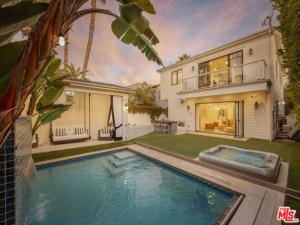
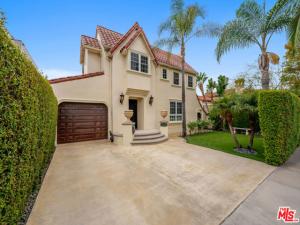
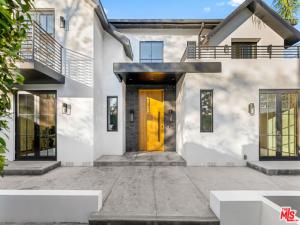
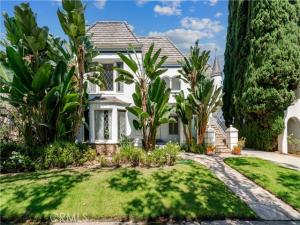
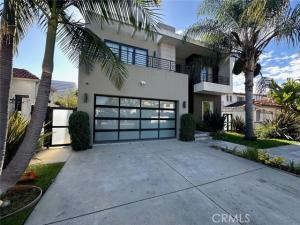
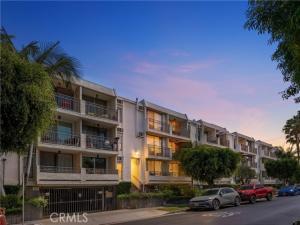
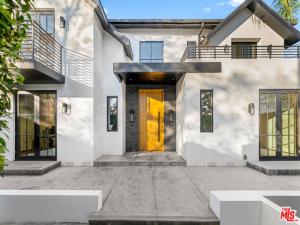
Mid City West Homes for Sale currently number 7 active listings with a median asking price of $2,040,000 (CRMLS, September 2026).
Mid City West homes for sale sit between La Brea Avenue on the east, Doheny Drive and Robertson Boulevard on the west, Santa Monica and Beverly boulevards on the north, and Wilshire Boulevard on the south. It is not one neighborhood. The Mid City West Neighborhood Council covers seven areas: Beverly-Fairfax, Beverly Grove, Burton Way, Carthay Circle, Melrose, Miracle Mile and Park La Brea. Most of it carries the 90036 ZIP code. What you get is location without a Beverly Hills or West Hollywood price, plus museums, Cedars-Sinai and, since May 2026, subway service.
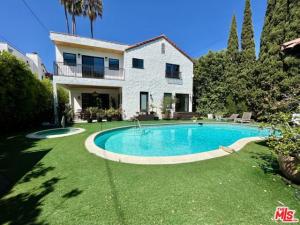
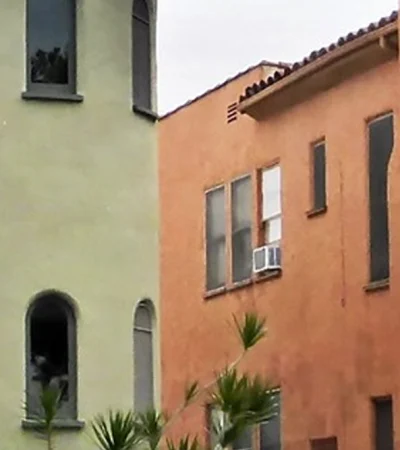
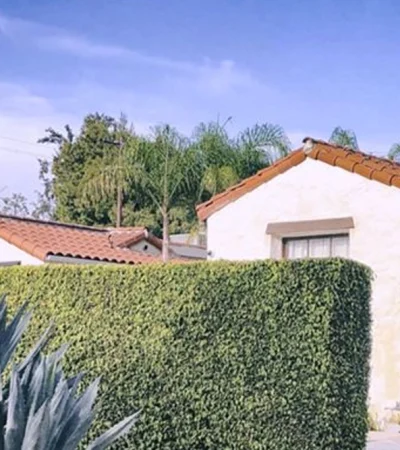
The stock is pre-war and small-lot, built mostly through the 1920s and into the 1940s: Spanish Colonial Revival, Tudor and English Revival, French Normandy, Art Deco apartment courts, and later mid-century infill. What varies is density and rules. Beverly Grove is denser and more rental-oriented; Carthay’s three subdivisions are all Historic Preservation Overlay Zones with design review. Cross Doheny or step north of Santa Monica Boulevard and you are in a different city with different transfer taxes.
Browse the current Mid City West listings below, or contact The Knight Group directly if you want the inventory that has not hit the MLS yet.
The council area is defined by streets, not by a tidy rectangle. The eastern edge is La Brea Avenue and the northern edge follows Santa Monica and Beverly boulevards. The western edge steps in and out along Doheny Drive, North Kings Road, North Sweetzer Avenue, La Cienega Boulevard, Schumacher Drive, Robertson Boulevard, San Vicente Boulevard and North Gardner Street. The southern edge runs along Willoughby Avenue, Romaine Street, West 6th Street and Wilshire Boulevard. The area borders West Hollywood, Beverly Hills, South Robertson and the P.I.C.O. neighborhood council area.
Why the jagged line matters: the western and northern boundaries are city limits, not just street names. Cross Doheny or step north of Santa Monica Boulevard in places and you are in West Hollywood or Beverly Hills, separate jurisdictions with their own planning departments, their own rent stabilization rules and no Measure ULA transfer tax. Two properties two blocks apart can sit in different tax regimes. Confirm jurisdiction with a title company. Do not rely on the mailing address or on a listing description.
Each pocket has a different housing type, a different buyer, and a different set of rules.
For a full cross-section of everything trading inside the council boundaries, start with Mid City West homes for sale.
Melrose. The residential blocks flanking Melrose Avenue between roughly La Cienega and La Brea. The avenue splits into two commercial personalities: the western stretch from La Cienega to Fairfax carries designer flagships including Alexander McQueen, Balenciaga, Marc Jacobs and Vera Wang. East of Fairfax toward Highland is the stretch that became a national reference point for underground and new wave retail in the early 1980s and still runs on vintage and resale. See Melrose Park homes for sale.
Fairfax District. Roughly 1.23 square miles, bounded by Willoughby Avenue or Romaine Street on the north, La Brea Avenue on the east, West Third Street on the south, and Fairfax Avenue on the west, per Mapping L.A. This is the historic center of Jewish Los Angeles after Boyle Heights. By 1945 the neighborhood held twelve synagogues along with religious schools and a Jewish Community Center. Fairfax and Beverly is officially Raoul Wallenberg Square, and the Los Angeles Museum of the Holocaust operates nearby in Pan Pacific Park. The Beverly Fairfax Historic District, designated in 2019, protects 1920s apartment buildings east of Fairfax. See Fairfax District homes for sale.
Carthay. A half square mile bounded by Wilshire Boulevard on the north, Fairfax Avenue on the east, Pico Boulevard on the south and La Cienega Boulevard on the west, per Mapping L.A. It contains three subdivisions: Carthay Circle, Carthay Square and South Carthay. All three are Historic Preservation Overlay Zones. That is the single most important fact a buyer here needs to understand. See Carthay Circle homes for sale.
Beverly Grove. Bounded by the West Hollywood and Beverly Hills city limits on the north and west, Fairfax Avenue on the east, and Wilshire and San Vicente boulevards on the south, per Mapping L.A. Built primarily in the 1920s. This is the retail and medical core: the Beverly Center, opened in 1982, the Third Street corridor between Fairfax and La Cienega, and Cedars-Sinai Medical Center at 8700 Beverly Boulevard. See Beverly Grove homes for sale.
Pre-war, small-lot, and architecturally specific.
The building boom that produced most of this area ran through the 1920s and into the 1940s. Beverly Grove was built primarily in the 1920s, and Carthay’s three subdivisions are period-revival developments from the same era. Expect Spanish Colonial Revival, Tudor and English Revival, French Normandy, streamline and Art Deco apartment courts, and later mid-century infill. The Edinburgh Bungalow Court in Beverly Grove, a Spanish Colonial Revival complex, was designated a city historic monument in 2016.
Density is real. Mapping L.A. recorded 21,417 residents in Beverly Grove across 1.65 square miles at the 2000 census, roughly 12,990 per square mile, and 4,866 in Carthay at about 9,642 per square mile. Those counts are two decades old and directional only, but the gradient has held: Beverly Grove is denser and more rental-oriented, Carthay lower and more owner-occupied.
Park La Brea distorts the local supply picture. Metropolitan Life Insurance Company developed it starting in 1941 on 160 acres, and it holds 4,255 units including eighteen thirteen-story towers added in 1950. It is rental, so it absorbs local housing demand without producing resale inventory.
Prices vary more by pocket and by preservation status than by any single neighborhood label, which is why a district-wide median is close to useless as a planning number.
What is defensible to say: this is a high-income area by Los Angeles County standards. Mapping L.A. data puts Beverly Grove’s median household income at $119,223 in 2024 dollars, which the source describes as among the highest in the county. Carthay’s was recorded at $71,398 in 2008 dollars, old enough to be historical context and nothing more.
The drivers of price are consistent. Single-family homes on protected streets in Carthay Circle and South Carthay trade at a premium to comparable square footage on unprotected blocks, because the design review that constrains an owner also protects the block. Duplexes and small apartment buildings price off rent rolls and rent-control status rather than comparable sales. Condominiums are a thinner segment here than in Downtown or Century City, and the association matters more than the address.
If you want current numbers for a specific street, ask. We run comparable sales by pocket rather than by ZIP, because the ZIP averages several different markets together.
Substantially, and this is where buyers get surprised after closing.
A Historic Preservation Overlay Zone is a Los Angeles zoning tool that protects neighborhoods with architectural and historical significance. Inside one, exterior work including landscaping, alterations, additions and new construction goes through review. Some projects clear at staff level. Others go to the neighborhood’s HPOZ Board, a five-member body administering the district’s own Preservation Plan. As of 2023 the city had 35 HPOZ neighborhoods. Carthay holds three.
Beverly Grove uses a different mechanism aimed at the same problem. The name came into use in 2006 in connection with an anti-mansionization proposal, and in 2008 the city adopted ordinance 182754 creating a Residential Floor Area Supplemental Use District to control the scale of new development. That is a floor-area cap rather than a review board, but the effect is the same: the largest-possible-house strategy does not work here.
State the trade-off plainly. Preservation rules slow a remodel, add consultant cost, and rule out some additions entirely. They also mean the neighbor across the street cannot replace a 1926 Spanish with a lot-line-to-lot-line box. If your plan requires a second story, a flat-roofed contemporary addition or a demolition, verify district status and read the Preservation Plan before you remove your inspection contingency.
Yes, for the portions inside City of Los Angeles limits, which is nearly all of Mid City West.
Measure ULA is a documentary transfer tax on high-value property transfers within the City of Los Angeles, effective April 1, 2023. It applies at 4 percent at or above the lower threshold and 5.5 percent at or above the upper threshold, calculated on the entire sale price rather than only the amount above the line. Thresholds adjust annually. Effective July 1, 2026, per the Los Angeles Office of Finance, they stand at $5,400,000 and $10,900,000. The seller pays.
Two consequences. The tax creates a hard pricing cliff: a property closing just above a threshold can net less than the same property closing just below it, which changes negotiation strategy near those numbers. And the boundary question turns seven-figure at the western edge, because Beverly Hills and West Hollywood are separate cities where ULA does not apply. Confirm jurisdiction with a title company before you set a list price.
It changed materially in 2026, and that is the most consequential recent development for this market.
Section 1 of the Metro D Line extension opened May 8, 2026, running from Wilshire/Western to Wilshire/La Cienega and adding three stations: Wilshire/La Brea, Wilshire/Fairfax and Wilshire/La Cienega. The first two sit on the southern edge of Mid City West. Sections 2 and 3, extending to downtown Beverly Hills, Century City, Westwood/UCLA and the West LA VA campus, are expected to open in 2027.
That puts a one-seat rail ride to Downtown Los Angeles within walking distance of the Miracle Mile and Carthay edges, and in 2027 it will do the same for Century City and Westwood, two of the largest job centers on the Westside. For anyone who has priced a Westside commute in hours rather than miles, that changes the calculation.
By car, the district runs on arterials rather than freeways. Wilshire, Olympic, Third, Beverly, Melrose and Santa Monica cross it, and La Cienega, Fairfax and La Brea carry the north-south load. Freeway access is indirect. That is the trade-off for being central: close to everything, far from an on-ramp.
This is one of the few genuinely walkable parts of Los Angeles that is also primarily residential, and the anchors are unusually good.
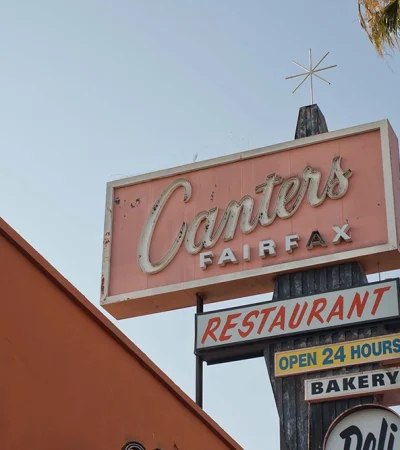
The Original Farmers Market opened in 1934 at Fairfax and Third, on land the Gilmore family had held since 1880. It became Los Angeles Historic-Cultural Monument number 543 on July 24, 1991, and now runs more than 100 vendors seven days a week in its 1930s open-air layout. The Grove opened adjacent to it in 2002, connected by an electric tram. Canter’s Deli on Fairfax remains a fixture.
CBS Television City, built in 1952 on the former site of Gilmore Stadium, has hosted The Price is Right continuously since 1972. Museum Row along Wilshire holds LACMA, the La Brea Tar Pits and Page Museum, the Petersen Automotive Museum, and the Academy Museum of Motion Pictures, which opened September 30, 2021 at 6067 Wilshire in the 1939 May Company building, redesigned by Renzo Piano with Kulapat Yantrasast.
Cedars-Sinai at 8700 Beverly Boulevard is a Level I trauma center with 919 beds and more than 16,000 employees across its network as of 2025, and it ranked first in California and in Los Angeles in the 2025 U.S. News and World Report hospital rankings.
The area is served by the Los Angeles Unified School District. Fairfax High School, founded in 1924, is the comprehensive high school for much of the district, including Beverly Grove. Public elementary and magnet options nearby include Laurel Early Education Center, Rosewood STEM Magnet, and Laurel Cinematic Arts and Creative Technologies Magnet.
In Carthay, Carthay Center Elementary at 6351 West Olympic Boulevard is a K-6 school that became the Carthay School of Environmental Studies Magnet in fall 2014. The Fairfax District also holds a network of private Jewish day schools and yeshivas, a legacy of the community that settled there in the 1930s and 1940s.
Attendance boundaries change and magnet admission is not geographic. Verify the current assignment for a specific address with LAUSD before you make school access part of your offer rationale.
Four, worth naming before you tour.
Older housing. A 1926 building has 1926 systems unless someone replaced them. Budget for electrical, plumbing, sewer lateral and seismic work, and get a foundation inspection on anything pre-war. That is the cost of the architecture, not a defect of the area.
Design review. Inside the Carthay HPOZs and under Beverly Grove’s floor-area district, renovation ambitions are constrained. Confirm what is permitted before you buy.
Density and traffic. The commercial anchors that make this area walkable also generate traffic and parking pressure. Blocks around The Grove, the Beverly Center and Melrose Avenue absorb visitor volume that quieter neighborhoods do not. Tour on a Saturday afternoon, not only a Tuesday morning.
Rental concentration. Mapping L.A. recorded 72 percent renters in Beverly Grove. That is not a negative in itself and reflects the apartment-court stock, but it changes block character and it matters if you are underwriting an investment purchase.
It can be, and the answer turns almost entirely on one variable: rent stabilization status.
The Los Angeles Rent Stabilization Ordinance applies to most residential rental units in the city built before October 1978. Given how much of Mid City West went up between the 1920s and the 1940s, a large share of the multifamily stock falls under it. RSO coverage caps annual increases at the percentage the city sets each year and imposes just-cause eviction requirements. A building with long-tenured residents can carry rents well below market with no near-term path to reset them.
That does not make RSO buildings bad assets. It makes them different assets, valued off the actual rent roll and a realistic turnover assumption rather than a market-rent proforma. Confirm a parcel’s RSO status and registered rent history with the Los Angeles Housing Department before you commit, and read the estoppels.
Yes. It is in Central Los Angeles, governed by the City of Los Angeles and served by the Mid City West Neighborhood Council. It borders but does not include West Hollywood and Beverly Hills, which are separate cities. That distinction determines which transfer taxes, rent rules and planning processes apply.
Seven: Beverly-Fairfax, Beverly Grove, Burton Way, Carthay Circle, Melrose, Miracle Mile and Park La Brea. The most actively traded for-sale segments are Beverly Grove, the Fairfax District, Carthay and the blocks around Melrose.
Yes for parcels inside City of Los Angeles limits, which covers nearly all of the district. Measure ULA took effect April 1, 2023 and applies at 4 percent and 5.5 percent on the full sale price above thresholds of $5,400,000 and $10,900,000 effective July 1, 2026 per the Los Angeles Office of Finance. Sellers pay. Adjacent parcels inside Beverly Hills or West Hollywood are not subject to it.
Yes, within the rules of the applicable Historic Preservation Overlay Zone. Carthay contains three: Carthay Circle, South Carthay and Carthay Square. Exterior alterations, additions, new construction and landscaping are reviewed, some at staff level and some by the district’s five-member HPOZ Board. Read that district’s Preservation Plan before you buy.
Yes, as of May 8, 2026. Section 1 of the Metro D Line extension opened that day with stations at Wilshire/La Brea, Wilshire/Fairfax and Wilshire/La Cienega. The first two sit on the southern edge of the district. Sections 2 and 3 to Beverly Hills, Century City and Westwood are expected in 2027.
Yes, more than most of Los Angeles. The Original Farmers Market, The Grove, the Third Street corridor, Melrose Avenue, the Beverly Center and Museum Row all sit inside or immediately adjacent to the district. Freeway access, by contrast, is indirect.
By pocket and by parcel, not by ZIP code.
Mid City West rewards specificity. A South Carthay block inside an HPOZ and an unprotected block three streets away carry different renovation budgets, different appraisal sets and different resale audiences. A parcel inside City of Los Angeles limits and one across Doheny differ by a transfer tax that can run into seven figures. A pre-1978 fourplex and a post-1978 one are different investment theses. None of that shows up in an aggregate market report.
For buyers, we run comparable sales at the block level, confirm district and jurisdiction status in writing before contingency removal, and pull permit history where a remodel is part of the plan. For sellers, we model net proceeds against current Measure ULA thresholds before setting a list price. Pricing through a threshold without that math is the most expensive avoidable mistake here.
Review the current Mid City West listings below. For the comparable set on a specific street, the HPOZ status for a specific address, or an off-market conversation, contact The Knight Group.
Lucky for you we’re looking out.
Subscribe to this Custom Search to be alerted when new properties hit the market in the area.
Choose the frequency that works for you.