
Living in Malibu, California: The Real Guide for Buyers

Living in Malibu, California means living in the only place in the continental United States where the Santa Monica Mountains meet the Pacific Ocean at your front door. The landscape is genuinely extraordinary — and it is the dominant force that shapes everything about the lifestyle, the property values, the infrastructure limitations, and the risks that buyers accept when they choose this address.
Malibu is the most honestly transactional neighborhood in LA. Every buyer knows what they’re paying for: the beach, the mountains, the PCH, and the privacy that 27 miles of linear coastline and a canyon-based road grid provides. What the listing descriptions frequently omit is what those attributes cost in terms of daily livability, fire risk, access limitations, and an insurance market that has materially changed since 2018.
This is the guide that covers both.
Why People Choose Malibu
The Malibu proposition is direct: you want to live at the beach, with the mountains behind you, in a setting that has no equivalent in Southern California. That’s a correct and legitimate preference, and for buyers who hold it strongly, no other address delivers the same thing.
*The beach.* Malibu’s beach access — both public and private — spans the full 27-mile coastal zone from the Los Angeles County line to the Ventura County border. Carbon Beach (known informally as “Billionaires’ Beach”) is the densest concentration of private beach-fronting residences in California. The Malibu Colony is the most historic private beach community. Point Dume is the dramatic headland that punctuates the coastline with surfing, swimming, and whale watching access. El Matador, El Pescador, and Nicholas Canyon are the public beaches with geological drama that photographers and naturalists specifically seek out.
*The mountains.* The Santa Monica Mountains National Recreation Area — a national park that runs through the center of Malibu’s geography — provides direct residential access to hiking, mountain biking, and equestrian trails that most LA residents reach only by driving 45 minutes. Residents of the Malibu canyon neighborhoods (Malibu Canyon Road, Decker Canyon, Kanan Dume Road) live adjacent to trail systems that would be three-hour round trips from the Westside.
*The privacy.* Malibu’s geography is its own privacy infrastructure. The canyon-based road system makes the neighborhood largely inaccessible to casual throughput; residents who choose canyon addresses have a physical separation from the city that gated communities can only approximate.
Malibu’s Sub-Markets: What the Geography Means for Buyers
Malibu is not a single residential experience — the address covers dramatically different environments with different price points, different lifestyle propositions, and different risk profiles. The Malibu real estate listings reflect these distinctions across beach frontage, canyon, and inland properties.
*Beach frontage (Carbon Beach, Broad Beach, Malibu Colony).* The highest price per linear foot of any residential real estate in California. Properties here trade from $10M for smaller beach cottages to $75M+ for significant estates with substantial beach frontage. The lifestyle: step off the patio into the sand. The risks: sea-level positioning means storm surge and wave action are real concerns; ground-floor flooding events occur; wind exposure is constant. The views are incomparable.
*Point Dume.* The headland neighborhood above the southern end of Zuma Beach. A mix of suburban-scaled homes on the flat plateau and more dramatic properties on the cliffs above the ocean. Prices run $3M-$20M+. The neighborhood has a distinct community character — more residential than the beach colony communities, with a genuine year-round resident base. Point Dume Elementary School is within the neighborhood; Malibu High School is the public secondary.
*Malibu Road and Latigo Shore.* Beach-adjacent but not directly on the sand — these communities have beach access via rights-of-way and in some cases direct sand access, at lower prices than Carbon Beach or the Colony. $2M-$10M range for beach-adjacent properties.
*Malibu Canyons (Malibu Canyon, Latigo, Kanan Dume, Encinal, Trancas, Ramirez).* The canyon neighborhoods are a completely different Malibu experience. Properties here are typically on land, with no beach access, at lower price points ($1M-$5M). The lifestyle is rural, equestrian in parts, and substantially more isolated than the beach properties. Fire risk is higher in the canyons than on the beach — the canyon topography and vegetation create conditions that have historically produced the most destructive fire events.
*Las Virgenes Road area and surrounding inland.* The most affordable Malibu adjacent real estate. The Malibu school district extends into this zone, and some buyers settle here for school district access at lower price points than canyon or beach properties.
What Daily Life Actually Looks Like in Malibu
The Malibu daily lifestyle requires accepting a specific set of constraints that the beach and mountain access more than compensate for — if you’re the right buyer.
*Pacific Coast Highway.* PCH is the primary (and in much of Malibu, only) north-south road connecting the community to the rest of the city. It is a two-lane undivided highway that becomes a parking lot on any summer weekend afternoon. A drive from Malibu’s eastern edge to Santa Monica that takes 15 minutes at 7 AM can take 45-60 minutes at 3 PM on a Saturday in July. Residents who commute to Santa Monica, Century City, or Beverly Hills on weekdays will typically encounter manageable PCH traffic during morning and evening rush hours — but they have one road, and if there’s a PCH closure (which occurs regularly due to accidents, landslides, fire evacuations, and storm events), the alternative route over the Santa Monica Mountains adds 45 minutes to any trip.
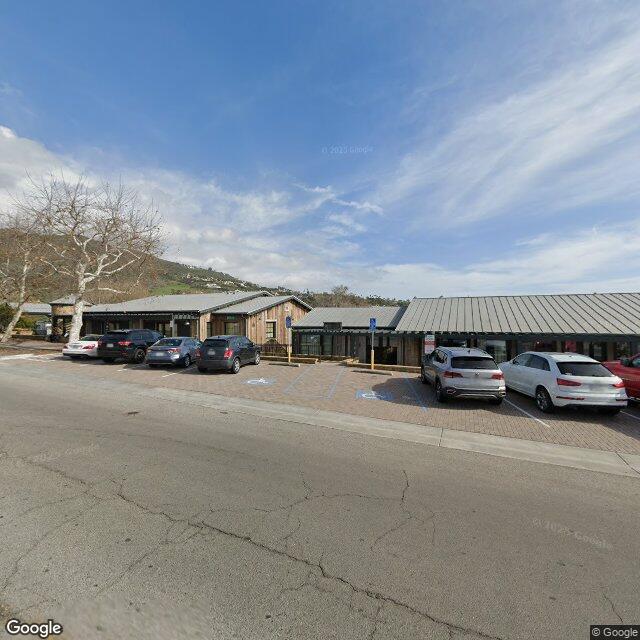
*Commercial infrastructure.* Malibu’s commercial footprint is minimal relative to what the address and price point might suggest. There is a Ralphs, a CVS, the Cross Creek shopping center, a handful of local restaurants, and a Nobu. For everything else — the grocery selection, the medical facilities, the restaurants, the shopping — residents drive to Santa Monica or Thousand Oaks depending on their location within Malibu. Buyers who want to walk to the farmer’s market or have spontaneous access to a wide range of amenities will find Malibu limiting.
*Schools.* Malibu is served by the Santa Monica-Malibu Unified School District. Malibu High School and Webster Elementary are the main public school options. The public schools are well-regarded; the overall school options are more limited than in Westside neighborhoods with higher population density.
*Community character.* Malibu has a genuine resident community — year-round families, surfers, artists, entertainment industry principals who live here because they’ve chosen the lifestyle over convenience. The community character is relatively informal by LA luxury standards; the social culture in Malibu is more about the activities (surfing, hiking, yoga, equestrian) than the address. For buyers who value that, it’s a significant attractor. For buyers looking for the urban social culture of Beverly Hills or Brentwood, Malibu is not that.
Fire, Insurance, and What Buyers Must Know in 2025
The Palisades Fire of January 2025 changed the conversation about wildfire risk in Malibu, as the Woolsey Fire of 2018 had before it. Both fires moved through portions of Malibu’s geography and destroyed a significant number of structures. The insurance market’s response to repeated wildfire losses in coastal Southern California has been material.
*Insurance availability.* Major homeowners insurance carriers — State Farm, Allstate, Farmers, and others — have non-renewed, reduced coverage, or refused to write new policies in high-risk fire zones in California, including significant portions of Malibu. California’s FAIR Plan (the insurer of last resort) is available but carries higher premiums and coverage limitations relative to private market policies. Buyers considering Malibu properties must verify insurance availability for the specific parcel before submitting an offer — insurance is not guaranteed to be available or affordable in all Malibu locations.
*Hillside and canyon fire risk vs. beach fire risk.* The fire risk is not uniform across Malibu’s geography. Beachfront properties have lower historical fire loss than canyon and hillside properties, where fire can move rapidly through vegetation. Canyon buyers should specifically model fire risk as part of their due diligence, including verifying whether the property is in a Very High Fire Hazard Severity Zone (VHFHSZ) and what that designation means for insurance, maintenance requirements, and evacuation access.
*Evacuation access.* PCH is the primary evacuation route from Malibu during a fire event. In the Woolsey Fire, PCH became gridlocked during the evacuation, leaving residents with no viable exit route for hours. The practical implication for buyers: understand the specific evacuation access for any property you’re considering and the realistic conditions during an actual event.
Is Malibu the Right Move?
Malibu is the right answer for a specific, clearly defined buyer: someone for whom the beach and mountain lifestyle is the primary purchase driver, who has enough financial resilience to absorb the insurance market’s current complexity, who doesn’t need daily urban infrastructure convenience, and who has genuinely researched the fire and access risk and has made peace with it.
For that buyer, there is no substitute. The lifestyle Malibu delivers — morning surf, mountain hiking, beach dinners, the sound of the ocean — is not available at the Westside neighborhoods where the convenience is higher. The trade is explicit, honest, and for the right buyer, completely worth it.
For buyers who want a beautiful Southern California lifestyle but need more access, more commercial infrastructure, or more insurance certainty, the Westside neighborhoods deliver more of those things at comparable or lower price points. Those buyers — and anyone who wants to test the market before committing — can find current Los Angeles rental listings across the Westside and coastal markets.
TKG’s approach to Malibu transactions includes specific due diligence on insurance availability, fire risk, and PCH access before any offer is submitted. If you’re seriously considering Malibu, those variables need to be part of the conversation from the first day of your search.
Browse all available Malibu homes for sale, or explore luxury real estate across Los Angeles.
Ready to buy in Malibu? TKG’s buyer advisory covers the full process.
Already own in Malibu and considering a sale? TKG’s seller strategy guide covers pricing, positioning, and how to access the off-market channel.