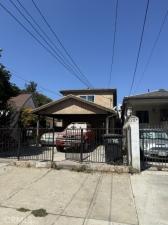
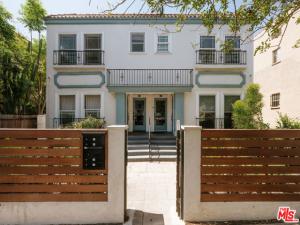
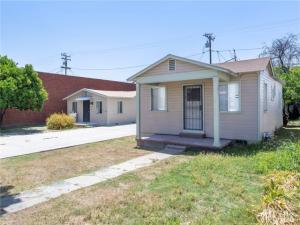
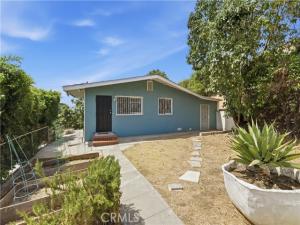
Browse all Los Angeles real estate — or explore the full Los Angeles luxury real estate market.

East Los Angeles, in the sense used here, is the band of historic communities that sit directly east of Downtown Los Angeles inside the City of Los Angeles. It covers the hillside and river-adjacent neighborhoods that grew up as the city’s first suburbs: El Sereno, Boyle Heights, Monterey Hills, and Lincoln Heights. These are some of the oldest inhabited sections of the city, and the housing reflects that, from early-1900s bungalows to 1971-era condominium complexes.
The value proposition is straightforward. This is central real estate at prices below the Westside and much of the Eastside proper, on land that has been continuously settled longer than almost anywhere else in Los Angeles. Buyers who have been priced out of Highland Park, Silver Lake, or Echo Park keep moving east because the commute stays short and the character stays intact. That demand has pushed prices up, but the entry point is still meaningfully lower than the neighborhoods immediately to the west.
Browse the active listings below, or contact The Knight Group to talk through which of these communities fits your budget, your commute, and the kind of house you actually want to live in.
These neighborhoods sit between Downtown Los Angeles and the unincorporated East Los Angeles line, roughly bounded by the Los Angeles River on the west and the hills that climb toward South Pasadena and Alhambra on the north and east. All four communities profiled here fall inside City of Los Angeles limits, which matters for taxes, rent rules, and permitting in ways covered further down this page.
The geography is a mix. Lincoln Heights and Boyle Heights hug the river and the industrial flats. El Sereno climbs into the Ascot Hills. Monterey Hills is a leveled hillside project a few miles from both Downtown and Pasadena. That range means you can find a flat lot with a 1920s house or a hillside condo with a view within a few minutes’ drive of each other.
Four neighborhoods anchor this hub, and each has a distinct market character worth understanding before you tour anything.
El Sereno is one of the oldest sections of Los Angeles, sitting on land that was the Tongva village of Otsungna before the Southern Pacific Railroad reached it in 1876. The housing stock leans older and well established, a mix of early-1900s bungalows and Spanish-style homes, midcentury ranch houses, and newer infill. Over the twelve months tracked by NeighborhoodScout, the median sale price was around $850,000, and the neighborhood has been drawing buyers priced out of other parts of the Eastside. Woodrow Wilson High School sits atop the Ascot Hills here.
Boyle Heights is the most storied of the four. The Spanish called the bluff El Paredón Blanco and claimed it as the eastern edge of the Pueblo de Los Ángeles founded in 1781. The neighborhood took its current name from Andrew Boyle, an Irish immigrant who bought land after the Mexican-American War and planted grapes in the 1860s. Today Mariachi Plaza, centered on the historic Boyle Hotel, is where mariachi musicians have gathered for hire since the 1950s. The neighborhood is a stronghold of Los Angeles Mexican-American culture and history, and it carries real development pressure: a rent strike at a Second Street building housing mariachi musicians ran from April 2017 to February 2018 before ending in a negotiated deal.
Monterey Hills is the Eastside’s condo colony, and it exists because of a specific act of city planning. The Monterey Hills Redevelopment Project, adopted by City Council on July 29, 1971, leveled hillsides between Montecito Heights and Hermon to build housing across income levels. Twenty-one condominium and rental complexes totaling 1,781 units went up in the project area. The neighborhood sits about four miles east-northeast of Downtown and about three miles from Pasadena off the 110 Freeway. Its history is not spotless: land subsidence in some developments led to what was, in 1989-1990, the longest civil jury trial in Los Angeles County history. Those structural issues have since been remediated, with maintenance funded in part from a Global Settlement trust. If you buy here, read the HOA disclosures closely, because that history is why they matter.
Lincoln Heights is billed as the oldest neighborhood in Los Angeles. It was subdivided in 1873 as the city’s first suburb and actually carried the name “East Los Angeles” from 1873 to 1917, when residents voted to rename it after Abraham Lincoln High School. The wealthy elite built Victorian mansions on the bluffs to escape Downtown congestion, and much of the housing stock still dates to 1939 or earlier. NeighborhoodScout puts the median real estate price around $605,521, the lowest of the four and a reason Lincoln Heights keeps drawing buyers who want a historic house on a central lot.
Prices span a wide range across these four neighborhoods, and that spread is the point. On the lower end, Lincoln Heights carries a median real estate price near $605,521 per NeighborhoodScout. El Sereno runs higher, with a median sale price around $850,000 over the trailing twelve months, and LAist has reported an El Sereno home selling for close to $1 million as the neighborhood’s profile has climbed. Monterey Hills, being predominantly condominiums, tends to offer the lowest entry price per unit but adds a homeowners association due on top.
The direction of travel has been upward. These are neighborhoods that buyers reach for after being priced out of Highland Park, Eagle Rock, and the neighborhoods closer to the reservoir. That inflow has lifted values, but the absolute numbers still sit below the Westside and below much of the trendier Eastside. If your budget tops out where a Silver Lake teardown begins, this is where that same money buys a standing house. Contact The Knight Group for current comparable sales in the specific neighborhood you are considering, because these medians move and a single street can diverge sharply from its ZIP code.
Old, mostly, and that is a feature and a caution at once. El Sereno and Lincoln Heights are dominated by houses built in the first half of the twentieth century: Craftsman and Spanish bungalows, a scattering of Victorians on the Lincoln Heights bluffs, and midcentury ranch homes on the later-developed streets. Boyle Heights carries a similar vintage plus its multifamily and mixed-use fabric near Mariachi Plaza.
Monterey Hills is the outlier. It is almost entirely condominiums and townhomes built after the 1971 redevelopment plan, which means newer construction, HOA governance, and shared-structure considerations rather than single-family lots. Across all four neighborhoods, an older housing stock means you should budget for inspection findings: foundations, galvanized plumbing, knob-and-tube wiring, and unpermitted additions are all common in pre-1940 Los Angeles housing. None of that is a reason to walk away. It is a reason to hire a thorough inspector and price the work before you write an offer.
Access to Downtown is the through-line for this whole area. Interstate 5 parallels the Los Angeles River through Lincoln Heights before bending east into Boyle Heights. Interstate 10 runs between Boyle Heights and Lincoln Heights. U.S. Route 101 and State Route 60 both have exits in Boyle Heights before the East Los Angeles Interchange, one of the busiest freeway junctions in the country. That density of freeway access is why these were the city’s first commuter suburbs, and it still holds.
Rail is real here too. The Metro E Line, the former Gold Line, runs through Boyle Heights partly in tunnel, with underground stations at Mariachi Plaza and Soto that opened in 2009 as part of the Eastside Extension. In Lincoln Heights, the A Line’s Lincoln/Cypress station sits above Avenue 26 near the line’s crossing of Interstate 5. For a buyer who wants to reach Downtown, Union Station, or Pasadena without a car every day, that rail access is a genuine differentiator from many other parts of Los Angeles.
All four communities are served by the Los Angeles Unified School District, and several of the campuses are neighborhood landmarks in their own right. Theodore Roosevelt High School in Boyle Heights opened in 1923 and has anchored the neighborhood for more than a century; it now hosts magnet and pilot academies focused on math, science, and technology. Woodrow Wilson High School sits atop the Ascot Hills in El Sereno. Abraham Lincoln High School gave Lincoln Heights its name in 1917, and the Lincoln Heights and Chinatown area also includes Francisco Bravo Medical Magnet High School.
These schools carry historical weight beyond test scores. In March 1968, Roosevelt, Wilson, and Lincoln, along with Belmont and Garfield, were at the center of the East Los Angeles student walkouts, a defining moment in the Chicano civil rights movement. If schools drive your search, request current enrollment boundaries and program details directly, because magnet and pilot options change year to year and attendance zones do not always follow neighborhood lines.
It can, and you need to know the threshold. Because all four neighborhoods fall inside City of Los Angeles limits, Measure ULA applies to property sales here. The measure, approved by city voters in November 2022 and effective April 2023, imposes a 4% transfer tax on property sales above roughly $5 million and 5.5% on sales above roughly $10 million. For transactions closing after June 30, 2026, those thresholds adjust to $5,400,000 and $10,900,000.
For most single-family buyers in this area, those numbers sit well above any price you are likely to pay, so ULA will not touch your purchase. Where it matters is on larger multifamily and commercial deals, where a sale can clear the threshold and the tax lands on the seller as a real cost. If you are selling an apartment building or an assembled lot here, model the ULA tax before you set a price, and talk to a tax professional. The Knight Group can flag when a transaction is near the line so it does not surprise you at closing.
This is one of the most common oversights among out-of-area investors. These neighborhoods carry a large share of older multifamily and small-income properties, and buildings inside the City of Los Angeles with two or more units first occupied before October 1978 generally fall under the city’s Rent Stabilization Ordinance. That caps annual rent increases and limits the grounds for eviction. Boyle Heights, with its dense pre-war fabric, is exactly the kind of place where a duplex or fourplex is likely to be rent-stabilized.
That does not make these bad investments. It means the pro forma has to be honest. Underwrite to the actual regulated rents and allowable increases, not to market rents you cannot legally reach on existing tenants. The 2017-2018 mariachi rent strike in Boyle Heights is a reminder that tenant organizing here is active and effective. Buy with clear eyes about the rules, and the older buildings in this area can still perform.
This is some of the deepest history in Los Angeles, and it is written into the streets. The land was Tongva territory for centuries. El Sereno sits on what was the village of Otsungna, and the Boyle Heights bluff was part of the original Pueblo de Los Ángeles claimed in 1781. Lincoln Heights was subdivided in 1873 as the city’s first suburb, built for people who worked the industrial corridor along the river and wanted to live upstream of it.
The twentieth century made these neighborhoods the port of entry for wave after wave of Angelenos. Boyle Heights was famously multiethnic before it became a center of Mexican-American life. The railroads and freeways that made the area accessible also cut through it, and the 1968 walkouts put its schools at the heart of a national civil rights moment. When you buy here, you are buying into a place with a long and specific memory, not a blank subdivision. For many buyers, that continuity is precisely the appeal.
Every neighborhood has them, and naming them upfront saves you money later. The housing stock is old, so inspection and rehabilitation costs are a real line item, especially on pre-1940 houses in El Sereno and Lincoln Heights. Monterey Hills carries a documented history of land subsidence, resolved but relevant, which makes HOA reserve studies and disclosures essential reading rather than fine print. Boyle Heights sits under genuine development and displacement pressure, which shapes both community sentiment and the rules around multifamily property.
On the other side of the ledger: central location, short commutes, real rail access, prices below the Westside and much of the near Eastside, and neighborhoods with more history and identity than most of Los Angeles. The trade-off, in one sentence, is that you exchange move-in polish and predictability for location, character, and price. For the right buyer, that is a good trade. For the wrong one, it is a source of surprises. The job of a good agent is to make sure you know which you are before you commit.
El Sereno, Boyle Heights, Monterey Hills, and Lincoln Heights are all inside City of Los Angeles limits. Unincorporated East Los Angeles is a separate community to the east governed by the county. The distinction matters for transfer taxes, rent rules, and permitting, all of which follow city rules for the four neighborhoods on this page.
Of the four, Lincoln Heights carries the lowest median, near $605,521 per NeighborhoodScout. Monterey Hills condominiums can have a lower per-unit price but add HOA dues. El Sereno runs higher, around an $850,000 median sale price over the trailing twelve months. Ask The Knight Group for current comparable sales, because these figures move.
The severe structural subsidence that led to major litigation in 1989-1990 has been remediated, with ongoing maintenance funded in part from a Global Settlement trust. That said, it is a condominium market, so read the HOA reserve study, budget, and disclosures carefully before you buy any specific unit.
Short, by Los Angeles standards. Interstates 5 and 10, U.S. 101, and State Route 60 all serve the area, and the Metro E Line and A Line have stations in Boyle Heights and Lincoln Heights. Many residents reach Downtown, Union Station, or Pasadena without driving daily.
Almost certainly not on a typical single-family home, because the tax applies only to sales above roughly $5.4 million as of mid-2026. It becomes relevant on larger multifamily or commercial transactions, where it falls on the seller. Model it before pricing any deal near the threshold.
Often, yes. Buildings inside the City of Los Angeles with two or more units first occupied before October 1978 generally fall under the Rent Stabilization Ordinance. Underwrite any income property to its regulated rents and allowable increases, not to market rents.
Mostly early-twentieth-century Craftsman and Spanish bungalows, a scattering of Victorians on the Lincoln Heights bluffs, and midcentury ranch homes on later streets. Expect older-home inspection findings and budget for them.
Values have been rising as buyers priced out of neighborhoods to the west move east, but the entry point remains below the Westside and much of the near Eastside. Whether it is right for you depends on your budget, your commute, and your tolerance for renovation. That is a conversation worth having before you tour.
We treat East Los Angeles as four distinct markets, not one label. The right advice for a Monterey Hills condominium is different from the right advice for a rent-stabilized Boyle Heights fourplex or a pre-1940 El Sereno bungalow, and we handle each on its own terms. That means pulling current comparable sales for the specific neighborhood and property type, reading HOA and disclosure packages closely where they exist, and flagging tax and rent-control exposure before it becomes a problem at closing rather than after.
Start by browsing the active listings below across all four communities. When you find something worth a closer look, or when you want to know what your budget realistically buys in each neighborhood, contact The Knight Group. We will tell you the trade-offs before you make an offer, not after.
The Knight Group is here to help you with all your realty needs. To get started, fill out the form below and one of our experienced agents will contact you as quickly as possible.
Copyright © 2024 The Knight Group.
All rights reserved. License: 02133297
Lucky for you we’re looking out.
Subscribe to this Custom Search to be alerted when new properties hit the market in the area.
Choose the frequency that works for you.