Condos for Sale in Hollywood
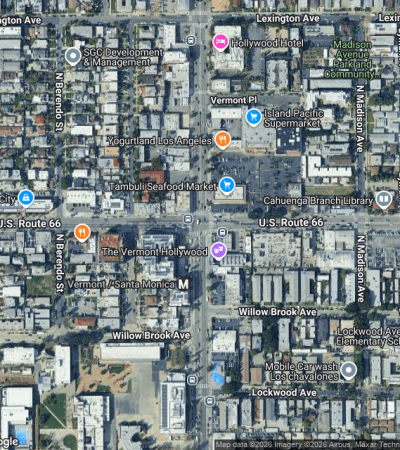
Condos for sale in Hollywood are attached, HOA-governed residences inside the Hollywood district of Los Angeles, concentrated between the Sunset Boulevard studio corridor and the Franklin Avenue hillside edge. Buyers come here for access. Sunset Bronson Studios and Sunset Las Palmas Studios sit inside the district, and the Metro B Line runs beneath Hollywood Boulevard, so you can own a home, walk to a subway station, and stay inside the entertainment industry’s working geography.
The stock splits into three products that trade on different logic. Adaptive-reuse lofts occupy 1920s buildings like the 1927 Broadway Hollywood and the 1929 Equitable Building at 6253 Hollywood Boulevard. Full-service towers arrived with the transit build-out, including the 143-unit Residences at W Hollywood and Hollywood Proper Residences at Columbia Square. Older mid-rises such as the 1966 Hollywood Versailles Tower hold the entry pricing. Dues, maintenance profile, and city jurisdiction vary sharply between them.
The listings below are live for this market. If you want a read on a specific building’s reserves, litigation history, or resale record before you tour it, contact The Knight Group and we will pull it first.
What kinds of condo buildings exist in Hollywood?
Three categories, and they trade on different logic.
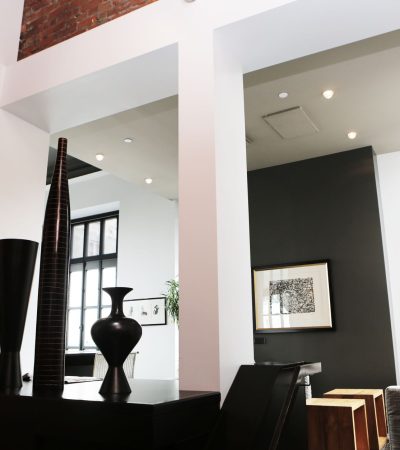
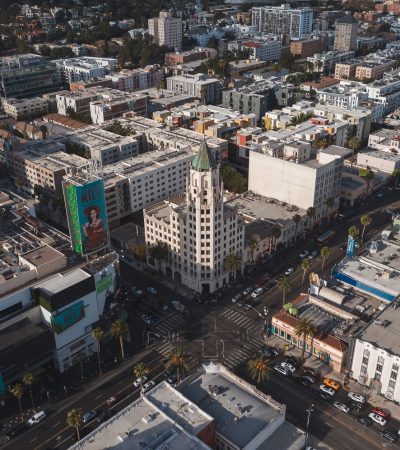
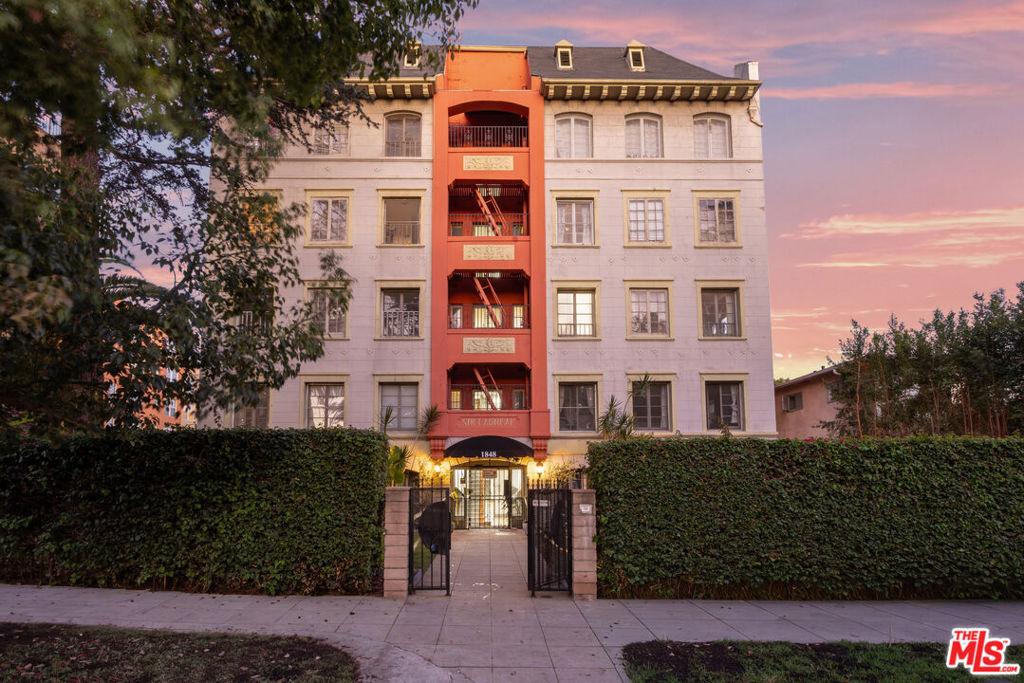
Historic conversions. Hollywood’s 1920s commercial boom left behind a stock of steel-frame office towers that later became residential. The Broadway Hollywood at Hollywood and Vine was built in 1927 as the B. H. Dyas Building, was designated a Los Angeles Historic-Cultural Monument on September 29, 1999, and was converted to residential use in 2007 with two stories added on top. The Equitable Building at 6253 Hollywood Boulevard, originally a 1929 bank and office building, now trades as loft condominiums. These units deliver ceiling height, window scale, and architectural detail that no new construction reproduces at the same price. They also carry the maintenance profile of a building that is close to a century old.
The new full-service towers arrived with the transit build-out. The Residences at W Hollywood at 6250 Hollywood Boulevard completed in 2010 as a 15-story building with 143 condominium units, built to LEED Silver, sitting directly on top of the Hollywood/Vine Metro station. Hollywood Proper Residences at Columbia Square completed in 2016 at 23 stories with roughly 200 residences on the former CBS Columbia Square site, developed by Kilroy Realty with interiors by Kelly Wearstler. These buildings sell on service: valet, concierge, rooftop pool, fitness. They also carry the HOA dues that fund that service.
The older mid-rises and low-rises are where the entry pricing lives. Hollywood Versailles Tower at 7135 Hollywood Boulevard was completed in 1966 and contains 117 units across 13 stories. Hollywood Regis at 7320 Hawthorn Avenue was built in 1985 as a 4-story building with 100 units, with living areas reported between roughly 549 and 1,140 square feet. Buildings in this tier typically offer a pool, secured parking, and not much else, which keeps monthly carrying costs lower.
Which buildings and pockets make up the Hollywood condo market?
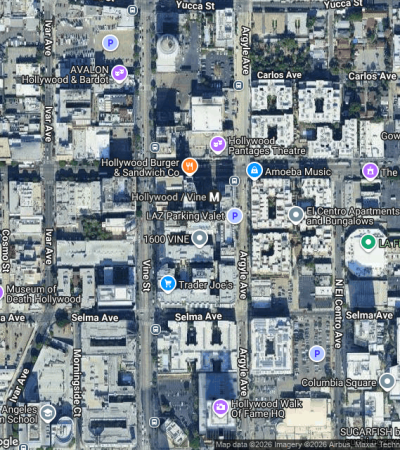
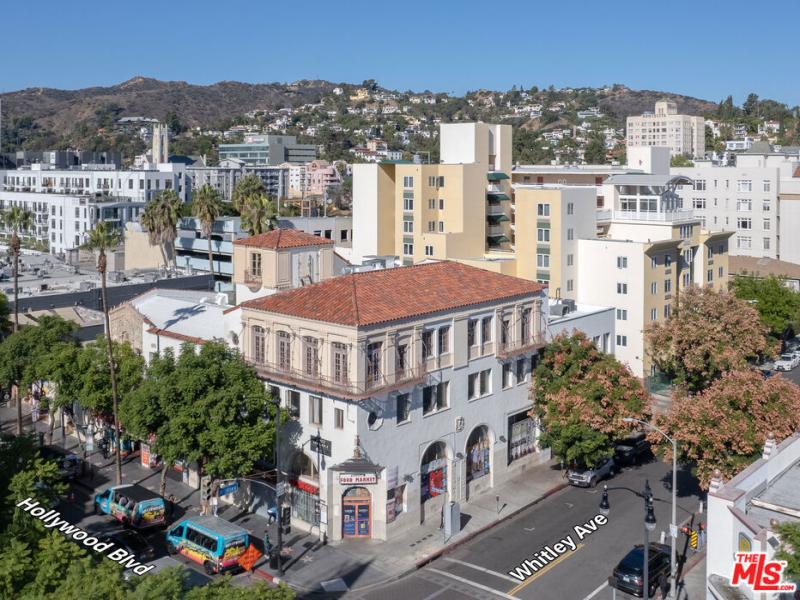
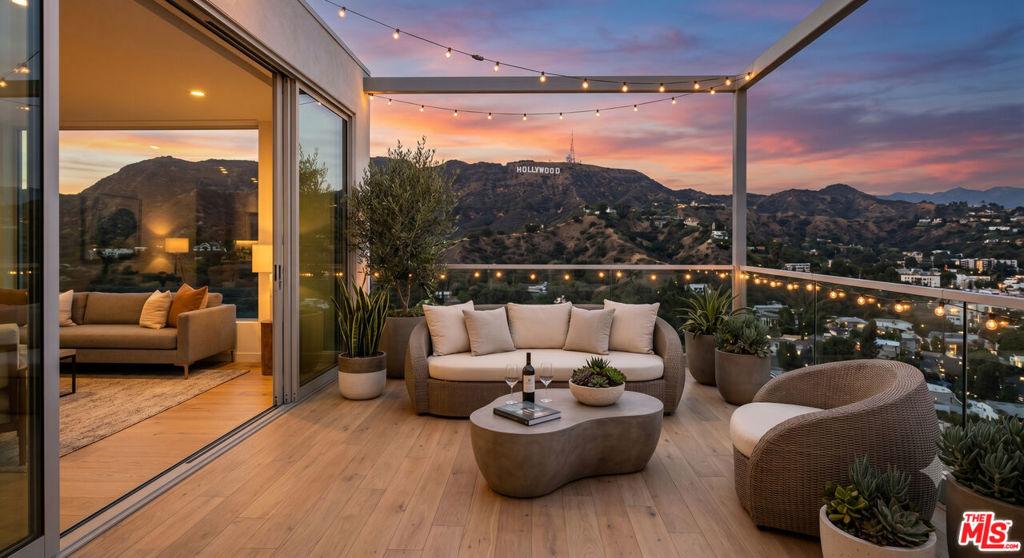
Start with the transit core. The Residences at W Hollywood and The Broadway Hollywood lofts face each other across the Hollywood and Vine intersection and represent the two ends of the ownership experience: hotel-branded new construction on one corner, a restored Streamline Moderne monument on the other. A block west, the Lofts at Hollywood and Vine occupy the 1929 Equitable Building, with units that look out at the Capitol Records tower and the Hollywood Sign. Buyers who want loft geometry without a specific building in mind should scan the Hollywood lofts inventory and the broader Hollywood, CA loft listings together, since supply in any single conversion building is thin and units turn over irregularly.
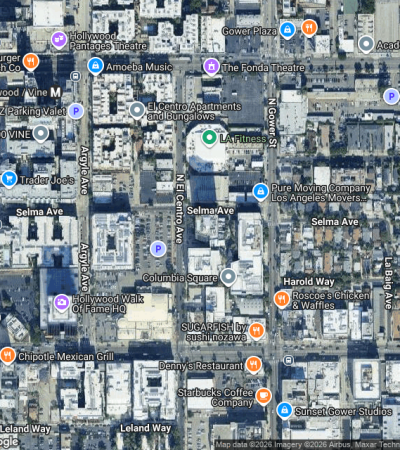
South of the boulevard, Hollywood Proper Residences anchors the Sunset side at Columbia Square, and Modera Hollywood on Selma Avenue is a 2019 Mill Creek Residential community about a tenth of a mile from the Hollywood/Highland station. Note the distinction clearly: Modera is a rental community, not a for-sale condominium, so treat it as a comparison point for what new construction rents for rather than as a purchase target.
Moving west, Hollywood Versailles Tower and Hollywood Regis sit near the West Hollywood boundary, as does West Hollywood Heights. That boundary matters more than most buyers expect, because West Hollywood is a separate incorporated city with its own transfer tax structure, its own rent stabilization ordinance, and its own permitting. Two buildings four blocks apart can sit under entirely different rulebooks.
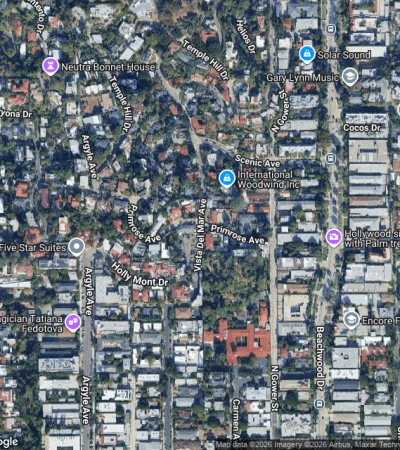
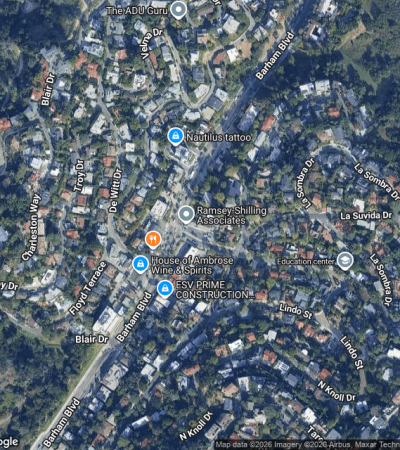
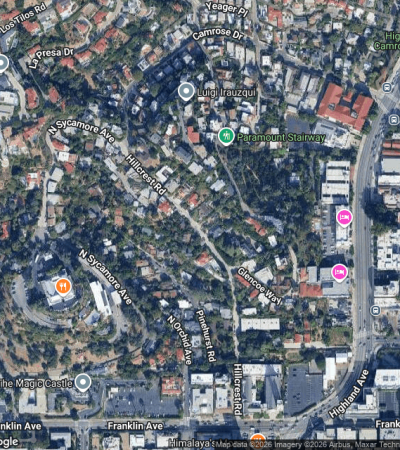
North of Franklin, the product changes from condominium to hillside house. Hollywood Dell sits east of Cahuenga, north of Franklin, west of Argyle, and south of the Hollywood Reservoir, and filled in during the 1910s and 1920s with Spanish Colonial Revival and Mediterranean houses on hillside lots. Hollywood Knolls was subdivided by Taft Realty Company in 1923 to a plan by Swiss planner Franz Herding, and sits above the Cahuenga Pass off Barham Boulevard with straight-line views toward the Hollywood Sign across Lake Hollywood. Hollywood Manor is a smaller pocket of the same Hollywood Hills East group, with its earliest houses dating to 1925 and roughly 327 residences total per RubyHome’s neighborhood data. Hollywood Tower and La Belle on Franklin Avenue mark the transition point: the 1929 Hollywood Tower, originally La Belle Tour, was designed by Cramer and Wise in a French Normandy style and was listed on the National Register of Historic Places in 1988.
East and south, the character shifts again. East Hollywood holds more than 78,000 residents and contains Thai Town, Little Armenia, and Melrose Hill, plus Los Angeles City College and Barnsdall Art Park at 4800 Hollywood Boulevard, where Frank Lloyd Wright’s 1921 Hollyhock House stands. The Hollywood Studio District covers the working production spine along Sunset, including Sunset Bronson Studios, an 11-acre campus built in 1919 where The Jazz Singer was shot in 1927, and now home to the ICON tower that serves as Netflix’s Los Angeles headquarters. For a full view across price tiers, browse all Hollywood, CA condos alongside the general Hollywood, CA inventory, which includes houses and income property as well.
What do Hollywood condos cost?
Pricing spans a wide band, and the band is the point. Per Homes.com data compiled in February 2026, the median home price in Hollywood was $1,129,950 with an average sale price of $1,218,077, and condominium asking prices ranged from roughly $335,000 to $3,500,000. The same source showed about 69 condos on the market and an average of 65 days on market.
The trailing view was softer. Homes.com reported a median sale price of $960,000 across the prior 12 months, down roughly 13 percent from the 12 months before that. Read those two numbers together rather than separately: current asking prices skew higher than what actually closed over the preceding year, which is a normal signature of a market where sellers have not fully adjusted to slower absorption.
What drives the spread inside a single ZIP code is building tier, not square footage. A studio in a 1980s low-rise and a two-bedroom in a hotel-branded tower do not track the same price curve. Any figure quoted here moves. Ask us for the current comparable set on the specific building before you write an offer.
How do HOA dues and building finances work here?
Dues in Hollywood vary more than in almost any other LA submarket, because the amenity spread is enormous. A full-service tower funding 24-hour valet, concierge, a rooftop pool, and a fitness center collects substantially more per unit than a 1966 building with a pool and a parking gate. Neither is inherently better. The question is whether you will use what you are paying for.
Read three documents before you remove contingencies: the reserve study, the last two years of board minutes, and the current budget. In century-old conversions, watch for deferred capital items on the envelope, elevators, and plumbing risers. In the newer towers, watch for construction defect litigation and for amenity operating costs that have inflated since lease-up.
One statewide requirement applies directly. California Senate Bill 326 added Civil Code Section 5551 to the Davis-Stirling Act, requiring condominium associations to inspect load-bearing exterior elevated elements supported substantially by wood, with the first inspection deadline set for January 1, 2025 and repeat inspections every nine years. Inspections must be performed by a licensed structural engineer or licensed architect. Ask whether the association completed its inspection, what the report found, and how any required repairs are being funded. An association that has not inspected is a financial question, not a paperwork question.
What should you know about the Hollywood earthquake fault?
The Hollywood fault runs through the district, and that has a documented regulatory consequence. The California Geological Survey released the final earthquake fault zone map for the Hollywood Quadrangle in November 2014, establishing an Alquist-Priolo zone that requires most new construction projects within it to complete a fault rupture investigation before permits are issued. At least one trace of the fault is believed to cross between Hollywood Boulevard and Yucca Street.
For a buyer purchasing an existing condominium, this is a disclosure and insurance matter rather than a permitting one. Natural hazard disclosure reports will flag whether the property sits inside the zone. Look separately at whether the building is concrete, steel, or wood-frame, whether any soft-story retrofit was completed, and what the association carries for earthquake coverage. Many Los Angeles associations carry none, which shifts the exposure to owners.
How is the commute and transit access?
Better than most of Los Angeles. The Metro B Line subway serves Hollywood at three stations: Hollywood/Highland, Hollywood/Vine, and Hollywood/Western, running from North Hollywood in the San Fernando Valley to Union Station downtown. A condo directly above a station is one of the few places in this county where a car-light household is genuinely workable.
By car, the 101 cuts through the Cahuenga Pass on the north edge, putting Burbank, Universal, and Studio City within a short drive outside peak hours and a much longer one during them. Westward travel on Sunset or Santa Monica to Century City and Beverly Hills is the harder direction. Drive it at your actual departure time before you commit to a building.
What are the schools?
Hollywood is served by Los Angeles Unified. Hollywood High School at 1521 North Highland Avenue enrolls a little over a thousand students and organizes students into majors including a Performing Arts Magnet and a New Media Academy Magnet, with the Performing Arts Magnet recognized by Magnet Schools of America. Los Angeles City College sits in East Hollywood.
Attendance boundaries here are granular, and magnet admission runs on a separate points-based application rather than on address alone. Verify assignment with LAUSD directly rather than relying on a listing portal.
What is daily life in Hollywood actually like?
Dense, loud in places, and unusually walkable by Los Angeles standards. The Hollywood Bowl sits at the north end above the Cahuenga Pass, which makes summer concert traffic on Highland and Cahuenga a recurring fact of life for nearby owners. Runyon Canyon and the Lake Hollywood Reservoir loop absorb the outdoor demand. Barnsdall Art Park in East Hollywood carries the arts programming, including Hollyhock House.
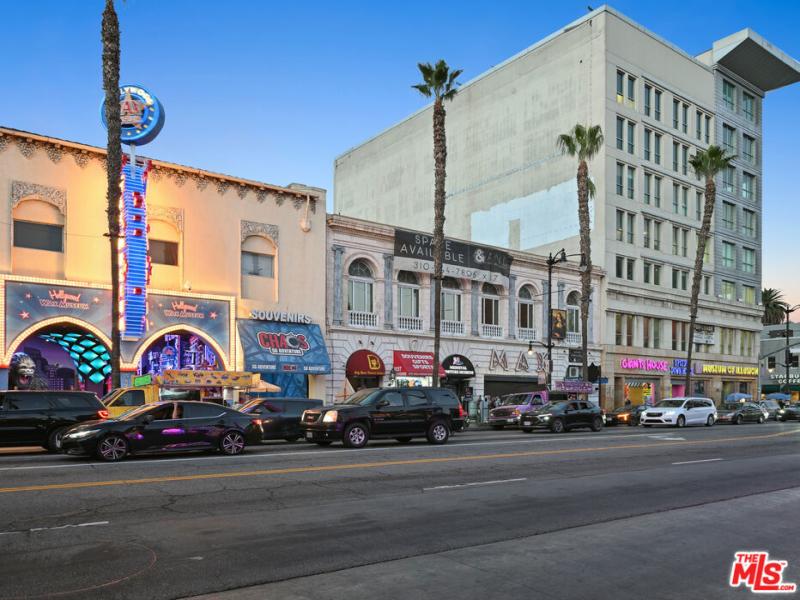
Tourist volume concentrates tightly along the Walk of Fame between roughly Highland and Vine, and residential quality of life improves quickly a few blocks off that line. A high unit facing an interior courtyard is a materially different experience than a low unit facing Hollywood Boulevard in the same building. Tour at night before you decide.
What taxes and regulations apply when you sell?
Hollywood is inside the City of Los Angeles, so Measure ULA applies. The measure passed in November 2022 and took effect in April 2023, imposing an additional transfer tax on high-value property sales. Per the Los Angeles Office of Finance, the thresholds adjust each July based on the Chained Consumer Price Index. For transactions closing after June 30, 2026, sales above $5,400,000 but under $10,900,000 are assessed at 4 percent, and sales at or above $10,900,000 are assessed at 5.5 percent.
Most Hollywood condominium sales fall well below those thresholds. It matters at the top of the market and for anyone selling a building or a portfolio. The tax applies to gross sale price, not to gain, and only within City of Los Angeles boundaries. A property in the separate City of West Hollywood is outside it.
On the preservation side, contributing properties in Historic Preservation Overlay Zones and designated Historic-Cultural Monuments may qualify for a Mills Act contract, which the LA Conservancy notes can reduce property taxes for qualifying owners in exchange for maintenance and restoration commitments. Whitley Heights, adjacent to the Hollywood core, is both an HPOZ and a National Register district. Eligibility is property-specific and the contract carries obligations, so treat it as something to verify, not assume.
Can you rent out a Hollywood condo?
Usually, but verify two layers. The first layer is the CC&Rs. Many Hollywood associations cap the percentage of units that may be rented, impose minimum lease terms, or prohibit short-term rental outright. Read the governing documents before you underwrite rental income.
The second layer is the city’s Rent Stabilization Ordinance, which covers residential rental units in buildings that received a certificate of occupancy on or before October 1, 1978. Condominiums are generally exempt when not owned by a REIT, corporation, or LLC. The exception is important in a district full of conversions: a condominium unit converted from an apartment building that was already RSO-covered can retain that coverage. Given how much of Hollywood’s inventory came out of pre-1978 buildings, confirm status on the specific unit rather than assuming the exemption applies.
What are the real trade-offs of buying in Hollywood?
Four worth naming. First, development pressure. The Los Angeles City Council adopted the Hollywood Community Plan Update on May 3, 2023 in a 13-0 vote, and the Planning Department projected the revised zoning could support a Hollywood population between 243,000 and 264,000 residents, up from roughly 206,000 as of 2016. That means more housing supply, more construction noise, and view corridors that are not permanent.
Second, resale liquidity. A 100-unit building generates few comparable sales per year, which makes appraisal and pricing harder. Third, the amenity cost curve: dues in service-heavy towers rise over time and are not negotiable. Fourth, street-level variance. Block-to-block conditions in Hollywood differ more than mapping data suggests, which is an opportunity for a buyer who does the legwork and a liability for one who does not.
Frequently Asked Questions About hollywood Condos for Sale
Are Hollywood condos a good investment?
It depends on the building’s balance sheet more than the neighborhood. Hollywood has structural demand from the entertainment workforce and three subway stations, which supports rental interest. Offsetting that, Homes.com reported a roughly 13 percent decline in Hollywood’s trailing 12-month median sale price as of February 2026, and the Hollywood Community Plan Update points toward significant new supply. Underwrite the specific association, not the ZIP code.
Which Hollywood condo buildings are historic?
The Broadway Hollywood at 1645 Vine, built in 1927, is a Los Angeles Historic-Cultural Monument designated in 1999. The Equitable Building at 6253 Hollywood Boulevard dates to 1929. Hollywood Tower at 6200 Franklin Avenue, built in 1929 as La Belle Tour, was listed on the National Register of Historic Places in 1988.
Do Hollywood condos come with parking?
Most do, but assignment varies by building and by unit, and older conversions sometimes have fewer spaces than units. Confirm the number of deeded or assigned spaces, whether they are tandem, and whether guest parking exists before you offer.
Is Hollywood inside an earthquake fault zone?
Parts of it are. The California Geological Survey published the final Alquist-Priolo earthquake fault zone map for the Hollywood Quadrangle in November 2014. Whether a specific address falls inside the zone appears in the natural hazard disclosure report during escrow.
What is the difference between Hollywood and West Hollywood for a buyer?
They are different jurisdictions. Hollywood is a district of the City of Los Angeles and is subject to Measure ULA and the LA Rent Stabilization Ordinance. West Hollywood is a separate incorporated city with its own transfer tax, rent stabilization, and permitting rules. Compare the total carrying and exit costs, not just the listing price.
Can I use a Hollywood condo as a short-term rental?
Often not. Association CC&Rs in Hollywood commonly set minimum lease terms or ban short-term rental, and the City of Los Angeles separately regulates home-sharing. Confirm both before relying on short-term income.
What does the Metro B Line mean for value?
It compresses commute times to North Hollywood and downtown Los Angeles and supports a car-light household, which matters for a segment of buyers and renters. It also concentrates foot traffic and noise near station entrances. Whether that reads as a premium or a discount depends on the specific unit’s exposure.
Are there single-family options in this area?
Yes, immediately north of Franklin Avenue. Hollywood Dell, Hollywood Knolls, and Hollywood Manor are hillside single-family pockets with different price structures, hillside grading rules, and fire-access considerations than the flat-land condominium market.
How The Knight Group works in this market
We work building by building. Before you tour, we pull the association’s financials, reserve study, board minutes, insurance certificate, and SB 326 inspection status, and we tell you what we find, including when the answer is that you should walk. In a market where two units in the same tower can carry different risk profiles, the document review is the work.
On the sell side, we price against the specific building’s closed comparables rather than a neighborhood median, because Hollywood’s median blends a 1966 studio with a 2016 penthouse and describes neither. We prepare the disclosure package early, including fault zone, hazard, and RSO status, so the transaction does not stall in escrow over a document that could have been sourced in week one.
If you are weighing a specific building, or deciding between the Hollywood core and the hillside pockets above Franklin, contact The Knight Group. Send us the address and we will send back the comparable set, the association’s financial posture, and the trade-offs as we read them.
What are the different types of Condos For Sale In Hollywood?
- Condos For Sale In Hollywood are attached, HOA-governed residences inside the Hollywood district of the City of Los Angeles.
- Hollywood’s condo belt is concentrated between the Sunset Boulevard studio corridor and the Franklin Avenue hillside edge.
- Sunset Bronson Studios and Sunset Las Palmas Studios sit inside the district, keeping owners inside the entertainment industry’s working geography.
- Metro B Line service beneath Hollywood Boulevard lets a buyer own a home and walk to a subway station.
- Condos For Sale In Hollywood split into three products that trade on different logic: historic conversions, full-service towers, and older mid-rises.
- Adaptive-reuse lofts occupy Hollywood’s steel-frame commercial buildings, including the Broadway Hollywood and the Equitable Building on Hollywood Boulevard.
- Broadway Hollywood at Hollywood and Vine opened as the B. H. Dyas Building and later converted to residential use with added stories.
- Los Angeles Historic-Cultural Monument status attached to the Broadway Hollywood before its residential conversion, making it a designated landmark address.
- Loft units deliver ceiling height, window scale, and architectural detail that no new construction reproduces at the same price.
- Historic conversions carry the maintenance profile of a building close to a century old, which shows up in dues and reserves.
- Full-service towers arrived with the transit build-out, led by the Residences at W Hollywood and Hollywood Proper Residences at Columbia Square.
- Residences at W Hollywood sits directly on top of the Hollywood/Vine Metro station and was built to a LEED Silver standard.
- Hollywood Proper Residences rose on the former CBS Columbia Square site, developed by Kilroy Realty with interiors by Kelly Wearstler.
- Full-service towers sell on valet, concierge, rooftop pool, and fitness, and carry the HOA dues that fund that service.
- Entry pricing among Condos For Sale In Hollywood lives in older mid-rises such as Hollywood Versailles Tower and Hollywood Regis on Hawthorn Avenue.
- Lofts at Hollywood and Vine occupy the Equitable Building, with units looking out toward the Capitol Records tower and the Hollywood Sign.
What is it like to live in Condos For Sale In Hollywood?
- Transit access for Condos For Sale In Hollywood is better than most of Los Angeles, with Metro B Line stations at Highland, Vine, and Western.
- Metro B Line trains run from North Hollywood in the San Fernando Valley to Union Station downtown, passing under the Hollywood core.
- Condos directly above a subway station make a car-light household genuinely workable, which is rare across Los Angeles County.
- Westward travel on Sunset or Santa Monica toward Century City and Beverly Hills is the harder commute direction for Hollywood owners.
- Los Angeles Unified serves the district, with Hollywood High School on North Highland Avenue organizing students into majors and magnet programs.
- Hollywood High School offers a Performing Arts Magnet recognized by Magnet Schools of America along with a New Media Academy Magnet.
- Los Angeles City College sits in East Hollywood, adding a higher-education anchor near the eastern edge of the condo market.
- Magnet admission runs on a separate points-based application rather than on address alone, so verify assignment with the district directly.
- Daily life around Condos For Sale In Hollywood is dense, loud in places, and unusually walkable by Los Angeles standards.
- Hollywood Bowl sits at the north end above the Cahuenga Pass, making summer concert traffic a recurring fact for nearby owners.
- Runyon Canyon and the Lake Hollywood Reservoir loop absorb outdoor demand for residents living in the flats below.
- Barnsdall Art Park in East Hollywood carries the arts programming for the district, including Hollyhock House.
- Tourist volume concentrates tightly along the Walk of Fame, and residential quality of life improves quickly a few blocks off that line.
- Exposure matters among Condos For Sale In Hollywood, since a high courtyard-facing unit lives differently than a low unit facing the boulevard.
- Rental use requires reading both the association CC&Rs and the city’s Rent Stabilization Ordinance before underwriting any rental income.
What should buyers know before buying Condos For Sale In Hollywood?
- Investment performance for Condos For Sale In Hollywood depends on the building’s balance sheet far more than on the neighborhood itself.
- Structural demand comes from the entertainment workforce and the subway stations serving the district, which supports steady rental interest.
- Hollywood Community Plan Update signals significant new supply ahead, a factor buyers should weigh against neighborhood demand.
- Underwriting should target the specific association rather than the ZIP code, because building finances drive outcomes here.
- Historic inventory includes the Broadway Hollywood on Vine, a designated Los Angeles Historic-Cultural Monument.
- Hollywood Tower on Franklin Avenue, originally built as La Belle Tour, is listed on the National Register of Historic Places.
- Parking accompanies most Condos For Sale In Hollywood, though assignment varies by building and by unit.
- Older conversions sometimes have fewer parking spaces than units, so confirm deeded spaces, tandem configuration, and guest parking before offering.
- Portions of the district fall inside an Alquist-Priolo earthquake fault zone mapped by the California Geological Survey for the Hollywood Quadrangle.
- Natural hazard disclosure reports delivered during escrow reveal whether a specific address sits inside the mapped fault zone.
- Hollywood is a district of the City of Los Angeles subject to Measure ULA and the city Rent Stabilization Ordinance.
- West Hollywood is a separate incorporated city with its own transfer tax, rent stabilization, and permitting rules, so compare total carrying and exit costs.
- Short-term rental is often off the table, since CC&Rs commonly set minimum lease terms and the city separately regulates home-sharing.
- Metro B Line access compresses commute times to North Hollywood and downtown while concentrating foot traffic and noise near station entrances.
- Hillside alternatives to Condos For Sale In Hollywood include Hollywood Dell, Hollywood Knolls, and Hollywood Manor north of Franklin Avenue.