Browse all Monterey County real estate.

Browse all Monterey County real estate.
No properties found. |
Most buyers looking at Castroville CA homes for sale are trading Peninsula prices for a working farm town about 8 miles southeast of Salinas and roughly 16 miles from Monterey. Per Zillow in July 2026, the median list price was around $1.09M, about $237 per square foot, with homes sitting a median of 85 days on the market. Inventory is thin — a few thousand households total — so a single unusual listing can move the median, and longer days on market give you real room to inspect and negotiate.
The housing stock is mostly detached single-family homes on modest lots, ranging from genuinely old houses in the 1863 town core to mid-century homes and newer subdivisions. Condos and townhomes exist but aren’t the main product. Street to street, what changes is age of construction, how close you sit to Highways 1, 156, and 183, and proximity to the surrounding farmland and sloughs.
The listings below show what is currently available in and around Castroville. If you want to understand which pockets fit your budget and how the flood and agricultural factors affect a specific property, contact The Knight Group and we will walk you through it.
Castroville sits about 8 miles northwest of Salinas and roughly 16 miles northeast of Monterey, at an elevation of about 23 feet. The town covers just over one square mile and carries the ZIP code 95012. Its position at the junction of three state highways is the single most useful thing to understand about it.
Castroville is served by State Route 1 (Cabrillo Highway) along the coast, State Route 183 (Merritt Street) running to Salinas, and State Route 156, which for its westernmost two miles is a freeway through Castroville that terminates at a Y-interchange with Route 1. Route 156 is part of the primary route between the Monterey Peninsula and both the San Francisco Bay Area and the Central Valley, connecting to U.S. Route 101 near Prunedale. That makes Castroville a genuine crossroads: you can reach Monterey, Salinas, or the 101 corridor without long drives.
That convenience comes with congestion. Highway 156 carries thousands of commuters, travelers, and commercial trucks each day, and the corridor has long been a bottleneck. The Transportation Agency for Monterey County has an approved State Route 156/Castroville Boulevard interchange project intended to improve that junction. If you commute daily toward the Peninsula or the 101, drive the route at your actual commute time before you commit to a home here.
Castroville is more affordable than the Monterey Peninsula, but it is not cheap. Per Zillow in July 2026, the median list price in Castroville was about $1.09M, at roughly $237 per square foot, and homes spent a median of about 85 days on the market, the same as July 2025. Movoto listing data around the same period showed a smaller set of active listings averaging in the mid-$900,000s.
Two things matter in those numbers. First, inventory is thin. This is a town of a few thousand households, so the active listing count is small and a single unusual listing can move the median noticeably. Second, days on market are longer here than in the hottest Peninsula submarkets, which gives buyers more room to inspect, negotiate, and walk away than they would have in a bidding-war environment.
The median household income in Castroville was $90,486 as of 2023 per census data, which tells you this is a working community where much of the housing stock is owner-occupied family housing rather than second homes or investment flips. That tends to produce a more stable, slower-moving market than a resort town. For an up-to-date read on active inventory and recent closed sales, browse the listings below or ask The Knight Group for a current comparative market analysis.
Castroville’s housing stock is a mix of older, established neighborhoods and newer housing developments. Because the town was founded in 1863 and had a settled business district by the 1870s, the core includes genuinely old housing alongside mid-century single-family homes and more recent subdivisions built as the population grew.
Most of what trades here is detached single-family housing on modest lots, oriented toward families rather than luxury buyers. You will find fewer of the large architectural estates common on the Peninsula and more practical, functional homes. Condominiums and townhomes exist but are not the dominant product. Because the town is small and geographically compact, the difference between one street and the next often comes down to age of construction, proximity to the highways, and how close a lot sits to the surrounding farmland and sloughs. The Knight Group can help you read those distinctions on the ground.
The nickname is earned. Castroville is world-renowned as the “Artichoke Center of the World,” and by some accounts about three-quarters of the artichokes grown in the United States come from this small farming area. The cool-summer Mediterranean climate near Monterey Bay lets the crop grow productively for much of the year.
The industry took hold in the 1920s. Italian immigrants who settled in the area planted artichokes commercially, and in 1922 a group of growers leased farmland to expand production. Within a few years California’s artichoke acreage had grown dramatically. The town leaned into the identity: the Castroville Artichoke Festival ran annually from 1959 until 2025, and a giant artichoke statue, described as the world’s largest, was erected in 1963 and still stands as a local landmark.
For a homebuyer, the agricultural identity is not just trivia. It explains why the town is surrounded by active farmland, why the economy and school demographics look the way they do, and why land use in and around Castroville is shaped by farming rather than by tourism or tech.
Castroville is one of Monterey County’s oldest communities. It was founded in 1863 by Juan Bautista Castro on land that traced back to the Rancho Bolsa Nueva y Moro Cojo Mexican land grant of 1844. The Castro family were ranchers, and the town grew quickly after its founding: by 1875 it had roughly 900 residents and an established set of businesses.
That long history means the town center predates modern zoning and subdivision patterns, which is part of why the housing stock spans such a wide range of ages. It also means Castroville has a settled, established feel rather than the raw newness of a master-planned community. Buyers who value a place with real roots, as opposed to a development built last decade, tend to appreciate that.
Castroville is served by the North Monterey County Unified School District, which spans about 70 square miles covering Castroville, Prunedale, Moss Landing, Aromas, and part of Salinas. The district contains 8 schools serving roughly 4,435 students, and reported per-pupil spending of about $19,043.
Within Castroville, Castroville Elementary School serves several hundred students in the Pre-K through 6 range. North Monterey County High School, established in 1978 and located on Castroville Boulevard, enrolls around 1,250 students. The district’s student body is predominantly Hispanic or Latino, reflecting the surrounding agricultural community. As with any school decision, verify current enrollment boundaries and school assignments for a specific address before you buy, because attendance zones can change. The Knight Group can point you to current district resources.
Life in Castroville is quieter and more down-to-earth than in the Peninsula’s tourist cities. This is a farm town with a small commercial core along Merritt Street, surrounded by working artichoke and vegetable fields. It does not offer the boutique shopping, restaurant density, or beachfront of Carmel or Monterey, and buyers should set expectations accordingly.
What it does offer is location. From Castroville you are minutes from Moss Landing and the Monterey Bay coastline, a short drive to Salinas for big-box shopping and services, and within reasonable reach of Monterey and the Peninsula for work, dining, and the coast. Households here skew toward families: at the 2020 census, a majority of households included children under 18. If you want a practical home base with real access to the region rather than a resort lifestyle, that combination is the draw.
Flood risk is the most important due-diligence item in Castroville. The town sits at low elevation near the mouth of the Salinas River, with the Tembladero Slough forming its southwest edge. Monterey County identifies the Salinas River among its major flood hazards, and Castroville has sustained devastating damage in historical floods, including the March 1995 storm event. Portions of the town also fall within dam-failure inundation scenarios for the Salinas River system.
In practical terms, that means you should check the FEMA flood zone designation for any specific property, budget for the possibility of flood insurance, and factor the risk into both your offer and your long-term hold. Do not assume every Castroville address carries the same exposure: elevation and distance from the river and sloughs vary block by block. The Knight Group will help you pull the flood-zone status on a target property and connect you with the right inspection and insurance resources before you remove contingencies.
Castroville is an unincorporated census-designated place, which means it has no city government of its own. Land use, permitting, building, and code enforcement are handled by Monterey County rather than a municipal city hall. For most buyers this is invisible day to day, but it matters if you plan to remodel, add square footage, or develop a lot, because you will be working with county processes and county timelines.
Being unincorporated and agricultural also shapes the surrounding land use. Homes here sit near active farmland, and county agricultural and environmental regulations govern how nearby parcels can be used. If proximity to working fields, farm operations, or environmental protections around the river and sloughs matters to your plans, confirm the specifics for your parcel during escrow. The Knight Group works within these county processes regularly and can flag issues early.
Castroville rewards buyers who want value and access over prestige and polish. The upside is clear: lower prices than the Peninsula, a genuine crossroads location with quick highway access in three directions, longer days on market that give buyers negotiating room, and an established community with deep history.
The trade-offs are just as real. This is a farm town, not a walkable downtown or a beach community, so amenities are limited and you will drive for much of your shopping and dining. Flood risk near the Salinas River is a documented hazard that has to be underwritten property by property. Highway 156 congestion is a daily reality for Peninsula commuters. And thin inventory means the right home may not always be on the market when you are ready. Naming these trade-offs honestly is how you buy well here. The Knight Group’s job is to make sure you go in with clear eyes.
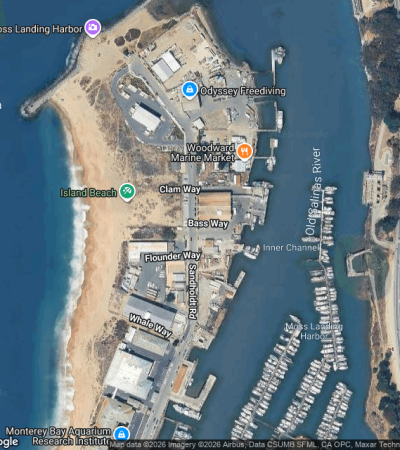
Castroville anchors a cluster of northern Monterey County communities, and understanding its neighbors helps you place it. To the west along Highway 1 lies Moss Landing, a small harbor and coastal community on Monterey Bay, closely tied to Castroville through the shared North Monterey County school district. To the northeast, Prunedale sits along the Highway 101 corridor and shares the same school district, offering a more rural, larger-lot alternative. Aromas, further northeast toward the San Benito County line, rounds out the district’s footprint.
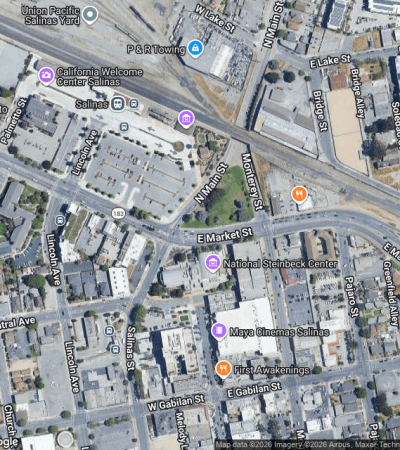
To the south and east, Salinas is the county seat and the nearest full-service city, reachable via Highway 183, and the source of most big-box shopping, medical services, and employment in the area. Southwest along the coast, the Monterey Peninsula cities of Monterey, Seaside, and beyond offer the region’s higher-priced coastal housing and its tourism and hospitality economy. Castroville’s value proposition is that it sits at the center of that map: less expensive than the coast, more connected than the outlying rural towns, and a short drive from all of them. If you are weighing Castroville against these neighbors, The Knight Group can compare active inventory and price tiers across all of them for you.
The practical work of shopping Castroville real estate happens at the parcel level, not the town level. Because the town covers just over a square mile and sits low — around 23 feet of elevation — near sloughs and active farmland, two homes a few blocks apart can carry very different flood exposure, insurance costs, and disclosure histories. Ask early whether a property sits in a mapped flood zone, what the seller’s insurance actually costs, and how drainage behaves in a wet winter.
Farm adjacency deserves the same scrutiny. Living beside working fields means seasonal equipment noise, dust, early-morning activity, and spray schedules that a weekend showing won’t reveal. None of that is disqualifying — it is simply the trade you make for the price gap with the Peninsula. Visit at different hours, read the natural hazard disclosure closely, and budget inspection time. With homes typically taking months to sell here, you generally have room to do that carefully rather than waiving contingencies to win a deal.
It can be, for the right buyer. Castroville offers lower prices than the Monterey Peninsula, strong highway access, and an established community, which suits families and value-focused buyers. It is less suited to buyers who want a walkable downtown, coastal lifestyle, or resort amenities. Flood risk and highway congestion are the main factors to weigh.
Per Zillow in July 2026, the median list price in Castroville was about $1.09M at roughly $237 per square foot, with active listings from other sources averaging in the mid-$900,000s. Inventory is thin, so figures move with the small number of homes on the market. Ask The Knight Group for a current analysis on a specific price point.
Parts of it are. Castroville sits at low elevation near the Salinas River and the Tembladero Slough, and the county identifies the Salinas River as a major flood hazard. The town has flooded historically, including in March 1995. Flood exposure varies by address, so check the FEMA flood zone for any specific property before buying.
Castroville is served by the North Monterey County Unified School District, which also covers Prunedale, Moss Landing, Aromas, and part of Salinas. Local schools include Castroville Elementary and North Monterey County High School. Confirm current attendance boundaries for a specific address.
Castroville is about 16 miles from Monterey and 8 miles from Salinas, with direct access to Highways 1, 156, and 183, plus a connection to Highway 101 near Prunedale. Highway 156 carries heavy daily traffic and can be congested, so test your specific commute at rush hour before committing.
Castroville is the “Artichoke Center of the World,” and by some accounts about three-quarters of U.S. artichokes come from this farming area. Commercial artichoke growing took hold in the 1920s, and the town celebrated the crop with an annual Artichoke Festival that ran from 1959 to 2025.
No. Castroville is an unincorporated census-designated place governed by Monterey County rather than a city government. Permitting, building, and land use go through county processes, which matters if you plan to remodel or develop.
Yes. Castroville is a small town with a modest number of households, so the active listing count is typically low and the right home may not always be available. Working with an agent who tracks the market closely, and who can surface off-market opportunities, helps in a thin market.
The Knight Group covers northern Monterey County, including Castroville and its neighboring communities, with a focus on precision rather than pressure. We start by matching your budget and priorities to the right pocket of the market, then run the due diligence that actually matters here: flood-zone status, county permitting considerations for any changes you plan, school boundary verification, and a clear read on how a specific home compares to recent sales.
Because Castroville has thin inventory and real flood and agricultural factors, buying well takes local knowledge and honest advice about trade-offs. We name the risks, we do not oversell the upside, and we help you decide whether Castroville or one of its neighbors fits you better. Browse the current listings below, and when you are ready, contact The Knight Group to talk through your options in this market.
Castroville CA Homes currently show 3 active listings priced from $209,900 to $675,000, with a median asking price of $451,322 (CRMLS, August 2026).
Lucky for you we’re looking out.
Subscribe to this Custom Search to be alerted when new properties hit the market in the area.
Choose the frequency that works for you.