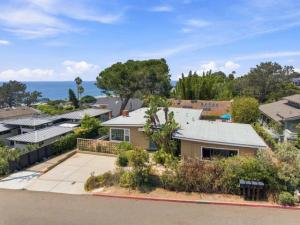
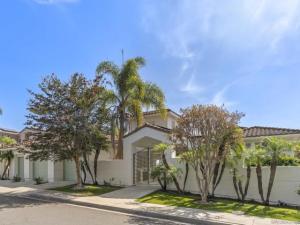
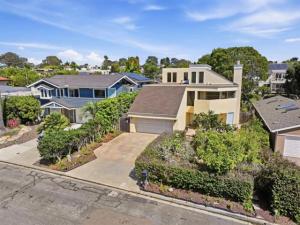
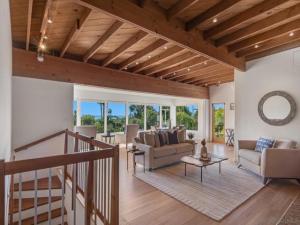
Condos for Sale in Del Mar
Condos for sale in Del Mar are attached homes inside a 1.72-square-mile coastal city of roughly 3,954 residents, and that scale is deliberate — Del Mar incorporated in 1959 specifically to keep development low and prevent high-rises. A condo is the least expensive way to own an address inside the city limits, with walkable beach access, the village, and the Del Mar Union School District attendance area attached to it. You trade land and privacy for position, and you take on an association, shared reserves, and a coastal regulatory environment that is more active than most buyers expect.
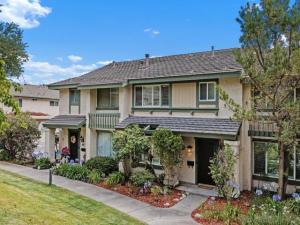
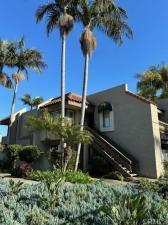
Expect two-story townhomes, garden-style complexes, and small bluff-top buildings rather than towers. Inventory is organized by complex, and two units a quarter mile apart can behave like different markets: Beach Colony sits level with the sand north of 15th Street, Sea Village and Del Mar Woods offer amenities and older buildings, and Del Mar Bluffs and Del Mar Heights trade beach proximity for elevation and views. Price tracks distance to sand and the health of the association.
Browse the current condo and townhome listings below, or contact The Knight Group and we will send you the HOA documents and sale history for any complex before you tour it.
Where exactly is Del Mar, and what sits inside the city limits?
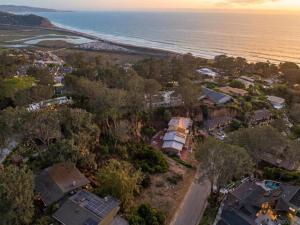
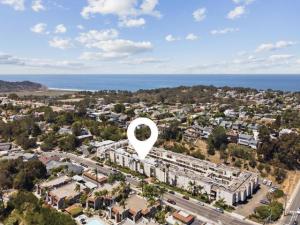
Del Mar sits between two lagoons. The San Dieguito River and San Dieguito Lagoon form the northern edge, and Los Peñasquitos Lagoon sits to the south. Torrey Pines State Beach and Torrey Pines State Natural Reserve occupy the southern approach, and the reserve protects one of only two natural stands of the Torrey pine.
The city boundary and the mailing address are not the same thing, and this trips up buyers constantly. Del Mar postal addresses extend past the city limits into Del Mar Heights and surrounding land governed by the City of San Diego. A listing can say Del Mar in the address line and still sit under San Diego’s zoning, permitting, and short-term rental rules. Confirm which jurisdiction a unit is in before you compare it to anything.
What does a Del Mar condo actually cost?
Del Mar is one of the most expensive small markets in California. Movoto’s Del Mar market data for June 2026 put the median list price for homes across the city at $3.49 million, with a median of 102 days on market. That figure covers all housing types, not condos alone, so read it as a ceiling indicator. Attached homes generally clear well below the detached median, which is why this segment is the practical entry point.
Two variables drive price inside the condo segment. The first is distance to sand and the quality of the view. The second is the health of the association. A well-funded complex with recent capital work will outprice a comparable unit in a building carrying deferred maintenance. Buyers who ignore the balance sheet routinely overpay.
The buyer pool is older and better capitalized than the county average. Census-derived profiles put Del Mar’s median age near 55 and median household income near $199,000 as of 2024, and many transactions involve cash or large down payments.
Which Del Mar condo communities should you know?
The attached-home market is organized around named subdivisions and complexes, and two units a quarter mile apart can behave like different markets.
Start at the north end. Beach Colony runs from roughly 15th Street north toward the San Dieguito Lagoon and sits level with the beach rather than on the bluff, which is why locals call it the flats. It is dominated by low-rise condos, townhomes, and duplexes on tight lots, with decks and rooftop patios in place of yards. True oceanfront product in that stretch is covered on our beach front homes page, and Sandy Lane covers a small pocket in the same beach-adjacent band.
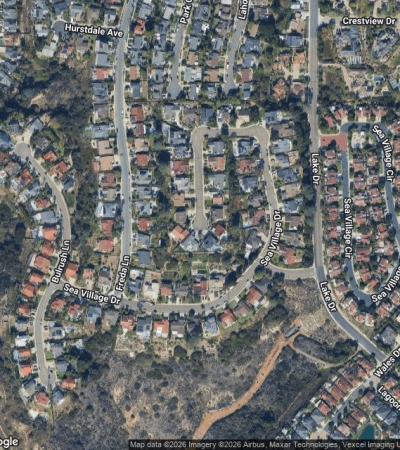
Several established complexes anchor the rest of the attached market. Sea Village is described in local brokerage community profiles as a 130-unit complex of two-story townhomes a short walk from Torrey Pines State Beach and the state reserve, set high enough that some units carry ocean views. Del Mar Woods is an older community with a deep amenity set including a pool, spa, sauna, tennis and pickleball courts, and a barbecue area. It also illustrates the trade-off: older buildings with real amenities carry periodic special assessments, so ask for the assessment history before you write. Spindrift sits on the Del Mar and Solana Beach border and is one of the more sought-after townhome addresses in the area. Its inventory is indexed across two pages here, Spindrift and Spindrift Del Mar, so check both.
The village core is the walkable center of the city. Del Mar Village covers the blocks around Camino Del Mar with the shops, galleries, and restaurants of Del Mar Plaza. Olde Del Mar sits on higher ground east of Camino Del Mar and is mostly detached homes on larger lots with walkable access to the village, so attached inventory there is limited and moves quickly. Nearby you will find Riviera Del Mar, Costa Del Rey, Las Vistas, Lower Stratford, Boca Del Mar, and Del Mar Villas, small subdivision and complex names that appear in MLS records and that buyers search directly.
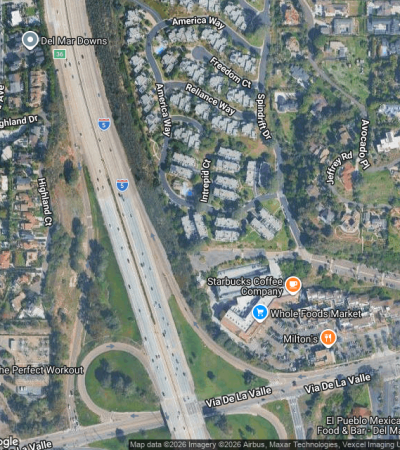
Climb the hill and the inventory changes character. Del Mar Bluffs, Del Mar Hills, Del Mar Terrace, and Del Mar Estates sit on elevated ground where view premiums dominate pricing. Torrey Pines Terrace sits toward the southern end near the state reserve. Del Mar Heights is the one to get right on jurisdiction: much of it carries a Del Mar mailing address while sitting outside the city limits. Its commercial center is Del Mar Highlands Town Center at Del Mar Heights Road and El Camino Real, which lists more than 70 retailers.
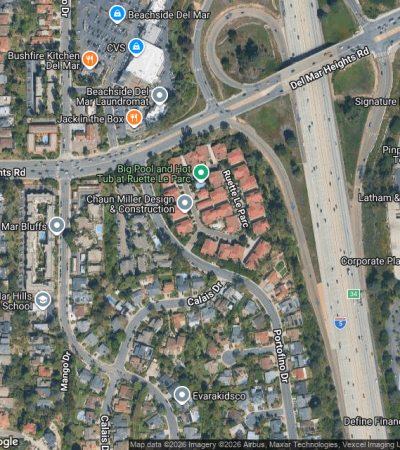
East of the freeway the product shifts toward planned communities and larger-lot enclaves. Rancho Del Mar and Ruette Le Parc serve buyers who want more square footage and a quieter street than the beach blocks allow. Fairbanks Polo Club sits inland in the Fairbanks Ranch corridor, an equestrian and country club orientation rather than a surf one.
What is the difference between west of I-5 and east of I-5?
Interstate 5 is the most useful dividing line in this market. Everything west of I-5 is closer to the ocean and the village and is priced against beach access. Lots are smaller, parking is tighter, and much of the attached stock was built decades ago. Ocean influence is constant, which is pleasant for climate and unforgiving on exterior materials.
Everything east of I-5 generally buys more interior square footage per dollar and newer construction. You give up the walk to the sand, and westbound crossings back up during fair and racing season.
Neither side is better in the abstract. The question is whether you are buying proximity or space.
How do HOAs and California condo law affect the purchase?
Every condo purchase in California buys two things: a unit and a membership in a common interest development. These associations are governed by the Davis-Stirling Common Interest Development Act, which sets the rules for governance, disclosure, and assessments. The seller must deliver a disclosure package in escrow. Read all of it.
What matters most in a coastal market is the reserve study, several years of board minutes, current and historical assessment levels, any pending special assessment, and the association’s litigation status. Salt air and age drive real capital costs near the ocean: roofs, decks, balconies, railings, plumbing, and windows all wear faster within a few blocks of the water.
Ask whether the association has completed the exterior inspections California now requires for elevated elements such as balconies and walkways, and whether repairs were identified. Ask whether the project is warrantable for conventional or FHA financing, because high investor concentration, active litigation, or an underfunded reserve can restrict your lender options now and your buyer’s options later.
Can you rent a Del Mar condo short term?
Inside city limits, only under a strict permit regime. The City Council adopted a short-term rental ordinance on September 23, 2024, and the California Coastal Commission certified it on February 5, 2026. The ordinance caps short-term rentals at 129 units, equal to 5 percent of the city’s total dwelling units. It requires the unit to be the owner’s primary residence, defined as occupancy for at least six months of the year. It limits owners to one short-term rental each and sets a three-night minimum stay. Permits run two years, with fees reported at $815 for the first permit and $598 for renewals. The city identified 150 existing short-term rentals and said they would be accommodated consistent with the ordinance.
Rentals longer than 30 days are exempt. That is the practical path for most non-resident owners: long-term tenancy rather than nightly rental.
Two cautions. Your association’s governing documents can be more restrictive than the ordinance, and many are. And if the property carries a Del Mar mailing address but sits outside the city limits, a different rule set applies. Read the CC&Rs before you underwrite rental income.
What coastal and infrastructure risks should you price in?
This is the section most Del Mar marketing skips. The rail line along the coast sits directly on eroding bluffs roughly 40 feet above the beach. SANDAG has an active Del Mar Bluffs stabilization program running from spring 2024 through 2027 at an expected cost of $88 million.
The longer-term plan is to move the tracks off the bluffs entirely. SANDAG’s LOSSAN Rail Realignment project would relocate roughly 1.7 miles of track into a double-track tunnel under the hillside, and an updated Notice of Preparation for a Draft Environmental Impact Report was released in May 2025 for a 45-day comment period. Three route alternatives are under study. If your target unit sits near a candidate alignment, the construction timeline is material to your hold period, and you should read the current project documents rather than a summary.
Sea level rise is an open policy question here. The California Coastal Commission has recommended managed retreat along this stretch of coast, and the City of Del Mar rejected that approach in 2019. Bluff and beachfront properties therefore sit inside an unresolved disagreement between the city and the agency holding coastal permitting authority, and any significant remodel or seawall work runs through Commission review.
One access quirk: the southern half of the city’s shoreline lacks legal public beach crossings because the railroad right of way blocks pedestrian access. Proximity on a map is not the same as a legal walking route.
Which schools serve Del Mar addresses?
Elementary students in the city attend the Del Mar Union School District, which operates eight schools. Those schools feed into Carmel Valley, Pacific Trails, or Earl Warren middle schools, and then into the San Dieguito Union High School District, typically Torrey Pines High School or Canyon Crest Academy.
The Torrey Pines attendance boundary is defined to include the Del Mar, Solana Beach, and Rancho Santa Fe school district areas, excluding the area north of Escondido Creek in the Rancho Santa Fe district. Assignment follows the property address, not the city name. Confirm it with the district rather than relying on a listing remark.
How is the commute and transit access?
Interstate 5 is the primary regional connection and runs along the eastern edge of the area. Historic Highway 101, which becomes Camino Del Mar through town, is the coastal alternative and the local main street.
Rail service is close but not in town. The original Del Mar station closed in 1995, and the nearest station is Solana Beach, about two miles north, served by Coaster commuter rail and Amtrak. That is the practical option for commuting south to downtown San Diego or north to Orange County without driving.
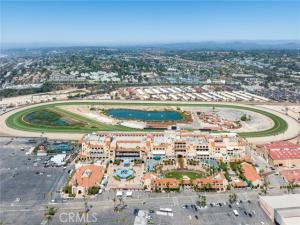
Plan around the calendar. The Del Mar Fairgrounds has been the permanent home of the San Diego County Fair since 1936, and the racetrack runs summer and fall meets. Those events push heavy traffic through a small city on a two-lane coastal road.
What is daily life like from a Del Mar condo?
The daily radius is short, which is the point. Powerhouse Park and Seagrove Park sit on the bluff above the 15th to 17th Street surf break with lawns, walking paths, a playground, and picnic tables. Seagrove Park is open from 7 a.m. to 10 p.m. and allows leashed dogs. Camino Del Mar and Del Mar Plaza carry the concentration of restaurants, coffee shops, boutiques, and galleries.
North Beach, known locally as Dog Beach, runs north of 29th Street for nearly half a mile. Shores Park covers 5.3 acres with an off-leash dog park, a baseball field, and basketball hoops. Court Street Park has two tennis courts and a half-court basketball court, free and first-come. Torrey Pines State Beach offers three miles of sand reached by two trails, and the San Dieguito Lagoon trail forms the western end of the Coast to Crest Trail.
The city’s history is visible in its layout. Del Mar was named in the 1880s by Ella Loop, wife of railroad engineer Theodore Loop, after the poem “The Fight on Paseo Del Mar,” and was established in 1885 as a seaside resort. The fairgrounds arrived in the 1930s, and the mile-long thoroughbred track opened on July 3, 1937, with Bing Crosby as president of the Del Mar Thoroughbred Club.
What should you verify before writing an offer?
Run the same checklist on every Del Mar condo regardless of price. Confirm the jurisdiction. Confirm the school assignment with the district. Read the reserve study, the minutes, and the assessment history. Get the association’s insurance certificate and confirm what the master policy covers versus what your own policy must cover. Ask when the roof, decks, railings, plumbing, and windows were last replaced. Check the tax bill for special districts or bonded assessments. Finally, check parking: in the beach-adjacent blocks, deeded parking is a value driver and its absence is a resale problem.
Frequently Asked Questions About del mar Condos for Sale
Are Del Mar condos cheaper than houses in Del Mar?
Yes, substantially. Movoto’s June 2026 data put the median list price across all Del Mar home types at $3.49 million. Attached homes generally trade below that, which is why condos and townhomes function as the entry point into the city.
Does a Del Mar mailing address mean the property is in the city of Del Mar?
No. Del Mar postal addresses extend beyond the city boundary into Del Mar Heights and other land governed by the City of San Diego. Jurisdiction determines zoning, permitting, and rental rules, so confirm it on the parcel record.
Can I buy a Del Mar condo and rent it nightly?
Generally not unless it is your primary residence. Del Mar’s ordinance caps short-term rentals at 129 units, requires primary-residence occupancy of at least six months a year, limits owners to one short-term rental, and sets a three-night minimum. Rentals over 30 days are exempt. Your HOA may be stricter than the city.
How high are HOA dues in Del Mar?
Dues vary widely by complex, and we will not quote a figure without pulling current documents for the specific association. What drives them is predictable: pools, spas, saunas, courts, elevators, and coastal exterior maintenance all raise the number, and an older complex with deferred work shows up either in the dues or in special assessments.
Is the eroding bluff and rail line a problem for condo buyers?
It is a factor to price, not a reason to avoid the market. SANDAG is running an $88 million bluff stabilization program through 2027 and separately studying three tunnel routes to move roughly 1.7 miles of track off the coastline. If your target unit sits near a candidate alignment, read the current project documents before committing to a hold period.
Which high school will my child attend from a Del Mar condo?
Most Del Mar addresses feed to Torrey Pines High School in the San Dieguito Union High School District, with Canyon Crest Academy as the other common assignment. The Torrey Pines boundary includes the Del Mar, Solana Beach, and Rancho Santa Fe school district areas, excluding the portion of Rancho Santa Fe north of Escondido Creek. Verify with the district for the exact address.
Can I walk to the beach from every Del Mar condo?
No. The southern half of the city’s shoreline has no legal public crossing because of the railroad right of way. Some addresses that look close on a map require a detour to a legal access point. Walk the route before you buy on the assumption of beach access.
Is Del Mar a good market for a second home?
It can be, with the rental math done honestly. Much of the housing stock is used seasonally. If your plan depends on nightly rental income, the current ordinance will likely block it. If your plan is personal use with occasional long-term tenancy, the market supports it.
How does The Knight Group work in the Del Mar condo market?
We work this market on documents, not adjectives. Before you tour a Del Mar condo with us, you get the sale history for the complex, the HOA disclosure package where the seller has produced one, the assessment history, and a plain statement of which jurisdiction the property sits in.
On the buy side, our job is to tell you where the risk is: naming complexes with known deferred maintenance, flagging when a reserve study does not support the dues, and telling you when a view is exposed to future construction or to the rail realignment. On the sell side, thin inventory works in your favor if the file is clean. We prepare association documents in advance, resolve lender warrantability questions before escrow, and position the unit against the specific comparable complexes competing buyers are shopping.
Start with the listings below. When you find a complex worth a closer look, contact The Knight Group and we will pull the file before you spend a Saturday touring.
What Are Condos For Sale In Del Mar Actually Like?
- Condos for sale in Del Mar are attached homes inside a small coastal city that incorporated specifically to keep development low and prevent high-rises.
- Attached housing represents the least expensive way to own an address inside the Del Mar city limits, with walkable beach access included.
- Buyers trade land and privacy for position, taking on an association, shared reserves, and a coastal regulatory environment more active than most expect.
- Housing stock runs to two-story townhomes, garden-style complexes, and small bluff-top buildings rather than towers of any kind.
- Inventory among condos for sale in Del Mar is organized by complex, and units a short walk apart can behave like entirely different markets.
- Beach Colony sits level with the sand north of Fifteenth Street, giving it a flat, beach-adjacent character locals describe as the flats.
- Sea Village and Del Mar Woods offer amenities and older buildings, appealing to buyers who want a community setting over new construction.
- Del Mar Bluffs and Del Mar Heights trade beach proximity for elevation and views, a different value proposition within the same city.
- Price among condos for sale in Del Mar tracks distance to sand and the financial health of the governing association.
- Del Mar sits between two lagoons, with the San Dieguito River and lagoon forming the northern edge of the city.
- Los Peñasquitos Lagoon anchors the southern side, while Torrey Pines State Beach and State Natural Reserve occupy the southern approach.
- Torrey Pines State Natural Reserve protects one of only two natural stands of the Torrey pine, a rare setting for a residential market.
- City boundary and mailing address are not the same thing in Del Mar, a distinction that trips up buyers constantly.
- Del Mar postal addresses extend past the city limits into Del Mar Heights and surrounding land governed by the City of San Diego.
- Jurisdiction should be confirmed before comparing any unit to another, since zoning, permitting, and short-term rental rules follow the governing city.
- The Knight Group will send HOA documents and sale history for any Del Mar complex before a buyer schedules a tour.
What Should Buyers Know Before Buying Condos For Sale In Del Mar?
- Short-term rental of condos for sale in Del Mar is permitted inside city limits only under a strict permit regime adopted by the City Council.
- The city ordinance caps short-term rentals citywide and requires the unit to serve as the owner’s primary residence for much of the year.
- Owners are limited to a single short-term rental each, and a minimum stay requirement applies to every booking under the ordinance.
- Long-term tenancy is the practical path for most non-resident owners, since longer rentals fall outside the short-term ordinance entirely.
- Association governing documents can be more restrictive than the city ordinance, and many are, so CC&Rs deserve reading before underwriting rental income.
- Properties carrying a Del Mar mailing address but sitting outside the city limits fall under an entirely different rule set.
- The coastal rail line sits directly on eroding bluffs above the beach, a risk buyers should price rather than ignore.
- SANDAG runs an active Del Mar Bluffs stabilization program, with the longer-term plan being to move the tracks off the bluffs entirely.
- The LOSSAN Rail Realignment project would relocate coastal track into a double-track tunnel under the hillside, with several route alternatives under study.
- Construction timelines matter to hold periods for condos for sale in Del Mar sitting near a candidate rail alignment.
- Sea level rise remains an open policy question, with the Coastal Commission recommending managed retreat and the city rejecting that approach.
- Significant remodel or seawall work on coastal property runs through California Coastal Commission review before it can proceed.
- The southern half of the city shoreline lacks legal public beach crossings because the railroad right of way blocks pedestrian access.
- Elementary students attend the Del Mar Union School District, feeding into Carmel Valley, Pacific Trails, or Earl Warren middle schools.
What Questions Do Buyers Ask About Condos For Sale In Del Mar?
- Condos for sale in Del Mar trade substantially below detached houses, which is why attached homes function as the entry point into the city.
- A Del Mar mailing address does not guarantee the property sits inside the city of Del Mar itself.
- Del Mar postal addresses extend beyond the city boundary into Del Mar Heights and other land governed by the City of San Diego.
- Jurisdiction determines zoning, permitting, and rental rules, so the parcel record is where buyers should confirm it.
- Nightly rental is generally off the table for condos for sale in Del Mar unless the unit is the owner’s primary residence.
- Homeowner association dues vary widely by complex, and The Knight Group will not quote a figure without pulling current association documents.
- Pools, spas, saunas, courts, elevators, and coastal exterior maintenance all push association dues higher in a predictable way.
- Older complexes carrying deferred work reveal it either in the monthly dues or in special assessments levied on owners.
- The eroding bluff and rail line represent a factor to price rather than a reason to avoid the market entirely.
- SANDAG runs a bluff stabilization program and separately studies tunnel routes to move coastal track away from the shoreline.
- Most Del Mar addresses feed to Torrey Pines High School, with Canyon Crest Academy as the other common assignment.
- School assignment should be verified with the district for an exact address rather than assumed from a listing remark.
- Walking to the beach is not possible from every unit, since the southern shoreline has no legal public crossing.
- Second-home buyers can do well here provided the rental math is done honestly and does not depend on nightly income.
- Much of the local housing stock is used seasonally, supporting personal use paired with occasional long-term tenancy.
- The Knight Group works this market on documents, providing sale history, HOA disclosure packages, assessment history, and a plain jurisdiction statement.