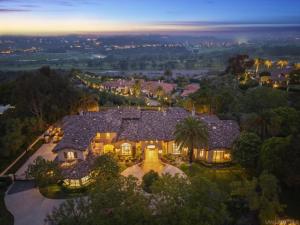
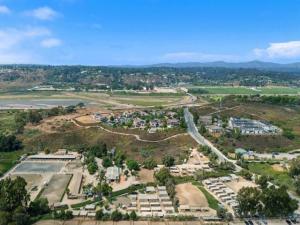
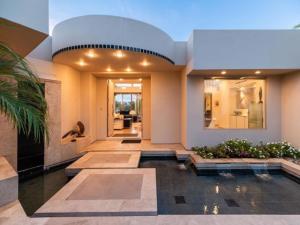
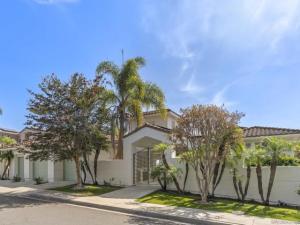
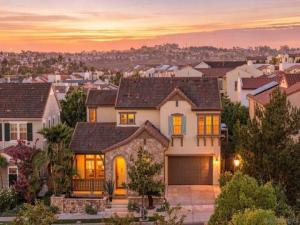
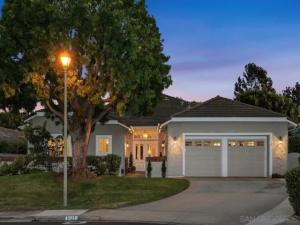
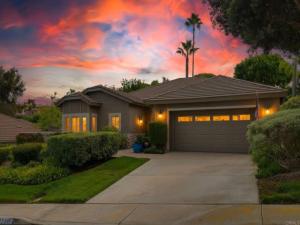
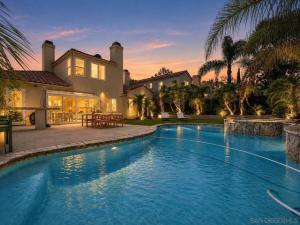
North City Homes for Sale currently number 14 active listings with a median asking price of $3,299,999 (CRMLS, September 2026).
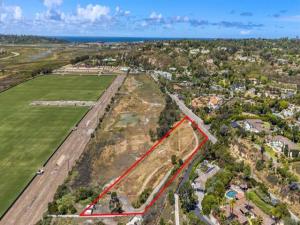
North City homes for sale sit on the coastal mesa terrain at San Diego’s northern edge, next to Del Mar and Solana Beach. The area covers the city’s master-planned northern communities: Carmel Valley, Del Mar Mesa, Black Mountain Ranch, Torrey Highlands, and Sabre Springs. Prices generally run from about $1.2 million to $3 million, and where a home lands in that band depends heavily on which community it’s in.
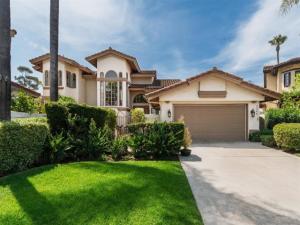
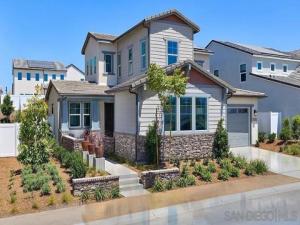
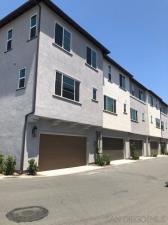
This is master-planned housing, so you’re looking at newer construction laid out with the amenities and street planning that come with that approach rather than the older housing stock found in the neighborhoods closer to downtown. Carmel Valley and Del Mar Mesa reach the top of the price range, driven by school district assignments and the quality of the planning and amenities in each community.
The spread between roughly $1.2 million and $3 million is wide enough that the community you pick matters more than square footage alone. Carmel Valley and Del Mar Mesa sit at the upper end, so buyers working near the lower half of the range will find more available in Sabre Springs, Torrey Highlands, and Black Mountain Ranch. School assignment is one of the factors pushing the top of the market, which means it is worth confirming exactly which schools serve a given address before you narrow your search — assignments do not follow community lines the way buyers often assume.
The other tradeoff is proximity versus value. North City real estate closest to Del Mar and Solana Beach carries the coastal premium; move inland across the mesa and the same budget goes further. Because these are planned communities, also compare what each one includes — amenities, HOA structure, and street layout differ meaningfully from one to the next.

Browse all San Diego County real estate.
North City is one of San Diego’s distinct residential communities, north city encompasses san diego’s master-planned northern communities — carmel valley, del mar mesa, black mountain ranch, and the torrey highlands and sabre springs communities that occupy the coastal mesa terrain at the city’s northern edge adjacent to del mar and solana beach within a city whose geographic diversity — ocean canyons, mesa communities, coastal strips, and the historic urban neighborhoods surrounding downtown — creates residential options for buyers across an unusually broad range of lifestyle preferences, price points, and lifestyle priorities. San Diego’s combination of mild climate, military employment, biotech and technology industry growth, and the quality of life that year-round outdoor access provides creates consistently robust residential demand across the city’s diverse community types.
San Diego Unified School District serves most San Diego city residential communities for K-12 education. The district’s performance varies significantly across its campuses — the North City communities (Carmel Valley, Del Mar Mesa, Black Mountain Ranch) are served by the district’s highest-performing schools including Canyon Crest Academy and Westview High School; coastal communities have above-average options; urban and lower-income communities have more variable outcomes. The specific school assignment for North City should be researched with SDUSD, as campus quality can vary significantly across adjacent neighborhoods within the district’s boundaries.
San Diego’s freeway system — the I-5, I-8, I-15, and I-805 — provides connectivity across the city’s diverse communities to the Sorrento Valley and Kearny Mesa employment corridors, downtown San Diego, and the regional freeway network connecting San Diego to Los Angeles to the north and to Mexico’s Tijuana to the south. The Trolley’s expanding light rail network, the Coaster commuter rail, and the airport’s direct flight access provide the transportation infrastructure that sustains San Diego’s connectivity as a major metropolitan area despite its geographically dispersed residential development pattern.
North City is San Diego’s planning designation for the large master-planned community zone in the city’s northern geographic area — the corridor that includes Carmel Valley, Black Mountain Ranch, Torrey Hills, Del Sur, and the surrounding planned residential communities developed from the 1980s through the 2000s on the mesa terrain north of the Miramar Marine Corps Air Station. North City’s residential character is primarily master-planned — the newer construction, the HOA-maintained common areas, the planned commercial centers adjacent to residential neighborhoods, and the SDUSD high school campuses (Westview, Torrey Pines area access) that sustain the academic quality that family buyers from throughout San Diego County have consistently targeted as a primary residential motivation for relocating to North City from older San Diego neighborhoods and from outside the region.
North City’s employment accessibility — the Sorrento Valley biotech corridor is approximately 10–20 minutes from most North City residential addresses, the I-15’s connection to the Carmel Mountain Ranch-Penasquitos employment zone, and the I-5’s connection to downtown San Diego via the Miramar and Rose Canyon corridors — sustains the professional workforce residential demand that the high-income buyer demographic who funds North City’s premium pricing requires. The commercial infrastructure (the Carmel Mountain Ranch Town Center, the Del Sur shopping center, the One Paseo mixed-use development in Carmel Valley) provides the daily-use retail, dining, and services that sustain North City’s lifestyle quality independently of the downtown or coastal commercial districts. The master-planned character, the school quality, and the employment proximity create the North City residential value proposition that has sustained the city’s fastest residential appreciation cycles through the post-2010 market.
Balboa Park is San Diego’s most significant cultural resource — a 1,200-acre urban park adjacent to downtown that houses 17 museums (including the San Diego Museum of Art, the Natural History Museum, and the Air and Space Museum), multiple performing arts venues, the San Diego Zoo, and the Spanish Colonial Revival architecture of the 1915 Panama-California Exposition that gives the park its distinctive architectural character. The park’s concentration of cultural, educational, and recreational resources within a single contiguous park space creates a civic amenity that sustains San Diego’s identity as a major American metropolitan center rather than a sprawling collection of suburban communities. Residents of neighborhoods adjacent to Balboa Park — North Park, Hillcrest, University Heights — can access the park’s museums, restaurants, and recreational facilities by walking or cycling.
San Diego Bay provides the waterfront experience that anchors the city’s maritime identity — the Harbor cruise, the USS Midway museum, the waterfront embarcadero, and the ferry to Coronado sustain downtown San Diego’s bayfront character. The bay’s protected waters sustain a significant boating culture, with multiple marinas (Shelter Island, Harbor Island, and others) providing slip access for private boats. Mission Bay, the large recreational waterway north of downtown, provides powerboating, sailing, sailing, and water sports access within a protected urban bay environment that is unique in California — a 4,600-acre waterway specifically developed for recreation within a major metropolitan area.
The I-5, I-8, I-15, and I-805 Freeways create the grid that connects San Diego’s diverse communities. The Trolley’s Blue Line, Orange Line, and Green Line provide light rail transit connecting downtown San Diego to Mission Valley, Kearny Mesa, El Cajon, National City, Chula Vista, and the UCSD campus. The Coaster provides commuter rail service north to Oceanside along the coast. San Diego International Airport (SAN), located 3 miles from downtown, provides the direct flight access that sustains San Diego’s connectivity to the national and international markets its biotech, defense, and tourism industries require. The airport’s proximity to downtown neighborhoods is both an asset (access convenience) and a trade-off (approach noise) that buyers near the flight path should assess carefully.
The city of San Diego encompasses one of the most diverse residential landscapes in the United States — 372 square miles of Pacific coastline, canyons, mesa communities, the historic Gaslamp Quarter, the Balboa Park cultural district, and the North City master-planned communities of Carmel Valley, Del Mar Mesa, and Black Mountain Ranch that provide the suburban residential option at the northern edge of the city’s geography. The 2026 median home price across the San Diego city proper ranges from approximately $700,000 for more affordable inland communities to $2 to $4 million in Carmel Valley, the Covenant section bordering Rancho Santa Fe, and the premium Del Mar Mesa and Rancho Pacifica communities that occupy the city’s most prestigious northern positions.
Carmel Valley is San Diego’s fastest-growing and most complete planned master community — a collection of residential villages, the One Paseo mixed-use development, the Carmel Valley Recreation Center, and access to the Sorrento Valley technology employment corridor that has made it one of Southern California’s most successful planned community developments. Del Mar Mesa and Black Mountain Ranch provide additional master-planned residential options at the northern city edge, with San Diego Unified School District’s highly rated Carmel Valley Middle School and Canyon Crest Academy serving the North City student population. Downtown San Diego’s ongoing revitalization — the Gaslamp Quarter, Little Italy, and the Embarcadero’s waterfront — has attracted a condominium residential market that provides urban living adjacent to San Diego Bay at pricing below La Jolla and Del Mar.
San Diego Unified School District serves most of the city’s K-12 population — a large, diverse district whose performance varies significantly across its campuses. The North City communities (Carmel Valley, Black Mountain Ranch, Del Mar Mesa) are served by the district’s strongest campuses, including Torrey Pines Elementary, Canyon Crest Academy (visual and performing arts focus), and Westview High School. Bay Park and the coastal-adjacent communities are served by mid-performing district campuses. Downtown San Diego’s school assignment depends on address and program selection within SDUSD’s choice enrollment system.
The City of San Diego — with approximately 1.4 million residents across 372 square miles, the eighth-largest city in the United States — encompasses the most geographically and demographically diverse residential market in San Diego County, with neighborhood types ranging from the downtown waterfront and Gaslamp Quarter’s urban core to the suburban planned communities of Black Mountain Ranch and Rancho Peñasquitos at the city’s northern edge. San Diego’s residential market benefits from the multi-sector employment base that reduces the cyclical volatility that single-sector-dependent cities experience: the Department of Defense and the naval, Marine Corps, and Coast Guard installations that account for approximately $28 billion in annual regional economic activity; the biotech and life sciences sector centered in the Torrey Mesa-Sorrento Valley-UTC corridor; the healthcare and hospital systems anchored by UC San Diego Health and Scripps Health; the technology sector that has made San Diego a significant digital economy hub; and the tourism industry that the Pacific beaches, the Zoo, Balboa Park, and the year-round climate sustain. This employment diversification creates the demand stability that sustains San Diego City residential values across economic cycles more consistently than the more concentrated economic bases of peer California cities.
The City of San Diego’s diverse residential geography creates distinct neighborhood market segments within a single municipal address — the coastal neighborhoods (Coronado notwithstanding, which is a separate municipality) including Ocean Beach, Pacific Beach, Mission Beach, and Point Loma command the coastal lifestyle premiums that sustain pricing in the $1–3 million range for single-family homes; the hillside neighborhoods of Mission Hills, North Park, South Park, and Kensington sustain the urban walkable community premiums that the gentrification of San Diego’s older neighborhood stock has produced; and the northern planned communities (Rancho Peñasquitos, Black Mountain Ranch, Del Mar Mesa) provide the large-lot, top-school-district access that family buyers who are priced out of La Jolla and Del Mar specifically target. The variation across these segments — urban walkable at $700K-$1.5M, coastal at $1.5M-$5M, northern planned community at $1M-$2.5M — creates the access range that the San Diego City address provides across a wider income spectrum than the more uniformly expensive municipalities in the northern coastal corridor.
San Diego Unified School District serves the city’s K-12 student population with significant quality variation across the district’s campuses — the northern city neighborhoods (Clairemont, Bay Park, Del Cerro) access mid-range SDUSD campuses, while the northernmost city addresses (Torrey Hills, Black Mountain Ranch, Del Mar Mesa) access the higher-rated San Diego Unified campuses that border or overlap with San Dieguito Union High School District’s coverage area. For family buyers whose primary residential driver is school quality, the specific school assignment for any San Diego City address should be verified directly with SDUSD before purchase, as the quality variation within the large district is more significant than the variation within the smaller, more uniformly excellent districts of Del Mar, Solana Beach, and Rancho Santa Fe that serve the north coastal communities.
North City homes range from approximately $1.2 to $3 million, with the top master-planned communities of Carmel Valley and Del Mar Mesa achieving the upper tier based on school district assignments and the quality of planning and amenities. San Diego city residential pricing ranges broadly — from approximately $600,000 in more affordable eastern and southeastern communities to $4 million or beyond in the North City master-planned communities and the city’s premium Carmel Valley and Torrey Hills sections. Current pricing for North City is available from The Knight Group.
San Diego Unified School District serves most San Diego city communities for K-12 education. The district’s campus quality varies significantly; specific campus assignments and academic performance data for North City should be researched before purchase for families with school-age children. The North City communities (Carmel Valley, Del Mar Mesa) are served by the district’s highest-performing campuses including Canyon Crest Academy and Westview High School.
Commute patterns from North City depend on the neighborhood’s position within San Diego’s diverse geography. North City communities have direct access to the Sorrento Valley and Carmel Valley technology employment corridor and I-5/I-805 freeway access for broader destinations. Coastal communities have I-5 access for north and south movement. Downtown-adjacent neighborhoods have the most transit access via the Trolley network. San Diego’s overall traffic is significantly less severe than the Los Angeles metropolitan area for comparable distances; commute times are more predictable and generally shorter for destinations within San Diego County.
North City San Diego encompasses several distinct master-planned communities: Carmel Valley (primarily 1980s-2000s, closest to the coast and La Jolla, highest prices), Black Mountain Ranch (2000s, largest lots, adjacent to open space, Westview HS), Del Sur (2000s-2010s, newest construction, attached community feel, Del Norte HS), Torrey Hills (adjacent to UCSD and Torrey Pines Reserve, newer mid-rise condos alongside single-family), and the various sub-communities of each master plan. The communities share SDUSD school district access and the North County commercial infrastructure but differ in their specific school assignments (which affect demand significantly within each community), their construction vintage (which affects maintenance, infrastructure, and design character), and their proximity to specific employment centers and lifestyle amenities. Within North City, the specific school assignment and the distance to UCSD or the I-5 corridor are the two factors that most significantly affect relative pricing across the community sub-areas.
Signup for email alerts when properties match your interest!
Lucky for you we’re looking out.
Subscribe to this Custom Search to be alerted when new properties hit the market in the area.
Choose the frequency that works for you.