Cambria CA Homes for Sale: What to Know Before You Drive Up Highway 1
Most buyers searching Cambria CA homes for sale are looking at a town of roughly 5,678 residents on Highway 1, midway between San Francisco and Los Angeles, with a median age of 63 and 45.2% of the population 65 or older. Supply here does not grow. Cambria is unincorporated, bounded by the Pacific on one side and ranchland on the other, and its water supply is finite and actively managed. That scarcity drives long-term value, and it causes most of the friction buyers hit in escrow.
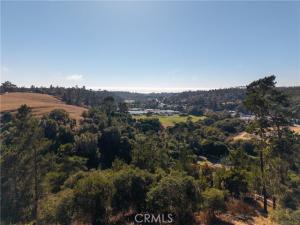
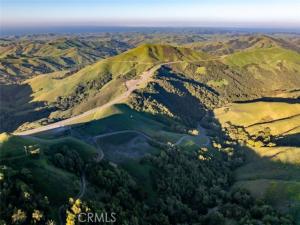
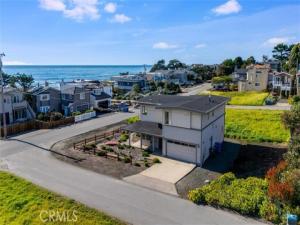
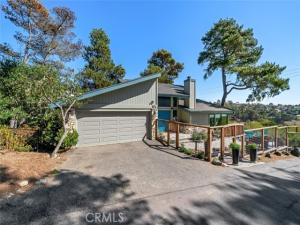
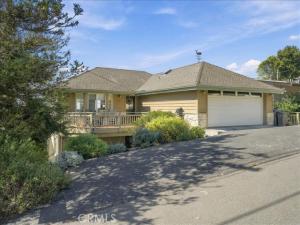
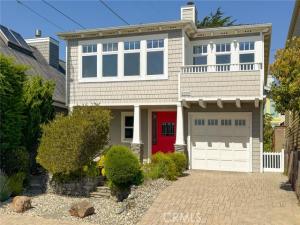
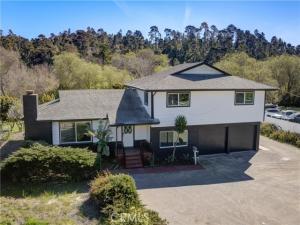
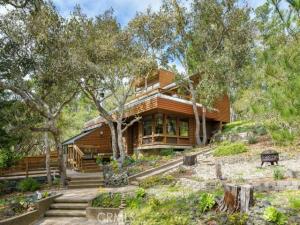
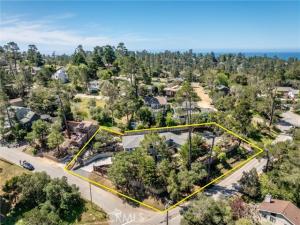
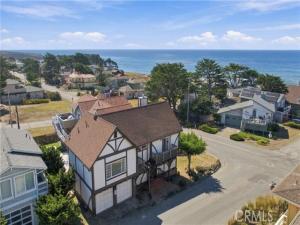
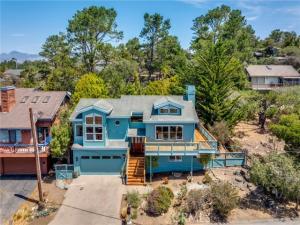
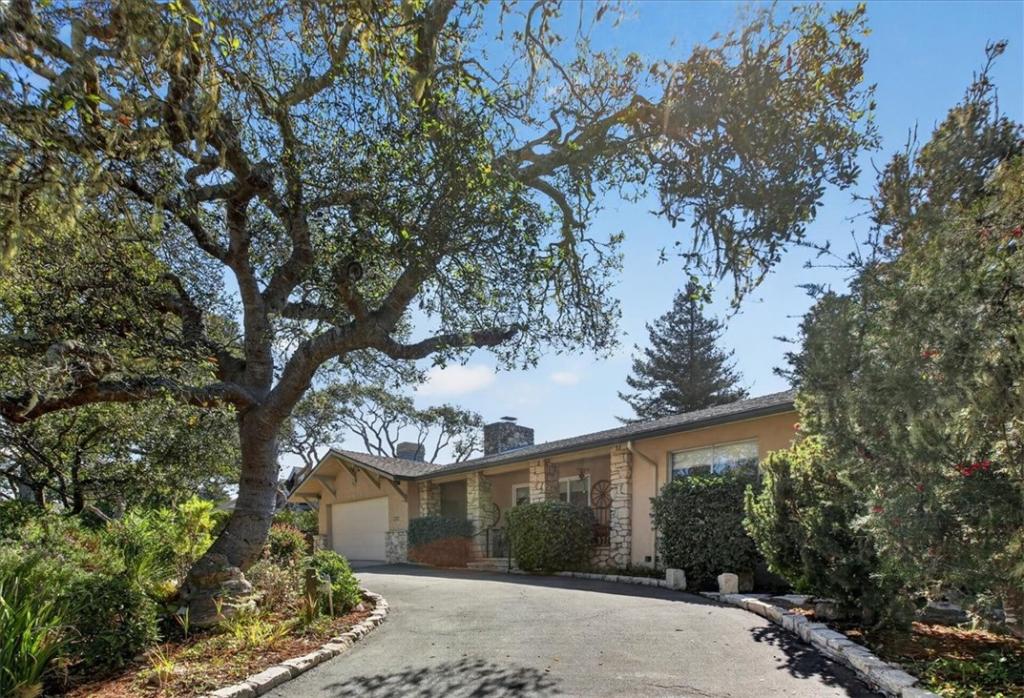
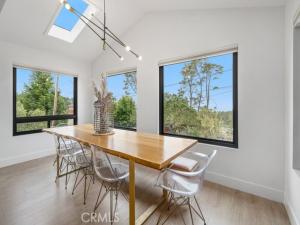
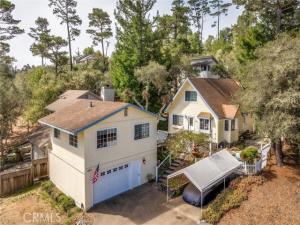
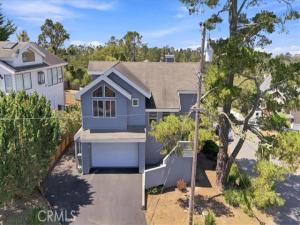
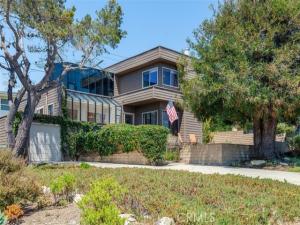
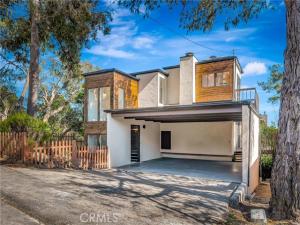
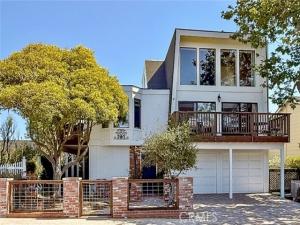
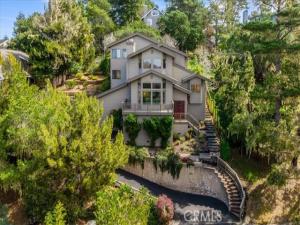
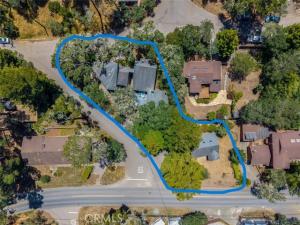
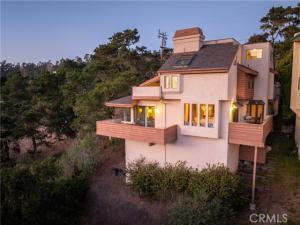
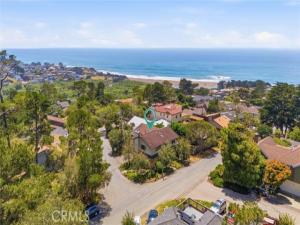
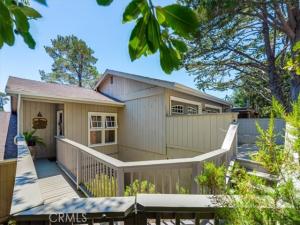
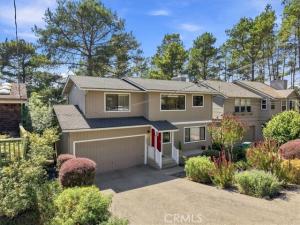
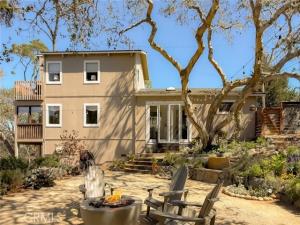
The housing stock is almost entirely detached single-family homes on small, hilly, tree-covered lots, weighted toward 1970s and 1980s construction, with split-level designs and a lot of stairs. Elevation, tree cover, and distance to the water set price: Lodge Hill for forest, Top of the World and Park Hill for views, Marine Terrace and Moonstone Beach for proximity to the shoreline, Leimert for walkability.
Browse the current Cambria listings below. If you want a read on a specific street, a specific tract, or a specific water connection before you spend a weekend driving up Highway 1, contact The Knight Group and we will pull it.
Where is Cambria and how do you get there?
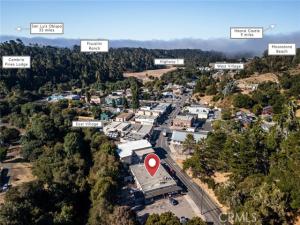
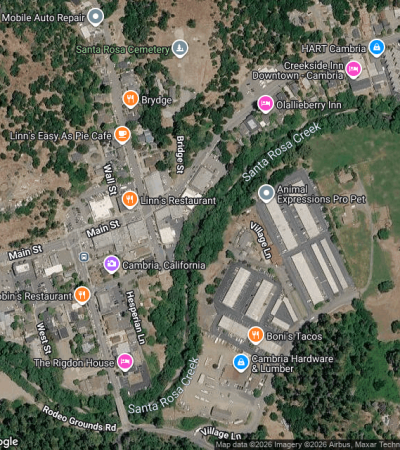
Cambria sits at roughly 35.55 degrees north on the San Luis Obispo County coast. Highway 1 is the spine and, functionally, the only through route. South of town, Highway 1 runs down through Cayucos and Morro Bay toward the city of San Luis Obispo. Just south of Cambria, Highway 46 West cuts inland over the Santa Lucia Range toward Paso Robles and the Highway 101 corridor, which is the practical connection to the rest of California for most residents.
North of town the road gets more interesting and less reliable. Hearst Castle is about six miles up the coast. The northern elephant seal rookery at Piedras Blancas is roughly fifteen miles north. Beyond that, Highway 1 enters the Big Sur coast, which closes periodically for slides and storm damage. Buyers who plan on regular northbound travel should treat that closure risk as a permanent feature of the location rather than an occasional inconvenience.
What this geography means in practice: Cambria is not a commuter town for any major employment center. It is a destination. People who buy here are retiring, working remotely, or buying a second home. Price that reality into your expectations for both resale liquidity and the pace of the local market.
What kind of housing stock does Cambria have?
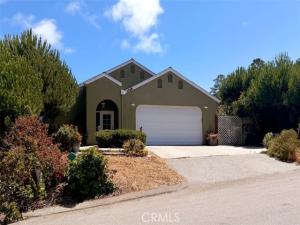
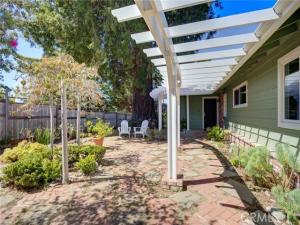
Cambria is dominated by detached single-family homes on small, hilly, tree-covered lots. Many of the town’s subdivisions were platted decades ago at lot sizes that would never be approved today, which is why the Cambria Community Services District maintains a Voluntary Lot Merger Program among its published programs. That program exists precisely because the town carries a large inventory of small legacy parcels.
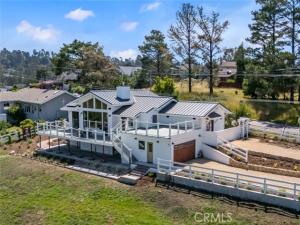
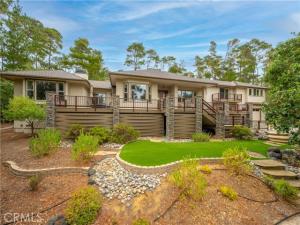
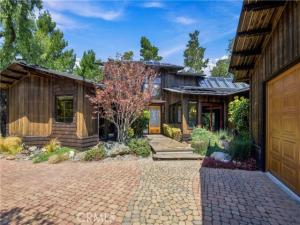
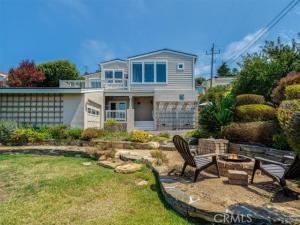
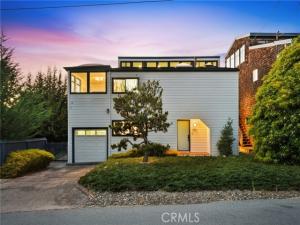
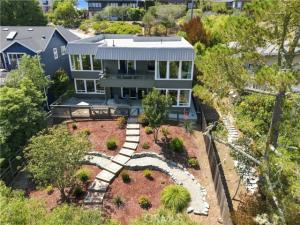
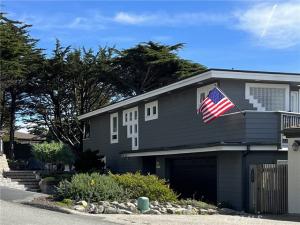
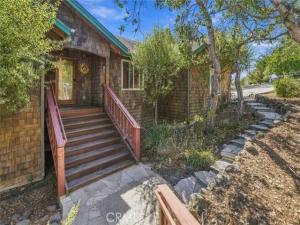
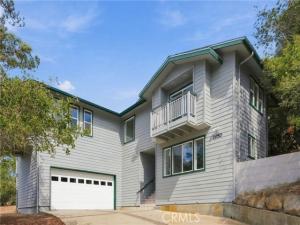
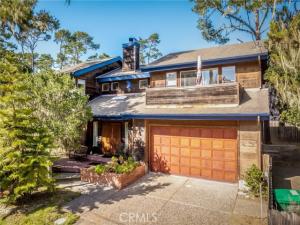
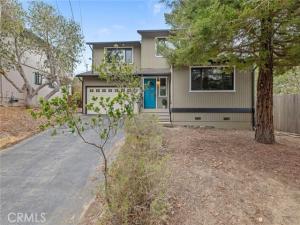
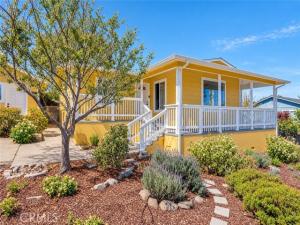
The architectural mix runs from mid-century cabins to substantial custom homes on view parcels, with a heavy concentration of 1970s and 1980s construction. Because so much of the town is built on slopes, split-level and multi-story designs are common, and so are homes with significant stair counts between the street and the front door. If mobility matters to you, that is a filter worth applying early rather than late.
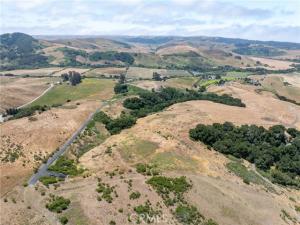
Vacant lots trade in Cambria as their own asset class. They are cheaper than improved property for a reason: a lot without an existing water connection is not automatically buildable. We treat undeveloped land here as a specialist purchase and will tell you plainly when a parcel does not pencil.
Which neighborhoods make up Cambria?
Cambria is best understood as a set of distinct hillside and terrace areas rather than a single grid. Elevation, tree cover, and distance to the water are the three variables that move price, and they vary sharply across a town this compact.
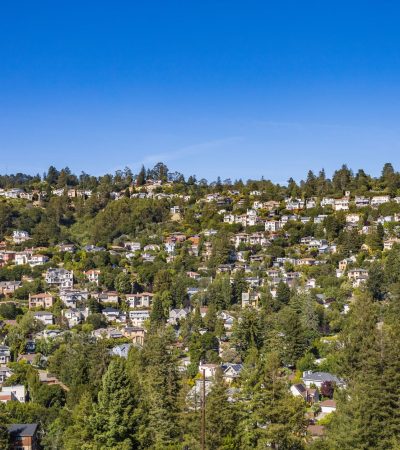
Lodge Hill is the large forested hillside section that accounts for a substantial share of Cambria’s residential inventory. It is dense with Monterey pine, laid out on narrow winding streets, and covers a wide range of price points. Start your orientation at Lodge Hill Cambria real estate if you want the forested setting and are comfortable with slope and shade.
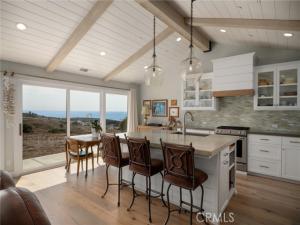
Top of the World is exactly what the name says: the high ground, where the payoff is panoramic ocean and forest exposure. Elevation buys view, and view carries a premium here. See Top of the World Cambria real estate for the properties at the top of the hill.
Park Hill is another elevated pocket where the draw is sightlines rather than walkability. Homes here trade on what you see from the deck. Review Park Hill Cambria real estate for the elevated-view inventory.
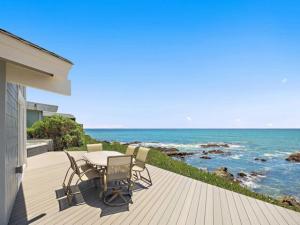
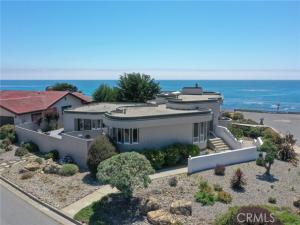
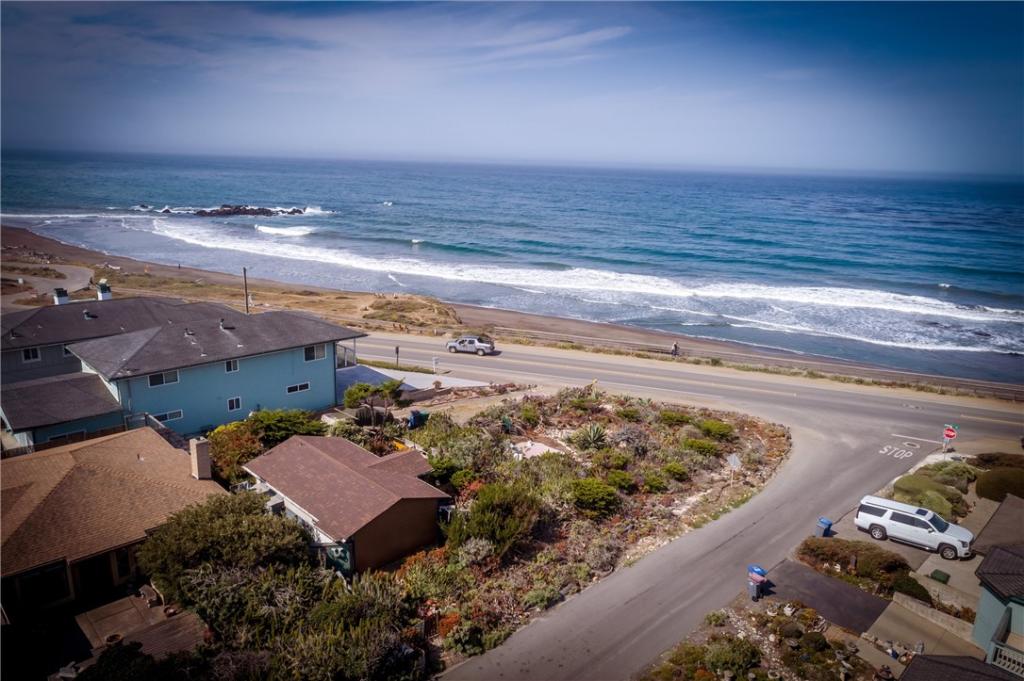
Marine Terrace sits closer to the ocean on the flatter coastal bench, which changes the character of the housing considerably: less slope, more direct proximity to the water, and a different exposure profile for wind and salt. Look at Marine Terrace Cambria real estate if being near the shoreline outranks being above it.
Moonstone Beach is the town’s best-known coastal frontage, defined by a 1.5-mile boardwalk named for the moonstones that wash ashore there. It is the hotel and inn corridor along Moonstone Beach Drive and the place most visitors experience first. Properties in and around this corridor are covered at Moonstone Beach Cambria real estate.
Leimert is a village-adjacent residential area, oriented toward Cambria’s walkable commercial core rather than toward the water. Buyers who want to walk to a restaurant instead of drive should start at Leimert Cambria real estate.
Pine Knolls Estates is a defined residential community within Cambria with its own street pattern and character. Inventory there is listed at Pine Knolls Estates Cambria real estate.
A practical note on all seven: in a town this small, tract boundaries are soft and local usage varies. Two agents will draw the line between areas differently. What matters more than the label is the specific parcel, its water status, its slope, its tree cover, and its exposure. We evaluate at the address level, not the tract level.
How does Cambria’s water situation affect buying here?
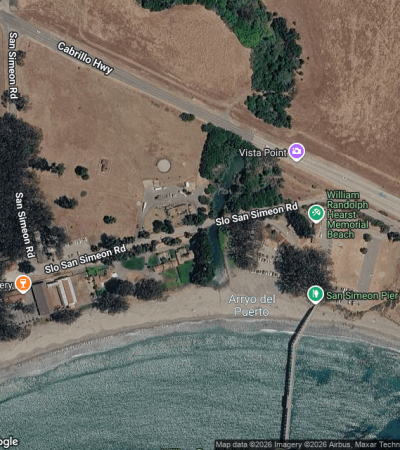
This is the question that separates informed Cambria buyers from surprised ones. The town draws its water from wells that tap San Simeon and Santa Rosa creeks. Those are small coastal watersheds, and their yield is weather-dependent. The Cambria Community Services District built a water treatment facility at a reported cost of $9.13 million to treat brackish water and buffer against shortage, a project that drew objections from critics concerned about effects on the San Simeon Creek lagoon ecosystem.
The operational consequence for buyers: CCSD publishes a Water Positions and Wait List program, a Transfers and Assignments process for existing connections, an Urban Water Management Plan, and a Water Shortage Contingency Plan with staged restrictions. In plain terms, water connections in Cambria are a managed, finite resource with their own administrative process, separate from the real estate transaction.
If you are buying an existing home with an existing connection, this mostly affects you through conservation rules and rates. If you are buying land, or planning an addition that increases fixture count, the water question is the deal. Verify status directly with CCSD before you remove contingencies. We build that verification into the escrow timeline as a matter of course rather than treating it as an afterthought.
What should you know about the Monterey pine forest before you buy?
The forest is the reason many people fall for Cambria, and it is also a maintenance obligation. Cambria sits in one of only three native mainland stands of Monterey pine on earth. Mainland populations of the species are listed as Endangered by the IUCN Red List and Critically Imperiled by NatureServe, with pine pitch canker fungus infecting 80 to 90 percent of trees in some stands.
Drought compounds it. During the 2012 to 2014 drought, estimates put as many as 40 percent of Cambria’s trees as dying. Dead and dying pines are a hazard-tree problem and a fuel problem at the same time, and the cost of removing a large pine from a steep lot with limited access is not trivial.
Two practical implications. First, tree removal in a coastal, environmentally sensitive setting is typically regulated, so assume you cannot simply cut what you want on your own parcel and confirm the rules before you buy a property whose value depends on clearing sightlines. Second, verify current fire hazard zone designation and, more importantly, confirm homeowners insurance availability and pricing for the specific address early in your search. Insurance capacity in California wildland-adjacent markets has tightened, and a quote is worth more than an assumption.
What are the coastal permitting rules in Cambria?
Cambria lies within California’s Coastal Zone, which means most development, remodels beyond a certain scope, grading, and tree work fall under coastal development permit review in addition to standard county building permits. Because Cambria is unincorporated, San Luis Obispo County is the land use authority, not a city council.
The effect on a purchase decision is timeline and cost. A project that would take one permit cycle inland can take considerably longer on the coast, and design constraints tied to view corridors, bluff setbacks, and habitat protection can reshape what you thought you were buying. Two marine protected areas sit offshore of the town, the Cambria State Marine Conservation Area and the White Rock (Cambria) State Marine Conservation Area, which is a useful signal of how the regulatory environment treats this coastline.
None of this is a reason to avoid Cambria. It is a reason to underwrite renovation plans conservatively and to get a feasibility read before you write an offer on a property whose value depends on a project you have not yet priced.
What is daily life in Cambria actually like?
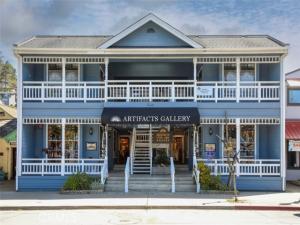
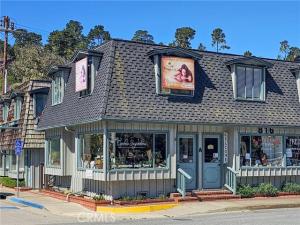
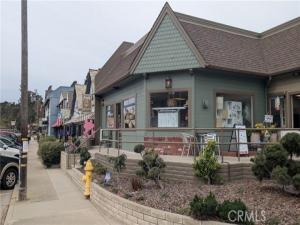
Tourism is the primary economic activity in Cambria. The town supports bed-and-breakfasts, inns, and hotels along Moonstone Beach Drive, plus a walkable commercial core built around independent restaurants, galleries, and shops. That gives residents an amenity base larger than a town of 5,678 would ordinarily carry, along with the seasonal traffic that comes with it.
Open space is the other defining amenity. Fiscalini Ranch Preserve covers 430 acres and protects more than a mile of Pacific coastline with public trail access, functioning as the town’s backyard. The Moonstone Beach boardwalk runs 1.5 miles along the shore, with seals, sea otters, and tide pools in view. Fifteen miles north, the elephant seal rookery at Piedras Blancas draws visitors year-round.
The town also keeps its history visible. Cambria began as Slabtown and was renamed in 1869, the name drawn from the Latin term for Wales. Nitt Witt Ridge, a house built from recycled materials, is a California Historical Landmark. The Cambria Historical Museum keeps the record of the town’s mercury mining era, when the Oceanic Quicksilver Mining Company employed 300 workers and ranked as the sixth-largest mine in the world, peaking at $282,832 in production in 1876 before collapsing after an 1889 fire.
What you give up: big-box retail, a wide restaurant selection at off-peak hours, and immediate access to a major medical center. Buyers relocating from a metro area should test drive those gaps for a week before committing.
Which schools serve Cambria?
Cambria is served by the Coast Unified School District, which operates one elementary school covering kindergarten through fifth grade, one middle school covering sixth through eighth, and Coast Union High School, which serves approximately 150 students. That is a genuinely small district, and it produces the trade-offs you would expect: high staff-to-student familiarity, limited course catalog breadth, and small athletic programs. The Coast Union girls volleyball program won CIF Southern Section championships in 1993 and 2011.
Given a median resident age of 63.0, school-age households are a minority of the buyer pool here. Families evaluating a move should visit the campuses directly and speak with the district rather than relying on aggregate rating sites, which handle very small schools poorly.
Who is actually buying in Cambria?
Three buyer types dominate. Retirees and pre-retirees relocating from Southern California, the Bay Area, and the Central Valley make up the largest share, consistent with the town’s age profile. Second-home buyers form the next group, drawn by the coastline and the drive-to positioning between two major metros. Remote workers are the newest and most variable segment.
Each type prices differently. Retirees weigh single-level layouts, stair counts, and proximity to the village heavily. Second-home buyers weigh view and rental potential, which makes short-term rental rules a material question worth confirming with the county before purchase rather than after. Remote workers weigh connectivity, which is worth testing at the specific address.
Understanding which pool a listing was priced for tells you a great deal about where the negotiation room actually is.
What are the real trade-offs of owning in Cambria?
The upside is straightforward: a constrained coastal market inside a rare forest ecosystem, with permanent geographic limits on new supply and an amenity base that outperforms the population count.
The costs are equally concrete. Water is administratively managed and not guaranteed for new development. Fire exposure in a pine forest is real and insurance is the practical test of it. Coastal permitting lengthens and complicates renovation. Slope and stairs affect long-term livability. Highway 1 closures north of town are recurring. Marine layer means many days are cool and gray even in summer, which some buyers love and others discover too late. Resale liquidity in a small market is thinner than in a metro, so holding period matters more.
We would rather you hear all of that before you write an offer than discover it in year two.
How should you approach pricing and offers in Cambria?
Comparable sales in a town this size require judgment rather than arithmetic. A single street can hold a view parcel and a shaded interior lot with materially different values, and the sample size in any given tract over any given six months is small. Averaging across Cambria as a whole produces a number that describes no actual property.
Our approach is to build the comparison set at the parcel level: elevation, sightline, slope, tree cover, exposure, water connection status, permit history, and condition. Then we look at days on market and price adjustments for genuinely similar properties rather than similar zip codes. In a market where inventory turns slowly, the history of a listing is often more informative than its list price.
If you want that analysis for a property you are already watching, send us the address.
Frequently Asked Questions About cambria Homes for Sale
Is Cambria a city?
No. Cambria is an unincorporated community in San Luis Obispo County. Land use decisions run through the county, and the Cambria Community Services District handles local services including water and wastewater. There is no city council.
Can I build a new house on a vacant lot in Cambria?
Not automatically. Water service is the gating factor, and CCSD administers a wait list and transfer process for connections. Coastal development permitting adds a second layer. Confirm both with CCSD and San Luis Obispo County in writing before you commit to a land purchase.
How far is Cambria from Hearst Castle?
About six miles north on Highway 1. The elephant seal rookery at Piedras Blancas is roughly fifteen miles north.
What schools serve Cambria?
Coast Unified School District, with one K-5 elementary school, one 6-8 middle school, and Coast Union High School, which serves approximately 150 students.
Is wildfire a concern in Cambria?
Cambria is built inside a native Monterey pine forest, and forest health has been under pressure from pine pitch canker and drought, with as many as 40 percent of trees reported dying during the 2012 to 2014 drought. Treat fire hazard zone verification and an early insurance quote as required steps, not optional ones.
Which part of Cambria has ocean views?
Elevated areas including Top of the World and Park Hill are oriented toward panoramic exposure, while Marine Terrace and the Moonstone Beach corridor trade proximity to the water for elevation. Views vary parcel by parcel because of tree cover, so verify sightlines on site and consider how they change as surrounding pines grow.
What is the population of Cambria?
The 2020 census recorded 5,678 residents, down from 6,032 in 2010. The median age was 63.0, with 45.2 percent of residents aged 65 or older.
Is Cambria a good short-term rental market?
Tourism is the town’s primary economic activity, which supports demand, but short-term rental regulation is set by San Luis Obispo County and is subject to change. Confirm current rules for the specific parcel before underwriting a purchase on rental income.
How does The Knight Group work in the Cambria market?
We work Cambria the way we work every constrained coastal market: parcel first, tract second. Before you tour, we pull the water connection status, the permit history, the slope and exposure profile, and the comparable set for the specific address, and we tell you where the property is weak as clearly as where it is strong.
For sellers, that same discipline sets the price. A Cambria listing that is priced off a townwide average will sit. One priced against genuinely comparable parcels, with the view, water, and access advantages documented up front for out-of-area buyers, moves.
Browse the Cambria listings and neighborhood pages linked above. When you have a shortlist, contact The Knight Group and we will build the analysis around it.
What should buyers know about Cambria CA Homes before visiting?
- Supply of Cambria CA Homes does not grow, because the town is bounded by the Pacific on one side and ranchland on the other.
- Water supply in Cambria is finite and actively managed, and that scarcity causes most of the friction buyers hit in escrow.
- Scarcity drives long-term value in Cambria, which is the underlying reason the town holds its pricing over the long run.
- Housing stock consists almost entirely of detached single-family homes on small, hilly, tree-covered lots throughout the town.
- Elevation, tree cover, and distance to the water are the three variables that set price across Cambria CA Homes.
- Lodge Hill is the large forested hillside section, dense with Monterey pine, laid out on narrow winding streets across a wide range of price points.
- Top of the World and Park Hill are the areas buyers look to when views drive the purchase decision.
- Marine Terrace and Moonstone Beach offer proximity to the shoreline, while Leimert is the section known for walkability.
- Cambria is not a commuter town for any major employment center, so buyers here are retiring, working remotely, or purchasing a second home.
- Split-level and multi-story designs are common because so much of the town is built on slopes, and stair counts between street and door run high.
- Vacant lots trade as their own asset class, and a lot without an existing water connection is not automatically buildable.
What is daily life like in Cambria CA Homes?
- Tourism is the primary economic activity supporting Cambria, giving residents an amenity base larger than a town this size would ordinarily carry.
- Moonstone Beach Drive holds the bed-and-breakfasts, inns, and hotels that anchor the visitor side of the local economy.
- Cambria CA Homes sit near a walkable commercial core built around independent restaurants, galleries, and shops.
- Fiscalini Ranch Preserve protects Pacific coastline with public trail access and functions as the town’s backyard for residents.
- Moonstone Beach boardwalk runs along the shore with seals, sea otters, and tide pools in view.
- Piedras Blancas hosts an elephant seal rookery north of town that draws visitors year-round.
- Cambria began as Slabtown and was later renamed, the name drawn from the Latin term for Wales.
- Nitt Witt Ridge, a house built from recycled materials, holds status as a California Historical Landmark.
- Cambria Historical Museum keeps the record of the town’s mercury mining era and the Oceanic Quicksilver Mining Company.
- Buyers relocating to Cambria CA Homes give up big-box retail, wide restaurant selection at off-peak hours, and immediate access to a major medical center.
- Coast Unified School District serves the town with an elementary school, a middle school, and Coast Union High School.
- Coastal development permit review governs most development, remodels beyond a certain scope, grading, and tree work throughout the town.
- San Luis Obispo County is the land use authority for Cambria CA Homes rather than a city council, because the town is unincorporated.
- Retirees and pre-retirees relocating from Southern California, the Bay Area, and the Central Valley make up the largest share of buyers.
- Second-home buyers weigh view and rental potential heavily, which makes short-term rental rules a material question to confirm with the county.
What questions do buyers ask about Cambria CA Homes?
- Cambria is an unincorporated community in San Luis Obispo County, with no city council and land use decisions running through the county.
- Cambria Community Services District handles local services including water and wastewater for the community.
- Building a new house on a vacant lot is not automatic, because water service is the gating factor for Cambria CA Homes.
- Water connections are administered through a wait list and transfer process managed by the Cambria Community Services District.
- Coastal development permitting adds a second layer of review on top of the water question for land purchases.
- Buyers considering land should confirm water and permitting in writing with both the district and the county before committing.
- Coast Union High School serves the town alongside an elementary school and a middle school within Coast Unified School District.
- Cambria CA Homes are built inside a native Monterey pine forest, where forest health has been under pressure from pine pitch canker and drought.
- Fire hazard zone verification and an early insurance quote are required steps rather than optional ones for buyers here.
- Top of the World and Park Hill are the elevated areas oriented toward panoramic ocean exposure.
- Marine Terrace and the Moonstone Beach corridor trade proximity to the water for elevation and the views elevation brings.
- Sightlines vary parcel by parcel because of tree cover, so views should be verified on site as surrounding pines grow.
- Short-term rental regulation is set by San Luis Obispo County and subject to change, so current rules deserve parcel-level confirmation.
- Cambria CA Homes reward a parcel-first approach that reviews water connection status, permit history, slope and exposure, and the comparable set.