Browse all Santa Barbara County real estate.

Browse all Santa Barbara County real estate.
No properties found. |
Buyers looking at homes for sale in Lompoc are usually after the same thing: coastal Santa Barbara County living at a price the rest of the county no longer offers. Lompoc is a city of 44,444 people in the Lompoc Valley along the Santa Ynez River, close to Vandenberg Space Force Base and the Sta. Rita Hills. The tradeoff is honest. The city is not on the 101 — Highway 246 connects you east through wine country to Buellton — so a daily Santa Barbara commute is a real decision.
The stock is mostly detached single-family homes on conventional lots. In town, much of it is single-story tract construction from the missile-era buildout of the late 1950s. Newer two-story plans and HOAs show up on the north and east edges, and the mesa and hillside communities — Vandenberg Village, Mission Hills, Mesa Oaks — sit higher, with larger lots and newer construction at the top of the valley’s range. Condos and townhomes are a small share here.
Browse the current Lompoc listings below, or contact The Knight Group directly. We will tell you which of these submarkets fits what you are actually trying to accomplish, and which ones we would steer you away from.
Lompoc sits inland from the coast at an elevation of roughly 80 to 100 feet, north of Santa Barbara and south of Santa Maria. Two state highways define access. State Route 1 runs north and south through the valley, toward Santa Maria in one direction and the Gaviota coast in the other. State Route 246 runs east out of Lompoc through the Sta. Rita Hills to Buellton and the Santa Ynez Valley, where it meets U.S. 101.
That geometry is the most important thing a buyer needs to understand about Lompoc. The city is not on the 101. It is connected to the 101 by a two-lane highway through wine country. If your job is in Santa Barbara proper and you need to be there five days a week, be honest about that drive before you make an offer.
The commutes that do work from here are Vandenberg Space Force Base, which is immediately adjacent, Santa Maria to the north, and the Santa Ynez Valley to the east. A large share of the valley’s working population never touches the 101 on a weekday. That is why this market behaves independently of Santa Barbara’s.
Mostly detached single-family homes on conventional lots, varying by decade and by part of the valley. The city grew hard through the missile-era buildout starting in the late 1950s, and much of the in-town inventory reflects that: single-story tract construction, straightforward floor plans, attached garages, mature street trees. Later phases on the north and east edges brought larger two-story plans and, in some cases, homeowner associations.
The mesa and hillside communities north of the city sit at higher elevation, generally in the 150 to 325 foot range depending on the area, and tend toward larger lots and newer construction. Those neighborhoods hold the upper end of the valley’s price range. Condominium and townhome product exists but is a small share of the market compared to Santa Barbara or Goleta.
We do not publish price figures on this page. Central Coast pricing moves quarter to quarter, and a stale number on a webpage is worse than no number. Ask us for a current comparable set on the specific streets you are considering and we will send actual closed sales.
The Lompoc Valley is not one market. It is a city plus a ring of distinct residential areas, some inside city limits and some in unincorporated Santa Barbara County, each with its own construction era, elevation, and service providers.
Vandenberg Village is the largest outlying community and the one most buyers ask about first. It is a census-designated place in the hills north of Lompoc, and the 2020 Census counted 7,308 residents, up 12.5 percent from 6,497 in 2010. Median household income there was estimated at $104,714 as of 2023. Water and wastewater come from the Vandenberg Village Community Services District rather than the City of Lompoc, electricity from PG&E. Cabrillo High School, Buena Vista Elementary, and Maple High sit within the community.
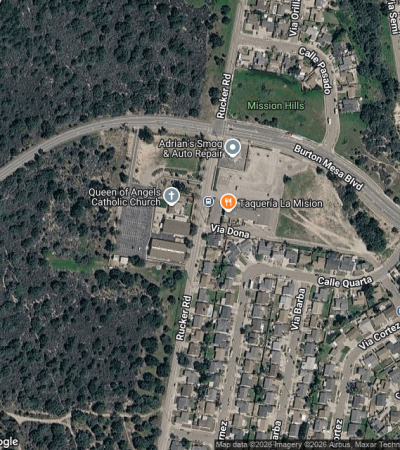
Mission Hills is the other established unincorporated community, sitting a short distance north of Lompoc on Highway 1 at an elevation of 325 feet across 1.2 square miles. The 2020 Census recorded 3,571 residents in 1,184 occupied households, flat against 3,576 in 2010. It is the most owner-dominated submarket in the valley: 83.4 percent owner-occupied, 59 percent married-couple households, 4.9 percent below the poverty line, with estimated median household income of $106,455 in 2023. Buyers looking for stability and low turnover start here.
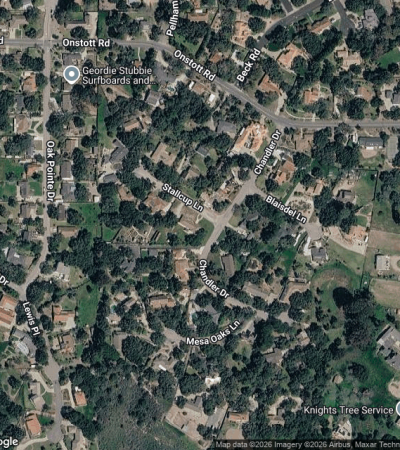
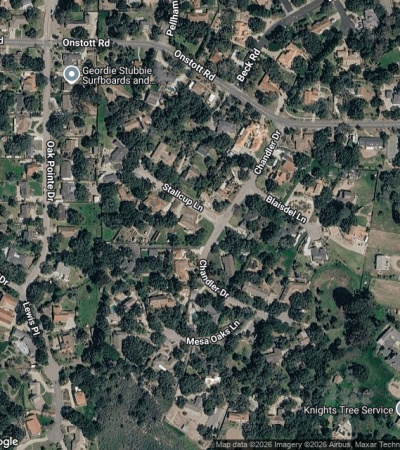
Mesa Oaks occupies the elevated mesa terrain north of the city and is organized as a homeowner association community. Directly related is The Bluffs at Mesa Oaks, a distinct enclave within the same mesa area. Association communities carry governing documents, dues, and architectural review under California’s Davis-Stirling Common Interest Development Act. We pull the full document package before you remove contingencies, because dues and rules vary and we will not quote numbers we have not read off the current statement.
Mission Hills and the mesa communities share the same general geography, but they are separate markets with separate comparable sets. Do not let an agent price one off the other.
The Wye area is the gateway district at the north end of the valley, where the highway corridors converge and traffic enters Lompoc. It is the transition zone between the city grid and the unincorporated mesa communities, which makes location within it matter more than usual. Some parcels are quiet. Some sit close to the highway. That is a walk-the-street decision, not a listing-photo decision.
University Park is the college-adjacent pocket. Allan Hancock College operates its Lompoc Valley Center in the city, and proximity to a community college campus tends to support steady rental demand alongside owner-occupancy. If you are underwriting a rental, look here first.
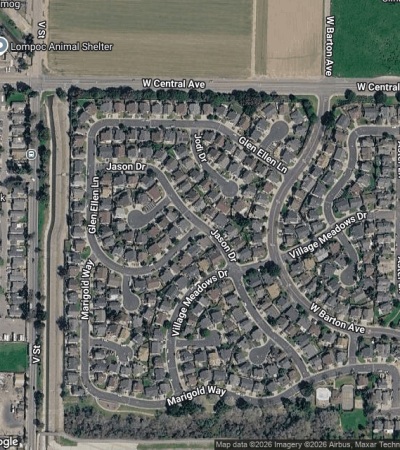
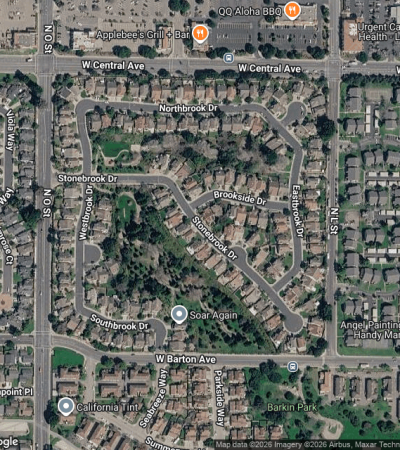
Stonebrook, Laurel Crossing, and Glen Ellen are named residential subdivisions within the Lompoc market. Subdivision identity matters more here than in a large city, because each tract was built in a defined window with a consistent set of floor plans, and buyers who know the valley shop by tract name. Ask which tract a street belongs to before assuming two listings are comparable.
Chinchilla Heights is hillside residential. Hillside parcels anywhere in Santa Barbara County bring their own diligence list: grading and drainage history, retaining walls, driveway grade, fire hazard zone designation. None of that is a reason to avoid the area. All of it is a reason to inspect properly.
It is the dominant economic fact of the valley. Vandenberg Space Force Base occupies 99,099 acres between Lompoc and Santa Maria and directly employs more Lompoc residents than any other employer, contributing approximately $1.7 billion to the regional economy. It began as Camp Cooke, an Army training facility, in 1941, became Cooke Air Force Base in 1957, was renamed Vandenberg Air Force Base in 1958 as a test site for Thor and Atlas missiles, and was redesignated a Space Force Base on May 14, 2021.
Today the base serves as a launch site for the Western Range, with Space Launch Delta 30 as the host unit. SpaceX launches Falcon 9 from Space Launch Complex 4-East and has leased Space Launch Complex 6 for conversion, adding first-stage landing pads for Falcon 9 and Falcon Heavy, with operations there anticipated in the 2025 to 2026 window.
For a buyer, this means three things. Demand is structurally supported by a workforce not tied to the Santa Barbara economy. That workforce rotates, so military and contractor households move on assignment cycles, producing reliable rental demand and a steady supply of well-maintained homes coming to market. And launch activity is audible. Sonic booms from returning boosters are a normal part of life here. Most residents stop noticing. Some do not. If noise sensitivity matters to your household, spend a launch day here first.
Lompoc is the western gateway to the Sta. Rita Hills AVA, which was approved as the nation’s 144th American Viticultural Area on May 31, 2001. The appellation runs east to west between Lompoc on its western boundary and the Buellton flats on the east, covering 35,520 acres with roughly 2,700 acres planted across about 60 operations. Chardonnay and Pinot Noir dominate, and the appellation is internationally recognized for both.
The reason the fruit works here is the same reason the real estate is what it is: marine influence enters through Lompoc from the west and dissipates abruptly at the eastern boundary, producing average post-veraison temperatures roughly 14.7 degrees Fahrenheit cooler than the adjacent Santa Ynez Valley. The 2004 film Sideways raised the region’s profile.
Practically, the wine economy gives Lompoc something most affordable markets lack: a tourism and hospitality layer. Roughly 30 boutique labels are produced locally with tasting rooms in town, concentrated in the industrial-park cluster locals call the Wine Ghetto. That supports restaurants, lodging demand, and a weekend visitor economy that did not exist here a generation ago.
Lompoc Unified School District serves the entire valley: the city, Mission Hills, Vandenberg Village, and the base. As of the 2020 to 2021 school year it enrolled 9,231 students at a student-teacher ratio of 21.17 to 1. The district operates nine elementary schools: Buena Vista, Clarence Ruth, Crestview, Leonora Fillmore, Arthur Hapgood, La Cañada, La Honda, Los Berros, and Miguelito. Middle schools are Lompoc Valley Middle and Vandenberg Middle. High schools are Lompoc High, Cabrillo High, and Maple High, a continuation campus. The district also runs the Mission Valley home school program and adult education.
Allan Hancock College operates its Lompoc Valley Center in the city, giving residents a community college option without leaving the valley. We do not publish school ratings. Rating providers change methodology and boundaries get redrawn. Confirm attendance boundaries with the district directly before you write an offer that depends on them.
This is the diligence item buyers miss most often here. Vandenberg Village and Mission Hills are census-designated places in unincorporated Santa Barbara County. They are not inside the City of Lompoc, and that changes several things at once.
Permitting and land use for unincorporated parcels run through Santa Barbara County rather than the city’s planning department, which means different processes, timelines, and standards for additions, accessory dwelling units, and remodels. Utilities differ too: Vandenberg Village receives water and wastewater service from the Vandenberg Village Community Services District and electricity from PG&E, not from City of Lompoc utilities. Street maintenance, code enforcement, and law enforcement are county functions in unincorporated areas. None of this makes unincorporated property better or worse. It makes it different. Ask which jurisdiction governs an address before you plan any project that requires a permit.
Start with fire. Santa Barbara County contains mapped fire hazard severity zones, and hillside and mesa parcels at the valley edges are exactly where designations matter. Pull the Cal Fire hazard map for the parcel, then confirm what the designation does to insurance availability and premium before you release your contingency. In California’s current insurance market, that is a financing question, not a formality.
Second, agriculture. The valley’s economy has long included seed flower and vegetable growing, and the city calls itself the City of Arts and Flowers, with a Flower Festival held the last week of June. Active farmland is an amenity from a distance and a set of real conditions up close: early equipment noise, spray schedules, dust, seasonal odor. Right-to-farm protections mean an established operation will not change because a new neighbor objects. Know what borders the parcel.
Third, industry. The valley’s employment base includes the Federal Correctional Institution at Lompoc, the Lompoc Oil Field and associated processing, and diatomaceous earth mining. The Imerys diatomite operation opened in 1893 and is described as the world’s largest marine diatomite mine. These are long-established facilities with defined footprints. Proximity to one is a location decision to make knowingly.
Fourth, association governance. For Mesa Oaks, The Bluffs, and any other common interest development, request the full Davis-Stirling disclosure package: dues, reserve study, budget, governing documents, minutes, and any pending litigation or special assessment.
Fifth, ordinary structural items. Foundation and drainage on graded lots, sewer versus septic on unincorporated parcels, roof age, and whether prior additions were permitted. On any home from the missile-era buildout, budget for a sewer lateral scope and an electrical panel assessment.
One thing Lompoc buyers and sellers do not face: the City of Los Angeles transfer tax under Measure ULA, which applies only within Los Angeles city limits. Lompoc transactions carry standard county documentary transfer tax, and your escrow officer will confirm the figure for your sale price.
Lompoc has a cool Mediterranean climate, classified Csb, with abundant sun, a persistent ocean breeze, and frequent fog. Snow is virtually unknown. The record high on file is 110 degrees Fahrenheit in 1987 and the record low 20 degrees Fahrenheit in 1990, but those are outliers. The pattern is mild.
Two practical consequences. Air conditioning is not the necessity here that it is inland, which affects both operating cost and what you should expect to find installed. And the marine layer is real: persistent moisture weathers exterior paint, wood trim, fencing, and roofing faster than it does 30 miles inland. Inspect exterior wood and any elevation that stays damp. Elevation matters too, and the mesa communities often clear the fog earlier in the day than the city grid does.
It can be, and the case rests on the employment base rather than on appreciation speculation. A large military installation with rotating personnel, a federal correctional facility, a community college center, and an agricultural workforce together produce rental demand that does not depend on the Santa Barbara cycle. The college-adjacent and in-town areas are where that demand concentrates.
The counterweight: this is a smaller market with thinner transaction volume than a metro, so exit liquidity is slower and pricing is more sensitive to the specific tract and street. Statewide rules apply as well, including the California Tenant Protection Act rent cap and just-cause requirements, subject to the statute’s exemptions. Confirm how those apply to the property type and vintage you are buying before you write.
The buyers who do well in Lompoc real estate tend to have one thing in common: their work, their family, or their tolerance for driving already points inland rather than south. Base personnel and civilian contractors at Vandenberg, Santa Maria commuters, and people working in the Santa Ynez Valley all end up in the same valley for practical reasons. Retirees and remote workers show up for the lot sizes and the price gap against the coast. If none of those describe you, the 246 corridor to the 101 is the question to settle before you tour anything.
Once you are past that, the decision is city grid versus mesa. In-town streets give you single-story plans, no dues, and shorter errands. Vandenberg Village, Mission Hills, and Mesa Oaks give you elevation, bigger lots, newer construction, and in some cases an association and a separate water district. Neither is the better buy in the abstract. Tell us the commute and the lot you want, and we will tell you which side to shop.
Yes. Lompoc is an incorporated city in Santa Barbara County, incorporated August 13, 1888. The surrounding communities of Vandenberg Village and Mission Hills are census-designated places in unincorporated Santa Barbara County, governed by the county rather than the city.
The 2020 U.S. Census recorded 44,444 residents across 11.7 square miles, a density of 3,824 people per square mile, with a median age of 35.7 years. The Census also reported that 57.3 percent of residents identified as Hispanic or Latino.
Of the two large unincorporated communities, Mission Hills: 83.4 percent of occupied units were owner-occupied per the 2020 Census, with 59 percent married-couple households. Vandenberg Village is larger, at 7,308 residents versus 3,571.
No. Vandenberg Village is a civilian community in unincorporated Santa Barbara County, not on-base housing. It is open to any buyer. Its proximity to the base simply means many residents work there.
Frequently, yes. Vandenberg Space Force Base is an active launch site for the Western Range, with SpaceX operating Falcon 9 from Space Launch Complex 4-East. Launches and returning-booster sonic booms are audible across the valley. Most residents treat it as a feature. Decide for yourself in person.
You are in it. Lompoc forms the western boundary of the Sta. Rita Hills AVA, established May 31, 2001 as the 144th American Viticultural Area across 35,520 acres. State Route 246 runs east from Lompoc through the appellation to Buellton.
Lompoc Unified School District serves the city, Mission Hills, Vandenberg Village, and the base. It enrolled 9,231 students in the 2020 to 2021 school year. Verify attendance boundaries with the district before relying on them.
Cal Fire hazard severity zone designation and its insurance consequences, grading and drainage history, retaining wall condition, driveway grade, sewer versus septic, and whether the parcel is city or county jurisdiction for future permits. In an association such as Mesa Oaks or The Bluffs, add the full Davis-Stirling document package.
We work this valley by tract, by street, and by disclosure package. That means we tell you which subdivision a listing belongs to and which closed sales are genuinely comparable, rather than pricing the whole valley off one citywide average. It means we pull the fire hazard designation, the jurisdiction, and the utility provider for a specific address before you write, not during escrow.
For sellers, the same discipline runs in reverse. Lompoc has distinct buyer segments: base and contractor households on assignment timelines, Santa Ynez and Santa Maria buyers priced out of their own valleys, wine-country weekend buyers, and long-tenured local move-up buyers. Positioning a home for the wrong one costs weeks on market.
Browse the Lompoc listings below. To go deeper on a neighborhood, start with the community pages linked above, then contact The Knight Group. Tell us the constraint that matters most, whether commute, school boundary, lot size, insurance cost, or budget ceiling, and we will tell you which parts of this valley solve for it and which do not.
The Knight Group is here to help you with all your realty needs. To get started, fill out the form below and one of our experienced agents will contact you as quickly as possible.
Copyright © 2024 The Knight Group.
All rights reserved. License: 02133297