Browse all Santa Barbara County real estate.

Browse all Santa Barbara County real estate.
Santa Maria is the largest city in Santa Barbara County and the commercial center of California’s Central Coast north of the Gaviota Pass. The 2020 census counted 109,707 residents across roughly 23.4 square miles. The city was founded in 1874, incorporated on September 12, 1905, and still runs on the three engines it always has: agriculture, energy, and aerospace. What changed is the housing. Over the last two decades the valley absorbed a wave of subdivision and master-planned development, giving buyers something the Central Coast rarely offers: newer construction on real lots at prices well below Santa Barbara or the South County beach towns.
That price gap is the whole argument. You are roughly 65 miles northwest of Santa Barbara and about 150 miles from Los Angeles, close enough to the coast to get marine air every morning and far enough from the tourist corridor that land still pencils. Buyers priced out of San Luis Obispo, Pismo Beach, or the Santa Ynez Valley routinely end up here and find they can buy square footage, a garage, and a yard instead of a condo. Sellers are selling into real local demand from Vandenberg Space Force Base, Marian Regional Medical Center, and the agricultural economy, not second-home money.
Browse the current listings below, or open the neighborhood page for whichever community you are weighing. For the honest read on which pocket fits your budget, your commute, and your tolerance for HOA rules, contact The Knight Group.
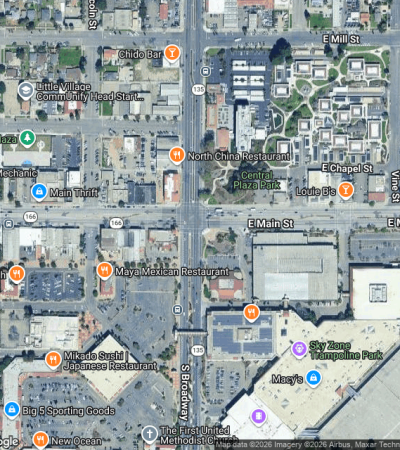
Santa Maria sits at the north end of Santa Barbara County, right at the San Luis Obispo County line. The Santa Maria River forms the northern boundary, the Pacific is to the west with Guadalupe about nine miles out, and the San Rafael Mountains and Los Padres National Forest rise to the east. Orcutt sits immediately south, and Vandenberg Space Force Base occupies the coastal terrain between Santa Maria and Lompoc.
The valley is a funnel that opens west to the ocean, and that geometry matters more than it sounds. Because it runs east to west rather than north to south, marine air and fog move inland freely, which is why summer afternoons stay cool. The climate is classified as cool Mediterranean and average annual rainfall is about 13.32 inches. In practice you get gray mornings, mild afternoons, and very few days where you truly need air conditioning. Santa Maria buyers get coastal climate without coastal pricing, and they trade sunshine hours for it.
Santa Maria is a workforce and move-up market with a genuine high-end tier stacked on top, not a resort market. Most inventory is single-family detached built from the 1960s forward. Attached product exists, largely in the villa-style and townhome developments, and it serves as the entry point for first-time buyers and the exit for downsizers.
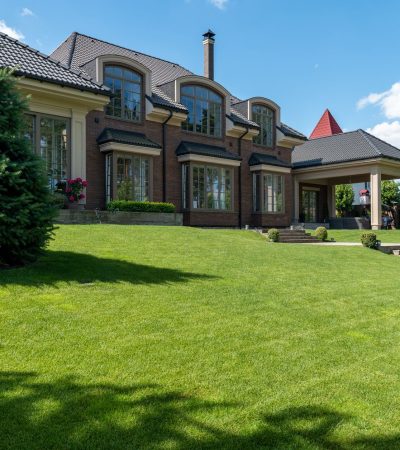
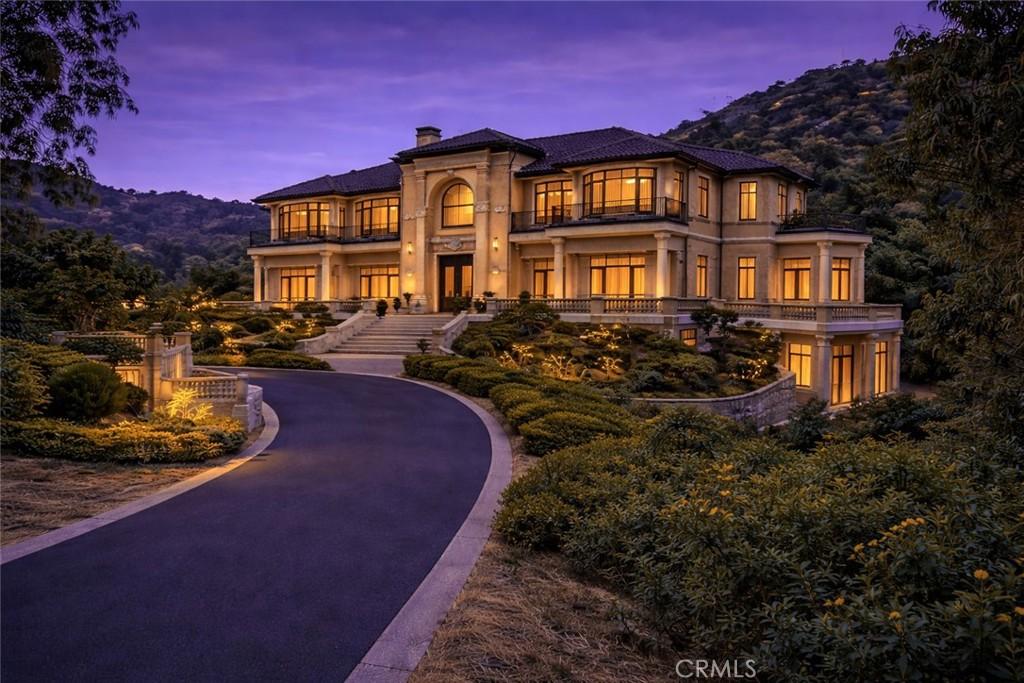
The upper tier is real but concentrated. Custom and semi-custom homes on larger parcels cluster in a handful of established estate subdivisions and in the hillside pockets around Orcutt. That is where the valley’s higher price per square foot lives, and where listing strategy changes the outcome, because the buyer pool for a genuinely high-end Santa Maria property is smaller and often comes from outside the area.
Two structural facts. Santa Maria competes directly with San Luis Obispo County, so pricing is anchored partly to Nipomo, Arroyo Grande, and Pismo Beach rather than to Santa Barbara. And much of the newer inventory sits in planned developments with homeowners associations and, in some cases, special district financing. Those carrying costs are not optional. We are deliberately not publishing a median price figure here, because any number would be stale within weeks. Ask us for the current month’s absorption and days on market for the subdivision you are considering.
Santa Maria is not one market. It is a set of subdivisions with distinct build years, lot sizes, HOA structures, and price bands, and two of them a mile apart can price very differently. Each page below covers one community.
Start with the two anchors. Orcutt is the unincorporated community directly south of the city and the most consistently sought-after address in the valley, with its own school district and its own identity. Inside Orcutt, Rice Ranch is the master-planned community that reshaped the south end of the valley, and the usual first stop for buyers who want newer construction.
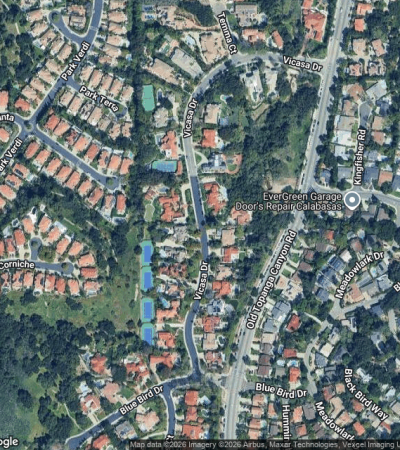
The established estate tier is where larger homes and larger lots concentrate. Foxenwood Estates is one of the best-known names in the area and a benchmark for mature-tree, larger-lot living. Its attached counterpart, Foxenwoods Garden Villas, serves buyers who want the same location with less exterior maintenance. Oakhill Country Estates and Hidden Pines Estates trade on lot size and setting rather than proximity to retail, which is the right trade for privacy and the wrong one if you want to walk to a grocery store. The Estates at Pacific Crest and Valley View Estates round out that group, and Regency Estates suits buyers who want an established street pattern rather than a new build.
The move-up tier is the deepest part of the market and where most buyers actually transact. Westgate Ranch and Westrail Estates cover the west side. The Meadows, The Groves, and Quail Meadows West are tract neighborhoods where floor plans repeat across the street, which is useful for pricing because comparable sales come out unusually clean. Sunrise Hills and Pine Creek sit in the same band. Arborwalk is one of the newer names on the list and draws buyers who want current-code construction without a custom build.
Then the attached and lower-maintenance group, where first-time buyers, investors, and downsizers should concentrate: Creekridge Villas and Toby Villas. Attached ownership in California is governed by the Davis-Stirling Common Interest Development Act, so you are buying into recorded governing documents and a shared reserve fund, not just four walls. Read the reserve study. It is the most predictive document about whether your dues are about to jump.
Finally, the established residential districts inside the city. Mesa Verde and Los Cabos reward buyers willing to renovate, since older stock in a rising submarket is usually where the spread is. Hancock Park takes its name from its position near Allan Hancock College, which makes it relevant to anyone underwriting long-term rental demand.
One caution. Subdivision names here get used loosely, including in listing remarks. Confirm the legal tract and the HOA of record on the preliminary title report. It determines dues, rules, and sometimes attendance area.
Orcutt is a separate community with a separate governance structure, and that difference shows up in price. It is an unincorporated census-designated place in Santa Barbara County, not part of the City of Santa Maria, sitting between Highway 135 and Route 1. The 2020 census recorded 32,034 residents, up 10.8 percent from 28,905 in 2010, and in 2005 it ranked among the county’s fastest-growing places.
The name comes from William Warren Orcutt of Union Oil, remembered as the “Dean of Petroleum Geologists,” who identified the first fossilized bones in the asphalt pools that became the La Brea Tar Pits. The town began as a townsite for oil field workers.
The practical distinctions: Orcutt is served by the Orcutt Union School District for elementary and middle grades, and per Wikipedia’s summary those schools rate in the 70th and 80th percentiles against other California schools. Unincorporated status means county rather than city jurisdiction for permitting. Old Town Orcutt gives the community a walkable commercial core most Santa Maria subdivisions lack. Those factors, plus newer housing stock, are why Orcutt addresses generally command a premium over comparable square footage inside city limits.
The school picture is unusual because elementary and secondary education run through separate districts, and the boundaries do not always match what buyers assume. The Santa Maria Joint Union High School District is the oldest high school district in California and serves roughly 7,800 students across four campuses: Santa Maria High School, Pioneer Valley High School, Ernest Righetti High School, and Delta Continuation High School. Righetti is the campus most often associated with Orcutt-area addresses. Elementary and middle grades are split between the Santa Maria-Bonita School District, which covers much of the city and employs about 2,100 people per publicly compiled city figures, and the Orcutt Union School District.
Higher education is anchored by Allan Hancock College, started under the Santa Maria High School District in 1920 as Santa Maria Junior College and moved to its current site in 1954. The main campus covers about 105 acres, with additional centers in Lompoc and at Vandenberg. Hancock matters to buyers twice over: significant local employer, and steady rental demand nearby. Do not buy on an assumed attendance area. Confirm with the district before removing contingencies.
US 101 is the spine, running north to San Luis Obispo and south to Santa Barbara and eventually Los Angeles. State Route 1 and State Route 135 handle coastal and Orcutt-side movement, including routes toward Vandenberg and Lompoc. Local bus service runs through Santa Maria Area Transit, and Amtrak connects by bus to the Guadalupe station rather than by rail from the city itself.
Set expectations honestly. Santa Barbara is roughly 65 miles southeast, a genuine commute rather than a hop, which is why few people do it daily by choice. San Luis Obispo is the more realistic cross-county commute and the reason buyers treat the Santa Maria and Nipomo corridor as one market. Vandenberg is close enough that base employment drives a meaningful share of local demand.
Air service is limited but real. Santa Maria Public Airport, code SMX, sits about three miles south of the city. Allegiant Air serves Las Vegas twice weekly. American Eagle resumed service in 2025 and discontinued it in May 2026, so scheduled options are thin and worth verifying before you rely on them. The primary runway was extended in 2012 to 8,004 by 150 feet, the longest civil runway on the Central Coast between Los Angeles and San Jose, which makes SMX a serious general aviation option. For most scheduled travel, buyers here use San Luis Obispo or Santa Barbara.
Three sectors carry the valley: aerospace and defense, healthcare, and agriculture. Vandenberg Space Force Base is the largest area employer at roughly 6,700 people per publicly compiled city figures. Its geography is the reason it exists: missiles and satellites launch westward over the Pacific and into polar orbit without overflying populated areas. Space Launch Delta 30 hosts the installation, and SpaceX has been expanding there, with Falcon 9 launches from SLC-6 expected from 2025 and Falcon Heavy in 2026. Healthcare is the second pillar, with Marian Regional Medical Center employing about 1,920 people. Agriculture, wine, oil, and light manufacturing round it out.
Wine shapes both the local economy and the reason outside buyers discover the valley. The Santa Maria Valley AVA was established on August 5, 1981, making it the nation’s third American Viticultural Area and California’s second. It covered 97,483 acres originally and expanded to 116,273 acres by 2010, with roughly 7,500 acres planted. The east-west orientation pulls Pacific wind and fog inland, placing the region in Region I on the Winkler Scale, and that long cool growing season is why the appellation is known for Pinot Noir and Chardonnay.
Why it matters: a diversified base of defense, healthcare, agriculture, and wine tourism holds up better through a downturn than a single-industry town.
Weather is cooler and grayer than buyers expect. The marine layer is a feature of the geography, not an occasional event. If you are relocating from inland, spend a summer morning here before you commit.
Water is a Central Coast issue. Rainfall averages about 13.32 inches a year and the valley’s agriculture and vineyards run on irrigation. Supply and groundwater management are live regulatory topics. Ask who the purveyor is for any specific property.
Wildfire exposure varies sharply by location. Properties near the foothills, the Los Padres National Forest edge, and the higher-elevation Orcutt-area subdivisions carry different risk than flat inland tract housing. Cal Fire publishes Fire Hazard Severity Zone maps, and where a parcel falls affects required disclosures and insurance availability and pricing. Check the parcel. Do not generalize from the neighborhood.
Carrying costs beyond the mortgage. Planned developments here can carry HOA dues, and some newer California developments are financed through Mello-Roos community facilities districts that add a special assessment to the tax bill. Whether a given subdivision carries one is answered by the tax bill and disclosure package. A few hundred dollars a month moves your buying power materially.
Resale is slower than in a coastal resort market. The buyer pool for high-end Santa Maria property is smaller and more local than in Santa Barbara. Fine if you plan to hold for years. A real risk if you expect to sell in 18 months.
The valley’s identity is food, wine, and open space. Santa Maria-style barbecue is a real regional culinary tradition built around tri-tip, and one of the few American barbecue styles named for a specific town. The Santa Barbara County Fair has run at the Santa Maria Fairpark since 1891. Wine country is at the doorstep, with the Santa Maria Valley AVA and the Santa Ynez Valley putting a dense concentration of Pinot Noir and Chardonnay producers within reach.
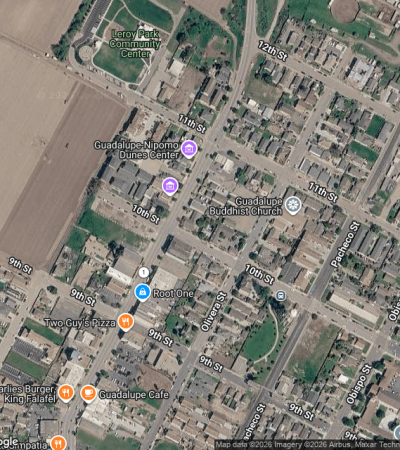
For coast and open space, the Guadalupe-Nipomo Dunes complex is the standout: about 22,000 acres across roughly 18 miles of coastline, the largest remaining dune system south of San Francisco and the second largest in California. Designated a National Natural Landmark in 1974, it includes Mussel Rock Dune at roughly 500 feet, the highest dunes on the western coast of the United States. Pismo Beach, San Luis Obispo, and Solvang are all inside a comfortable drive, which is much of why buyers accept the valley’s inland position.
It is the value play. You get Central Coast climate and access at prices below San Luis Obispo, Pismo Beach, and Santa Barbara, with a diversified employment base behind local demand. The trade is that it is a working city rather than a resort town, and appreciation runs steadier rather than spiky.
No. Orcutt is an unincorporated census-designated place in Santa Barbara County directly south of the city, with 32,034 residents at the 2020 census. It is served by the Orcutt Union School District rather than Santa Maria-Bonita, and falls under county rather than city jurisdiction. Mailing addresses often read Santa Maria, which is why the confusion persists.
The premium generally sits in the established estate subdivisions and the newer Orcutt-side developments, where lot sizes and build quality run higher. We are not publishing a ranking with dollar figures because the ordering shifts with inventory. Ask us for a current price-per-square-foot comparison and we will pull live MLS data.
Some do and some do not, and it is parcel-specific. Planned developments and attached-housing communities carry HOA dues governed by the Davis-Stirling Act. Mello-Roos special assessments apply inside a community facilities district and appear on the county property tax bill. Both are verifiable before you remove contingencies. Never assume from the subdivision name.
Most Santa Maria and Orcutt addresses feed the Santa Maria Joint Union High School District, which runs Santa Maria High, Pioneer Valley, Ernest Righetti, and Delta Continuation for roughly 7,800 students. Elementary and middle grades depend on whether you are in the Santa Maria-Bonita or Orcutt Union district. Confirm with the district for the exact address.
Yes. Santa Maria Public Airport, SMX, is about three miles south of the city. Commercial service is limited: Allegiant flies to Las Vegas twice weekly, and American Eagle service that resumed in 2025 was discontinued in May 2026. The 8,004-foot main runway is the longest civil runway between Los Angeles and San Jose on the Central Coast, so general aviation use is strong.
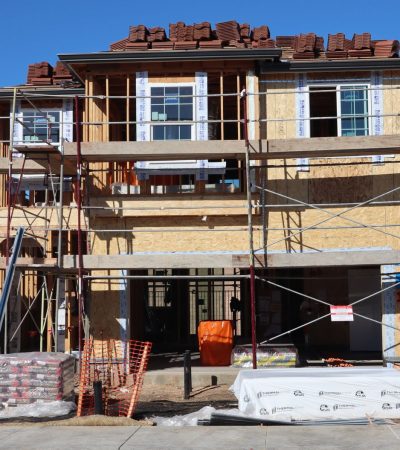
Yes, more than in most Central Coast markets. The valley absorbed heavy subdivision and master-planned development over the past two decades, which is why buyers who want current-code construction have real options here that are scarce in San Luis Obispo or Santa Barbara at comparable prices.
We work Santa Maria parcel-level, not headline-level. Before you tour anything, we build a shortlist tied to your actual constraints: school district, HOA and assessment tolerance, commute direction, wildfire and insurance exposure. Then we pull live MLS absorption and days-on-market for those subdivisions so you know whether you are negotiating from strength or competing.
For sellers, the work is positioning against the right comparable set. A Foxenwood Estates home and a Rice Ranch home are not competing for the same buyer, and pricing one off the other costs money. We identify which pool your property actually draws from, including buyers coming down from San Luis Obispo County, and market to that pool directly rather than listing and waiting.
When you want the read that is not on any public site, the pending sale that has not recorded yet, the assessment nobody mentions in the listing remarks, the street that floods, contact The Knight Group and we will give it to you straight.
The Knight Group is here to help you with all your realty needs. To get started, fill out the form below and one of our experienced agents will contact you as quickly as possible.
Copyright © 2024 The Knight Group.
All rights reserved. License: 02133297