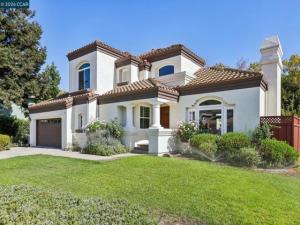
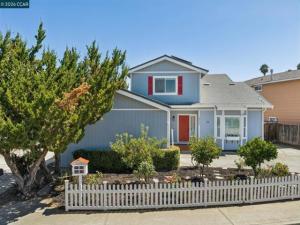
Homes for Sale in Morgan Hill currently number 89 active listings with a median asking price of $1,328,147 (CRMLS, September 2026).
Homes for sale in Morgan Hill sit about 24 miles south of downtown San Jose and 13 miles north of Gilroy, at the southern end of Santa Clara County. This is where county real estate stops behaving like the Peninsula and starts behaving like a valley town with land: bigger lots, hillside parcels that actually trade, and new construction you won’t find much of farther north. Redfin put the median sale price at $1,294,225 as of May 2026, down 4.1% year over year. Expensive nationally, moderate for this county. The trade-off is commute time and thin transit.
Inventory falls into four buckets: downtown bungalows, infill townhomes, and condos along Monterey Road; postwar through 1990s tract neighborhoods on the valley floor that carry most of the volume; hillside custom homes on the east and west edges in areas like Jackson Oaks and Holiday Lake Estates; and new construction such as Toll Brothers’ Manzanita Park, priced from roughly $1.2 million. Valley floor and hillside are different markets and need to be underwritten differently.
The trade-off is commute time and thin transit, and two location-specific items deserve attention before you write an offer: the state preemption that suspended the city’s decades-old growth cap, and the Anderson Dam rebuild that has kept the county’s largest reservoir near empty for years. Browse the current Morgan Hill listings below, or contact The Knight Group to talk through a specific street, subdivision, or parcel.
Morgan Hill sits on the Highway 101 corridor between the Coyote Valley greenbelt to the north and San Martin and Gilroy to the south. That geography is not incidental. The open land north of the city is the main reason Morgan Hill still reads as a separate town rather than a San Jose suburb, and it is protected by design.
Coyote Valley comprises roughly 7,400 acres of greenbelt between San Jose and Morgan Hill, and conservation groups have been acquiring it steadily. The Santa Clara Valley Habitat Agency, the Open Space Authority, and the Peninsula Open Space Trust announced protection of the 1,861-acre Tilton Ranch, bringing permanently protected acreage adjoining Coyote Valley above 2,900 acres. The practical effect: the northern approach to Morgan Hill is unlikely to fill in with tract housing.
East, the land rises into the Diablo Range toward Henry W. Coe State Park. West, Uvas Road and Croy Road climb toward Uvas and Chesbro reservoirs. El Toro, the conical peak in nearly every Morgan Hill photograph, tops out near 1,427 feet. The result is a compact valley floor of gridded, walkable neighborhoods ringed by hillside parcels. Those two settings behave like different markets and should be underwritten differently.
Morgan Hill is expensive by national standards and moderate by Santa Clara County standards. That is the whole thesis. Buyers priced out of Los Gatos, Almaden, and Willow Glen land here and trade minutes on the freeway for square footage and lot size.
The most recent verifiable figure is the Redfin median sale price of $1,294,225 as of May 2026, down 4.1% from the prior year, with Redfin calling the market somewhat competitive and homes going pending in roughly two weeks. Treat that as directional. Morgan Hill carries enough product variety, from downtown condos to multi-acre hillside parcels, that a citywide median tells you little about a specific street.
Inventory splits into four buckets. Downtown and near-downtown: older bungalows, infill townhomes, newer condominium product. Postwar through 1990s tract neighborhoods on the valley floor, which supply most of the transaction volume. Hillside custom homes on the east and west edges, where views, access driveways, and well and septic questions drive value. And new construction.
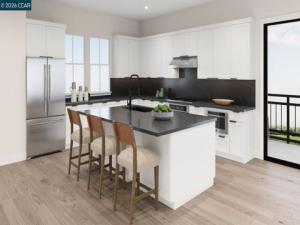
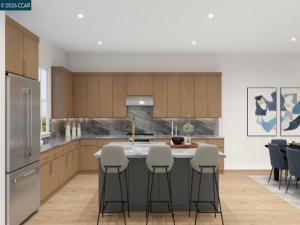
New construction changes negotiating dynamics. Toll Brothers announced Manzanita Park at 19685 Juniper Loop, 67 residences ranging from about 1,350 to more than 2,400 square feet, expected to open for sale in early 2025 and priced from approximately $1.2 million, plus Huntington, 93 townhome-styled condominiums. Where new product is actively selling, resale sellers compete against incentives, a warranty, and a model home. Most underestimate that constraint.
Neighborhood names here are used loosely by consumer sites, so treat this as a working map rather than official boundaries.
Downtown Morgan Hill is the pedestrian core along Monterey Road and the part of town that has changed most in fifteen years. The city sold the Granada Theater to a private developer who remodeled it into a live entertainment venue, and a four-story boutique hotel adjacent to the theater at Monterey and East First was approved with restaurants, retail, and banquet space. Downtown supports a year-round farmers market, a summer Friday night concert series, and one of the Bay Area’s oldest Fourth of July parades, running since 1876. Downtown condos and townhomes are the entry point for buyers who want to walk to dinner.
Jackson Oaks is the east-side hillside neighborhood, known for elevation, valley views, and winding streets, with a census-derived population near 1,086. Homes read individual rather than tract. Budget for hillside inspection items: drainage, retaining walls, driveway grade, defensible space.
Holiday Lake Estates sits in the eastern foothills near Anderson Reservoir, with custom homes on varied elevations. Reservoir views are the selling point, with the caveat that the reservoir has been held near empty for the dam project described below.
Paradise Valley is on the west side, flatter and more walkable, with the Santa Cruz Mountains as backdrop and hillside trail access. It is one of the most consistently requested submarkets in town.
Madrone is the northern end of town along Monterey Road, historically a separate settlement and now the corridor absorbing much of the city’s new multifamily. A 249-unit Jemcor apartment project at Monterey Road and Madrone Parkway was structured with all units qualifying as affordable under state and regional guidelines.
Coyote, at the far north edge, straddles the transition into the protected valley. El Toro, The Granary, Heritage Greens, and Capriano are additional names in common local use. For a street-level read on any of them, contact The Knight Group and we will pull the comparable set.
It depends entirely on where you work, and you should test it before you buy. Highway 101 and Monterey Road carry almost all of the load. Caltrain serves a Morgan Hill station downtown, but service runs weekday peak hours only, northbound in the morning and southbound in the evening. That works for someone on standard hours in San Jose, on the Peninsula, or in San Francisco. It does not work for reverse commutes, midday travel, or variable schedules. A City of Morgan Hill transportation analysis put it plainly: the limited train service does not provide a substantive commute mode and does not accommodate travel in the non-peak direction, which pushes traffic onto Monterey Road and US 101.
VTA connections at the station include routes 68 and 87, Express 121, and Rapid 568, plus a Morgan Hill on-demand shuttle for citywide point-to-point trips. Only two local, non-express routes, 16 and 68, serve downtown directly.
Drive your actual commute at your actual departure time, in both directions, on a Tuesday. The difference between a 7:15 and a 7:45 departure is material.
Morgan Hill Unified School District serves the city and a wide surrounding area. It describes itself as the largest geographical district in the state, serving roughly 9,133 students across Morgan Hill, portions of San Jose, and the unincorporated areas of San Martin and Coyote Valley. That size means attendance boundaries matter and can shift. Verify the assigned school for an address with the district, not a listing portal.
The district runs three high schools: Live Oak, Ann Sobrato, and Central. Live Oak Union High School was established in 1904 and the current campus opened in 1975. Sobrato opened in 2004 as the city’s second comprehensive high school. On the 2025 California School Dashboard, the district reported graduation rates for the Class of 2025 exceeding 95% at both Live Oak and Sobrato. Gavilan College also operates a campus serving Morgan Hill.
We do not quote third-party school rating scores in property advice, because those scores compress unrelated variables into one number. Read the dashboard data and visit the campus.
This is the most misunderstood item in Morgan Hill real estate. Voters approved a Residential Development Control System in 1977 to limit sprawl. Under the RDCS, developers competed for a limited number of annual building allotments by earning points for delivering schools, parks, affordable units, and open space. Measure S, approved in November 2016 and effective March 1, 2017, updated the system and was codified at Morgan Hill Municipal Code Chapter 18.156. It capped annual allotments at 215 units and set a citywide population ceiling of 58,200 through 2035.
That system is currently suspended. The city states it directly: SB 330, the Housing Crisis Act of 2019, effective January 1, 2020 and later extended through 2030, preempts and precludes enforcement of those portions of the RDCS while the Act is in effect.
Why a buyer should care. The scarcity premium the growth cap created is not guaranteed to persist. More units can now be entitled than the local ordinance contemplated. If your thesis is that supply here is legally constrained, that thesis is on pause until at least 2030.
Anderson Reservoir is Santa Clara County’s largest, it sits immediately east of Morgan Hill, and it has been held near empty since 2020. Valley Water began lowering water levels on October 1, 2020, to comply with a Federal Energy Regulatory Commission order, and by mid-December 2020 the reservoir was at 3% of capacity, the lowest level reachable through the existing outlet. The reason is seismic.
The retrofit is expected to run about ten years. The first phase is a new outlet tunnel roughly 1,700 feet long and up to 24 feet in diameter, able to discharge up to 2,000 cubic feet per second against the existing pipe’s 500 cfs. Tunnel work was projected at about three years, after which Valley Water disassembles and rebuilds the earthen dam, expected to continue until roughly 2031. The reservoir is closed to the public during construction.
What it means for buyers. If you are purchasing in the eastern foothills for reservoir views or recreation, you are buying a dry basin and an active construction zone for the near term, with the water returning later. That is an opportunity or a problem depending on your hold period. Raise it during offer analysis, not after close. If a property sits within the mapped inundation area, expect that to surface in disclosures and in some lender and insurer conversations.
Wildfire exposure here is a hillside issue, not a citywide one, and the mapping was recently redrawn. CAL FIRE’s updated Fire Hazard Severity Zone maps, released in 2025 and replacing maps last updated in 2009, showed reduced hazard severity across western Morgan Hill and increased severity across eastern portions, which now show predominantly high-severity zones with moderate and very high areas mixed in. The hillsides that cradle the city, including the Croy Road and Uvas Road areas and the country in and east of Henry W. Coe State Park, are identified as most likely to see fires that are difficult to fight and that spread quickly.
Consequences. Owners in very high fire hazard severity zones must maintain 100 feet of defensible space around structures under state law. Zone designation also drives insurance availability and pricing, and in the current California market that is often the binding constraint on a hillside purchase rather than price. Get a quote in writing during your contingency period. The City publishes an address-level zone viewer; check the exact parcel, because adjacent streets can carry different designations.
The amenity base is unusually deep for a city this size, and it is built around outdoor recreation and wine.
The city’s Community Services Department operates the Centennial Recreation Center, the Aquatics Center, the Outdoor Sports Center, and the Community and Cultural Center. The Aquatics Center includes an Olympic-size competition pool, a warm-water instructional pool, a recreation pool with a water playground, two water slides, and an 18-hole miniature golf course. The Outdoor Sports Center provides two lighted synthetic turf fields for soccer, football, lacrosse, and field hockey. The Community and Cultural Center opened in 2002.
The Santa Clara Valley Wine Trail connects more than 30 boutique wineries and tasting rooms across one of the oldest commercial wine-producing regions in California. Guglielmo Winery, at 1480 E. Main Avenue, has been family owned and operated since Emilio and Emilia Guglielmo bought their first 15 acres of the Morgan Hill ranch in September 1925, and it marked its centennial in 2025.
The historic layer is real. Villa Mira Monte, the 1880s estate built between the railroad and Monterey Road, now houses the Morgan Hill Museum, and the Malaguerra Winery, established in 1869, is on the National Register of Historic Places. The city takes its name from landowner Hiram Morgan Hill and his wife Diana Murphy Hill.
Morgan Hill is not purely a bedroom community, which separates it from much of the 101 corridor. Its top three business niches, per the city, are food production and manufacturing, sports and recreation, and electronic components manufacturing.
Per the city’s 2018 employment report, the largest single employer was Morgan Hill Unified School District at about 900 employees, followed by Anritsu at about 480 and Specialized Bicycle Components at about 380. Specialized has been headquartered here since it began building bikes and gear in 1974, and Anritsu made Morgan Hill its Americas headquarters in 2000. Other named industry employers include Paramit, Wolfspeed, TenCate Advanced Composites, Kettle Cuisine, and Sakata Seeds. That local base means some demand is independent of the northern Silicon Valley commute cycle, which tends to soften the downside in a tech correction.
You are buying distance. Twenty-four miles to downtown San Jose is fine at 10 a.m. and expensive at 7:45 a.m. Hillside carries cost: views and lot size on the east and west edges come with fire zone designation, defensible space obligations, insurance scrutiny, and sometimes well and septic systems. None of it is disqualifying, and all of it belongs in the budget. Special assessments deserve a check: California’s Mello-Roos Act lets districts levy a special tax on top of ordinary property tax, and newer subdivisions statewide are where they most often appear, so pull the tax bill rather than assuming.
Redfin reported a median sale price of $1,294,225 across all home types as of May 2026, down 4.1% year over year. That figure blends downtown condos with hillside custom homes, so it is a reference point, not a valuation for any particular property.
The ordinance remains in the municipal code, but the city states it is currently suspended. SB 330, the Housing Crisis Act of 2019, preempts enforcement of the 58,200 population cap and the 215-unit annual allotment limit, and the law has been extended through 2030.
Only on a standard weekday schedule. The Morgan Hill Caltrain station is served during weekday peak hours only, northbound in the morning and southbound in the evening. There is no midday, weekend, or reverse-peak rail service from this station.
Valley Water began draining Anderson Reservoir on October 1, 2020, under a Federal Energy Regulatory Commission order, because seismic studies found the dam could fail in a large earthquake. The rebuild is expected to continue until roughly 2031, and the reservoir is closed to the public during the work.
Parts of it. CAL FIRE’s 2025 maps show reduced hazard severity in western Morgan Hill and elevated severity across eastern portions, with the surrounding hillsides carrying the highest designations. The valley floor and the eastern foothills are not comparable risks. Check the parcel on the city’s fire hazard severity zone viewer.
Yes, and more than in most Santa Clara County cities. Availability changes; ask us for current builder inventory before you tour.
We work Morgan Hill the way we work every Santa Clara County submarket: parcel first, narrative second. Before advising on price, we pull the tax bill, the preliminary title report, the fire hazard severity zone designation, the dam inundation mapping, and the school assignment for the address. Then we build a comparable set from the actual submarket rather than the citywide median.
On the buy side, that means three conversations most agents skip. What your real commute costs in minutes and in resale liquidity. What insurance will quote on a hillside parcel before contingencies release. Whether builder inventory nearby gives you leverage on a resale offer.
On the sell side, it means pricing against the right competition. A seller in a submarket with an active builder community is competing with incentives, warranties, and a model home, and pretending otherwise costs weeks on market. We say that at the listing appointment, not at the first price reduction.
Browse the current Morgan Hill listings below. To have a specific street, subdivision, or parcel evaluated, contact The Knight Group and we will run it and send you the file.
Lucky for you we’re looking out.
Subscribe to this Custom Search to be alerted when new properties hit the market in the area.
Choose the frequency that works for you.