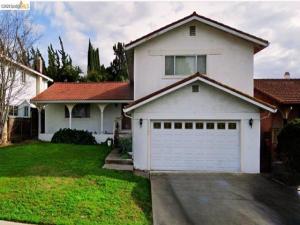
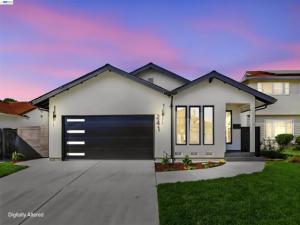
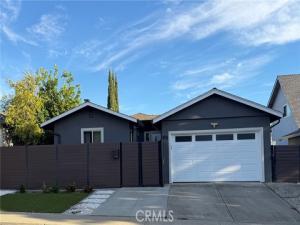
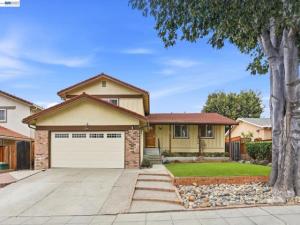
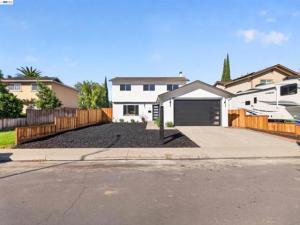
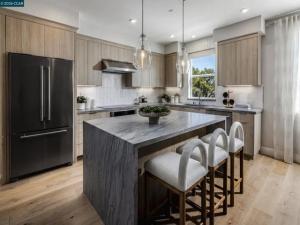
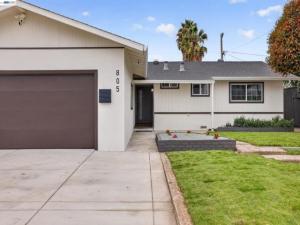
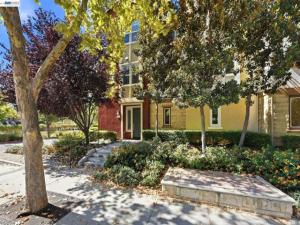
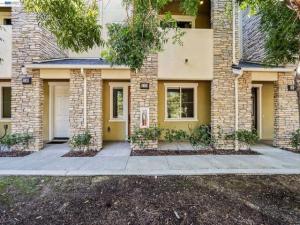
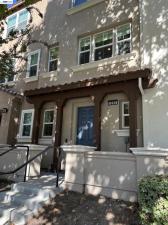
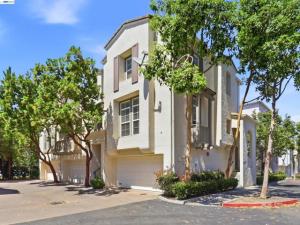
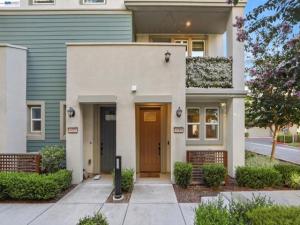
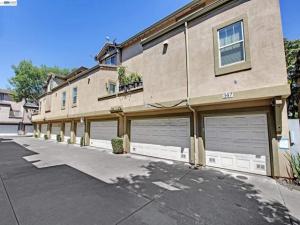
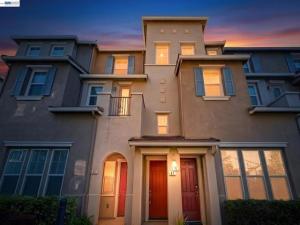
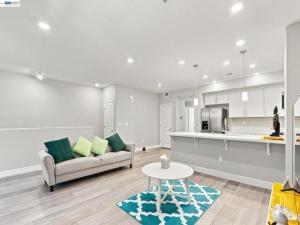
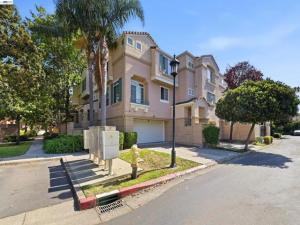
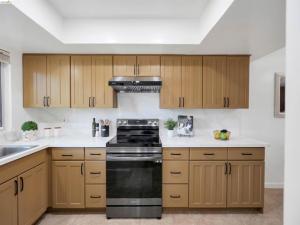
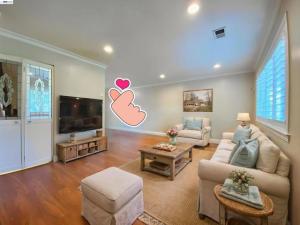
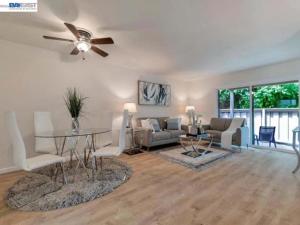
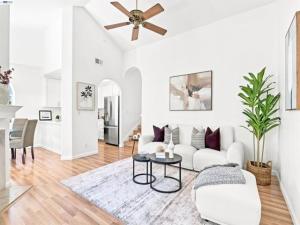
Homes for Sale in Milpitas currently number 78 active listings with a median asking price of $1,165,000 (CRMLS, September 2026).
Homes for sale in Milpitas sit at the northeast corner of Santa Clara County, on the seam between Silicon Valley and the East Bay. The city of roughly 80,000 people covers about 13.5 square miles and is the last Santa Clara County address before the Alameda County line. That position is the whole argument: a BART station, a Santa Clara County school district, and the intersection of Interstate 680 and Interstate 880, which very few Bay Area cities have. The trade is a price tier below Cupertino, Los Altos, or Palo Alto inside the same job market.
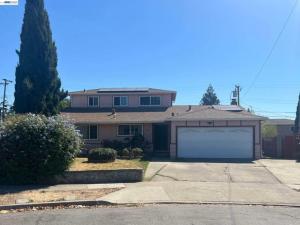
Inventory falls into four buckets: postwar and 1960s tract single-family homes, 1970s through 1990s townhomes inside homeowners associations, later and hillside subdivisions in areas like Curtner Estates and Country Club, and newer condos near the BART station and the Great Mall. Elevation drives much of the price spread — the flatland sits low, while the eastern edge climbs toward Ed R. Levin County Park.
Browse the current Milpitas listings below, or contact The Knight Group if you want the inventory filtered against your actual commute, school, and HOA constraints before you spend a Saturday touring.
Milpitas is bordered by San Jose to the south, Fremont to the north, Coyote Creek to the west, and the hills toward Calaveras Reservoir to the east. That places the city at the intersection of Interstate 680 and Interstate 880. Very few Bay Area cities have both. From Milpitas a driver reaches north San Jose in minutes, Fremont and Newark on 880, the Tri-Valley on 680, and Sunnyvale or Santa Clara across the valley floor. This is not a bedroom community feeding one employment center.
The developed flatland sits low, with a median elevation around 19 feet, while the eastern edge climbs into the hills that hold Ed R. Levin County Park. That topography drives much of the price variation inside the city: hillside parcels command a premium over the flatland tracts and carry different grading, drainage, and access considerations.
Milpitas incorporated on January 26, 1954, in significant part to avoid being annexed by San Jose. That decision explains a great deal about the city today. Milpitas kept its own general plan, school district, and zoning authority at exactly the moment Silicon Valley began building over the orchards.
A Ford Motor Company assembly plant opened in 1955 and drove the first wave of tract construction. That plant closed in 1984, and the site became the Great Mall of the Bay Area, which opened in 1994 and now anchors the retail and transit core. Auto plant to outlet mall to transit village is the through line of Milpitas real estate: the same acreage has been rezoned and rebuilt three times in seventy years, and it is being rebuilt again now. One piece of that history matters nationally. The Sunnyhills neighborhood was developed in 1956 through a United Auto Workers cooperative and is recognized as the first subdivision in the United States built on an explicitly racially integrated basis.
Milpitas inventory falls into four buckets. Knowing which one a listing sits in tells you most of what you need to know about it.
Postwar and 1960s tract single-family. Single-story ranch and split-level homes on modest lots, largely in the older central and western parts of the city. These carry the oldest systems in town: original panels, early supply lines, roofs on their second or third replacement. They are also the most straightforward to renovate, and the lots are usable.
1970s through 1990s townhomes and planned developments. A very large share of Milpitas inventory. These are units inside homeowners associations governed by California’s Davis-Stirling Common Interest Development Act. The association controls exterior maintenance, reserves, and rules. Two units on the same street can carry very different costs depending on how their associations are funded.
Later single-family subdivisions and hillside product. Larger two-story homes built as the city filled in. These trade at the top of the Milpitas range and hold value better through soft markets, because the buyer pool for a detached house with a school assignment does not thin as fast as the condo pool does.
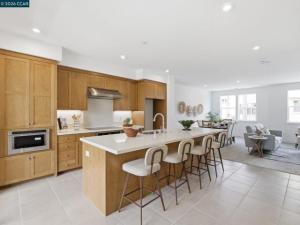
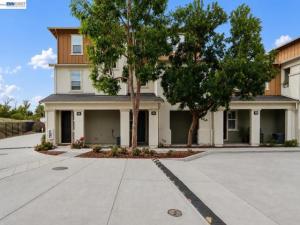
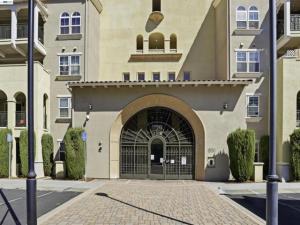
Transit-area condos and apartments. The newest stock, concentrated near the BART station and the Great Mall. Elevator buildings and stacked flats, structured parking, and dues that reflect real amenity packages. This is where entry pricing lives, and where supply risk is highest.
Milpitas does not have formally bounded neighborhoods the way San Francisco does. What it has is a set of tract names and areas that local agents and residents use consistently. The names you will hear most often include Sunnyhills, Parktown, Piedmont Heights, Midtown and the Starlite Pines area, Central Milpitas, Hidden Lake Village, Milpitas Manor, Curtner Estates, and the Country Club and Stonegate areas.
Treat those names as shorthand for era and product type rather than hard boundaries. Sunnyhills and the older central tracts read as postwar single-story. Parktown and Piedmont Heights sit closer to schools and parks and mix established homes with newer infill. Hidden Lake Village and similar communities are association-governed developments where the CC&Rs matter as much as the floor plan. The Curtner and Country Club areas trend toward larger, later construction on the hill side of the city.
The practical move is to work the map by commute and school assignment first, then by tract. If you want a written breakdown of which streets fall into which assignment area and which associations are well reserved, ask us directly.
The Milpitas market in 2026 is priced high and moving fast, with a mild downward drift on values. Zillow’s home value index put the average Milpitas home value at roughly $1.45 million in 2026, down about 2 percent year over year, with listings going pending in around 15 days. Read those two numbers together. They conflict on the surface and do not conflict in practice.
Short days on market with flat to slightly declining values is the signature of a supply-constrained market with disciplined buyers. Correctly priced homes clear quickly because there is little competing inventory. Aspirationally priced homes sit, then reduce, and the reductions pull the average down. Sellers who read fast pending times as license to overprice end up with a stale listing and a worse outcome than the neighbor who priced at market.
For buyers, speed matters on the good listings and leverage exists almost entirely on the stale ones. Know which playbook you are running before you write.
Segment behavior diverges too. Detached homes with a Milpitas Unified assignment have the deepest buyer pool. Attached product competes with a large supply of newly built transit-area units, which caps appreciation in that segment. If you are buying a condo here as a five-year hold, model that supply.
Milpitas is one of the few South Bay cities with heavy rail. The Milpitas BART station opened on June 13, 2020, as part of Phase I of the Silicon Valley BART extension. The Santa Clara Valley Transportation Authority also operates three light rail stations inside city limits on the Orange Line.
That combination is unusual, and it is why so much new housing has been approved near the station. A buyer working in San Francisco or the East Bay rides BART. A buyer in north San Jose or the Sunnyvale corridor uses light rail or drives against traffic. A buyer in the Tri-Valley takes 680.
The trade-off is that transit proximity and quiet run in opposite directions here. Parcels closest to the station and the Great Mall sit in the densest, busiest, most actively redeveloping part of the city. Decide which side of that you want before you tour. The two sets of listings look very different in person.
Milpitas is served by Milpitas Unified School District, formed when the community voted to unify the city schools in 1968. The district reports 18 schools serving grades K through 12, with 2024-25 enrollment of 10,086 students: two child development centers, ten elementary schools serving K through 6, two middle schools serving 7 and 8, one comprehensive high school, one continuation high school, an adult school, and a San Jose City College extension campus.
The middle schools are Rancho Milpitas Middle School and Thomas Russell Middle School. The comprehensive high school is Milpitas High School at 1285 Escuela Parkway, which reported 2025-26 enrollment of 2,895 students.
Two structural notes for buyers. A single comprehensive high school means high school assignment is not a variable within city limits the way it is in larger districts. Elementary assignment is a variable, and boundaries can be redrawn. If school assignment is driving your purchase, verify the current attendance area with the district for the specific address before you remove contingencies.
The two anchors are the Great Mall and Ed R. Levin County Park, and they pull in opposite directions in a useful way. The Great Mall is described as Northern California’s largest indoor outlet, with more than 200 stores plus restaurants and entertainment. It sits in the transit core, which is why the surrounding blocks have been the focus of the city’s redevelopment planning.
Ed R. Levin County Park occupies the hills on the eastern edge and offers hiking, a dog park, horseback riding, picnic areas, and lakes for fishing. It is why Milpitas hillside listings can advertise trail access as a real feature rather than a marketing stretch. Closer in, Cardoza Park is one of the larger community parks at roughly ten acres, with a lighted baseball diamond, playgrounds, public art, and courts.
The food and grocery scene reflects the city’s demographics. The 2020 census recorded Milpitas at 71.33 percent Asian alone, non-Hispanic, one of the highest shares of any American city its size. In practice that means deep Chinese, Vietnamese, Indian, and Filipino restaurant and grocery options, including 99 Ranch Market and Ocean Supermarket. For many buyers relocating here, that infrastructure is a primary reason to choose Milpitas over an equivalently priced address elsewhere in the valley.
This is the most consequential planning fact in the city, and most buyers have never heard of it. Milpitas adopted a Transit Area Specific Plan in 2008 to concentrate growth around the future BART station. That plan anticipated roughly 7,100 new residential units supporting about 18,000 new residents, alongside office, hotel, and retail. The Milpitas Metro Specific Plan updates that framework, expanding the plan area from roughly 437 acres to roughly 510 gross acres. Per city reporting, nearly 7,000 housing units and about 185,000 square feet of retail have been entitled, with nearly all projects completed and occupied or under construction.
A regional driver sat behind this. A 2001 Metropolitan Transportation Commission resolution set a housing threshold of 3,850 units within a half mile of each planned station as a condition tied to extending BART into Santa Clara County. Milpitas planned well past that number.
Why it matters to your offer: concentrated new supply in a defined district supports long-term land value and walkable amenity, and it creates real competition for resale condos in and near that district. If you are buying attached product inside or adjacent to the plan area, you compete with builder inventory on resale. Ask what is still under construction within a half mile before you decide what a unit is worth to you.
Seismic exposure. Milpitas sits in the Calaveras Fault corridor and is identified among the cities at risk from it. UC Berkeley researchers published findings in 2015 concluding that the Hayward Fault is effectively a branch of the Calaveras Fault, which raises the possibility of a joint rupture larger than previously modeled. USGS paleoseismic work indicates large Hayward Fault earthquakes roughly every 100 to 200 years. Check whether the parcel falls inside an Alquist-Priolo Earthquake Fault Zone, which restricts structures for human occupancy over an active trace, and price earthquake coverage before you commit.
Odor from Newby Island. The Newby Island landfill near the city’s western edge has produced persistent odor complaints and litigation from Milpitas residents. It affects some parts of the city more than others and varies with wind and season. Tour a candidate property more than once, at different times of day, before you decide it is not a factor.
Age of systems. A large share of the single-family stock predates modern electrical and plumbing standards. Budget for a sewer lateral scope, a panel evaluation, and a roof assessment on anything from the tract era. These are line items that belong in your number before you write, not after you are in contract.
Segment concentration. Milpitas is tied closely to Silicon Valley employment and to a heavy construction pipeline in one district. Both are strengths in an expansion and both concentrate risk in a contraction. A detached home with a school assignment is the more defensive position within the city.
Attached housing is a large share of Milpitas inventory, and the association is a material part of what you are buying. California’s Davis-Stirling Common Interest Development Act governs these communities and gives you the right to receive association documents during your contingency period. Use it.
Read the reserve study, not just the current dues figure. Low dues plus an underfunded reserve is a special assessment waiting to be voted. Read twelve months of board minutes for litigation, deferred projects, and roof or siding discussions. Confirm whether the master policy is bare walls or walls-in, since that sets what your own HO-6 must cover. Ask about the rental cap and current rented percentage, because a high investor share can affect financing. For newer construction inside the transit plan area, add one question: what remains entitled but unbuilt nearby.
It is one of the strongest access-per-dollar positions in the county: a Santa Clara County address, a unified school district, BART, VTA light rail, and both 680 and 880, at a price tier below the western valley cities. You give up lot size, architectural variety, and the cachet of a Cupertino or Los Altos address. If access drives your decision, Milpitas is a serious candidate. If prestige drives it, it is not.
Zillow’s index put the average Milpitas home value at roughly $1.45 million in 2026, down about 2 percent year over year. Pricing varies widely by product type, with attached homes and transit-area condos entering well below that figure and detached hillside homes clearing above it. Ask for a comparable set on your target profile rather than working from a citywide average.
Milpitas has not adopted a local rent control ordinance. Rental housing falls under California’s statewide Tenant Protection Act of 2019, AB 1482, which caps annual increases at 5 percent plus local CPI to a maximum of 10 percent and requires just cause to terminate a tenancy after twelve months. Common exemptions include most single-family homes and condominiums when properly noticed, and housing built within the last fifteen years. If you are buying a tenant-occupied property, verify status before removing contingencies.
Milpitas Unified School District, unified in 1968, serves the city with 18 schools and 10,086 students as of 2024-25. There is one comprehensive high school, Milpitas High, plus a continuation high school. Elementary boundaries can change, so confirm assignment with the district for the exact address.
Trip time depends on mode and hour, so we do not publish a single number. The option set is what matters: BART from the Milpitas station gives a rail path north, 880 and 680 both run through the city, and VTA light rail connects to the north San Jose employment corridor. Run a timed test drive and a timed BART trip at your actual departure hour before you commit to a location.
Yes, and they should be priced rather than feared. Milpitas is in the Calaveras Fault corridor, and 2015 UC Berkeley research established that the Hayward and Calaveras faults are connected, raising the potential magnitude of a joint rupture. Verify whether a specific parcel sits within a state-designated Alquist-Priolo Earthquake Fault Zone and obtain an earthquake insurance quote during your contingency period.
The landfill near Milpitas has generated long-running odor complaints from residents, who have pursued the matter legally. Impact varies by location and wind. Visit a candidate property at multiple times of day before you conclude it does not affect you.
We work Milpitas as a data problem before we work it as a tour. We narrow the map against three constraints first: commute, school assignment, and carrying cost including association dues. Most buyers tour too broadly and lose weeks to homes that were never going to work.
On the buy side, we tell you which listings are priced to clear and which are priced to sit, and we run each accordingly. On the sell side, we price against what is actually competing with your home, including builder inventory in the transit district, and we say so plainly when the market does not support your number. We will also tell you when Milpitas is the wrong answer.
Browse the Milpitas listings below to see what is on the market now. When you want a filtered short list and a written read on pricing, contact The Knight Group.
Lucky for you we’re looking out.
Subscribe to this Custom Search to be alerted when new properties hit the market in the area.
Choose the frequency that works for you.