West Sacramento, CA

West Sacramento is the largest city in Yolo County by population and the most urban of the county’s residential communities, situated directly across the Sacramento River from downtown Sacramento and connected to the state capital by several bridges and a growing network of trails and transit links. The city was incorporated in 1987 and has undergone substantial redevelopment over the past two decades, transforming from a primarily industrial and commercial freight corridor into a mixed residential and commercial community with an emerging waterfront identity along the Sacramento River’s west bank.

The Tower Bridge, which connects West Sacramento’s Bridge District neighborhood to Sacramento’s Old Sacramento waterfront, is the geographic and symbolic connector between the two cities, and the pedestrian and cycling access across the bridge has made the Bridge District one of the most walkable and transit-accessible residential neighborhoods in the Yolo County housing market. West Sacramento’s proximity to downtown Sacramento gives it commute advantages that no other Yolo County community can match for Sacramento employment-dependent households, and the city’s ongoing residential development has created a significant new housing inventory that offers alternatives to the older Sacramento housing stock across the river at often more competitive prices.

How is the West Sacramento real estate market?

West Sacramento’s housing market is more diverse and more actively transacting than any other Yolo County community, with new construction, established suburban neighborhoods, and the redeveloping riverfront areas all contributing to a range of housing types and price points. The Bridge District, the city’s most high-profile redevelopment area, has attracted significant new residential construction including market-rate apartments, condominiums, and townhomes that provide urban-lifestyle housing options within walking distance of downtown Sacramento across the Tower Bridge. This urban residential product competes directly with Sacramento’s midtown and downtown housing market and provides buyers who want urban proximity with a West Sacramento alternative at prices that have historically been somewhat below comparable Sacramento inventory.

The older residential neighborhoods in West Sacramento, particularly the southernmost portions of the city adjacent to the Port of Sacramento and the industrial areas, reflect the city’s pre-incorporation industrial character and tend to offer the most affordable single-family residential options in the city. Buyers who are comparing West Sacramento’s older neighborhoods to comparable Sacramento inventory will generally find West Sacramento pricing to be competitive, with the trade-off being the industrial adjacency in some areas and the perception differential that has historically existed between West Sacramento and Sacramento proper despite the cities’ geographic proximity.

New master-planned residential development in West Sacramento’s western and southern sections has added significant single-family suburban housing supply over the past decade, attracting Sacramento-area buyers who want new construction at prices below comparable Elk Grove or Folsom suburban developments while maintaining access to Sacramento’s employment center. The Sacramento Kings’ facilities and the associated development activity in the riverfront area have added commercial and entertainment amenity to the West Sacramento waterfront that has improved the residential appeal of the city’s riverfront districts.

What are the schools like in West Sacramento?

West Sacramento students are served by the Washington Unified School District, which provides K-12 education for the West Sacramento community. The district has undergone improvement initiatives in recent years as the city’s demographics have shifted with the influx of professional and younger household types attracted to the Bridge District and new construction areas. River Valley High School and the district’s other secondary campuses serve the diverse residential population. For school-motivated buyers who are comparing West Sacramento to Sacramento proper, the Washington USD’s performance relative to Sacramento City Unified is a relevant comparison that buyers should research through current state assessment data rather than relying on older impressions.

What is the job market like in West Sacramento?

West Sacramento’s economic base is more diversified than its historical industrial identity would suggest. The Port of West Sacramento remains an important freight and agricultural commodity shipping facility. The California Department of General Services, the California Highway Patrol’s headquarters, and various other state agency offices are located in the West Sacramento commercial corridor along Jefferson Boulevard, providing significant state government employment that is distinct from but complementary to the larger state government presence across the river in Sacramento. The Ziggurat Building, one of the more architecturally distinctive commercial office properties in the Sacramento region, anchors the city’s Capitol Corridor commercial district and reflects the professional employment base that has grown in West Sacramento alongside the residential development.

Getting Around from West Sacramento

West Sacramento’s transportation geography is one of its strongest competitive advantages. The Sacramento Regional Transit light rail network and the Sacramento-area bus system provide transit access from the Bridge District to downtown Sacramento and beyond. The Tower Bridge pedestrian and cycling route provides a car-free connection to Old Sacramento and the downtown core that is unique among the Sacramento region’s residential communities. Interstate 80 provides direct freeway access both east to Sacramento and west toward the Bay Area, and the US-50 and Interstate 5 connections are easily accessed from the city’s freeway network. For commuters who need multiple directional access options, West Sacramento’s position at the confluence of these freeway corridors and the river crossing is genuinely advantageous.

What is West Sacramento like to live in?

The Sacramento River waterfront is West Sacramento’s primary lifestyle asset, with the River Walk along the west bank providing public promenade access and the riverfront restaurant and entertainment district that has developed in the Bridge District providing dining and gathering options within walking distance of the residential neighborhoods. The Sacramento Republic FC professional soccer club’s facility and practice infrastructure in West Sacramento has added a sports and entertainment anchor to the city’s recreational identity. The proximity to downtown Sacramento’s extensive cultural, entertainment, and dining infrastructure means that West Sacramento residents have practical walkable and bikeable access to the Sacramento region’s most complete urban amenity portfolio.

Is West Sacramento a good real estate investment?

West Sacramento’s investment case is the strongest among Yolo County communities for buyers who are specifically seeking Sacramento employment proximity, urban lifestyle access, and new construction availability at prices that have historically offered some discount to comparable Sacramento inventory. The city’s ongoing redevelopment trajectory, its riverfront identity development, and its growing commercial and entertainment base suggest continued appreciation potential for well-positioned West Sacramento properties. The Bridge District and the riverfront residential areas represent the highest-confidence investment positioning within the city, while the older western and southern residential areas offer more affordable entry points with longer appreciation timelines tied to the city’s broader improvement trajectory.

West Sacramento Bridge District and Waterfront Development

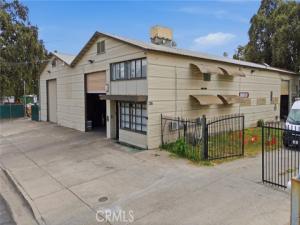
The Bridge District is West Sacramento's most actively developing neighborhood and the area that most clearly represents the city's transformation from its industrial heritage toward a urban residential and mixed-use character. The neighborhood's location at the base of the Tower Bridge, adjacent to the Sacramento River's west bank promenade and within walking distance of Old Sacramento across the bridge, creates a walkability profile that is exceptional for the Sacramento region. New residential construction in the Bridge District has included market-rate condominiums, apartment complexes, and townhomes that have attracted younger professional buyers and renters who want urban lifestyle access at prices below the more established Sacramento midtown market across the river.

The Sacramento Republic FC's Sutter Health Park minor league baseball stadium and the planned soccer stadium in the Bridge District have anchored an entertainment district that draws visitors to the West Sacramento waterfront on game days and event nights. The concentration of restaurants, bars, and entertainment venues that has developed around the stadium complex provides a commercial energy to the riverfront that the Bridge District residential population benefits from as a walkable amenity. The ongoing discussions about a major league soccer stadium in West Sacramento have added a long-term development catalyst to the area's commercial planning that could substantially expand the Bridge District's entertainment and hospitality infrastructure over the coming decade.

West Sacramento Comparison to Midtown Sacramento

The most common comparison buyers make when considering West Sacramento is with Sacramento's midtown and East Sacramento neighborhoods, which represent the alternative urban lifestyle purchase within the Sacramento metropolitan area. The trade-offs between these markets are well-defined: Sacramento midtown offers greater restaurant and commercial density, more established neighborhood identity, and the prestige association of Sacramento addresses, while West Sacramento offers newer construction in the Bridge District, competitive pricing relative to midtown equivalents, and the river and bridge proximity that midtown cannot provide. Buyers who are specifically motivated by urban lifestyle and Sacramento proximity will find both markets worth evaluating, and the price comparison between Bridge District West Sacramento and midtown Sacramento typically favors West Sacramento on a square-footage basis by a margin that reflects the newer market's still-developing identity.

For suburban family buyers who are not specifically urban-lifestyle motivated, the comparison shifts to West Sacramento's newer master-planned residential areas versus the Elk Grove, Folsom, or Rancho Cordova suburban alternatives. In this comparison, West Sacramento offers similar suburban housing product with the addition of Sacramento employment proximity that the more distant eastern suburbs cannot match, and the city's improved school district performance trajectory has made Washington USD a more competitive consideration for family buyers than was the case a decade ago.

West Sacramento Port and Industrial Heritage

The Port of West Sacramento, operated by the Port of Sacramento, is a deep-water inland port connected to San Francisco Bay by the Sacramento Deep Water Ship Channel and provides an active freight and agricultural commodity shipping facility that serves the Sacramento Valley's export economy. The port's role in shipping Sacramento Valley agricultural products, including rice, almonds, and other commodities, to international markets reflects the Sacramento Valley's integration into the global agricultural trade network. The port infrastructure and the associated industrial land in West Sacramento's eastern section represent the city's economic foundation that predates the residential development and that continues to provide employment and tax revenue that supports the city's public services.

What are the schools like in West Sacramento?

Washington Unified School District's improvement trajectory over the past decade has been a significant factor in the changing buyer perception of West Sacramento as a family residential option. The district has invested in STEM programming, dual language immersion programs at select elementary campuses, and the school improvement initiatives that have raised test scores and graduation rates across the district's campuses. River Valley High School has developed programs in engineering, environmental science, and health sciences that provide career pathway education alongside the standard college preparation curriculum. For families who are comparing Washington USD to Sacramento City Unified on the western side of the river, Washington USD's performance metrics have improved to the point where the comparison is less one-sided than it was a decade ago.

The Bridge District's proximity to Sacramento's midtown magnets and private school options also gives Bridge District families additional educational choice beyond the Washington USD boundaries, with the Tower Bridge crossing making Sacramento school campuses practically accessible for families willing to manage the daily commute. For buyers who are making an urban lifestyle purchase in the Bridge District and who value educational flexibility, the combination of Washington USD's improving performance and the practical access to Sacramento school alternatives provides more educational optionality than the district's standalone metrics might suggest.

West Sacramento Infrastructure Investment

The city of West Sacramento has invested substantially in its infrastructure over the past decade, using the property tax revenue from the Bridge District and other development areas to fund street improvements, park development, and the waterfront promenade that has defined the riverfront's physical transformation. The Jefferson Boulevard corridor improvements, the Southport Expressway extension, and the ongoing development of the planned road network in the city's growing southern residential areas reflect a capital investment program that is improving the city's physical environment at a pace that is visible and measurable to long-term residents and visitors. The California Department of General Services' facilities cluster in West Sacramento, combined with the Port of Sacramento's infrastructure, represents a significant built environment that supports the employment base and the tax revenue that funds the city's public investment program.

West Sacramento Southport Community

The Southport area of West Sacramento, located on the south side of the Sacramento River's bend in the southwestern portion of the city, is a primarily residential community that developed in the 1990s and 2000s as master-planned subdivisions on the agricultural land that was annexed into the city for residential development. Southport's character is more conventionally suburban than the Bridge District or the older residential neighborhoods near the Tower Bridge, with single-family homes on standard lots, neighborhood parks, and a community layout that prioritizes car access over pedestrian connectivity. The Southport Safeway and the surrounding retail center provide the primary commercial access for the Southport community, and the lack of a walkable commercial district is the most significant lifestyle trade-off for Southport buyers compared to the Bridge District's urban amenity environment.

Southport's housing inventory is among the most affordable in the city for larger single-family homes, and buyers who are comparing Southport to comparable South Sacramento or Elk Grove suburban neighborhoods will find pricing that is competitive with the broader Sacramento suburban market. The Southport connection to the South Sacramento and Elk Grove freeway network via Interstate 5 is straightforward, and the commute to Sacramento's downtown employment centers is approximately 20 to 25 minutes. For buyers who are specifically seeking maximum house per dollar in the greater Sacramento area with reasonable downtown access, Southport's combination of suburban home size, competitive pricing, and I-5 positioning is a rational choice that is often overlooked by buyers who are focused on the more widely discussed Bridge District and West Sacramento waterfront development.

What is the rental market like in West Sacramento?

The West Sacramento rental market reflects the city's dual character as an urban riverfront destination and a suburban commuter community. The Bridge District's apartment and condominium rental inventory serves a young professional renter population that values the urban lifestyle access and the Sacramento proximity, with rents that are typically below comparable Sacramento midtown inventory but above the city's older suburban rental stock. The Southport and older West Sacramento neighborhoods provide more affordable rental options for the workforce housing population that serves the Sacramento region's essential services economy. The ongoing residential development in the city's growth areas has added significant new rental inventory over the past five years, and the absorption of this new supply by the growing West Sacramento employment and commuter population has maintained occupancy rates that are consistent with the city's improving residential desirability trajectory.

Investors who are evaluating West Sacramento rental property acquisition should distinguish between the Bridge District urban product, which commands premium rents from the professional renter demographic but involves higher acquisition costs relative to the older suburban inventory, and the Southport and older West Sacramento single-family rental market, which provides more affordable entry prices and serves the family rental demographic that values the city's suburban housing scale and school district access. Each segment involves different management considerations, renter profiles, and appreciation trajectories that should be understood before making a rental property acquisition decision in the West Sacramento market.

TKG's West Sacramento recommendation is to focus buyer evaluation on the specific neighborhood within the city rather than on the city as a whole, since the Bridge District, Southport, and the older residential neighborhoods represent genuinely different residential products and lifestyles at different price points. The Bridge District urban lifestyle buyer, the Southport family suburban buyer, and the affordable first-purchase buyer in the older western neighborhoods are three distinct buyer profiles served by three distinct West Sacramento sub-markets, and the right sub-market depends on the buyer's specific priorities rather than on a single city-level assessment.

Browse all Yolo County real estate.
Our extensive guide through the neighborhoods below will help you identify the one for you.

Similarneighborhoods

Elegant residential property in Woodland, CA showcasing luxury real estate in Northern California

Woodland, CA

Luxurious Davis, CA residential property showcasing upscale real estate in Northern California

Davis

Luxury home in Winters, CA showcasing modern architecture and elegant design in Northern California wine country.

Winters, CA

Luxury home in Clarksburg, CA featuring modern architecture and manicured landscaping

Clarksburg

What is West Sacramento, California?

West Sacramento is a Yolo County city of roughly 56,000 people sitting directly across the Sacramento River from downtown Sacramento. It incorporated on January 1, 1987, stitching together the older river communities of Broderick and Bryte, the West Sacramento townsite, and the farmland of Southport into a single municipality. The 2020 census counted 53,915 residents, up from 48,744 in 2010, and a 2024 estimate put the figure at 55,991. It covers 22.8 square miles, of which 21.5 is land.

The value proposition is geographic. You are minutes from the State Capitol and the downtown Sacramento employment core, but in a different county with a different tax roll, a different school district, and a housing stock that runs from prewar river cottages to subdivisions built in the last fifteen years. Buyers priced out of Land Park or East Sacramento routinely find the same money buys more square footage and a newer roof on this side of the water.

Browse the current West Sacramento listings below. If you want the version of this market that does not show up in the public feeds, including which streets carry assessments and which parcels sit inside mapped flood zones, contact The Knight Group.

What neighborhoods and districts make up West Sacramento?

The city reads as four broad zones, and the differences between them are larger than the four-mile drive from one end to the other suggests.

Broderick and Bryte occupy the northern riverfront, closest to the Tower Bridge and the I Street corridor into downtown Sacramento. These are the oldest parts of the city, predating incorporation by decades. Housing here skews small, older, and highly variable block to block. This is where you find the widest spread between a fully renovated home and the one next door that has not been touched since the 1960s, and where the shortest downtown commutes are.

The West Capitol Avenue corridor runs east to west through the middle of the city and functions as the commercial spine. It carries older motel and strip retail stock alongside civic uses and has been the focus of long-running redevelopment attention. Evaluate the immediate block rather than the corridor as a whole, because conditions change quickly street by street.

The riverfront district around Sutter Health Park is the newest urban fabric in the city. The ballpark opened on May 15, 2000, originally as Raley Field, and was renamed Sutter Health Park after the 2019 season. The surrounding blocks, built on former warehouse and rail yard land, carry the city’s densest and most recently constructed housing. This is the closest thing West Sacramento has to a downtown-adjacent condo and townhome market.

Southport is the southern half of the city and the main engine of new construction. It is where you find the master-planned subdivisions that give West Sacramento its suburban profile, including areas known as Bridgeway, Gateway, Linden, River Ranch, Newport, and Arlington Oaks. Homes here are newer, lots are more uniform, and the trade-off is a longer drive to the bridges and a higher likelihood of special district assessments attached to the parcel.

West Sacramento is one of several markets we cover in Yolo County, and the comparison against Davis and Woodland matters when you are weighing schools, commute, and price per square foot against each other.

What kinds of homes does West Sacramento actually have?

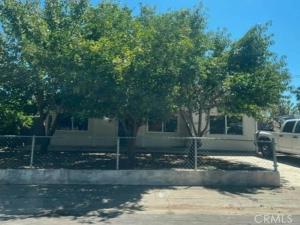
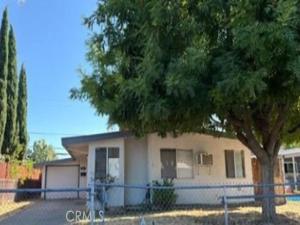
The inventory splits along the age line. North of West Capitol Avenue, in Broderick and Bryte, the dominant product is the modest single-story house on a compact lot, often with detached garage, original layout, and construction predating modern seismic and energy code. These trade at the lowest entry prices in the city and carry the most renovation risk. Inspect the sewer lateral, the electrical panel, and the foundation before you commit to the price.

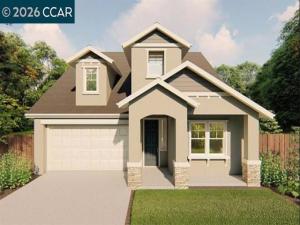
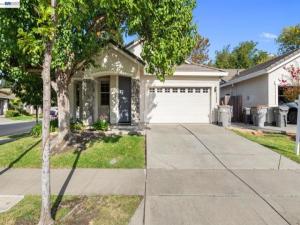
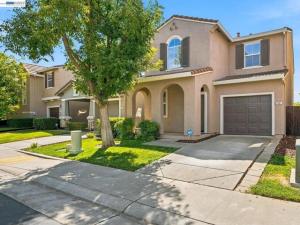
South in Southport, the dominant product is the two-story tract home built from the late 1990s forward, with attached two-car garage and a small to mid-size yard. Construction quality is consistent, mechanical systems are current, and deferred maintenance risk is low. What you give up is lot size and architectural distinction.

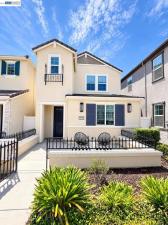
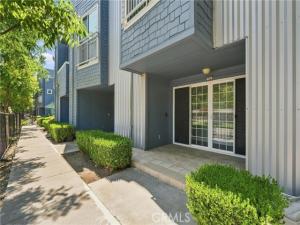
Between them sits the newer attached and multi-family product near the riverfront, which is the only meaningful condo and townhome supply in the city. If you want walkable proximity to downtown Sacramento without a Sacramento County address, that is where to look. There is also a thin band of larger homes on and near the water. Riverfront parcels here are limited, and they price accordingly.

Why do buyers choose West Sacramento over Sacramento proper?

Three reasons come up repeatedly, and they are structural rather than promotional.

The first is distance to work. The Tower Bridge, opened December 15, 1935, carries State Route 275 directly into Capitol Mall with four vehicle lanes plus two bicycle lanes. From the northern half of West Sacramento, downtown Sacramento is a short drive or a bike ride.

The second is housing age. Sacramento’s close-in neighborhoods are dominated by prewar and midcentury stock. Southport’s inventory is largely post-1995. For a buyer who does not want a renovation project, that difference is the whole decision.

The third is that West Sacramento is a separate jurisdiction: different city, county, school district, and permitting. That cuts both ways, and you should understand which side of each line you are landing on before you write an offer.

How does the commute work from West Sacramento?

US-50 crosses the city and delivers you into downtown Sacramento in one direction and toward the Bay Area connection in the other. Interstate 80 runs along the northern side of the city and is the artery toward Davis, Vacaville, and the Bay Area to the west.

Within the city, Jefferson Boulevard and Harbor Boulevard are the primary north to south arterials, and West Capitol Avenue is the primary east to west arterial. The practical consequence: a Southport address adds real minutes to a downtown Sacramento commute compared with a Bryte or Broderick address, and those minutes compound at peak hours when bridge approaches back up. Test your actual commute at your actual departure time before committing. The map distance across this city is small. The clock distance at 8:00 a.m. is not the same number.

What should buyers know about flood risk and levees in West Sacramento?

This is the single most important due diligence item in this market.

West Sacramento sits in the Sacramento Valley floodplain, protected by levees, adjacent to the Yolo Bypass. The bypass is one of two flood bypasses in the Sacramento Valley, running roughly 41 miles north to south across about 59,000 acres in Yolo and Solano counties. It activates when Sacramento River flow exceeds approximately 55,000 cubic feet per second, diverting water away from populated areas. The Sacramento Weir, built in 1916 north of the city, has 48 gates across 1,920 feet and opens when the river reaches 27.5 feet at the reference gauge.

That system is why the city is buildable. It is also why flood zone designation, levee accreditation status, and flood insurance requirements are live variables here in a way they are not in most California markets. Levee improvement work has been ongoing through the local flood control agency, and FEMA mapping has changed over time.

Practical instruction: pull the current FEMA flood zone for the specific parcel, ask your lender whether flood insurance will be required, and get an actual quote before your contingency period expires. Do not rely on a neighbor’s premium or a listing remark. The number varies by parcel and by year, and it belongs in your monthly payment math from day one.

Which schools serve West Sacramento?

Washington Unified School District covers virtually all of West Sacramento. The district traces back to Washington Grammar School, established in 1917, and today serves roughly 7,500 students. It is also one of the city’s larger employers, with 766 employees as of a 2025 employer tally.

At the secondary level the district operates River City High School, Washington Middle College High School, and Yolo High School. Its K-8 campuses include Bridgeway Island, Elkhorn, Riverbank, Southport, Stonegate, Westfield, and Westmore Oaks. Several campus names map onto neighborhood names, which is useful shorthand when you are orienting yourself.

Attendance boundaries change, and district transfer and enrollment policies change with them. If a specific school is driving your purchase decision, confirm the assignment for the exact address with the district directly rather than relying on a third-party school-matching site. Those sites lag boundary revisions by months.

What does the riverfront and ballpark district mean for values?

Sutter Health Park is the city’s highest-visibility asset. It seats 10,624 in fixed seats and 14,014 including lawn and standing room, sits at 400 Ballpark Drive directly across the river from the state capitol, and has hosted the Sacramento River Cats since 2000. The Oakland Athletics are using it as a temporary major league home for the 2025 through 2027 seasons, with an option for 2028, and the park received upgrades to displays, audio, turf technology, clubhouse, and premium seating ahead of that arrival.

The honest read for a buyer: a major league tenant on a defined, temporary term is a demand event, not a permanent structural change. It brings traffic, spending, and attention to the riverfront blocks for a few seasons. It also brings game-day congestion and parking pressure to the streets immediately around the park. If you are buying near it, walk the area on a game night first. If you are buying more than a mile away, the ballpark is an amenity rather than a factor in your daily life. Do not let a temporary tenancy carry your appreciation thesis. Buy the house, the block, and the commute.

What role does the Port of West Sacramento play in the city?

The Port of West Sacramento opened in June 1963, following completion of the Sacramento Deep Water Ship Channel, and it remains an operating inland port. Its principal import is cement and its principal export is rice, which tells you a great deal about the surrounding regional economy: construction materials in, Central Valley agriculture out.

For a residential buyer, the port matters two ways. It anchors an industrial and logistics employment base that supports local demand. It also means parts of the city carry genuine industrial adjacency, with the truck traffic, rail activity, and operating hours that come with it. Check what is on the other side of the fence line before you buy near the channel or the port district.

Who employs people in West Sacramento?

The employment base here is more institutional than most people assume. As of a 2025 tally, the largest employers were the California Department of General Services with about 3,000 employees, CalSTRS with 1,401, and Washington Unified School District with 766. CalSTRS occupies the tallest building in the city, on the riverfront.

State agency and pension fund employment is stable and salaried compared with a market that leans on a single private industry. That stability shows up as a steadier bid under mid-priced inventory. The riverfront also holds the Ziggurat Building, a stepped office structure on the Sacramento River and one of the region’s most recognizable pieces of architecture.

What does ownership cost here beyond the mortgage?

Four line items deserve attention before you write an offer.

Special assessments. Newer subdivisions in the Southport area frequently carry community facilities district or Mello-Roos assessments that fund infrastructure, and those appear on the property tax bill on top of the base rate. The amount varies by district and by parcel. Pull the actual tax bill for the address rather than estimating from the base rate.

Flood insurance. Covered above. Quote it before you remove contingencies.

HOA dues. Some newer developments and most attached product carry association dues. Where dues exist, read the governing documents, the reserve study, and the most recent minutes. In California, common interest developments operate under the Davis-Stirling Act, which sets rules for disclosure, assessments, and enforcement. You are entitled to those documents. Read them.

Deferred maintenance. In the older northern neighborhoods, the true cost is the price plus the work. Sewer laterals, panels, foundations, and roofs are the four items that turn a good deal into an expensive one. Budget them explicitly.

What are the honest trade-offs of buying in West Sacramento?

Four points, plainly.

First, the housing stock is uneven. The gap between a 1940s Broderick house and a 2015 Southport two-story is enormous in condition, layout, and cost of ownership. Two homes at similar prices here can be entirely different financial propositions.

Second, flood zone and levee status affect insurance cost and, in some cases, financing. This is not a formality.

Third, the city’s climate is a hot-summer Mediterranean pattern. Cooling load, insulation quality, and HVAC age are worth more attention here than in a coastal market.

Fourth, block-level differences dominate neighborhood-level generalizations. A single street can change character in two blocks. Any advice that treats the city as one uniform market is advice you should discount.

Against those, the case for buying here is straightforward: proximity to the state capital employment core, a newer housing supply than comparable Sacramento neighborhoods, an institutional employment base, and a city that has been investing in its riverfront for two decades.

How should a buyer approach an offer in this market?

Start with financing that is verified, not pre-qualified. Where flood insurance and special assessments can move a monthly payment meaningfully, you want your lender working the real numbers for the real parcel before you are in contract. Then front-load inspections: in the older neighborhoods the general inspection is the beginning, not the end, and a sewer scope plus a foundation evaluation are worth their cost many times over. On the limited riverfront and newer-construction inventory, be ready to move quickly, because thin supply means the good listings do not sit.

Frequently asked questions about buying in West Sacramento

Is West Sacramento part of the City of Sacramento?

No. West Sacramento is a separate incorporated city in Yolo County, incorporated on January 1, 1987. Sacramento is in Sacramento County. They are separated by the Sacramento River, with different city governments, different school districts, and different county services.

How far is West Sacramento from downtown Sacramento?

The Tower Bridge connects the two directly, carrying State Route 275 into Capitol Mall. From the northern part of West Sacramento the trip is a short drive, and the bridge includes two bicycle lanes. From the southern Southport area the drive is longer and more subject to peak-hour bridge approach congestion.

Does West Sacramento flood?

The city sits in a levee-protected floodplain adjacent to the Yolo Bypass, which is engineered to divert Sacramento River flow when it exceeds roughly 55,000 cubic feet per second. That system is why the area is developed. It also means individual parcels can sit in mapped flood zones with insurance implications. Check the FEMA zone for the specific address and obtain an insurance quote during your contingency period.

What school district serves West Sacramento?

Washington Unified School District covers virtually all of the city. Its high schools include River City High School, Washington Middle College High School, and Yolo High School, and its K-8 campuses include Bridgeway Island, Elkhorn, Riverbank, Southport, Stonegate, Westfield, and Westmore Oaks. Confirm attendance boundaries with the district for any specific address.

Which part of West Sacramento has the newest homes?

Southport, the southern half of the city, holds the bulk of the newer subdivision construction. The riverfront blocks near Sutter Health Park hold the newest attached and higher-density product. The northern Broderick and Bryte areas hold the oldest stock.

Do homes in West Sacramento have Mello-Roos or special assessments?

Some do, particularly in the newer Southport subdivisions, where community facilities districts were used to fund infrastructure. Others do not. There is no single answer for the city. Pull the actual property tax bill for the parcel you are considering rather than assuming either way.

Is West Sacramento a good place to buy an investment property?

It has the ingredients: proximity to a large state government employment center, an operating inland port, a growing population, and price points below comparable Sacramento neighborhoods. The variables that decide the outcome are parcel-specific, including flood insurance cost, assessment load, and deferred maintenance. Underwrite those individually rather than from a city-level average.

What is Sutter Health Park and does it affect nearby homes?

It is the ballpark at 400 Ballpark Drive on the West Sacramento riverfront, opened in 2000 as Raley Field and renamed in 2019. It is home to the Sacramento River Cats and is serving as the temporary home of the Oakland Athletics for the 2025 through 2027 seasons with an option for 2028. Homes within a few blocks see game-day traffic and parking pressure. Homes further out get the amenity without the congestion.

How does The Knight Group work in the West Sacramento market?

We work this market at the parcel level, because that is the only level at which the answers are reliable here. Before you see a property, we pull the flood zone, the tax bill including any special district assessments, the association documents where they apply, and the permit history. Those four documents settle most of the questions that otherwise turn into surprises after contingency removal.

For sellers, West Sacramento pricing is won or lost on comparable selection. A home two streets away in a different construction era and a different assessment district is not a comparable, and pricing off one costs you either days on market or money left on the table. We build the comp set narrowly, then price against verified condition rather than against listing photos.

For buyers, we will tell you when a property does not work: when the insurance quote changes the math, when the block does not match the listing’s framing of it, or when the renovation budget is larger than the discount. Precision on the front end is cheaper than a correction on the back end.

Review the West Sacramento listings below. When you want the full picture on a specific address, contact The Knight Group.

Work With Us

The Knight Group is here to help you with all your realty needs. To get started, fill out the form below and one of our experienced agents will contact you as quickly as possible.

The Knight Group Logo

The Knight Group

8560 W Sunset Blvd., Floor 3
West Hollywood, CA 90069
503-200-4823
[email protected]

Copyright © 2024 The Knight Group. 
All rights reserved.  License: 02133297

Hey, You ALMOST MISSED IT!

Lucky for you we’re looking out.

Subscribe to this Custom Search to be alerted when new properties hit the market in the area.

Choose the frequency that works for you.

get alerts

[showcaseidx_contact]