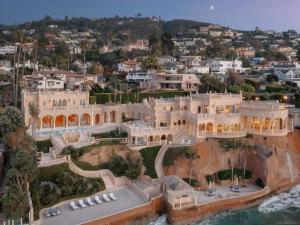
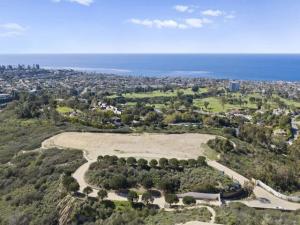
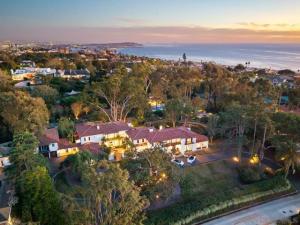
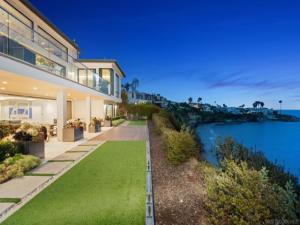
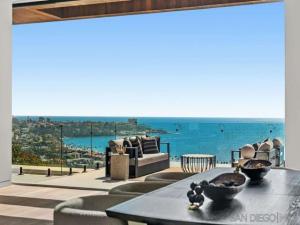
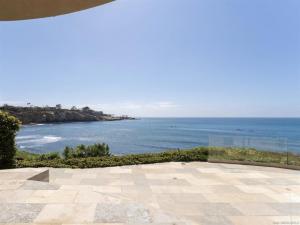
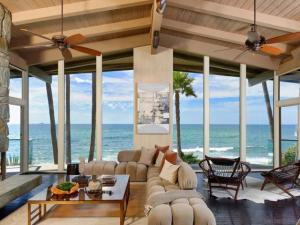
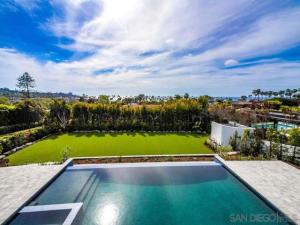
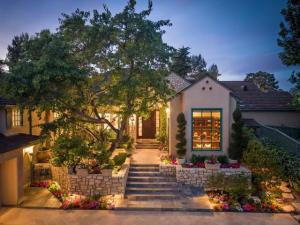
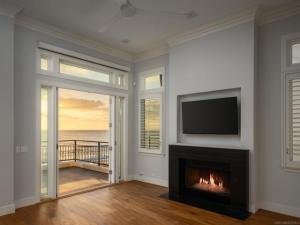
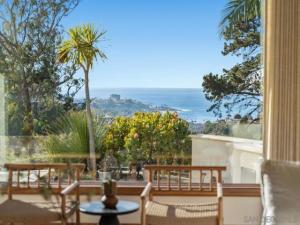
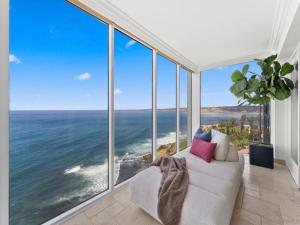
Condos for Sale in La Jolla
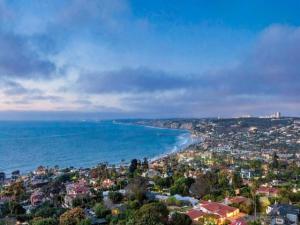
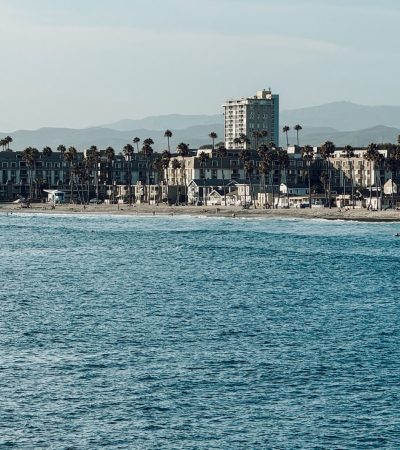
Condos for sale in La Jolla are attached, HOA-governed homes in San Diego’s coastal La Jolla community, about 12 miles north of downtown along roughly seven miles of Pacific coastline. A condo is the lowest-cost way into a coastal market where bluff-front houses trade beyond most budgets, and the nearby research and medical institutions keep steady professional demand under it. The trade-off is that you are buying a governing document as much as a floor plan.
The inventory falls into four groups: oceanfront high-rises on Coast Boulevard above the Cove, low-rise complexes in South La Jolla and Bird Rock, townhome associations on the Mount Soledad slopes, and garden complexes inland near UC San Diego. Dues, reserves, rental rules, and remodel restrictions vary sharply between two buildings a block apart, and most of these share ZIP 92037 — so the postal code tells you almost nothing about what you are buying.
Browse the active La Jolla condo listings below. If you want the association documents, reserve study, and rental policy for a specific building before you tour it, contact The Knight Group and we will assemble that first.
Where exactly is La Jolla, and why does that matter to a condo buyer?
La Jolla is not a separate city. It has been part of the City of San Diego since 1850, when California achieved statehood, and it runs on San Diego’s municipal code, permits, and tax structure. There is no La Jolla city transfer tax, and Measure ULA, the transfer tax on high-value sales inside the City of Los Angeles, has no bearing here.
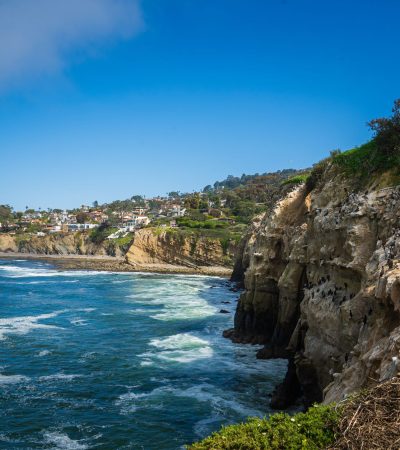
Geographically, the community runs from the Pacific Beach line north to Torrey Pines State Natural Reserve and the Del Mar edge, with Interstate 5 forming its eastern boundary. Mount Soledad, an 823-foot rise crowned by a cross erected in 1954, sits in the middle and splits the area into distinct microclimates and view corridors. Ocean side means marine layer, salt air, and water views. Eastern slope means more sun, easier freeway access, and canyon or city-light views. Most La Jolla condos sit in ZIP 92037, but do not judge location by ZIP. A Coast Boulevard unit and a Villa La Jolla Drive unit share a postal code and almost nothing else.
Which La Jolla condo communities and buildings should you look at?
The inventory falls into four types: oceanfront high-rises on Coast Boulevard, low-rise coastal complexes in South La Jolla, townhome associations on the Mount Soledad slopes, and garden complexes inland near UC San Diego. Each name below links to its own page with current listings.
What are condos like in the Village and on the oceanfront?
The Village is La Jolla’s commercial and civic center, home to the La Jolla Playhouse tradition founded in 1947 and the Girard and Prospect retail spine. Condos here carry the community’s most concentrated walkability. Start with Village of La Jolla, then the Coast Boulevard buildings that face the water: 100 Coast, 373 Coast, and 939 Coast, built in 1966 with 164 units per public building records and floor plans running from studios to over 4,000 square feet. Shore Tower sits in the same vertical category. For attached homes on or adjacent to the sand and bluff, review Beach Front Homes and Ocean View Homes. These buildings carry the highest dues in the market, because elevators, staffing, and salt-air envelope exposure are expensive.
What is South La Jolla like for condo buyers?
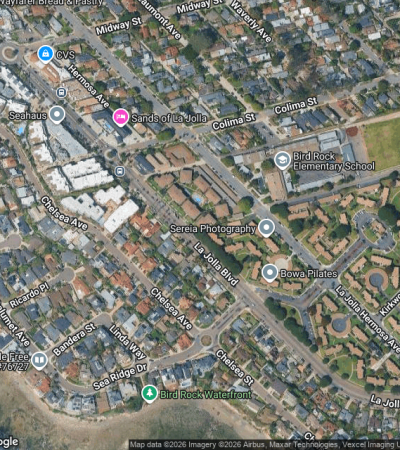
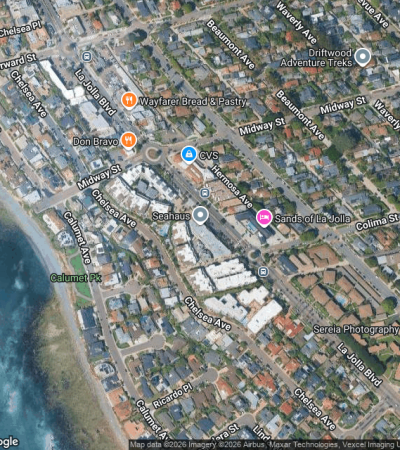
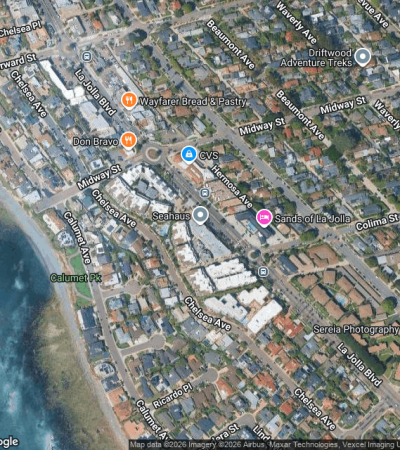
Bird Rock was subdivided in 1906 by developer Michael Francis Hall and named for an offshore formation whose natural arch collapsed under wave erosion in December 2010. It is the southernmost part of La Jolla, bordering Pacific Beach, with a rocky shoreline rather than sand and a walkable business district. In 2005 the community replaced signalized intersections on La Jolla Boulevard with roundabouts and narrowed the road from four lanes to two, which slowed traffic and let the retail strip work as a main street. Seahaus, at 5410 to 5490 La Jolla Boulevard and completed in 2005 with 138 residences plus shared pool, spa, and fitness facilities, is the anchor complex here. It also appears in MLS records under the alternate spelling Seahous, so search both if you are tracking inventory.
North of Bird Rock, Windansea surrounds one of the best-known surf breaks in Southern California, and the adjacent Beach Barber Tract is a tightly held pocket of short flat blocks running to the water. La Jolla Hermosa sits just inland with a wider range of attached product. Smaller associations in this band include Boardwalk, Bella Capri, and Capri Aire.
What are the Mount Soledad and Muirlands hillside condos like?
The Muirlands and Muirlands West occupy the southwestern slope of Mount Soledad and are best known for large-lot houses, but attached homes do trade there with the same view exposure. Around the hill, Soledad South and Soledad Corona Estates sit on the mountain’s flanks, and Mount La Jolla is one of the larger attached-home communities here. Hillside associations usually carry lower dues than the oceanfront towers, but they own drainage, retaining wall, and slope obligations that surface in reserve studies.
The hillside also holds a cluster of mid-size associations worth comparing side by side, because their dues, ages, and view positions differ more than their marketing suggests: Windemere, Ventana, Ridgegate, Blackhorse, Southpointe, Eastbluff, Devonshire, Cambridge, Villa Tuscana, and La Jolla Hideaway. When you tour two of these the same day, ask each listing agent for the reserve funding percentage. It is the fastest way to separate a well-run association from one deferring work.
What are condos near UC San Diego like?
The inland portion of La Jolla holds the community’s deepest supply of attached housing and its most accessible pricing. Villa La Jolla sits under two miles from the UC San Diego campus and is a common first purchase for buyers working at the university, the medical center, or nearby research institutes. Cape La Jolla and Cape La Jolla Gardens are related but separately governed, the kind of distinction that changes your dues and rental rights.
The Woodlands is not one association. It is a family of them, and buyers regularly confuse the members. Review each individually: Woodlands, Woodlands North, Woodlands South, Woodlands West I, and Woodlands West II. Before writing an offer in any of them, confirm in writing which association the unit belongs to. Dues, insurance, and rental restrictions are set at the association level, not the neighborhood level.
What are condos like in La Jolla Shores?
Ziani sits on Torrey Pines Road in the La Jolla Shores area, a newer townhome-style development in a part of La Jolla otherwise dominated by older stock. The Shores side gives you the community’s main sandy beach, Scripps Institution of Oceanography, the Birch Aquarium, and the shortest drive north.
How do HOA rules and the Davis-Stirling Act shape a purchase here?
Every condo in La Jolla is a common interest development governed by California’s Davis-Stirling Act, codified at Civil Code section 4000 and following and reorganized into its current form effective January 1, 2014. It sets how an association may assess fees, adopt and enforce rules, hold elections, place liens, and notice owners. The CC&Rs are the controlling document and they bind you at close.
So your due diligence is not just about the unit. Read the CC&Rs, the rules, the budget, the reserve study, twelve months of board minutes, the insurance certificate, and any litigation or special assessment disclosure. Board minutes are the most underused document in the stack. They tell you what the association is arguing about, which is usually what it is about to spend on.
One local pressure matters above the rest. Coastal buildings sit in salt air, so envelope work on windows, railings, decks, and waterproofing arrives on a shorter cycle than inland. An underfunded reserve here is not a discount. It is a deferred bill with your name on it.
Does the California Coastal Act affect condos in La Jolla?
Yes, and it is a real difference between buying here and buying inland. The California Coastal Act of 1976 created the California Coastal Commission and a regulated coastal zone extending inland from the mean high tide line, from a few hundred feet in dense urban areas to as much as five miles in rural ones. Development inside that zone generally requires a coastal development permit. The City of San Diego issues those under a certified Local Coastal Program, with the Commission retaining amendment authority and hearing appeals.
For a condo buyer this shows up three ways. Exterior modifications, deck enclosures, and anything altering building bulk or public views can require review beyond a standard city permit. Association projects such as seawall or bluff work face a longer and costlier path. And redevelopment of neighboring parcels is constrained, which is part of why coastal supply stays tight. If a unit’s value rests on a specific view, ask what protects it. A marketing photo is not a legal entitlement.
Can you rent out a La Jolla condo short term?
Sometimes, and the rules are specific. The City of San Diego requires a Short-Term Residential Occupancy license, and it has been unlawful to operate without one since May 1, 2023. Tier 1 covers rentals of 20 days or fewer per year and is uncapped. Tier 2 covers home sharing with the host onsite and is uncapped. Tier 3 covers whole-home rentals over 20 days per year outside Mission Beach and is capped at 1 percent of the city’s housing units outside the Mission Beach planning area. Tier 4 is Mission Beach only.
The cap is the part buyers miss. Per the City of San Diego’s published figures, as of July 2026 the Tier 3 program had 4,840 licenses issued with 821 remaining. That pool is city-wide, so La Jolla competes with every other non-Mission Beach neighborhood for it.
A city license is only half the question. Your HOA can prohibit short-term rentals regardless of what the city allows, and many La Jolla associations set minimum lease terms of 30 days, six months, or a year. Read the CC&Rs before you underwrite any rental income. For long-term rental, California’s Tenant Protection Act generally exempts individually owned condominiums from its rent cap when the owner is not a corporate entity and the required written notice is given. Confirm current state and city tenant rules with counsel.
What schools serve La Jolla condo addresses?
La Jolla is served by San Diego Unified School District. The traditional pattern runs through La Jolla Elementary, operating since 1896, Bird Rock Elementary, opened in 1951, and Torrey Pines Elementary, then Muirlands Middle School and La Jolla High School, established in 1922. The Preuss School, a charter, operates on the UC San Diego campus. The independent school presence is unusually deep: The Bishop’s School opened in 1909 and remains in the Village, alongside The Gillispie School, Stella Maris Academy, The Children’s School, and the Evans School.
Attendance boundaries are set by the district and they change. Do not rely on a neighborhood name, a listing remark, or this page. Verify the address with San Diego Unified before enrollment becomes part of your purchase logic.
How do you get around from a La Jolla condo?
Interstate 5 forms the eastern boundary and carries everything south to downtown San Diego and north toward Del Mar. Torrey Pines Road handles the northern connection through La Jolla Shores. La Jolla Boulevard runs the southern length toward Pacific Beach, slowed deliberately through Bird Rock by the 2005 roundabout conversion.
Rail changes the calculus for inland buyers. The San Diego Trolley Blue Line opened its Mid-Coast extension on November 21, 2021, adding stations at UC San Diego Health La Jolla, Executive Drive, and the UTC Transit Center, connecting the university area directly to downtown. Those stations sit in University City rather than La Jolla proper, so the benefit concentrates on the eastern, campus-adjacent communities. If rail commuting matters, that should decide which side of Mount Soledad you shop.
Employment is largely local. UC San Diego, approved in 1960 and enrolling its first undergraduates in 1964 on the former Camp Matthews site, anchors a research cluster including Scripps Institution of Oceanography, founded in 1903, the Salk Institute, and Scripps Research. Westfield UTC, at Genesee Avenue and La Jolla Village Drive, is the regional retail center just east.
What are the real trade-offs of buying a condo in La Jolla?
Dues versus price. A lower purchase price with high dues can underperform a higher price with low dues over a hold period. Run the total monthly number, not the sticker.
Older stock versus new construction. Older buildings often sit on better land with better views and larger footprints. They also carry aging plumbing, electrical, and envelope, plus parking that sometimes will not fit a modern vehicle. New construction is scarce because the coastal zone constrains it.
Ocean side versus inland side. Views, beach access, and a late-spring marine layer that can hold through the morning on one side. Sun, freeway and trolley access, and lower per-foot pricing on the other. Neither is better.
Small association versus large. Small associations move faster and concentrate risk. One roof or one elevator across a dozen owners is a very different assessment than the same repair across 150.
What should you check before writing an offer?
Confirm the exact association name and management company, especially in the Woodlands and Cape La Jolla groupings where similar names cover separate legal entities. Request the full HOA document package early, because a short contingency period plus a slow management company is a bad combination. Verify the master insurance policy, since its deductibles and any wind, water, or earthquake exclusions determine what your own HO-6 policy must cover. Confirm the lease minimum and whether the building sits near any owner-occupancy threshold, which affects rental plans and conventional financing alike. Get parking, storage, and pet rules in writing. And if the price is carried by a view, walk the sight line first.
Frequently Asked Questions About la jolla Condos for Sale
Is La Jolla its own city?
No. La Jolla is a community within the City of San Diego and has been since 1850. It has no separate municipal government, so San Diego’s permitting, code enforcement, and short-term rental rules apply.
Does Measure ULA apply to a La Jolla condo sale?
No. Measure ULA is a transfer tax on sales within the City of Los Angeles. La Jolla is in the City of San Diego and is not subject to it. Standard California and San Diego County documentary transfer taxes still apply.
Can I short-term rent my La Jolla condo?
Only with a City of San Diego Short-Term Residential Occupancy license, and only if your HOA permits it. Whole-home rentals over 20 days per year need a Tier 3 license, which is capped city-wide: 4,840 issued with 821 remaining as of July 2026. Your CC&Rs can prohibit the use even when the city would license it.
Why are HOA dues so different between two La Jolla buildings?
Dues reflect what the association maintains and insures. A high-rise with elevators, staffing, salt-air envelope exposure, and amenity space costs far more to run than a twelve-unit low-rise. Reserve funding policy also drives the number. An association funding reserves properly shows higher dues and lower special assessment risk.
Do I need a coastal development permit to remodel?
Interior work typically does not, but exterior changes inside the coastal zone can require review under the California Coastal Act of 1976, administered locally through San Diego’s certified Local Coastal Program. Your association’s architectural approval is separate and additional. Confirm both before setting a renovation budget.
Which La Jolla condo areas are most affordable?
Generally the inland communities nearer UC San Diego and University Town Center, including Villa La Jolla, Cape La Jolla, and the Woodlands associations. The gap versus the Coast Boulevard buildings reflects view, beach proximity, and walkability rather than build quality.
Are La Jolla condos a good rental investment?
The demand base is real, driven by UC San Diego, the medical and research institutions, and the University Town Center employment core. Whether a specific unit works depends on dues, the lease minimum in the CC&Rs, financing given the building’s owner-occupancy ratio, and short-term rental eligibility. Underwrite the association, not just the address.
What about coastal erosion and bluff risk?
It is a live consideration on the shoreline. Wave erosion collapsed the natural arch on the Bird Rock formation in December 2010. For bluff-adjacent buildings, ask what geotechnical work the association has commissioned, what shoreline protection exists, and what permitting path a repair would follow. Salt air also accelerates envelope wear on every oceanfront building here.
How does The Knight Group work in the La Jolla condo market?
We start with the association, not the listing. Before you tour, we pull the governing documents, budget, reserve study, and available board minutes for the buildings on your list, and we tell you what they say in plain terms, including when that is unfavorable to a unit you liked.
We map your search against the real dividing lines here: ocean side versus inland side, high-rise dues versus townhome dues, small association risk versus large association pace, and rental rules that either support your plan or quietly kill it. We compare units on total monthly cost and on the repair cycle each building is standing in, not on price per square foot alone. When it is time to write, we set contingency timelines around how fast a given management company actually delivers documents, because that is where these escrows most often go sideways. If you are selling, we assemble the disclosure package before the property goes live, which shortens escrow and removes the most common renegotiation lever a buyer has.
Browse the La Jolla condo listings below. When you want the document-level read on a specific building, reach out.
What other La Jolla condo communities can you browse?
The Knight Group also covers these La Jolla condo communities: La Jolla Heights La Jolla · La Jolla Farms La Jolla · La Jolla Alta La Jolla · La Jolla Woods La Jolla · La Jolla Village La Jolla · La Jolla Shores La Jolla · La Jolla Shores Heights La Jolla · La Jolla Seville La Jolla · La Jolla Scenic Heights La Jolla · La Jolla Park Villas La Jolla · La Jolla Palisades La Jolla · La Jolla Mesa La Jolla · La Jolla Hills La Jolla · La Jolla Highlands La Jolla · La Jolla Terrace La Jolla · Hidden Valley La Jolla · Luxury Homes La Jolla · Lower Hermosa La Jolla · Gated Homes La Jolla · El Dorado La Jolla · Emerald Cove La Jolla · Del Charro Woods La Jolla · Country Club La Jolla · Country Club Heights La Jolla · Montoro La Jolla.
Where are Condos For Sale In La Jolla located, and what are they like?
- Condos For Sale In La Jolla are attached, HOA-governed homes in San Diego’s coastal La Jolla community, set along a stretch of Pacific coastline.
- La Jolla is not a separate city, having been part of the City of San Diego since California achieved statehood, and it runs on San Diego’s municipal code and tax structure.
- Condominiums represent the lowest-cost way into a coastal market where bluff-front houses trade beyond most budgets.
- Nearby research and medical institutions keep steady professional demand under the La Jolla condo market.
- Buyers of Condos For Sale In La Jolla are purchasing a governing document as much as a floor plan, which shapes the entire due diligence process.
- Inventory falls into four groups: oceanfront high-rises above the Cove, low-rise complexes in South La Jolla and Bird Rock, Mount Soledad townhomes, and inland garden complexes.
- Dues, reserves, rental rules, and remodel restrictions vary sharply between two buildings standing only a block apart.
- The shared postal code across most La Jolla condos tells a buyer almost nothing about what they are actually purchasing.
- Mount Soledad, crowned by a cross, sits in the middle of the community and splits the area into distinct microclimates and view corridors.
- Ocean-side positions mean marine layer, salt air, and water views, while the eastern slope means more sun, easier freeway access, and canyon or city-light views.
- Geographic boundaries run from the Pacific Beach line north to Torrey Pines State Natural Reserve and the Del Mar edge, with Interstate forming the eastern edge.
- No La Jolla city transfer tax exists, and Measure ULA, the transfer tax on high-value sales inside the City of Los Angeles, has no bearing here.
- The Village serves as La Jolla’s commercial and civic center, home to the La Jolla Playhouse tradition and the Girard and Prospect retail spine.
- Coast Boulevard buildings facing the water carry the highest dues in the market, because elevators, staffing, and salt-air envelope exposure are expensive.
- Bird Rock, the southernmost part of La Jolla bordering Pacific Beach, offers a rocky shoreline rather than sand alongside a walkable business district.
- Roundabouts replaced signalized intersections on La Jolla Boulevard and the road narrowed, which slowed traffic and let the retail strip work as a main street.
What rules and regulations affect Condos For Sale In La Jolla?
- Every condominium in La Jolla is a common interest development governed by California’s Davis-Stirling Act, codified in the Civil Code and reorganized into its current form.
- Davis-Stirling sets how an association may assess fees, adopt and enforce rules, hold elections, place liens, and notice owners.
- The CC&Rs are the controlling document for Condos For Sale In La Jolla, and they bind the buyer at close.
- Due diligence covers the CC&Rs, the rules, the budget, the reserve study, board minutes, the insurance certificate, and any litigation or special assessment disclosure.
- Board minutes are the most underused document in the stack, revealing what the association is arguing about and therefore what it is about to spend on.
- Coastal buildings sit in salt air, so envelope work on windows, railings, decks, and waterproofing arrives on a shorter cycle than inland.
- An underfunded reserve at a coastal building is not a discount but a deferred bill with the buyer’s name on it.
- The California Coastal Act created the California Coastal Commission and a regulated coastal zone extending inland from the mean high tide line.
- Development inside the coastal zone generally requires a coastal development permit, issued by the City of San Diego under a certified Local Coastal Program.
- Exterior modifications, deck enclosures, and anything altering building bulk or public views can require review beyond a standard city permit.
- Association projects such as seawall or bluff work face a longer and costlier permitting path than ordinary maintenance.
- Constrained redevelopment of neighboring parcels is part of why coastal supply stays tight around Condos For Sale In La Jolla.
- A marketing photo is not a legal entitlement, so buyers whose value rests on a specific view should ask what protects it.
- Short-term rental of Condos For Sale In La Jolla requires a City of San Diego Short-Term Residential Occupancy license, with tiers covering occasional rentals, home sharing, and whole-home use.
- An HOA can prohibit short-term rentals regardless of what the city allows, and many La Jolla associations set minimum lease terms measured in months.
- San Diego Unified School District serves La Jolla, alongside an unusually deep independent school presence including The Bishop’s School in the Village.
What should buyers know before choosing Condos For Sale In La Jolla?
- Measure ULA is a transfer tax on sales within the City of Los Angeles and does not apply to La Jolla, which sits in the City of San Diego.
- Standard California and San Diego County documentary transfer taxes still apply to a La Jolla condominium sale.
- Short-term rental of Condos For Sale In La Jolla requires a City of San Diego Short-Term Residential Occupancy license and HOA permission.
- CC&Rs can prohibit short-term rental use even when the city would license the property, so the governing documents come first.
- HOA dues reflect what the association maintains and insures, which is why a high-rise costs far more to run than a small low-rise.
- Reserve funding policy drives the dues number, and an association funding reserves properly shows higher dues with lower special assessment risk.
- Interior remodel work typically needs no coastal permit, but exterior changes inside the coastal zone can require review under the California Coastal Act.
- Architectural approval from the association is separate from and additional to any city or coastal permitting a renovation requires.
- Inland communities nearer UC San Diego and University Town Center are generally the most affordable places to buy here.
- The price gap between inland associations and the Coast Boulevard buildings reflects view, beach proximity, and walkability rather than build quality.
- Rental demand is driven by UC San Diego, the medical and research institutions, and the University Town Center employment core.
- Investment performance for Condos For Sale In La Jolla depends on dues, the lease minimum in the CC&Rs, financing given owner-occupancy ratio, and rental eligibility.
- Coastal erosion is a live consideration on the shoreline, where wave erosion collapsed the natural arch on the Bird Rock formation.
- Bluff-adjacent buildings warrant questions about geotechnical work commissioned, shoreline protection in place, and the permitting path a repair would follow.
- Real dividing lines in the market are ocean side versus inland side, high-rise dues versus townhome dues, and rental rules that support or kill a plan.
- Comparing Condos For Sale In La Jolla works best on total monthly cost and the repair cycle each building stands in, not price per square foot alone.