
Multi-Family Homes in Los Angeles: Investment Guide for Buyers

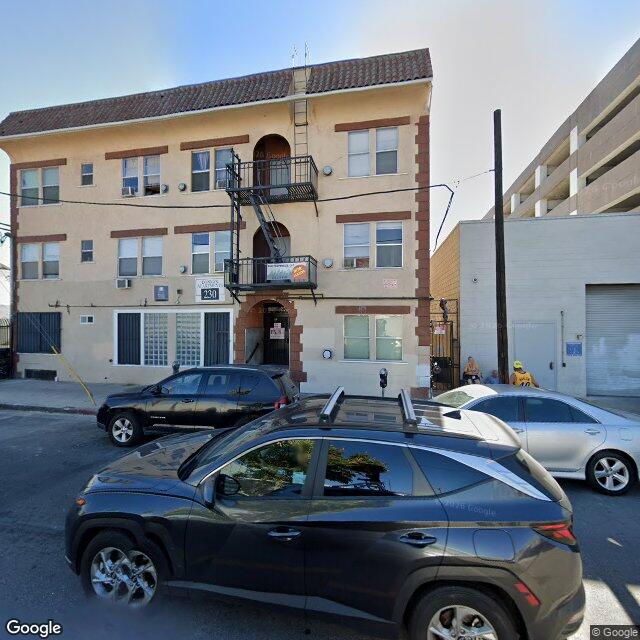
Multi-family homes in Los Angeles are among the most complex residential investments available — and the investment math starts with one variable that organizes everything else: the Rent Stabilization Ordinance (RSO). Whether a multi-family property is subject to rent control determines its income potential, its tenant dynamics, its vacancy risk, and ultimately its value as an investment. Buyers who understand this distinction before entering the market are better positioned than those who discover it after they’re in contract. Sellers of multi-family properties in LA — particularly RSO-covered assets — can get a realistic pricing read through TKG’s home selling advisory before determining how to structure the exit.
This guide covers the RSO structure, asset type considerations, the current financing environment for small multi-family, and what buyers need to evaluate before purchasing a duplex, triplex, or small apartment building in Los Angeles.
The RSO: The Most Important Variable in LA Multi-Family
Los Angeles’s Rent Stabilization Ordinance (RSO) applies to most residential rental units in the city of Los Angeles that were built before October 1, 1978. RSO-covered units are subject to:
- Annual rent increases capped by the city’s allowed percentage (typically 3-8% depending on CPI, often announced each year)
- Just-cause eviction requirements — landlords can only evict for defined reasons (non-payment, lease violations, owner move-in, substantial renovation, or property withdrawal from the rental market)
- Rent freeze protections that limit a landlord’s ability to bring rents to market between tenancies in many circumstances
For investment buyers, the RSO creates a fundamental distinction between two types of multi-family properties in LA:
*RSO-covered properties (pre-1978 construction).* The tenant rents in RSO-covered units may be significantly below current market rents if long-term tenants have been in place. A four-plex where tenants have lived for 10-15 years may have rents at 40-60% of current market levels — and those rents cannot be increased to market levels until the unit vacates naturally. RSO properties trade at higher cap rates than non-RSO because the income upside is constrained and the regulatory environment is more complex.
*Non-RSO properties (post-1978 construction or exempt categories).* Rents can be raised to market levels with proper notice (typically 30-90 days depending on the rent amount and tenure). Vacant units can be re-rented at whatever the market will bear. The investment is more straightforward.
*The practical implication:* when evaluating any LA multi-family property built before 1978, verify whether it’s RSO-covered, check the current rents in each unit, and model what the realistic timeline to market rents looks like given the RSO’s vacancy-decontrol rules. Don’t underwrite to current rents as the floor without understanding whether those rents can be raised.
Asset Types: Duplex, Triplex, and Small Apartment Buildings
*Duplex (2 units).* The most accessible entry point for small multi-family investors. In many cases, buyers can use residential financing (conforming or jumbo) rather than commercial loans, which reduces the down payment requirement and rate environment. An owner-occupant who lives in one unit and rents the other can use the projected rental income to qualify for a larger loan in some financing scenarios. Duplexes in LA run from approximately $1M-$3M depending on location and condition. Buyers modeling rental income for multi-family scenarios can benchmark current market rates through the Los Angeles rental listings database before finalizing acquisition assumptions.
*Triplex and four-plex (3-4 units).* Still typically eligible for residential financing in many configurations, though the underwriting considerations become more complex. The rental income from 3-4 units can meaningfully offset carrying costs — though at current LA prices and interest rates, the coverage ratio is often well below 1:1 at acquisition. Properties in this range run $1.5M-$5M in primary market locations.
*5+ units (small apartment buildings).* Once a property has 5 or more units, it crosses into commercial real estate financing — different loan products, higher down payment requirements (typically 25-30%+), and commercial underwriting standards rather than residential. The investment characteristics change substantially: the cap rate becomes a primary valuation metric, commercial lenders evaluate the property on income rather than comparable sales, and the buyer’s profile shifts from a residential investor to a commercial real estate buyer. Investors who hold or are considering multi-family assets in multiple California markets — including the San Francisco Bay Area, where multi-family dynamics differ significantly from LA under the RSO — should calibrate each market separately.
What LA Multi-Family Properties Actually Cash Flow
The honest answer at current price levels and interest rates: most LA multi-family properties cash flow poorly or negatively at acquisition. The investment thesis in LA is primarily appreciation, not yield.
A representative example: a four-plex in Koreatown priced at $2M with current rents of $4,000/month per unit (total gross $192,000/year) and a 25% down payment ($500,000) at 7% interest on a $1.5M commercial loan would generate approximately $105,000 in annual debt service, plus taxes ($24,000/year), insurance ($6,000/year), and maintenance/management (10% of gross, $19,200/year). Total carrying costs: approximately $154,200/year against $192,000 gross rents. After vacancy allowance (5%) and credit loss: roughly breakeven to slightly positive in the best scenario.
At current prices and rates in most LA markets, “roughly breakeven” is the optimistic scenario at acquisition. The investment requires patience and a long-term hold thesis anchored in appreciation.
Where the math improves: properties with specific value-add potential (non-RSO properties where units are below market and can be reset to market quickly, properties with ADU potential, properties on lots with redevelopment value) can offer better income profiles than the stabilized market suggests.
ADUs and SB 9: The Value-Add Opportunity for Multi-Family Buyers
State legislation has significantly expanded ADU development rights in California, creating a value-add opportunity for buyers of multi-family or single-family properties in LA.
*ADU construction.* California’s ADU laws now allow attached or detached accessory dwelling units on most residential properties. For a buyer purchasing a duplex or triplex with a large backyard or garage, the ADU opportunity may meaningfully increase the property’s income potential. An ADU that rents for $2,500-$3,500/month adds $30,000-$42,000 in gross annual income — a significant income addition for a $2M investment.
*SB 9 lot splits.* Senate Bill 9 allows most single-family lots in urban areas to be split into two parcels, each of which can have a dwelling unit. For investors considering single-family properties with oversized lots, SB 9 creates a path to incremental density without full commercial development. Implementation has been uneven — many local jurisdictions have found ways to slow-walk SB 9 applications — but the law is real and enforceable.
For buyers specifically targeting the value-add multi-family thesis in LA, the combination of ADU potential and RSO structure should be evaluated together before acquisition.
Financing Multi-Family in LA
*2-4 unit residential financing.* Buyers using conventional or jumbo financing for properties with 2-4 units can typically access residential loan products with 20-25% down payment requirements. Lenders will apply a percentage of the rental income from the non-owner-occupied units toward the borrower’s qualifying income (typically 75% of projected rents after vacancy allowance). This income offset can significantly improve how much purchase price the borrower can qualify for.
*5+ unit commercial financing.* Commercial loans for small apartment buildings typically require 25-30% down payment, carry rates that are currently 0.5-1.5% above equivalent residential jumbo rates, and use the property’s income (net operating income divided by cap rate) as the primary valuation input rather than comparable sales. Commercial lenders for this asset type include regional banks, credit unions, and dedicated commercial real estate lenders.
*Key variables lenders evaluate:* current rent roll, vacancy history, tenant quality, RSO status and implications, property condition and deferred maintenance, and the borrower’s track record with investment real estate.
What to Check Before Buying Multi-Family in LA
Before submitting an offer on any LA multi-family property:
- Verify RSO coverage status for all units — confirm with the LA Housing Department, not just the seller
- Pull the current rent roll and verify each unit’s actual lease terms and rent amount
- Request 2-3 years of operating statements (or build your own from the rent roll and utility/maintenance records)
- Identify any unpermitted construction — in LA, unpermitted work on a multi-family property creates code compliance risk that can be expensive to resolve
- Verify whether any units are currently under Ellis Act withdrawal (a mechanism that takes property off the rental market) — this changes the regulatory context significantly
- Model your actual all-in return at the current purchase price, current rents, and current financing costs — don’t rely on the listing agent’s proforma
TKG’s approach to multi-family acquisitions includes a structured due diligence framework that addresses all of these variables before the contingency period expires. If you’re evaluating multi-family opportunities in the LA market, we can bring that framework to your specific situation.
Interested in acquiring investment property in Los Angeles? TKG’s buyer advisory covers the full acquisition process — from identifying value plays to structuring offers that hold up in competitive conditions.
Browse luxury real estate across Los Angeles — including multi-family, ADU-ready, and high-yield opportunities across every price tier.
Sellers in the multi-family or investment space can find TKG’s approach to timing the exit and maximizing net proceeds at the seller strategy guide.