
Real Estate Investment in Los Angeles: The Honest Guide for Serious Investors

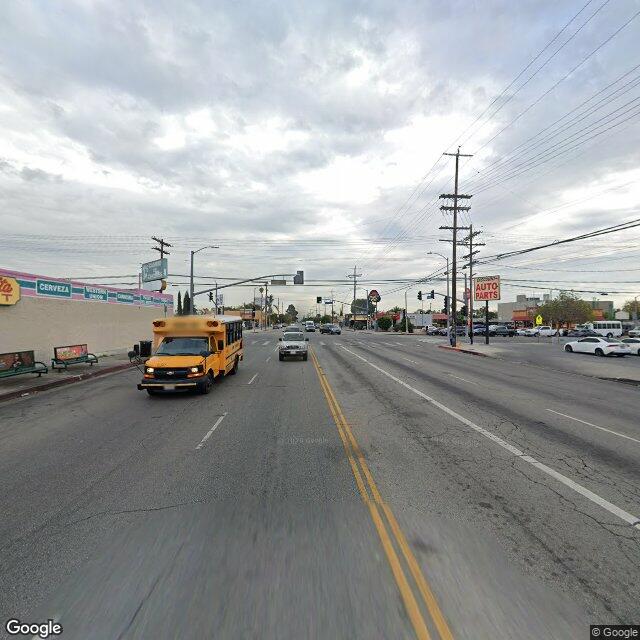
Real estate investment in Los Angeles is one of the most difficult — and historically most rewarding — investment strategies in the United States. The difficulty is real: LA’s residential real estate cash flows poorly at current price and rate levels. The cap rates are thin. The operating costs are high. The regulation is complex, particularly for landlords. And the entry price is steep enough to require significant capital before you can access the most resilient segments of the market.
The rewards are also real: LA has produced some of the most significant private real estate fortunes in American history. The market has demonstrated consistent long-term appreciation, driven by a genuinely constrained supply market with persistent demand from one of the most economically productive metropolitan areas in the world. Investors who want parallel exposure to another supply-constrained California market can explore the San Francisco Bay Area, where the same structural appreciation thesis applies alongside a different set of asset types and entry points.
If you’re considering LA real estate as an investment, this guide gives you the honest framework — where the math works, what most investors get wrong, and how off-market access changes the investor’s odds.
Why Los Angeles Is Both a Great and Terrible Investment Market Depending on Your Strategy
Los Angeles is two investment markets operating simultaneously. Recognizing which one you’re in — and being honest about which one your specific situation fits — is the foundational decision.
*Market A: Appreciation plays.* LA has generated significant long-term appreciation across most property types and most geographic areas. Investors who bought in Bel Air in 1990, Silverlake in 2000, or the Arts District in 2010 and held have captured extraordinary gains. The appreciation thesis in LA is driven by structural supply constraints (geography, zoning, permitting, NIMBYism), strong demand from a deep, diversified local economy, and the city’s position as a global destination for entertainment industry, technology, and international wealth.
*Market B: Cash flow plays.* At current price and interest rate levels, cash flow in LA’s residential real estate is nearly nonexistent across most asset types. The cap rates on single-family residential and small multifamily in LA’s primary markets run 2-4% — well below debt service costs at current rates. An investor buying a $2M four-plex in Koreatown is likely breaking even or losing modestly on a month-to-month basis at current mortgage rates. The cash flow thesis requires either significant equity (purchased at lower prices and now above water), specific property types that cash flow better (commercial, some industrial, specific multifamily in certain submarkets), or a time horizon that doesn’t depend on current cash flow.
Most investors come to LA expecting Market A appreciation and are surprised by Market B cash flow. The investors who succeed in LA have aligned their strategy with the actual market: they are buying for appreciation, they are patient, and they are not dependent on cash flow to service their lifestyle or debt. Property owners at the appreciation-exit inflection point can start with an honest market read through TKG’s home selling advisory before deciding whether to sell, hold, or execute an exchange.
Where the Investment Math Works in LA Right Now
The investment thesis in LA is neighborhood and asset-type specific. Broad generalizations don’t serve investors well.
*Best appreciation trajectory:* Neighborhoods in active gentrification where price discovery is still happening. Highland Park, Eagle Rock, and Glassell Park have already repriced; the Crenshaw corridor, West Adams, and portions of South LA are in earlier innings of that transition. The risk is higher in earlier-stage neighborhoods; the return potential is also higher. This is speculative appreciation investing, not yield investing.
*Best cash flow potential:* Multifamily in specific LA submarkets — Koreatown, Palms, Mid-City — where rents relative to purchase prices are better than Westside. Even these markets cash flow marginally or negatively at current financing costs; a 25-30% down payment and favorable financing can push some assets into cash-flow-positive territory. Commercial and mixed-use properties in secondary corridors can offer better yield than residential.
*Best risk-adjusted long-term hold:* The established Westside and close-in Eastside markets (West Hollywood, Silver Lake, Echo Park) where supply constraint and persistent demand have historically produced the most consistent appreciation with lower volatility than speculative submarkets. The yield is poor; the long-term store-of-value case is strong. Investors who want a California market with better yield alongside long-term appreciation can explore Placer County, where Sacramento suburb growth has delivered consistent appreciation with cap rates that meaningfully exceed the LA average.
*Avoid at current prices:* Luxury single-family homes purchased as rental properties. The cap rates are 1-2%; the carrying costs including property tax, insurance, maintenance, and property management are 3-4% of value annually. This is not an investment structure that works mathematically at current prices and rates. Buy luxury for personal use or for the off-market flip thesis; don’t buy luxury for rental yield.
Single-Family vs. Multi-Family vs. Condo: Which Asset Type Makes Sense in LA?
*Single-family homes* in LA are primarily lifestyle assets. Investors buy them when they have a specific thesis — renovation and resale, redevelopment potential on a large lot, or the appreciation conviction that the address will meaningfully outperform the market. They are poor cash flow instruments at current prices. They are excellent stores of value in the right locations over long hold periods. Investors who want a California lifestyle-market thesis with mountain character rather than coastal can also explore the El Dorado County Sierra foothills and Lake Tahoe area, where vacation rental income supplements the appreciation thesis.
*Multi-family properties (2-12 units)* are where LA’s residential investment math is best, in relative terms. Multifamily in LA comes with a critical divide: properties built before 1978 are subject to LA’s Rent Stabilization Ordinance (RSO), which limits annual rent increases and severely restricts eviction rights. RSO-covered properties are fundamentally different investment vehicles than non-RSO properties. An RSO four-plex where all units are at below-market rents may cash flow worse than a non-RSO property at the same price — because the upside of bringing rents to market is locked behind the RSO’s vacancy-decontrol rules (which in practice mean significant tenant turnover is required before market-rate rents can be achieved).
*Non-RSO multifamily* — properties built after 1978 or properties that qualify for exemption (single-family homes with ADUs, etc.) — are a different and generally more investor-friendly asset. If you’re buying multifamily in LA with a cash flow thesis, prioritize post-1978 construction.
*ADUs and SB 9 splits* are the most interesting structural opportunity for existing homeowners. Adding an ADU to a single-family property is now significantly simplified under California law. In neighborhoods where rents relative to ADU construction costs work, an owner-occupant can meaningfully improve the cash flow profile of their property while building equity in a separate rentable unit. The same logic applies to SB 9 lot splits, where a single residential lot can be split and developed with two residential units.
*Condos* in LA are rarely good investment properties due to the HOA overlay. HOA fees reduce net yield; HOA rules restrict rental policies; and condo associations can make decisions (special assessments for building repairs, litigation, significant capital expenditure) that materially affect the economics of the investment without owner input. There are exceptions — specific buildings with investor-friendly structures and strong HOA financial health — but condos are generally less favorable investment vehicles than equivalent single-family or multifamily assets in LA.
What the Current Interest Rate Environment Means for LA Investors
The 2022-2023 rate cycle fundamentally changed LA real estate investment math. Investors who purchased with 3-4% financing and now hold in a 6-8% rate environment have seen their debt service cost effectively double on new purchases. This has two effects:
*Lower buyer pool competition.* Investors who need debt to close deals have retreated from the market in most segments. This has opened negotiating room that didn’t exist during the low-rate era.
*Significantly worse cash flow at acquisition.* The same property that barely cash-flowed at 4% financing is deeply negative at 7%. The investor entering the market now is either very well-capitalized (large down payment), very patient (buying at today’s prices for long-term appreciation without cash flow dependence), or very specifically focused on the asset types and locations where the yield is best.
*The implication for buyers:* Rate environment changes the tactical timing of purchases. Buying when rates are high and prices haven’t fully adjusted can position buyers to refinance into a better cash flow profile when rates normalize. Buying when rates are low and prices are at peak provides the best apparent cash flow but may leave buyers exposed to value correction if the rate environment tightens.
LA investors who entered in 2020-2021 at low rates and peak prices face a specific challenge: their cost basis and rate environment are locked; they cannot easily sell into a thinned buyer market without taking losses; and their best path is often to hold and wait for a rate normalization that improves their exit liquidity.
The Off-Market Advantage for LA Investors
The most significant structural advantage available to LA real estate investors is off-market access. Here’s why this matters specifically for investors versus primary residence buyers:
An investor’s purchase criteria are more analytical than a lifestyle buyer’s criteria. They’re optimizing for price, yield, location characteristics, and development potential — not for school district or how the kitchen feels. This means the off-market investor can pursue sellers who would not sell at current market prices but who have a compelling reason to consider a private sale.
Estate sales, sellers in financial transition, owners of appreciated property who don’t want the marketing cost and disruption of a public listing, and long-term owners who haven’t engaged with the market but would consider selling to the right buyer at the right price — these are the off-market sellers who are not accessible through the MLS. They exist in every market at every price point, and their properties often trade at discounts that the open market would not produce. Investors considering an exit from an LA investment property can review TKG’s seller strategy for the positioning decisions specific to the luxury tier.
For a 1031 exchange investor with a 45-day identification window, off-market access is additionally critical: it allows pre-market negotiations to begin before the exchange clock starts, rather than entering the open market under time pressure.
TKG’s off-market access is specific to the LA market we operate in. If you’re evaluating investment opportunities in the $2M-$15M range in LA and want to search beyond what the MLS shows, that’s the conversation worth having before you start your formal search.
What Most LA Real Estate Investors Get Wrong
*Projecting national investment frameworks onto the LA market.* LA real estate doesn’t cash flow like Dallas or Phoenix real estate. Investors who bring cap rate expectations from other markets and apply them to LA will find the market confusing. LA’s value proposition is appreciation and scarcity, not yield.
*Underestimating operating costs.* LA landlords face high property tax rates, mandatory seismic retrofitting for older buildings, increasing insurance costs in many neighborhoods, active tenant protections that can constrain rent increases, and property management costs that are proportionally higher than in less regulated markets. Operating cost underestimation is the most common driver of investor disappointment.
*Buying the wrong asset type for the strategy.* Buying a luxury single-family home for rental yield. Buying RSO-covered multifamily expecting to quickly mark rents to market. These are strategy-execution mismatches. Align the asset type to the investment thesis before buying.
*Ignoring the permitting and regulatory environment.* LA has one of the most active residential regulatory environments in California. ADU permitting, short-term rental regulations, seismic upgrade requirements, eviction moratoriums, and rent control are features of the investment landscape, not exceptional events. Investors who plan without accounting for regulatory risk in LA are underprepared.
*Underestimating the off-market opportunity.* The investor who only searches the MLS is searching the market everyone else is searching — the market where prices reflect maximum competitive pressure. The investor with off-market access is searching a different market entirely.
If you’re positioning a serious capital deployment in LA real estate, let’s run the investment brief together: asset type, location thesis, timeline, and where off-market access can improve the odds.
Interested in acquiring investment property in Los Angeles? TKG’s buyer advisory covers the full acquisition process — from identifying value plays to structuring offers that hold up in competitive conditions.
Browse luxury real estate across Los Angeles — including multi-family, ADU-ready, and high-yield opportunities across every price tier.