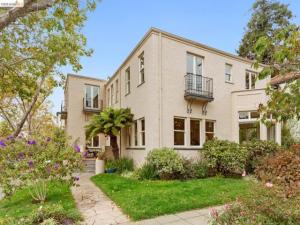
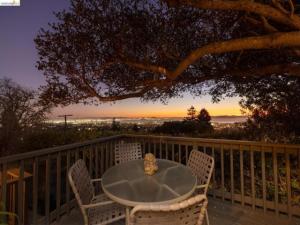
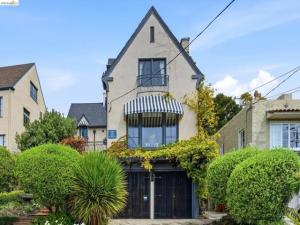
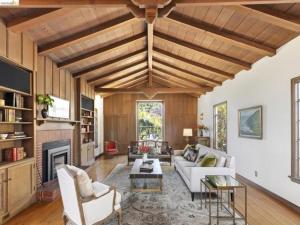
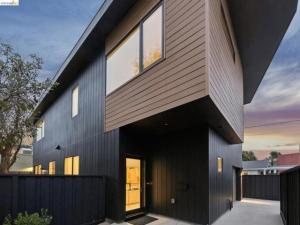
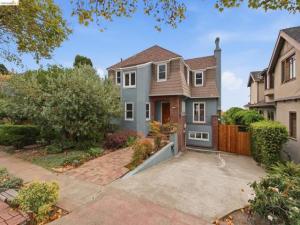
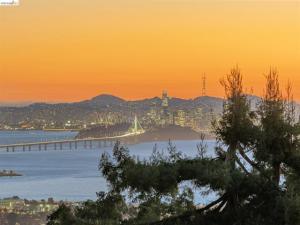
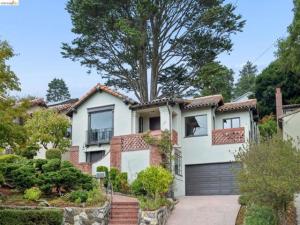
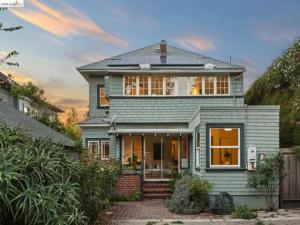
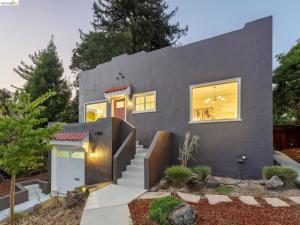
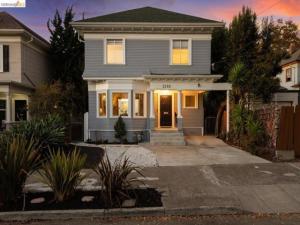
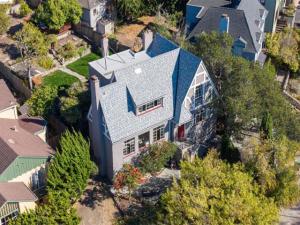
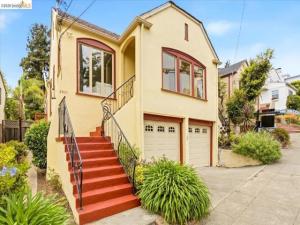
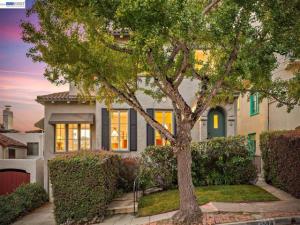
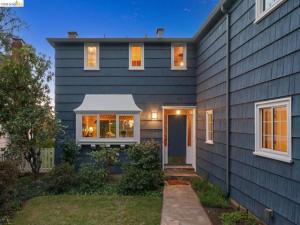
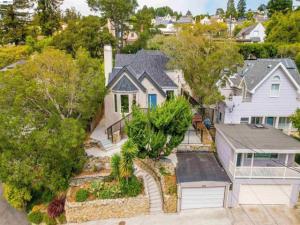
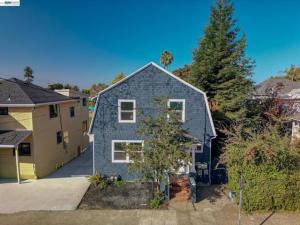
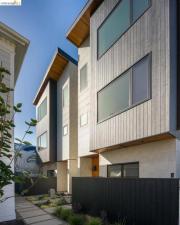
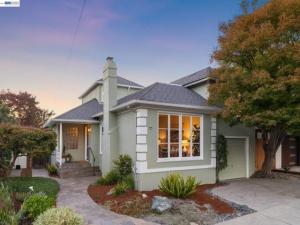
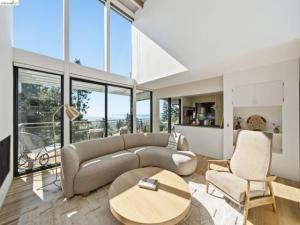
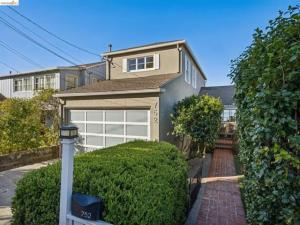
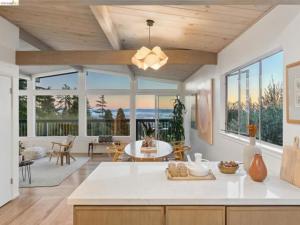
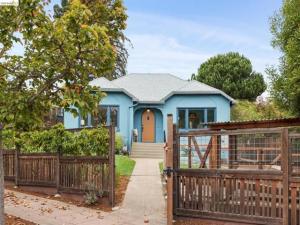
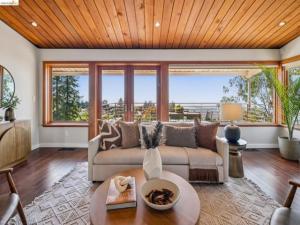
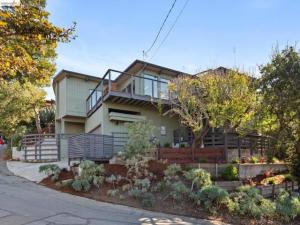
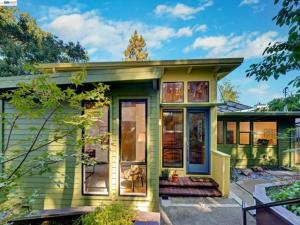
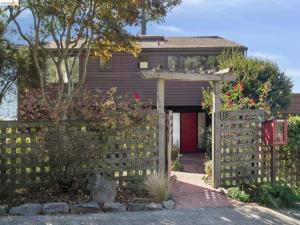
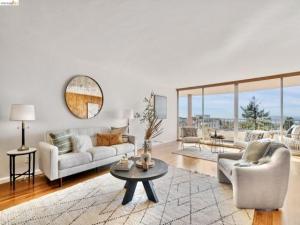
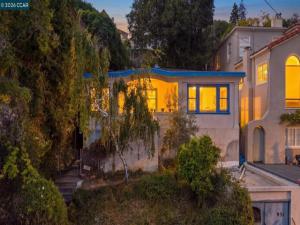
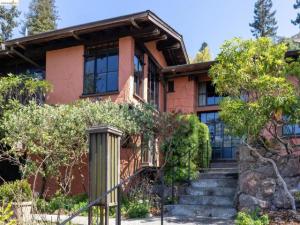
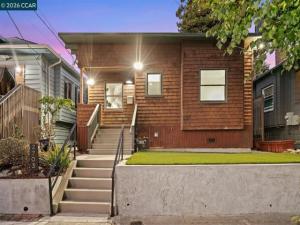
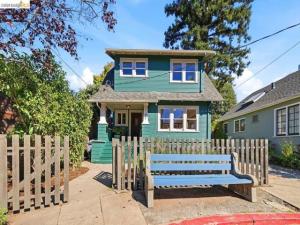
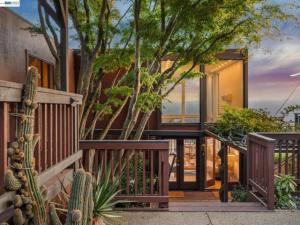
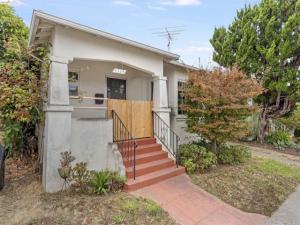
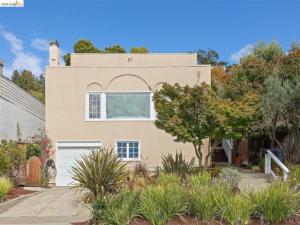
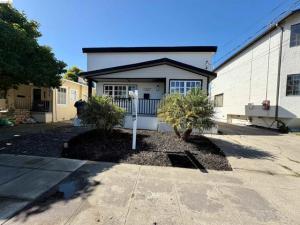
Homes for Sale in Berkeley currently number 220 active listings with a median asking price of $1,147,500 (CRMLS, September 2026).
Buyers looking at homes for sale in Berkeley are really looking at several markets at once, spread across the city’s 10.5 square miles. The flatlands west of Telegraph Avenue and below the hills cover a wide range of price points, with Rockridge and Elmwood at the top of that tier and South, West, and Southside Berkeley more accessible. Hill properties in Claremont, Panoramic Hill, and Thousand Oaks can trade $200 to $400 per square foot above comparable flatlands addresses.
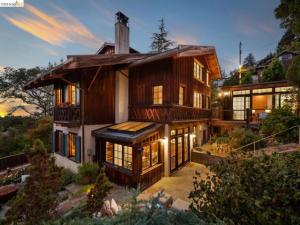
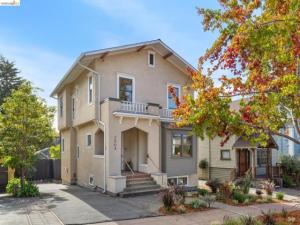
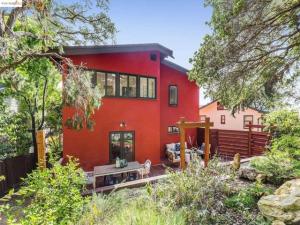
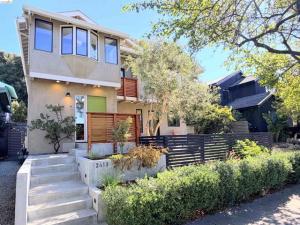
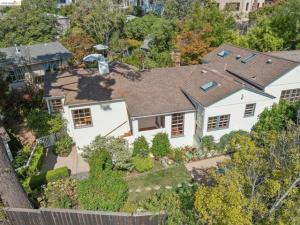
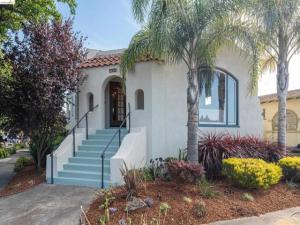
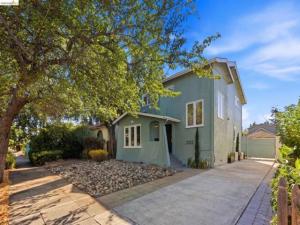
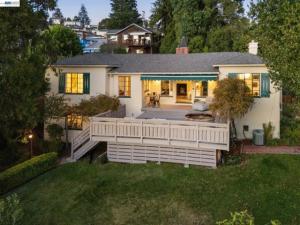
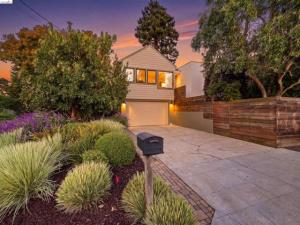
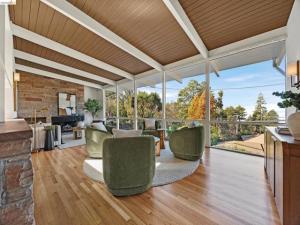
Housing stock runs heavily to Craftsman bungalows and Colonial Revival homes on tree-lined streets, with Arts and Crafts period homes, mid-century moderns, and contemporary custom builds in the hills, and post-war single-family homes in areas like Westbrae. What varies most is fire hazard zone designation, which drives insurance cost in the hills, along with school assignment, BART proximity, and walkability.
Berkeley is one of the most internally diverse real estate markets in the East Bay, with neighborhood character and price points varying dramatically across the city’s 10.5 square miles. From the dense flatlands blocks near the BART corridors to the wooded hillside estates of the Claremont and Panoramic Hill areas, Berkeley encompasses a range of residential environments that attract buyers across income brackets and lifestyle priorities. The University of California anchors consistent employment demand, and the city’s cultural density creates a buyer pool drawn from across the Bay Area and beyond. This guide covers the Berkeley market in full, including neighborhoods, schools, commute options, and what buyers need to know before competing here.
Berkeley’s market operates at a premium relative to the broader East Bay, driven by persistent demand from UC Berkeley faculty, staff, researchers, and affiliated professionals, combined with a broader buyer pool attracted to the city’s architectural character, transit access, and cultural offerings. Even during market downturns, Berkeley’s lower price tier sees competition because the absolute cost of entry, while high by national standards, is among the more accessible in the Bay Area for buyers with dual incomes and substantial down payments.
The flatlands neighborhoods, roughly speaking those west of Telegraph Avenue and below the hills, offer a range of property types at price points below the hills. Rockridge and Elmwood represent the top of the flatlands market, with Craftsman homes on tree-lined streets trading at significant premiums. The South Berkeley, West Berkeley, and Southside neighborhoods offer more accessible pricing but with trade-offs in school quality and walkability to premium amenities.
Hill properties carry their own premium structure based on views, lot size, and privacy. Homes in Claremont, Panoramic Hill, Thousand Oaks, and the Mosswood-adjacent areas can trade at $200 to $400 per square foot above comparable flatlands addresses. Fire hazard severity zone designations affect insurance costs and should be factored into buyer budgets for hill properties, as the California FAIR Plan and private alternatives have diverged significantly in price in recent years.
Inventory is consistently limited across Berkeley’s most desirable neighborhoods. Days on market for correctly priced properties in Rockridge and Elmwood average under two weeks. The competitive dynamic requires buyers to be pre-approved, to understand the market value of properties before they visit, and to be prepared to write offers with limited contingency periods in competitive situations.
Rockridge, straddling the Oakland-Berkeley border along College Avenue, is one of the most consistently sought-after neighborhoods in the East Bay. Craftsman bungalows, walkable retail, and close proximity to the Rockridge BART station make it a perennial target for buyers who want urban amenities with residential character. Competition here is among the highest in Berkeley, and properties rarely sit more than a week if priced within market range.
Elmwood, centered on College Avenue south of Ashby, has a village-scale commercial strip with independent businesses and a quiet residential character on the surrounding blocks. The neighborhood is predominantly single-family Craftsman and Colonial Revival homes with mature tree cover. Its school proximity, both elementary campuses and private options, makes Elmwood a consistent target for families.
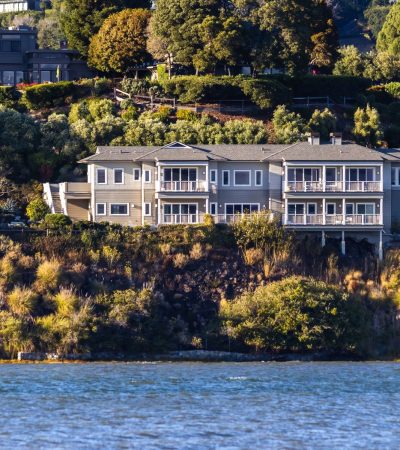
The Berkeley Hills encompass several distinct communities including Claremont, Thousand Oaks, Northbrae, and the Panoramic Hill area. These neighborhoods offer views, privacy, and architectural diversity ranging from Arts and Crafts period homes to mid-century moderns and contemporary custom builds. Fire risk management is a primary due diligence consideration in this zone, with defensible space, chimney condition, and access road evaluation all relevant to offer decisions.
Westbrae, along Gilman Street and the flatlands north of campus, has developed a dedicated local following for its craft brewery scene, independent dining, and easy access to North Berkeley BART. Properties here are mid-century and post-war single-family homes at prices that are competitive but generally accessible relative to Elmwood and Rockridge. The Gourmet Ghetto area around Shattuck Avenue in North Berkeley is adjacent and adds walkable food and retail.
Berkeley Unified School District serves the city with a range of elementary, middle, and high school options. Berkeley High School is the single comprehensive high school and enrolls approximately 3,200 students across five Small Learning Communities, each with a distinct academic and social focus. The school has a strong record for college placement and access to advanced coursework, though the large size means the student experience varies significantly depending on which program a student enters.
The elementary campuses within BUSD vary in performance and available resources, and families with school-age children typically research individual school ratings and programs rather than the district average. Several elementary schools have dual-language immersion programs, arts integration models, and language acquisition programs that draw applications from across the district via the choice process.
Private school options in Berkeley are numerous, including Ecole Bilingue de Berkeley, a French-American bilingual school, Black Pine Circle School for K-8, and Bentley School, which offers independent K-12 education in Oakland adjacent to the Berkeley Hills. The concentration of private options near the Berkeley-Oakland border reflects the education priorities of the buyer demographic in the premium hill neighborhoods.
Berkeley’s cultural density is exceptional for a city of 120,000 people. The Gourmet Ghetto along Shattuck Avenue in North Berkeley established Berkeley’s reputation as a food city, with Chez Panisse the originating institution of the California cuisine movement. That culinary tradition has expanded throughout the city, with College Avenue in Rockridge, Telegraph Avenue near campus, and the Elmwood district all offering concentrated restaurant and cafe options that draw diners from across the East Bay.
Tilden Regional Park occupies the hills above Berkeley and provides thousands of acres of trails, an operating steam train, a botanic garden, Lake Anza for swimming, and a golf course. The park is accessible directly from several Berkeley hill neighborhoods and is a primary reason many buyers specifically target hillside properties. The connection to Wildcat Canyon Regional Park extends the accessible trail network further north.
The UC Berkeley campus anchors a constant cycle of cultural programming through the Cal Performances series, the Berkeley Art Museum and Pacific Film Archive, and the various lecture and public programming series run by university departments. Residents who are not affiliated with the university still benefit from this programming calendar throughout the academic year.
The Fourth Street shopping district in West Berkeley is a distinct retail corridor with a mix of national brands, independent furniture and design stores, and casual dining that draws shoppers from across the East Bay. Its location near I-80 makes it accessible as a destination rather than a neighborhood commercial strip.
Berkeley is among the best-served BART communities in the East Bay, with three stations: Downtown Berkeley, Ashby, and North Berkeley. All three serve the Richmond and Fremont/Daly City lines, providing direct service to San Francisco’s Embarcadero, Montgomery, Powell, Civic Center, and Balboa Park stations. Commute times to the Financial District average 25 to 35 minutes from Berkeley stations.
AC Transit operates an extensive bus network through Berkeley, including the Transbay 1R line with limited-stop express service to San Francisco’s Transbay Terminal during peak commute hours. This option provides a direct bus connection for buyers who work in South of Market or near the Transbay Terminal without a BART transfer.
Berkeley is widely considered the most bicycle-friendly large city in the East Bay, with a network of designated bike boulevards on low-traffic residential streets running parallel to major arterials. The city’s Bicycle Plan has invested significantly in protected infrastructure, and many Berkeley residents bike to BART or to East Bay destinations as a primary commute mode.
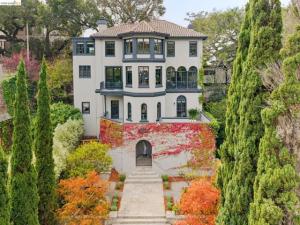
Craftsman bungalows from the 1905 to 1930 period are the most architecturally iconic property type in Berkeley and dominate the premium flatlands and lower-hills market. These homes typically range from 1,200 to 2,500 square feet on lot sizes of 4,000 to 6,000 square feet. Condition varies widely, from fully renovated to original with deferred maintenance, and the price spread between these conditions can be substantial.
Brown Shingle homes, a Berkeley-specific architectural tradition associated with the early 20th-century Arts and Crafts movement, are found primarily in the hills and near the UC campus. Several were designed by significant Bay Area architects and carry historic designation. These properties attract buyers who value architectural provenance and are willing to invest in appropriate restoration and maintenance.
Mid-century modern homes in the hills and post-war ranches in the flatlands provide more accessible price points and lower maintenance profiles relative to the historic stock. Condominium and multi-unit buildings are concentrated near the BART stations and the commercial corridors and serve both owner-occupant and investor markets.
Fire hazard severity zone classifications affect a significant portion of Berkeley’s hill properties. Buyers in the hills should verify the FHSZ designation of any property, review insurer availability and pricing, and assess defensible space. The 1991 Tunnel Fire destroyed over 3,000 homes in the Berkeley-Oakland hills and remains a reference point for how quickly conditions can change. Some lenders have specific underwriting requirements for hill properties that buyers should know before committing to a property type.
Berkeley’s older housing stock, particularly pre-1940 construction, frequently has original electrical panels, galvanized plumbing, and clay or cast-iron sewer laterals. Buyers should budget for infrastructure updates that may not be visible during a showing. TKG routinely connects buyers with pre-inspection resources so they understand total acquisition cost before going into contract.
The Knight Group brings Berkeley-specific market knowledge to buyer and seller representation. The city’s neighborhood diversity means that accurate pricing and competitive strategy differ significantly between Rockridge and West Berkeley, between a flatlands Craftsman and a hills view property. TKG provides clients with neighborhood-level data, not city-level averages, so their decisions are grounded in what is actually happening at the address level.
Sellers working with TKG in Berkeley benefit from targeted pre-listing preparation, accurate pricing informed by recent closed sales rather than asking prices, and marketing that reaches the specific buyer demographic most likely to value the property at its highest use. Connect with TKG to discuss the current Berkeley market.
Connect with TKG about Berkeley real estate.
Berkeley's rental market is one of the largest and most structurally complex in the Bay Area, shaped by the UC Berkeley enrollment cycle, a longstanding and comprehensive rent control framework, and a policy environment that significantly affects the economics of rental property ownership. Buyers considering Berkeley investment properties need to understand the Berkeley Rent Stabilization Ordinance, which applies to most multi-unit buildings constructed before 1980 and to single-family homes with specific historical tenancy characteristics, before making any acquisition decision.
The rent control framework in Berkeley is among the most protective of tenant interests in California, with just cause eviction provisions, annual allowable rent increase schedules tied to inflation, and a Rent Stabilization Board that adjudicates disputes. For landlords, this framework limits income upside on covered units and creates holding-cost risk in scenarios where rent increases don't track the cost of ownership increases. Berkeley rental investment is appropriate for buyers who understand and can underwrite this policy environment accurately, not for buyers who assume Berkeley rents can be adjusted freely.
ADU (accessory dwelling unit) development is a significant investment strategy in Berkeley given the city's substantial owner-occupied housing stock and the state's ADU expansion legislation. Berkeley has complied with state ADU law, and the ability to add garage conversions, detached units, or internal ADUs to single-family properties creates a value-add pathway that many Berkeley buyers pursue. TKG coordinates ADU feasibility assessment for buyers who are evaluating this pathway as part of their acquisition strategy.
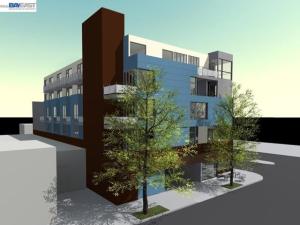
Berkeley's development environment has been more permissive in recent years under state housing law preemptions that have reduced local ability to block infill development. Areas near BART stations and along major commercial corridors are seeing increased mixed-use and multi-family development activity that is modestly expanding housing supply in a city that has historically been resistant to density increases. The effect of this supply addition on the broader Berkeley single-family market is limited by the scale of new units relative to existing stock, but it does affect the condominium and ADU market segments more directly.
UC Berkeley's enrollment trajectory and its ongoing construction of on-campus housing affects off-campus demand in ways that influence the specific sub-markets near campus most directly. Buyers targeting student-oriented rental properties should monitor UC housing construction commitments as a forward indicator for off-campus demand.
Does Berkeley rent control affect single-family home sales?
Single-family homes that are owner-occupied at time of sale are generally exempt from Berkeley's rent stabilization ordinance. However, single-family homes with sitting tenants in place may be subject to rent control provisions if the tenancy was established under covered conditions. Buyers of single-family homes with tenants in place should have the specific tenancy reviewed against Berkeley's rent ordinance before assuming the property can be freely re-let at market rates.
What are the strongest school neighborhoods in Berkeley?
Berkeley Unified operates with a controlled choice enrollment system rather than strict attendance boundaries, which means school assignment is not fully determined by home address. However, the areas of north Berkeley, particularly the Elmwood and Claremont neighborhoods, have historically had stronger access to the most sought-after elementary programs within the BUSD system. TKG reviews current BUSD enrollment practices for buyers who are making a Berkeley purchase specifically for school access.
How does Berkeley's fire hazard zone affect buying?
The Berkeley hills are designated as a High and Very High Fire Hazard Severity Zone under Cal Fire mapping, a designation that reflects the 1991 Tunnel Fire that destroyed over 3,000 structures in the Berkeley-Oakland hills. Fire insurance in the hills has become significantly more difficult to obtain and more expensive in recent years as insurers have re-underwritten their Bay Area hills exposure. Buyers considering hills properties should verify insurance availability and cost before committing, and TKG facilitates insurance pre-qualification as part of standard hills transaction due diligence.
Are Berkeley homes earthquake-resistant?
Berkeley is in a seismically active area with the Hayward Fault running through the eastern portion of the city. Pre-war wood-frame homes have generally performed well in seismic events relative to unreinforced masonry construction, but foundation condition, cripple wall bracing, and bolt-to-foundation connections are all relevant to seismic resilience assessment. TKG coordinates seismic evaluation as part of standard Berkeley hills and older flatlands property due diligence.
What does the typical Berkeley buyer look like?
Berkeley attracts a genuinely diverse buyer profile that includes UC-affiliated professionals, Bay Area tech and healthcare workers, longtime Bay Area residents trading up within the East Bay, and investors seeking ADU-capable properties. The range means that competitive dynamics vary significantly across Berkeley's sub-markets: the flatlands near BART are different from the hills, and the North Berkeley bungalow market is different from the Elmwood Victorian corridor. TKG provides neighborhood-specific competitive analysis rather than Berkeley-wide generalizations.
Browse all Alameda County real estate.