Browse all Los Angeles real estate — or explore the full Los Angeles luxury real estate market.

Browse all Los Angeles real estate — or explore the full Los Angeles luxury real estate market.
No properties found. |
In Los Angeles, architectural style is a shortcut for era, neighborhood, and cost of ownership. A Craftsman bungalow built in 1915, a Cliff May ranch built in 1954, and a spec-built contemporary finished last year are three different assets with three different maintenance profiles, three different insurance conversations, and three different buyer pools. The style label on a listing is not decoration. It is the fastest available signal about what you are actually buying.
This is why Los Angeles buyers search by style more than buyers in most American markets. The city grew in distinct waves, each wave left behind an intact stock of houses, and very little of it was torn down. Within a twenty-minute drive you can tour a Victorian from the 1880s, a Spanish Colonial Revival from the 1920s, a glass-and-steel modernist house from the 1950s, and a new-construction modern farmhouse.
Below you can browse Los Angeles listings organized by architectural style, from period revivals to new construction. If you already know the style you want and need help judging condition, permit history, or resale exposure in a specific pocket of the city, contact The Knight Group and we will work the shortlist with you.
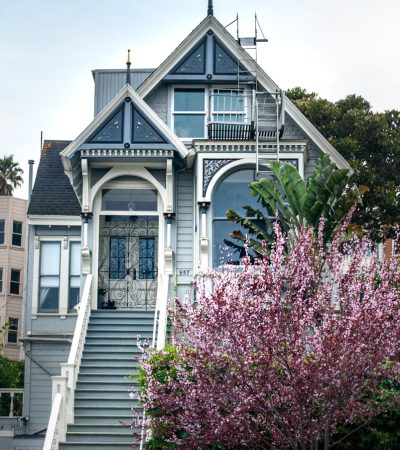
Because the city built in bursts, and each burst had a different fashion. The Victorian era caught the tail end of the 1880s land boom. Angelino Heights, founded in 1886, is one of the oldest residential districts in Los Angeles outside Downtown, and the 1300 block of Carroll Avenue is listed on the National Register of Historic Places with the highest concentration of nineteenth-century Victorian homes in the city.
The next wave arrived with the Arts and Crafts movement in the early 1900s. Charles and Henry Greene, working out of Pasadena, gave the Craftsman its most refined American expression. The volume version followed across Northeast Los Angeles and Pasadena. In Pasadena, the sixteen-block district known as Bungalow Heaven holds more than 800 small Craftsman homes built between 1900 and 1930, and it became the city’s first Landmark District in 1989.
The interwar period was the most stylistically promiscuous stretch in the city’s history. Between the world wars, Los Angeles produced Spanish Colonial Revival, Mediterranean Revival, Tudor Revival, English Revival, French Eclectic, Italian Renaissance Revival, Monterey Revival, and American Colonial Revival, frequently within the same subdivision. Hancock Park, developed by G. Allan Hancock in the 1920s, is the textbook case: period revival estates set back a uniform fifty feet from the street, with side drives running through a porte cochere to a rear garage.
Then the war ended and the direction reversed. Postwar Los Angeles turned toward openness, glass, and indoor-outdoor circulation. That turn produced both the mass-market ranch tract and the experimental modernism that made the city internationally famous.
One magazine program did most of the work. The Case Study House program was launched in 1945 by John Entenza, editor of Arts & Architecture, to design and build replicable postwar houses using modern industrial materials. Thirty-six designs were commissioned and twenty-five were built. The program never achieved its mass-production goal, but it produced two of the most recognized houses in the world: the Eames House, Case Study House No. 8, completed in 1949 by Charles and Ray Eames, and the Stahl House, Case Study House No. 22, completed in 1960 by Pierre Koenig and photographed by Julius Shulman.
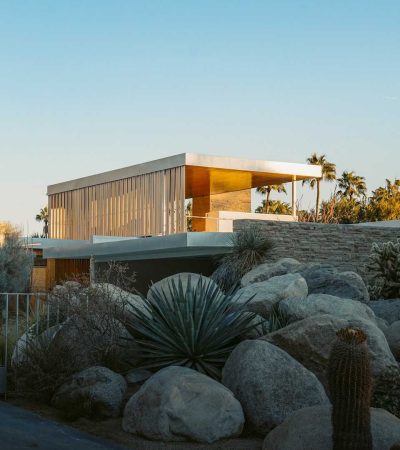
Richard Neutra and Rudolph Schindler had already been building in the same direction for decades. Their work, plus the Case Study houses, is why “mid-century modern” is understood as a Southern California product rather than a generic postwar label. It also explains the price premium. Architect-attributed modernism in Los Angeles trades on provenance in a way that comparable-square-footage stock does not.
The other postwar story is volume. Cliff May is generally credited as the father of the California ranch house. Per USC Libraries and the Los Angeles Conservancy, May sold designs for roughly 18,000 ranch homes and more than 1,000 custom residences. By 1950 ranch tracts filled the San Fernando Valley and the San Gabriel Valley. That stock is now the backbone of mid-market Los Angeles inventory and the most common candidate for expansion, second-story addition, or full modernization.
Each category below carries its own active listings. Start with the era that fits how you want to live, then narrow by neighborhood.
For the earliest stock, start with Victorian homes in Los Angeles and the broader pool of historic homes across the city, which includes designated monuments and contributors to historic districts. The Arts and Crafts era is covered by Craftsman homes for sale in Los Angeles and the smaller-footprint Los Angeles bungalow category, which overlaps heavily with Craftsman but also picks up Spanish, Colonial Revival, and Tudor bungalows built in the same years.
The interwar revivals split into several distinct searches. Hollywood Spanish homes covers the white and buff stucco, red clay tile, arched openings, wrought iron, and decorative tile that defined the 1910s through the 1930s. Mediterranean homes for sale in Los Angeles runs adjacent and typically larger, with courtyards and heavier massing. On the northern European side, browse Tudor homes for sale in Los Angeles, English homes for sale in Los Angeles, and French homes for sale in Los Angeles. The formal American revivals are grouped under Georgian homes for sale in Los Angeles, Colonial homes for sale in Los Angeles, and the lighter, shingled Los Angeles Cape Cod. For smaller period houses that do not fit a single revival label, look at cottage homes for sale in Los Angeles and the catch-all traditional homes for sale in Los Angeles, which is where a great deal of well-built but stylistically mixed inventory actually lives.
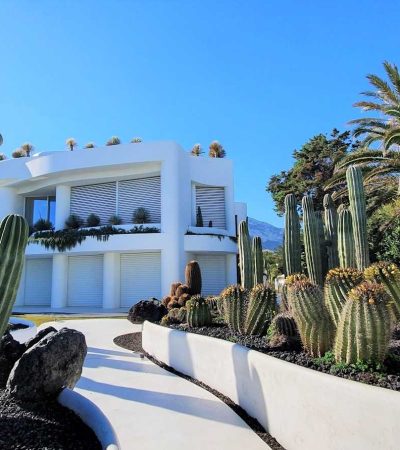
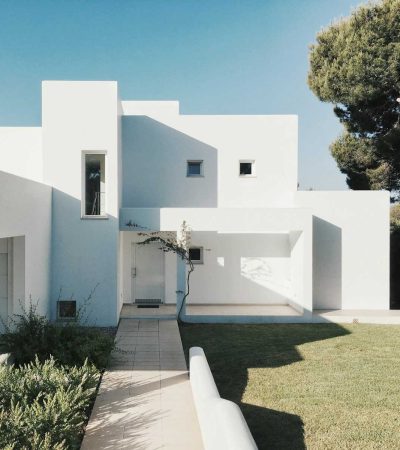
Postwar Los Angeles is covered by mid-century homes in Los Angeles and ranch homes for sale in Los Angeles. Those two overlap: a great many Valley ranches are mid-century by date without being architect-designed. If you want the later and more design-forward end, modern homes for sale in Los Angeles and Los Angeles contemporary homes carry the glass-forward, open-plan inventory, including recent ground-up builds in the hills.
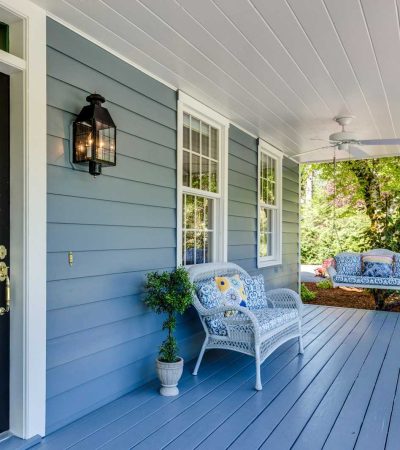
The current construction cycle has its own categories. Modern farmhouse homes remain one of the most-requested new-build styles in the city, and the related wrap-around porch homes search pulls the properties where outdoor circulation is the selling point rather than the finish package. For inventory built in the current code cycle, see new homes for sale in Los Angeles and Los Angeles spec homes for sale, which are builder-financed projects completed on speculation and priced to move at completion. At the opposite end of the condition spectrum, fixer upper homes for sale in Los Angeles is where buyers who want a period house and are willing to underwrite the work should start.
Style moves price in three ways. First, scarcity. There is a fixed and shrinking supply of intact Victorians, documented modernist houses, and unaltered period revival estates. That stock does not get rebuilt, so it prices on rarity rather than on cost per square foot.
Second, provenance. A house attributed to a known architect trades above an unattributed neighbor of similar size and condition. Attribution has to be documented, not assumed. A listing that says “Neutra-inspired” is telling you the opposite of what it appears to say.
Third, condition and code. A 1925 Spanish with original knob-and-tube wiring, unretrofitted foundation, and a clay tile roof at the end of its service life is a very different number from the same house post-renovation. In practice, the spread between the two on the same block can be wide enough to change which loan product makes sense. Get the inspection scope right before you fall for the arches.
A Historic Preservation Overlay Zone is a zoning overlay that regulates exterior alterations in neighborhoods of architecturally or historically significant structures. The City of Los Angeles adopted the HPOZ ordinance in 1979. Angelino Heights was the first neighborhood designated, adopted by City Council in 1983. Per the Los Angeles Conservancy, thirty-five neighborhoods had been designated as HPOZs as of 2023, ranging from San Pedro to San Fernando and from two blocks to districts of several hundred structures.
The practical effect is review. Exterior work in an HPOZ, including windows, roofing material, front-facade changes, and additions visible from the street, goes through a board and has to meet the district’s preservation plan. Interior work is generally not regulated. Buyers get two things from this: protection against a neighbor building something that destroys the streetscape, and a slower, more constrained remodel path for themselves. Both are real. Decide which one matters more to you before you write an offer, and read the specific preservation plan for the district, because they are not identical.
Yes, materially, for qualifying properties. To qualify in the City of Los Angeles a property must be a designated Historic-Cultural Monument or a contributing structure in an HPOZ. The city’s Mills Act program was established in 1996. Under a Mills Act contract, the County Assessor values the property using an income-capitalization method instead of the Proposition 13 factored base year value. Per the Los Angeles County Assessor, savings commonly land in the 30 to 60 percent range, with a wider reported band of 20 to 70 percent. The city’s own program assessment reported 948 contracts enrolled as of 2022 across single-family, multifamily, commercial, industrial, and recreational properties.
The trade-off is a recorded ten-year rolling contract with maintenance and rehabilitation obligations that runs with the land. It transfers to you at purchase. Treat it as both an asset and a duty, and read the contract during your contingency period rather than after.
Name them up front. Unreinforced or cripple-wall foundations on pre-1940 houses. Original galvanized supply plumbing and clay sewer laterals. Knob-and-tube wiring and undersized panels that will not carry modern loads or an EV charger. Clay tile and slate roofs that are expensive to repair correctly and easy to ruin with a cheap patch. Lead paint and asbestos in pre-1978 construction. Unpermitted additions, which surface at appraisal and again at resale.
None of these are reasons to avoid a period home. They are reasons to price them. The correct move is a scoped inspection package, a permit-history pull from Building and Safety, and a contractor walk during the contingency period rather than a general inspection alone. On designated properties, add a check for open code violations and any recorded preservation obligations.
Code, mostly. Since January 1, 2020, California’s Title 24 building standards have required solar photovoltaic systems on new single-family homes and low-rise multifamily buildings up to three stories, sized to offset projected annual electricity use. An analysis by E3 cited in the code rulemaking put the added construction cost at roughly $9,500 with about $19,000 in owner savings across a thirty-year mortgage. A new house in Los Angeles therefore arrives with a different energy profile than anything built before it.
Spec homes carry a specific set of questions. Who was the builder, what else have they delivered, and how do those projects look three years on? Are finishes selected for durability or for listing photography? Is the lot fully permitted with a final sign-off, or is anything still open? Design criticism of the current cycle is worth hearing on both sides: some architects argue the modern farmhouse look was often executed without authentic materials or restraint, and critics of the proliferation of boxy modern spec houses argue they erode the architectural variety that defines Los Angeles neighborhoods. Buyer demand for both has nonetheless held. Buy the build quality, not the moodboard.
It is a live cost for sellers of high-value property inside the City of Los Angeles. For transactions closing after June 30, 2026, the Measure ULA thresholds are $5,400,000 and $10,900,000, with a 4 percent rate applied to consideration at or above the lower threshold and 5.5 percent at or above the higher one. These are gross-consideration taxes, not taxes on gain, and they sit on top of existing county and city documentary transfer taxes.
The market has responded. UCLA research cited in coverage of the measure estimated that the odds of a property selling above the $5 million threshold fell by as much as 55 percent after implementation. The City of Los Angeles reported in January 2026 that the measure had surpassed $1 billion in total revenue since inception. For buyers of trophy architectural property, the practical takeaway is that pricing behavior clusters unnaturally just under each threshold, and that sellers near a threshold are often more negotiable than the list price suggests. Note also that the tax applies to property inside the City of Los Angeles, which is why an identical estate in an independent city on the Westside carries a different exit cost.
This has changed recently and it matters most for hillside architectural inventory. CAL FIRE issued its 2025 recommended Local Responsibility Area Fire Hazard Severity Zone maps for Los Angeles County on March 24, 2025. The updated maps added more than 440,000 acres to the county’s hazard zones, including roughly a 30 percent increase in acreage carrying the highest severity rating.
Consequences for a buyer are concrete. Property in high and very high zones can trigger California Building Code Chapter 7A ignition-resistant construction requirements for new work and rebuilds, and defensible space obligations under Public Resources Code 4291, including clearance around the structure in very high zones. Sellers must disclose the hazard designation. Insurance availability and premium should be quoted before your contingency deadline, not after. On a period house in a hillside canyon, the insurance quote is frequently the deciding number, not the inspection report.
For Victorians, Angelino Heights, where the 1300 block of Carroll Avenue is on the National Register. For Craftsman, Pasadena and Northeast Los Angeles, including Pasadena’s Bungalow Heaven district with its 800-plus Craftsman houses built from 1900 to 1930. For 1920s period revivals at scale, Hancock Park and Windsor Square. For postwar ranch stock, the San Fernando and San Gabriel Valleys.
Check the city’s records rather than the listing copy. Los Angeles has designated more than 1,300 Historic-Cultural Monuments as of 2025 under a preservation ordinance first passed in 1962, and HistoricPlacesLA inventories over 65,000 records of designated and surveyed resources. A house can be surveyed as potentially eligible without being designated. Those are different legal statuses with different consequences.
Usually yes, with review. Interior work is generally outside HPOZ jurisdiction. Exterior changes visible from the public way go through the district’s board against its adopted preservation plan. Budget more time than a standard permit path.
Documented, architect-attributed examples continue to command a premium over comparable unattributed stock, driven by scarcity and by the international recognition of the Case Study House program and the Neutra and Schindler bodies of work. Generic postwar houses marketed as mid-century do not automatically carry that premium. Attribution and originality are what get paid for.
They can be, if the price reflects the actual scope. The risk is underestimating structural, systems, and permit-legalization costs on a pre-1940 house, and underestimating timeline in a review district. Get contractor pricing during contingencies. If the numbers only work assuming zero surprises, the numbers do not work.
New single-family homes and low-rise multifamily buildings up to three stories permitted under California’s Title 24 standards since January 1, 2020 are required to include a solar system sized to offset projected annual electricity use. Confirm whether the system is owned or leased, because a lease follows the property and affects your financing.
No. It applies to real property transfers within the City of Los Angeles. Independent cities in Los Angeles County are governed by their own transfer tax rules. This is a meaningful difference when you compare estates that look identical on a map but sit on opposite sides of a city line.
There is no single answer, and anyone giving you one is selling something. Value holds where scarcity, condition, location, and documented provenance line up. A well-kept Spanish in a stable neighborhood and a documented modernist house in the hills can both outperform. A heavily altered example of either can lag badly.
We work architecture as a due-diligence problem, not a taste problem. Before you write an offer we pull permit history, check designation and district status, flag any recorded Mills Act or preservation obligation, verify the current fire hazard severity zone designation, and get insurance quoted early enough to matter. On the sell side we position period and architect-attributed property on documentation, since provenance that is proven prices differently from provenance that is implied.
Browse the style categories above to see current Los Angeles inventory. When you want a specific house evaluated, or you want a realistic renovation number before you commit, contact The Knight Group and we will put the analysis in front of you before the contingency clock starts running.
The Knight Group is here to help you with all your realty needs. To get started, fill out the form below and one of our experienced agents will contact you as quickly as possible.
Copyright © 2024 The Knight Group.
All rights reserved. License: 02133297
Lucky for you we’re looking out.
Subscribe to this Custom Search to be alerted when new properties hit the market in the area.
Choose the frequency that works for you.