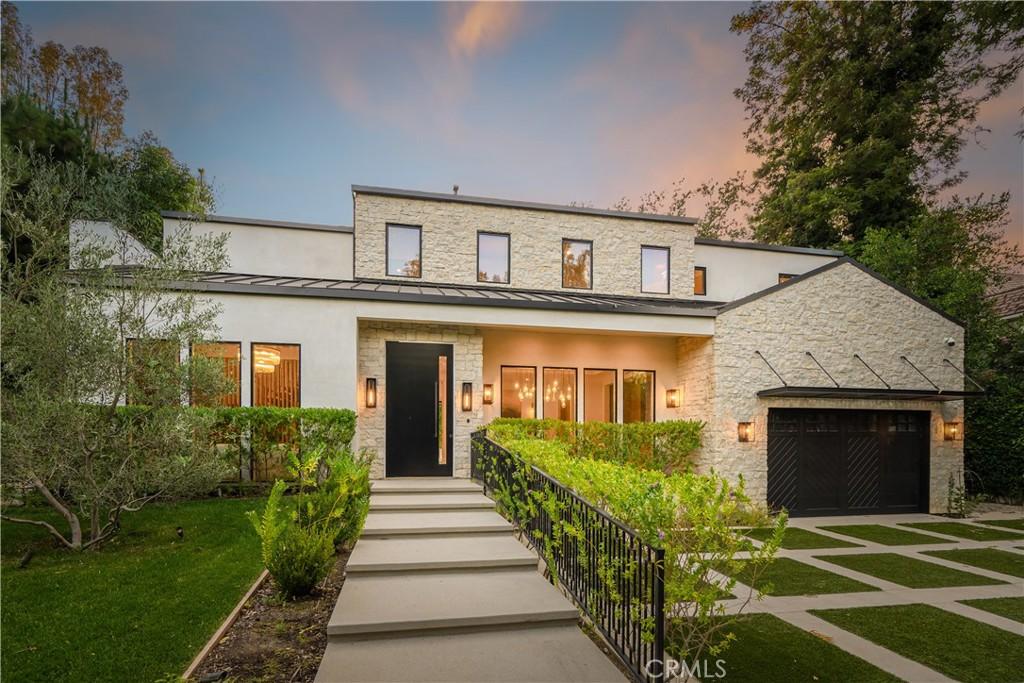
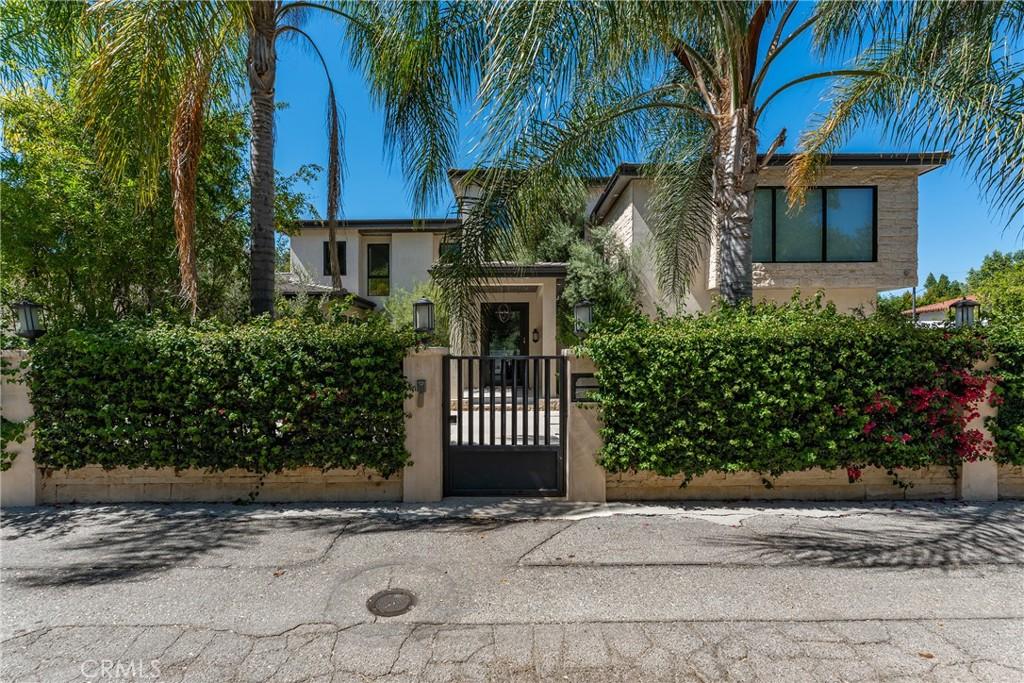
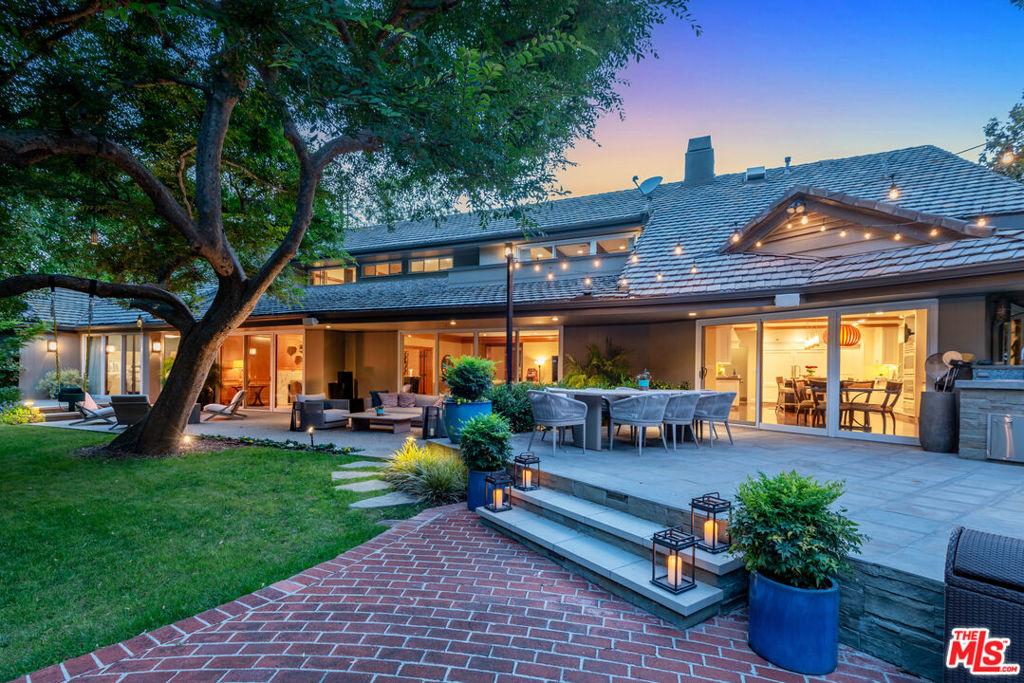
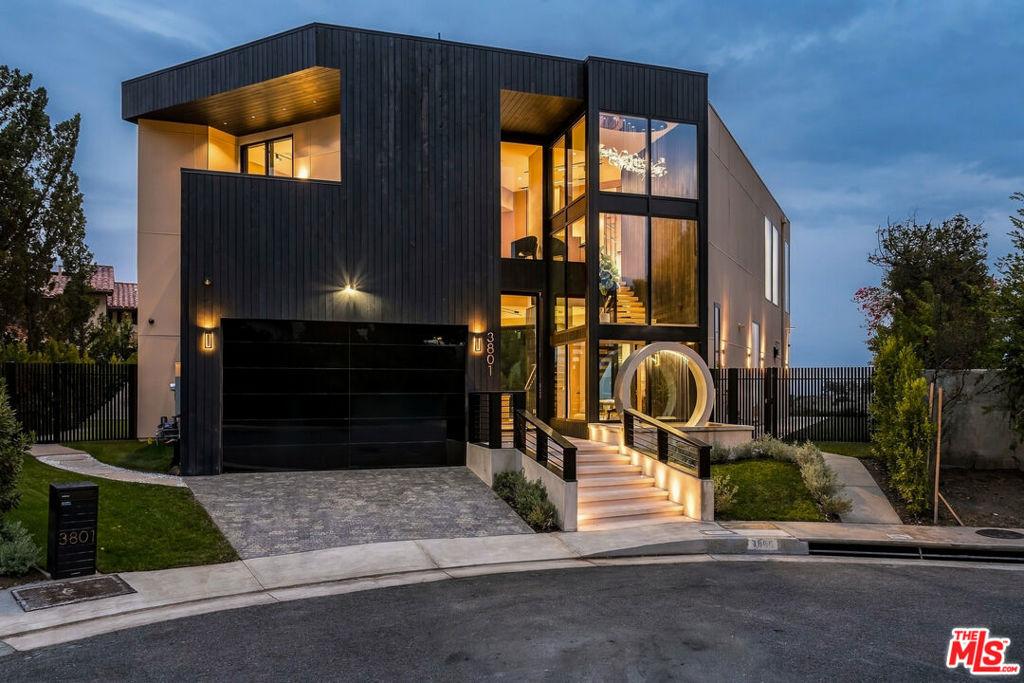
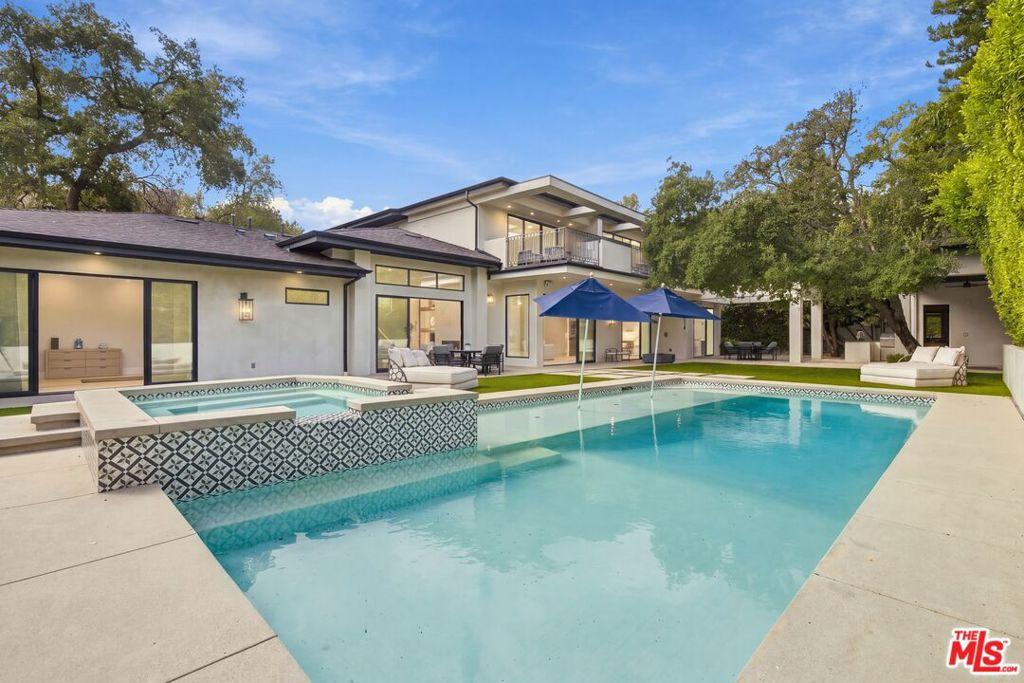
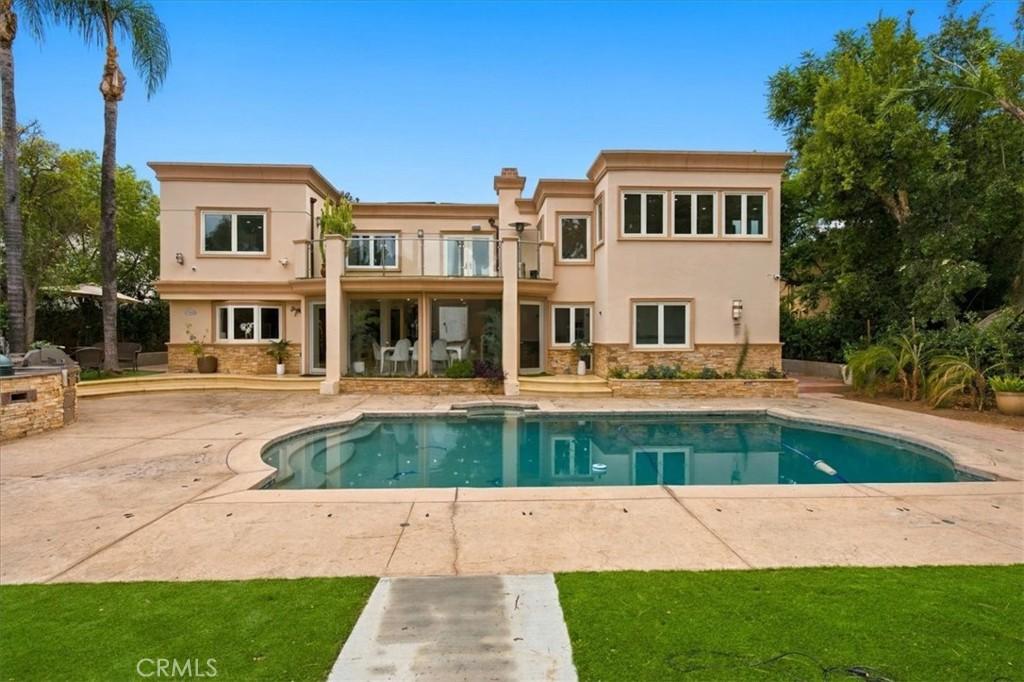
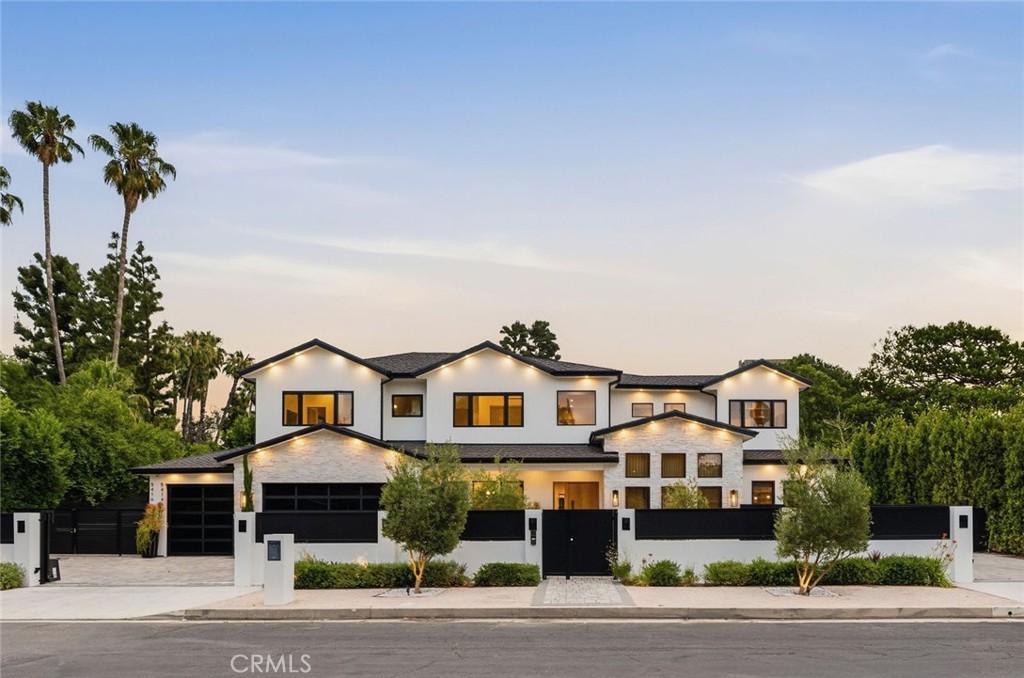
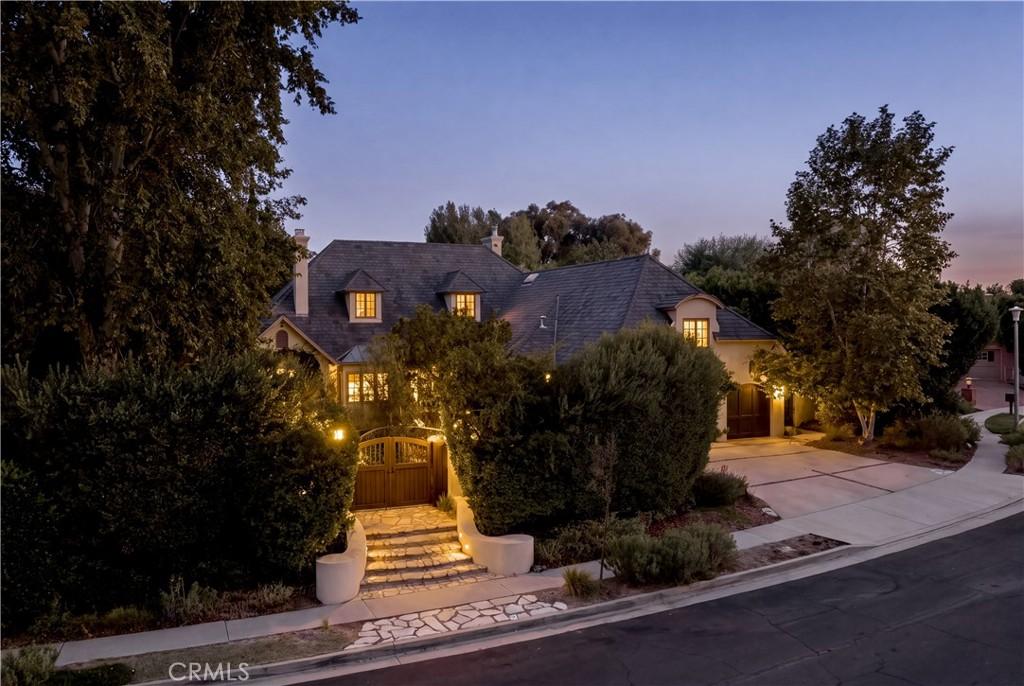
Browse all Los Angeles real estate — or explore the full Los Angeles luxury real estate market.
Encino condos are attached, HOA-governed residences in the central southern San Fernando Valley, most of them clustered within a few blocks of Ventura Boulevard. They are the lowest-cost way to own real property inside one of the Valley’s most established addresses. Because Encino’s single-family stock sits on large lots and prices accordingly, the condo and townhome inventory is where entry-level buyers, downsizers, and investors actually transact.
The value proposition is straightforward. You get an Encino address, walkable access to the Ventura Boulevard service corridor, direct 101 Freeway access, and Los Angeles Unified school assignments, without the price of a detached home on an Encino lot. The trade is that you buy into a homeowners association, and the quality of that association matters as much as the unit itself.
Browse the current inventory below. If you want the HOA financials, reserve position, and litigation history on a specific building pulled before you tour it, contact The Knight Group and we will do that work first.
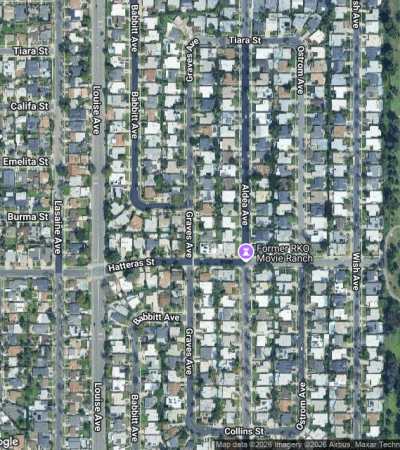
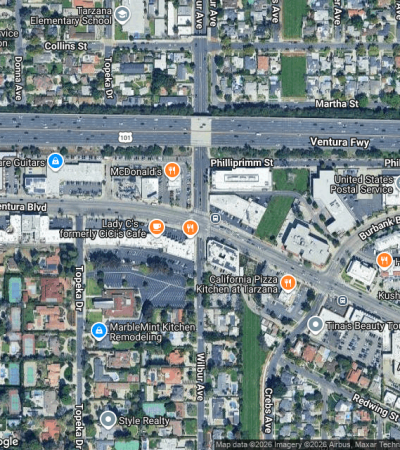
Encino occupies the central portion of the southern San Fernando Valley plus the north slope of the Santa Monica Mountains. Per the neighborhood’s Wikipedia entry, it borders Reseda and Lake Balboa to the north, Sherman Oaks to the east, Brentwood to the south over the ridge, and Tarzana to the west. The 2000 census recorded the community at 9.5 square miles, and 2023 population figures put it at roughly 53,000 residents.
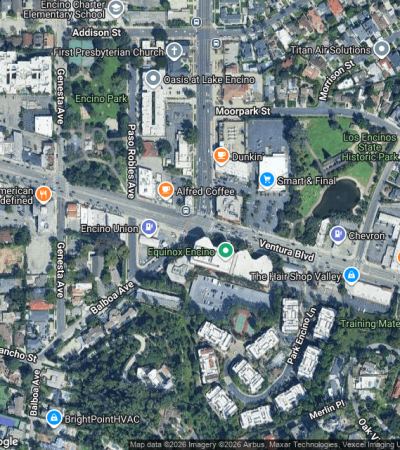
That geography creates two different condo markets inside one name. North of Ventura Boulevard the land is flat and the 1970s complexes sit on wide streets like White Oak Avenue and Newcastle Avenue. South of the boulevard the ground rises into the mountains, lots get larger, attached inventory thins out, and prices climb.
The name comes from the land. The Spanish Portolá expedition passed through in 1769 and stayed at the Tongva village of Siutcanga, which translates to the place of the oaks. Rancho Los Encinos was established in 1845 out of former Mission San Fernando land. Los Encinos State Historic Park still holds historic buildings, a small museum, and picnic grounds off Ventura Boulevard.
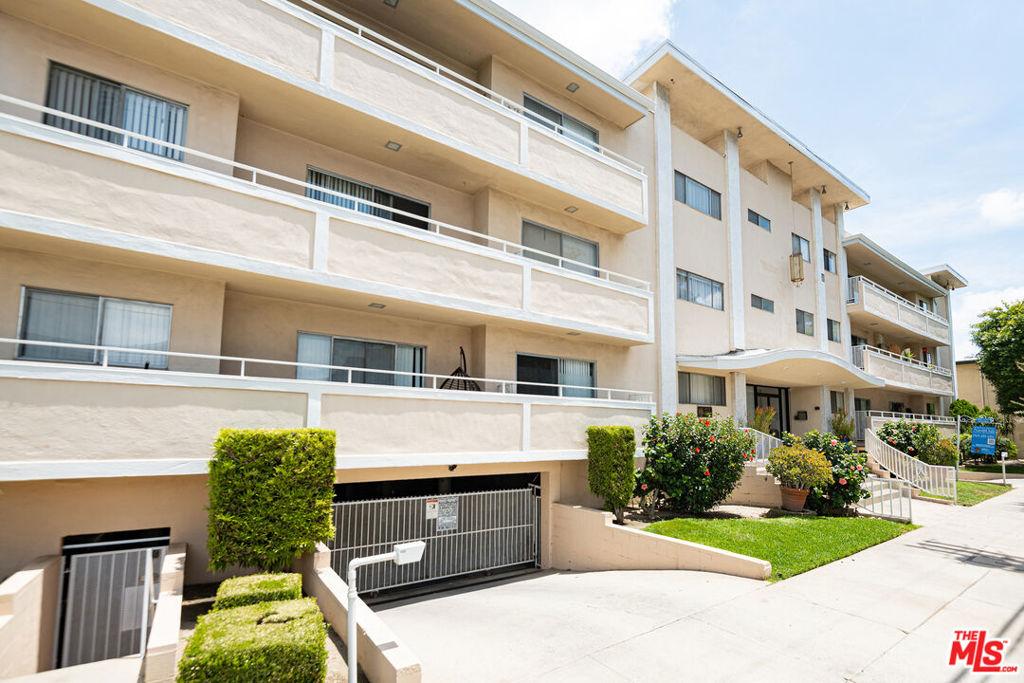
Most of it is garden-style and low-rise, built between the late 1960s and the mid-1970s. This is not a high-rise market. The dominant format is a multi-building gated complex on a large parcel, with a pool, a spa, tennis courts, a clubhouse, and subterranean or gated parking, sitting on a lot that would be impossible to assemble today.
Encino Oaks at 5460 White Oak Avenue is the largest example most buyers encounter. Building profiles published by condo listing sites describe it as a 1971 building with 508 one- and two-bedroom units, some with lofts, plus a pool, three tennis courts, a recreation room, fitness facilities with saunas, tandem parking, and security staff. Encino Towers on Park Encino Lane runs the opposite direction: the same profiles describe roughly 120 units across ten low-rise buildings behind a 24-hour guarded gate, with unit sizes reported in the 1,800 to 2,500 square foot range.
Newer construction exists but it is scarce and the projects are small. Treat every square footage figure and unit count you read online, including the ones above, as a starting point to verify against the HOA documents and the recorded map.
Encino’s condo inventory is indexed under a set of area and building labels that come out of listing feeds. Some are true neighborhoods, some are specific complexes, and some are geographic segments. Knowing which is which saves you from searching the same buildings three times.
Start with the named neighborhoods. Amestoy Estates is the oldest of them, with homes dating to 1918 and a name that traces to December 1891, when Domingo Amestoy acquired the property of the original Rancho Los Encinos. It is primarily a detached-home neighborhood, so attached inventory there is occasional. Encino Village is the mid-century counterpart, known for well-kept post-war homes on tree-lined streets, with attached product on the edges. Encino Woods is another Valley-floor pocket label you will see on listings in the same general area.
Then there are the geographic splits. Encino flats covers the level ground north of Ventura Boulevard, which is where the bulk of the condo supply sits and where walkability to the boulevard is highest. Encino south of Ventura covers the rising ground on the other side of the boulevard, a smaller and more expensive set. Encino hills homes goes further up the same slope into the Santa Monica Mountains, where attached product is rare and wildfire zoning becomes a live underwriting issue. Lake Encino is a label you will encounter in listing data for the reservoir side of the community; confirm the exact complex on any specific listing rather than assuming the label describes a single association.
Building-level and format-level searches are the most useful of all. Encino Towers is the guard-gated Park Encino Lane community described above, and it trades as its own micro-market because the floor plans are unusually large for this area. Encino Spa East on White Oak Avenue is a 1973 townhome-style association whose amenity set, per listing-site building profiles, includes a pool, two indoor spas, two steam rooms, a fitness center, and a clubhouse behind a gated entry. Encino gated filters for controlled-access communities generally, the most requested feature in this market.
Finally, some labels are pure feed artifacts. Encino 2 and Encino 3 are numbered area segments rather than neighborhoods anyone names out loud, and they exist because listing systems subdivide large communities for reporting. Search them anyway, because inventory routinely lands in one of them and nowhere else. One naming note: Balboa Highlands appears in this set, but the well-documented Balboa Highlands is the Joseph Eichler tract of roughly 100 homes built in 1963 and 1964 in Granada Hills, designed by A. Quincy Jones and Frederick Emmons with Claude Oakland, and now a city Historic Preservation Overlay Zone. If a listing carries that label, verify the actual address before you draw conclusions about location.
It varies more than buyers expect, and it drives your real monthly cost. In the larger 1970s complexes the association often carries a wide utility bundle. Building profiles for Encino Towers, for example, describe electricity, water, sewer, trash and recycling, cable, internet, and earthquake insurance as association-covered. A building down the street may cover water and trash only.
That difference can swing the true cost of ownership by hundreds of dollars a month, so comparing two listings on their dues figures alone is meaningless. Compare what the dues buy, then compare reserve funding. A low-dues association with a thin reserve is a special assessment waiting to be voted on.
Earthquake insurance deserves its own question. Some Encino associations carry it at the master-policy level and some do not. If the association does not, you are exposed in a seismically active basin, and your lender will not flag it for you.
Three things, consistently. First, disclosure. Under California Civil Code section 4525, the seller of a unit inside an association must deliver a defined document packet to the buyer, including the CC&Rs, articles, bylaws and operating rules, the annual budget report, the most recent reserve study summary, the assessment and reserve funding disclosure summary, a statement of regular and special assessments with any unpaid amounts and fines, and the insurance summary required under section 5300. If that packet arrives late or incomplete, say so in writing and hold your contingency open.
Second, balcony inspections. Senate Bill 326 added Civil Code section 5551 to the Davis-Stirling Act and required condominium associations to inspect the load-bearing components of exterior elevated elements and their waterproofing systems, with the first inspections due by January 1, 2025 and re-inspection every nine years thereafter. Encino’s stock is heavily 1970s and many of those buildings have balconies and elevated walkways, so ask for the completed report. An association that cannot produce one is telling you something about how it is run.
Third, financing eligibility. If you are using FHA and the project is not FHA-approved, single-unit approval has its own tests. Per FHA guidance summarized by HUD and the National Association of Realtors, those include at least five units, a limited concentration of FHA-insured units, at least 50 percent owner-occupancy with a reduced 35 percent threshold available for projects with strong financials and a current reserve study, no more than 35 percent commercial space, and a single-investor cap of 10 percent of units in projects of 20 or more units. Older Valley complexes with heavy rental concentration can fail these tests, so confirm eligibility before you write.
For most Encino condo transactions it does not apply, but you should know the line. Encino is inside the City of Los Angeles, so the city’s Measure ULA transfer tax applies to property sold there. Under the threshold schedule effective for transactions closing after June 30, 2026, sales above $5,400,000 are taxed at 4 percent and sales at or above $10,900,000 are taxed at 5.5 percent, with the seller paying at closing on the gross sale price rather than on gain.
Two details matter. The tax applies to the entire price once a threshold is crossed, with no exclusion for the portion below it, and it stacks on top of the existing City and County documentary transfer taxes. Standard Encino condo pricing sits well under the first threshold, so ULA is generally a non-event here. It becomes relevant if you are also selling an Encino estate or transacting on a multi-unit building.
Good in one direction and difficult in another. The 101 Ventura Freeway runs along the northern edge of the community, which makes east-west movement toward Sherman Oaks, Studio City, and Hollywood straightforward outside peak hours. The 405 San Diego Freeway meets it just east of Encino and carries you south over Sepulveda Pass toward the Westside, which is the leg that costs you time. If you work in Century City, Westwood, or Santa Monica, drive the pass at your actual commute hour, in both directions, before you buy.
Transit is the weak point. Metro’s G Line busway runs east-west north of Encino rather than through it, and per Metro, the Sepulveda and Van Nuys stations are closed during the multi-year busway improvement project. The nearest stops sit in Lake Balboa and Van Nuys, so most residents drive. Check the assigned parking count on any unit, since tandem parking is common in the older complexes.
Encino is inside the Los Angeles Unified School District. Public campuses associated with the community include Encino Charter Elementary, Emelita Street Elementary, Lanai Road Elementary, and Hesby Oaks Leadership Charter, which runs kindergarten through eighth grade. Birmingham Community Charter High School in Lake Balboa serves parts of Encino, including Amestoy Estates, and Reseda High School also draws from the area.
Private and parochial options are a real factor in local demand. Crespi Carmelite High School, Westmark School, Holy Martyrs Armenian High School, and Valley Beth Shalom all operate in or around Encino.
Attendance boundaries in LAUSD shift, magnet and charter admission runs on separate processes, and a listing’s stated school assignment is marketing, not a guarantee. Confirm the current assignment with the district for the exact address before school access drives your purchase.
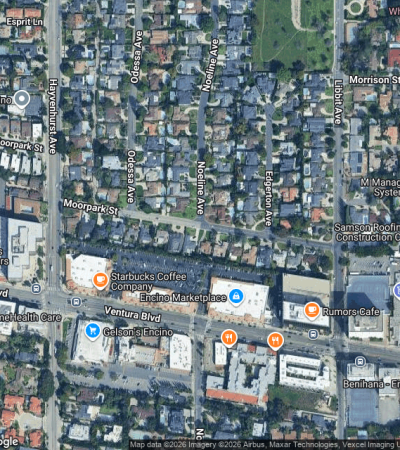
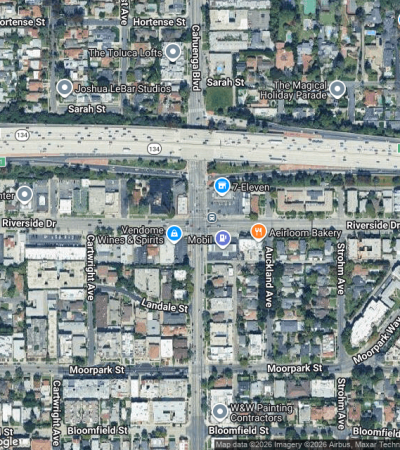
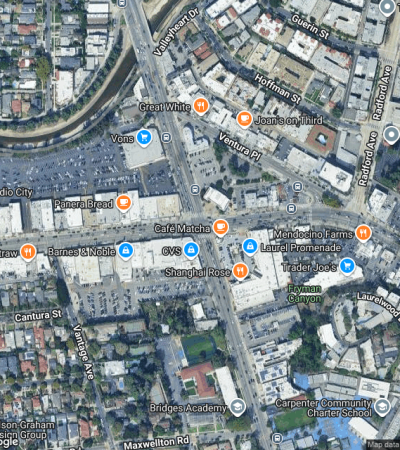
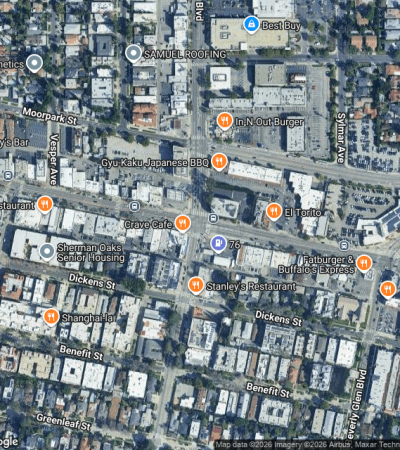
The Ventura Boulevard corridor is the reason most buyers choose Encino over cheaper Valley alternatives. Encino Commons, the local business association, covers Ventura Boulevard between White Oak and Balboa Boulevards, a dense run of restaurants, cafes, markets, medical offices, and services. For a condo owner that means groceries, dinner, a gym, and a dentist inside a short walk or a five-minute drive.
Open space is the other draw. The Sepulveda Basin Recreation Area covers roughly 2,000 acres and is the largest public open space in the San Fernando Valley, with golf courses, sports fields, lake paths, and a skate park. Lake Balboa Park adds an 80-acre facility built around a 27-acre lake with boat rentals, fishing, cherry trees, and a lakeside path. The Encino Velodrome has operated as a cycling track since 1961.
Summers are hot. The Valley runs warmer than the coastal side of the hill, so check air conditioning capacity and window orientation on any 1970s unit you tour.
Deferred maintenance is the first. A large share of Encino’s attached stock is fifty years old, and plumbing, roofs, decks, and parking structures in that vintage are at or past replacement age. The reserve study tells you whether the association funded that reality or postponed it. Read the last three years of board minutes, not just the current budget.
Rental concentration is the second. Investor-heavy buildings restrict financing options for the next buyer, which affects your resale pool even if it does not affect your purchase. Ask for the current owner-occupancy percentage in writing.
Wildfire exposure is the third, and it applies to the hillside portion of the community. CAL FIRE issued recommended 2025 Local Responsibility Area fire hazard severity zone maps for Southern California including the City of Los Angeles on March 24, 2025, and the Los Angeles Fire Department has said it expects an increase in the number of affected parcels. Zone designation can carry building and vegetation management obligations and can influence insurance availability. On anything on the slope south of Ventura Boulevard, pull the designation for the exact parcel, not the general area.
Litigation is the fourth. Construction defect or insurance litigation involving an association can freeze conventional financing entirely. Ask before your inspection money is spent.
It can, and the regulatory position is more favorable than buyers assume, but only if the paperwork is handled correctly. Under California’s Tenant Protection Act, commonly called AB 1482, a residential property that is alienable separate from the title to any other dwelling unit, which includes a condominium, is exempt from the statute’s rent caps and just cause requirements. That exemption is conditional. The owner cannot be a real estate investment trust, a corporation, or an LLC with a corporation as a member, and the specific statutory exemption notice must be delivered to the tenant. Miss the notice and the exemption does not apply.
Separately, the association’s own governing documents may restrict leasing, cap the number of rented units, impose minimum lease terms, or prohibit short-term rental outright. Those restrictions are enforceable and they live in the CC&Rs and operating rules, not in the listing. Read them before you underwrite a rental assumption.
Run the numbers with dues, the reserve trajectory, and a realistic vacancy figure included. A unit bought on amenity appeal alone rarely pencils. One bought on a clean association with funded reserves and a permissive leasing provision often does.
Yes, substantially. Encino’s detached inventory sits on large lots and prices accordingly. Attached product is the accessible entry point to the same address, freeway access, and school district. We can pull current comparable sales for a specific building on request.
Yes. Encino is a neighborhood of the City of Los Angeles in the San Fernando Valley, which means city taxes, city permitting, and the Measure ULA transfer tax schedule all apply to property there.
They vary widely by building and by what the association covers, so a single number would mislead you. Some Encino associations bundle electricity, water, sewer, trash, cable, internet, and earthquake insurance while others cover far less. Ask for the dues figure and the coverage list together, then compare on total monthly cost.
Only if the project is FHA-approved or the unit qualifies for single-unit approval. Single-unit approval requires the project to meet owner-occupancy, FHA-concentration, commercial-space, and single-investor tests. Some large older Valley complexes fail on rental concentration. Confirm eligibility before you write an offer.
Some associations carry it on the master policy and some do not. It is disclosed in the insurance summary required under Civil Code section 5300, which is part of the document packet the seller must provide. If the association does not carry it, decide deliberately whether you want your own coverage.
Controlled access is common in the larger complexes. Encino Towers operates a 24-hour guarded gate, and Encino Spa East and Encino Oaks both have gated entry per their published building profiles. Search the gated category above for current inventory across all of them.
Predominantly late 1960s through the 1970s. Encino Oaks dates to 1971, Encino Spa East to 1973, and Encino Spa South to 1974, per building profiles published by condo listing sites. Newer boutique projects exist but are limited in number.
The Ventura Boulevard corridor is walkable and dense with services, and condos north of the boulevard are generally within walking distance of it. The rest of Encino is car-dependent, and transit service does not run through the community itself. Plan on driving for most trips beyond the boulevard.
We start with the association, not the unit. Before you tour, we pull what we can on the building: dues and coverage, reserve position, special assessment history, board minutes, litigation status, insurance including earthquake coverage, leasing restrictions, and whether the SB 326 balcony inspection is complete. Where most of the stock is fifty years old, that file separates a sound purchase from an expensive one.
From there we run the trade-offs in the open. Flats versus the slope. A large amenity-heavy complex versus a small association with fewer moving parts. A lower price with a thin reserve versus a higher price with funded capital planning. You get the case against a building as clearly as the case for it.
Browse the Encino condo areas and buildings above, or send us the address of a listing you are tracking. We will come back with the association file, the recent comparable sales, and a straight recommendation.
The Knight Group is here to help you with all your realty needs. To get started, fill out the form below and one of our experienced agents will contact you as quickly as possible.
Copyright © 2024 The Knight Group.
All rights reserved. License: 02133297
Lucky for you we’re looking out.
Subscribe to this Custom Search to be alerted when new properties hit the market in the area.
Choose the frequency that works for you.