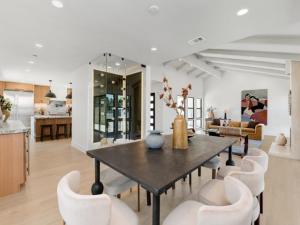
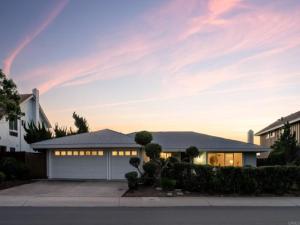
La Jolla Highlands homes for sale sit in La Jolla’s highland zone, on elevated terrain above the coastal village, and generally run from about $2 million to $5 million. That’s below the village tier closer to the water, but you’re still in La Jolla — UC San Diego, the Scripps Institution of Oceanography, La Jolla Cove, Windansea Beach, and the Village’s galleries, restaurants, and Museum of Contemporary Art are all part of the picture.
What you’re buying up here is the residential character of upper La Jolla rather than the village itself. The spread across that $2 to $5 million range comes down mostly to elevation and view access — how much ocean a lot actually sees, and where it sits on the highland terrain. Buyers who want La Jolla’s location and institutions without coastal village pricing tend to end up here.
La Jolla Highlands Homes currently show 3 active listings priced from $2,200,000 to $3,850,000, with a median asking price of $3,149,000 (CRMLS, August 2026).
Browse all San Diego County real estate.
La Jolla Heights is one of La Jolla’s established neighborhoods, la jolla heights is a la jolla residential neighborhood in the community’s highland zone — elevated terrain providing ocean views and the residential character of upper la jolla at pricing below the coastal village tier within a community whose residential geography spans from the oceanfront Village and coastal cliff properties at the market’s most extreme premium tier to the hillside communities of the upper La Jolla highlands where ocean views from elevated terrain provide the Pacific panorama at pricing below the immediate oceanfront. Each La Jolla neighborhood maintains its own specific character within the broader community’s identity as San Diego County’s luxury residential capital.
La Jolla’s residential value is sustained by the combination of natural assets (the Pacific coastline, La Jolla Cove’s marine protected area, Torrey Pines Reserve), institutional gravity (UC San Diego, Salk Institute, Scripps Research), cultural infrastructure (the Village, MCASD, La Jolla Music Society), and the professional employment concentration in the adjacent Sorrento Valley and Torrey Pines Science Park biotech and technology cluster. This multi-factor value support — no single factor can be eliminated without diminishing the whole — creates the resilience that sustains La Jolla’s pricing through economic cycles that affect the broader California residential market.
La Jolla Unified School District serves La Jolla’s K-12 population with some of San Diego County’s highest-performing schools. La Jolla Elementary, Muirlands Middle School, and La Jolla High School form the primary K-12 pathway that sustains some of the strongest academic outcomes in the county’s public school system. The district’s demographics — La Jolla’s wealth concentration and the highly educated parent population that UC San Diego, the biotech industry, and the medical community attract — create the parent engagement culture that high-performing districts depend on. Specific campus assignments depend on address; some La Jolla residents attend UC San Diego-affiliated Lab School programs or private alternatives given the strong private school options in the community.
The I-5 Freeway and I-805 provide La Jolla’s primary freeway connections — the I-5 via La Jolla Village Drive connects to downtown San Diego (approximately 15 to 20 minutes) and northbound to Torrey Pines and Del Mar. Genesee Avenue provides access to I-805 for eastern San Diego County destinations. The UCSD Blue Line (formerly UC San Diego Blue) Trolley extension (completed 2021) runs through La Jolla with stops at UCSD campus locations and connects to downtown San Diego’s transit network, providing a car-optional transit option for residents whose destinations are at UCSD or along the trolley corridor.
La Jolla Highlands occupies the elevated terrain of La Jolla’s eastern mesa edge — the “highlands” positioning that the community name accurately describes, where the mesa elevation above the canyon drainage system creates the elevated viewshed and the natural landscape backdrop that distinguishes La Jolla Highlands from the flat-mesa interior communities at comparable distances from the Village and coast. The highland elevation creates the panoramic view corridors — across the La Jolla canyon system, toward the Pacific, and in some positions toward the inland mountain ranges on clear days — that sustain the view premium that La Jolla Highlands’ elevated addresses command within the broader La Jolla mesa market. The canyon adjacency provides the natural landscape backdrop and the canyon wildlife habitat that creates the transition between the residential community and the natural topography below.
La Jolla Highlands’ proximity to UCSD and the I-805 freeway corridor sustains the residential demand from the research and professional workforce that the La Jolla-UCSD employment ecosystem generates. The elevated highland positions provide the wind exposure of elevated canyon-edge terrain — buyers should evaluate the specific wind character on the canyon-facing streets during site visits, as Santa Ana wind events and the regular onshore marine breeze can be more pronounced at elevated canyon-edge positions than at sheltered valley-floor or mesa-interior addresses. La Jolla High School through SDUSD and the area private schools serve the highland community’s K-12 education. The community’s elevated positioning, canyon-and-coastal view access, and La Jolla address create the specific residential value that the “highlands” name and La Jolla’s market positioning combine to sustain.
The Village of La Jolla — the walkable commercial and residential core along Prospect Street, Girard Avenue, and the coastal strip — is La Jolla’s cultural heart, where the concentration of galleries, restaurants, boutiques, and the Museum of Contemporary Art San Diego sustains an arts and culture scene that distinguishes La Jolla from purely residential coastal communities. Prospect Street’s restaurant row, the MCASD’s nationally significant permanent collection, and the summer La Jolla Music Society concerts at the Athenaeum Music and Arts Library create the cultural density that La Jolla’s wealth concentration can sustain year-round. The Village’s walkability — Prospect Street’s commercial strip is accessible on foot from the adjacent residential neighborhoods — provides the pedestrian lifestyle option that relatively few southern California residential communities can genuinely offer.
La Jolla Cove and the surrounding marine protected area provide unique coastal recreation — the clear water above the protected reef attracts snorkelers, kayakers, and open-water swimmers whose daily ocean access is a distinctive lifestyle element of La Jolla Village residents. Windansea Beach, with its distinctive beach shack, is one of San Diego’s most celebrated surf breaks and sustains the surfing identity that distinguishes La Jolla from purely luxury-residential beach communities. Children’s Pool — the controversial harbor seal beach, where protected seals share the shoreline with human beach users — is one of La Jolla’s most photographed and most debated natural landmarks, a wildlife viewing destination that’s accessible to the general public and a constant presence in La Jolla residents’ daily coastal experience.
The La Jolla Country Club provides private golf and tennis in a setting that commands the hills above The Village — a member-owned club with a long history and a residential community that has developed around its course over multiple decades. Torrey Pines Golf Course (City of San Diego operated, public access) is accessible within 10 minutes from most La Jolla addresses, providing world-class public golf that supplements the Country Club’s private member access. The proximity to both the private club and the world-class public course provides La Jolla’s golf-oriented residents with a comprehensive golf lifestyle that few communities in the United States can match in quality or accessibility. The La Jolla Beach and Tennis Club provides beach and tennis facility access for non-Country Club members who want the organized facility access that the natural beach environment alone doesn’t provide.
La Jolla is one of California’s most prestigious residential communities — a coastal enclave of approximately 46,000 residents that functions as San Diego’s luxury residential capital, where the Scripps Institution of Oceanography, UC San Diego, the La Jolla Playhouse, and Torrey Pines Golf Course create an institutional and cultural infrastructure alongside one of the most dramatic Pacific Ocean coastlines in California. The 2026 median home price in La Jolla ranges from approximately $2.5 million for condominiums and smaller homes in the more accessible sections to $10 million or beyond for oceanfront and view estates in The Village, Prospect Street, and the coastal cliffs above Children’s Pool. The La Jolla Country Club’s private golf and the concentration of physician and biotech executive wealth in the Sorrento Valley adjacent employment corridor sustain demand at the luxury tier that distinguishes La Jolla from all other San Diego neighborhoods.
La Jolla’s residential geography is organized around two primary topographic zones: the lower Village and coastal strip — The Village commercial district, Prospect Street, Windansea Beach, Children’s Pool, and the oceanfront properties that command the community’s most extraordinary prices — and the upper La Jolla highlands, including the neighborhoods of Mount La Jolla, La Jolla Summit, La Jolla Scenic Heights, La Jolla Alta, Colony Hill, and the Muirlands that provide ocean views from elevated terrain at prices somewhat below the immediate oceanfront tier. The distinction between a coastal and hillside property in La Jolla is one of the single most significant price determinants in San Diego County real estate — a similar-sized home a half-mile from the ocean in the same neighborhood can be half the price of an oceanfront equivalent.
UC San Diego — one of the nation’s top public research universities, consistently ranked among the top 10 globally in research output — is La Jolla’s most significant institutional presence. The university’s 36,000 students, 28,000 employees, and the Torrey Pines Science Park research cluster it has attracted create an economic and demographic gravity that sustains residential demand in La Jolla and the surrounding communities. The Salk Institute, Scripps Research, and the biotech cluster that these institutions have seeded — Illumina, Neurocrine Biosciences, and dozens of other significant companies maintain major operations within 10 minutes of La Jolla — create the professional employment base that gives La Jolla its specific combination of institutional prestige and economic vitality.
La Jolla — “The Jewel” in local interpretation, though the etymology is debated — is consistently ranked among the most desirable and expensive residential addresses in the United States, with single-family home median prices regularly exceeding $3 million and the highest-tier coastal properties transacting at $10 million to $30 million or above. The market’s fundamental dynamic is the permanent scarcity of a coastal enclave whose boundaries are fixed: the Pacific Ocean to the west, Torrey Pines Mesa’s canyon terrain to the north, the I-5 corridor to the east, and the Rose Canyon open space to the south create the geographic container that limits La Jolla’s residential land area to what exists today. No development cycle can expand La Jolla’s coastal residential supply; what a buyer acquires is a share of a permanently supply-constrained coastal asset that the convergence of world-class research institutions, biotech employment, and the Pacific Ocean’s physical splendor has made the most sought residential address in San Diego County.
UC San Diego — a top-20 global research university with approximately 40,000 students, 16,000 faculty and staff, and annual research expenditure exceeding $1.5 billion — anchors the La Jolla employment ecosystem that sustains residential demand from a uniquely educated and research-oriented buyer and tenant demographic. The Salk Institute for Biological Studies, the Scripps Institution of Oceanography, the Scripps Research Institute, and the biotech corridor that has developed along Torrey Pines Mesa and the Sorrento Valley business parks create the life sciences employment cluster that has made the La Jolla-to-Sorrento Valley corridor one of the world’s most concentrated biotechnology research and development centers. This employment ecosystem sustains a professional demographic — research faculty, biotech executives, physicians, attorneys, and the financial professionals who serve the biotech sector — whose income and wealth levels support La Jolla’s residential pricing through cycles that weaken the markets of employment-diversified communities more significantly than they affect La Jolla’s concentrated high-income demand base.
La Jolla’s school assignment through San Diego Unified School District includes La Jolla High School — consistently one of the top-performing high school campuses within SDUSD, with a specialized International Baccalaureate program, strong AP course completion rates, and the engaged parent community that the La Jolla residential demographic sustains. The private school options available in the La Jolla area (Bishop’s School, Francis Parker, and the La Jolla Country Day School) provide the independent school alternative that many La Jolla families choose for K-12 education alongside the public school district option. The combination of public and private educational pathways, the UCSD proximity that allows concurrent enrollment and enrichment opportunities for advanced students, and the overall intellectual community that the research institution concentration creates sustain La Jolla’s educational quality reputation at a level that sustains residential pricing independently of the physical and lifestyle amenity value that the coastal setting provides.
La Jolla Heights homes range from approximately $2 to $5 million, with the highland elevation and view access providing value within La Jolla’s broader residential geography. La Jolla’s overall market ranges from approximately $2 million for the most accessible condominiums to $15 million or beyond for the most premier oceanfront and view estates in The Village and the coastal cliff zone. Current specific pricing for La Jolla Heights is available from The Knight Group.
La Jolla Unified School District serves La Jolla Heights for K-12 education, with La Jolla Elementary, Muirlands Middle, and La Jolla High School as the primary pathway. The district is one of San Diego County’s highest-performing systems. Specific campus assignments depend on address location within LJUSD boundaries; some La Jolla families access private schools or the UC San Diego-affiliated Lab School programs given the variety of high-quality educational options the community’s wealth concentration can support.
La Jolla’s diverse neighborhoods have widely varying ocean proximity. Village and coastal properties are within walking distance of La Jolla Cove, Windansea Beach, and the shore. The hillside communities — La Jolla Alta, Colony Hill, Mount La Jolla, La Jolla Summit — are elevated with ocean views but require a short drive to beach access. The specific ocean proximity and view orientation of La Jolla Heights properties depends on the exact address; buyers prioritizing ocean access should verify this for any specific property under consideration.
La Jolla Highlands overlooks portions of the canyon system that flanks La Jolla’s eastern mesa edge — the Rose Canyon Open Space Park and the related drainage corridors that provide the protected open space preserving natural habitat between La Jolla’s residential mesa and the Mission Valley/University area to the east. Rose Canyon’s coastal sage scrub and chaparral habitat sustains the wildlife (raptors, coyotes, mule deer) that canyon-edge residents observe from their elevated positions; the canyon’s preserved habitat creates the permanent natural landscape that the Rose Canyon Open Space designation protects from development pressure. The canyon view from La Jolla Highlands creates the juxtaposition of residential amenity above and natural reserve below that characterizes La Jolla’s canyon-edge residential experience — the developed community looking out over the undeveloped natural corridor that sustains the ecological character the residential setting benefits from.
Signup for email alerts when properties match your interest!
Lucky for you we’re looking out.
Subscribe to this Custom Search to be alerted when new properties hit the market in the area.
Choose the frequency that works for you.