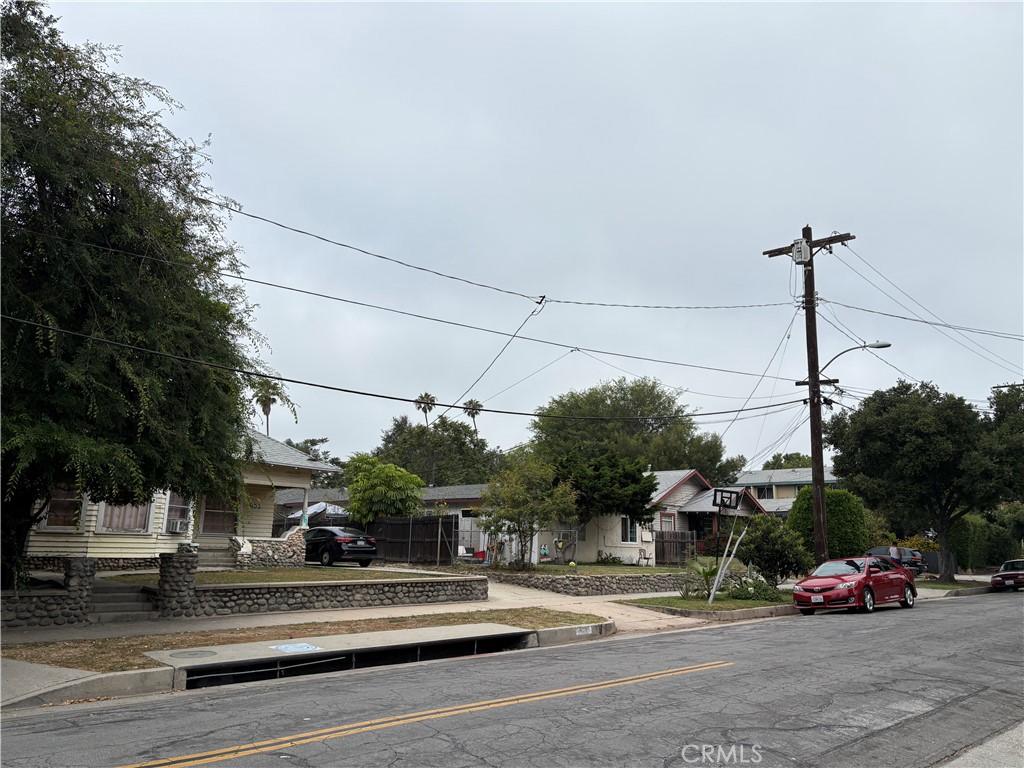
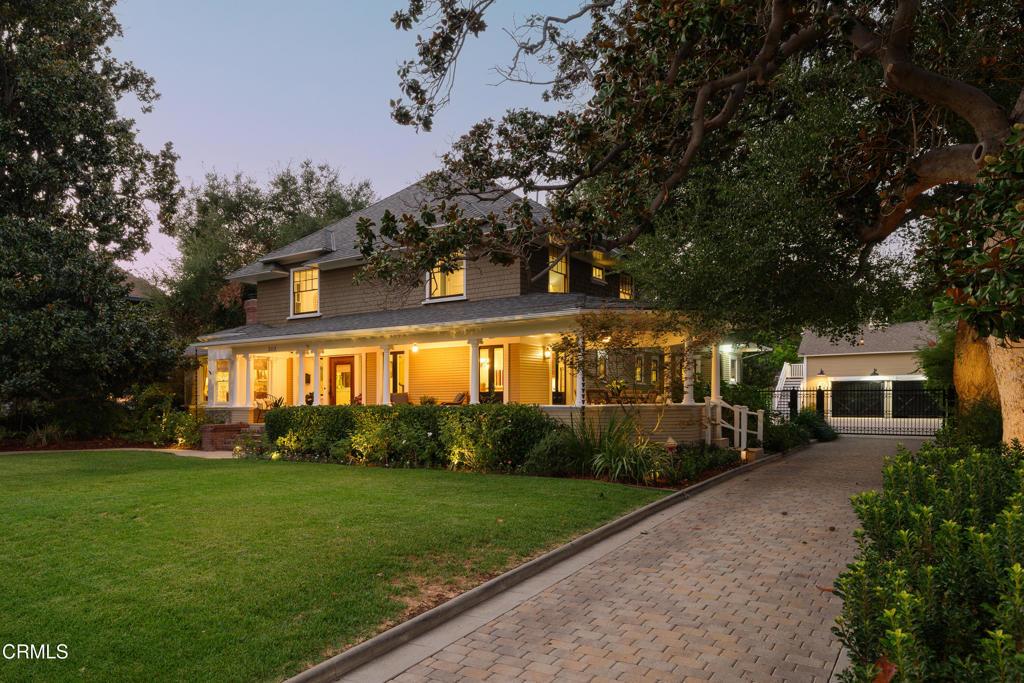
More than 800 Craftsman bungalows built between 1900 and 1930 make up the core of the housing stock, and most remain standing. The typical home runs one-and-a-half stories with an open floor plan, wide front veranda, sloping roof, and extensive use of natural wood throughout the interior. Built-in cabinets, shelves, and window seats are standard features in period-intact examples, along with exposed rafter tails and decorative brackets on the exterior. The building density gives the neighborhood a cohesive streetscape that is rare in Southern California: a single block often contains 10 to 15 homes with similar setbacks and complementary design language that would be difficult to replicate in any newer subdivision.
McDonald Park sits at the center of the neighborhood and serves as the primary gathering space for the active Bungalow Heaven Neighborhood Association. The association organizes an annual historic home tour that draws several thousand visitors each spring, one of the longest-running neighborhood events of its kind in Pasadena. Preservation guidelines, design review requirements, and consistent community involvement mean that exterior changes to historic facades require city approval, which is exactly what maintains the cohesion that draws buyers to the district in the first place.
Buyers in Bungalow Heaven are typically choosing the neighborhood specifically for its architectural character rather than treating it as a stepping stone to something else. Original homes run between 900 and 1,400 square feet on lots of 4,500 to 6,000 square feet. Additions and interior renovations are common, but the historic designation creates real constraints around exterior changes, particularly anything visible from the street or public alley. Buyers who want to significantly expand footprint or alter street-facing elements need to plan for a design review process with the Pasadena Historic Preservation Commission. The trade-off is a neighborhood where the context stays stable: a purchase here is not at risk of being flanked by a teardown or a speculative contemporary rebuild next door.
Within Pasadena’s housing market, Bungalow Heaven tends to price at or slightly above the citywide median on a per-square-foot basis. The historic designation adds a premium relative to comparable non-designated bungalows in adjacent neighborhoods, and the combination of national recognition and annual home-tour visibility keeps buyer awareness active year-round. Turnover is low, with many owners staying a decade or more, so inventory is limited and well-priced homes move quickly when listed. Off-market opportunities do come up through the neighborhood association network, making local agent relationships particularly useful in this pocket.
The landmark designation covers exterior changes visible from public rights-of-way, including paint colors within approved period palettes, window replacements that match original profiles, and porch modifications. Interior renovations are unrestricted, so buyers with budgets targeting kitchens, bathrooms, and system updates can proceed without design approval delays. ADU development is possible on the larger lots under standard Pasadena permitting and setback requirements, giving some buyers a path to additional income or multigenerational use without altering the front of the house.
The neighborhood falls within Pasadena Unified School District. McKinley Elementary serves the area at the K-5 level, and John Muir High School is the assigned secondary. Old Pasadena, the Lake Avenue commercial corridor, and the farmers market are all within a short drive or bike ride. The Gold Line Metro station at Lake Avenue sits roughly one mile from the neighborhood’s eastern boundary, providing a transit connection to Downtown Los Angeles for buyers who prefer rail over freeway.
The neighborhood’s history begins in earnest at the turn of the 20th century, when speculative developers laid out residential lots along a grid of streets named for prominent early Pasadena families. The first homes were marketed to middle-class buyers who wanted a Pasadena address at a fraction of the cost of an estate on Orange Grove Boulevard. That original buyer profile, practical, community-oriented, architecturally aspirational without the resources for a grand estate, is part of the reason the neighborhood’s Craftsman bungalows were built to endure. The original owners had to maintain them carefully, and successive generations have continued that tradition in a way that the HPOZ designation now formally reinforces.
The Bungalow Heaven Historic Preservation Overlay Zone boundary follows North Orange Grove Boulevard to the west, East Washington Boulevard to the north, North Mentor Avenue to the east, and East Orange Grove Boulevard (and its extension) to the south. Within those boundaries, the Design Review Committee reviews exterior modifications, additions, and new construction to ensure compatibility with the Craftsman character. Buyers planning any exterior work, a porch modification, a window replacement, an addition, should budget for the DRC review process, which adds time and sometimes requires design revisions. The review is not prohibitive, but it is a real process that takes longer than standard permit timelines. A good local architect familiar with HPOZ requirements can streamline the experience considerably.
The streets most worth walking to understand the neighborhood are North Mentor Avenue, North Chester Avenue, North Holliston Avenue, and North Hill Avenue. These four north-south residential streets carry the highest concentration of well-preserved Craftsman bungalows with original front porches, exposed rafter tails, and landscaped front yards that reflect the period’s garden aesthetics. North Grand Avenue and North Garfield Avenue frame the neighborhood’s eastern and western edges respectively. Many buyers do a preliminary walking tour of these streets before making an offer, the variety within the shared Craftsman vocabulary (Foursquares, California bungalows, the occasional Prairie-influenced design) gives each block a slightly different character worth experiencing directly.
Schools serving Bungalow Heaven fall within Pasadena Unified School District. Madison Elementary School at 515 North Madison Avenue has historically been the neighborhood’s primary elementary feeder, and its proximity, walkable from most Bungalow Heaven addresses, is a practical advantage for families with young children. John Marshall Fundamental Elementary at 280 South Putney Avenue offers a district magnet option with an emphasis on structured academic fundamentals and a longer waiting list than typical enrollment programs. Blair High School at 1201 South Marengo Avenue serves the secondary grades. PUSD also operates several independent charter options accessible to Pasadena residents, and private school alternatives including Westridge School, Polytechnic School, and Sequoyah School are located within a few miles of the neighborhood.
Daily life in Bungalow Heaven revolves around the Fair Oaks Avenue corridor to the west and the scattered neighborhood commercial nodes within the surrounding streets. The Fair Oaks Pharmacy and Soda Fountain at 1526 Mission Street, a few blocks south, is one of the most widely recognized neighborhood institutions in Pasadena, an operational 1915-era soda fountain serving breakfast, lunch, and fountain drinks at the same counter where Pasadenans have eaten for over a century. The Pasadena Farmers Market on Villa Street operates Saturday mornings and draws residents from across the city. Green Street and Colorado Boulevard to the south provide the full range of restaurant options from casual neighborhood spots to chef-driven dining. The annual Bungalow Heaven Home Tour, held each April, draws visitors from across the greater Los Angeles area and serves as an informal neighborhood open house for prospective buyers who want to see interiors without the pressure of a real estate showing.
The buyer profile for Bungalow Heaven skews toward people who have done their homework on Pasadena’s historic districts. Many buyers come specifically because of the HPOZ, they want the design review process as a protection mechanism, not despite it. Architectural enthusiasts, buyers relocating from other preserved districts (Pasadena’s Arroyo Seco neighborhoods, Hancock Park in Los Angeles, Craftsman districts in the San Gabriel Valley), and buyers who plan to stay long-term rather than flip tend to dominate the market. A significant share of buyers come from design and architecture fields. Entry-level buyers do exist, Bungalow Heaven’s prices are lower than the estate neighborhoods to the south, but the neighborhood’s HPOZ constraints make it less attractive for buyers who want to convert or expand quickly.
Pasadena Water and Power (PWP) provides electricity and water service to Bungalow Heaven. PWP is a city-owned municipal utility, and its residential rates differ from Southern California Edison’s, buyers coming from Edison service areas should request a PWP rate comparison before assuming utility cost expectations. SoCal Gas serves natural gas throughout the neighborhood. Most Craftsman bungalows were built with wood-frame construction over concrete foundations, and the soils in north-central Pasadena have well-documented stability characteristics compared to hillside or Arroyo-adjacent areas. Standard lender inspections and general contractor estimates for any significant renovation should be sufficient for most purchases, this is not an area where geotechnical surprises are a common theme, though buyers should always commission standard inspections regardless.
For buyers comparing Bungalow Heaven to other Pasadena historic areas, the primary trade-offs are straightforward. Bungalow Heaven has a more accessible price floor than the San Rafael or Linda Vista neighborhoods to the south and west, a larger home count and therefore more frequent supply than the smaller designated districts, and a community culture that is among the most active in the city. The HPOZ constraints are real but manageable for buyers who plan ahead. Buyers who want Craftsman architecture without the design review process will find more flexibility in Madison Heights or the non-designated Garfield Heights areas nearby, but will also find fewer protections against unsympathetic renovation by future neighbors. The trade-off between preservation guarantee and renovation flexibility is Bungalow Heaven’s central buyer decision.
Property values in Bungalow Heaven have appreciated consistently over the past two decades, supported by the HPOZ designation’s constraint on supply and the sustained national interest in Craftsman architecture. The neighborhood’s position as one of Pasadena’s most affordable entry points into a designated historic district creates a specific demand tier: buyers who cannot yet afford Linda Vista, Oak Knoll, or Prospect Park but who want the protections and identity of an HPOZ over a non-designated residential area. That demand floor has historically provided Bungalow Heaven with more resilience in down markets than comparable non-designated residential neighborhoods in central Pasadena.
Property taxes in Bungalow Heaven follow standard Pasadena norms. Pasadena is in Los Angeles County, and property is taxed at the standard California base rate of 1% of assessed value, plus voter-approved supplemental bonds (PUSD bonds, county bonds, state measures) that typically add 0.2% to 0.4% to the effective rate. The Mills Act, which allows historically designated properties to negotiate a reduced assessed value in exchange for a preservation maintenance agreement, is theoretically accessible to Bungalow Heaven homeowners whose properties carry individual historic designations in addition to the HPOZ overlay, but most Bungalow Heaven homes are contributing resources to the HPOZ without individual designations and do not currently qualify for Mills Act treatment unless they pursue and obtain a separate historic designation. Buyers interested in this option should consult with the City’s Historic Preservation Program before purchase.
The community culture in Bungalow Heaven is organized partly around the Bungalow Heaven Neighborhood Association, one of Pasadena’s most active neighborhood organizations. The association coordinates the annual Home Tour, advocates for HPOZ enforcement and improvement, organizes neighborhood cleanups, and maintains communication channels among residents that give the neighborhood a connected character unusual among Pasadena residential areas of comparable size. Buyers who engage with the neighborhood association early in their purchase process often develop a more accurate picture of the neighborhood’s current condition and any pending issues (infrastructure projects, zoning requests, HPOZ amendment proposals) than buyers who rely solely on public records and listing disclosures.
The east side of Bungalow Heaven, near North Mentor and North Chester Avenues, borders the transition zone toward Garfield Heights and the commercial uses on North Los Robles Avenue. This eastern edge carries more foot traffic and is closer to the Gold Line at Lake Station than the neighborhood’s western portions near Fair Oaks. For buyers who prioritize transit access and walkable commercial convenience over maximum residential quiet, the eastern Bungalow Heaven blocks offer a useful combination of HPOZ character and Gold Line proximity that is rare in the central Pasadena market.
What is it like to live in Bungalow Heaven Pasadena Homes?
- Craftsman bungalows built in the early twentieth century make up the core of the housing stock, and most of them remain standing today.
- Typical houses run one-and-a-half stories with an open floor plan, a wide front veranda, a sloping roof, and extensive natural wood inside.
- Built-in cabinets, shelves, and window seats are standard features in period-intact examples throughout Bungalow Heaven Pasadena Homes.
- Exposed rafter tails and decorative brackets appear on the exteriors of period-intact houses, marking the original Craftsman detailing that survived.
- Building density gives the streetscape a cohesive feel that is rare across Southern California and hard to find in newer construction.
- A single block often holds houses with similar setbacks and complementary design language that would be difficult to replicate in any newer subdivision.
- McDonald Park sits at the center of the district and serves as the primary gathering space for residents and neighbors.
- The Bungalow Heaven Neighborhood Association stays active and organizes community life around the park at the heart of the district.
- An annual historic home tour draws visitors each spring and ranks among the longest-running neighborhood events of its kind in Pasadena.
- Preservation guidelines, design review requirements, and consistent community involvement mean exterior changes to historic facades require approval from the city.
- City approval for facade changes is exactly what maintains the cohesion that draws buyers to Bungalow Heaven Pasadena Homes in the first place.
- Buyers choose this district specifically for its architectural character rather than treating a purchase as a stepping stone to something else.
- Original houses sit on modest lots, with additions and interior renovations common across Bungalow Heaven Pasadena Homes over the years.
- Historic designation creates real constraints around exterior changes, particularly anything visible from the street or from a public alley.
- Owners who want to significantly expand footprint or alter street-facing elements plan for review by the Pasadena Historic Preservation Commission.
- Neighborhood context stays stable, so a purchase here is not at risk of being flanked by a teardown next door.
- Speculative contemporary rebuilds next door remain unlikely because the historic designation governs what neighbors can change on their own facades.
- National recognition and annual home-tour visibility keep buyer awareness of the district active throughout the year rather than seasonally.