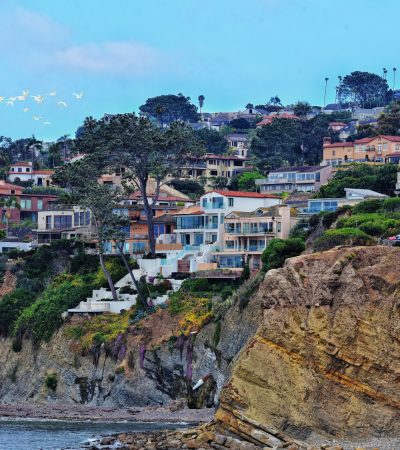
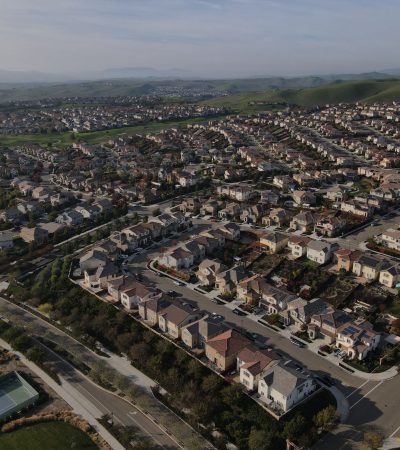
Homes for sale in san mateo cover a wider range than any other city on the mid-Peninsula, which is why the city name alone is a poor search term. San Mateo holds just over 100,000 residents and sits at the intersection of US 101, I-280, and State Route 92, with three Caltrain stations: downtown, Hayward Park, and Hillsdale. Zillow put the average home value at roughly $1.7 million as of May 31, 2026, up 1.6% year over year — a number that blends a hillside estate market with a condominium market clearing at a fraction of it.
What you buy depends entirely on which pocket you are in. The western hills hold Eichlers in The Highlands, Mediterranean homes in Baywood, and larger lots in San Mateo Park. The flats are post-war ranches. Along the rail corridor, Bay Meadows and Hillsdale offer the newest construction in the city. Detached and attached prices are currently moving in opposite directions, so tell us which one you are shopping and we will narrow the map.
Browse the current San Mateo listings below, or contact The Knight Group and we will tell you which pockets on this page match what you are trying to buy.
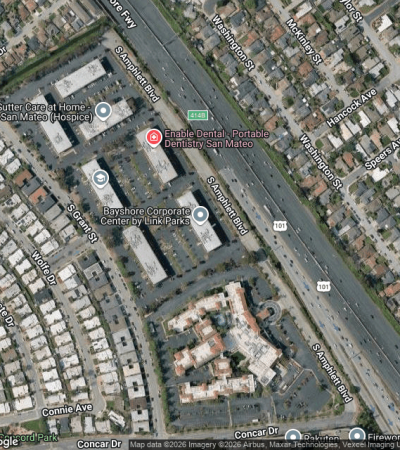
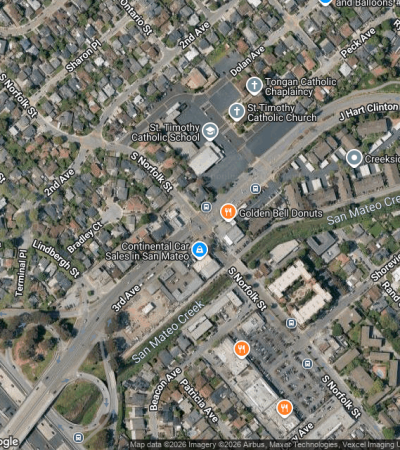
San Mateo sits at the intersection of three major freeways. US Route 101, the Bayshore Freeway, runs along the bay side. Interstate 280, the Junipero Serra Freeway, runs along the western ridge. State Route 92 cuts between them, connecting I-280 to the San Mateo-Hayward Bridge, a roughly seven-mile crossing to the East Bay. Very few Peninsula cities have all three, and it is the biggest structural advantage San Mateo holds over its neighbors.
The city also has three Caltrain stations: downtown San Mateo, Hayward Park, and Hillsdale. Caltrain launched electrified service on September 21, 2024, with a stated goal of bringing the San Francisco to San Jose run under 60 minutes, down from roughly 90. Employment is local too. Companies headquartered or holding major offices here include Sony Interactive Entertainment, Franklin Templeton, Roblox, GoPro, Guidewire Software, Coupa, and Fisher Investments, so many buyers are not commuting to San Francisco at all.
The city incorporated in 1894, per Britannica, and took on its multi-story downtown profile in the 1960s. Central Park, converted from a private estate in 1922, holds a Japanese Garden designed by Nagao Sakurai of the Imperial Palace of Tokyo and installed in 1966.
Prices are high and roughly flat, with a widening gap between houses and attached product. Zillow put the average San Mateo home value at approximately $1.7 million as of May 31, 2026, up 1.6% over the prior year. That figure blends every property type in the city and is not the cost of a single-family house in a sought-after attendance area, which is considerably more.
The split matters more than the average. A Burlingame Properties market update covering January 2026 reported a San Mateo County single-family median around $1.93 million, up roughly 7% year over year, against a county condominium and townhome median around $830,000, down roughly 9%. Detached and attached are moving in opposite directions. If you are buying a condominium here, you have leverage you would not have had in 2021. If you are buying a house in the hills, you do not.
We do not publish neighborhood-level medians here. Sub-market sample sizes are small enough that one closing distorts the number. Ask us for the current comparable set on your pocket.
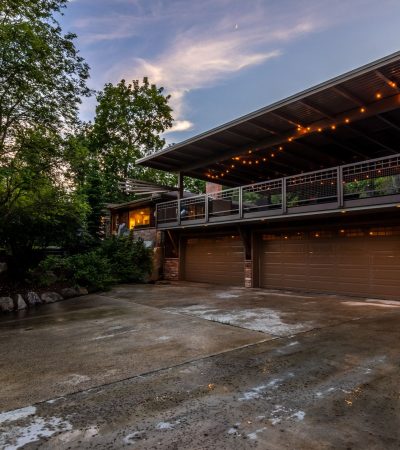
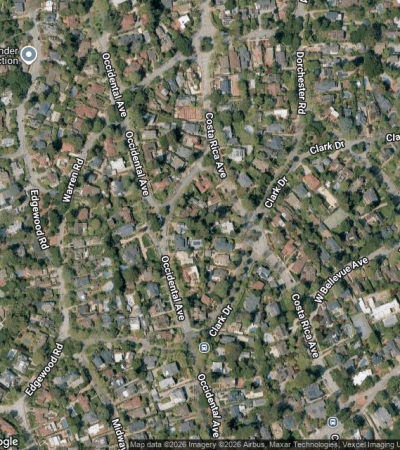
The west side is the top of the market and where the architecture gets interesting. The Highlands is the marquee example: roughly 650 Eichler homes built between 1955 and 1965, spanning designs from all three architectural firms Joseph Eichler worked with. Buyers who want post-and-beam construction, radiant floors, and glass walls to a private rear yard come here specifically, and they pay for it.
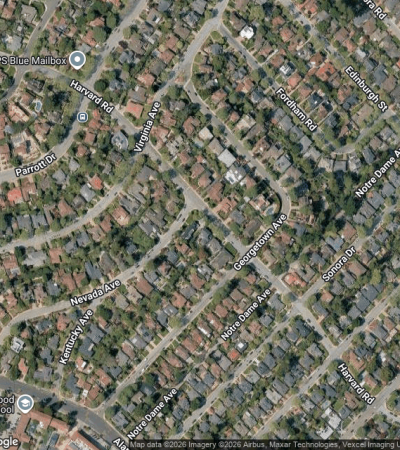
Around it sits the Baywood cluster. Baywood is known for Mediterranean-style homes on mature tree-lined blocks and prints among the highest prices in the city. Baywood Park and Baywood Knolls extend that character toward the College of San Mateo. Part of this area falls inside Highlands-Baywood Park, an unincorporated county community of 4,027 residents across 1.8 square miles at the 2010 census, where county rather than city rules govern permits. Confirm jurisdiction before you write an offer.
San Mateo Park is the estate end of the city: larger lots, larger houses, and the deepest architectural pedigree here. It draws buyers who want scale without Hillsborough pricing. Western Hills and Westwood Knolls sit higher and southwest, where streets curve with the topography and lots get irregular.
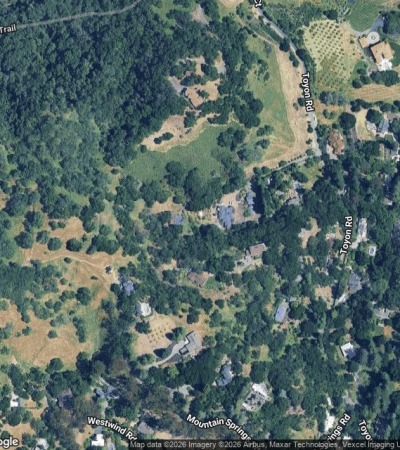
Laurelwood and Sugarloaf are the open-space pockets. Laurelwood Park spans roughly 225 acres and its trails climb to Sugarloaf Mountain Open Space. Start here if you want to step onto a trail from your street. San Mateo Woods reads similarly: wooded, quiet, car-dependent. Smaller hillside tracts including San Mateo Heights, The Heights, Foothill Terrace, and Highlander each carry their own build era and resale pattern. Sellers use these names because they command a premium, so verify the boundary rather than taking the marketing at face value.
Central San Mateo is where growth and transit investment are concentrated. Bay Meadows is the clearest case. Built on the former racetrack site, its second phase alone covers roughly 83 acres and is the largest project implementing the city’s Rail Corridor Transit-Oriented Development Plan, with offices, parks, and mixed housing arranged so Caltrain is within about a five-minute walk from anywhere in the neighborhood. It is the newest stock in San Mateo by a wide margin, priced accordingly.
Hillsdale is the anchor next to it: walkable streets, Hillsdale Shopping Center, and its own station, whose elevated platform opened in 2021 as part of a grade-crossing elimination project, relocated roughly 1,000 feet north between 28th and 31st Avenues. Hayward Park holds the third Caltrain stop and bridges downtown and the Bay Meadows corridor.
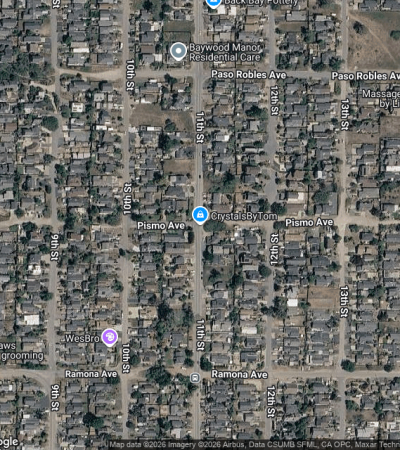
Beresford Park and Beresford Manor cover a large share of central San Mateo’s single-family stock: mid-century subdivisions, flat streets, consistent lot sizes, Beresford Elementary serving the area. They are the practical entry point for a detached house with a yard below hillside pricing.
Around them sits a dense cluster of named tracts. Parkside, Homestead, San Mateo Village, and San Mateo Terrace are post-war subdivisions with modest original floor plans, much of it expanded since, so two houses on one block can differ by a thousand square feet. Las Casitas, Madison Gardens, El Cerrito Manor, Bowie Estate, and Ticonderoga are smaller pockets with tighter inventory, which means fewer comparables and more pricing noise on any single sale.
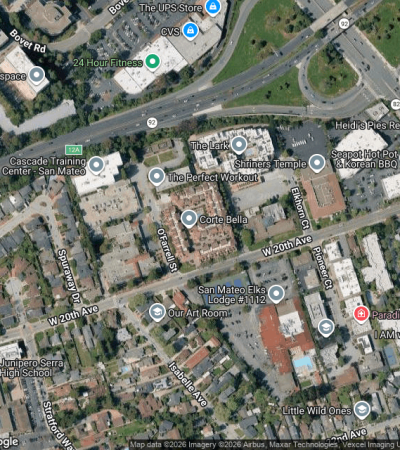
Attached housing runs through this band too. Corte Bella, Ivy Court, The Gardens, Lauriedale, Lauriedale Condos, and Los Prados each trade under their own name on the San Mateo County MLS. With any of them, association documents matter as much as the unit: reserve funding, pending special assessments, litigation history, and rental caps drive both financing and resale.
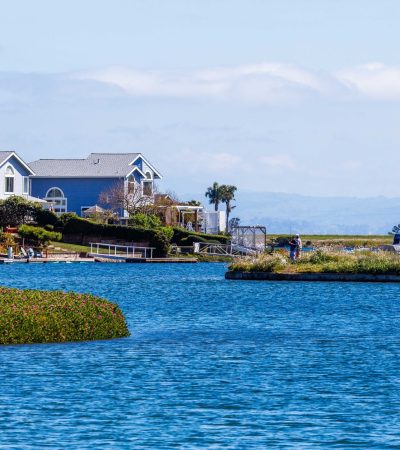
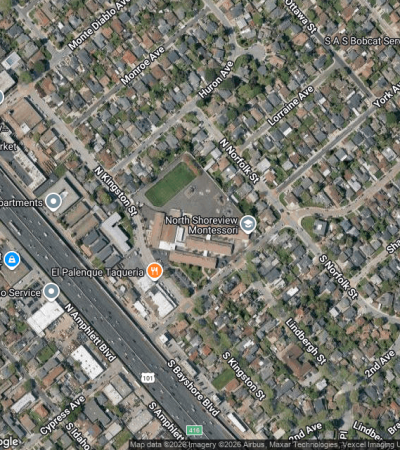
East San Mateo is the water side of the city and a genuinely different product. Shoreview is the largest of these areas and one of San Mateo’s more attainable single-family markets, with Bay views from parts of it and quick access to Coyote Point Recreation Area, Seal Point Park, and Mariners Point Golf Center. North Shoreview and South Shoreview split that territory into halves that price differently.
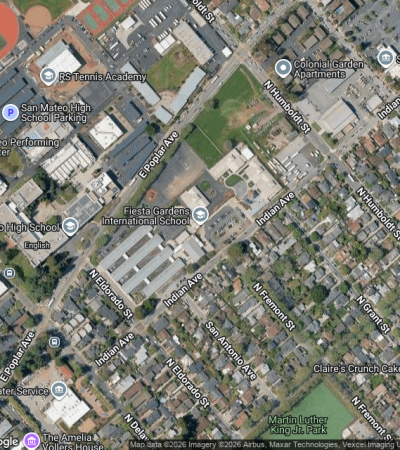
Fiesta Gardens is the most architecturally coherent neighborhood on this side of the freeway: developed in the early 1950s on former Leslie Salt property, subdivision established around 1954, wide streets, post-war ranch homes on roughly 5,000 square foot lots, and a 4.8-acre park at the center. The Fiesta Gardens Homes Association has run the shared pool, cabana, and parks since 1954, unusual for a detached-house neighborhood and a cost line most buyers do not expect. Adjacent sits the 19th Avenue Park Eichler tract, a mid-1950s development of more than 200 Eichlers on smaller lots than the Highlands.
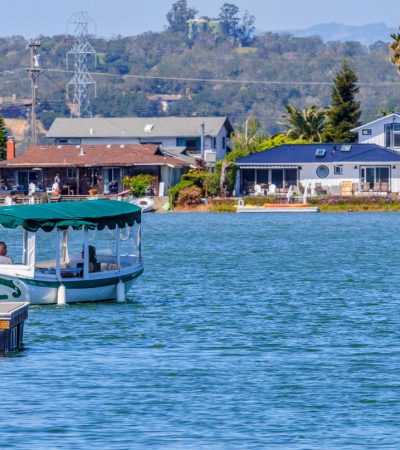
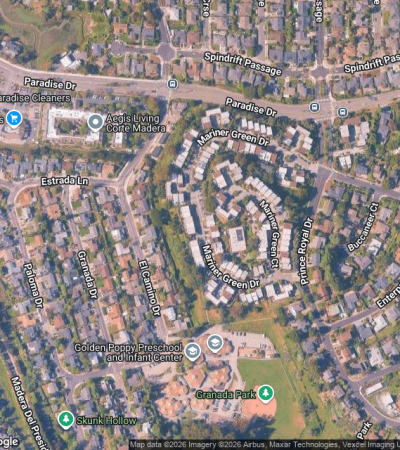
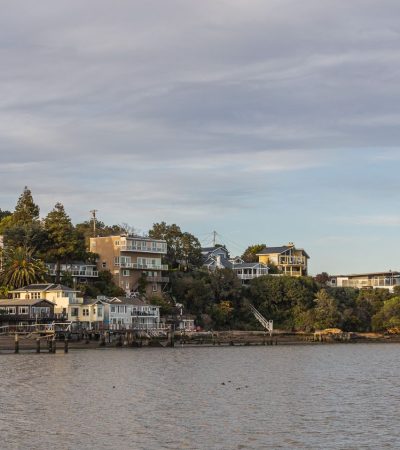
The waterfront pockets require the most diligence. Marina Lagoon homes front a managed waterway and some carry private docks. Marina Gardens, Mariners Island, Mariners Green, Lakeshore, Tidelands, San Mateo Bay, and Westshore round out the bayside inventory across houses, townhomes, and condominiums. Water frontage is why people buy here. Flood insurance, covered below, is why some later wish they had asked more questions.
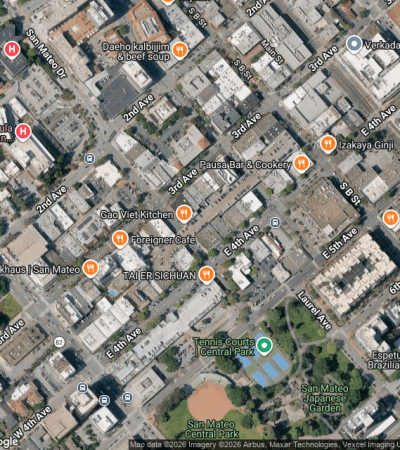
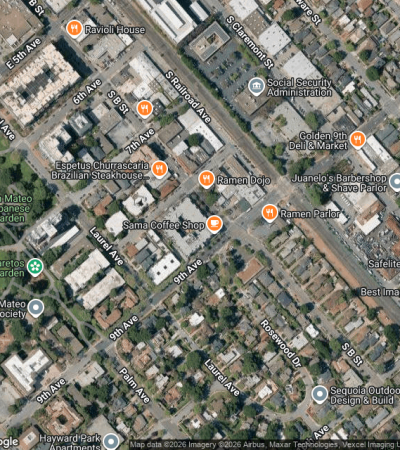
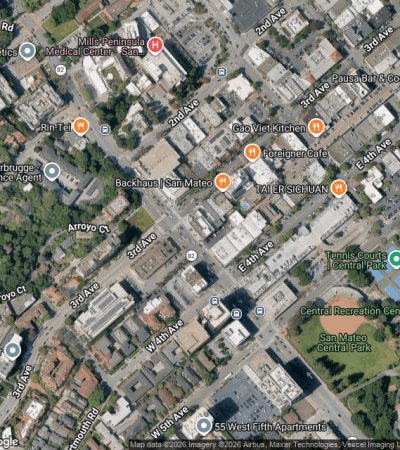
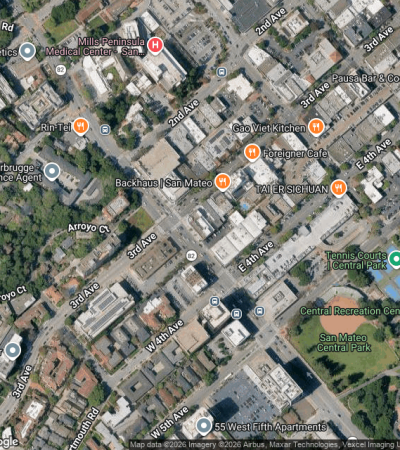
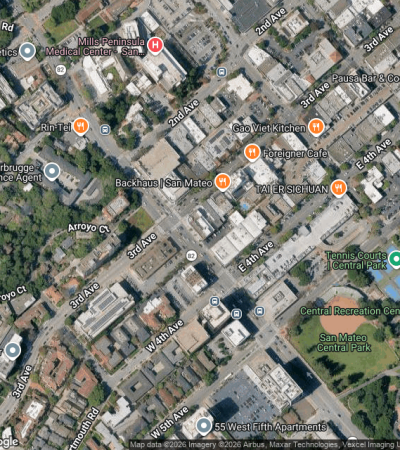
Downtown San Mateo is among the most walkable addresses in the county. B Street and the surrounding grid carry restaurants, a movie theater, a farmers market, Central Park with its Japanese Garden, and the downtown Caltrain station. Buyers who want to own on the Peninsula without owning a car should look here first. North Central sits adjacent with older stock at a lower entry price.
The named buildings behave differently from one another. The Towers, Versailles, Nazareth Plaza, and Classics at Midtown Place are established condominium communities with their own dues structures, parking arrangements, and lender profiles. In a mid-rise, the questions that decide your outcome are whether the association is warrantable for conventional financing, what the reserve study says, and whether an assessment for elevators, plumbing, or facade work is pending.
The Peninsula Regent is a separate category. At One Baldwin Avenue on the edge of downtown, it is a continuing care retirement community of 207 full-service residences plus 20 assisted-living studios and four penthouse guest suites, with more than 50,000 square feet of club-level space and an on-site medical director, operated by Bay Area Senior Services, a nonprofit subsidiary of Pacific Retirement Services. Ownership runs through a membership that includes a condominium interest in the unit, not a conventional purchase. Treat it as a healthcare and estate-planning decision with a real estate component attached, and read the membership agreement with counsel.
San Mateo runs on a two-district structure. Elementary and middle grades fall under the San Mateo-Foster City School District, roughly 12,500 students and the largest in the county. High school falls under the separate San Mateo Union High School District, a community-funded district of approximately 8,500 students covering San Bruno, Millbrae, Burlingame, Hillsborough, Foster City, and San Mateo.
SMUHSD operates six comprehensive high schools: Aragon, Burlingame, Capuchino, Hillsdale, Mills, and San Mateo. Three sit in the city itself. Hillsdale High runs a Smaller Learning Communities model, fed mainly by Abbott, Bayside, Borel, and Bowditch middle schools.
One caution. Attendance boundaries do not follow neighborhood names, and they change. Verify current assignment with both districts before you make school access a condition of your offer.
Better than most of the Peninsula, and improving. Three Caltrain stations inside city limits is unusual, and electrified service since September 2024 runs faster and more frequently than the diesel schedule it replaced. Rail-adjacent neighborhoods capture most of that benefit; the rest of the city is a drive-to-station market.
By car, the 101 and 280 pairing gives you two north-south options, which matters on a bad morning. The cost is congestion at the 101 and 92 interchange, one of the more reliably backed-up points on the Peninsula at peak hours. If your commute crosses the bridge, drive it at your actual departure time before you decide.
This is the most underpriced risk in the local market, and it applies almost entirely to the bay side. San Mateo has spent heavily on flood infrastructure with real results. The South Bayfront Levee Improvement Project removed roughly 4,000 properties from the FEMA Flood Insurance Rate Map and kept another 4,000 from being added. The North Shoreview Flood Improvement Project, completed in 2023, added pump stations at Coyote Point and Poplar Avenue and raised a 1,300-foot levee segment between San Mateo and Burlingame. FEMA issued a Letter of Map Revision effective October 11, 2024 removing approximately 1,600 addresses from mapped flood zones.
The picture is not uniformly improving. When FEMA has released updated countywide maps, some Marina Lagoon homeowners previously removed from the FIRM found themselves mapped back in. The San Mateo Daily Journal reported that Mariners Green homeowners whose homes have an attached dock, deck, or pilings in the water were required to carry flood insurance on the entire property.
The rule: on any property east of 101, pull the current FEMA determination for that exact parcel, get a written insurance quote during your contingency period rather than after, and ask whether any dock, deck, or piling touches the water. A premium surprise after closing changes your carrying cost and what the next buyer will pay.
San Mateo voters passed Measure Y in November 2020, setting citywide height limits of up to 55 feet, density of up to 50 units per acre, and floor area ratios up to 3.0, with heights to 75 feet at specified locations when criteria are met, and a sunset date of 2030. The City Council adopted the Strive San Mateo General Plan 2040 on March 18, 2024. Reporting has noted tension between the housing element’s targets and Measure Y’s caps. For a buyer, San Mateo’s future skyline is a live political question, and a view near a transit corridor is not permanently guaranteed.
On rentals, San Mateo has no local rent control beyond state law. A measure to cap increases and require just cause failed to qualify for the November 2024 ballot over signature validity. On April 21, 2025 the City Council declined to adopt protections exceeding California’s AB 1482, then on November 17, 2025 passed two ordinances extending AB 1482 provisions locally. Under AB 1482 as applied from August 1, 2025, the San Mateo County maximum increase was capped at up to 6.3%. Confirm the current cap before underwriting, since both the state formula and the local rules move.
You are paying a premium for location that you will not see in the house. San Mateo pricing reflects three freeways, three rail stations, two districts, and proximity to both San Francisco and Silicon Valley employment. It does not reflect square footage. The inventory is also old: outside Bay Meadows and scattered infill, most stock was built between the 1920s and the 1960s, so underwrite roofs, sewer laterals, panels, foundations, and seismic retrofit in your offer rather than in escrow.
Geography sets the rest, and each product type has its own inspection profile. The hills bring drainage and slope questions. Eichlers need a roofer and a radiant specialist, not just a generalist. The bay side brings flood mapping and insurance. Expanded ranch houses need permit history. Attached housing turns on the association’s finances rather than the unit’s kitchen. None of this is disqualifying. All of it is worth pricing before you write.
Buyers who start on the west side and get priced out usually end up looking at the flats, and that is not a downgrade so much as a different trade. The post-war ranch stock east of El Camino sits on flatter, more regular lots, which makes additions and second-story work more straightforward than on the curving hillside parcels in Western Hills or Westwood Knolls. You also give up the tree canopy and the trail access that Laurelwood and Sugarloaf buyers pay for. Weigh the freeway proximity honestly: being close to US 101 or Route 92 shortens a bridge commute and puts noise in the yard.
The attached market is where San Mateo real estate currently favors the buyer, given that county condominium and townhome prices have moved down while detached prices moved up. If you are open to a condominium or townhome near a Caltrain station rather than a house in the hills, tell us early — the two searches use different comparables and different negotiating posture.
It depends on property type. Per a Burlingame Properties update covering January 2026, the county single-family median was up roughly 7% year over year while condominiums and townhomes were down roughly 9%. Attached housing currently gives you negotiating room the detached market does not.
The western hills. San Mateo Park, Baywood, and the Highlands sit at the top of the city’s range. The Highlands commands its premium partly on architecture, as one of the largest intact Eichler tracts anywhere.
Generally the east side and attached housing. Shoreview and its sub-areas are among the more attainable single-family markets, and condominiums downtown and in the garden complexes clear well below the detached median.
It depends on the parcel, not the neighborhood. Levee and pump station projects have removed large numbers of properties from FEMA mapping, including approximately 1,600 addresses via a Letter of Map Revision effective October 11, 2024. Others, particularly those with docks or pilings in the water, remain subject to mandates. Get a parcel-specific determination.
San Mateo Union High School District runs Aragon, Hillsdale, and San Mateo High within the city. Assignment depends on current boundaries, which change. Confirm with the district rather than relying on a listing.
Yes. The city has three Caltrain stations: downtown San Mateo, Hayward Park, and Hillsdale. Electrified service launched September 21, 2024, with a stated goal of an under-60-minute San Francisco to San Jose run.
Not beyond state law. The City Council declined in April 2025 to adopt protections exceeding AB 1482, then in November 2025 passed ordinances extending AB 1482 provisions locally, including relocation assistance for no-fault evictions.
We start with the pocket, not the city. Before we show you anything, we establish which neighborhoods on this page fit your budget, commute, school, and risk tolerance, and which do not. A buyer who wants an Eichler and a buyer who wants a low-maintenance downtown condominium are shopping two unrelated markets that share a zip code.
On diligence, we pull the parcel-level items that decide outcomes here: FEMA flood determination and a written insurance quote for anything east of 101, association reserve studies and assessment history for attached housing, school boundary confirmation from both districts, and permit history for any expanded ranch house.
For sellers, positioning is the lever. San Mateo’s named subdivisions each carry their own comparable set, and pricing a Beresford Manor house against a generic city median leaves money on the table. We price to the tract and tell you when a pre-listing repair will not return its cost. Browse the listings below, and contact The Knight Group when you want the analysis behind a specific address.
The Knight Group is here to help you with all your realty needs. To get started, fill out the form below and one of our experienced agents will contact you as quickly as possible.
Copyright © 2024 The Knight Group.
All rights reserved. License: 02133297
Lucky for you we’re looking out.
Subscribe to this Custom Search to be alerted when new properties hit the market in the area.
Choose the frequency that works for you.