Browse all San Diego County real estate.

Browse all San Diego County real estate.
San Diego homes for sale span roughly twenty distinct submarkets, and the rules on what you can buy, build, and rebuild change by neighborhood, sometimes by block. Per Redfin, the median sale price in the City of San Diego was about $954,000 over the three months ending May 2026, down roughly 3.0% year over year, while other trackers put the mid-2026 median closer to $915,000–$920,000. That is a flat-to-slightly-down market, not a falling one, held up by durable demand against supply constrained by the ocean, the border, Camp Pendleton, MCAS Miramar, and mesa-and-canyon topography.
The housing itself ranges from 1920s Spanish Revival and Craftsman stock in Kensington and Mission Hills, to beach cottages under a 30-foot height limit in Pacific Beach and Ocean Beach, to high-rise units downtown and Little Italy, to newer tracts in Carmel Valley and 4S Ranch. What varies most is carrying cost: Mello-Roos taxes in the master plans, association dues in the towers, and wildfire insurance inland. Two homes at the same price can differ by thousands a year.
Browse the listings below to see what is currently active across the city, or contact The Knight Group and we will narrow the field to the two or three submarkets that actually fit your budget, timeline, and tolerance for disclosure complexity.
Three buyer profiles do well here, and one consistently struggles. The first is the school-driven family buyer: San Diego contains attendance areas served by Poway Unified, San Dieguito Union High School District, Del Mar Union, Solana Beach School District, and San Diego Unified, and district lines are a primary price driver in the north-city communities. The second is the coastal buyer who wants walkability to sand and accepts older housing stock, tighter lots, and coastal permitting friction. The third is the urban buyer who wants an attached unit with services included and is comfortable underwriting a homeowners association.
The buyer who struggles is the one shopping on headline price alone. San Diego attaches large recurring costs to specific addresses: Mello-Roos special taxes in the master plans, layered association dues in the towers, wildfire insurance in the inland canyons, and assessments driven by state-mandated balcony inspections. Two homes at the same list price can differ by thousands of dollars a year in carrying cost. Underwrite that number, not the sticker.
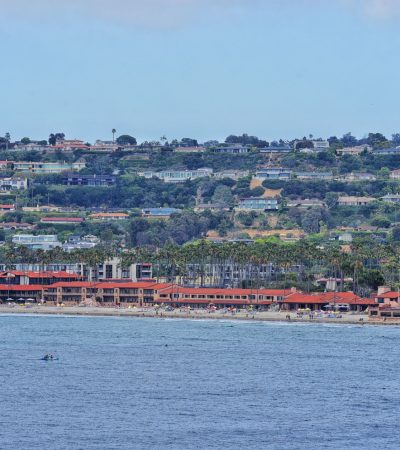
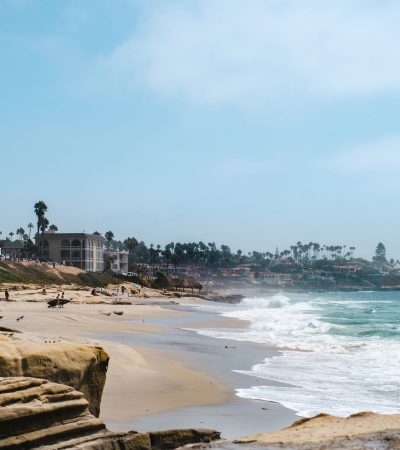
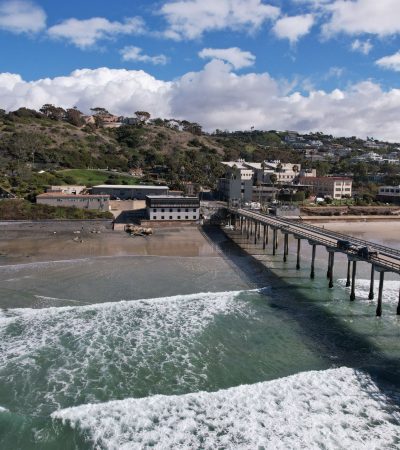
Start with the coastal band. Point Loma sits on the peninsula guarding the bay entrance and runs from Spanish and Mediterranean stucco homes to modern rebuilds, with far fewer Craftsman-era houses than the uptown neighborhoods. Pacific Beach and Ocean Beach are the walkable beach towns with the deepest rental history and the strongest attachment to the coastal height limit, which both backed overwhelmingly in 1972. Mission Beach is the narrow sandbar between the ocean and Mission Bay, regulated differently from every other San Diego neighborhood because of its vacation-rental history.
Move inland to the uptown neighborhoods. Mission Hills is one of the city’s most architecturally significant residential districts, dense with early twentieth-century Craftsman, Spanish Revival, and period-cottage stock on canyon-edge lots. Kensington is a collection of five original subdivisions dating to 1910, laid out on a narrow peninsula bounded on three sides by steep slopes, with stone gateways, curving streets, a deep concentration of Spanish Revival houses, and a working main street on Adams Avenue anchored by the Ken Theatre; Richard Requa and Cliff May both built here. Hillcrest is the most rapidly re-planned neighborhood in the city, discussed in its own section below.
Downtown and its edges are the attached-housing core. Downtown San Diego holds the high-rise inventory across the Marina, Columbia, Core, and East Village districts. Little Italy is a 48-block district built by Italian and Portuguese fishing families who founded the American tuna fleet, reorganized after Interstate 5 cut through in the 1970s, and revitalized since 1996 under the Little Italy Association business improvement district; the India Street corridor and the Mercato farmers market are its anchors. Bankers Hill absorbed the portion of the old Italian quarter east of the freeway and now mixes Balboa Park-adjacent low-rise with mid-rise towers.
The established inland neighborhoods trade walkability for space. Bay Park sits above the Morena corridor and was one of the direct beneficiaries of the Mid-Coast Trolley extension. Scripps Ranch occupies the old Miramar Ranch that E.W. Scripps assembled starting in 1890; the eucalyptus groves along Pomerado Road are survivors of that estate planting, Miramar Reservoir sits inside the community, and San Diego Unified serves it through Thurgood Marshall Middle School and Scripps Ranch High. Rancho Peñasquitos spans the 92129 ZIP with State Route 56 running through its middle and Interstate 15 on its eastern edge, and it is served by Poway Unified schools including Mt. Carmel High.
North of State Route 56 you are in master-planned territory. Carmel Valley is the largest of these, a planned community of condominiums, townhomes, single-family tracts, and gated enclaves with newer construction and a three-district school structure. 4S Ranch is a 2,900-acre plan of 4,715 homes built between 2000 and 2013, served by Poway Unified through Stone Ranch and Monterey Ridge elementaries, the Design 39 Campus, Oak Valley Middle, and Del Norte High. Black Mountain Ranch and North City carry their planning history in their names: both sit inside what the city long called the North City Future Urbanizing Area, a roughly 12,000-acre, five-subarea framework adopted in 1993.
At the top of the market are the low-density estate enclaves. Del Mar Mesa was designated in the late 1990s for low-density residential use and remains a thin-supply pocket of custom homes, small gated groupings, and horse-friendly parcels. Rancho Pacifica is a guard-gated community of roughly 148 custom estates on the hills above Fairbanks Ranch Country Club, a figure repeated consistently across brokerage guides for the community. Torrey Woods Estates and Del Mar Country Club are smaller enclaves in the same corridor where inventory is measured in a handful of homes at a time. The Covenant in Rancho Santa Fe is the historical parent of this tier: the Santa Fe Railway bought the land in 1906 to grow eucalyptus for railroad ties, the wood proved unusable, and architect Lilian Rice was engaged in 1921 to master-plan a residential village instead. It was registered as California Historical Landmark #982 in 1989 as a historic planned community.
If you would rather scan everything at once instead of working neighborhood by neighborhood, start with San Diego homes for sale and filter from there.
The City of San Diego is not served by a single district, which surprises buyers relocating from cities where it is.
Carmel Valley is the clearest example. It is served by three districts at once: Del Mar Union and Solana Beach School District split the elementary grades depending on which part of the 92130 area a home sits in, and both feed into San Dieguito Union High School District for grades seven through twelve, which operates Carmel Valley Middle, Pacific Trails Middle, Torrey Pines High, and Canyon Crest Academy. Torrey Pines High also draws from Del Mar, Solana Beach, and Rancho Santa Fe.
North and east of there, Poway Unified is the operative district for 4S Ranch, Rancho Peñasquitos, and much of the surrounding north-city area. Scripps Ranch sits inside San Diego Unified. Rancho Santa Fe families are served by the Rancho Santa Fe Elementary School District and, again, San Dieguito Union at the high school level.
Verify the attendance area for the specific address, not the neighborhood. Boundaries in Carmel Valley and the north-city plans do not follow neighborhood names, and districts adjust them. This is the most common assumption we correct for relocating buyers.
Anything built in San Diego’s north-city master plans from the 1990s forward is likely to carry a Mello-Roos special tax funding the schools, roads, and infrastructure that made the development possible. Every home in 4S Ranch is subject to Mello-Roos, and the community layers multiple sub-associations beneath a master plan alongside multiple Community Facilities Districts at differing rates with differing expiration dates. That is a real disclosure package, not a formality.
Two things matter more than the current rate: the expiration date, because a special tax with six years left is a different liability from one with twenty-two, and whether the rate escalates annually. Both are disclosed, and both belong in your carrying-cost math before you write an offer.
On the attached side, high-rise dues run higher than townhome dues because elevators, security staffing, amenities, and master insurance all sit inside the association budget. Read the reserve study, not the dues line.
San Diego voters approved Proposition D in 1972, creating the Coastal Height Limit Overlay Zone and capping building height at 30 feet across most of the coastal zone west of Interstate 5, excluding parts of downtown. It passed with about 64% of the citywide vote and roughly 80% support in Ocean Beach and Pacific Beach.
The consequences are specific. The 30 feet is measured from a reference datum to the highest point of the roof including parapets, mechanical equipment, vents, and antennas, so rooftop equipment counts against your envelope. That constrains third stories, rooftop decks, and view-capture remodels in Ocean Beach, Pacific Beach, Mission Beach, and coastal Point Loma. It also caps competing construction, which is why coastal owners defend it. Qualifying affordable housing projects can seek waivers allowing additional height, subject to Coastal Act consistency and city review. If your purchase thesis depends on adding a level, price the feasibility study before you remove contingencies.
Sometimes, and the answer depends on the neighborhood and the license tier. San Diego regulates short-term residential occupancy through a four-tier license system: Tier 1 for part-time rental up to 20 nights per year, Tier 2 for home-sharing with the host on site, Tier 3 for whole-home rental capped citywide at 1% of the city’s housing units, and Tier 4 for whole-home rental in Mission Beach, capped separately at 30% of the Mission Beach community planning area’s housing units.
Tier 3 and Tier 4 licenses are the scarce ones. Mission Beach Tier 4 licenses are allocated by random lottery rather than first-come processing, and the tier had been closed since November 2022 before applications reopened for a window running July 1 through August 15, 2026. Whether a license exists is a property-level question with real dollar value attached. A separate rule catches investors off guard: new accessory dwelling units may not be rented for terms shorter than 31 consecutive days. If the plan is to build an ADU and rent it nightly, that plan does not work under current city rules.
Two changes matter to anyone underwriting future value. The Hillcrest Focused Plan Amendment, an amendment to the 2016 Uptown Community Plan covering roughly 350 acres centered on Hillcrest, was approved by the City Council on July 30, 2024, with implementing ordinances effective December 1, 2024. It contemplates buildings up to 20 stories in parts of the neighborhood and creates capacity for roughly 17,000 additional homes, with the stated goal of moving the broader Uptown population from about 40,000 today toward roughly 100,000 by 2050. Buying in or next to Hillcrest means buying beside a neighborhood the city has decided will change shape.
Second, San Diego pulled back on ADUs. On July 23, 2025, the City Council voted to roll back parts of the ADU Bonus Program, with amendments effective August 22, 2025 eliminating the bonus program across eight single-family zones. Coastal ADU processing moved the other way: AB 462 imposes a 60-day approval deadline for coastal development permits on ADUs in Pacific Beach, La Jolla, Ocean Beach, and Mission Beach, down from prior processing that ran several months.
Wildfire is the first. Much of Scripps Ranch sits in a Very High Fire Hazard Severity Zone, and the exposure is not theoretical: the Cedar Fire of October 2003 destroyed more than 300 homes there, part of a fire that burned over 270,000 acres and took 15 lives. The community organized a fire safe council afterward and has run fuel-reduction work since. Buyers in the inland canyon communities should get an insurance quote in writing during the contingency period, not after.
The second is attached-housing assessments. California Civil Code section 5551, enacted through SB 326, requires associations with three or more multifamily units to inspect load-bearing balconies, decks, stairways, walkways, and elevated entries along with their waterproofing systems, with the first inspection deadline of January 1, 2025 and re-inspection every nine years. Market reporting through 2026 attributes much of San Diego’s condo softness to the combination of these inspection and repair costs, rising association dues, and higher insurance premiums. Detached housing has held up considerably better than older attached stock.
The third is historic designation. In Kensington, Mission Hills, and Talmadge, where the Talmadge Park Estates Historic District was listed on the National Register on March 25, 2024, designation status affects what you can alter. Ask whether the property is individually designated or sits in a district, and confirm what that means for windows, roofs, and additions before planning a remodel.
Interstate 5 runs the coast, Interstate 15 runs the inland spine, and State Route 56 is the east-west connector across the north-city communities linking the 5 and the 15. Rancho Peñasquitos sits at that junction, which is why its commute profile is better than its distance from downtown suggests.
Rail changed meaningfully in 2021. The Mid-Coast Trolley extension opened November 21, 2021, adding roughly 11 miles and nine stations at a construction cost MTS estimated at $2.1 billion. It runs from Old Town north through Tecolote Road, Clairemont Drive, and Balboa Avenue to Nobel Drive, the UC San Diego campus, and the UTC Transit Center. That corridor put Bay Park and the Morena area on the map for buyers working in University City and La Jolla without a car-dependent commute.
Two things separate a workable shortlist from a frustrating one: the recurring costs attached to an address, and the rules governing what you can change once you own it. In the master plans north of State Route 56, Mello-Roos special taxes are the line item that moves a monthly payment most; in the downtown and Little Italy towers, it is association dues plus assessments tied to state-mandated balcony inspections; in the inland canyon communities, it is wildfire insurance. None of those appear on a listing price. Ask for the actual figures before you fall for a floor plan.
Permitting follows the same pattern. Coastal parcels in Pacific Beach, Ocean Beach, and Mission Beach carry the 30-foot height limit and, in Mission Beach, a separate regulatory history around vacation rentals. San Diego real estate rewards buyers who check those constraints first, then shop.
Neither cleanly. Per Redfin, the citywide median sale price was roughly $954,000 for the three months ending May 2026, down about 3.0% year over year, and other trackers put the mid-2026 median somewhat lower. Detached homes have held near prior peaks while older attached units gave back ground. Buyer leverage is real in the condo tier and thin in well-located detached inventory.
Not all, but most built from the 1990s forward in the north-city plans do. Every home in 4S Ranch is subject to Mello-Roos. Because a community can contain several Community Facilities Districts at different rates with different sunset dates, the correct question is always about the specific parcel rather than the community.
Usually not without hitting the 30-foot coastal height limit created by Proposition D in 1972. The measurement runs to the highest point of the structure including rooftop equipment, so a third level plus mechanicals rarely fits. Verify feasibility with a designer before you commit.
Three of them. Del Mar Union and Solana Beach School District split elementary coverage by sub-area, and San Dieguito Union High School District handles grades seven through twelve, running Carmel Valley Middle, Pacific Trails Middle, Torrey Pines High, and Canyon Crest Academy. Confirm the assignment for the exact address.
Only where a Tier 4 license already exists or can be obtained. Mission Beach whole-home licenses are capped at 30% of the community planning area’s housing units and allocated by lottery. The tier was closed from November 2022 until applications reopened from July 1 through August 15, 2026. Never assume a license transfers with a sale; verify it in escrow.
Carrying costs. Dues have risen, insurance has repriced, and SB 326 inspections surfaced deferred repair work associations must fund. Buyers underwrite total monthly cost, so higher dues translate directly into lower offers. A building with completed inspections, funded reserves, and finished repairs trades better than one that deferred all three.
Scale and governance. Del Mar Mesa is a low-density City of San Diego planning area zoned for large-lot custom homes since the late 1990s. Rancho Pacifica is a specific guard-gated community of roughly 148 estates near Fairbanks Ranch Country Club. The Covenant is the historic core of Rancho Santa Fe, an unincorporated community master-planned by Lilian Rice beginning in 1921 and designated California Historical Landmark #982 in 1989. Different rule sets, different buyer pools.
We start with the constraint set, not the listings. Before we send homes, we establish which districts you need, whether Mello-Roos fits your budget, whether you require short-term rental capability, and what your tolerance is for wildfire insurance pricing or assessment risk. Those four answers eliminate most of the city and make the remainder searchable.
On the buy side we underwrite the full carrying cost of every property we present: special taxes with their expiration dates, association dues against the reserve study, insurance quoted in writing during contingencies, and any open SB 326 inspection or repair obligation in an attached building. We tell you which of those numbers is likely to move against you.
On the sell side we position for the specific buyer pool that clears your property. A Kensington Spanish Revival, a Carmel Valley tract home, and a Marina District tower unit are marketed to three different audiences with three different objections to overcome. We handle the disclosure package early rather than late, because in this market the deals that fall apart usually fall apart over something that was knowable on day one.
Browse the listings below, or reach out and tell us what you are solving for.
The Knight Group is here to help you with all your realty needs. To get started, fill out the form below and one of our experienced agents will contact you as quickly as possible.
Copyright © 2024 The Knight Group.
All rights reserved. License: 02133297
Lucky for you we’re looking out.
Subscribe to this Custom Search to be alerted when new properties hit the market in the area.
Choose the frequency that works for you.