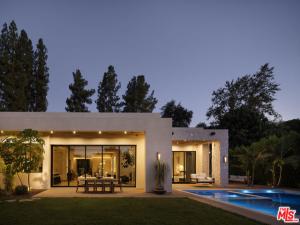
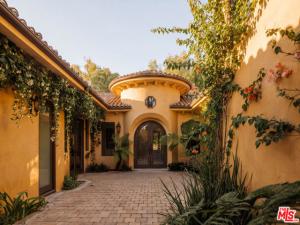
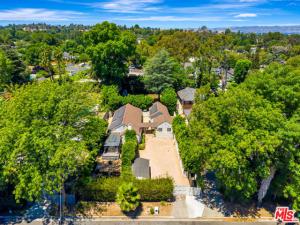
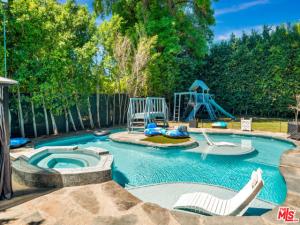
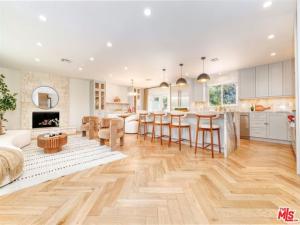
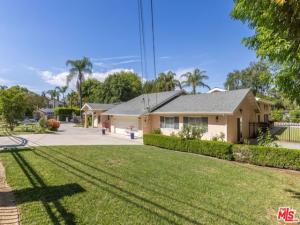
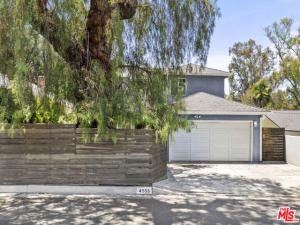
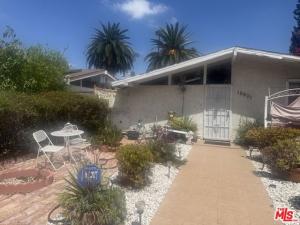
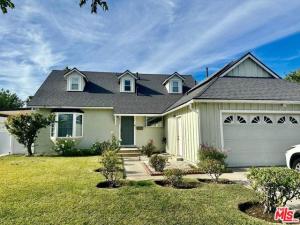
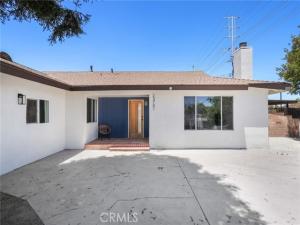
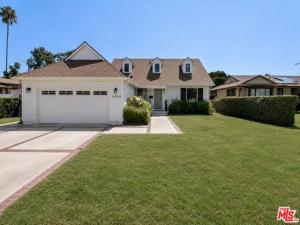
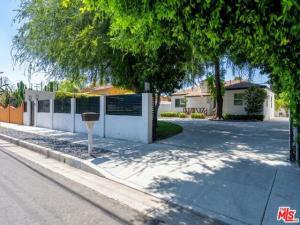
Browse all Los Angeles real estate — or explore the full Los Angeles luxury real estate market.
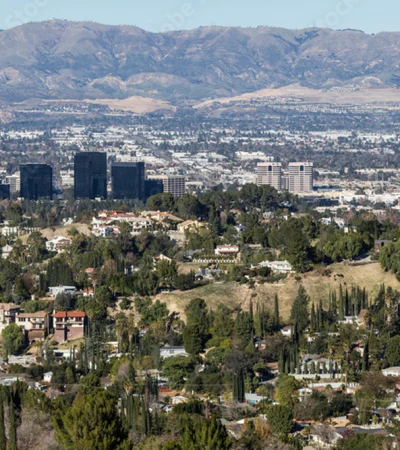
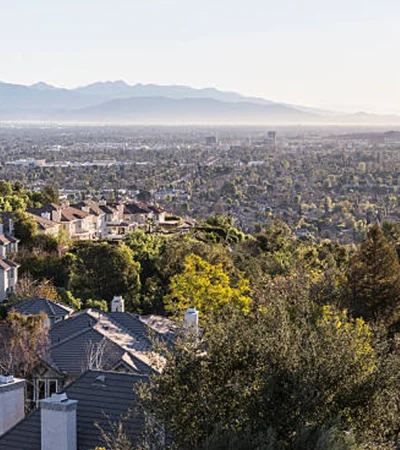
Woodland Hills is a large residential district at the southwest corner of the San Fernando Valley, inside the City of Los Angeles. It stretches from the valley floor around Warner Center south into the foothills of the Santa Monica Mountains. That vertical range is the story: one community holds flat-lot postwar tracts, newer planned developments, and hillside estates on view parcels under a single name.
The area was developed as the town of Girard in 1922 by Victor Girard Kleinberger, who planted 120,000 trees to sell an arid valley as a wooded one. It was annexed into Los Angeles and renamed Woodland Hills in 1945. Population was 79,451 as of 2022 census reporting, and the neighborhood has long indexed above the citywide median household income. Buyers come for lot size, tree cover, and a school picture that holds up, and they accept a Valley address rather than a Westside one.
Listings appear below. If you want the read behind them, which tract actually holds value, which hillside streets carry insurance problems, what a specific block traded for, contact The Knight Group for the direct answer.
Woodland Hills occupies the southwestern San Fernando Valley and backs onto the Santa Monica Mountains. To the north and northwest it meets West Hills, Canoga Park, and Winnetka. To the east, Tarzana. To the west, the cities of Calabasas and Hidden Hills, separate municipalities with their own tax and permitting regimes. That western boundary matters more than buyers expect: two homes a few hundred yards apart can sit in different cities, with different transfer tax exposure and different school attendance.
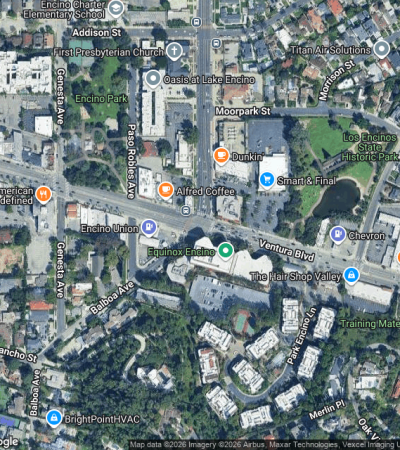
Two east-west spines organize the community. U.S. Route 101, the Ventura Freeway, carries the through traffic. Ventura Boulevard runs parallel and functions as the commercial main street. It is also the dividing line locals use. North of it is the valley floor: flatter lots, grid streets, larger inventory. South of it the ground rises into canyons and ridgelines, where lots get irregular, views appear, and the driving gets slower.
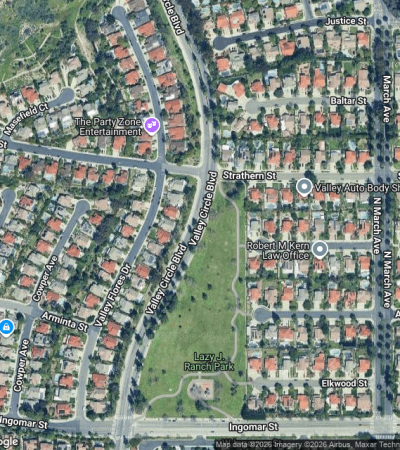
The far western edge runs along Valley Circle Boulevard, where the Upper Las Virgenes Canyon Open Space Preserve puts protected land within reach of residential streets. Serrania Park and the 19-acre Woodland Hills Recreation Center at Shoup Park serve the interior.
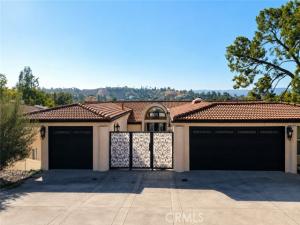
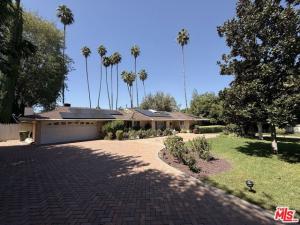
Mostly single-family homes on real lots. The core of the inventory is postwar tract construction from the 1950s and 1960s: ranch-style, single-story, three to four bedrooms, on lots generous by Los Angeles standards. Much of that stock has been remodeled at least once, so the buying decision is frequently a question of whose remodel you are inheriting and whether it was permitted.
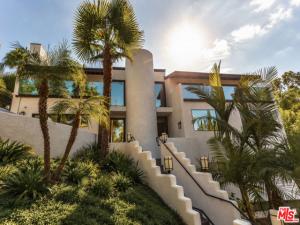
Above that sits the hillside estate segment south of Ventura Boulevard, where lot size, privacy, and view drive price far more than square footage does. These compete with Calabasas and Hidden Hills rather than with the rest of the Valley, and they are where geotechnical, access, and insurance questions get serious.
The third category is newer and denser: attached homes, townhomes, and apartment product in and around Warner Center. The Warner Center 2035 Plan, adopted in December 2013, was written to add mixed-use and transit-oriented density, projecting 20,000 residential units and 49,000 jobs by 2035. Buying attached product here means buying into an area deliberately being built up, which cuts both ways: walkability improves, and so does construction noise and near-term supply.
We will not quote a median price on this page. Price per square foot here varies too widely between a flat interior tract and a ridgeline parcel for a single number to mean anything. Ask us for the comparable set on the specific pocket you are considering.
Woodland Hills is not shopped as one market. Buyers and listing agents sort it by tract name, and those names carry real pricing differences. The pages below break the community into the pockets the market actually uses, each with current listings.
Start with the community-wide view at Woodland Hills homes for sale if you have not narrowed yet. From there, the split between the valley floor and the hillside is the first decision worth making. Everything below Ventura Boulevard is covered at Woodland Hills south of Ventura, which is where the view lots, canyon streets, and the higher end of the price range concentrate.
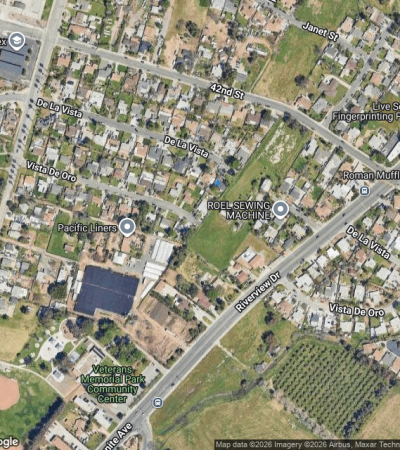
Within the hillside band, the market recognizes several distinct pockets. Dumetz Hills and Carlton Terrace are elevated addresses where grade and access shape what a lot is worth. Vista de Oro and Forest Hills Estates are the names buyers use for the tree-heavy pockets set back from the boulevard, and both trade on privacy more than on square footage.
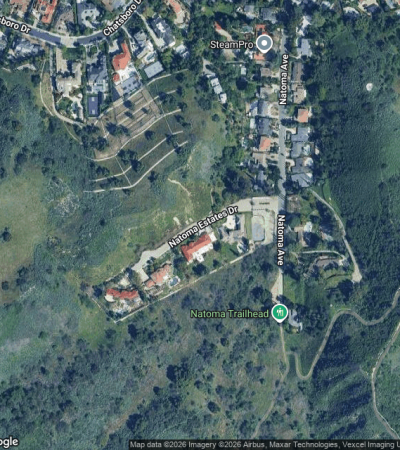
Along the western edge, Valley Circle tracks the boulevard that forms the boundary with Calabasas and the open space preserve beyond it. The named estate tracts in this part of the community include Westchester County Estates, Natoma Estates, and Penfield Estates. Tract names like these usually signal a coherent block of homes built as one development, which matters because it makes comparable sales inside the tract genuinely comparable. Siena is another named development in this part of the community.
On the valley floor, Walnut Acres Estates is among the tract names buyers here search by name rather than by street. College Acres takes its name from Los Angeles Pierce College, the 426-acre community college that has operated in Woodland Hills since 1947 and still runs a 225-acre working farm. Girard Tract carries the name of the original 1922 townsite that became Woodland Hills.
Finally, the district that changed the most: Warner Center covers the high-rise and mixed-use core itself, while the Warner Center area covers the surrounding residential streets that feel its gravity without sitting inside it. If you want walkability and are willing to accept density, that is where to look first.
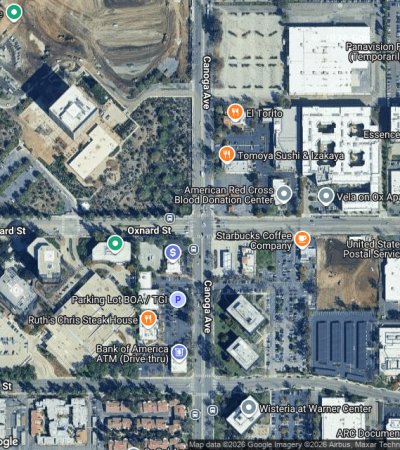
Warner Center is roughly 1,100 acres of office, retail, and residential development bounded by Vanowen Street on the north, De Soto Avenue on the east, the Ventura Freeway on the south, and Topanga Canyon Boulevard on the west. It is named for Harry Warner, the eldest Warner brother, who ran a horse ranch on the land beginning in the 1940s. His family donated 20 acres in 1967 that became Warner Center Park.
The commercial build-out started after 1968, when 630 acres sold to Aetna Life and Casualty for $30 million, with Rocketdyne and Litton Industries putting aerospace employment on the ground nearby. Warner Center Plaza added roughly 1.8 million square feet with the signature towers, and the Trillium project delivered twin 17-story towers totaling 600,000 square feet in 1986.
The current chapter is the one homeowners should be tracking. Stan Kroenke, owner of the Los Angeles Rams, assembled roughly 100 acres between 2022 and 2023, buying the vacant Promenade Mall for $150 million in March 2022 and The Village at Westfield Topanga for $325 million in January 2023, with plans for a Rams headquarters and practice facility. Westfield Topanga, at the district’s western edge, opened as Topanga Plaza in February 1964 as one of California’s first enclosed malls and now runs about 1.5 million square feet of leasable space. A redevelopment at that scale reprices the surrounding residential streets over time in both directions: proximity is an amenity for some buyers and a traffic problem for others.
Car-first, and you should plan around that. U.S. 101 runs through the community and is the primary route east toward the rest of the Valley and Hollywood, or west toward Calabasas and Ventura County. Topanga Canyon Boulevard and Malibu Canyon run south over the Santa Monica Mountains to the coast. Westside commutes over the hill are the most common reason buyers rule Woodland Hills out, and peak-hour travel to Santa Monica or Century City is long and unpredictable.
Transit is limited but real. Metro’s G Line is a 17.7-mile bus rapid transit route with 17 stations running between Chatsworth and North Hollywood, where it connects to the B Line subway into Hollywood and Downtown Los Angeles. It opened in October 2005 and now runs on battery-electric buses. Note the caveat: the western branch that served Warner Center directly was eliminated in 2018 and replaced with a local shuttle, so Warner Center is no longer a station on the line itself. Metro has planned a full light rail conversion of the corridor, but the published horizon for that is 2050. If transit access is a hard requirement rather than a preference, tell us at the outset, because it changes which pockets we show you.
Woodland Hills is served by Los Angeles Unified School District, with several charter schools that draw buyers specifically. El Camino Real Charter High School sits at 5440 Valley Circle Boulevard, was founded in 1969, became a California Distinguished School in 2009, and converted to charter status in 2011 after a staff vote. Its Academic Decathlon program has won national titles in 1998, 2001, 2004, 2005, 2007, 2010, 2014, 2018, 2023, 2024, and 2025, with enrollment of 3,261 in grades 9 through 12 for the 2023-24 year. William Howard Taft Charter High School also serves the area, along with LAUSD elementary campuses including Serrania and Woodlake Avenue, and Woodland Hills Charter Academy at the middle school level.
Los Angeles Pierce College anchors higher education locally. It opened on September 15, 1947 as the Clarence W. Pierce School of Agriculture with 70 students, and now serves roughly 22,000 students per semester on a 426-acre campus that includes a working farm and an equestrian center.
One warning. Attendance boundaries and charter admission rules are not the same thing, and both change. Verify enrollment directly with the district or the charter before you remove contingencies.
This is the part of the conversation that gets skipped, and it should not be. Woodland Hills recorded 121 degrees on September 6, 2020, the highest temperature ever measured in Los Angeles County. The climate is hot-summer Mediterranean. Cooling load is a real operating cost, and HVAC age and condition deserve more scrutiny here than in coastal neighborhoods.
Fire exposure follows the same geography as the views. The southern portion of the community sits against the Santa Monica Mountains, and parts of Woodland Hills fall within state-designated fire hazard severity zones. Under California law, sellers of property in a designated zone carry specific disclosure obligations, and defensible space and home hardening requirements can apply. The downstream consequence is insurance: carriers have tightened or withdrawn coverage in high-hazard areas across Southern California, and some buyers end up on the California FAIR Plan with a separate wrap policy for liability and contents.
The instruction is simple. Get an insurance quote on the specific address before you are deep into escrow. A hillside home you can afford on the mortgage math can fail on the insurance math. We front-load this check on every hillside transaction we run.
Yes, if the price clears the threshold, because Woodland Hills is inside the City of Los Angeles. Measure ULA was approved by City of Los Angeles voters in November 2022 and took effect April 1, 2023. It applies a 4 percent transfer tax to sales above the lower threshold and 5.5 percent to sales at or above the upper threshold. Those thresholds adjust annually for inflation: as of July 1, 2025 they stood at $5.3 million and $10.6 million. The tax applies to the full sale price, not to the amount above the threshold, and it covers residential as well as commercial property.
Two consequences for this market. First, the upper end of the Woodland Hills hillside segment can reach the first threshold, so pricing strategy near that line requires real arithmetic rather than a round number. Second, the boundary with Calabasas and Hidden Hills is a tax boundary, and a comparable estate a short distance west may not carry the same exposure. If you are selling in that range, we model net proceeds with the tax included before setting a list price.
You get lot size, mature trees, and a house that is usually larger than the equivalent budget buys on the Westside. You give up ocean-influenced climate, you take on summer heat, and you accept a commute that is fine within the Valley and difficult over the hill.
Inside the community, the trade-off is flat versus elevated. Valley floor tracts are easier to insure, more predictable to renovate, and more liquid on resale because the buyer pool is wider. Hillside parcels deliver views and privacy, and carry the fire, access, drainage, and geotechnical questions that come with grade. Neither is correct in the abstract. It depends on your holding period, your insurance appetite, and whether you are buying a house or a lot with a house on it.
The Warner Center segment is its own bet. You are buying into an area under active large-scale redevelopment, which means near-term construction and traffic against a plan projecting substantially more housing and jobs by 2035. Judge it on your holding period.
Price to the tract, not the ZIP code. Woodland Hills spans too wide a range for a community-level average to be useful, and comparables pulled from the wrong side of Ventura Boulevard produce a number that will not survive an appraisal. The tighter the set, ideally inside the same named tract and construction era, the more defensible the list price.
Second, remodel quality is doing a large share of the work in this market because so much of the stock is postwar and has been updated at least once. Buyers here are sophisticated about permits. Unpermitted additions, converted garages, and undocumented electrical work get discovered, and they get discounted harder than sellers expect. Pull your permit history before you list.
Third, if you are near a Measure ULA threshold or in a designated fire hazard zone, both facts belong in the pricing conversation from day one. Disclosure handled early is a negotiating position. Disclosure handled late is a renegotiation.
Yes. It was annexed and renamed Woodland Hills in 1945. That means city services, LAUSD schools, city permitting, and Measure ULA transfer tax exposure on sales above the threshold. Neighboring Calabasas and Hidden Hills are separate cities and are treated differently.
Warner Center is a district inside Woodland Hills, roughly 1,100 acres bounded by Vanowen, De Soto, the 101, and Topanga Canyon Boulevard. It is the commercial and high-density core. The rest of Woodland Hills is predominantly single-family residential.
It is the local shorthand for the hillside portion of the community, where the ground rises toward the Santa Monica Mountains. Expect view lots, irregular parcels, higher prices, and more scrutiny on fire, access, and insurance than on the valley floor.
Several of the named tracts function as defined developments with their own character and, in some cases, association governance. Whether a specific tract is gated and what the association actually controls varies, so confirm the governing documents for the exact address rather than relying on the tract name.
Hot. Woodland Hills recorded the highest temperature ever measured in Los Angeles County at 121 degrees on September 6, 2020. Summer heat is a genuine factor in cost of ownership and in how you evaluate HVAC, insulation, and shade.
Indirectly. The Metro G Line bus rapid transit route connects to the B Line subway at North Hollywood, which runs through Hollywood into Downtown. Warner Center itself lost its direct G Line branch in 2018 and is now served by a local shuttle instead.
The analysis differs by segment. Single-family in the established tracts is a long-hold appreciation play. Attached product near Warner Center is a bet on the 2035 plan and the Kroenke redevelopment. City of Los Angeles rent control and tenant protections must be checked against the specific property and its build date before you underwrite anything.
Insurance availability and cost for the exact address, permit history on any renovation, current school attendance and charter admission rules, and whether the price triggers Measure ULA. Those four checks resolve most surprises in this market.
We work this market at the tract level. Before we show you anything, we tell you which pocket fits your criteria and which ones we would rule out for you, with the reason stated plainly. On the hillside segment we run the insurance question and the permit history early, because those are the two items that most often kill a deal late.
For sellers, we build the comparable set inside your tract rather than across the ZIP code, we model net proceeds with transfer tax included when the price is anywhere near a Measure ULA threshold, and we get disclosures assembled before we go live instead of negotiating them under time pressure.
Browse the listings below, or start with the neighborhood pages above if you already know which part of Woodland Hills you want. When you are ready for the numbers behind a specific street, contact The Knight Group.
The Knight Group is here to help you with all your realty needs. To get started, fill out the form below and one of our experienced agents will contact you as quickly as possible.
Copyright © 2024 The Knight Group.
All rights reserved. License: 02133297
Lucky for you we’re looking out.
Subscribe to this Custom Search to be alerted when new properties hit the market in the area.
Choose the frequency that works for you.